Reflections on Feminist Performance Art
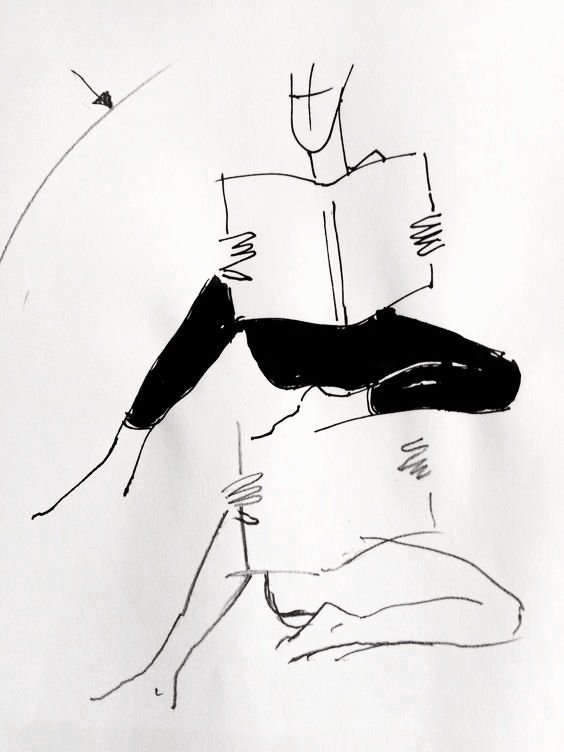
By Wim Langedijk for HURS
Reflections on Feminist Performance Art
HUR Reads is our definitive shortlist of the most prominent articles from around the web.
By HURS Team
1
Is Yoko Ono Still Our Most Radical Artist?
Amanda Fortini revisits Yoko Ono’s Cut Piece (1964) as a still-provocative work that exposes power, and vulnerability. In today’s climate of renewed threats to women’s rights, such feminist performance art feels strikingly relevant. Alongside figures like Ana Mendieta and Marina Abramovic, Ono is being critically reassessed, her once-marginalized, body-centered work reframed as foundational: challenging, unsettling and enduring in its exploration of gender and agency.
T MAGAZINE
Veronica Leoni, newly appointed as Calvin Klein’s first female creative director, brings a rigorous, precision-cut sensibility shaped by decades at leading fashion houses. Splitting time between Rome and New York, she blends Italian tailoring with American ease, drawing deeply from the brand’s archives to reconnect with its origins. Her debut collections refine Calvin Klein’s minimalism through subtle subversion, while her leadership also quietly addresses gender imbalances within the industry.
THE GENTLEWOMAN
As the Martha Graham Dance Company marks its centenary, it grapples with preserving a radical legacy while staying relevant. Once revolutionary, Graham’s grounded, emotionally charged technique now feels foundational, even taken for granted. Anniversary programs mix classics with new works, exposing tensions between reverence and reinvention. While pieces like Appalachian Spring endure, others feel dated, raising a central question: can Graham’s innovation survive as living practice rather than museum piece?
THE NEW YORKER
Lydia Ourahmane’s practice blends spare gestures with complex political and personal histories, tracing migration, memory and power. From researching Venice’s haunted Poveglia Island to embedding a gold tooth cast from a migrant’s necklace in her own jaw, her works merge bureaucratic systems, artefacts and lived experience. Often collaborative and deliberately understated, her projects challenge institutions, accessibility and ownership, proposing art as both material intervention and a subtle, enduring act of resistance.
FRIEZE
Rosie Huntington-Whiteley’s new venture, Mémoire, translates her self-professed homebody instincts into a refined line of luxury homeware. Inspired by the calm of her Rose Uniacke–designed London townhouse, the collection centers on analogue rituals and “heirloom” objects—hand-poured candles, leather frames, journals and illustrated notecards. Organized into four sensory “worlds,” Mémoire reflects her shift from beauty into interiors, framing memory, slowness and domestic pleasure as modern luxuries.