Downtown's Most Instinctive Gallerist

Photography byWilliam Jess Laird. Courtesy of Jacqueline Sullivan Gallery.
Jacqueline Sullivan
Downtown's Most Instinctive Gallerist
By Bonnie Langedijk
Jacqueline Sullivan has always had a soft spot for the quietly obsessive.
At her gallery in New York, she brings together design, art and object with an eye for the intimate over the impressive. The exhibitions are small in scale but expansive in thought, concept-led and carefully assembled, but always presented with a sense of ease you’re more likely to find at a private home than a gallery.
Operating somewhere between sanctuary and laboratory, Jacqueline Sullivan Gallery pairs contemporary commissions with historic pieces to spark what she calls “antiquarian inquisitiveness.” It’s an approach rooted in instinct rather than doctrine. Furniture, sculpture, decorative arts—everything is treated as a vessel for ideas, rather than limited by its function or provenance. Objects from different centuries share the same room, not to make a point, but to deliver a new context.
Her latest exhibition, The Semiotics of Dressing, turned its gaze to the choreography of getting dressed—a quiet daily ritual reimagined as a performance of identity, control and transformation. Taking cues from Martha Rosler’s The Semiotics of the Kitchen (1975), the show brought together works by Gala Colivet Dennison, Zoé Mohm, Anne Libby, Alice Wong and others, using textiles, metal, glass and found materials to explore the tension between private preparation and public presentation. The dressing room, in Sullivan’s hands, became a site of metamorphosis—both deeply personal and universally understood.
But we’ll let Jacqueline tell you the rest.
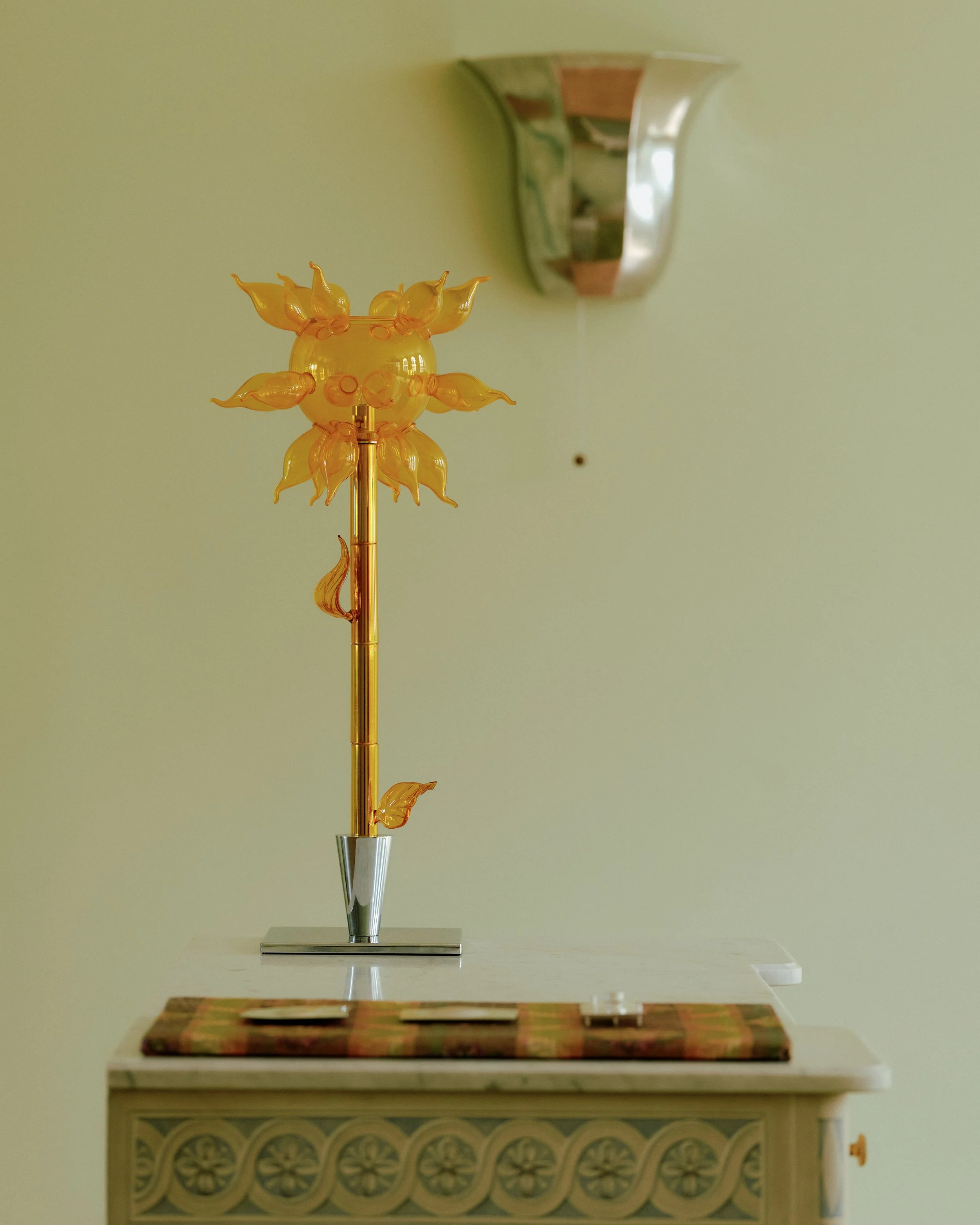
Voghera Zonca Sunflower Table Lamp, Late 20th Century Glass, chrome, electrical components. Hannah Kuhlmann Shell, 2025 Courtesy of St Vincents Stainless steel, tiger eye pearl, electrical components. Photography byWilliam Jess Laird. Courtesy of Jacqueline Sullivan Gallery.
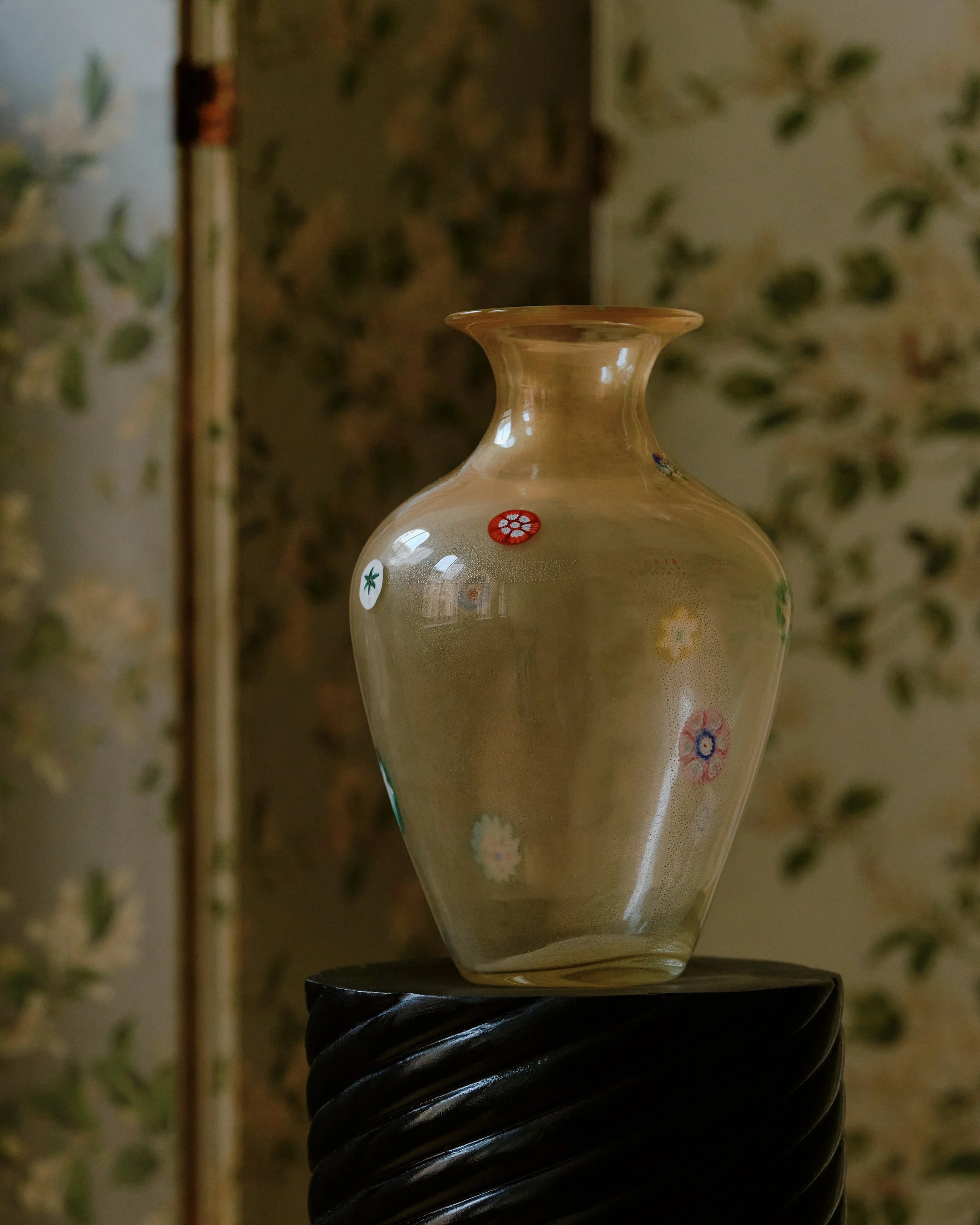
Millefiori Vase, c. 1920 Glass. Photography byWilliam Jess Laird. Courtesy of Jacqueline Sullivan Gallery.
You’ve built a gallery that moves between art and design without drawing hard lines. Why was that important to you from the start?
The distinction between art and design has never really been that important to me. While the conversation regarding their differences can be thought-provoking as discourse, I personally don’t find it that interesting to deliberate in practice. Rather than defining a work based on a set of rigid criteria, thereby confining it to an arbitrary category, I find it much more compelling to observe it from a more expansive viewpoint. Fine art, furniture, decorative objects, sculpture – they all give form to ideas and experiences. I’d rather people really look at furniture and objects, both for, and in spite of, their supposed functional properties.
You’ve become known for bringing together everything from 18th-century clocks to contemporary jewelry and sculpture. How do you decide what belongs together? What does it take to make those two worlds—often kept separate—speak to each other in a meaningful way?
I am very drawn to the notion of tension and of contrasting truths. Though an intuitive practice for me, my sense of discernment and composition is a result of many years of observation and my love of learning. I often wonder why furniture and objects from different periods are kept separate. It really confuses me, though I am also terrible at compartmentalizing–everything bleeds into everything else for me. Though perhaps things were made throughout different moments in history, they all exist now, today. Why not have them occupy a room together and see what they show us?
“Fine art, furniture, decorative objects, sculpture – they all give form to IDEAS and experiences. I’d rather people really look at furniture and objects, both for, and in spite of, their supposed functional properties.”
The Semiotics of Dressing is your latest show. What drew you to the idea of using dressing as a lens? The dressing room here becomes something more—part private space, part performance. What does that setting let the artists explore?
I had been thinking a lot about privacy and what should be kept safe and sacred in my own life. I began thinking about domestic rites and practices, and the ritual of dressing came to mind. I find it so fascinating that something so banal and private can be its own particular kind of dance or performance, yet there is no audience for the process itself; the public only has access to its result. This carries implications about agency, power and self-actualization, but also the notion of trespass through viral home tours and GRWM videos all over the internet. Each person’s experience of dressing is also quite singular, and I was curious to see how different contemporary artists responded to these ideas.
You’ve built a show around the rituals of getting dressed—private, repetitive, often overlooked. What’s your own relationship to that process?
I was single and lived alone for quite some time, and so I remained unaware of my own particularities and routines. When my boyfriend moved in, I suddenly had someone to bear witness to all of it – some aspects of which are “adorable” and others “not so much” (my classification, not his!). It feels warm and intimate to share the experience with someone else but also as if I have lost something that was secret and only belonged to me.
Do you miss that intimacy of getting dressed by yourself? Has it impacted your personal process?
At this moment, I don't miss getting dressed by myself because I'm enjoying the delicious intimacy of a ritual that is now shared with someone I love very much. I absolutely need and treasure my time alone, but in the solitary quiet moments I am also naturally inclined to get a bit dark and experience the valleys of sadness and heaviness of emptiness. Dressing for me could get a bit too interiority-focused in that way, but now it brings joy, humor and feelings of connection.
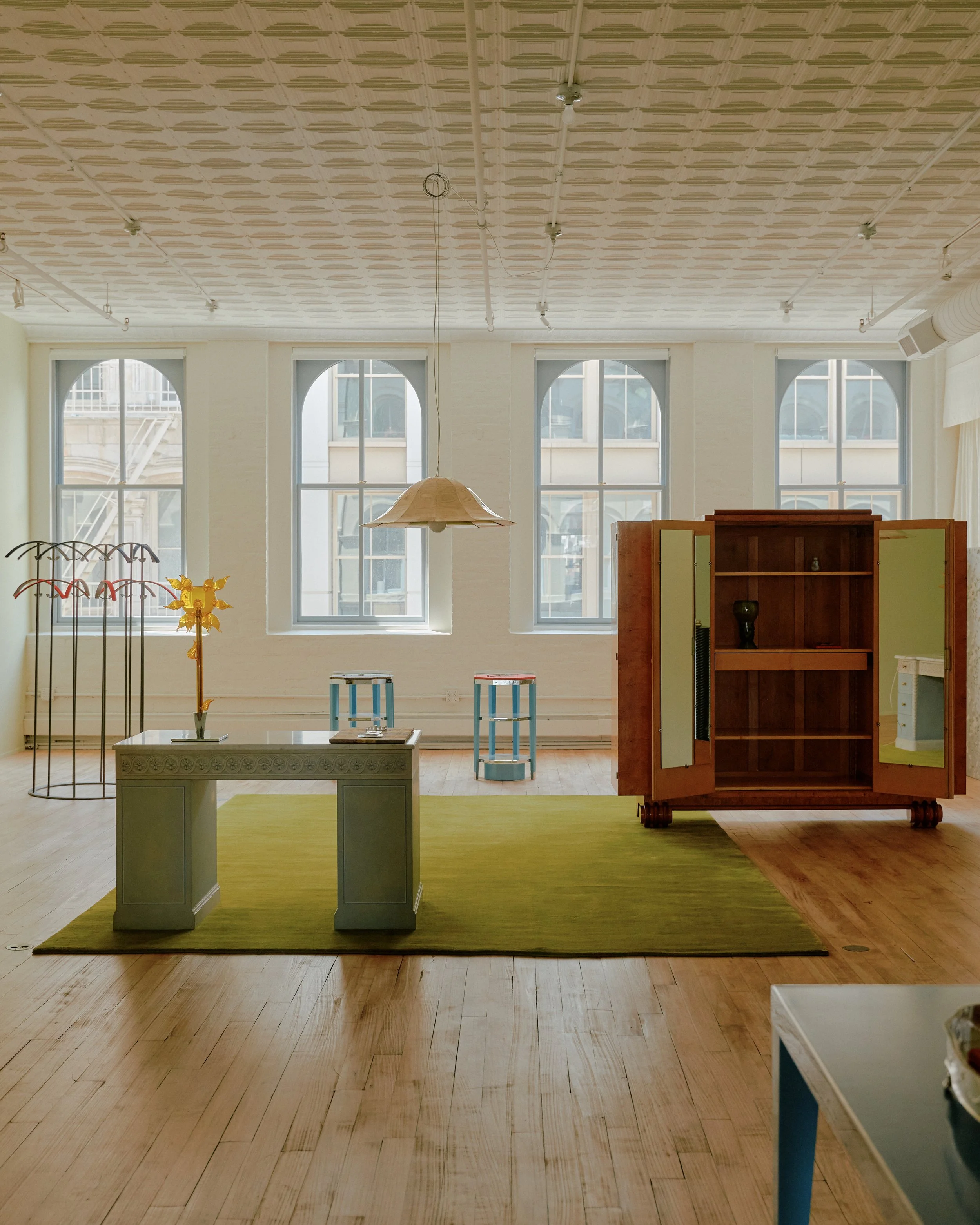
Photography byWilliam Jess Laird. Courtesy of Jacqueline Sullivan Gallery.
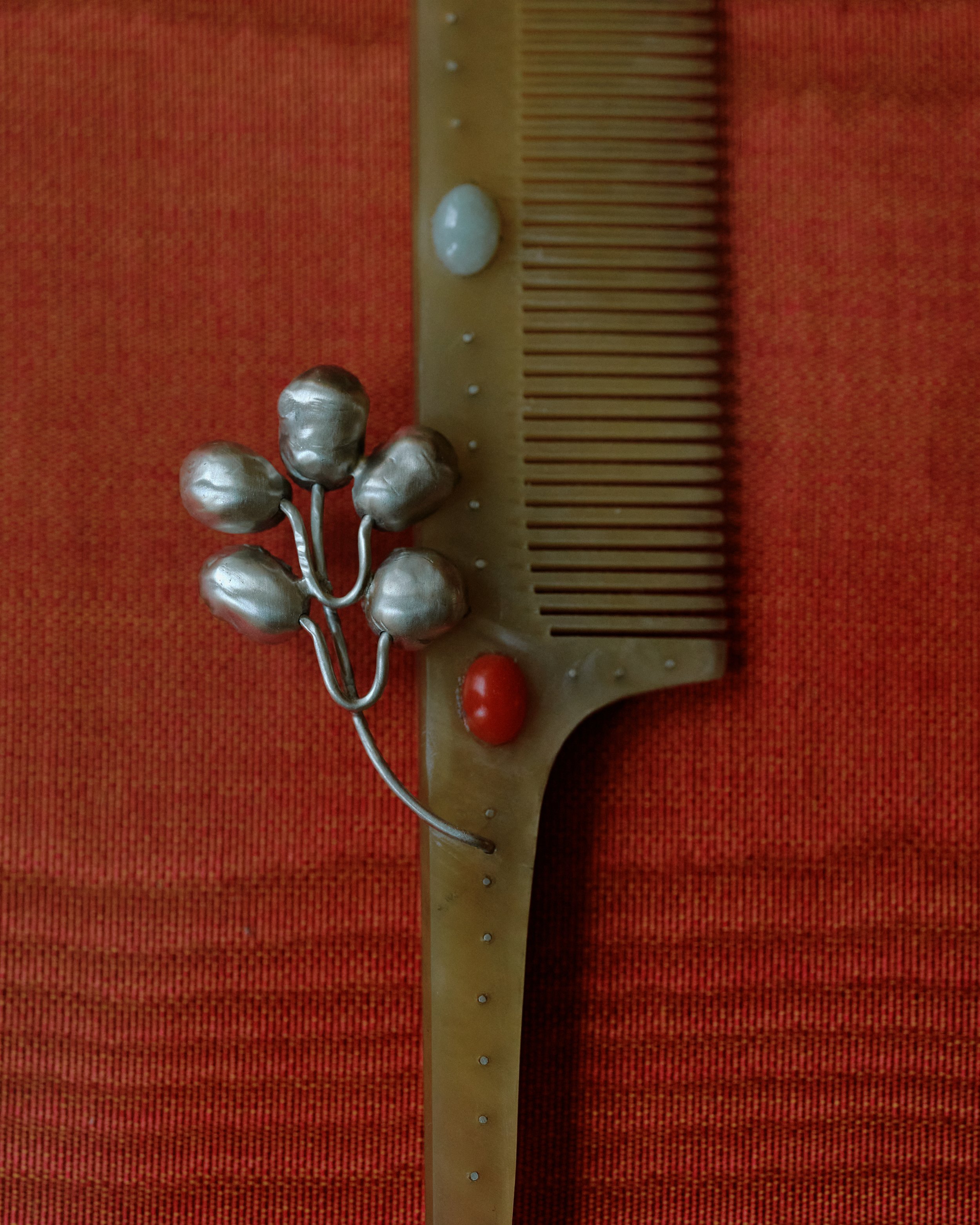
Zoé Mohm Comb Study 1, 2025 Antique animal horn, silver, jade, coral. Photography byWilliam Jess Laird. Courtesy of Jacqueline Sullivan Gallery.
The artists from Creative Growth bring a different kind of voice to the show. What made you want to include them?
I became familiar with Creative Growth when I lived in the Bay Area for a few years in my late 20s. I really admire what they do and find the work really interesting and inspiring. I’ve wanted to work with them since the gallery’s inception and I felt that the work of artists like Alice Wong, Stephanie Nguyen, Barry Regen fit nicely with the exhibition’s brief and offered another compelling point of view.
From a broader perspective, what's your approach to collaborating with artists, entities? How do you decide what or who is the right fit?
I'm just very interested in the way in which artists give form to wild, huge concepts and ideas, or even their meticulous obsession with one particular material or process. I absolutely love artists with obsessions. Though I've worked with a diverse range of artists and designers, I suppose you could say that the through-line is that each of them demonstrate an intense sensitivity that I find compelling and worth consideration. I also greatly value curiosity, discipline, humility and care. I'm especially interested in those artists that aren't always "the loudest in the room", and work in quiet earnest. I think it's important to recognize that the gallery is a public platform and so it is also my responsibility to show a diverse range of perspectives, including those of whom are often marginalized.
What does collecting look like today? How has it shifted since you started out in the industry?
I can only speak to my own personal relationship with collecting. Since I started out in the industry four years ago, I’ve found that my collecting has stayed its course more or less in terms of my interests, while also evolving into a more dynamic and collaborative process. The premise of an exhibition is often predicated on particular contemporary artists or historical works that I’d like to include in a show, but also inspires new curiosities and serendipitous discoveries. I’ve always loved sourcing, and I’ve gotten a lot better at the hunt. It takes time, but I’ve worked to forge relationships with dealers and collectors who are generous with their knowledge and resources. It’s a lot of fun, and now I get to do it both personally and professionally.
For someone who has never visited the gallery, how would you describe your philosophy and approach as a gallery?
My philosophy really relies on intuition. I do what feels natural, and don't force anything that doesn't feel right. The times that I've made mistakes are the times I didn't follow my own internal voice. I do think that my own emotional composition is really reflected in the way the gallery presents itself. There's a bit of intellectual seriousness but also a healthy sense of perspective that brings lightness and joy – I'm not curing cancer here. It's not easy owning a business, but I approach the gallery with a genuine sense of ease. Someone described it as "sprezzatura" which translates roughly to "considered carelessness or effortlessness" in Italian. I think that word perfectly encapsulates both the gallery and my own approach to living.
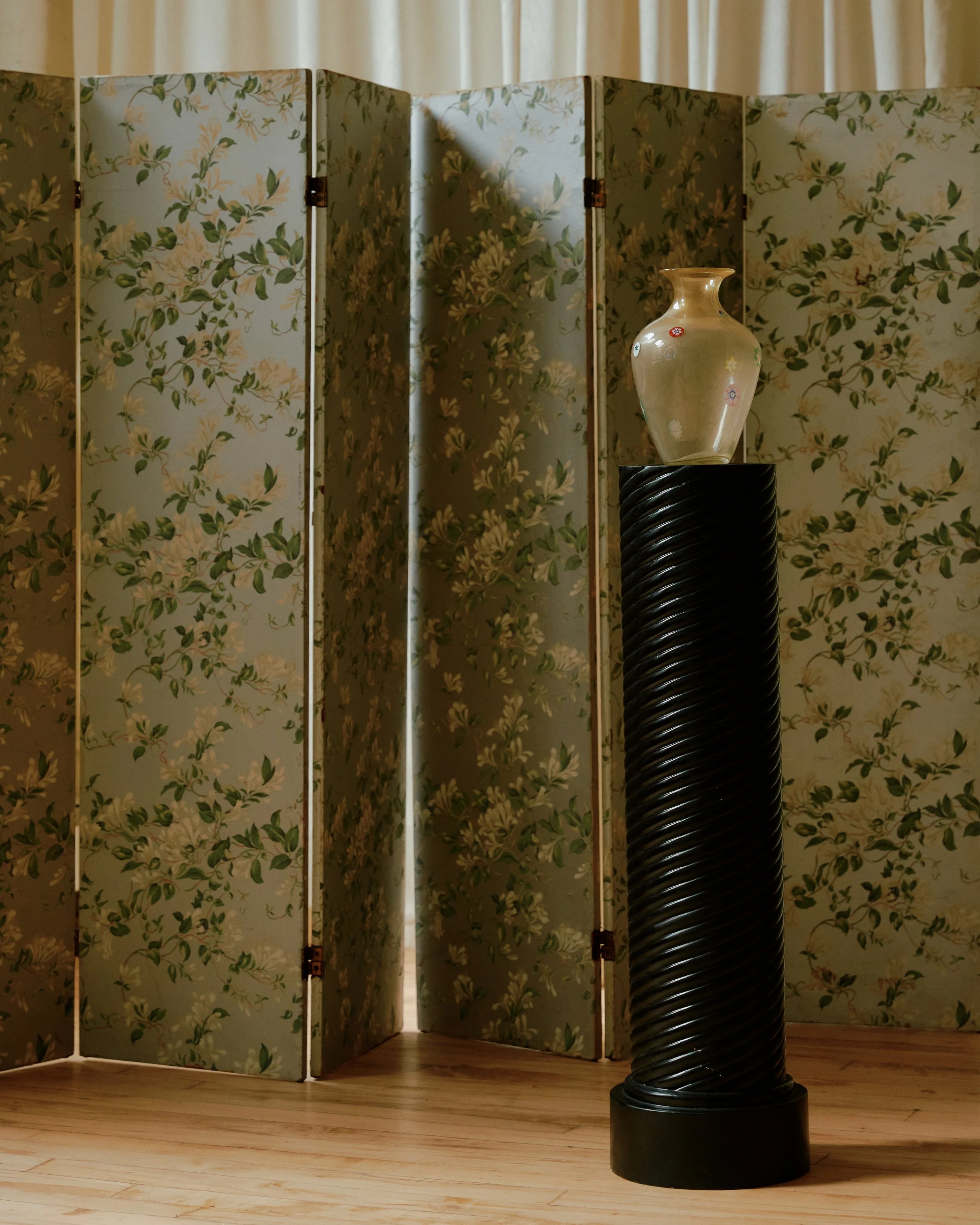
Pair of Chinoiserie Dressing Screens, c. 1930, qood, paper, pair of Black Painted Pedestals, 20th Century, painted resin. Photography byWilliam Jess Laird. Courtesy of Jacqueline Sullivan Gallery.
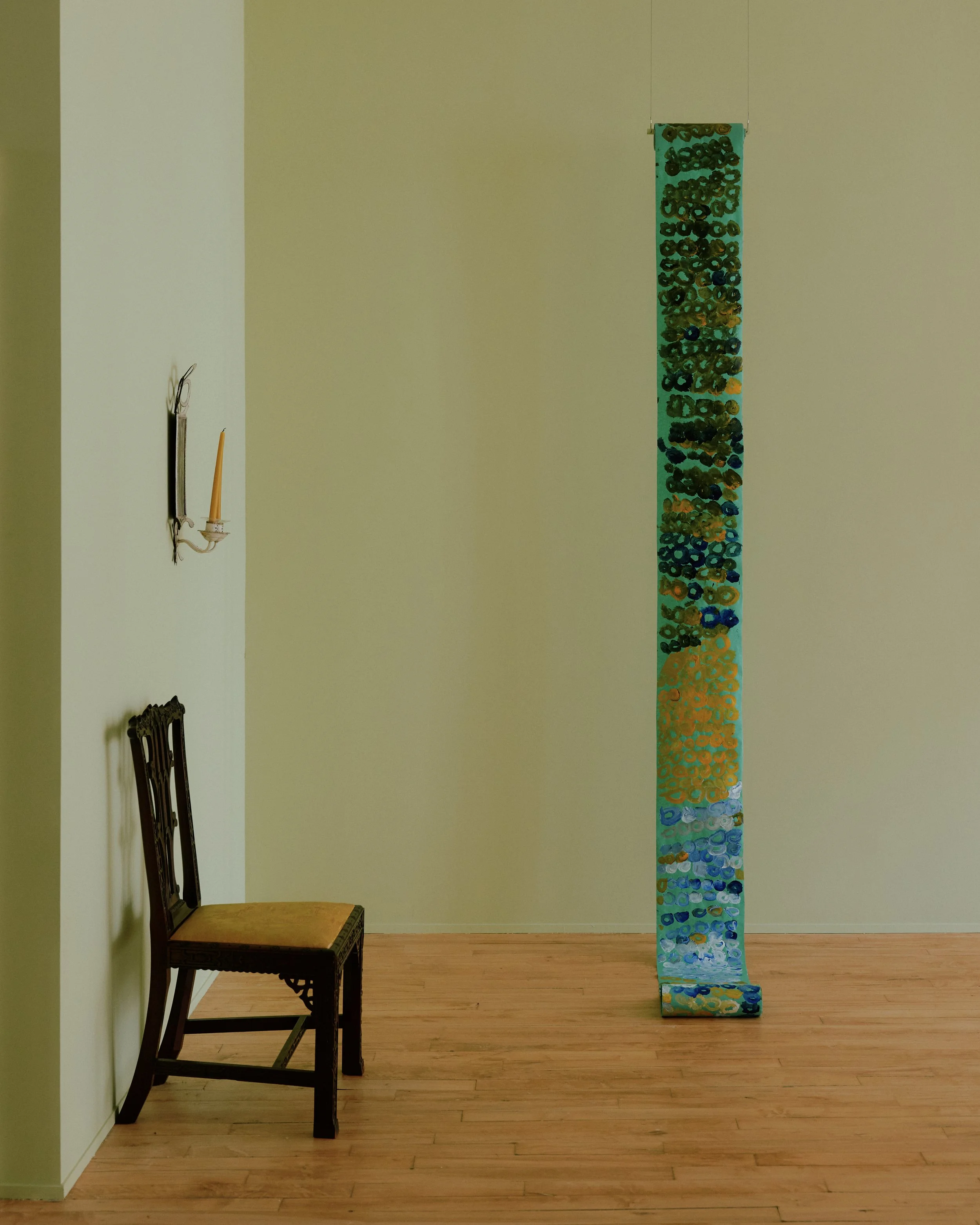
George III Style Chair, c. 1900, mahogany, fabric, pair of French Candle Sconces, 20th Century, metal, mirror, electrical component amd Barry Regan Untitled, No date Acrylic on paper. Photography byWilliam Jess Laird. Courtesy of Jacqueline Sullivan Gallery.
A lot of your programming feels considered but not overly polished, like it’s okay for things to be strange or unresolved. Is that something you look for?
I love this take! I don’t deliberately or consciously look for a certain tone within our programming, it really does occur naturally. Though I deeply appreciate beauty, I am not very interested in “style”. I don’t find it very imaginative or engaging. I love weird proportions, lots of patina, odd materials, “brown town” furniture, a juicy provenance, nothing too perfect-feeling. Things are meant to be used! Life is messy and unresolved, and that is such a richer well from which to draw inspiration.
What kind of work or thinking excites you right now — across art, design, or beyond?
I love that antiques are being collected and appreciated by a younger generation! Not just from an environmental standpoint, but I think it demonstrates a renewed curiosity about where we’ve come from and how we got here. Life moves fast these days, and it’s wonderful to see people reflecting and taking their time to consider well-made furniture and objects that were made deftly and deliberately.
This interview has been edited and condensed for clarity.
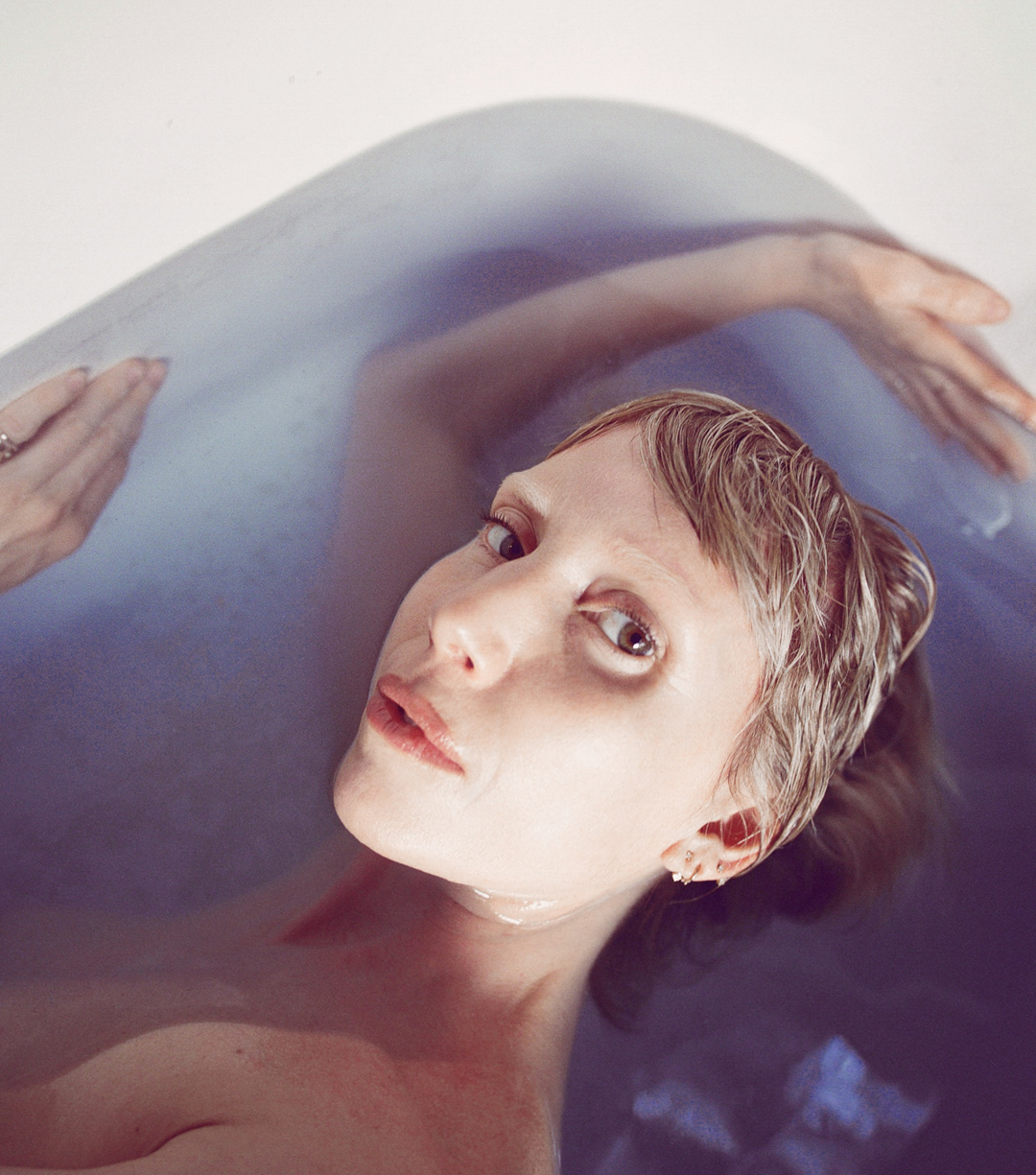
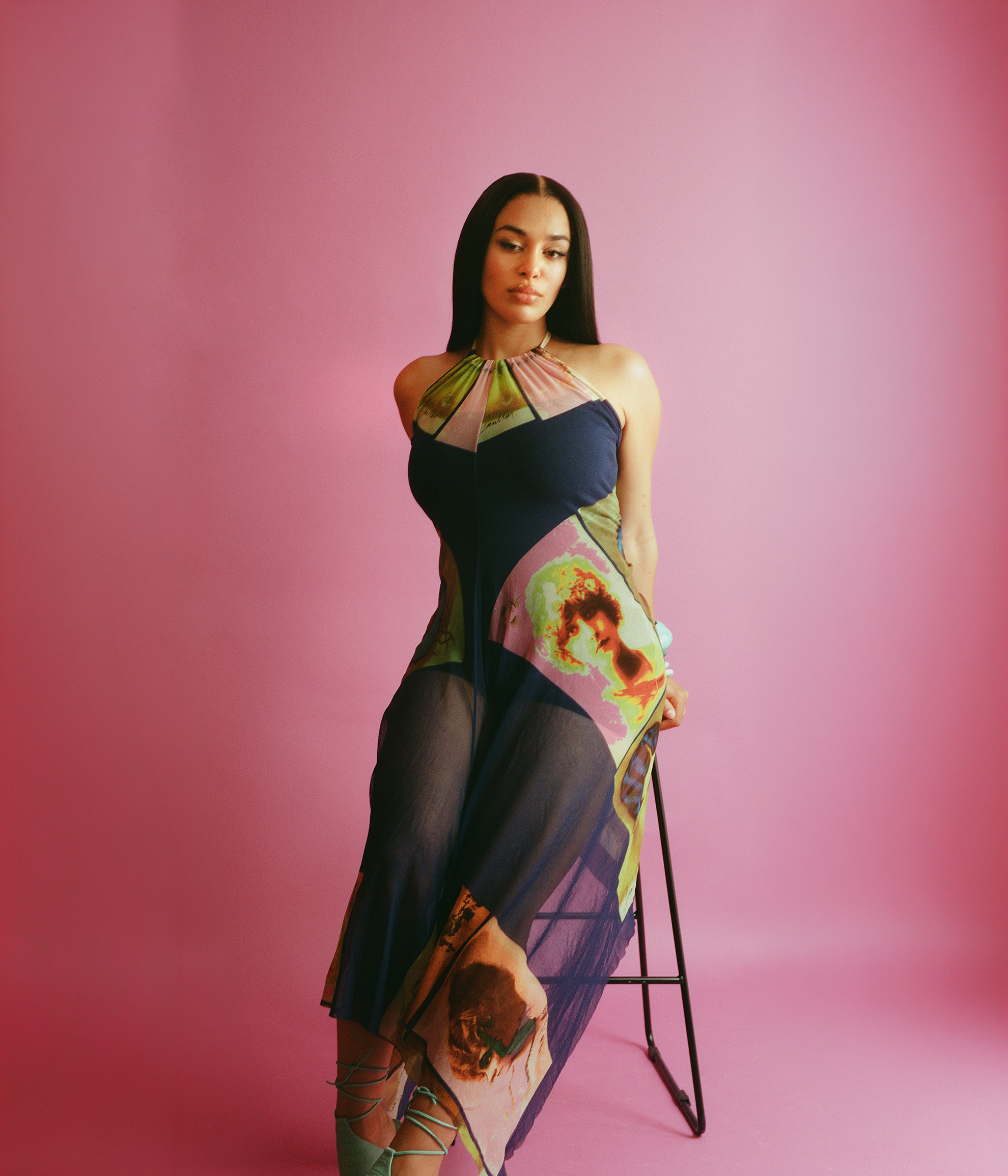
Shaniqwa Jarvis on why photographs are beautiful liars, grief as a portal, and the moment she found her whole practice hiding in a childhood snapshot.