For Those Who Love Wine—Even When They're Not Drinking It
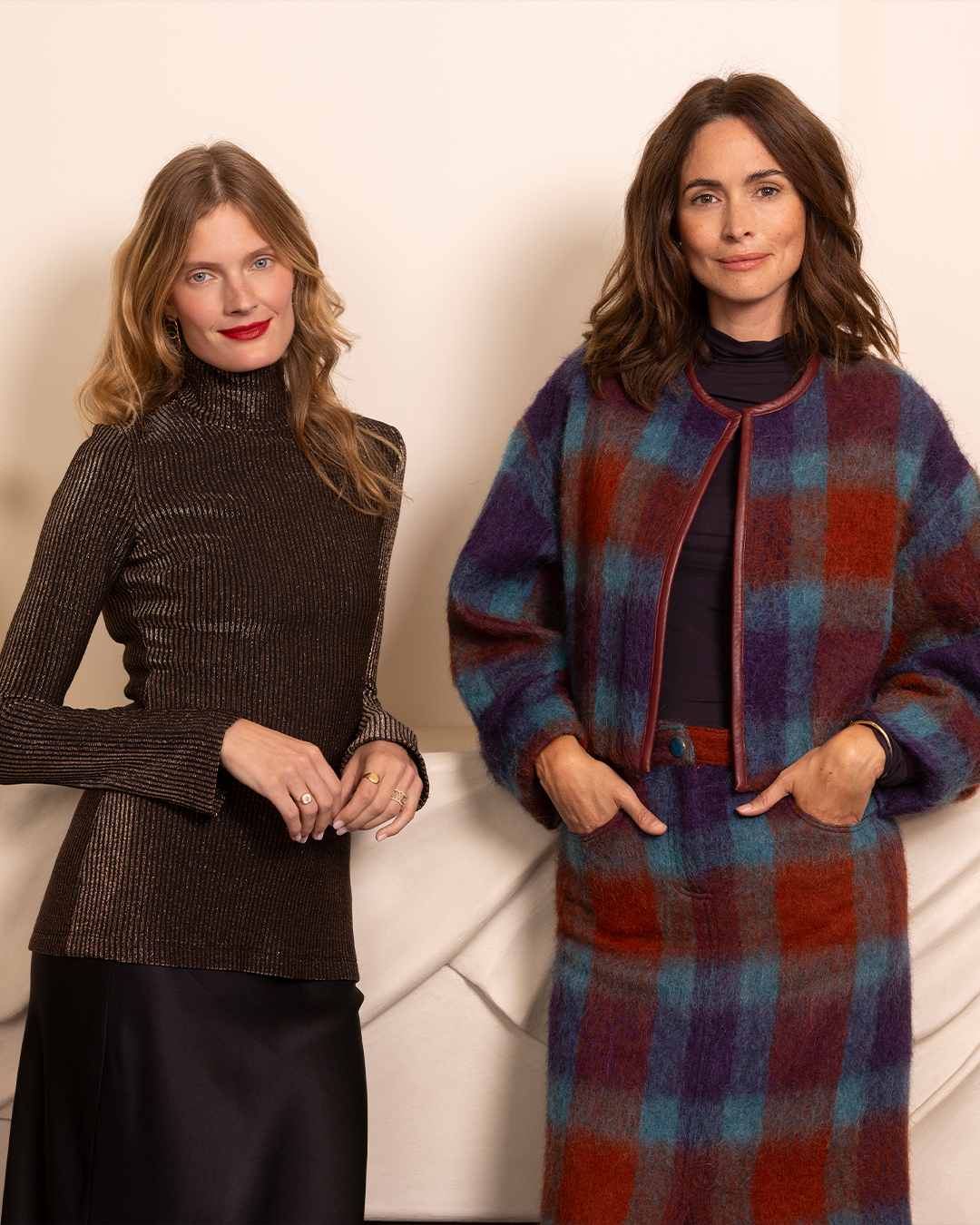
Constance Jablonski and Maggie Frerejean-Taittinger. Courtesy of French Bloom.
Maggie Frerejean-Taittinger and Constance Jablonski
For Those Who Love Wine—Even When They're Not Drinking It
By Bonnie Langedijk
There is a particular awkwardness that descends upon the person who declines a glass of champagne. A flicker of something in the host's eyes, an almost imperceptible shift in the room's attention. The raised glass has always been shorthand for participation, for belonging. To refuse it has felt, somehow, like a small act of separation.
And yet something is shifting—not towards abstinence, but towards a recalibration of when and why and how much. What the wellness industry often fails to grasp is that health pursued in isolation misses something essential. We are social creatures. We want to clink glasses.
French Bloom, the luxury non-alcoholic sparkling wine founded in 2021 by Maggie Frerejean-Taittinger and Constance Jablonski, has made not drinking feel like an upgrade rather than a compromise. A former Michelin Guide executive and an international model, the pair built the brand from a shared frustration. Maggie, pregnant with twins, found herself at the world's finest tables with nothing to drink but water. Constance, navigating the relentless demands of fashion, had learned that hangovers were a luxury she couldn't afford. At every event, the same binary: champagne or water. As if celebration and sobriety were mutually exclusive.
Now available in twenty-eight countries, backed by LVMH, and recently named the official non-alcoholic sparkling wine of Formula 1 and Airfrance, French Bloom has become the drink of models between shows, executives before meetings, athletes in training. The bottle, notably, is always the first to empty.
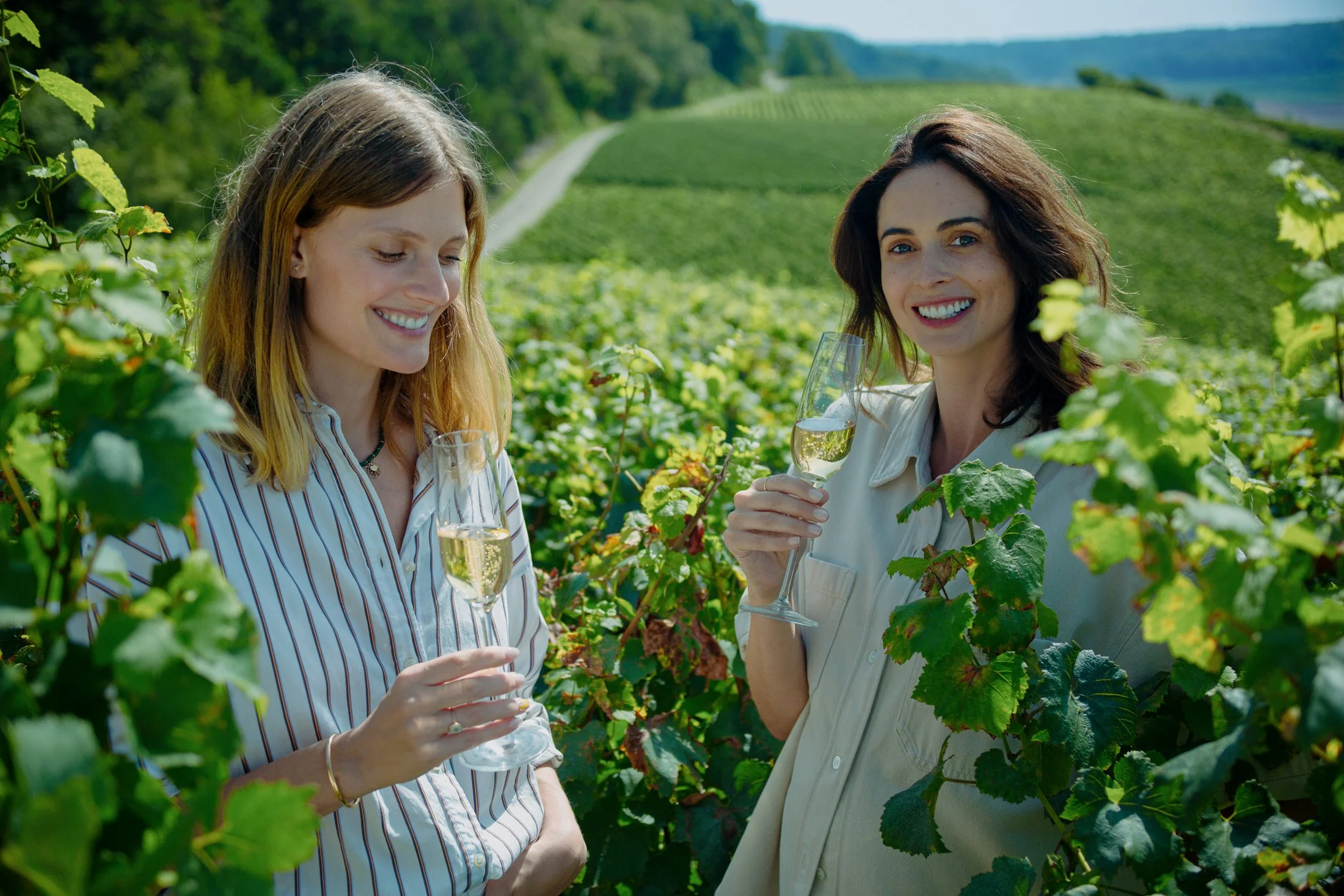
Constance Jablonski and Maggie Frerejean-Taittinger. Courtesy of French Bloom.
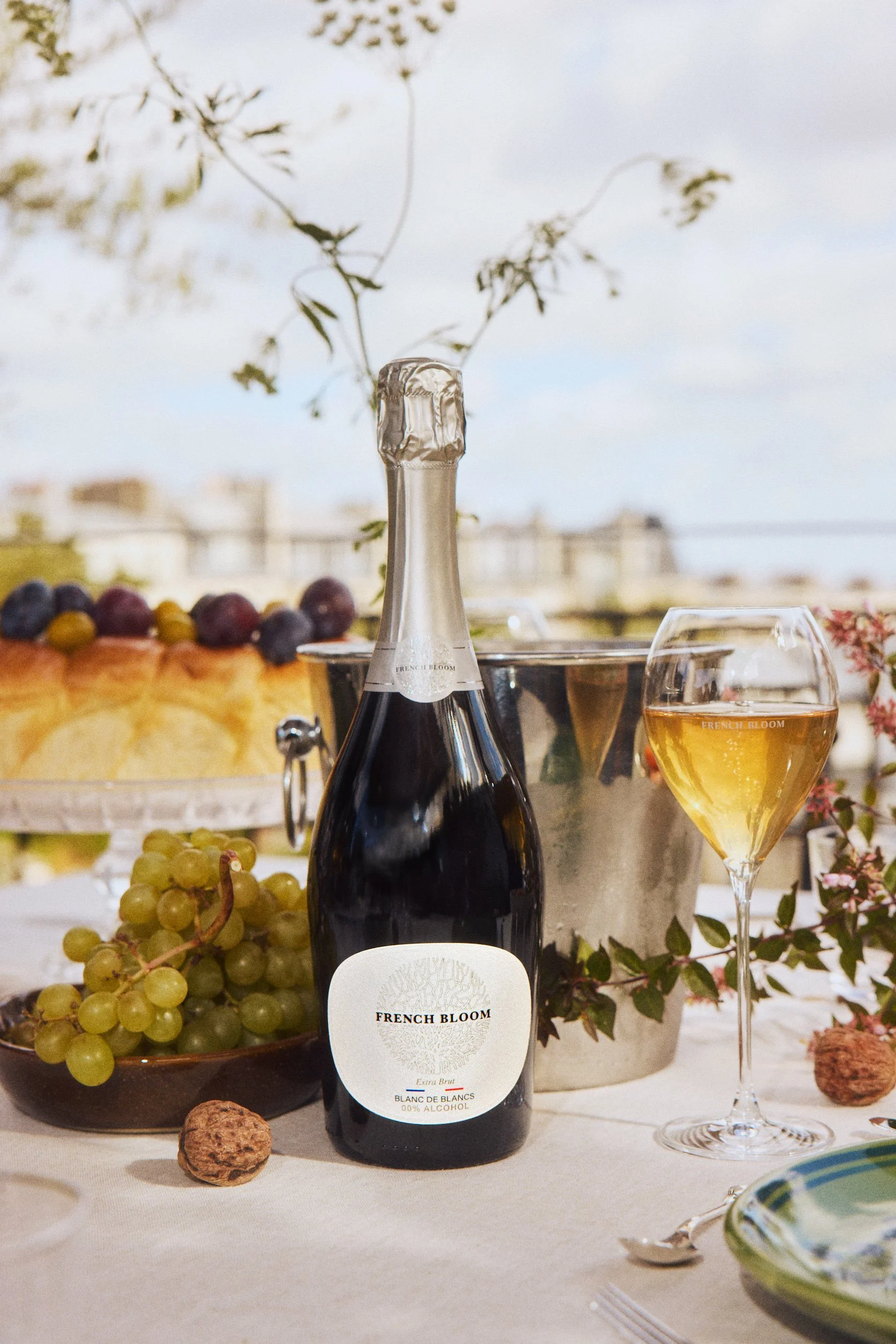
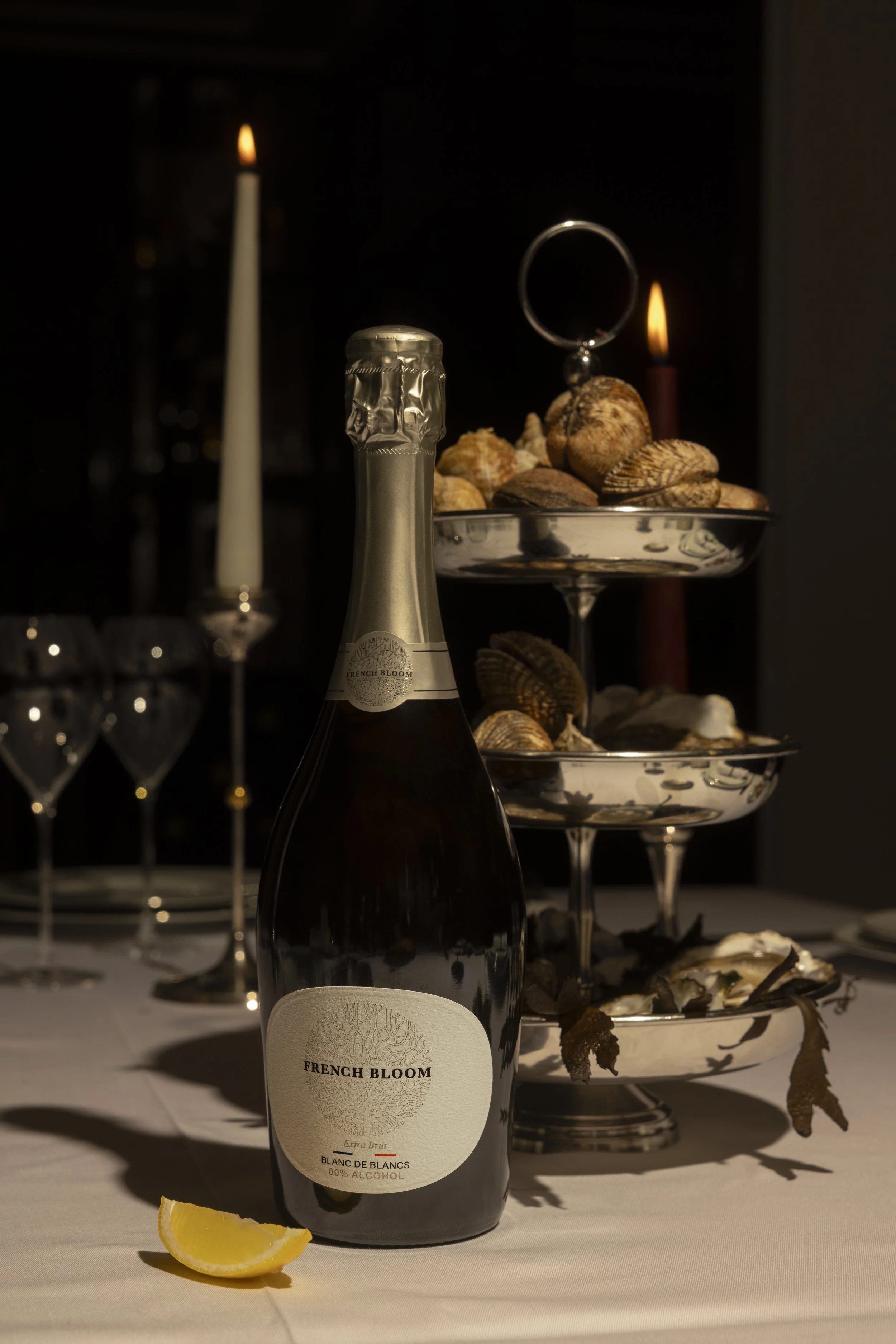
French Bloom’s Blanc de Blancs. Courtesy of French Bloom.
Bonnie: There's such breadth in the alcohol sector—something for everyone. Yet within non-alcoholic, there's still a notable absence of luxury. French Bloom has clearly stepped into that space. What was your approach to building the brand?
Maggie: First and foremost, we focused on what was in the bottle. When we weren't drinking, we wanted something that wasn't an afterthought—something at the same level as the person across from us with a flute of champagne. It couldn't be subpar, couldn't be an alternative. We were part of creating a super premium category of non-alcoholic sparkling wines. When you create a category, you must build desirability. We wanted something you could feel proud to have on your table, something you could bring to a dinner party. We wanted to create a "better than"—a plus plus.
You've stayed quite close to the elements of traditional sparkling wine.
Maggie: We could have gone in a different direction, but consumers are often looking for a direct substitute for their favourite alcoholic beverage. When I was pregnant, I was drinking non-alcoholic beer, but I'm not a beer drinker.
“We realized QUICKLY that if you simply remove alcohol from a wine made to have alcohol, you get a disappointing result. Dealcoholization strips away the backbone. Our aha moment was: what if we rebuild the entire winemaking process, always knowing we're going to dealcoholize?”
Could you walk me through the process?
Maggie: We began dealcoholizing wines from throughout France—Burgundy, Champagne, the Loire, Bordeaux. We realized quickly that if you simply remove alcohol from a wine made to have alcohol, you get a disappointing result. Dealcoholization strips away the backbone. Our aha moment was: what if we rebuild the entire winemaking process, always knowing we're going to dealcoholize? We went south to Limoux in Languedoc, the best terroir for complex non-alcoholic sparkling wines. We do an extra early harvest, age in oak barrels, essentially making base wines that are extremely exaggerated, textured, with the body to withstand dealcoholization. When you dealcoholize, you lose about 60% of the aromas. You have to start with something almost undrinkable, so that after dealcoholization you have French Bloom—and you don't need to add sugar to cover disappointing results.
How did traditional winemakers respond?
Constance: Very resistant at the beginning. The bad reaction came more from the wine industry than the people buying the wine—we had amazing results from our first pop-up at La Grande Épicerie in October 2021. We couldn't believe how many bottles we sold. The hard part was convincing those operating in the world of wine. It's difficult to break into a world so anchored in tradition.
Maggie: Wine is a religion, a conservative one, especially in France. You're going to be denigrated when you disrupt something traditional. Certain wine regions wouldn't even consider it. That's another reason we chose Limoux. They're extremely open-minded, thought of as the heart of the natural wine movement. Young pioneers doing funky things. Making non-alcoholic wine doesn't seem as crazy there. About 40% of grapes in that region are organic compared to 3-4% in Champagne. We wanted French Bloom to be as clean as possible.
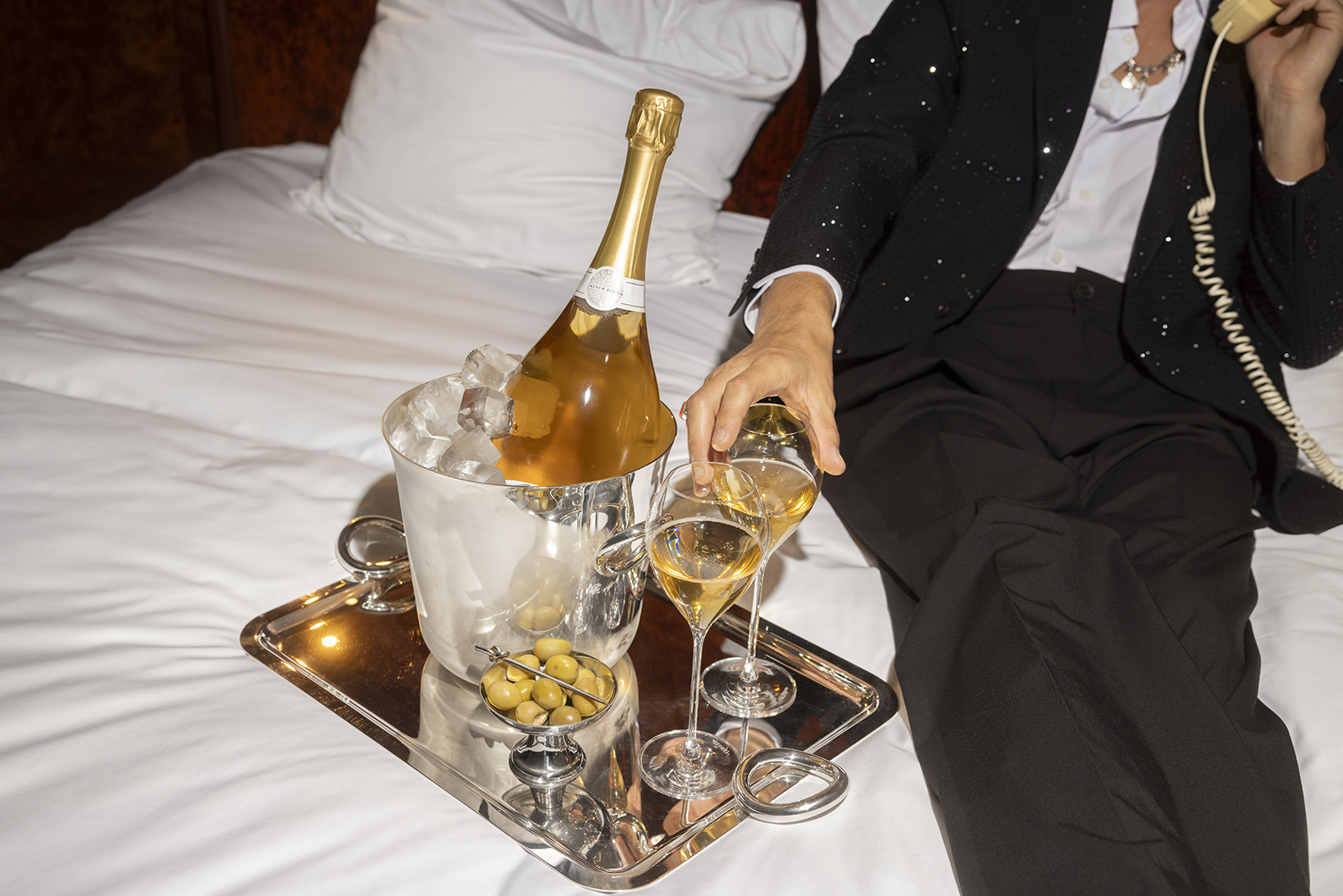
Courtesy of French Bloom.
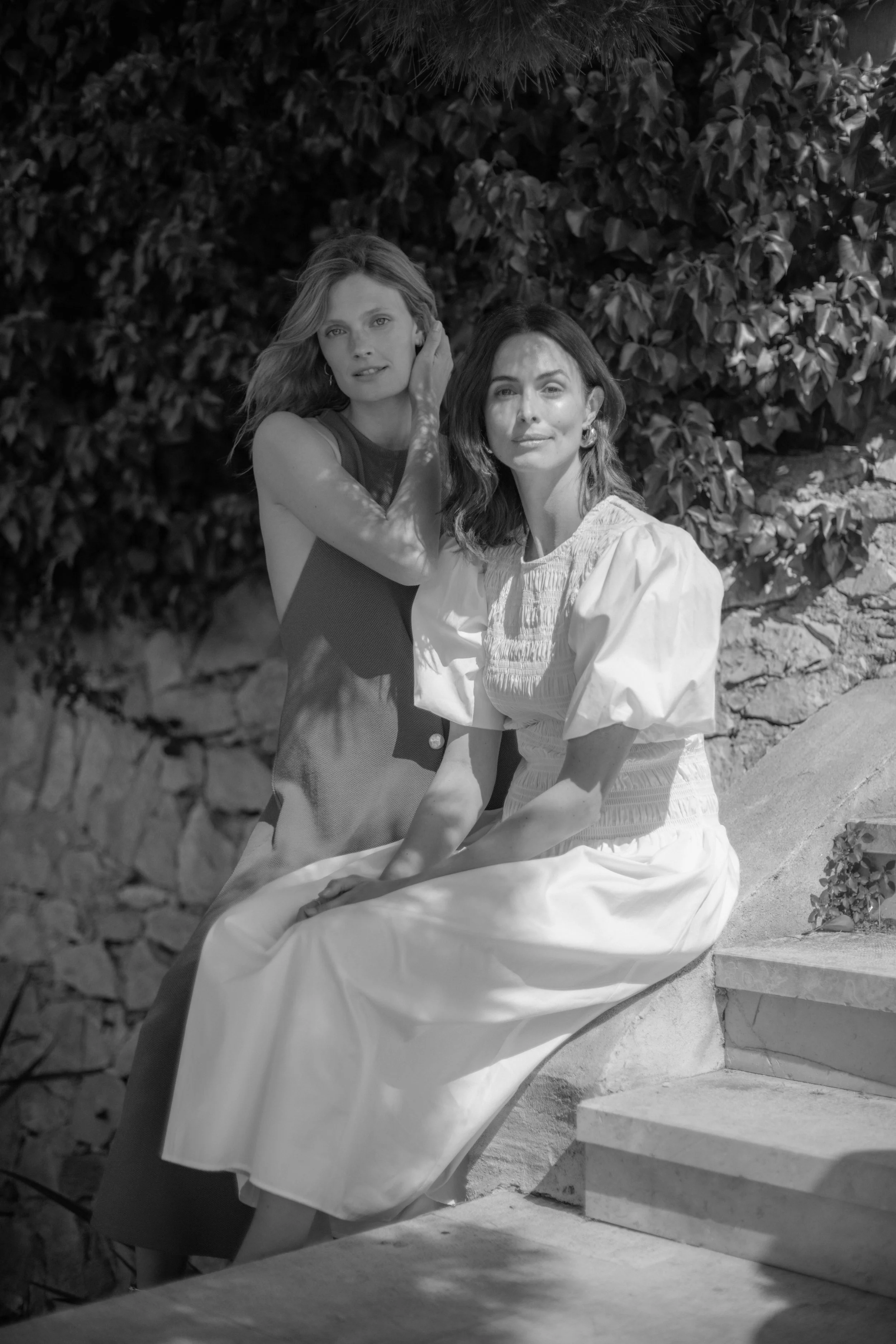
Constance Jablonski and Maggie Frerejean-Taittinger. Courtesy of French Bloom.
There's a real gap in how non-alcoholic beverages fit into the culinary world—something that genuinely elevates a meal. Is that something you're exploring?
Maggie: Absolutely. Some champagnes are drinks of celebration; others can be enjoyed as wine. French Bloom offers both. Our more gastronomic wines—our Extra Brut and La Cuvée Vintage—are thought through in terms of pairing. Our Extra Brut has extraordinary minerality and beautiful acidity, zero sugar, one calorie per glass. It's a perfect expression of Limoux. Our Blanc and Rosé can be the aperitif or follow you through dessert. We work with over 500 Michelin-starred restaurants worldwide. They've identified a real need for non-alcoholic wines that can take you through a meal. The sommelier of Hôtel de Crillon told us that at lunchtime, over half his diners opt for non-alcoholic drinks, and one in five in the evening. People are drinking higher quality and a little less. To maintain profitability, restaurants need products that can accompany the meal.
I see this shift at fashion events too—staying late and drinking used to be the norm. Now, many people prefer not to, yet the alternatives remain limited.
Constance: This trend really started with Goop. Gwyneth was the first to say being healthy was cool. Then COVID happened, we all drank too much, and came out realizing health is the new wealth. There's a real consciousness of wellness now, especially in Europe. Wine is so central to culture in France and Italy—it's how you enjoy a meal, how you connect. The importance lies in finding new ways to preserve that.
Maggie: Exactly. At French dinner parties, you're sharing the same meal and the same bottle at the same moment. Non-alcoholic beers or cocktails are very individual. The beauty of wine is this collective experience.
Constance: It's meant to be shared. And since we're talking about wellness—yes, it's better for the body, but with French Bloom we wanted to focus on conviviality. The wellness conversation often turns to taking care of ourselves. But the part often missed is the importance of being together, of connection. People are less sociable nowadays, while relationships are probably the most important pillar of wellness. French Bloom is about bringing a diverse group of people together around the same table.
Wellness and hedonism are often presented as opposites, but they don’t need to be. Your events—London Fashion Week, Paris—prove you can build community around a drink without alcohol.
Maggie: When we first launched in London, we did an event—lots of people, socialising, lights down, music. We came back to the hotel and I messaged Constance because there was a placebo effect. I felt something. I was afraid and wondered: is there alcohol in the product?
Constance: I remember! We started thinking: Did we dealcoholize it well enough?
Maggie: In the end, it's connecting with others that brings you up, not alcohol. That said, we're not anti-alcohol. Most of our consumers are flexi-drinkers, including ourselves. We just drink less but better. We're in phases of our lives where we want to feel our best and perform. Consuming alcohol every night isn't part of the equation.
I wanted to ask about your partnership with Formula 1—a world synonymous with champagne showers. Yet the sport is evolving, with a growing female fan base. What does a ten-year partnership with a non-alcoholic brand signal?
Constance: The new F1 fan base includes so many women. One in four fans is a woman now, due to the series and the movie. Sephora even did a makeup collection with F1 colours. It was an obvious choice for them and us. We have similar communities, and the driving component makes messaging around alcohol more complicated.
Maggie: We could never have imagined five years ago that F1 would want a non-alcoholic partner. Their fan base has changed, and consumption of alcohol has decreased. Millennials, Gen Z, women—they're driving growth in the non-alcoholic space and they're our core consumers. We share values with F1: craftsmanship, innovation, performance. Many of our customers train like professional athletes. We're constantly travelling, managing jet lag, wanting to feel our best—alcohol doesn’t always fit into that lifestyle, at least during the week.
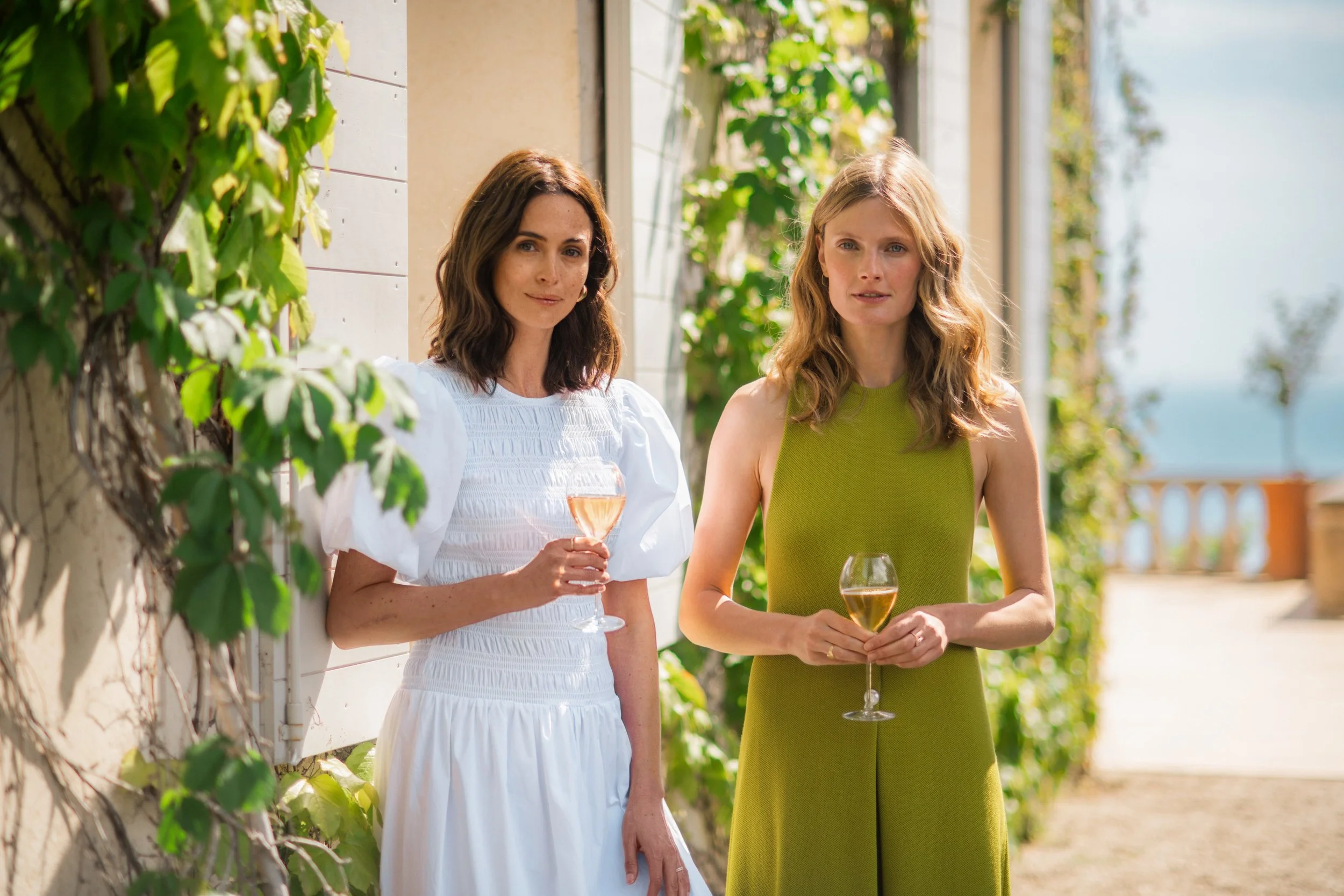
Maggie Frerejean-Taittinger and Constance Jablonski. Courtesy of French Bloom.
Courtesy of French Bloom.
Are cultural partnerships central to your longer-term strategy? I imagine fashion, art, design.
Constance: Absolutely. We partner with beautiful fashion brands, we're served in some stores for VICs.
Maggie: Many luxury boutiques have come to us—LVMH brands, jewellery, accessories, fashion. We want to be where culture happens. We were the first non-alcoholic sparkling wine sold on-site at Roland-Garros. We want to be there for celebrations that count. Our ambition is to help influence the event space to always consider all guests, not just the majority. There's also a long way to go in travel. Ten years ago on a plane, there was nothing to do but drink wine. Now you connect online, work, go straight to meetings. We've just been brought onto Air France as their first non-alcoholic product.
Constance: Sports speaks to us because of the wellness aspect. Any cultural event makes sense because we're changing culture. It's no longer okay not to offer a premium option for people who don't want to drink.
So much of it still feels like an afterthought—champagne or water. It's remarkable no one addressed that gap sooner.
Constance: Every time I bring French Bloom somewhere, at the beginning maybe two girls are drinking it. People get curious, ask questions, and when you tell them it doesn't have alcohol, they say: "Oh great, I don't want to drink either." There's this shame around not wanting to drink, but as soon as one person says they're okay not to, everyone follows. The French Bloom bottle is always the first one empty.
It’s true, and when there’s no great alternative on offer, most will gravitate towards what they know. You've achieved so much in four years. What's next?
Maggie: We've acquired our own domain and winery—we're in full construction and excited to open in September 2026. It will allow us to show how we make our wines and push the needle even further. We feel we're just at the beginning of the trajectory when it comes to quality.
Constance: I can imagine creating a spa experience there, taking the wellness elements to another level. But honestly, what we'd be most proud of is staying the leader as the category grows. We hope more brands launch. Competition is a good thing. We want to be the reference. If people start calling a non-alcoholic drink “a Bloom” that really means you made it.
This interview has been edited and condensed for clarity.
Shaniqwa Jarvis on why photographs are beautiful liars, grief as a portal, and the moment she found her whole practice hiding in a childhood snapshot.