Fashion's Most Thoughtful Materialist
Courtesy of © ISSEY MIYAKE INC.
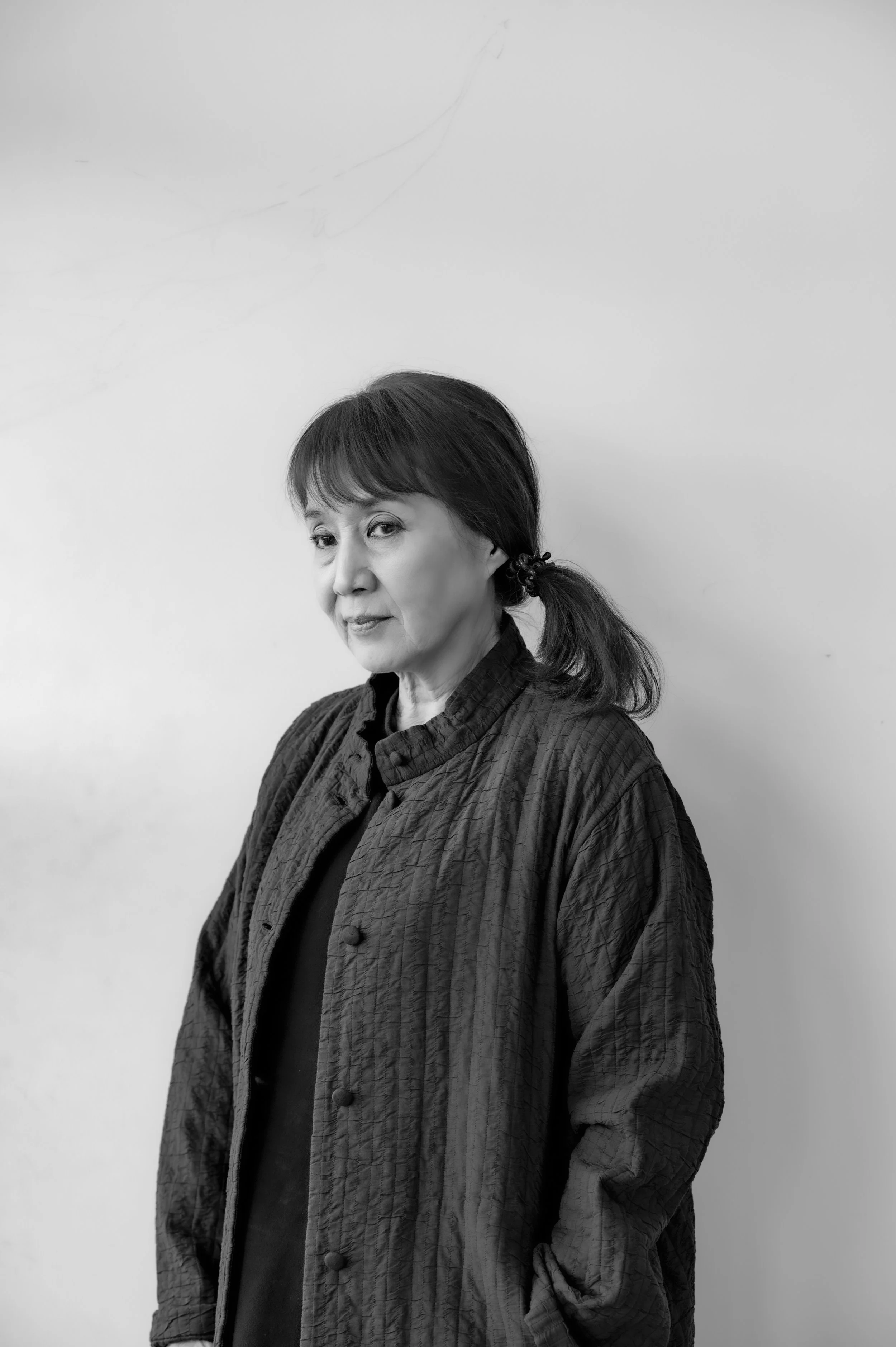
Makiko Minagawa
Fashion's Most Thoughtful Materialist
By Bonnie Langedijk
For three decades, Makiko Minagawa was the creative force behind some of fashion's most innovative textiles, working as textile director under Issey Miyake and helping to define the legendary designer's vision. While Miyake became the face of Japanese fashion innovation globally, Minagawa was the one translating his concepts into revolutionary fabrics that challenged how we think about clothing and the body.
Her influence extended far beyond fabric development. She was instrumental in creating the technical foundation for Miyake's pleating techniques and experimental materials that made his designs possible. When she launched HaaT in 2000 under Issey Miyake Inc., it wasn't just a spin-off but a natural evolution of decades spent pushing textile boundaries.
The brand name itself references the key pillars of Minagawa’s philosophy. “HaaT”, Sanskrit for village market, referencing the diverse nature of her collections, while also playing on "heart" for the emotional quality of textiles and "Haath" Sanskrit for hands in Hindi, celebrating the unity of Japanese and Indian craftsmanship.
Today, HaaT operates across three distinct collections that reflect modern living: "EVERY MONTH" features materials and designs by skilled artisans, "EVERY WEEK" offers high-quality pieces for daily life, and "EVERY DAY" provides versatile natural materials that respond to seasonal changes. It's a system that mirrors how Minagawa thinks about clothing: not as disposable fashion, but as companions for life.
Born into Kyoto's textile lineage, her grandfather hand-brushed dyes onto silk kimonos, Minagawa represents something increasingly rare in fashion: a designer who thinks in generations, not seasons. Her philosophy is deceptively simple but radical. The question isn't whether people will love wearing something, but whether they'll want to wear it time and time again.

Rows of stitches are sewn onto textiles to layer and reinforce them, creating warmth, strength and a rich visual texture by Indian artisan. Courtesy of © ISSEY MIYAKE INC.

Makiko Minagawa at her atelier. Courtesy of © ISSEY MIYAKE INC.
Bonnie: If you had to describe your relationship with fabric in one word, what would it be?
Makiko: Fabric exists as a single, soft surface. When hung, it becomes an integral part of the interior space; when folded, it transforms into clothing. Traditional flat garments, such as kimonos and saris, are especially convenient because they can be easily folded and stored. With this concept in mind, I chose the simple word "FOLDABLE."
Your inspirations come from everyday life—food, nature, the way light moves. Do you document these observations, or is it a more instinctive process?
Makiko: I may not write things down every day, but I find myself thinking about them—even during my sleep. Inspiration comes in vivid yet sometimes fleeting moments, and each one matters.
“Natural fibers alone don’t always match the demands of MODERN life—functionality, movement, climate, weight, and silhouette all come into play.”
Looking back at your earliest experiences in textile development, is there a piece of advice from Issey Miyake that still resonates with you today?
Makiko: His advice was simple: create a textile he had never seen before. He was someone who never rejected the notions of life and functionality, someone who made me question what the near future could hold. That is how I remember him.
Many of your textiles use a combination of natural and synthetic fibers. How do you decide which materials to merge, and how does this impact the longevity and feel of the fabric?
Makiko: Natural fibers alone don’t always match the demands of modern life—functionality, movement, climate, weight, and silhouette all come into play. That’s why, when striving for the best textile possible, we consider each of these factors and mix different yarns accordingly.
What do you hope people feel when they wear a HaaT garment—not just in terms of aesthetics, but in the tactile experience?
Makiko: Will people love wearing it? And, more importantly, will they want to wear it for a long time?
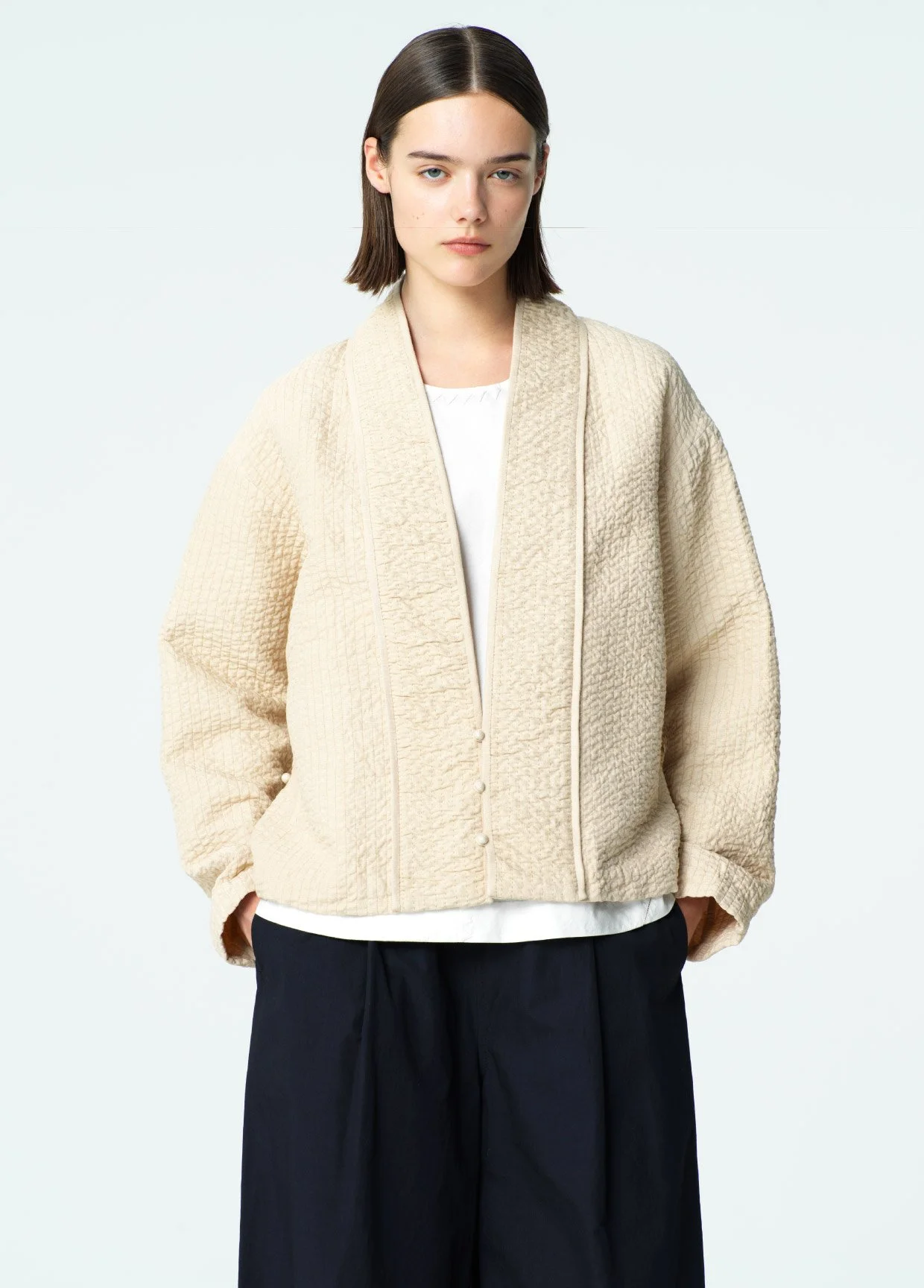
TIMLESS ʻ87 COTTON Kabira jacket. Made in collaboration with a workshop based in Ahmedabad, India, “HaaTH” presented clothing that was both luxurious and comfortable, made through a process of clothes-making that utilized local natural materials and delicate traditional techniques. Courtesy of © ISSEY MIYAKE INC.
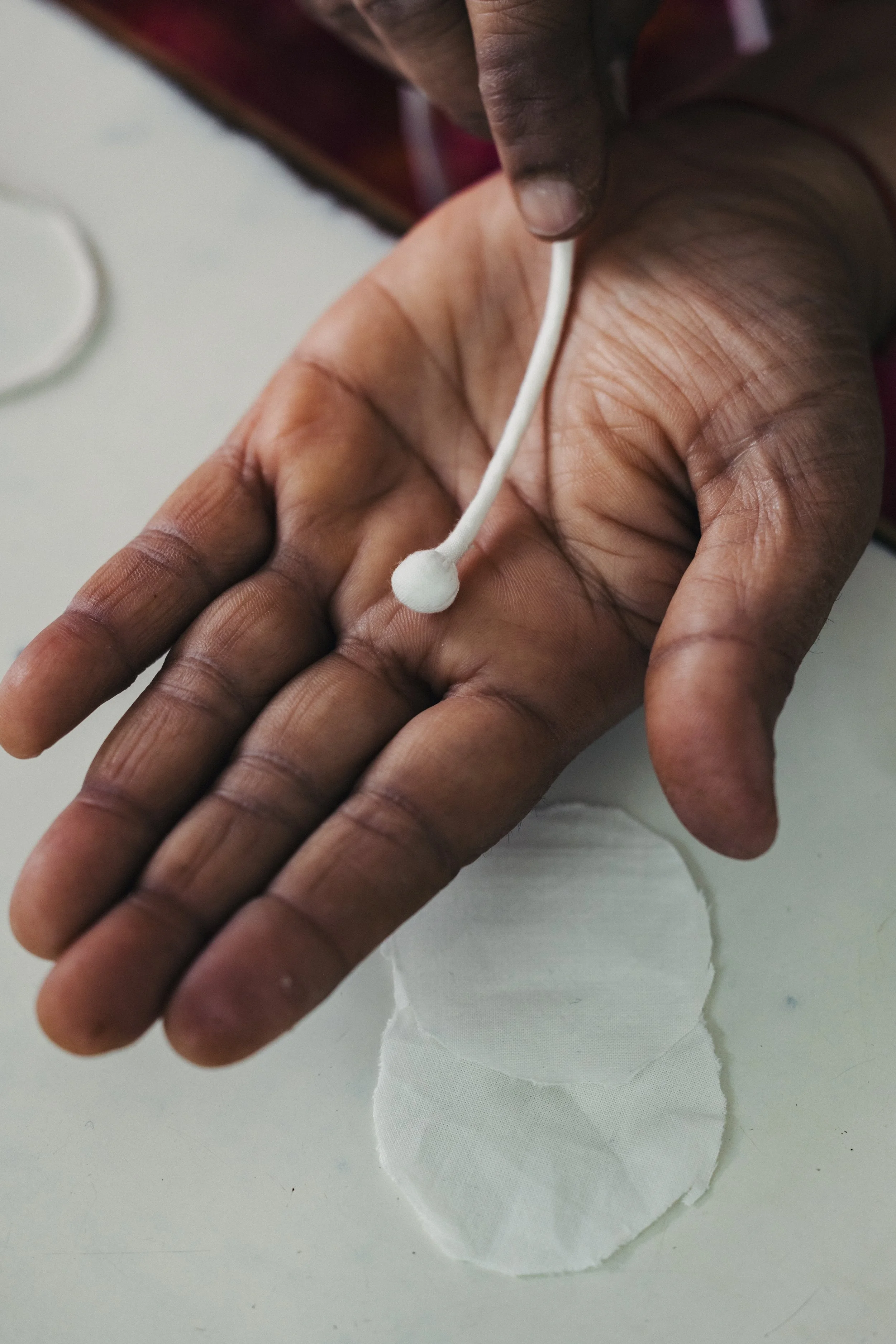
The string used in HaaTH collections are handmade using leftover fabric in order to reduce waste. Courtesy of © ISSEY MIYAKE INC.
Your work often employs unique finishing techniques—milling and hand-cut detailing. What are some of the most overlooked or misunderstood aspects of these processes?
Makiko: One often-overlooked aspect is quality consistency. Hand-finished materials each have unique characteristics, making them impossible to replicate exactly. This individuality is both their charm and their limitation, offering a distinct depth unlike anything else.
I’ve never thought about it like that before. The relationship between textile structure and movement seems central to your designs. How do you test and refine this element before a piece goes into production?
Makiko: Wearing and washing a fabric is essential for reassessment in the context of daily life. Ultimately, the key is whether it comes together in a way that feels right for the present moment—bringing it closer to the ideal design.
You’ve worked closely with artisans in India and Japan. In a time when speed, efficiency, and newness dominate fashion, how do you ensure these crafts remain viable?
Makiko: Fashion is never just about fashion.
What are your thoughts on the current state of the fashion industry? And what do you think is missing from the conversation?
Makiko: The fashion industry often talks about sustainability, but not many brands invest in deep textile research. In Japan, tradition has evolved through centuries of kimono culture, with countless techniques passed down through generations. We embrace these techniques with a fresh perspective, integrating them into clothing in new ways. With a focus on natural materials, we aim to reimagine tradition and weave it into modern styles and lifestyles—creating garments that are both meaningful and enjoyable to wear. India, too, has cultivated an unparalleled craftsmanship over centuries. The joy of learning from these time-honored methods and incorporating elements of Indian garment-making into contemporary fashion is a key part of our approach.
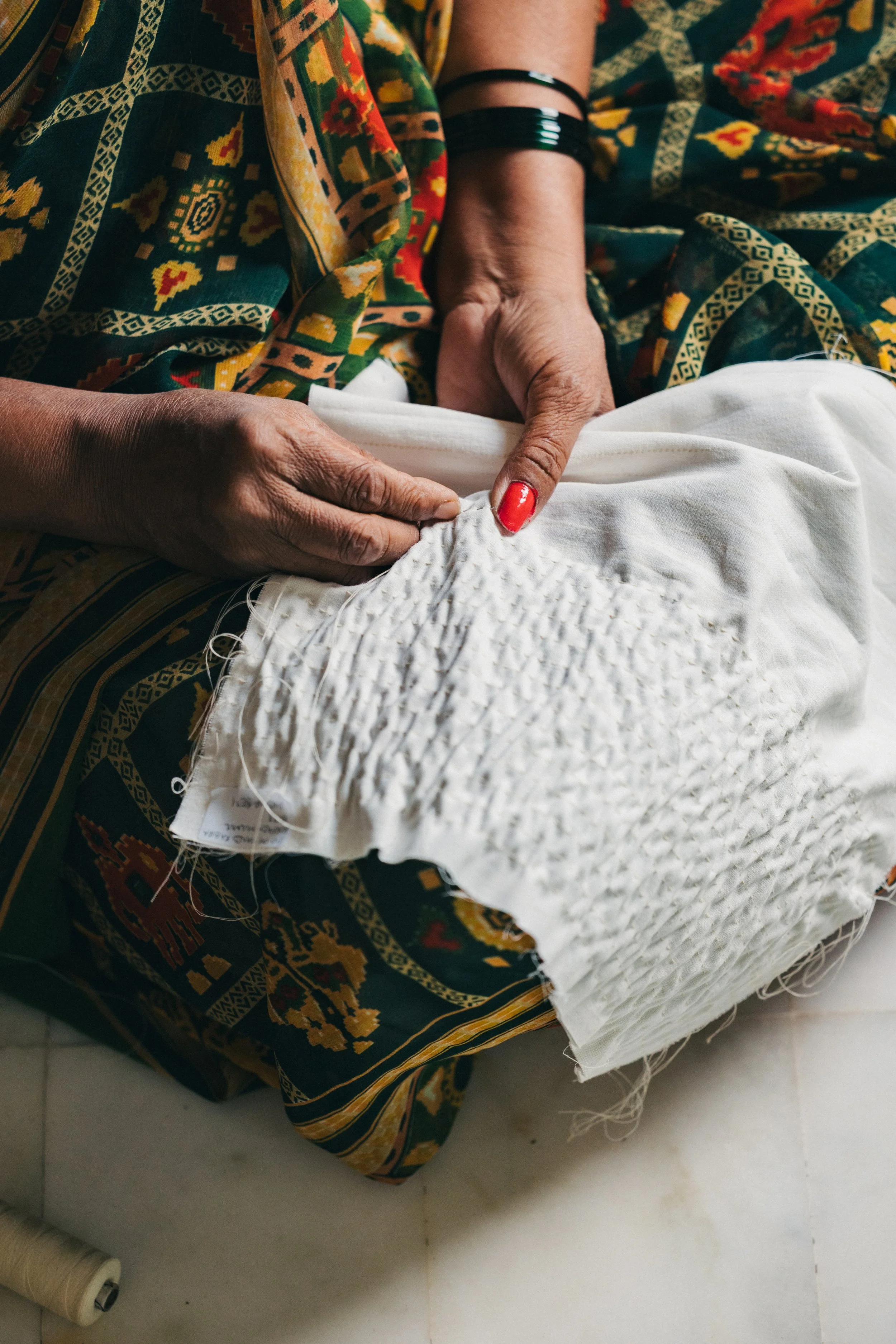
For more than two decades, HaaT has reimagined new forms of creative expression through the layers of Indiaʼs ancient textile heritage ‒ including Kabira. Courtesy of © ISSEY MIYAKE INC.
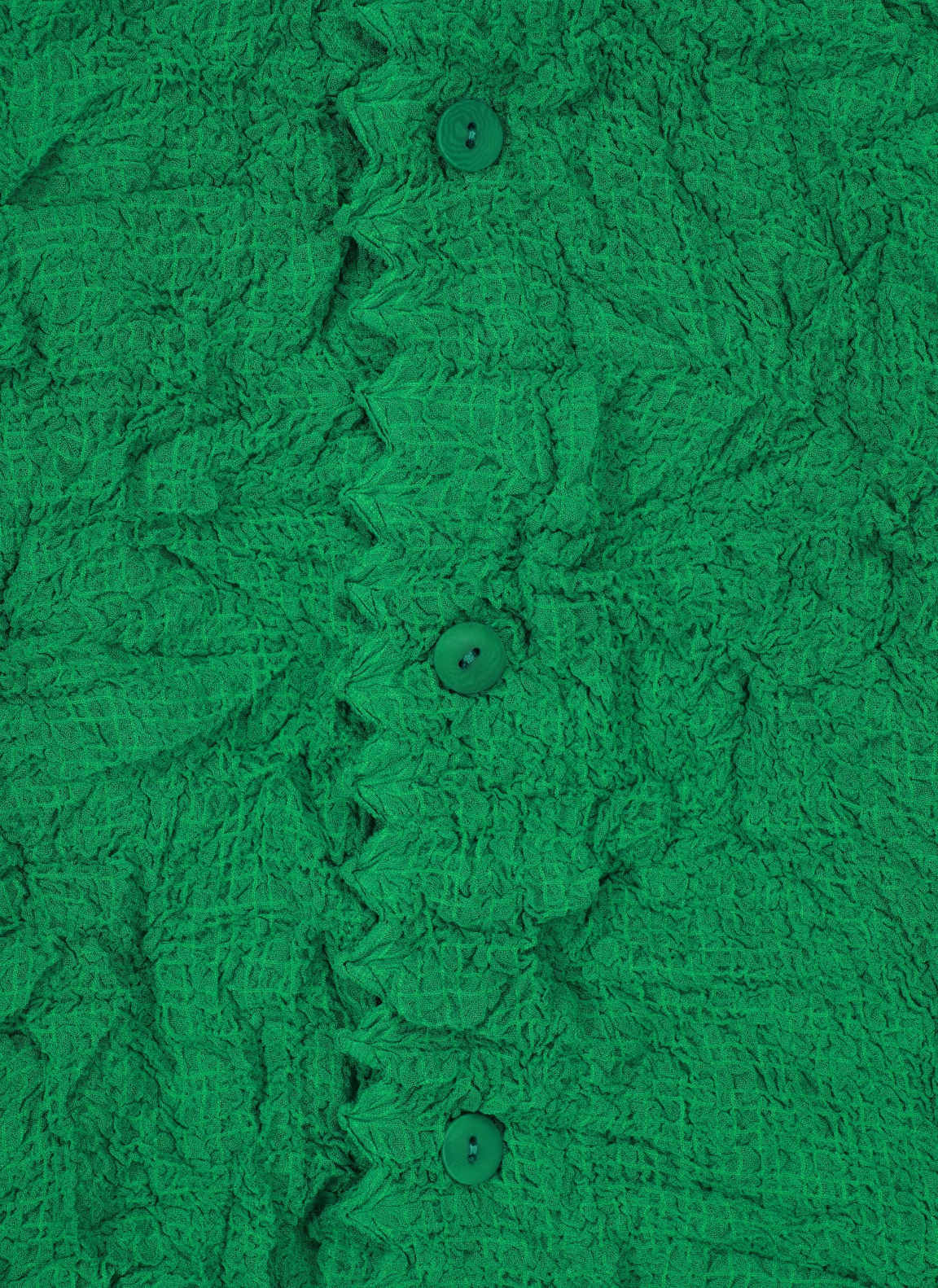
This cardigan is made from seersucker material with a bumpy texture. It is made in Arimatsu, a traditional tie-dyeing production area. The fabric is partially tied by hand using the Kumo Shibori process, creating three-dimensional protrusions which are incorporated into the hem and collar design. Courtesy of © ISSEY MIYAKE INC.
As someone who has worked with textiles for decades, have you seen a shift in how people interact with fabric—both in fashion production and as consumers?
Makiko: Having worked as a textile director under the late Issey Miyake since 1971, we launched HaaT in 2000, a brand that brings together Japanese and Indian traditions within a modern design framework. As we expanded as a company after the 90s, we began producing more fabric for our own pleated textiles, leading to fewer collaborations with the natural fiber weaving mills we had worked with since the beginning. Many of these mills shifted toward synthetic materials, but we remained committed to supporting them by continuing to use natural fibers. Collaboration and communication across different perspectives are essential. Without meaningful dialogue with the people behind the craft—their skills, emotions, and aspirations—true innovation in making cannot take shape.
I don’t think about only “fashion”. Sustainability is important, but within realistic limits. People's awareness of environmental impact is still evolving. That's why we focus on a carefully curated selection of items, using organic cotton, low-impact polyester, and regenerated cellulose fibers like cupro. In production, we collaborate with experienced and trusted artisans, as well as long-established workshops. The true joy of our work lies in the back-and-forth exchange—"What kind of material shall we create?"—a dialogue that sparks the birth of new textiles and designs.
What is one textile experiment you’ve always wanted to pursue but haven’t yet?
Makiko: A textile that could become food—now that’s an interesting idea!
This interview has been edited and condensed for clarity.



Shaniqwa Jarvis on why photographs are beautiful liars, grief as a portal, and the moment she found her whole practice hiding in a childhood snapshot.