The Invisible Art of Mastery
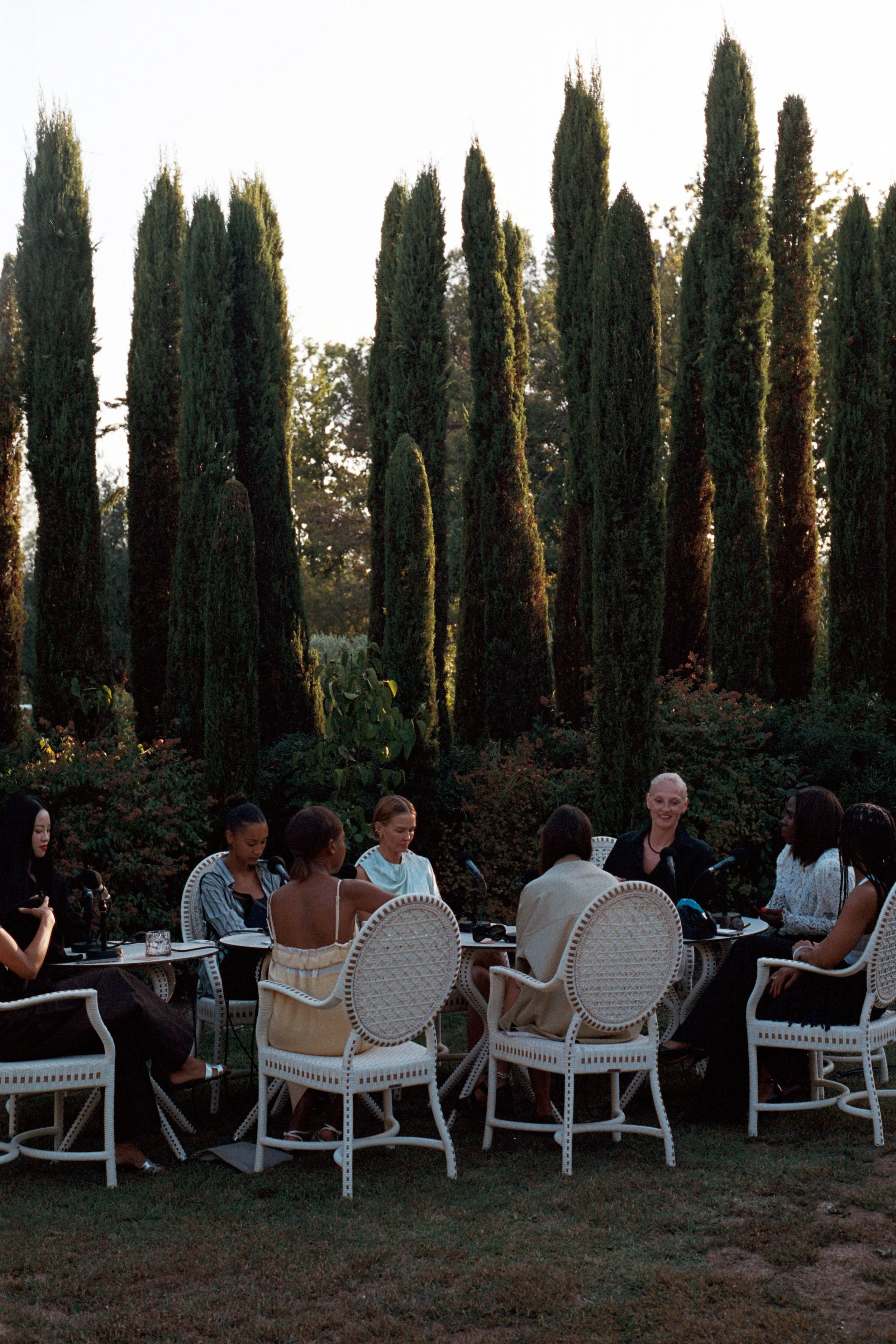
A modern take on the 17th century salon, hosted by Funmi Fetto and Bonnie Langedijk in partnership with CHANEL. Photography by Adrianna Glaviano. Courtesy of HURS.
The Invisible Art of Mastery
When slow craft meets fast culture — A conversation on authorship, value, and the unseen work that shapes what we love. In partnership with CHANEL.
By HURS team
From 14–16 September, HURS and CHANEL gathered ten women in the South of France to explore the world behind the bottle of CHANEL N°5. We stepped into the fields, laboratories, and studios that keep this century-old fragrance alive.
To close the trip, we hosted a modern take on the 17th-century salon — an intimate round-table conversation on The Invisible Art of Mastery. Co-led by Funmi Fetto, author, editor, and founder of GOODIFFERENT, and Bonnie Langedijk, founder of HURS, the salon brought together directors, artists, chefs, and authors to discuss what happens when the slow craft of mastery collides with the speed of culture.
Listen to the full conversation with Marjon Carlos, Fong Min Liao, Imogen Kwok, Fenn O’Meally, Charlene Prempeh, Juliana Salazar, and Lara Worthington below.
The Transcript
Speaker 1: In 1921, Gabrielle Chanel asked for a perfume that didn't smell like a rose or a lily, but smelled like a woman. And she was looking for something that was modern, that was abstract and unlike anything that at that moment existed on the market. That brief brought her CHANEL N°5, and it also brought her to Grasse where perfume making was seen as a discipline.
It's fair to say that a century later, Chanel fragrance is still a cultural benchmark, but I don't think it's necessarily the fandom around the scent, even though that's definitely part of its success. It's also all of this expertise that's put into this perfume, but that’s something that’s hard to translate through a screen.
Discussion on Mastery and Visibility
Speaker 2: One of the things that [my co-host] and I had been talking about is this idea of mastery and how mastery quite often, not always, but quite often is created in silence. And I guess in many ways, it's created behind closed doors, but it's also happening in a time when visibility equals value, rightly or wrongly.
We are really thinking about, how do you uphold the idea that building cultural value is something that often happens behind the scenes? How do you build this idea that it is okay for cultural value to not necessarily always be visible? We find that this idea around influence, it's usually so visible, it's tracked, you have metrics around it and so on. Even humans are behaving like brands in terms of strategizing around their brand and how visible they are and so on and so forth.
What happens to work that isn't made to be seen? And if your work is being made and it's not being seen, does that devalue it? Is it of less value? And that's one of the conversations that we were sort of having. You know, how do you define authorship when the creator isn't visible? And is there room for mastery in a culture that prioritizes speed and constant output? We want to have a conversation around a lot of those issues, and I hope you have lots of thoughts on them. [Laugh] I know you have lots of thoughts, so do not be silent. I need you to speak. [Laugh]
I'm going to start with this idea of craft being slow and culture being fast. How can we as individuals, as consumers, as lovers of culture, how do we maintain the integrity of these artisanal processes in a world that is constantly demanding newness and novelty? I've got quite a few questions, but I'm going to start with that. So, who wants to open up the floor with their thoughts?
Speaker 4: I was going to say, I think to an extent we've kind of forgotten about our power. We enable culture going fast in a lot of ways.
Speaker 2: In terms of consumers?
Speaker 4: In terms of consumers, or even thinking in that way of, oh, things have to be fastest because everything else is moving fast around us. And I think we kind of forget the bigger picture sometimes where probably every important movement in history started behind the scenes. And there was always an undercurrent and things happening behind the scenes that propelled it forward. And I think maybe we've lost our agency in that.
Speaker 5: Well, I'm just thinking about industries outside of beauty and like what our approach to food is now, right? We hold immense value for food that's really intricate or that’s organic or like Wagyu beef where the cows have been like, I don't know, having conversations with Plato or something. [Laugh]
I feel like if we can give that much importance to how our food is made, then we can give that kind of importance to how other things in our lives come our way. Like you said, we've got power. It's about shifting the narrative and what we kind of expect and what the benchmarks are for all of the things in our life, not just the things that we eat.
Digital Age and Cultural Value
Speaker 2: How do you feel that that works in the context of the digital age? Because you were talking about how this is something that back in the day was happening behind the scenes and so on. Undoubtedly we are in a different time now. How do you think that we are able to regain the beauty of that in our times right now? And that's for anyone to answer that.
Speaker 4: I was going to say, I think we're seeing the shift already with luxury going back to time being one of our most valuable assets. I think continuing to move in that direction, you start to make other things more important and it is a bigger, wider reframe. So I think taking back their power in that.
Speaker 6: I think it's usually about awareness as well. The circle of friends that you're in, their appreciation for certain things and the conversations that you're having. A lot of the people that I am good friends with, some of them aren't even on social media and have a real dedication to the craft that they're doing. And I think it’s so refreshing to be around that energy. And it's also very inspiring to realize you don't have to attach yourself to constantly sharing and constantly uploading.
What I find so rewarding is being dedicated to the craft and learning and finding myself, building and building and finding new people or new things. And I think that's something that I've really, especially in the last maybe two, three years, really held value to because of being so overwhelmed by social media. I think there's something really interesting about... The mystery is really beautiful sometimes.
Speaker 7: I definitely think that it starts at home. For example, my partner works in the industry but doesn't have that lens and doesn't look at life through social media, through any of that. And we've been together 11 years and it's just, it's so nice to be around that, you know? So I think there's a level of separation that that person personally, you can kind of separate things in life, but it definitely goes back to who you are hanging around as well.
Speaker 6: And like you said earlier, how dedicated he is to the craft.
Speaker 7: It's almost like a byproduct of what you do sometimes, but then can be a beautiful thing sometimes as well.
Digital Storytelling and Craft
Speaker 1: Do you think there's a way, for example, everything we saw today in the field and learning about how perfumes are made as an example, do you think there is a way to tell that story through digital media or social media? Should we even try to do it that way? Because I do think there's an interest from a consumer perspective to know more, but are we maybe even trying to tell that story, devaluing it in a way?
And I also think, you know, owning a media company, there's also this kind of obsession from a media perspective about pushing newness rather than pushing or adding depth to the stories that are already there. But I don't necessarily think that's driven by what consumers want, but more so by kind of equating culture to hype or culture to newness while culture is also so much about what has come before.
Speaker 2: I think also in many ways we talk about culture and you know, like you were saying, a lot of culture now is driven by hype and so on. Human beings drive culture. And I think it's interesting what you talked about in terms of regaining our power or understanding our power. We have the power to change culture. And I guess if more people decided to shift the way in which we think about craft or we value craft or we build conversations around it, it will change. It starts at home or starts in our circles and that really starts to shift. That's how the world changes, right? So in many ways I think we talk about culture, like it's this thing that exists in and of itself, but actually we drive culture, we create it, and sometimes we forget that. We forget that we create culture.
Speaker 4: And I think going back to [Speaker 6's] point is like if you are truly dedicated to your craft, that authenticity really has a halo effect. And that attracts more people, that creates momentum. And that's really how you create these shifts. Which I think is maybe part of the issue also where things have become very individualistic and everyone's kind of like in their own lane, rather than sharing and in conversation. I think that has weakened us as a society. But it's also what can make us really strong if we are aware of that power that we do have.
Speaker 6: You look at the field today, and there's so many people, so many people picking flowers. Not one person can just do that by themselves.
Speaker 1: But I also think seeing how many people are involved in the process makes the end product so much more valuable. And also learning about the craft, everything that goes on behind the scenes also makes you feel so much more connected to a scent or to a product. I don't know. I just think it's so strange that we don't speak about those things more.
Speaker 5: I would say though, people do talk about those things quite a lot. A lot of brands talk about their heritage and do factory tours, behind the scenes in the factories. But what is it about those stories that aren't currently capturing our attention? It's not that those stories don't exist so much.
Transparency and Mystery
Speaker 2: But also that actually leads me to my next question, which talks about where I'm thinking really about this idea of transparency. I've always argued that transparency is one of those things that it can shift both ways. It's not necessarily always a good thing. But also, you know, it's not necessarily a bad thing, but we have to find a sort of balance with that.
When I think about Gabrielle Chanel creating CHANEL N°5, it was something intangible and it was abstract and you couldn't put your finger on it and you didn't know what everything was made out of. It wasn't so transparent in that way. And I do wonder sometimes that, if we are aware of how everything is made and there's no mystery and everything is so transparent, is it possible to create something that has this cultural momentum and becomes this cultural icon if you know every single thing about it?
Speaker 4: I think if the creator is someone you trust, you don't feel like you need that transparency. If I'm thinking about the creation of CHANEL N°5, people just wanted whatever she was selling, right? She created her own momentum because of her history of being this person and this authority. And I think the need for transparency in our age now is because we really don't trust our institutions. Otherwise we would not think about it.
Speaker 8: I think an air of mystery is good. Obviously I'm in the food world, but I worked in restaurants for years and then I assisted on food styling for photo shoots and everything for years. A lot of people who are popping up and doing a “food artist” thing or whatever, I mean, I see myself as a chef and an artist, but there's this term for it now. And not that you need to have the formal training that I did, but I think so much of my work has had the hours and hours of repetitive movement of muscle memory of doing the same thing over and over again. All of that.
And so from that craftsmanship side and working your way up, I have that background, but the appreciation for it too. But I'm not always so obvious with that in my work now. I don't need to tell you how I've done this or the number of hours that I've put in the R&D or anything that has gone into it because I want people to just see it and be like, whoa. I don't really know what that is. But you know, that if they know anything about me, then they can, I guess that that's inferred. But yeah, I think it's good to not to not have to explain everything and lose a bit of the magic, the mystery.
Speaker 7: I don't want to know what grocery store you went to. I just want to see the end result.
Privacy and Exclusivity
Speaker 2: We're in a space where people just want a lot of information for the sake of it. I think we're so used to consuming so much, and so we just want more and more and more. But are you seeing a shift the other way where people don't want to know as much?
Speaker 9: Not so much, do they? Not that much. They don't want to know more, but I think to your point about mystery, I think more and more people are craving privacy. You can see that in the uptick of members clubs and bringing a little bit of gatekeeping back. I do think that the internet democratized so much of culture and allowed people to enter into industries that they previously had probably been left out of, which was also a fabulous thing. But now perhaps there might be the quality control thing, and so people are now craving a bit more privacy and a bit more mystery.
And to your point around transparency, and that we don't trust the institutions that we're supposed to. I totally hear what you're saying with that. I think for a long time people were like, well, I need my products to align with my values and my ideals. Which I still think is a bedrock of consumerism. But I do think people are going to go more for things that are more “if you know, you know,” and so I think to the end of what we saw today in the fields, “if you know, you know.”
I had no idea and I didn't know that I needed to know that information about CHANEL N°5. But now that I have this information, I feel like it was a once in a lifetime opportunity. Not everybody gets this opportunity. I'm already in another consumer profile, I guess. And then I feel even more aligned with the product. I guess what I'm trying to say is that we are craving more intimate special moments. Not everybody has these moments and if we think about it, that is the bedrock of luxury. Not everybody is going to have access to certain things.
Speaker 7: My mom would love to go today. Telling her, I bet she's going to appreciate it even more. If it’s passed on it is quite nice too. It's probably generational.
Speaker 1: Effort is also part of it. As you said, [Speaker 2], there's so much information at our fingertips that it's sometimes also nice to have to put in a little bit of effort to find out about something again. That as a consumer you can decide how many breadcrumbs you want to follow or whether you just buy the product and you don't really care about the backstory or you just want to wear a logo sweatshirt and that's it. Or whether you want to know the designer, understand their values, understand who does the music for their show. I think there's something to that as well where you as a consumer get to decide how deep you want to go into what you value.
Speaker 2: And I think in many ways it's understanding that not everything can be for everyone. And I think that's a mistake that people try to make trying to make everything for everyone. It's not possible. You're just not going to please everyone. Who are you speaking to? Who is your community and why should they care? And I think that's more the thread. When you talk about the fact that people want more privacy, I think on one hand one can say that, oh, perhaps that might seem quite elitist.
And is that gatekeeping? And is that not sort of opening up the conversation for everyone? But I think it's okay to say that it's not necessarily for everyone in the sense that not everybody, like you said, needs that level of detail for them.The product is enough, but then there's another contingency. And I think that contingency are people who are more likely to be in the position where they will shape culture. And I think those people are the ones who really want more and they're looking for something different and looking for a different way of consuming. I guess opposite to how we're seeing the world move at the moment.
Timelessness and Influence
Speaker 2: I'm going to go to my next question. I mean this sort of follows on more about this idea around time and timelessness. With CHANEL fragrances, I always find that they are timeless and they are of the time. You think about CHANEL N°5 and it's been alive for over a hundred years, which is kind of wild. There's a whole new generation of people who are wearing it. My 12-year-old son has discovered my CHANEL N°5 and wears it to school.He's obsessed. And I find that really quite fascinating. It stood the test of time.
And I guess my question is really thinking around, you know, influencers shape culture in real time and artisans shape it across time. This is something that I've heard time and time again. How do we reconcile those two speeds of influence?
Speaker 6: I think we'll always come back to the craft. That’s something that I feel very strongly about. At least for me and the people I align with, we always come back to the craft.
Speaker 5: It's like fast food and real food, right? [Fast food] is kind of the hit from an influencer comment but when it comes to what lands, what really kind of helps us decide who we are. It's like when I've read a book or poetry or a film, it's not, it's not these snacks. And so I think if we understand that about ourselves and think about what has lasted throughout time, then we know that it's always going to be the people who are doing the real work that have the influence long term.
Speaker 7: The food analogy is really good. I'm not saying I don't like McDonald's.
Speaker 9: I agree. [Speaker 8] you also comment about this, but like it takes time and what you do is very repetitive and it took time for you to learn these skills. And I think just piggybacking off of what you were saying as well, it's like yes, that will never age. Putting in the hours, putting in the blood, the sweat, the tears, and developing a craft that withstands any moods or trends or wherever the wind may blow. I think that is like a consistent classic. And I'm always talking about talent. Talent over clou.? I will always take that.

Photography by Adrianna Glaviano. Courtesy of HURS.
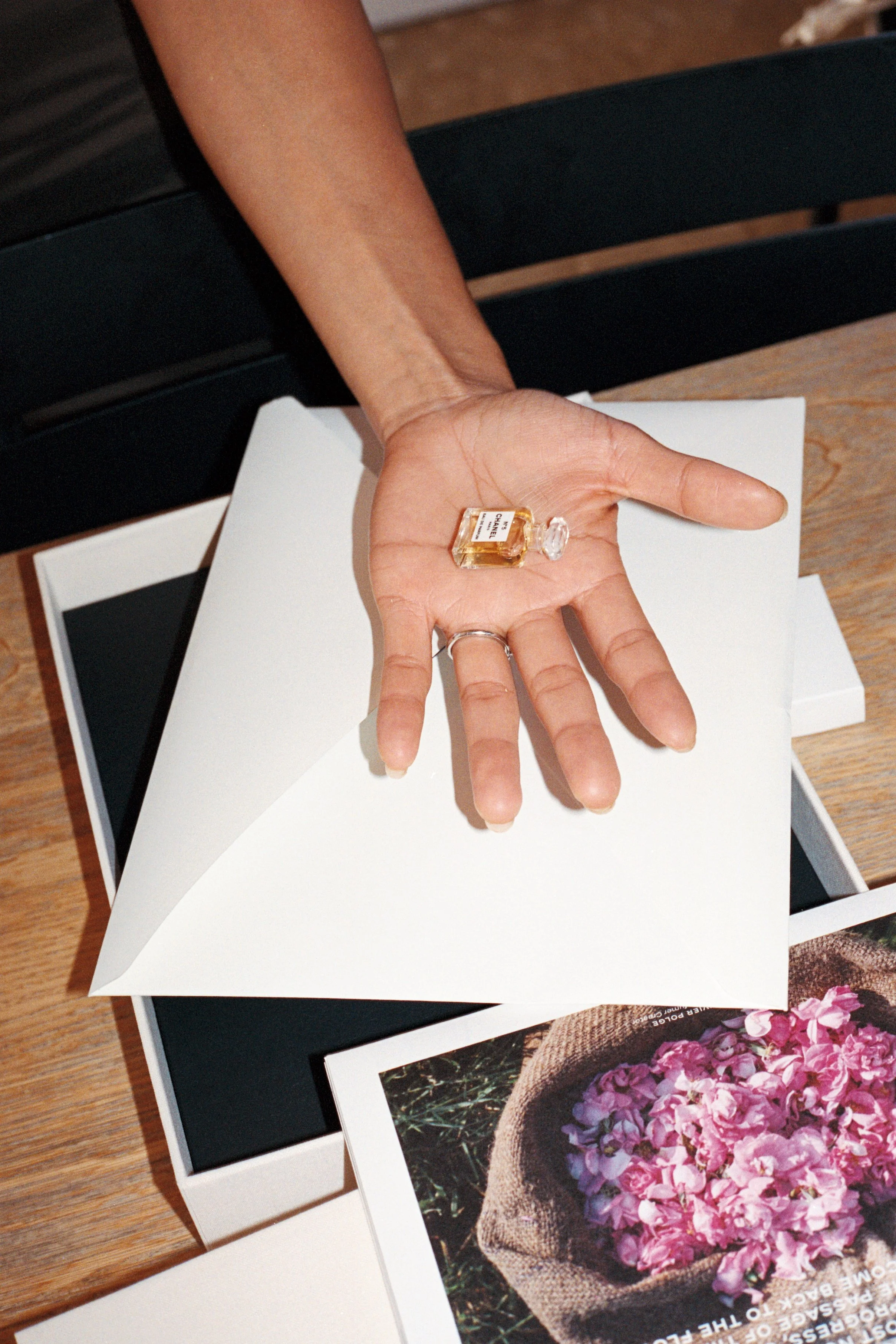
Photography by Adrianna Glaviano. Courtesy of HURS.
Talent vs. Trends
Speaker 2: I imagine when you talked about the fact that you have spent years really working on your craft and so on and so forth. And then you have another generation of people who kind of go da da da and suddenly they're food artists and so on and so forth. And I'm sure there's an element of frustration there. What I'm wondering is whether there is that pressure,while you are still crafting away and you are doing the work and so on and so forth, but then you see certain, and this could apply to brands as well, other brands who are doing certain things that are having big moments and people are lauding at this point in time. And sometimes that lauding goes on for more than a moment. It can go on for a while.
How do you push back against the pressure to think, okay, maybe I need to start doing that in order to have success? Because let's face it, you know, you talk about talent and that talent will always be it, but sometimes in our day and age, there's so many unknown talented people.
Speaker 9: Yeah, totally.
Speaker 2: Yes, it is. It's so frustrating that it takes years and years and years and years and years and sometimes talent doesn't necessarily rise to the top.
Speaker 4: I think it's talent meets like consistency, which kind of speaks to this discipline and even dedication. And there's this famous Jimmy Iovine quote that he says about race horses. When you go off into the race, if you start looking to the side of what other people are doing, you're going to mess up. And I think that's where you see brands lose also when they start being like, oh, that brand made this bag and it did really well. So like, let's make a version of it.
Speaker 2: Oh yeah. That's such a horrible thing.
Speaker 4: And then you lose your identity. For me, everything nowadays comes back to integrity and doubling down on it. And I think the people who I see that I align with or are the most successful in cutting through the noise are these people who are just steadfast to hold what they believe in and their aesthetic and whatever. And I think hopefully that's making a comeback.
Speaker 5: I think we need to think about what the definitions we're talking about are. How are you defining your own success? Obviously forever with brands or companies, the idea's been about growing. How do we grow and grow and grow, grow and grow until we burst effectively? Scale up. Let's scale up, scale up, scale up. And we've been talking about that too. Say like younger brands and the kind of power that could have on bringing them down sometimes.
And I think as individuals, we should start from who we are, what do we value? What do we think is important? It's not always going to be about making the most money or being the most famous. It can be about like, I did something brilliant, I created something, I learned something today. I think brands can kind of think about things in that same way. What are our values beyond making this money? And if it's doing like here, it's like doing something properly. I'm sure there were ways of making this perfume that were less expensive.
Speaker 2: Oh yeah. Less labor intensive, I'm sure. Right?
Speaker 5: But it's about doing it properly.
Speaker 2: Yes.
Speaker 5: Because it's the right thing to do.
Speaker 2: When you have the combination of doing it properly and doing it in this beautiful way that CHANEL N°5. is being made and it's also successful. Let's face it, it’s the most successful fragrance in the world, like the most famous fragrance in the world. Certainly it can be done, but I mean it can be done, but let's face it, it's rare. I think that those two things are quite rare where you, yes, you're doing it properly and so on and so forth, but when you have the societal pressures of scaling and this is how you are successful and the way in which society values success I think is also a big part of the conversation as well.And how you can resist that and work against that. I think that's huge. You see a lot of brands who, yes, they are beautiful brands and so on, and they have always been known for incredible artistry and so on. And then suddenly someone came along and said, guys, you need to be on TikTok or, you know... And you need to be speaking to this generation. It's about finding balance where you don't lose your DNA but you still feel relevant for the generation right now. And I think that's quite difficult. I think it is quite tough.
Authenticity and Community
Speaker 4: But I think going back to something you said earlier about you can't really be for everyone, I think... If you are specific and intentional to who you're speaking to, you will always have an audience. I think also that purity of intention and, and being proud of your work like that's what created hype. That's what hype stems from. And I think we all as an industry maybe got stuck on that and forgot about how that was even created in the first place.
Speaker 6: It's the same as my world, in film. The directors that I really worship or even the actors that I really respect, if they're not on social media, for me it's often a breath of fresh air. I want to go and read about them. I want to buy a book. You also understand them.
Speaker 2: There was an actor that I sat next to at a dinner and I was thinking, okay, I'm going to find them on social media. And I was like, oh, they're not here. And I thought that was kind of cool.
Speaker 6: Beautiful. And that's mystery as well. I actually think the statement to not have to over-explain yourself, there's a confidence in that.
Speaker 4: I was going to say that it takes, and it also connects back to making this effort to get to know someone, which then gets you to the “if you know, you know.” I actually don't think it's elitist. I think it's a direct correlation of the effort you want to put into something and your curiosity.
Speaker 5: And the question then about how you build that trust upfront, because you're right, then they become a shorthand in language, right? Like when your friend makes a joke slightly on the cusp but if you know them, you trust that it was the right intention because you know them well enough to believe in the goodness of them. I think brands need to build that same level of trust. It's just a question of how that's developed.
Speaker 10: It's important to educate consumers. I think a lot of what's happening right now in the influence world with TikTok and like short form content, it's really a lot about what's hot, what's trending. But people forget the reason behind the story of the brand, like the heritage. And although I do agree some mystery is good, building a brand is really about deciding what you show and what you don't show. It's almost a dance in my eyes of how a brand, a house like CHANEL tells their story and how they have become so timeless because of what they show and don't show.
The Power of Invisibility in Perfume
Speaker 1: That leads actually perfectly into my next question. Unlike fashion, perfume can't be seen. Of course you can see the bottle, but how do you translate a smell or a fragrance into an image? And I think that leaves so much open for the imagination. Do you think this invisibility gives it a kind of power, especially in this world where we're so obsessed with image?
Speaker 6: I definitely think so. I think you can share stories. There's endless stories of how you can share a scent. I did a campaign for a brand and the brief was so open because of the fact that it was a perfume and creating the feeling of it.
Speaker 7: Exactly. How does that translate?
Speaker 4: A scent is really a thing that you seek out. You have to discover. I'm someone who gets one perfume, wears it to death for 10 years and then I need another one. And I feel like the last year I've been like being like, what's my next one? And I found one recently that I really liked and someone complimented it to me the other day and I was like, oh my God, that's my favorite compliment. And they're like, really? Because it's so specific, you know? And it's something that I've done my work to find, I don't know, there is more of a journey.
Speaker 7: It's so personal, fragrance, I mean your son...
Speaker 2: But also what you were saying about the storytelling, I think that that's what makes fragrance so powerful. I think there are a lot of stories that you can tell around scent and around the way a person smells or what that conjures up in terms of memory or a sense of place or whatever it is. I think that there's so much more that scent tells you that is unspoken. When we talk about this element of mystery, I mean, goodness me, I think scent really kind of embodies that more so than something that is so kind of tangible or like fashion. When you meet someone and then you know, that smell, it's almost like...
Speaker 4: It's also the closest or the strongest connection to memory, which again, is also so personal. One thing can mean such a variety of different things for different people, which also makes it really special because there's just such a breadth of points to relate to.
Speaker 5: If anything, brands can be way more ambitious about how they present scent for all the reasons you guys have described. Firstly, from an emotional perspective, we were talking about the fact that my mom who passed away used to wear CHANEL N°5. Being in the house today was a bit emotional. If I saw [my mother’s shirt] shirt, I wouldn't think about that shirt, right? It wouldn't have evoked the same kind of feeling.
Speaker 7: Oh, completely. Or like a fragrance that I used to wear with a boyfriend. I did not go near that fragrance.
Speaker 2: Sometimes a fragrance you used to wear when you were younger and then you pass someone in the street, you're like that’s the old me.
Speaker 1: It even goes back to Gabrielle saying, I want something to smell like a woman. We're so lucky in the time we live in now, that there's such a breadth of what's available in terms of scents and that it's so easy to find something that you feel represents you or that you connect with. Can you imagine just having smelt like one thing, you would've gotten bored with things so quickly as well to just have that kind of, I also love how scent kind of changes.
What CHANEL N°5 Means Today
Speaker 1: I'm going to end on one more question before we wrap up. We've talked a lot about scent, about craft. Obviously we've seen and heard a lot today. What does CHANEL N°5 mean to you today? Socially, emotionally, culturally?
Speaker 2: As we were speaking, you talked about the fact that Gabrielle Chanel made this scent because she wanted it to smell like a woman. And I really think that she had in her mind, not one particular woman, she was thinking about how multifaceted women are and what they represent and who they are at different points in their lives and even different times of the day and who you want to be.
For me, that is what that represents. I feel that I can wear CHANEL N°5 and it represents one thing to me. You can wear CHANEL N°5 and it represents something to you. That's really quite powerful and quite wonderful because as women, we are not a monolith. We are different. We do have so many different facets of our personalities and our characters, and I do think that's bottled because you still can't put your finger on CHANEL N°5. Certainly for me, I find it a very difficult scent to put in a box, but I think that's fabulous because as women I don't think that we should be put in a box. So, that's what that represents to me.
Speaker 1: I love that. I think for me, it also goes back to what we were talking about earlier about not being for everyone. And for me, CHANEL N°5 and also Gabrielle Chanel herself carry a strength. It's not something everyone can carry. It's like a certain outfit, you know, is the outfit wearing you or are you wearing the outfit? For me that's very much CHANEL N°5 as well. You need to have a certain spice to you to be able to wear it, but I really like your approach as well. You can't box women in, and I think even if you're someone who's able to wear a very strong scent, it doesn't mean you can't also be vulnerable.I like that multifaceted duality of what it means being a woman today.
Speaker 7: It's almost like armor sometimes, like clothing. When you put on a suit as a woman, I love to dress very masculine and it's almost like that feeling of that extra layer of armor.
Speaker 9: It communicates a lot to people. And it endures when you walk out of a room you can still linger, which I think is a really powerful thing. What are you going to smell like, you know?
For me now, the fragrance really represents depth. It was always iconic in my mind, but sometimes you can get away from the meaning or the origins of the iconography. And now I understand all the layers that go into this and I'm going to wear it with a lot more intention and it may not be for everybody, but I love that. And I love making it my own and then wearing it in the future and something that's so enduring and classic.
Speaker 10: I think that's so beautiful. I relate to that because what I love about CHANEL N°5 is that I feel like it's a fragrance that girls can grow into. It's not for everyone because maybe they're not there yet. But as a woman, we go through so many seasons and phases of life and I think for many girls it can be an aspirational fragrance. They might one day want to wear it and they're going to go on that journey to get to that place. And I think that's also what makes the house of CHANEL so timeless because it's a brand that so many little girls aspire to be and they go through their own journeys of becoming that woman who can embody CHANEL.
Speaker 4: CHANEL is a really good example of a brand that is so true to their identity. Even when Karl passed, you know, it's become such a trend to get these new creative directors and a name and something that has hype behind it and they hired within, which I thought was such a special thing at the time and really rare in this landscape right now.
We're talking about something that's a hundred years old, right? It's really stood the test of time. It's also a really good example of resilience and creating a really strong foundation and not of capitulating to what is trendy or cool right now. Respecting the past and building from there because I think it's quite traditional but also very modern because it's quite contrarian at the same time.
Speaker 7: It's also with the perfume, if you can't afford the CHANEL bag, you can purchase the fragrance. And I think that's a nice gesture of being part of the world.
Speaker 5: YIn a world that, let's be honest, is pretty full of trashiness, it's this kind of persistent classy perfume. It was classy for my mom’s generation. It was classy for our generation. It’s classy for your son and it'll be classy for his son or daughter. I think to have something like that, that is accessible to everyone as a kind of marker of caring about design, about caring about yourself, is really beautiful and rare. I can't really think of any other object that has that same language.
Speaker 7: It's also the iconography and the logo has never changed. It builds that trust.
Speaker 6: It does.
Speaker 7: Like it was...
Speaker 6: So ahead of its time as well. For me it's a real sense of confidence and care. It's a daily reminder to care and be confident and have real, like you were saying, resilience. I think there's something so beautiful about the pride that it holds. There's so much pride in that. How many [flowers are in a bittle], 10,000 is it 10,000?
Speaker 4: Yeah 10,000 flowers. It's crazy. Even if you think about it as a business, I can't think of a lot of brands who have had employees for as long as they have. They have people who stayed there for 10 plus years.
Speaker 7: Everybody was happy today. There is a real pride.
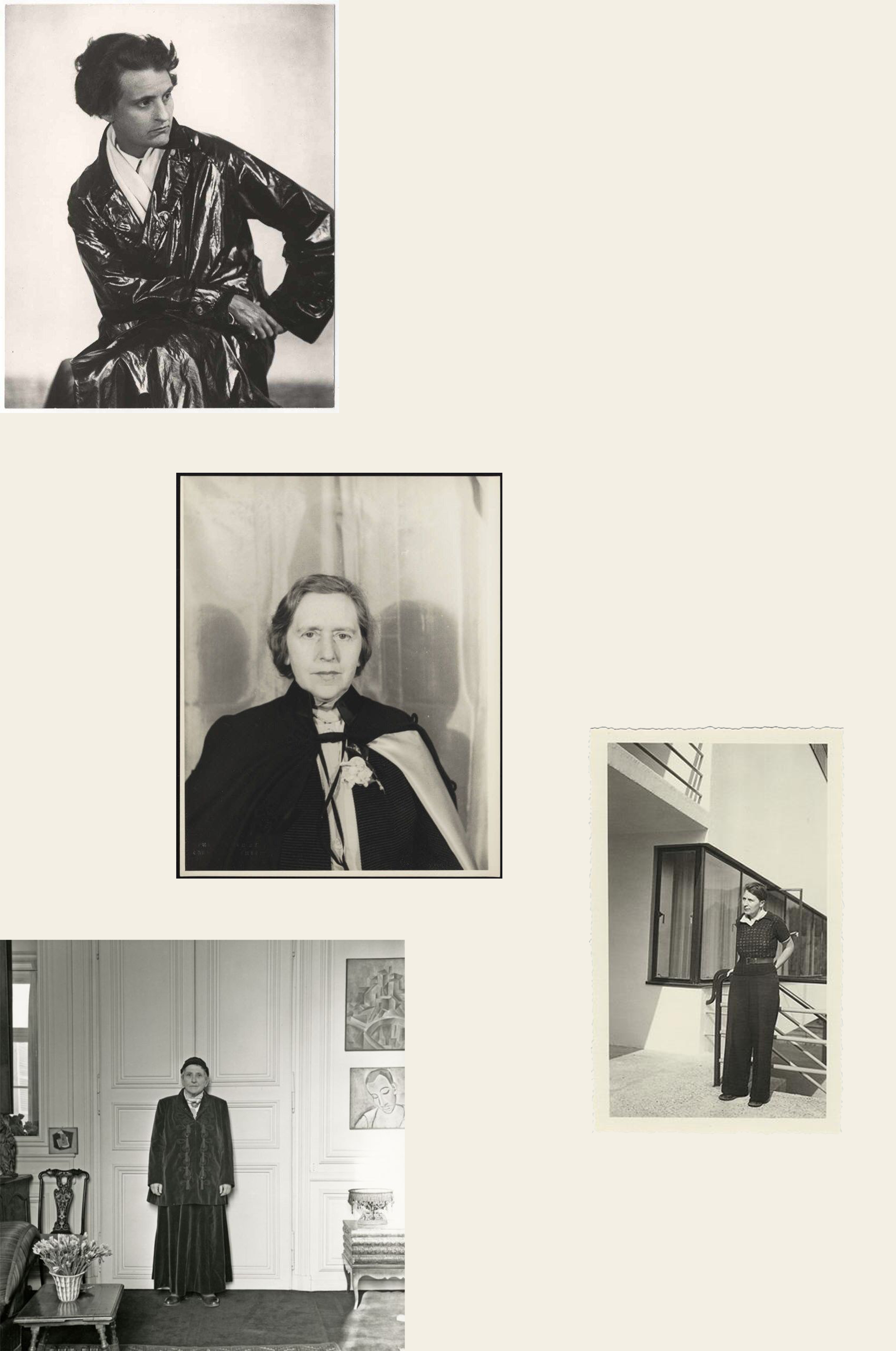

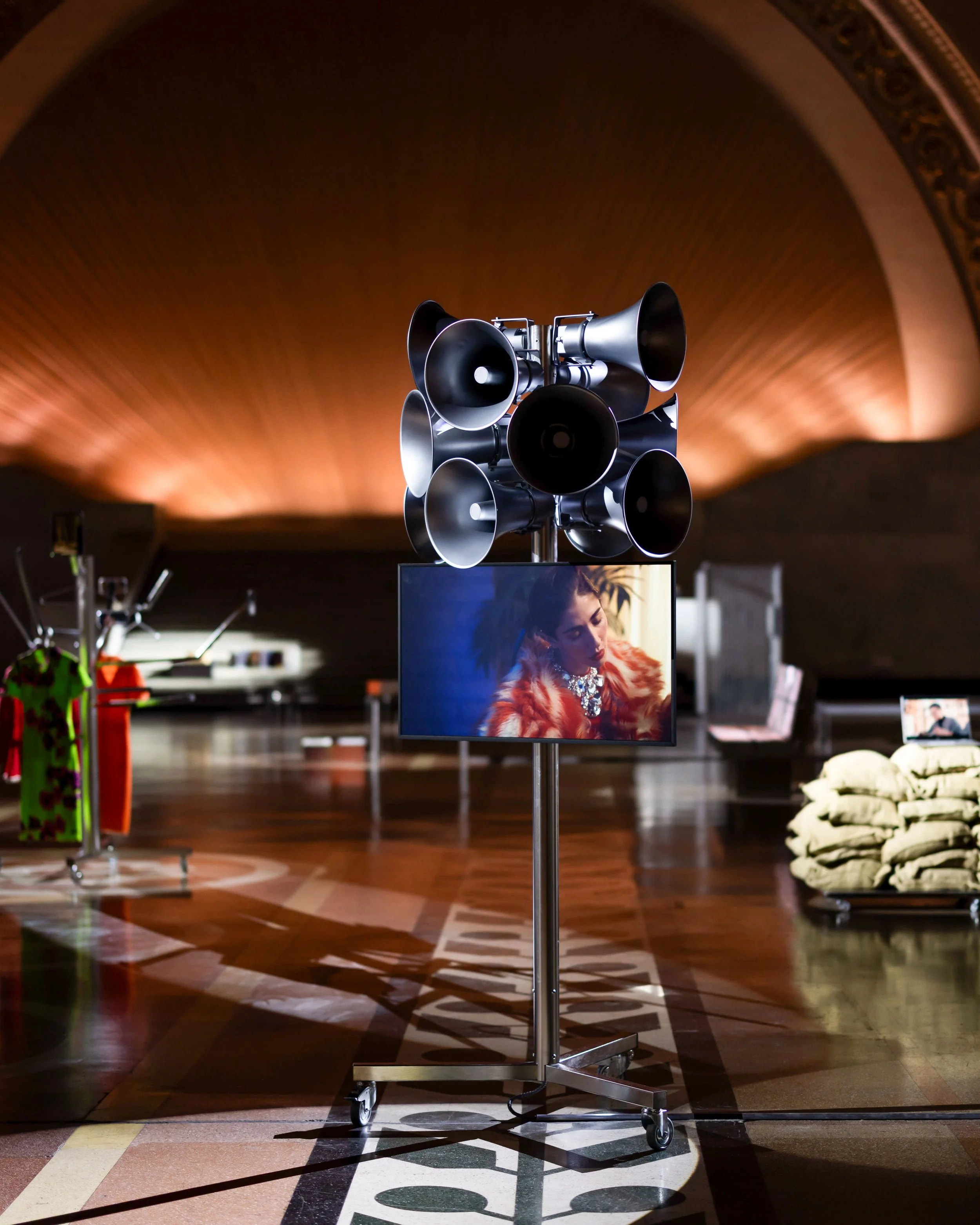
Everyone is an expert now, and almost no one is. In her latest essay, Bonnie Langedijk asks how confidence came loose from competence, why we believe the ring light over the researcher, and whether real expertise can survive a culture that rewards speed over depth.