Arcosanti: The Living Blueprint

Photography by Savannah White
Arcosanti:
The Living Blueprint
An essay by photographer and stylist Savannah White
By Savannah White
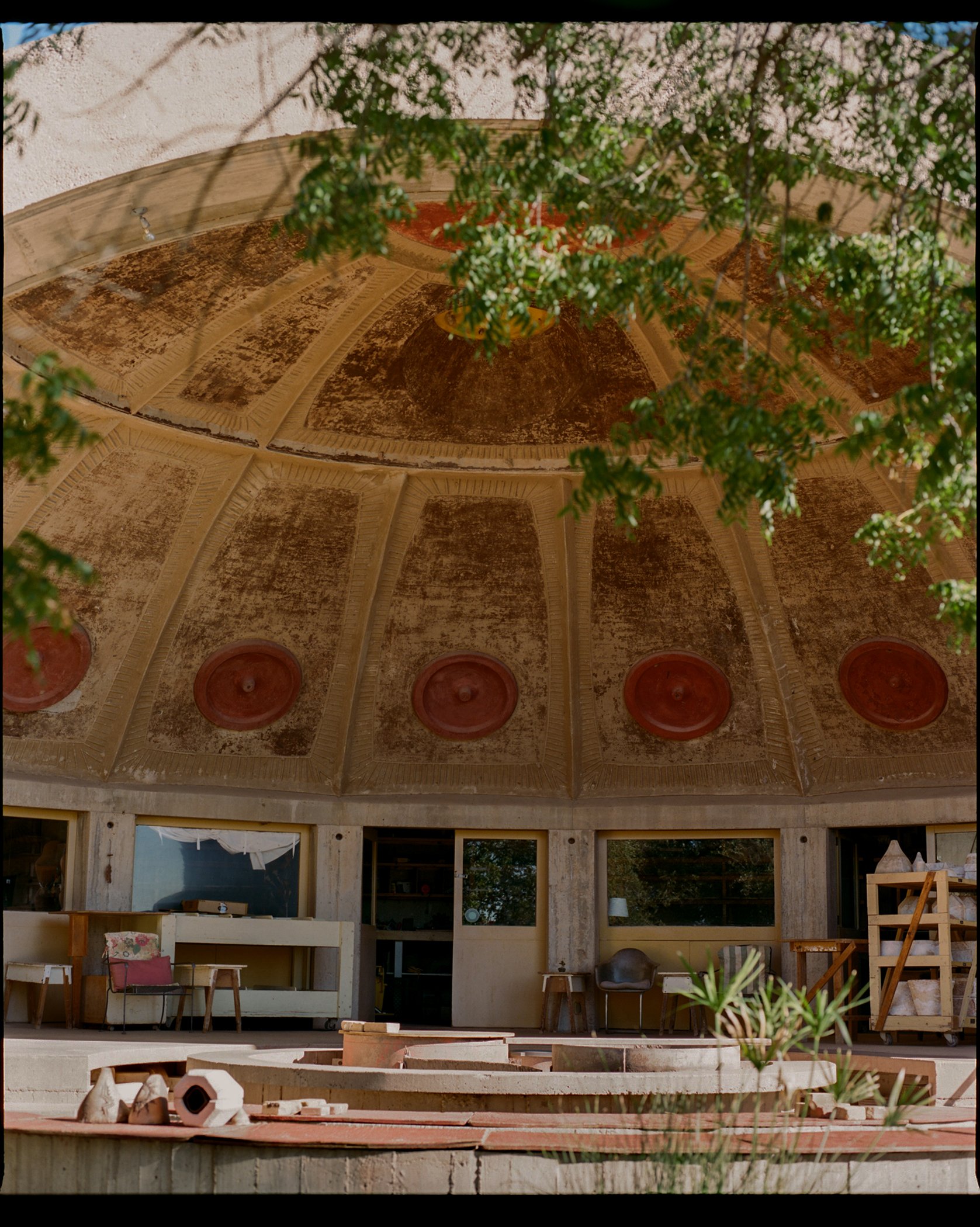
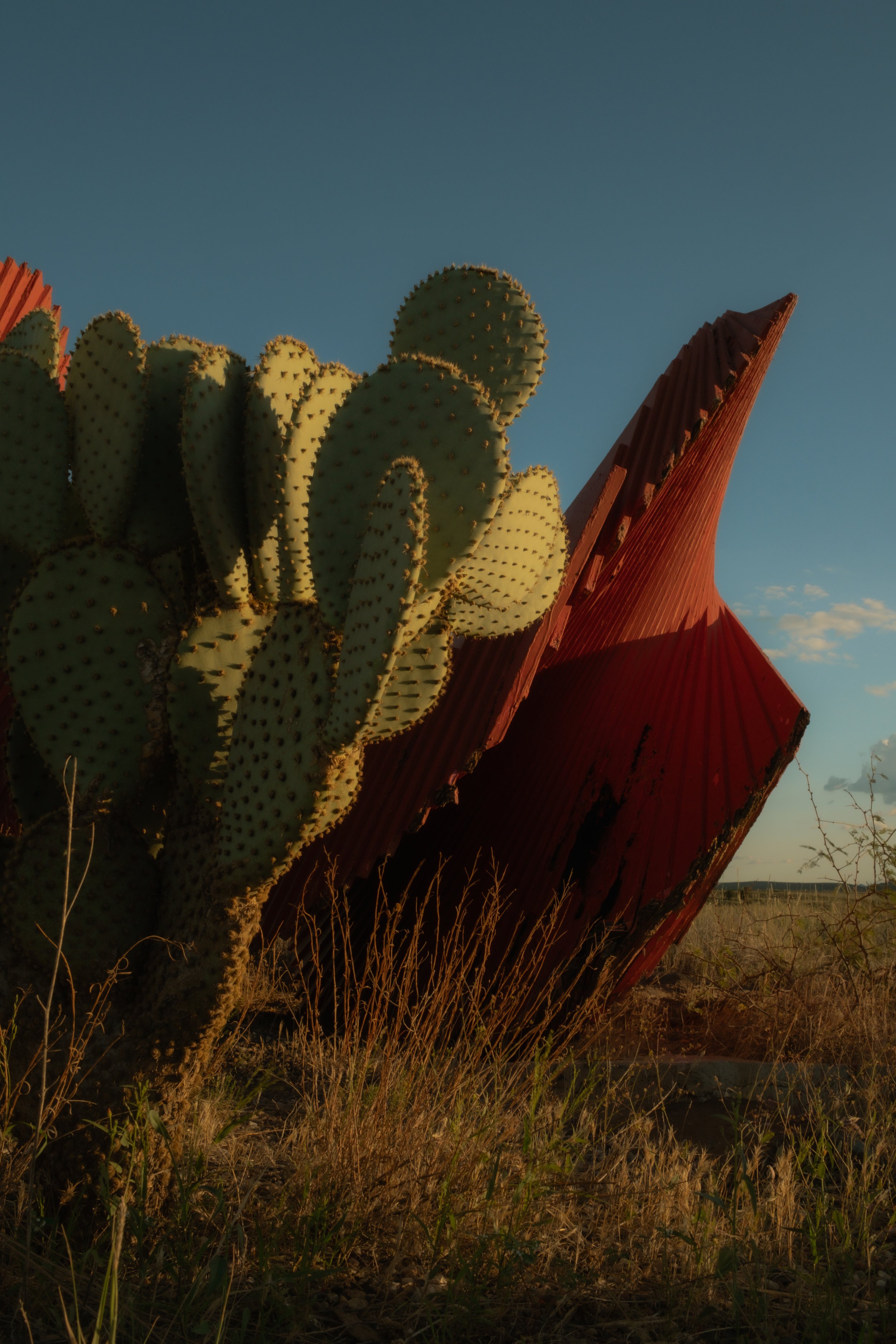
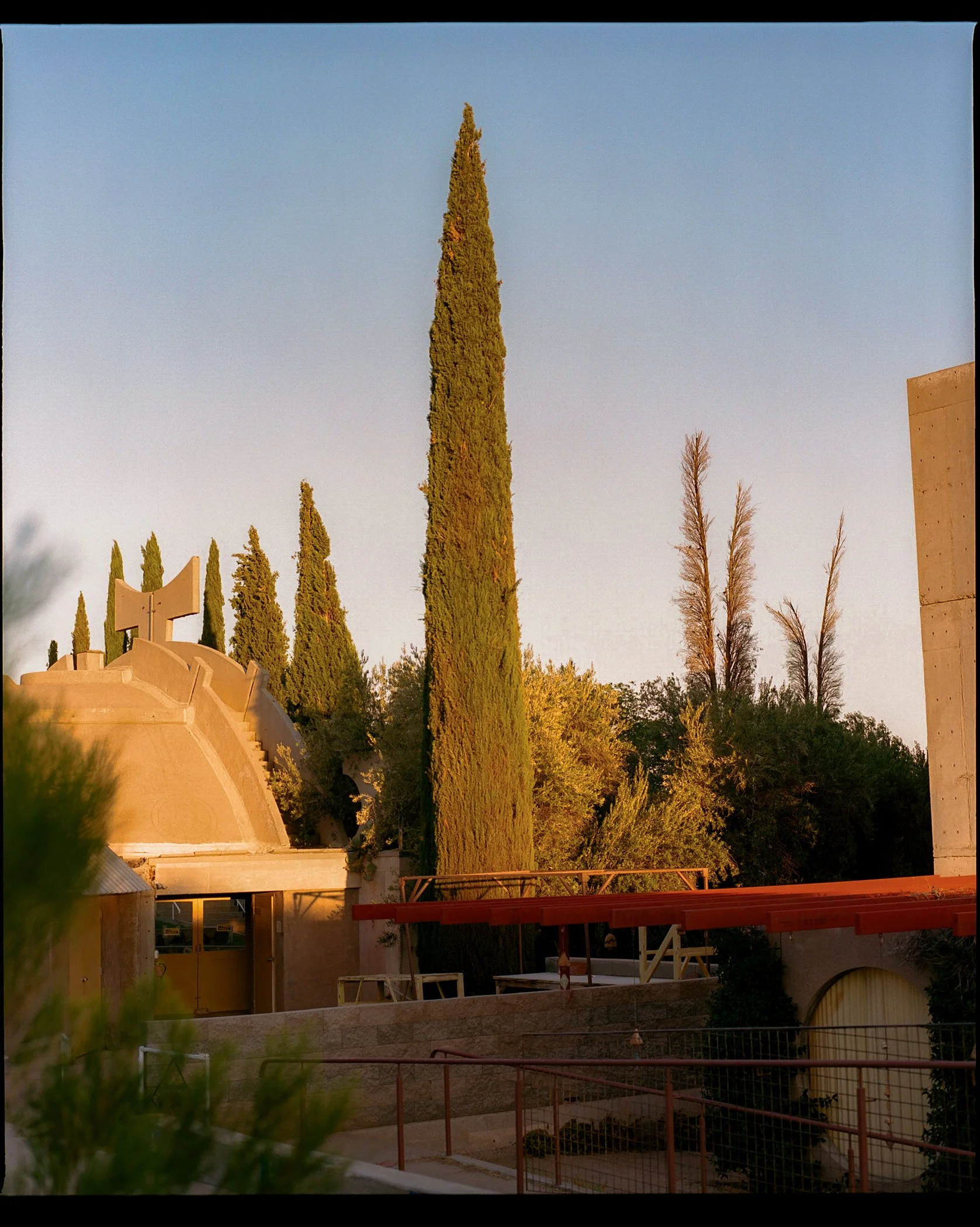
In the high desert of central Arizona, Arcosanti rises from the horizon like an unfinished thought, a constellation of concrete domes and arcades that seem both ancient and futuristic. Built by hand, shaped by idealism, it remains one of the most enduring social experiments in American architecture, a place where vision still lingers in the air like heat.
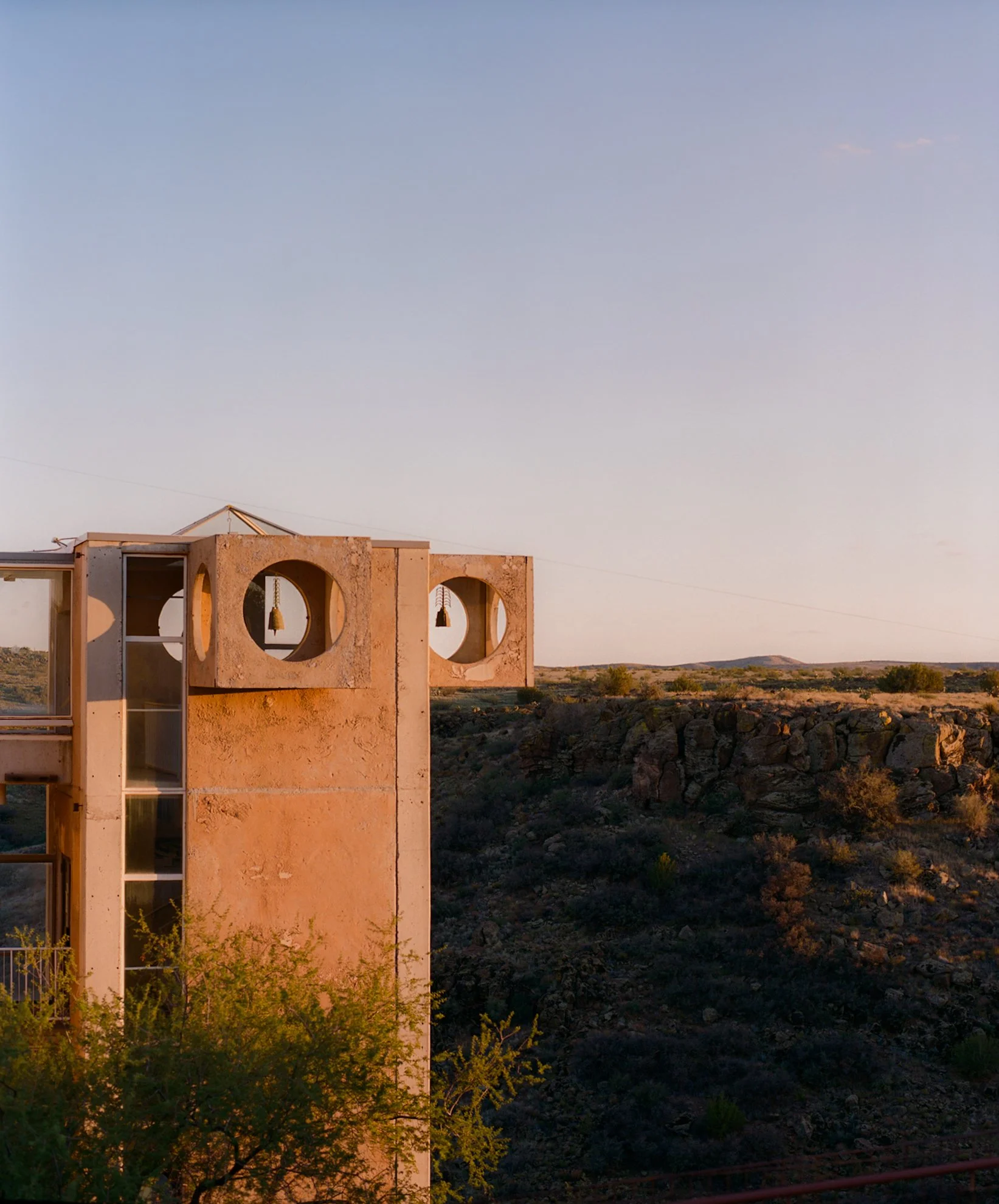
Conceived in 1970 by Italian architect Paolo Soleri, Arcosanti was meant to answer the sprawl of postwar America. His theory of arcology—a fusion of architecture and ecology—proposed that cities could function like living organisms: compact, self-sufficient, and harmoniously integrated with their surroundings. Volunteers from around the world came to build it, pouring domes and carving amphitheaters beneath the desert sun. They also cast the bronze bells that would become Arcosanti’s icon, each one a hymn to craftsmanship and community.
Half a century later, the city feels less like a relic than a meditation. Artists and architects still live and work here, their days shaped by quiet ritual, the hum of the foundry, community dinners, the rhythm of footsteps through the amphitheater at dusk. The desert has softened the concrete, but the ideas embedded within it—sustainability, collaboration, restraint, feel more relevant than ever.
Photography by Savannah White
Photography by Savannah White
In a century defined by excess and disconnection, Soleri’s call for density and shared purpose reads almost prophetic. His vision imagined a world where architecture shaped consciousness and beauty served function. Though Arcosanti was born of 1970s counterculture, its message translates fluently to our present: climate anxiety, urban isolation, the search for meaning within design.
To visit is to enter both a monument and a metaphor. The buildings frame the desert light like sculpture; shadows move across the vaults like music. The amphitheater still hosts performances, its acoustics carrying every sound into the open air. The café serves food grown nearby, and the guest rooms overlook a canyon where the morning sun spills gold across the walls.
“Arcosanti’s significance lies not in its completion but in its PERSISTENCE. It reminds us that architecture can be a moral act—that the way we build reflects how we choose to live.”
Arcosanti’s significance lies not in its completion but in its persistence. It reminds us that architecture can be a moral act—that the way we build reflects how we choose to live. Soleri once wrote that “the city is the necessary instrument for the evolution of humankind.” His city may never have reached full scale, but the idea endures: that a slower, smaller, more intentional way of living is still possible.
At dusk, the bells ring again, imperfect, resonant, handmade. Their sound carries through the canyon, echoing the simple truth at the heart of this place: that utopia is never built once, but continuously imagined.
Photography by Savannah White
Photography by Savannah White
Everyone is an expert now, and almost no one is. In her latest essay, Bonnie Langedijk asks how confidence came loose from competence, why we believe the ring light over the researcher, and whether real expertise can survive a culture that rewards speed over depth.