The Eloise Effect
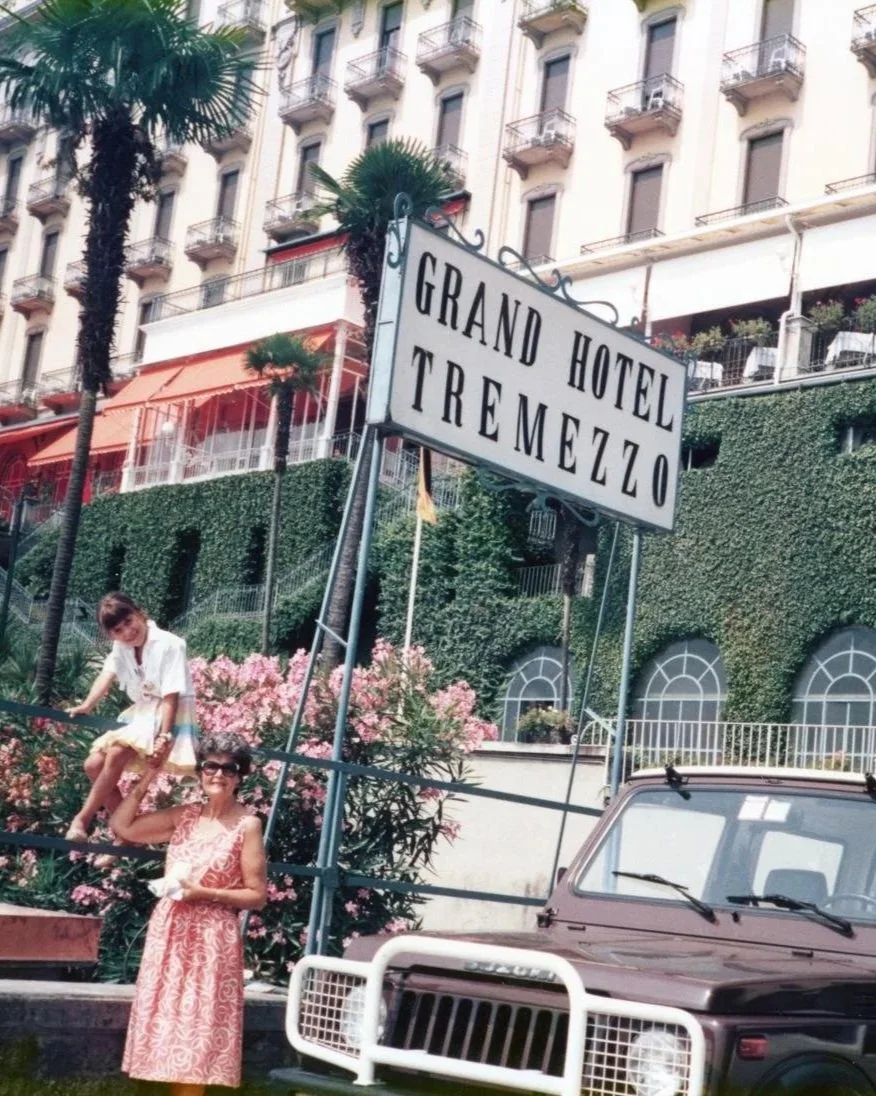
Courtesy of Passalacqua and Grand Hotel Tremezzo.
The Eloise Effect
In celebration of HERitage — SmartFlyer's founder-to-founder collective spotlighting the women at the helm of hospitality — we invited five leading women from across the industry to write about the rooms they've built, the ones they've walked into, and the ways hospitality shapes — and is shaped by — the women who run it.
When I first joined the family business, everyone kept comparing me to Eloise at the Plaza. I had no idea what they meant. Who was Eloise? What was she doing at the Plaza?
Then I discovered Kay Thompson's mischievous six-year-old, gallivanting through the corridors of New York's iconic hotel, the entire property, her playground. The similarities were uncanny. Like Eloise, I had spent my childhood roaming freely through the Grand Hotel Tremezzo, curious about every corner, befriending the vibrant personalities back of house, understanding instinctively that they were real-life fairy godmothers and godfathers making the Grand’s magic happen. It was here I learned that a hotel is more than a building—it's a living, breathing community.
But what if Eloise had grown up to run the Plaza? What if she had poured all that audacity and mischief, all her imagination and love for the only home she knew, into creating the hotel of her dreams?
It’s fascinating to watch as the industry and the guests discover that being a WOMAN in hospitality isn't just compatible with success. It's an added value that consistently raises the bar for what is possible.
The answer, I believe, is playing out right before our very eyes, with a new generation of women running the family properties that raised them—and doing so in an unapologetically feminine way. It’s fascinating to watch as the industry and the guests discover that being a woman in hospitality isn't just compatible with success. It's an added value that consistently raises the bar for what is possible.
"I can always tell when a hotel has a woman at the helm," a guest told me recently. "You can see it in the little things—I can tell you've thought about what we actually need." She was right, and she wasn’t the first guest to say so.
Walk through our hotels and you’ll find small stools beside every seat for your handbag. Three Dyson devices in every bathroom. Playpacks for our littlest travelers. A single bedside button to turn off all the lights. Eau de parfum as well as shaving cream in our toiletry set. These aren't revolutionary concepts—they're simply the result of leaders tuned into the lived experiences of their guests.
And since women make 80% of travel decisions and represent 64% of global travelers, as well as 85% of all solo travelers, understanding their needs becomes a question of business savvy-ness, not just fair play.
Consider the paradox: Women make up 39.7% of the travel and tourism workforce, yet only 7% are CEOs or chairs in leisure travel. Most women hold mid- to lower-level roles, earning 14.7% less than men in similar positions. All this despite research consistently showing companies with more female leaders to be more profitable, more innovative, and have higher employee engagement. Why does the hospitality industry remain stubbornly resistant to this advantage?
Our business is built on understanding and anticipating human needs, yet we systematically exclude the perspectives of our primary decision-makers and travelers. The issue goes beyond representation—we’re missing crucial insight. Hospitality, at its core, embodies what have traditionally been considered feminine values: nurturing, relationship-building, creating spaces where people feel cared for and understood. This isn't to suggest that caregiving is somehow "natural" to women, but rather that women have been socialized to notice and respond to these needs in ways that translate directly into hospitality excellence.
These (rightly or wrongly) feminine-coded values are precisely the factors that elevate mere hospitality to accoglienza, the Italian concept of welcome that comes from the Latin for “forming a bond”. My first glimpse of this philosophy came watching my mother and grandmother in action. From them, I learned that elegant fashions and elegant interiors may look effortless, though they rarely are. True elegance is the result of an exacting vision and attention to detail. That opening your doors to staff, guests, and community is good but not good enough. As I witnessed first-hand, opening your heart is what makes all the difference.
I see these same values in many of my fellow female leaders across Italy today. Mariella and Attilia Avino at Palazzo Avino in Ravello embody a hospitality that feels both grounded in their hereditary landscape and gracious in a new way all their own. Marie-Louise Sciò at Il Pellicano has pioneered what she calls "Il Dolce Far Bene"—honest luxury that is gentle on the earth, thoughtful in its approach to wellness, and championing considerate travel. And Lydia Forte, Group Director of Food & Beverage at Rocco Forte Hotels, understands the power of culinary experiences to weave a narrative and create a vivid sense of place. It’s not by chance that all of us have become fast friends, a sorority of support in this brave new world.
Standing shoulder to shoulder with inspiring female leaders across our industry, and on the shoulders of the women who came before us, our task is clear: We must give the next generation of women both the opportunity and the confidence to bring their full selves to leadership roles. Empowering women in the hotel business and across the travel industry isn't an additive process; it's a multiplier, spreading like the wake behind a Riva to unknown shores. In my own hotels, I've watched what happens when we promote women to traditionally male domains like food and beverage or conciergerie. The entire culture shifts toward greater emotional intelligence, and everyone—the guests, the entire team, the community—wins.
As Eloise used to say: “Ooooooooooooooooo I absolutely love the Plaza.” And that captures the essence of what we do: love. Real hospitality, la vera accoglienza, is love in action. Love for the landscape that raised us, the properties we steward, the staff we work alongside, and every single guest who walks through our doors. When you lead intentionally with that kind of love—the hallmark of this new generation of female hospitality leaders—it can literally move mountains.
My infatuation with our hotels hasn't faded a bit since those first memories of the Grand. I still get butterflies when I spy our signature orange awnings or drive through the ancient iron gates at Passalacqua—cheeks red, heart racing, just like a first date. My curiosity is still pure Eloise, the same curiosity that had us running our respective halls. What if we hung up a sheet and showed movies in the garden? How about giant apothecary jars of candy? Heritage chickens, maybe?
If there's anything I want to teach my daughter and the women coming up in our industry, it is this: follow your childish enthusiasm wherever it leads, laugh as long and loud as you want, and embrace the curves, colors, and crushes that make you you.
The secret is never quite outgrowing that Eloise spirit—part imagination, part courage, and the belief that if you can dream it, you can do it.
Everyone is an expert now, and almost no one is. In her latest essay, Bonnie Langedijk asks how confidence came loose from competence, why we believe the ring light over the researcher, and whether real expertise can survive a culture that rewards speed over depth.