Flâneuse in Motion
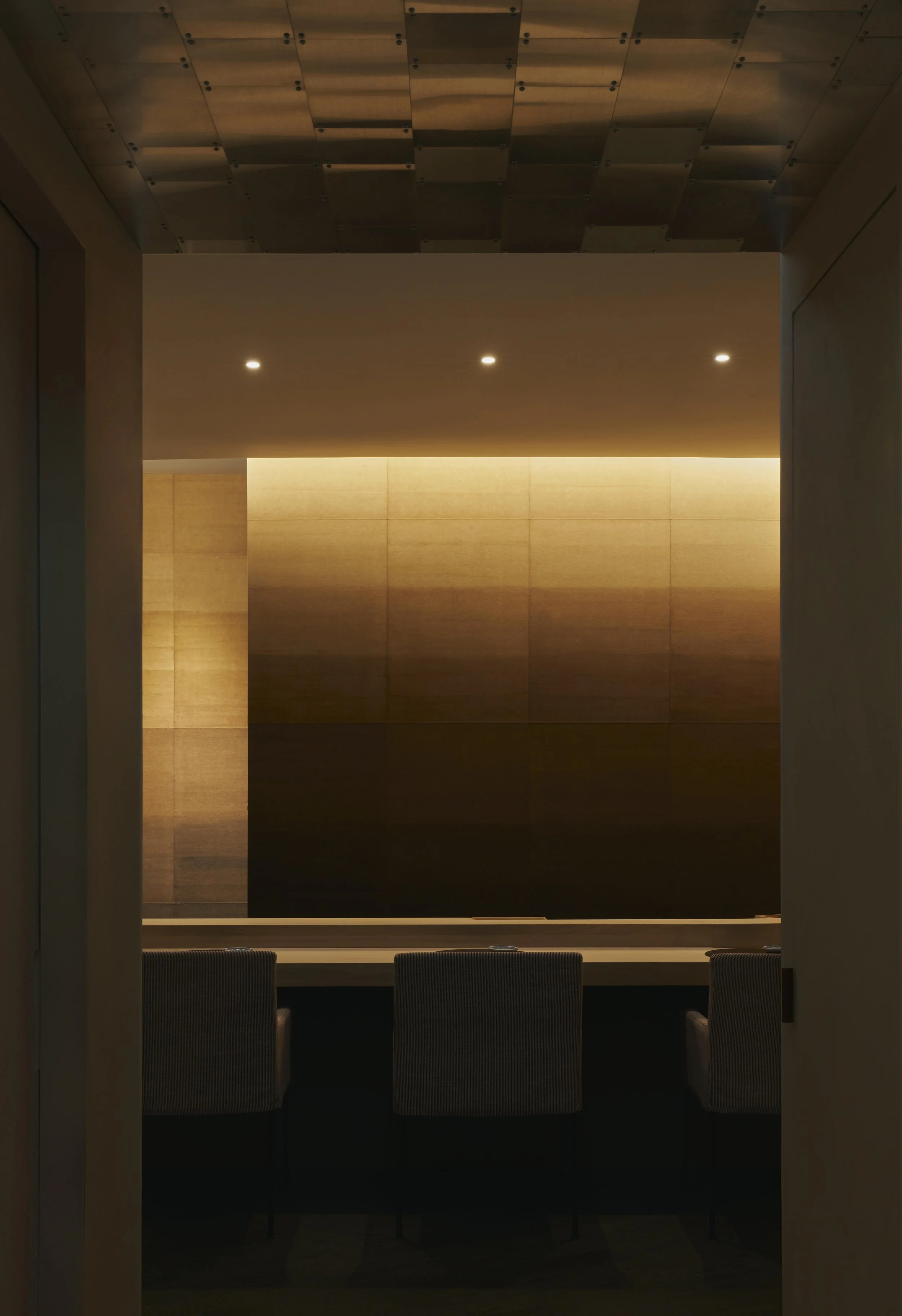
Courtesy of Studio HJRK.
Flâneuse in Motion
By Hye-Jin Ris Kim
I first came across the idea of flânerie when I was a student in Paris studying interior architecture. The term can be defined as “the act of leisurely strolling or sauntering, often aimlessly, through a city or landscape,” or perhaps less favorably as “aimless idle behavior.” There is no direct equivalent for this word in Korean, nor in English. Yet when I encountered the word, it felt strangely familiar, as if I had been practicing it long before I knew it had a name.
To me, flânerie is not an escape but a rhythm, the quiet art of moving, pausing, and beginning again. In work and in life, I have come to see flânerie as both a philosophy and a form of survival. To wander, to observe, to let go—these gestures teach me how to stay open amid uncertainty, how to find meaning in impermanence. It is how I find stillness through motion, and how the ordinary becomes newly lit. I have never lived in straight lines. I drift, I circle back, I begin again, and somehow, the curve keeps returning me to what matters.
I am a flâneuse, someone who moves through the world attentively, allowing motion itself to shape thought, work, and life. I collect fleeting impressions as well as memories that may surface later as inspiration. I am drawn to balance and contrast, to the quiet tension created by placing different cultures, styles, and histories side by side.
Rooted in Korea, my sensibility has been shaped by time spent elsewhere and by the many leaps of faith required along the way. I carry with me the ease I learned in Chicago as a young art history student, the discipline I absorbed during a short but formative year working in advertising in Seoul, and the sharpened eye I developed during the years at Christie’s, where I encountered art, objects, and stories from across time and cultures. Later, in Paris, as a more seasoned student of interior architecture, I learned attentiveness: the patience of observing before shaping. These layers and plot twists naturally surface in how I see, collect, design, and live.
Today, years later, I find myself in Seoul—now a wife, a mother, and a designer running a studio in one of the busiest and most dynamically paced cities in the world. Seoul is known for its relentless rhythm, a city that moves fast, thinks fast, and expects the same in return. Without flânerie, I might have been swept away by that speed, or frozen by it. Instead, flânerie has become my way of staying present within the movement, allowing me to observe rather than be overtaken.
Through that lens, Seoul’s rhythm reveals another quality. It feels not only fast, but also graceful, a city that harmonizes ambition with restraint. Tradition and modernity coexist without contradiction. I find inspiration in that delicate balance. I feel at ease in this convergence, perhaps because it mirrors my own composition.
I sometimes find myself lost in the maze of the Dapsimni Antique Market in Seoul, searching for old, traditional pieces that feel unexpectedly modern when placed alongside something contemporary. My team is often most energized when collaborating with Korean craftsmen, from traditional lacquer masters to wood marquetry artisans and ceramists. One such project was a private room at Shilla Atelier, the VIP lounge of Hotel Shilla, where we enveloped an entire wall in Korean lacquer panels. The result was a space that felt quietly luxurious and modern, yet deeply grounded in Korean sensibility. Rather than appearing cold, the room gained warmth, dignity, and restraint through the material itself.
At other times, I draw inspiration from places like Villa Necchi when imagining a private dining room for a sushi restaurant. Deep green velvet-upholstered wall panels and Roman shades with bold horizontal stripes, softened by a large round Hanji paper pendant, are not what one would expect from a typical sushi-ya, yet it is precisely this tension that brings the space to life.
At the same time, I feel a strong responsibility to share new ideas and methods with Korean craftsmen and manufacturers, encouraging them to use their skills in ways that may feel unfamiliar. I witness both their struggles and their sense of accomplishment. What emerges is a convergence of culture, mastery, and collective experience, a new energy that continues to drive us as designers working in this vibrant city.
It is a rare joy, as a designer, to witness the scattered dots of a life connect, revealing a pattern that could only have emerged through time and movement. Living between Seoul and Paris, I learned to trust rhythm over resolution. Balance, I realized, does not come from standing still, but from knowing when to move, when to pause, and when to begin again. Flânerie has never asked me to be fearless or certain. It has asked me to be attentive, to let purpose appear on the walk, to allow the curve to teach me what the line cannot.
Perhaps that is what I am creating, beneath the chairs and rooms and plans: not only objects, but ways of moving through the world with grace, curiosity, and the quiet confidence that wandering is not the opposite of purpose, but one of its most honest forms.
Everyone is an expert now, and almost no one is. In her latest essay, Bonnie Langedijk asks how confidence came loose from competence, why we believe the ring light over the researcher, and whether real expertise can survive a culture that rewards speed over depth.