On Shame and Desire

Courtesy of Miu Miu.
On Shame and Desire
By Bonnie Langedijk
Shame is the cheapest form of architecture ever invented. It requires no enforcement from outside because it operates entirely from within. This is what makes it so lastingly effective, and what makes it so difficult to discuss without sounding, to certain ears, melodramatic. There are no visible mechanisms. No one is stopping anyone from anything. And yet.
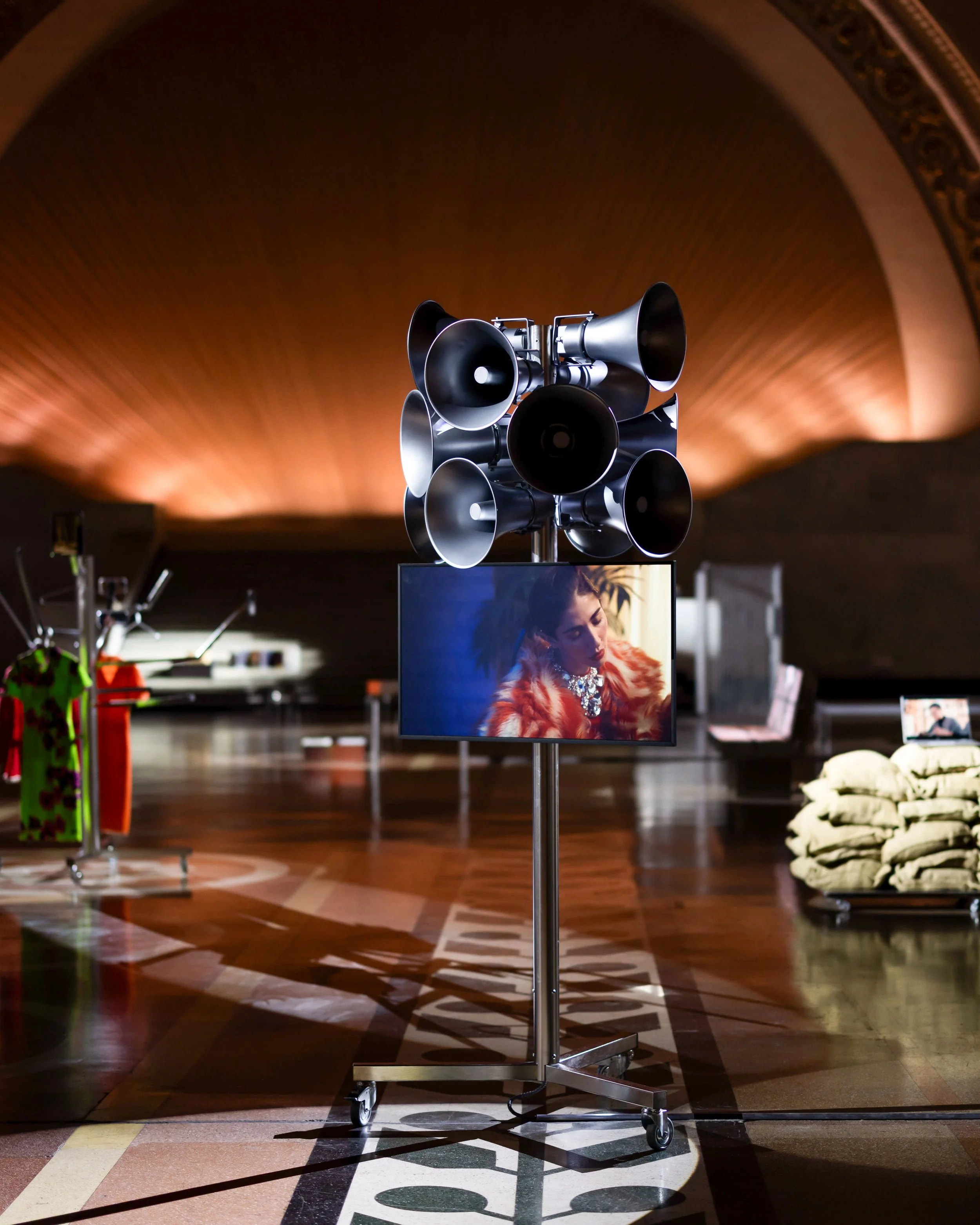
This is what I kept thinking about at Miu Miu's Literary Club in Milan, where a room full of women gathered around Annie Ernaux's A Girl's Story to talk about what happens to a woman who wants something. French-German critic Annabelle Hirsch was on the panel, alongside Italian feminist thinker Lea Melandri and Irish novelist Megan Nolan. The event was titled Politics of Desire and the more the conversation went on, the more obvious it became that the thing they were describing — this specific, all-consuming shame that follows female desire like a dark cloud — remains.
Ernaux's book is set in the summer of 1958, when an eighteen-year-old girl working as a camp counsellor in Normandy has her first sexual experience. The boy moves on. She realises she has submitted her will entirely to his, and finds herself — her words — a slave without a master. What follows is a shame so total it becomes the foundation of everything she later builds. She spent decades trying to write the girl of that summer, and failing. The girl of that summer haunts her not because the experience was violent — though there are elements of coercion — but because she wanted, and was made to feel that the wanting was the crime. The shame, she writes, has a vast and implacable memory.
Most women will RECOGNISE this. Not the same boy, not the same summer, but the texture of that particular moment. Desire, present and urgent, and then the cold realisation that it was only yours.
Most women will recognise this. Not the same boy, not the same summer, but the texture of that particular moment. Desire, present and urgent, and then the cold realisation that it was only yours. And the world, which never offered much encouragement to female desire in the first place, confirming what you already suspected: that you were foolish to have felt it at all. That wanting, for a woman, is a liability.
That is the mechanism. A woman's desire, historically, has been treated as a problem to be managed. Sometimes through religion, sometimes through law, sometimes through the softer architecture of social disapproval. The architecture of shame is elegant in the worst possible way. A woman ashamed of her desire doesn't need to be stopped from acting on it. She stops herself. Shame doesn't just punish transgression. It prevents it — and it makes women police themselves, which is so much more efficient than having to police them from the outside.
There has been progress, but it has been selective. The feminist argument has found its most comfortable ground in the professional sphere — pay gaps, glass ceilings, board representation — because those are public problems, arguable ones, that can at least theoretically be won. A woman who wants more from her career has a word for that: ambition. A woman who wants more from her relationship, her body, her private life, the language for that barely exists. And where there is no language, shame moves in and makes itself at home.
Christien Brinkgreve, Dutch sociologist and professor emerita in women's studies, wrote about this with uncomfortable precision in Het Beladen Huis (The Burdened House). The book is about how she came to reproduce, inside her own domestic life, the exact patterns she had spent her entire professional life critiquing. The karrensporen van het patriarchaat, she calls them: the cart tracks of patriarchy. Grooves worn so deep over so long that you follow them without deciding to, even when you can see where they go. This is the rearranging of furniture in a room you did not design and cannot leave. This is what liberation looks like when it stops at the front door.
The Italian writer Alba de Céspedes understood this too; how the personal life keeps a woman in a certain role regardless of what she has built in the world beyond it. The professional self and the private self are operating under entirely different rules, and the private rules, being older and more intimate and carrying the full weight of what was once called love, are far harder to rewrite. Financial independence matters enormously, a woman who controls her own money controls a meaningful part of her own story, but it is not the cure. A woman can be economically autonomous and still live in the cart tracks. Can still perform smallness out of habit. Can still feel shame about her own desire, and let that shame determine what she asks for, what she accepts, what she decides she doesn't deserve.
The shame that shaped Ernaux's girl of 1958 and the cart tracks Brinkgreve maps at home are not separate problems. The woman who learned, early and thoroughly, that her desire was a liability is the same woman who later finds herself living by rules she never consciously agreed to, in a life that has been quietly arranged around everyone else's comfort. Shame doesn't stay in one room. It furnishes all of them.
If I ever have a daughter, I hope she reads Annie Ernaux one day and finds her puzzling. Because what shame is there in following desire? Men have never seemed particularly troubled by this question. They want things; they go and get them; the world, on the whole, applauds. We have spent centuries managing the consequences of that asymmetry and calling it our nature, when it was only ever our circumstance. The argument has to go home. That is where the cart tracks are deepest.
Everyone is an expert now, and almost no one is. In her latest essay, Bonnie Langedijk asks how confidence came loose from competence, why we believe the ring light over the researcher, and whether real expertise can survive a culture that rewards speed over depth.