Anastacia Never Left
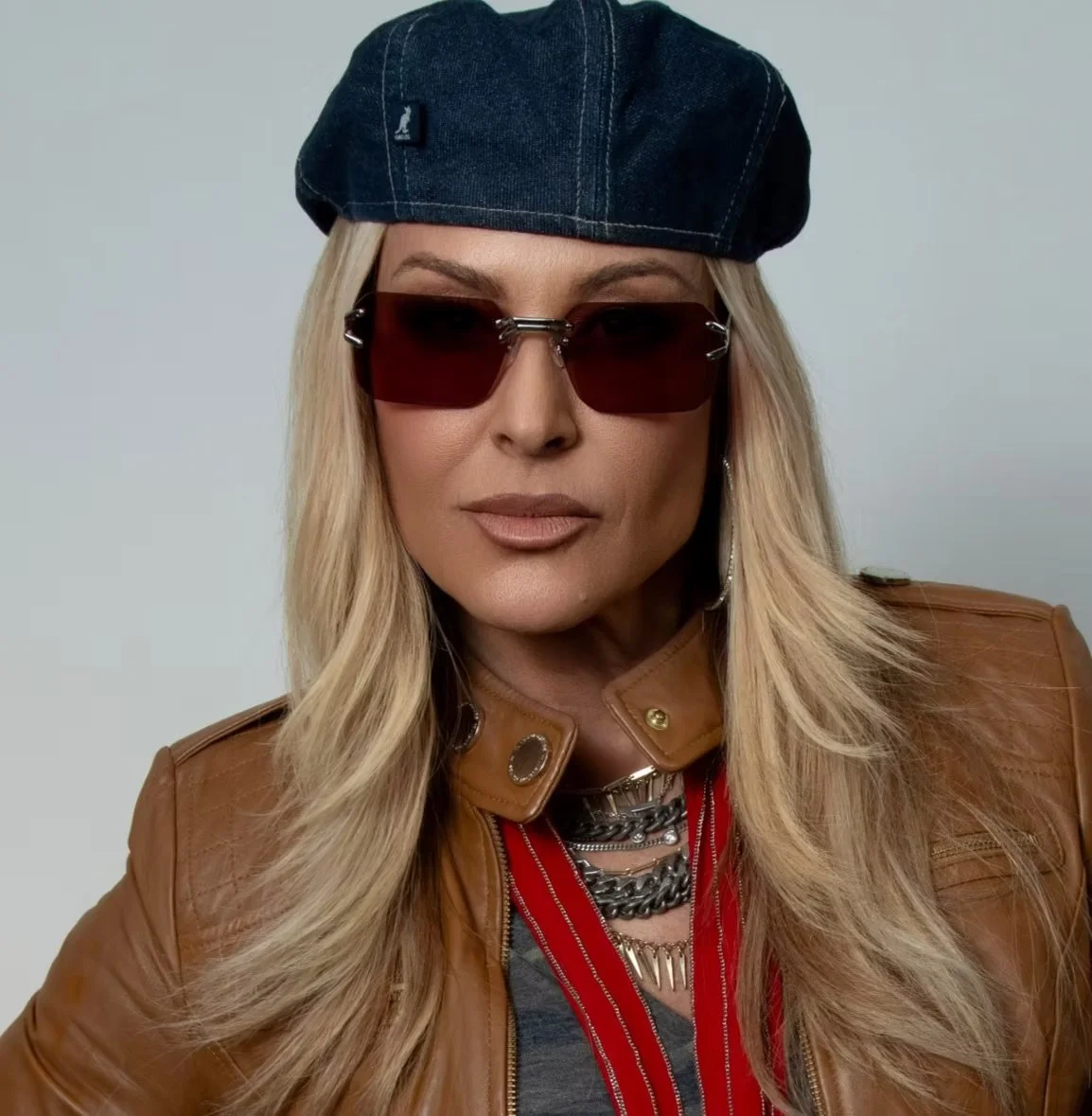
Courtesy of Anastacia
Anastacia
Anastacia Never Left
By Bonnie Langedijk
There are voices, and then there is Anastacia’s. Big, brazen, and impossible to ignore, it bulldozed into pop history with I’m Outta Love in 2000. With over 30 million records sold, an arsenal of awards across 31 countries, and global hits including Left Outside Alone and Paid My Dues, Anastacia has long secured her place among the rare singers whose voices became cultural touchstones. The Chicago-born is the kind of superstar who proves the music industry occasionally gets it right.
Yet her career has been anything but straightforward. Between the peaks of success came periods of profound challenge: two battles with breast cancer, enforced retreats from the spotlight, and the constant negotiation of an industry increasingly obsessed with novelty over longevity.
Twenty-five years on, she is still selling out arenas, still captivating audiences—most recently with her I’m Outta Lockdown tour—and now preparing her next European tour. When we meet, we talk about the alchemy of creation, the strange business of pop and what it means to carry a voice too distinctive to ever really disappear.
Bonnie: You've been such a consistent force throughout music, but you’ve also picked your moments. You’re not always visible, which is quite unique in the industry today.
Anastacia: Yes, part of that was health wise, which is why I always thought it wasn’t going to last forever. Maybe the ability to sing these songs consistently live is something a lot of people don't expect. You don’t just hear them, they hit you in the face. I also use a lot of comedy, and I think many are surprised by that. I don't even know that I'm trying to be funny, I just have a really good time up there.
Has your approach to performance and entertainment changed over time?
Anastacia: No, I think I've always had that joy and love for performing. It stems from this sense of giving. Of the music that I'm singing, the message, the energy. A lot of my songs were about struggling with things in the past, but I knew that it was strength I was trying to give to another person. People often tell me how my songs helped them, whether it was a bad relationship, got them through troubled times or it was their go-to song when they went out.
“A lot of my songs were about struggling with things in the PAST, but I knew that it was strength I was trying to give to another person. People often tell me how my songs helped them, whether it was a bad relationship, got them through troubled times or it was their go-to song when they went out. ”
Is that connection to other people what you love most about making music?
Anastacia: I never really knew that that existed until I started writing music and once I got the opportunity to have these people around me called fans. The amount of them that could connect to my stories, made me feel less alone. When I started sharing the things I went through, I didn’t really understand the vulnerability of it all. “Got punched in the face in LA”, I mean, I just said it. It was a cute phrase but people started asking, did you get punched? And I did, but it wasn't like I was punched in the face. I turned into a fight and I got knocked into the temple and was knocked out at a club. It worked well because the day after that I had a bruise and I went into the writing session and they said: “What the hell?” It was really one of those moments where I thought why don’t we just put that in a song?
Besides these out of the ordinary moments that spark inspiration, what does your creative process look like? Is it a structured process?
Anastacia: It usually is for me. It’s more of the structure of getting with a producer. If they have created some vibes, whether it's piano or keys, I find something that I like. What I start with is a mumble melody. It's something that catches you. When writing Left Outside Alone, it ended up having a double chorus, which isn't typical, but it worked for that song.
Is there anything you look for when writing a song?
Anastacia: I have to believe in the transitions. Creating a song is about connecting the parts so they make sense, which is why I love a bridge in a song. I like my songs to grow, but that just makes it harder for me because I have to sing higher notes. I laugh at it, but I often think, you haven't made it easy for yourself to sing these songs for the rest of your life.
For us listeners, it looks like it all comes very easily.
Anastacia: My voice is a gift. When I’m not feeling good or I’m working too much, you can't just spring it on. I couldn't record an album right now in the midst of the tour. Some people can, but I can't. When you’re in the studio, you’re using a completely different side of your artistic brain, it’s more analytical. I'm searching for that riff. I'm searching for what I need to do in this part of the song, and where is it going to go? I have to make a bunch of mistakes to find what that is. I can't do that when I'm in a show and I go to sleep at five in the morning. I find this rhythm. Even though, in between songs or when I'm talking to the audience, there’s no script. I like to talk to the audience and have no idea about what I'm going to say. In the studio it's all about vulnerability and you're just putting really bad notes out there sometimes to find the magical one.

Photography by Nora Jeker. Courtesy of Anastacia.
Your voice became instantly recognizable. That's rare in any era, but especially now. Do you think there's still space in our cultural moment for that kind of singular artistic identity?
Anastacia: I think so. There are voices that are being given the chance to rise that you recognize instantly, like Teddy Swims. I'm very happy that people are seeing his organic talent for what it is. And that he doesn't have to look like the boy next door. I saw him live not too long ago and he sang Small Hands, a song about his son. It’s the most vulnerable song about being a father. An artist with a song like that can really make you feel something.
A concert is also a moment you can't capture. I'm sure every stadium or city you play in feels different.
Anastacia: It does. A lot of it has to do with the country, the people, the energy that is connected to the culture. I treat them all as who they are. I don’t copy paste. Sometimes I'll pull out a piece of paper and attempt to say something in the local language, which probably no one understands. But the fact of even trying and just being able to fail in front of an audience, people appreciate that. What I’ve seen happening is inspiration turning into the loss of originality. Some artists lose the ability to give an organic performance. You can always tell when somebody is a natural, it’s great. And then you see someone who has so many followers, and I just don’t get why. But our world is different with followers and success. Can they sell out concerts or do they have a lot of followers that may not even be real? I don't really know what's going on in this internet world personally, but it does feel good to know that I’ve been in this career for over 25 years.
That’s a long time.
I've been married to my music for 20, actually 27 years. I’m really proud of having been able to hang tight with the difficult times, with the wonderful times and still have faith in our crazy business.
The business has changed since you started your career 27 years ago. The pace and the digital nature of everything, the visibility. How does that affect the role music plays in culture?
Anastacia: The business has changed, but they put a lot of pressure on us as well. I don't even know how many interviews I would be doing per day. You know, it was like bam, bam, bam, bam, then a different country. That private plane would get you there, and you just had to make it happen. When you are at that level, I don't think it's possible to enjoy it. I don't think you’re able to be present mentally. I just don't know how Taylor [Swift] does it. I'm just going to keep it real. Taylor and Ariana [Grande] really know business and have a good sense of their identities and the world around them. They also seem like they're really good people. Starting in the business so young and to still have not lost the plot, is impressive.

Photography by Nora Jeker. Courtesy of Anastacia
Taylor Swift especially protects herself from this constant circle of feedback. I don’t understand how you deal with everyone who feels like they should have access to you.
Anastacia: Yes, how do you navigate that as a human? And then she's taken all her music back. She lost it all, recreated it all, and now she owns it again. I just find her absolutely fascinating as an artist and as a woman.
Do you ever think about legacy?
Anastacia: I’m so proud of what I’ve left behind so far. Charity and philanthropy are really important. I know that when I say I love giving, I love making a difference in giving. That means helping another person, however that is. I've worked through a lot of the stress in my life through writing, but then when I had the health stuff, I didn't want to be the only one that had that information. I was learning things that I never knew, and it was communicated like just an old lady's problem, which it isn’t. The statistics are just baffling. And the women who get breast cancer, are the statistics. Some are scared to find answers. I want to know the answer because I prefer to get through the problem rather than be in the problem or worry about a problem that I don't know anything about. That’s a waste of time to me. Let's go to every doctor. Let's find out about all the diseases. In the end, you have to be your own advocate. You have to take care of yourself.
Take matters into your own ends. Have all the cards on the table. Is there a project you haven't worked on yet but would love to?
Anastacia: Yes. It's my book. It's all in my head. I just have to find the time in my schedule for it. I have to be in the right headspace. But I have the title, I know what I want to say. The one thing that I do know is, I’ll keep it real. It's not that kind of salacious book.
No. You don't seem like that kind of woman.
Anastacia: If you have nothing nice to say, then shut up.
This interview has been edited and condensed for clarity.
Shaniqwa Jarvis on why photographs are beautiful liars, grief as a portal, and the moment she found her whole practice hiding in a childhood snapshot.