She Designs the Jewelry Women Want to Wear

Courtesy of Charlotte Chesnais. Photography by Antoni Ciufo.
Charlotte Chesnais
She Designs the Jewelry Women Want to Wear
By Bonnie Langedijk
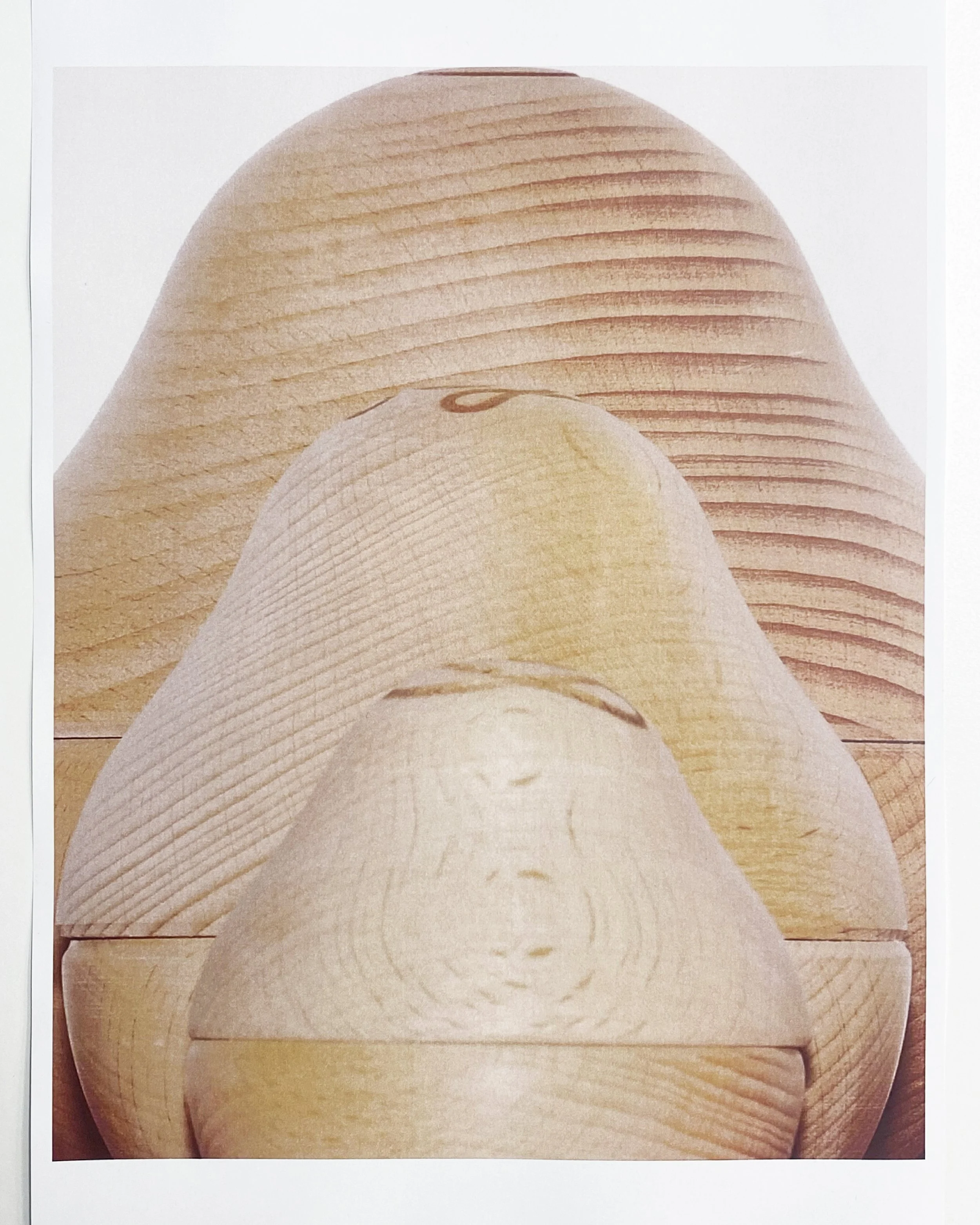
In a corner of Paris, Charlotte Chesnais is thinking about nipples. More specifically, about the little wooden box—affectionately dubbed the nipple box—that houses her jewelry.
"I had created a very simple packaging… but after visiting stores, I realized people either didn't take the box or just threw it away. I thought, if the box is beautiful, maybe they won't throw it away." She traveled to Japan and found a small wooden vessel with an organic, almost bodily curve. When M/M (Paris) transformed the shape into a three-dimensional object, Chesnais looked at the prototype and said what everyone else was thinking: "It looks like a nipple. Let's call it the nipple box." Turned by hand from responsibly sourced French wood, it perfectly encapsulates her approach: instinctive, honest, and unpretentious.
A Philosophy of No Philosophy
When asked about her design philosophy, Chesnais pauses. "It's very instinctive," she says. "I feel like my philosophy is almost… not having one."
For someone whose jewelry has become instantly recognizable—sculptural forms that balance elegance with strangeness—this might sound disingenuous. But spend any time examining her work, or listening to her talk, and it becomes clear that Chesnais designs from a very specific place: what works on her own body.
"I design 100% of the pieces, and they first and foremost have to appeal to me. I love things that are elegant but also a bit unusual — and above all, comfortable. That applies to everything. You'll never see me in a dress I can't breathe in or 12 cm heels. The jewelry I design reflects that mindset. I have three kids, I grew up in the countryside, I bike around Paris, I get my hands dirty — literally and figuratively. I want what I create to fit into my lifestyle. I have that Parisian kind of nonchalance too — I don't really think about how I dress. It's just who I am."
Courtesy of Charlotte Chesnais
Courtesy of Charlotte Chesnais
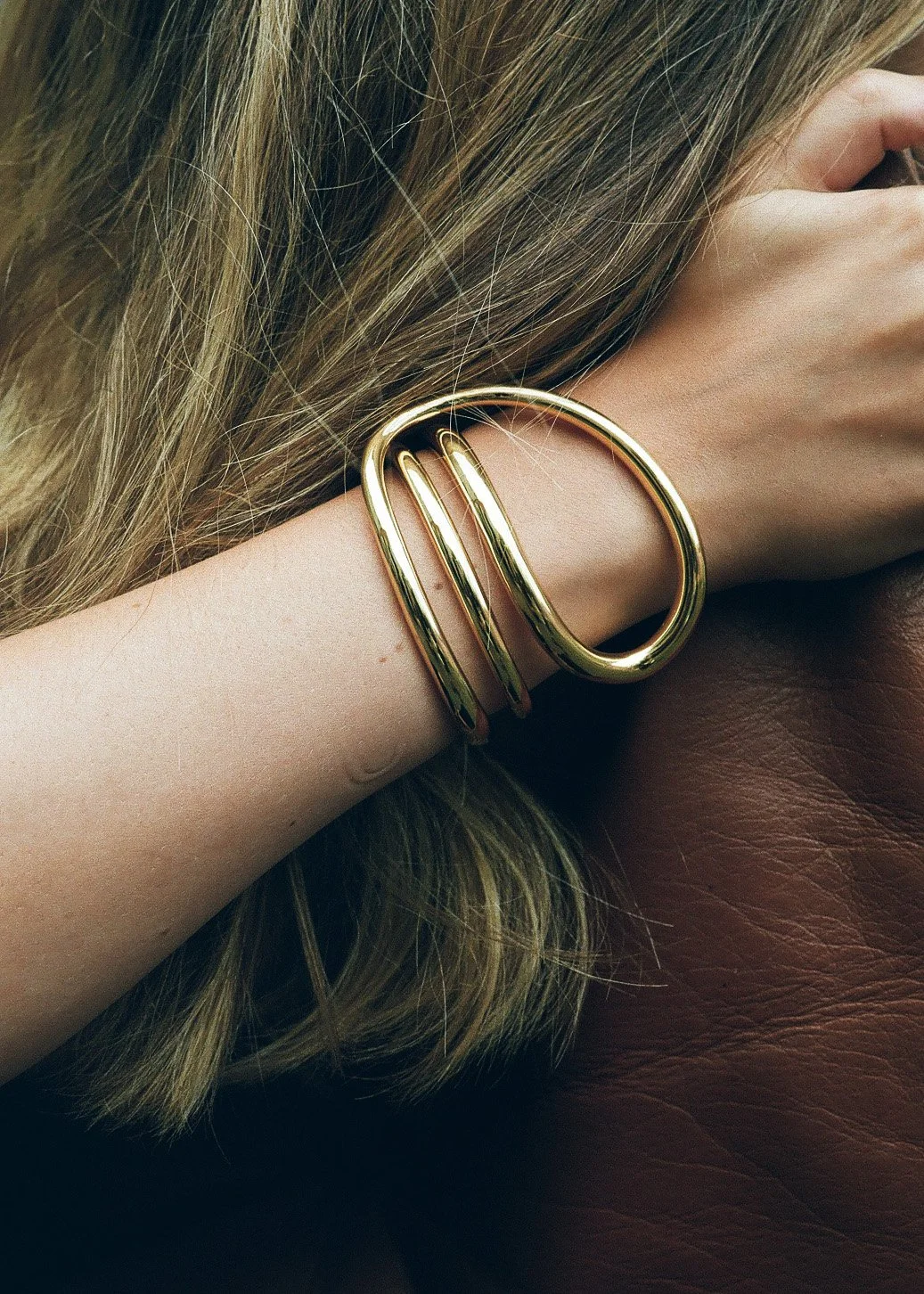
Her pieces exist between two states: worn and at rest. "It's a constant dialogue — a permanent tension — between sculpture and how it functions on the body," she explains. "Like saying a cake must be both beautiful and delicious." Some designs, particularly those that orbit the ear, require seven, eight, nine, even ten iterations. Pierced earrings tend to be the least sculptural because of the tiny post that interrupts the form. Rings, pendants, bracelets, and cuffs offer more freedom.
Lolita Jacobs, Creative Director at JACOBS+TALBOURDET-NAPOLEONE and Fashion Director at L'Etiquette Magazine, sees this duality as Chesnais's signature. "It's the balance between simplicity and complexity. On the surface, the pieces look very pure, but behind them is such a thoughtful, intricate process. That mix is what makes them so special."
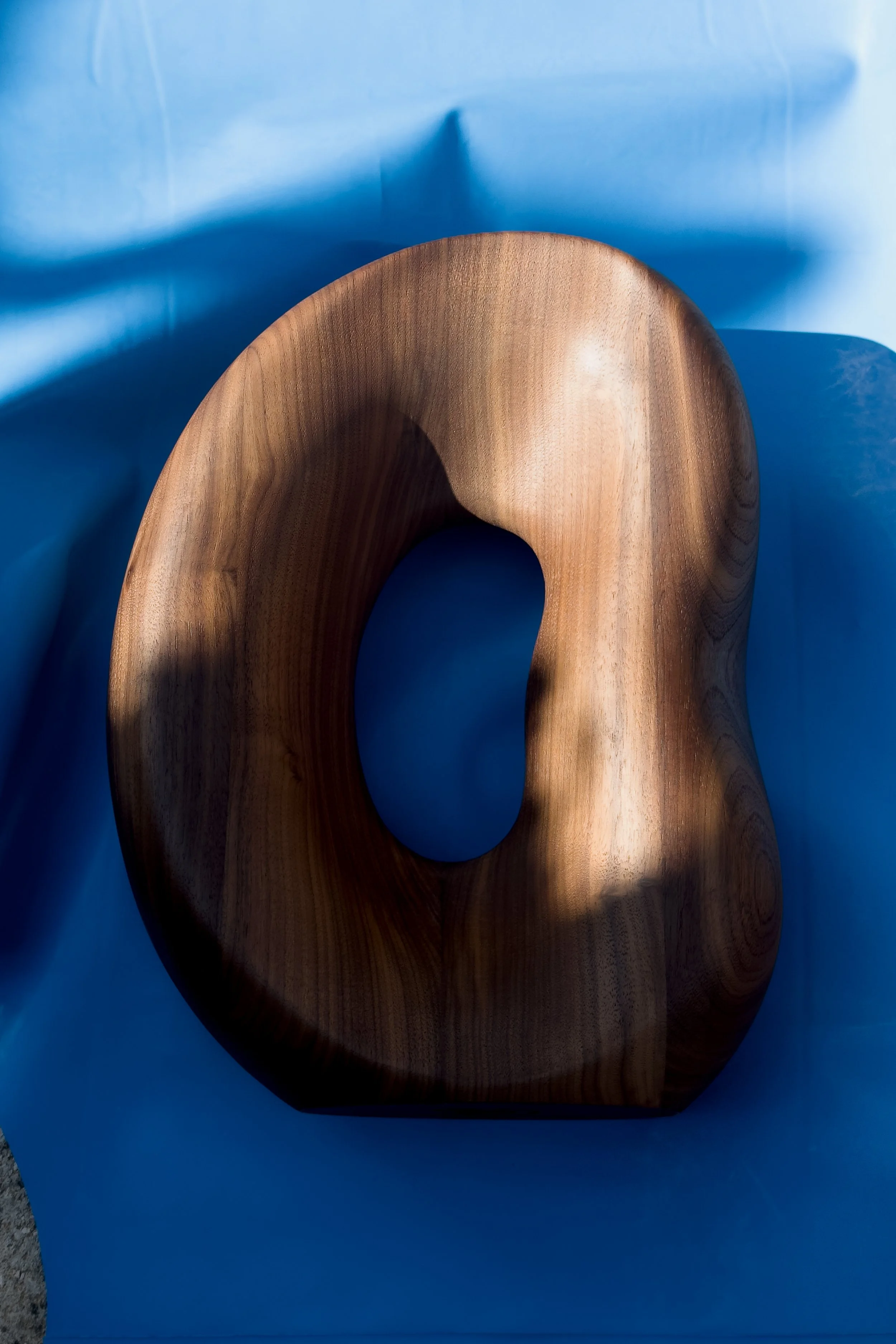
Scale, Chesnais insists, is never the starting point. "It's not scale that drives the process — it's form." She looks at Brancusi and Jean Arp sculptures and mentally shrinks them, testing whether they could wrap around a hand or an ear. "There are some forms that, to me, feel kind of universal. Some live in all sizes — I can see them in my head, large or small."
A Legacy of Strong Women
This confidence to trust her own body originates from the women who raised her.
"I come from a line of very strong, independent-minded women. My grandmother, who's 100, still has the spirit of a 15-year-old — she's incredibly modern."
When asked in another interview if she found it hard to start a business, she said no. "I had seen my mother and grandmother do it. It felt instinctive. I copied them, without even realizing it. In families where women have to fight harder to be heard, I can imagine it's more difficult. But I never thought of it that way back then. Now, at 40, I see the immense gift they gave me — this freedom they passed on without knowing it. And that's priceless."
This instinctive confidence has attracted a clientele of equally strong women who share her refusal to conform. From Pascale Mussard, co-artistic director of Hermès, to photographer Viviane Sassen and actress Léa Seydoux. Her collaborators—from artist Marte Mei van Haaster to houses like Christofle—reflect this same ethos.
Artist and model Marte Mei van Haaster, who met Chesnais backstage at Balenciaga in 2012, still wears her first pieces: a silver shell keychain and interlocking circle earrings. "I love her perfect balance of playfulness and minimalism. The craftsmanship is impeccable, and the designs are simple, yet never plain, boring, or abstract. There's always a feminine, playful quality that makes them feel alive."
Courtesy of Charlotte Chesnais
Courtesy of Charlotte Chesnais
Clara Cornet, now Meta's EMEA head of fashion and beauty partnerships, met Chesnais at the very beginning. "She was possessed by her work and had me try on Every. Single. Piece! She was so generous, explaining at length how to wear her design and wanting you to feel the jewelry against your own skin. She still does today with the same drive, care and dedication."
This tactile intimacy—the insistence that jewelry must be felt, not just seen—remains central to how Chesnais works.
Refusing the Rules
Chesnais's approach extends beyond design to how she views the entire jewelry industry. Where most brands tether their offerings to life's traditional milestones—engagements, weddings, anniversaries—she sees things differently.
"Personally, I've freed myself from that mindset. I didn't get married, and in my head, things aren't so traditional. I don't think, 'this ring is for a wedding' or 'this one is for an engagement.' I don't even know the customs. If I ever had to choose, I'd just pick the one that stirs an emotion in me — not necessarily what tradition says. I don't want to be boxed into that classic jewelry calendar."
For ten years, her brand has spoken to a diverse audience—mostly women, but not exclusively—across cultural backgrounds and ages. "I hope we continue in that direction. Maybe we'll attract some more traditionally minded clients, but also people who don't have fixed ideas about what a piece of jewelry should mean."
She's also observed a broader cultural shift in how people relate to brands. "There's been a clear shift — a kind of disinterest in big brands from people who, in the past, used to care a lot about them. And that's where brands like mine stand out. There's a craving for story, for authenticity — something you maybe get less with large houses. They just don't inspire the same kind of dreaming as they used to."
Her timing was fortunate. The brand emerged just as social media reshuffled the deck, giving younger designers visibility that traditional print never would. "Traditional print media used to revolve around the same few names, but now the deck has been reshuffled — and that's exactly when we launched the brand."
While the industry has shifted, she's stayed true to her original direction. "The brand's DNA has evolved, but it hasn't fundamentally changed — it's matured. The brand's values, which are closely aligned with my own, haven't changed either. We've always embraced a reasoned approach to production, with tightly edited collections. We aim to make the best choices — in terms of workshops, materials, and packaging."
This includes producing in Europe, where she knows the working conditions. "I would feel less at ease producing outside of Europe, without knowing about the working conditions of the people involved. After all, we're working in a 'beauty' industry — not one of necessity."
Even in how she presents her work, Chesnais refuses convention. Her brand presentations often feel more like museum installations than jewelry displays—a deliberate choice rooted in her fascination with museography itself. "Beyond the artworks themselves, what really resonates with me is the way things are displayed — I'm very sensitive to that. For instance, I absolutely loved the Museum of Egyptology; the way everything was arranged really stuck with me. I have to say, museography speaks to me much more than traditional brand presentations. You won't see cones covered in satin in my world — I try to be unique in the way I present jewelry, too."
Marte Mei van Haaster describes Chesnais's holistic approach as uniquely organic. "What I admire is how seamlessly Charlotte weaves her life and her brand together. She seems to lead the brand guided by her heart, instincts, and inspirations. Whether it's the way she designs her showroom, builds her team, or chooses photographers and collaborators, it all feels organic, like a natural extension of her passions. Our own collaboration grew out of that same spirit: full of trust, fluid communication, and a sense of ease. Working with her feels effortless because it's so genuine, and you can tell it is born out of her shared passion and respect."
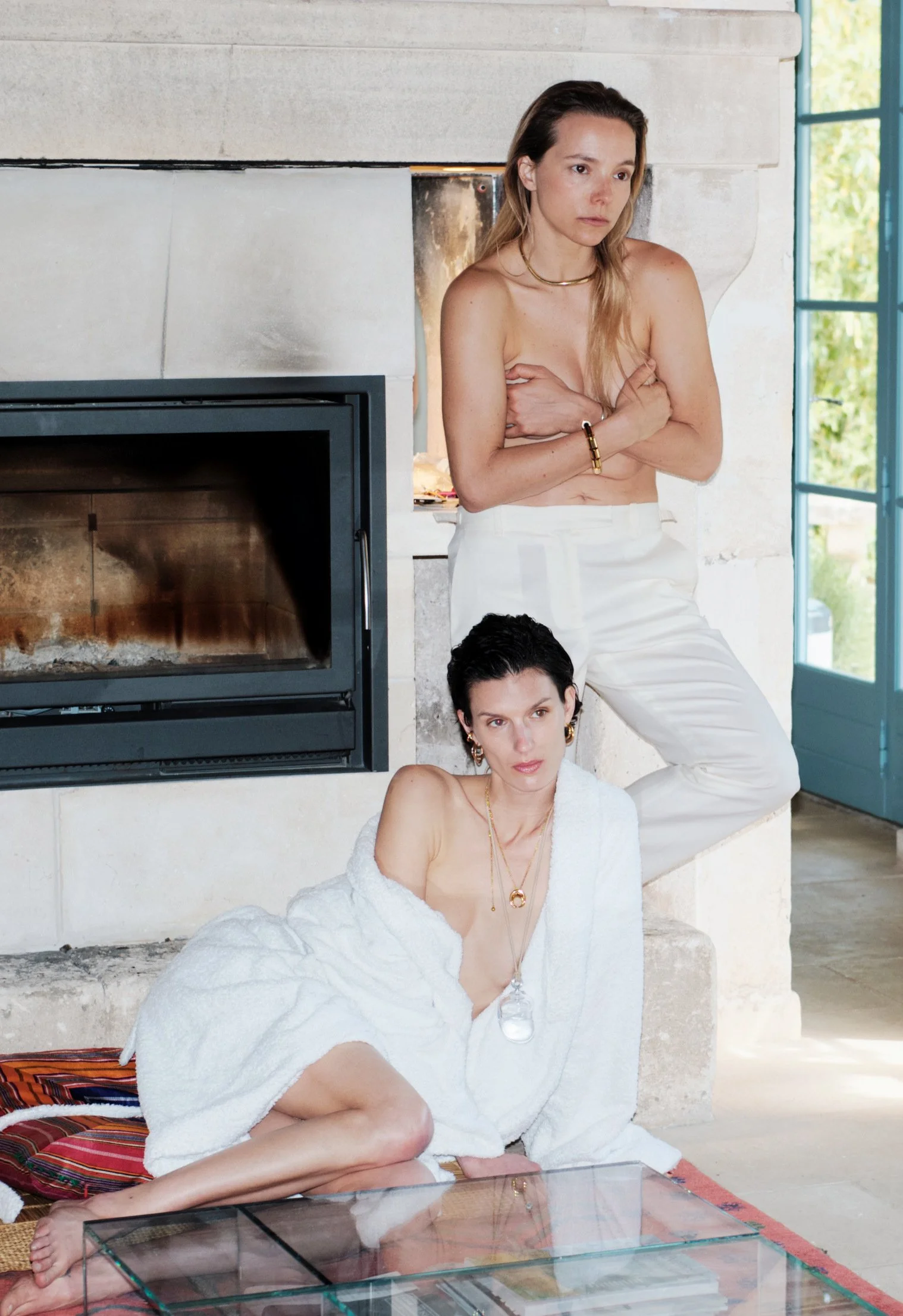
Marte Mei van Haaster and Charlotte Chesnais. Courtesy of Charlotte Chesnais.

Courtesy of Charlotte Chesnais.
Japan: A Second Home
A decade in, Chesnais is opening a store in Tokyo—a city that has shaped her aesthetic since her years working at Balenciaga. "It all started with Nicolas Ghesquière — we went to Japan together on inspiration trips. He absolutely loves it, and he passed that love on to us. Since then, I've visited at least once a year. I feel very at home there. I feel like my aesthetic is understood. The response from the press and buyers has been amazing. Japan and France have very different cultures, but both are incredibly refined — and I think that's where our connection comes from. We both have strong traditions and particular ways of doing things. To me, that explains our mutual fascination. We're extremely different, yet very sensitive in our approach."
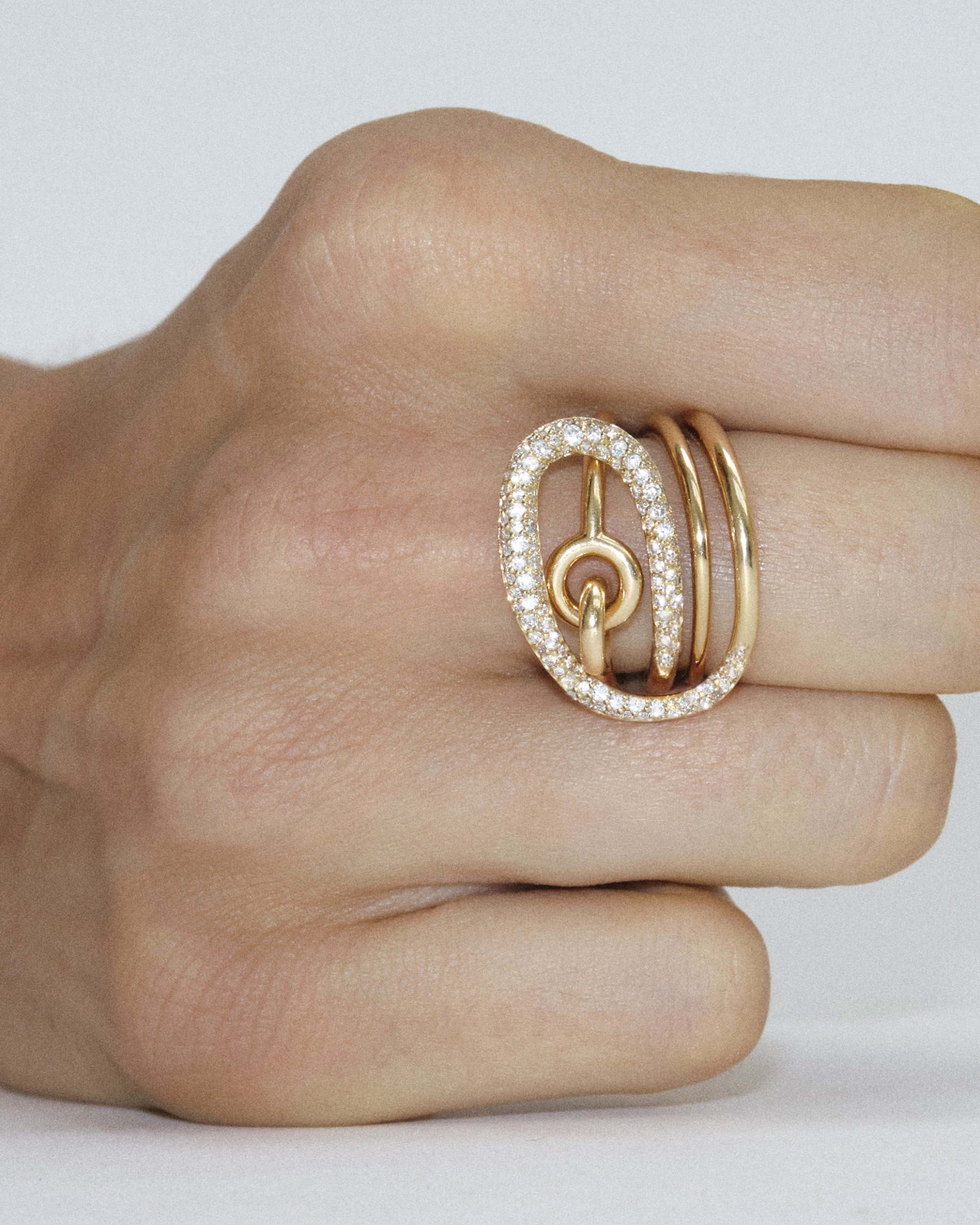
The Tokyo store will also launch her recently introduced fine jewelry collection—an entirely new chapter for the brand after a decade of working in vermeil and silver. It's a market that understands restraint, craft, and the modern approach to jewelry Chesnais has always championed.
What's Next
Chesnais's ambitions extend beyond jewelry. She dreams of designing a lamp, a chair, footwear, perhaps even a phone. An upcoming collaboration with Christofle launches this fall, and there are others in the works she can't yet discuss.
She doesn't feel pressure around constant newness. "I don't feel pressure around newness — honestly, I'd love to launch ten collections a year, even if there's no real point to it. If I had the audience, the money, the time — it's truly what I enjoy doing most." The real challenge, she says, is ensuring every new piece earns its place without cannibalizing older favorites. "Every new piece has to earn its place — that's the hard part."
Jacobs recalls Chesnais's irreverent energy perfectly. "Charlotte is quite hilarious. She's sharp and witty. I'll never forget a launch event she hosted at her studio: there was an indie rock band playing, and at some point she joined them, grabbed the bongo drums, and went for it like her life depended on it. Black sunglasses, perfect rhythm. That's Charlotte."
It's this same energy—instinctive, unbothered, entirely herself—that has defined Chesnais's decade in jewelry. The women who raised her gave her the freedom to trust her instincts. The women who wear her work share her refusal to conform. And the jewelry itself exists in that rare space where sculpture meets daily life, where timelessness meets irreverence, where nothing needs to follow the rules because the rules were never hers to begin with. After ten years, Charlotte Chesnais has proven that the most authentic path forward is simply to stay true to yourself.
This interview has been edited and condensed for clarity.


Shaniqwa Jarvis on why photographs are beautiful liars, grief as a portal, and the moment she found her whole practice hiding in a childhood snapshot.