Luxury's Best-Kept Thinker
Courtesy of Fanny Bourdette-Donon
Fanny Bourdette-Donon
Luxury's Best-Kept Thinker
By Bonnie Langedijk
It would be a challenge to find someone who has shaped the global beauty business quite like Fanny Bourdette-Donon. The Paris-based international global communications and brand strategy executive has spent the past fifteen years shaping the image, creating relevance and image for some of today’s most recognized brands including Dior and Augustinus Bader.
Bourdette-Donon was among the first to recognize that as our lives migrated online, the old grammar of luxury—aspiration, distance, desire—required rethinking. Her work reoriented the relationship between brand and consumer, placing people inside the narrative rather than beneath it. This was no small shift in an industry that has long conflated control with prestige, and treated connection as a concession. She understood that culture, not commerce, is what makes a brand endure.
Her work sits at the intersection of luxury, beauty, and wellbeing, grounded in intentionality, care, and cultural relevance. In an era of constant acceleration, she's managed to preserve something increasingly rare: meaning. We caught up with Bourdette-Donon—but we'll let her do the talking.
Bonnie: You’ve worked with various luxury brands in the beauty industry, including Dior. The house has this timelessness to it and sense of quality, but it can also feel a bit distant. How do you make a brand feel approachable yet aspirational?
Fanny: What has always fascinated me is the tension between heritage and a deep anchoring in the “now”, how a house can remain rooted in its history while retaining the intellectual and cultural acuity required to lead in the present moment. Approachability, in that sense, is not about dilution. It’s about relevance. It requires finding the right cultural languages, the right partners and the right moments to speak, while preserving the integrity and elevation of the brand. That balance is delicate and never static. It demands constant calibration, attention and restraint. Beauty, in particular, is an exceptionally dynamic category. It sits at the crossroads of culture, identity, desire, and self-perception, which means brands must remain closely attentive to the broader global context, from geopolitical and economic realities to more intimate emotional shifts. I believe in meeting people where they are. Not just aesthetically, but psychologically and culturally. Understanding what they are navigating at a given moment; their aspirations, their anxieties, their expectations, and creating experiences that resonate with that reality while still offering aspiration, clarity and meaning. When done well, a brand feels both elevated and deeply human.
Very often when people think about feminism, it’s connected to this idea of anti-femininity. And I think there's such a space to be both a feminist and feminine.
Fanny: There has long been a tendency to frame feminism in opposition to femininity, as though the two were mutually exclusive. That association is, in many ways, the result of a historical context in which women were excluded from intellectual, professional and public spheres, while being reduced to their appearance. For decades, femininity was tolerated only when it remained ornamental and silent. Women were expected to be polished and agreeable but not expressive or analytical. In that context, rejecting visible markers of femininity became, for some, a necessary strategy to gain access, legitimacy and a voice. It was not a rejection of femininity itself, but a response to the constraints placed upon it.
Today, while women are more present across industries and leadership roles, power remains largely unevenly distributed and many environments still impose implicit codes around how authority should look. In that sense, the tension has not disappeared, it has simply shifted. I believe that showing up as one’s full self, intellectually rigorous, emotionally complex and unapologetically feminine, is a deeply political act.
“Very little of what we’ve done was ever CALCULATED or driven by market analysis. From the beginning, our approach was rooted in dialogue.”
Agreed. You shaped so much of the cultural relevance for Dior. What do you think cultural relevance means today?
Fanny: Cultural relevance today is about being meaningfully present within the conversations shaping how people live, think, and relate to themselves and to the world. Relevance is determined by how precisely and intentionally a brand engages with its time. In beauty, perhaps more than in any other category, that relevance is inseparable from time and context. I’ve always believed that beauty is less about individual products and more about how a brand shows up in a given moment. Our relationship to beauty shifts alongside broader forces: political climates, technological acceleration, collective fatigue, all of which reshape expectations and meaning. Relevance, then, requires listening. In an over-digitized, over-produced landscape, brands are under constant pressure to speak, to launch, to generate content. Yet cultural accuracy rarely comes from volume and noise; it comes from attention. Listening allows brands to sense the shifts happening beneath the surface, the ones not yet visible but already in motion. And listening demands both humility and imagination. Humility, to accept that culture leads and brands respond. Imagination, to translate that understanding into narratives and experiences that feel precise and of their time. It is this balance that allows a brand to remain relevant.
Brands can't control the narrative anymore.
Fanny: And that shouldn’t be the aspiration. What replaces control is responsibility. We are moving away from a top-down model of messaging toward a landscape where meaning is shaped collectively by clients, employees, culture and lived experience. In that context, attempts to overly control narratives have increasingly backfired. What endures is coherence: the alignment between what a brand claims and what it consistently delivers. This is why the fundamentals matter more than ever. The “why” and the “what” are scrutinised through product quality, responsible production chains, and the way brands care for their most loyal clients. In luxury, relevance today is inseparable from the experience: how a brand treats its customers and how it builds trust through consistency. Listening is central to that responsibility: sensing shifts early and responding with precision. With the acceleration of digital tools and AI, there is little excuse for poor service. The technology exists to enhance personalisation, streamline interactions and elevate care. When used well, it reinforces what luxury ultimately stands for: quality, experience and trust.
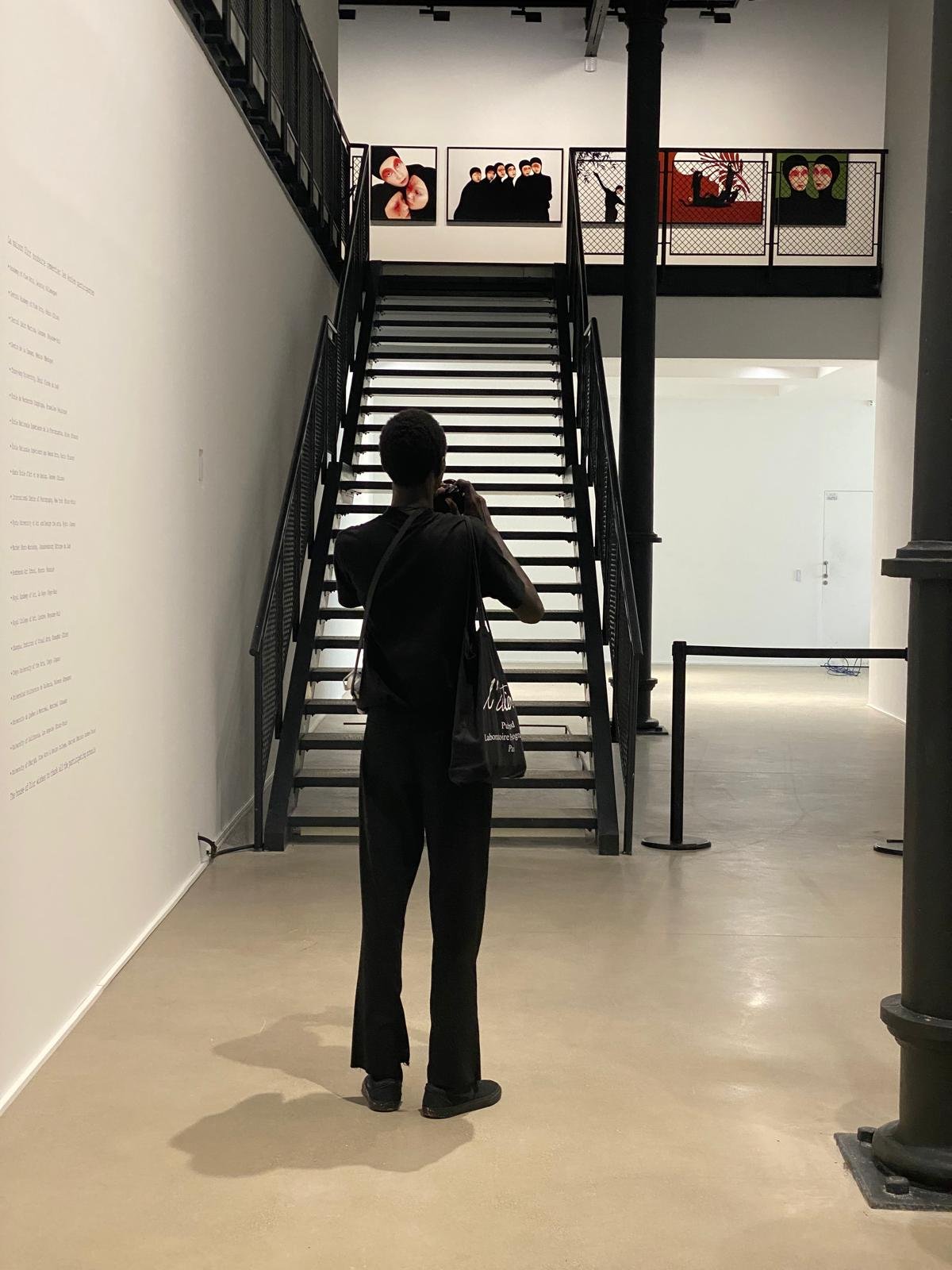
“The Dior Photography and Visual Arts Award for Young Talents was one of the initiatives closest to my heart. What mattered most was not only the mission of the Prize, but the ability to open Les Rencontres, inviting international photographers to experience it from the inside, to observe, exchange, and immerse themselves in the conversations and the work,” Bourdette-Donon told HURS.
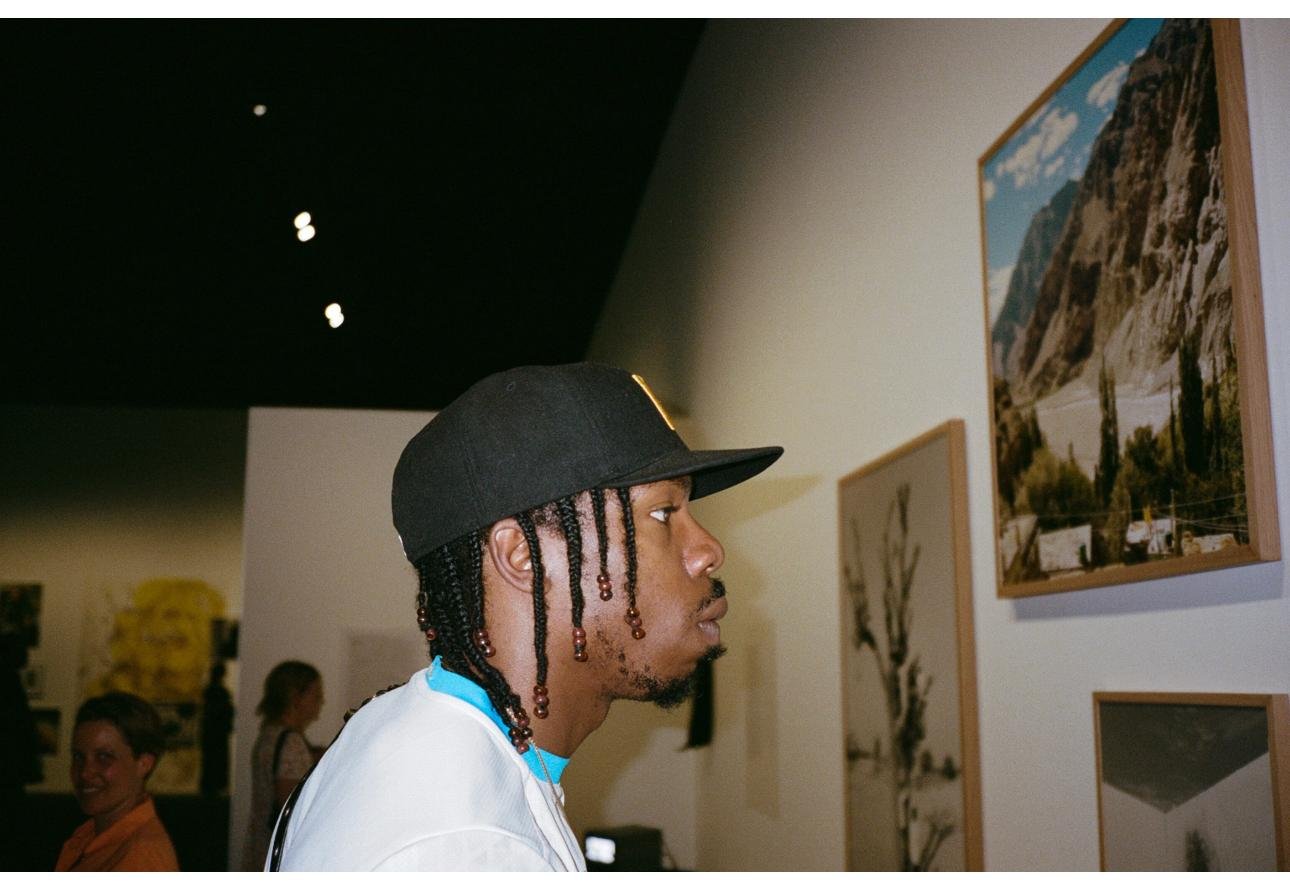
“Welcoming artists such as Malick Bodian, Dexter Navy, and Gabriel Moses was deeply meaningful. My greatest joy today is seeing them return independently, planning exhibitions and passing the experience forward by bringing their friends and communities with them.” - Fanny Bourdette-Donon
How do you see the role of beauty brands within the blurring between cultural disciplines?
Fanny: Beauty has always been influenced by forces beyond aesthetics, but those influences are now increasingly shaping how the category evolves. Today, beauty is informed as much by geopolitics, technological acceleration, climate concerns, and access to health as it is by form or image. These dynamics don’t sit at the margins of the industry but actively shape how beauty is understood, practiced and valued. This blurring also creates a significant opportunity. Beauty brands are uniquely positioned to play a more substantive role in areas such as science, longevity and wellbeing. Beyond product innovation, there is growing potential to support scientific research, help fund it, and contribute to making its insights more accessible to a broader audience. There is also a natural and increasingly relevant dialogue between beauty and the arts. Through patronage, cultural collaborations and creative experimentation, brands can elevate conversations around mental health, emotional wellbeing, and perception. Whether through colour, sound, or scent, beauty has the capacity to translate complex scientific concepts into sensory experiences that resonate on a deeply human level. As science, technology, art and culture continue to converge, beauty becomes less a standalone category and more a bridging language linking care and creativity, innovation and emotion. The brands that understand this shift will move beyond surface relevance and contribute meaningfully to the cultural landscape.
In building that bridge, there’s often a need for collaboration. Throughout your career you've been such a cultural connector. How do you decide which creatives and collaborators are the right fit for a brand?
Fanny: It’s never about strategy, but about alignment. It’s a deeply intuitive process. When a match is right, it presents itself as evidence, viscerally. There is a sense of coherence that settles before anything is articulated. I spend a great deal of time immersed in creative worlds: galleries, studios, ateliers, sets. I’m attentive to image-makers and creators not only for what they produce, but for what drives their work; the questions they’re asking, the language they’re developing, and how their practice evolves over time.
I don’t believe in one-off collaborations. Authentic partnerships require depth, trust and duration. My first question is always: what are you building and where are you going? A collaboration only makes sense when a brand can genuinely enter into that trajectory, not by redirecting it, but by recognising how its own project can sit naturally within a creator’s body of work. What I find most damaging is when a brand is drawn to a creator’s voice, only to dilute it, to ask them to become more “neutral”, more easily digestible. That approach strips the work of its colour, its tension, its soul. And in doing so, it undermines the very reason for the collaboration. A successful partnership is not performative; it’s generative. It’s built on shared values, mutual respect and a common horizon. When a brand chooses to echo and amplify what a creative already does, rather than overwrite it, something lasting is created. Not just content, but attachment, trust, and meaning on both sides.
I love what you said about longevity. So much of the media, of collaborations, of partnerships, has become transactional.
Fanny: I was recently watching an archival interview with Mr. Valentino in which he spoke about the growing tendency for people to approach their work as a succession of roles, rather than as a commitment to something lasting. What struck me was how timeless that observation felt. The idea that contributing to a house is not simply about executing a job but about participating in a legacy that extends beyond any individual moment. Every collaboration leaves a trace. Each decision, each partnership contributes to a brand’s long-term narrative. That sense of responsibility is a powerful driver for me. It’s also why I’ve never felt the urgency to build something solely under my own name. I find deep meaning in protecting and contributing to the radiance of a house within the context of my own time. Longevity, to me, is not about permanence for its own sake. It’s about continuity of vision, coherence of values and the humility to understand that our role is to add with care.
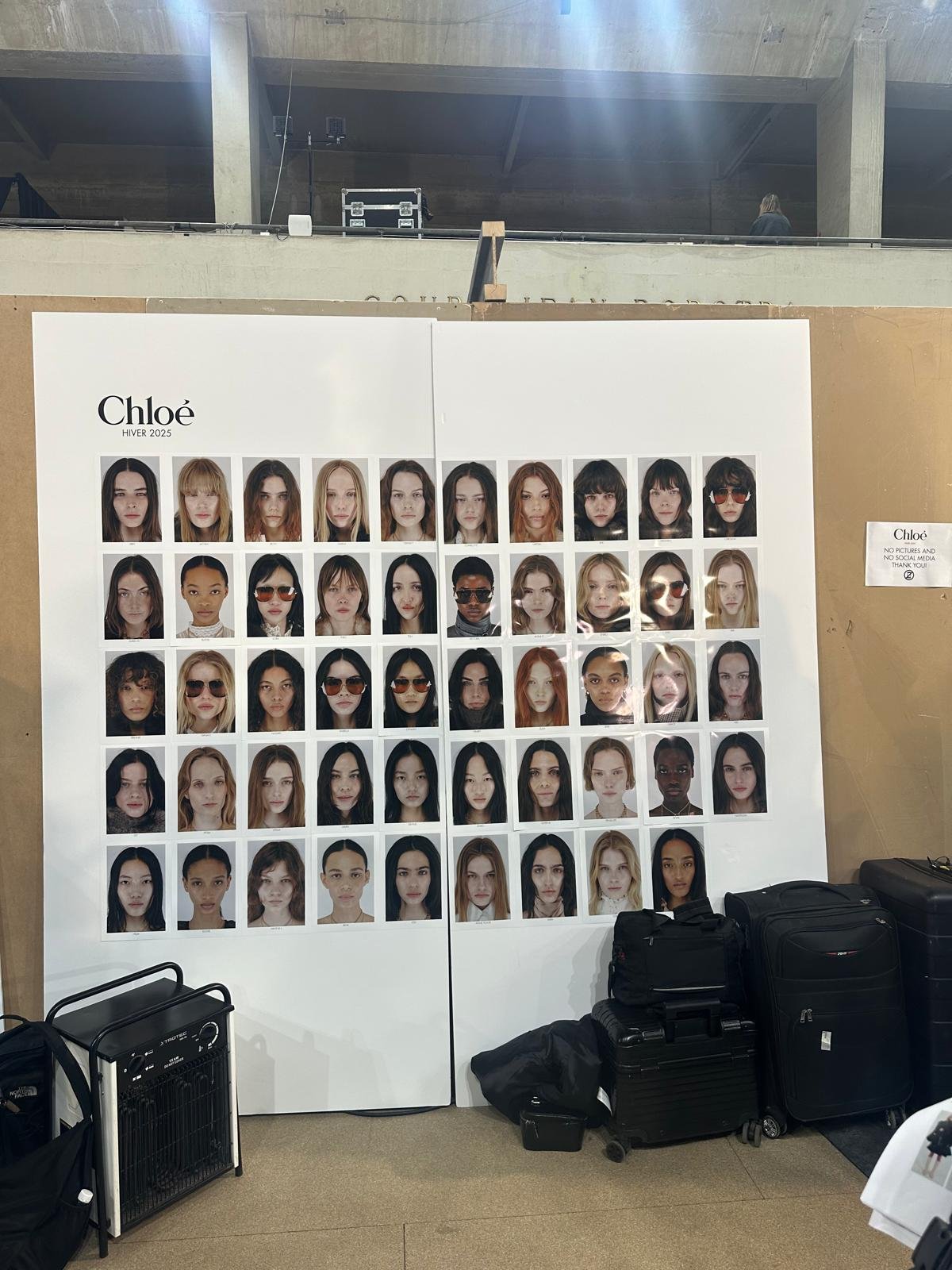
“I was very proud of the partnership we established with Chloé for the Winter 2025 show. It was a true collaboration, built backstage around skin preparation and the idea of effortless radiance. The Chloé woman is instinctively chic, and her skin should be seen, not disguised,” Bourdette-Donon shared.
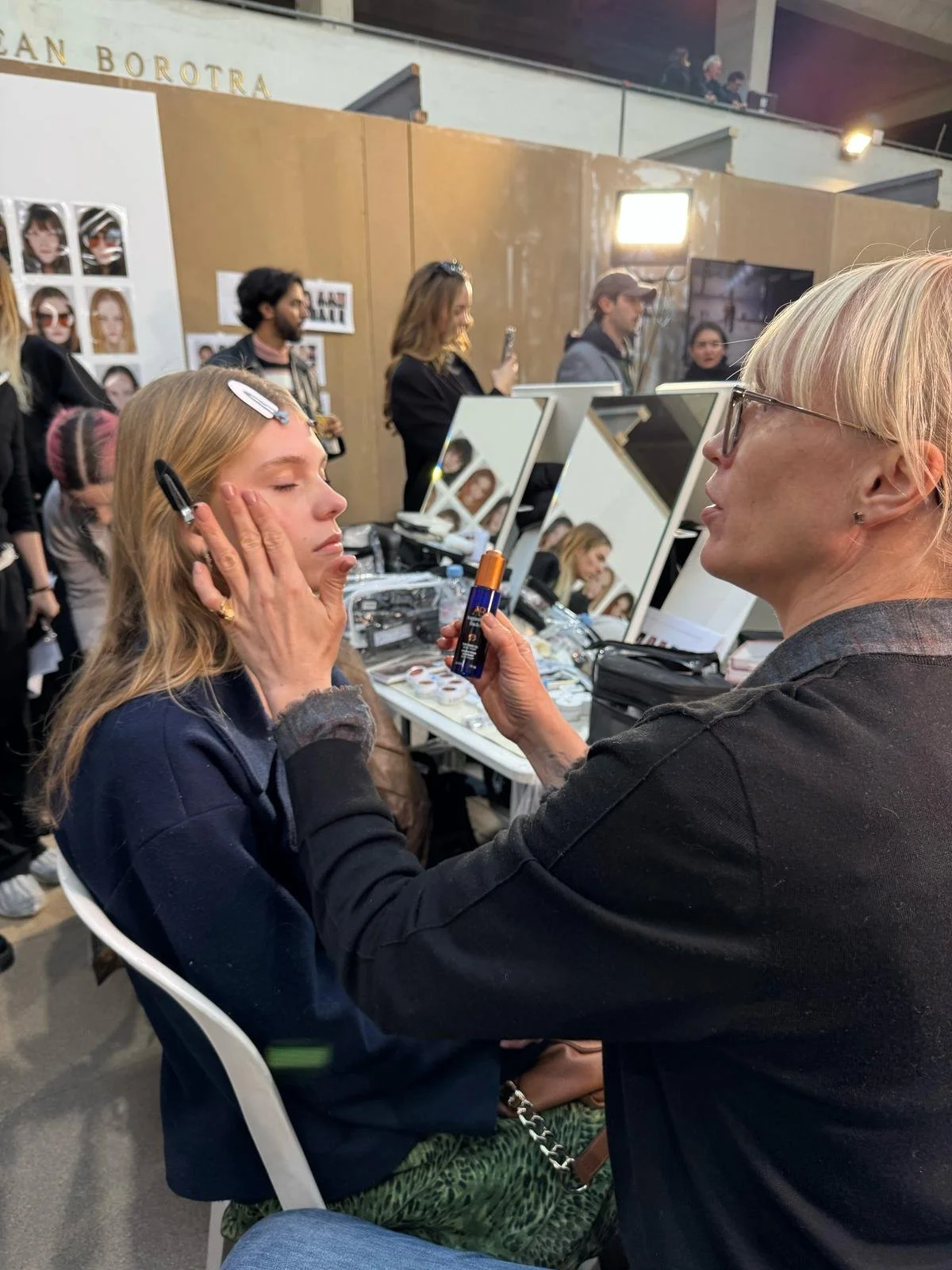
“Working hand in hand with Karin Westerlund, the oil was fully integrated into the final beauty look to achieve skin that felt real, fresh, and luminous. Skincare became part of the silhouette itself, reinforcing that sense of ease and authenticity.” - Fanny Bourdette-Donon
And there’s so much strength in that. What do you hope women take away when they walk away from something you've helped shape?
Fanny: A sense of belonging. That’s what matters most to me. Feeling seen, understood and recognised beyond the surface. When someone tells me, “I still think about that piece of content you shared years ago,” it touches me in a way that’s difficult to put into words, Bonnie. Not because of the content itself, but because it resonated and stayed. What I hope women take away is that they are not alone in what they feel, question or aspire to. That there is room for complexity, for softness and strength to coexist. If something I’ve helped shape can offer that sense of connection, then it has done what it was meant to do.
Which conversations happening outside of the beauty industry are you drawn to right now?
Fanny: I’m drawn to conversations that explore identity, culture preservation and conservation. Dialogues around feminine leadership, mental health, intergenerational trauma and climate grief feel particularly urgent right now. What connects them is a shared emphasis on care: How we understand ourselves, how we repair what has been fractured and how we remain attentive to one another in moments of uncertainty. These conversations sit outside the beauty industry, yet they profoundly inform and influence it. Ultimately, they remind us that care is not a passive concept. It is through this attentive and humane lens that the most meaningful work, in any field, continues to emerge.
This interview has been edited and condensed for clarity.

We spoke with Alice Diop about the books that have shaped her intellectual life, how literature becomes a form of freedom and resistance and the role of Chambre à soi in making space for the subjectivity of Black women.