Turning Contaminated Land Into Collectible Design
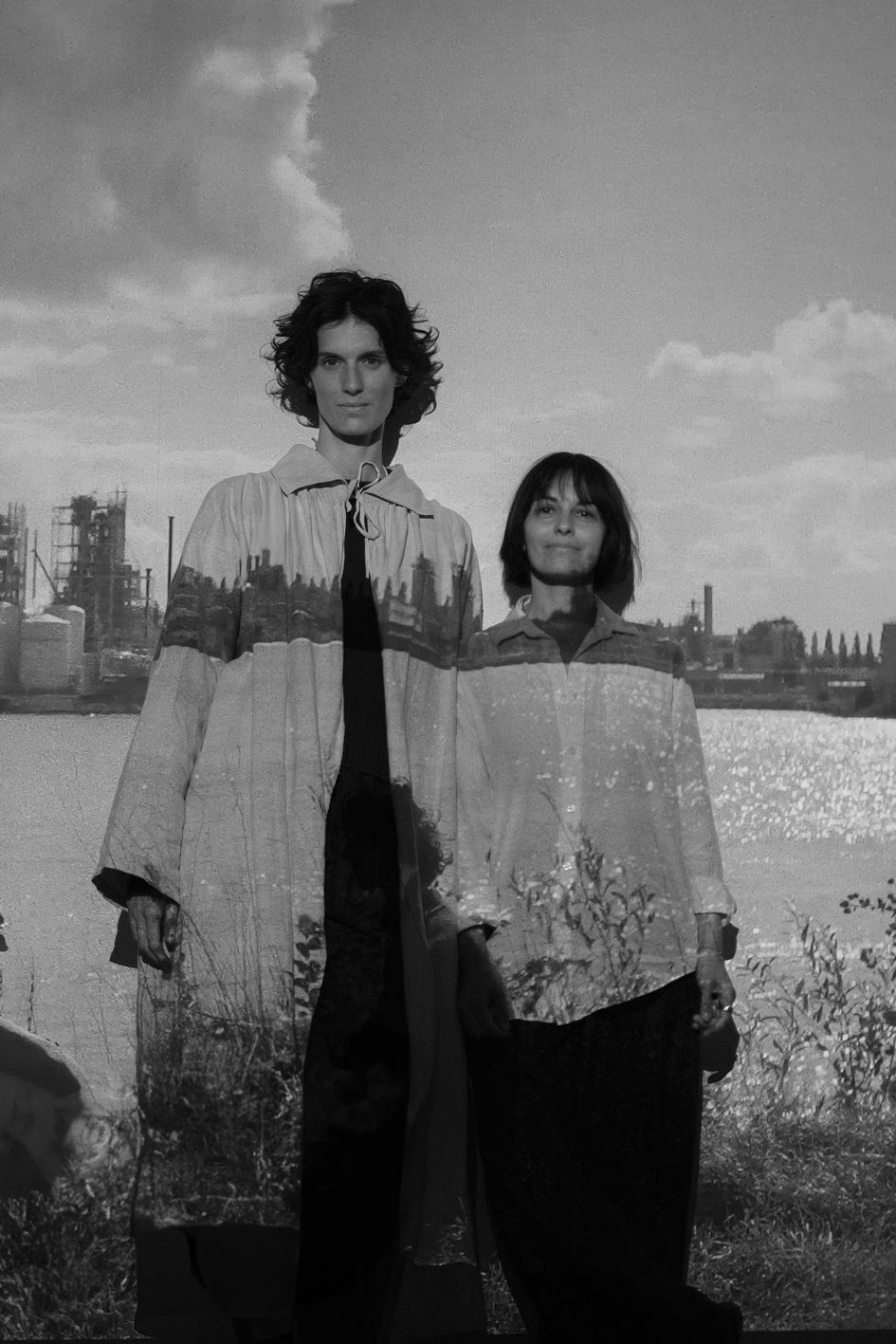
Courtesy of St Vincents
Marte Mei van Haaster and Gigi Jackman
Turning Contaminated Land Into Collectible Design
By Bonnie Langedijk
Marte Mei van Haaster doesn't believe in waste. A contaminated field, an off-cut of marble, a chemical the rest of us would rather forget, to her, each is raw material, the first step in something regenerative. Geraldine "Gigi" Jackman comes at it from the other side of the object: a piece that's lived with and repaired becomes closer to an heirloom than a piece of furniture. Both think in the same direction: against the churn of seasons and toward what lasts.
That shared instinct is what drew Jackman to van Haaster’s work when the two met at Collectible Design in New York. What sets van Haaster’s apart is the philosophy behind her work: a way of working Mei calls land-allyship. It treats the designer as an ally to nature rather than an extractor of it.
That method finds its fullest form in the exhibition Mending Lands that brings the two together here: van Haaster’s solo show at St Vincents, the Antwerp gallery Jackman runs with her partner Henri Delbarre. The work grew from a year-long residency in Zeeland, a region of the southern Netherlands scarred by PFAS contamination from nearby chemical plants. Working with scientists, ecologists and local communities, Mei turned to phytoremediation, using hemp to draw these "forever chemicals" out of the soil, then built the collection from the plants' decontaminated stems: tables, shelves, benches, mirrors and tiles in deep bordeaux and semi-translucent jewel tones. A closed loop, in which making helps heal the ground it draws from.
But we’ll let them do the talking.
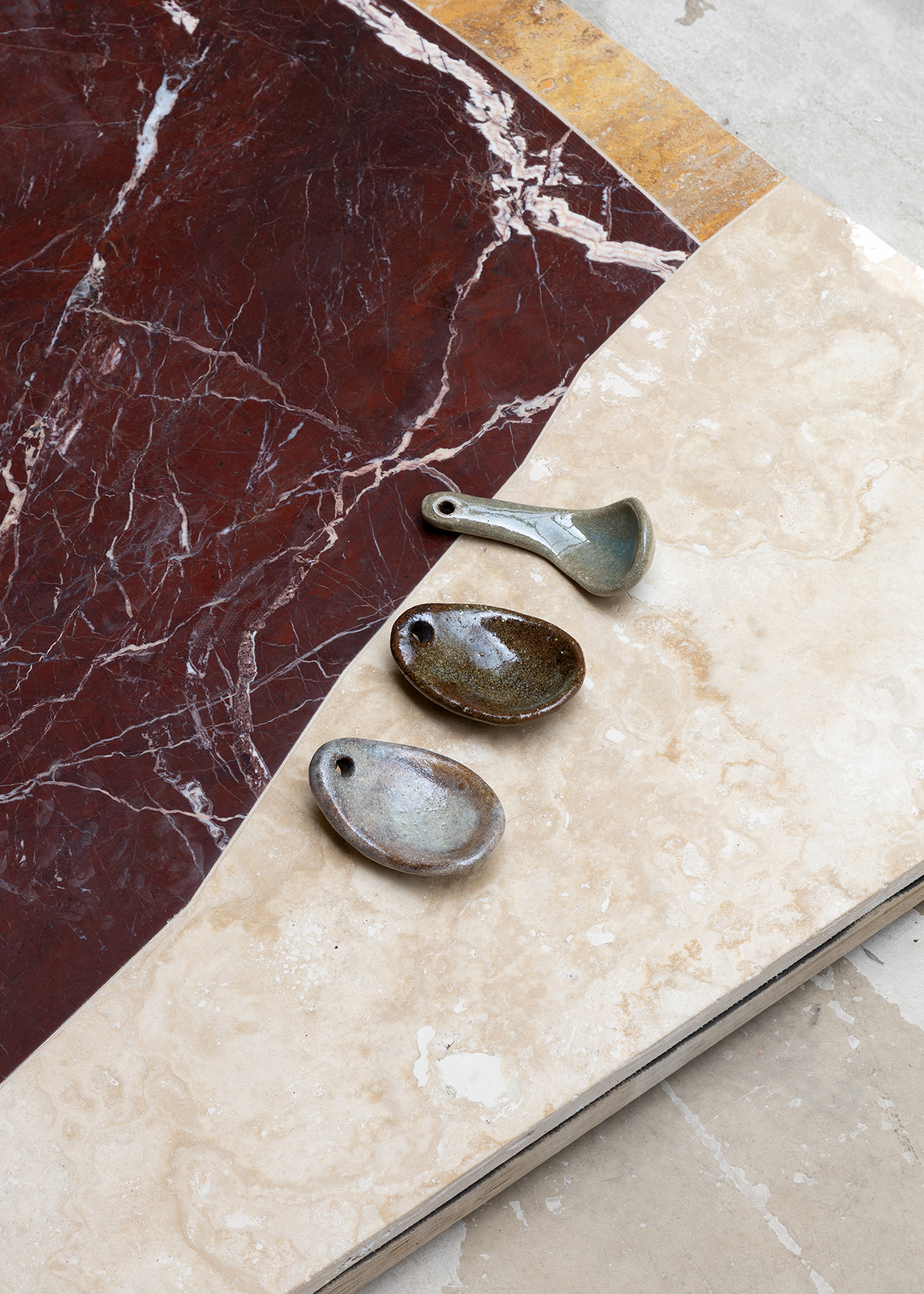
Mending Lands at St Vincents, captured by Eline Willaert. Courtesy of St Vincents.
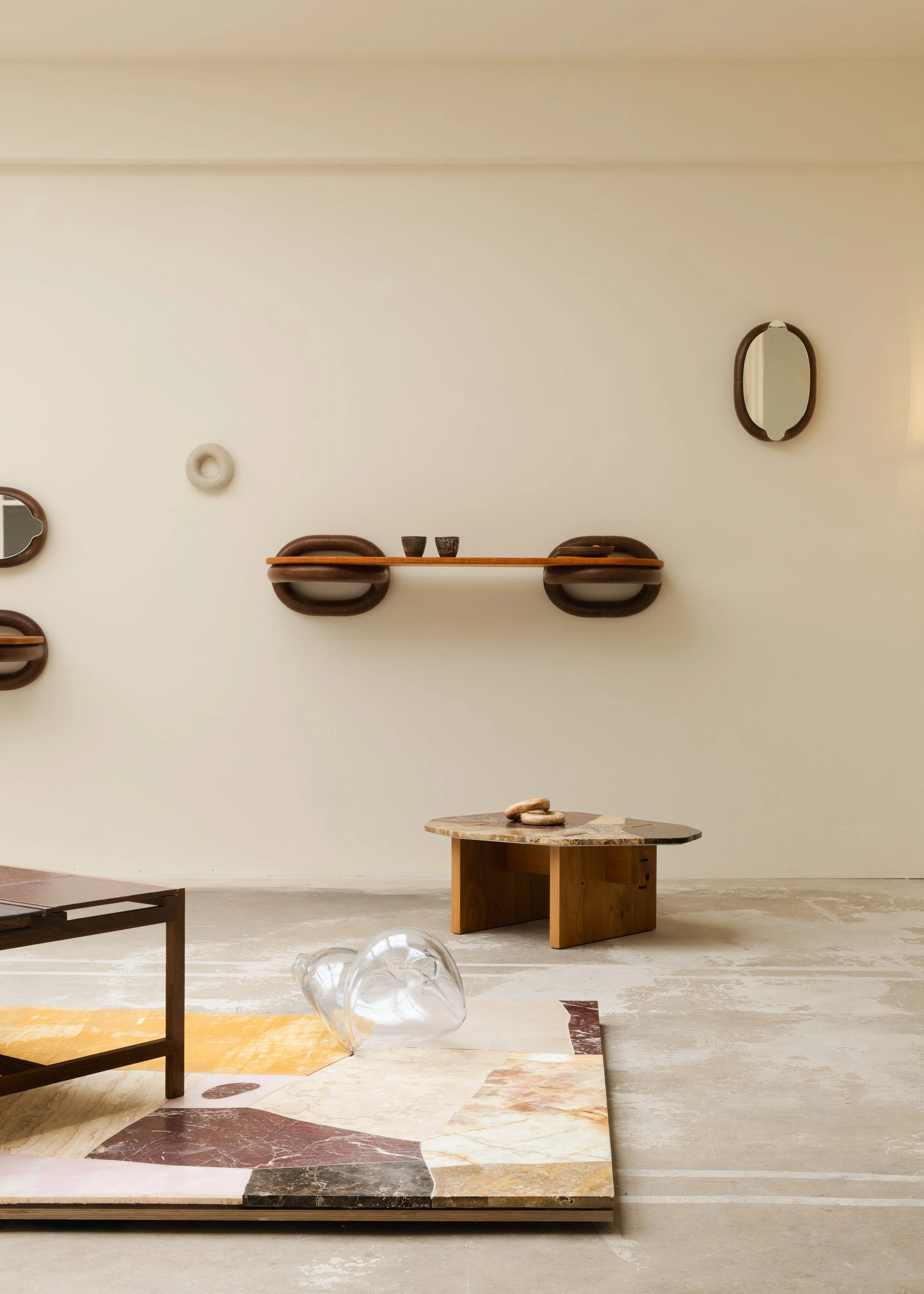
Mending Lands at St Vincents, captured by Eline Willaert. Courtesy of St Vincents.
How would you both describe your own practice, and your lens on design and its place in the world today?
Marte: I'd describe my practice as trying to see the designer as an ally to nature. I really hope not to be someone who just makes or produces products by extracting materials from the planet. I try to see design as a regenerative process, where the material extraction itself is part of that regeneration. In practice that means using techniques like phytoremediation, but also waste marble, or materials from a more diverse kind of forestry. So my role as a designer doesn't just end with drawing an object; it starts with a landscape.
Gigi: Our project started ten years ago partly as a rejection of mass production: a pull towards craft, towards independent designers doing something considered. A lot of design now runs on the rhythm of fashion, constant collections, constant new shows, and we try to pull back from that. Considered pieces are sustainable almost by definition. When a piece is lived with, cared for, cherished, it becomes closer to a family heirloom than a piece of furniture. The Japanese have a word for it, aichaku: the attachment that builds between a person and an object through long use. That attachment is what makes a piece sustainable.
“I try to see design as a REGENERATIVE process, where the material extraction itself is part of that regeneration.”
Marte, where did the concept of land allyship come from?
Marte: I did a master's in social design in Eindhoven, which means thinking about how design can be used positively for societal issues. In my case that was environmental. I wrote my thesis on the role of a designer in the world, shaped by Dutch nature maintenance. Here it's very split: stewardship, where humans decide what nature should look like, or rewilding, where humans don't belong in nature: you put a fence around it and people can't enter. I was interested in something in between, where people aren't excluded from nature but feel like active participants again. I believe a lot of our lack of environmental care comes from people no longer feeling part of the natural world. So I asked how my designs could help people feel that way again, and from that I shaped land allyship, a methodology of five or six steps that keep me in check. Rather than rushing toward what my human-centric mind wants something to become, I work from the landscape itself and let the project develop step by step.
Gigi, what was the moment you knew Marte's work belonged at St Vincents?
Gigi: It was understanding the methodology. A lot of what we call sustainable design, much of it genuinely meaningful, is about doing less harm: fewer materials, better sourcing, making things to order. Marte's work goes further. It isn't gratuitous; she doesn't create for the sake of creating. She starts with an ecological question: a contaminated landscape, a river that needs a voice, a forest that needs more diversity. The work emerges from there. The object exists because there's an environmental concern that needs addressing. We first commissioned a scaled-up version of her Companion Species shelving as a desk. Later, when she mentioned the PFAS project and asked whether we wanted to be part of it, the answer was immediate.
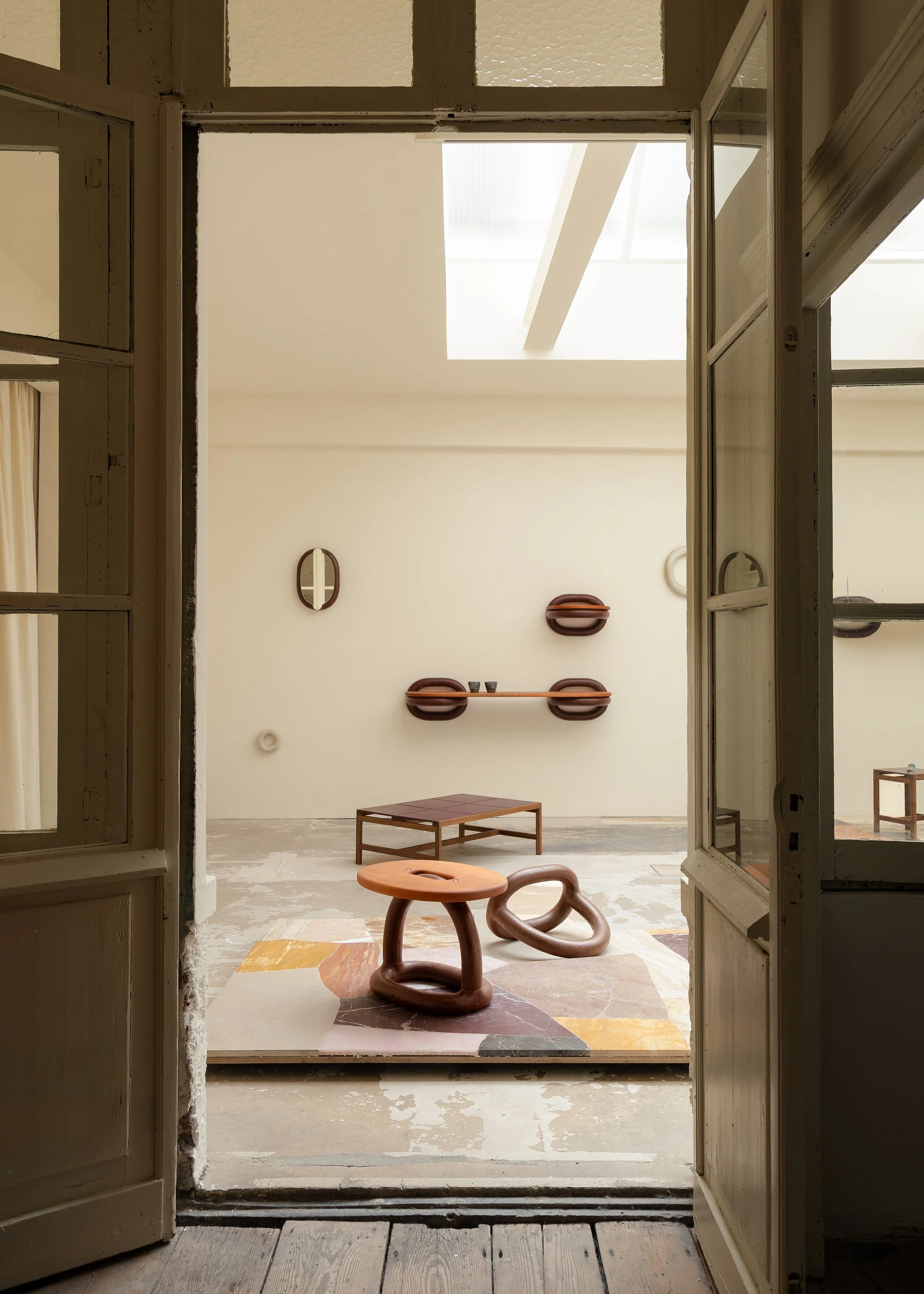
Mending Lands at St Vincents, captured by Eline Willaert. Courtesy of St Vincents.
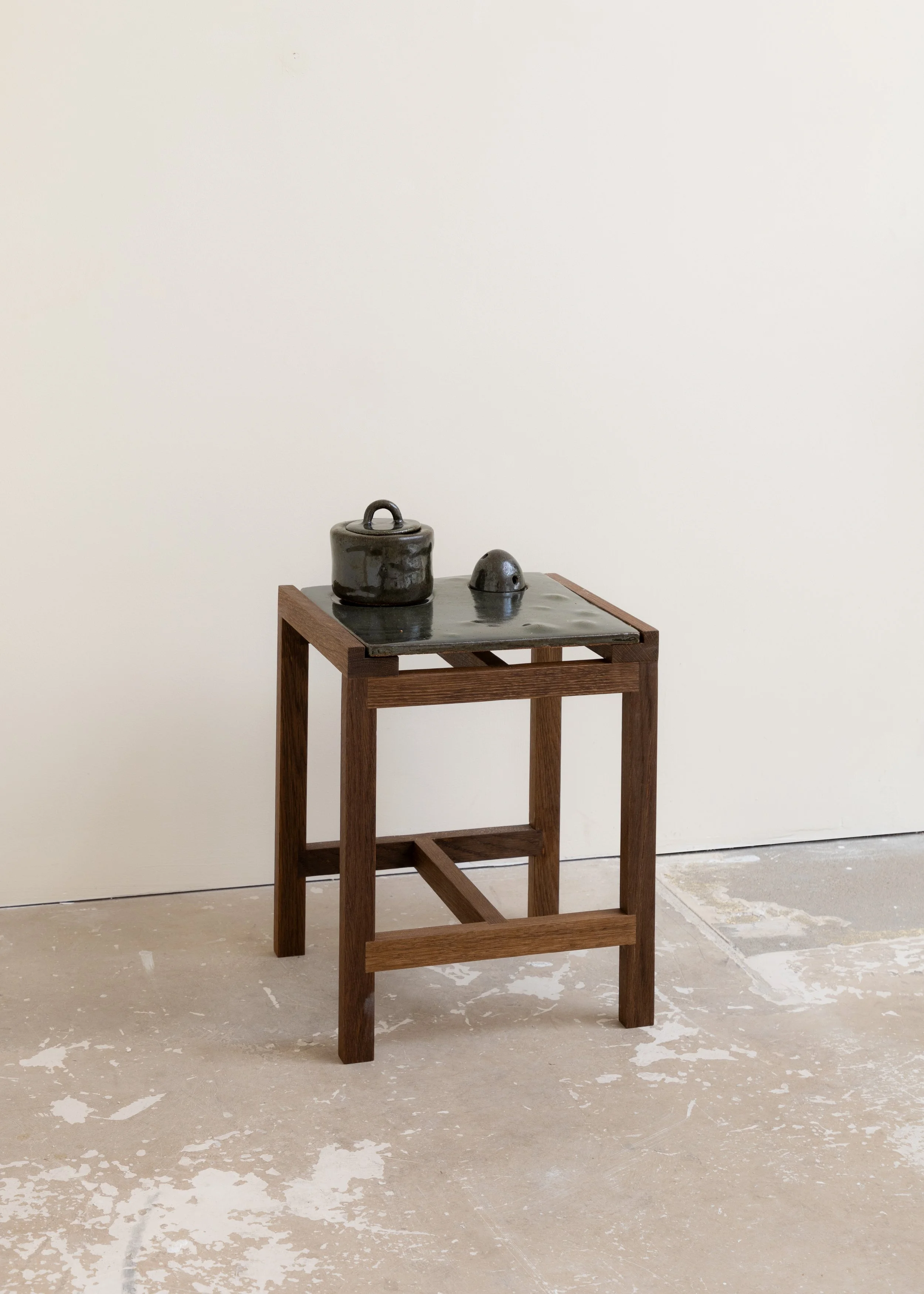
Mending Lands at St Vincents, captured by Eline Willaert. Courtesy of St Vincents.
PFAS contamination is largely invisible to most people. How do you make that legible through objects?
Marte: The research can be discovered by reading the text or seeing the film. If you're a conscious consumer who wants to contribute by investing in a piece and supporting a piece of land, of course you'll want to know the story. But it wasn't my intention to make the PFAS itself visible through the objects. That felt more like the responsibility of the film.
The pieces are genuinely beautiful: deep jewel tones, translucent surfaces. Is beauty a tool for communicating difficult truths, or does it risk softening them?
Marte: For me it was about making them playful and round and beautiful, so they wouldn't be disregarded as a kind of bio design. There's a beautiful variety of bio design out there, but at material fairs it can also be a straw tile or something beige and a bit boring. Working at the level of collectible design, I wanted the works to hold intrinsic value in how they came together while still functioning in that realm. The story is what gives the work meaning, but beauty is the tool that makes people interested in the first place, a way to invite them in, to learn about phytoremediation and natural ways of getting this contaminant out of the soil. I don't think there's a risk of it softening anything.
Gigi: For me, beauty isn't softening anything; it's what gets people through the door. We judge by looks. If the work didn't pull you in aesthetically, the story behind it wouldn't reach anyone. There's a difference between art and design here. In art, friction, discomfort, even resistance can be the point. With design, that tension has to be held differently; it still needs to invite you in. The risk would be if beauty were the whole point. With Marte's work, it isn't. The aesthetic is the invitation. The substance is what makes it resonate.
Collectible design asks people to invest in objects that last, while the wider industry runs on seasons and drops, and ideas like patina, repair and provenance are gaining traction. A meaningful shift, or another trend the industry will absorb?
Marte: I don't run on seasons and drops; I still wear sweaters from ten years ago. But that's about curating a style rather than following a trend, and I sincerely hope my furniture fits that too: that people collect the pieces because they love them forever, not because they're currently trendy. Repair isn't a trend either, hopefully, but more a lifestyle. I've always mended clothes and jeans, patched things, fixed wool. If people care about what they buy, whether clothes, furniture or tools, they see it as valuable and won't just trash it once it's a bit broken.
Gigi: We don't operate on seasons and drops. When we show a designer, we want the breadth of their practice in the room, not just the latest collection, and we don't relegate older work to a back room as "old collection." That pressure to constantly move in new directions can dilute a practice rather than develop it. Patina, repair and provenance, meanwhile, have always been there; what's changed is their visibility. I find repair really exciting, though it's still a hard sell: there's an assumption that a repair makes a piece somehow less. I don't see it that way. Some of Marte's pieces have come with repairs, and those are the ones I love most. A scar on ceramic doesn't take anything away; it makes the piece more precious. We already accept visible repair in butterfly keys, joinery, mended textiles; applied to other materials it can still read as damage, and I hope that changes. Industry always finds a way to absorb what happens in smaller circles, often flattening what made the idea interesting, but if it adopts something like repair properly, that could be a real shift.
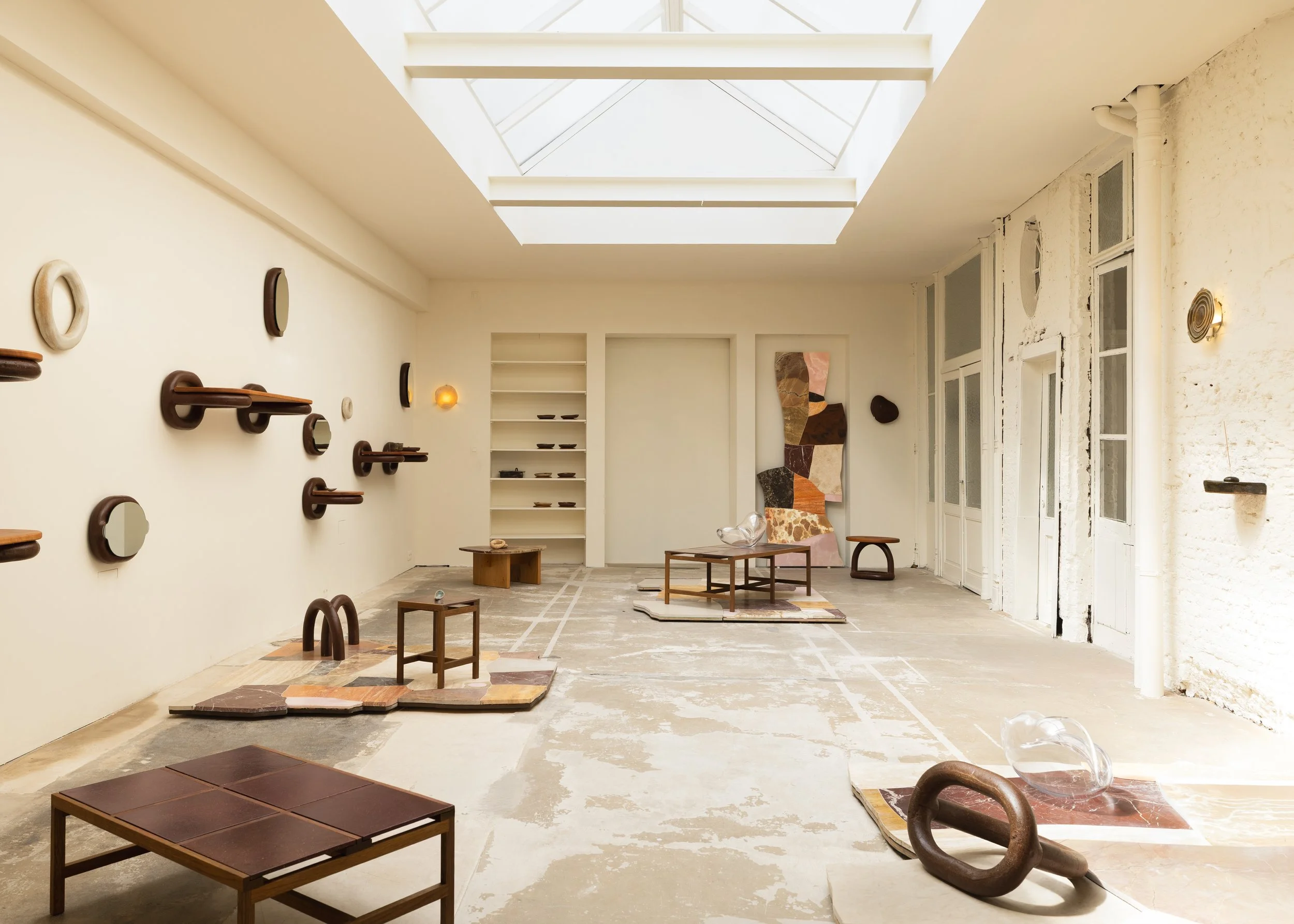
Mending Lands at St Vincents, captured by Eline Willaert. Courtesy of St Vincents.
The exhibition includes a film alongside the objects. How do you think about narrative as part of the work itself?
Marte: The film came about because certain things happened in the process that were too valuable to leave out of an exhibition that would otherwise be mostly objects and some text on a wall. The material and research represent a scientific breakthrough, but there are also social, ecological, cultural and political layers interwoven with this chemical compound, affecting communities, and scientists testing for something they don't fully understand yet. There's a lot of that process in the film, which felt necessary to comprehend the complexity. It's also connected to the playfulness of the objects: they were allowed to be playful because I knew the film would carry the more difficult layers. But not everything in it is bad; it's also showing the research and the experts.
Gigi: Narrative is essential. It's the tipping point, the aha moment. We judge work at face value, that's just how it is, but context turns recognition into understanding. I can form my own opinion about a piece, but without the story that opinion is limited. With Marte's work especially, the narrative isn't an addition; it's the reason the object exists. The film makes that visible. Without it, you might see beautiful pieces and miss the whole point.
How do you think about who this work is speaking to?
Marte: I hope it speaks to collectors who are into the environmental side, or who simply find it beautiful. But I also hope it speaks to companies, municipalities and ministries who might see this technique as something to scale up, who might license the process to produce a series themselves. I really see this as a pilot. Ideally the exhibition connects me with parties interested in a larger second trial or even full production, which would also mean a large piece of land getting cleaner.
Gigi: Two kinds of people, mainly: those who respond aesthetically, and those who come through the environmental side. But the project is bigger than the objects. This is work that should be put to use in public space, scaled up to clean actual land; that's where it really matters. The bottleneck is cost: biomaterials are expensive at small scale, and that's where many projects stall. To change that, the work needs institutional support: public bodies, municipalities, research partners. Businesses rarely lead these shifts; they follow what people pay attention to. So there's power in what collectors, galleries and audiences choose to engage with. But for issues that affect public health, institutions shouldn't wait for the market to move first.
What are you each curious about right now?
Marte: Right after the exhibition I'm going to the south of Portugal to start a new project, a site-specific installation for a nature reserve. I heard there's an oyster farm, and I'm fascinated by oysters as a species, so I'm very curious about oysters right now.
Gigi: We have a full line-up: Lisbon Design Week with Studio Gameiro and Nick Valentijn, then taking St Vincents to Ibiza for a four-month residency at Soleille and CAN Art Fair, followed by a solo show by Luna Paiva here in September. Personally, I'm converting our van into a camper, renovating my family home in Spain for a small artist residency connected to St Vincents, and slowly developing a functional chocolate business. So lately I'm deep in van-life, chocolate and renovation rabbit holes.
This interview has been edited and condensed for clarity.
Shaniqwa Jarvis on why photographs are beautiful liars, grief as a portal, and the moment she found her whole practice hiding in a childhood snapshot.