The Skin Intellectual
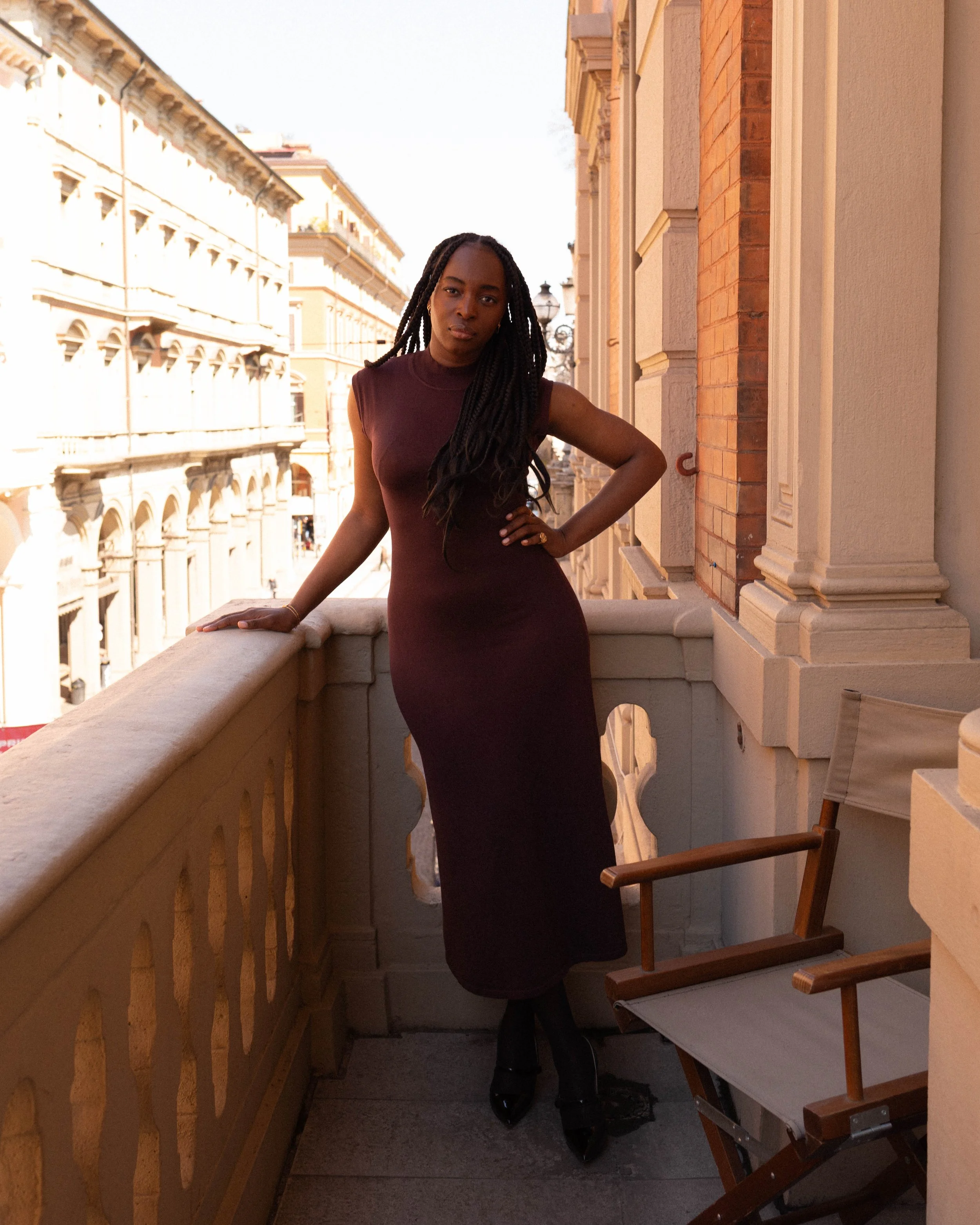
Courtesy of Sophie Carbonari.
Sophie Carbonari
The Skin Intellectual
By Bonnie Langedijk
Sophie Carbonari has never met a machine she couldn't outperform with two hands. The Paris-based facialist is trusted by culture's best, treating actors, designers and top models from her studio overlooking the gardens of the Palais Royal, at residencies in London and New York, and in hotel suites at Cannes and the Met Gala, wherever her clients happen to need her. Appointments, predictably, are hard to come by. Fame, however, interests her far less than faces; she'd rather be remembered for how much she laughed.
What makes her singular is her position in an industry racing towards lasers, needles and devices: she works entirely by hand. Her treatments stimulate the deep muscles of the face through a choreography of lymphatic drainage, ayurveda and kobido, techniques gathered from around the world and refined over twenty years. And she dives deeper than the surface, asking about medication, menstrual cycles and diet before her fingers ever touch a face, blending her own natural formulas to suit what she finds. The result is a facial reimagined as a moment of recovery rather than a procedure, a stance she also takes publicly, speaking on industry reform and the case for a more human kind of beauty.
But we'll let Sophie do the talking.
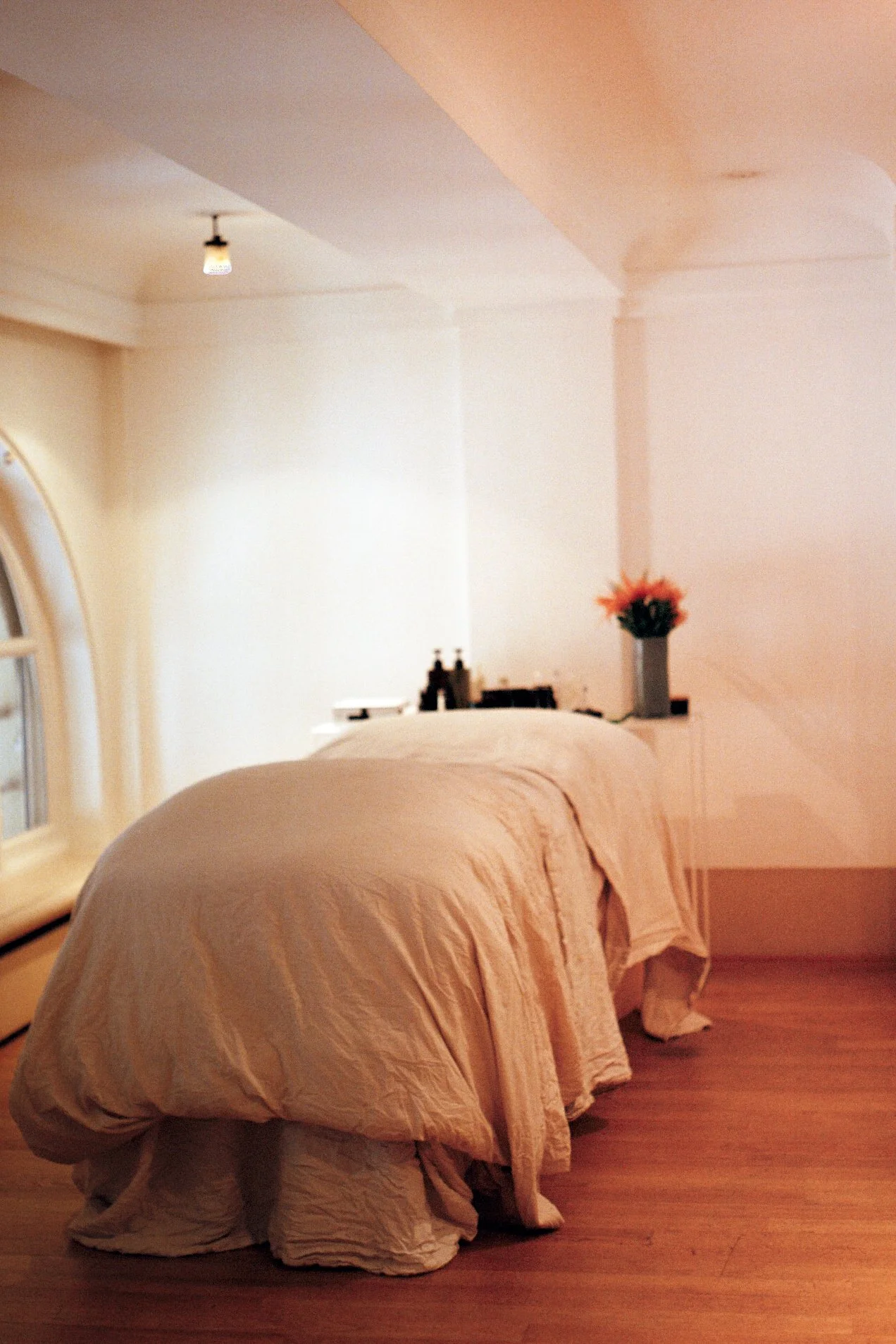
Sophie’s treatment room. Courtesy of Sophie Carbonari.
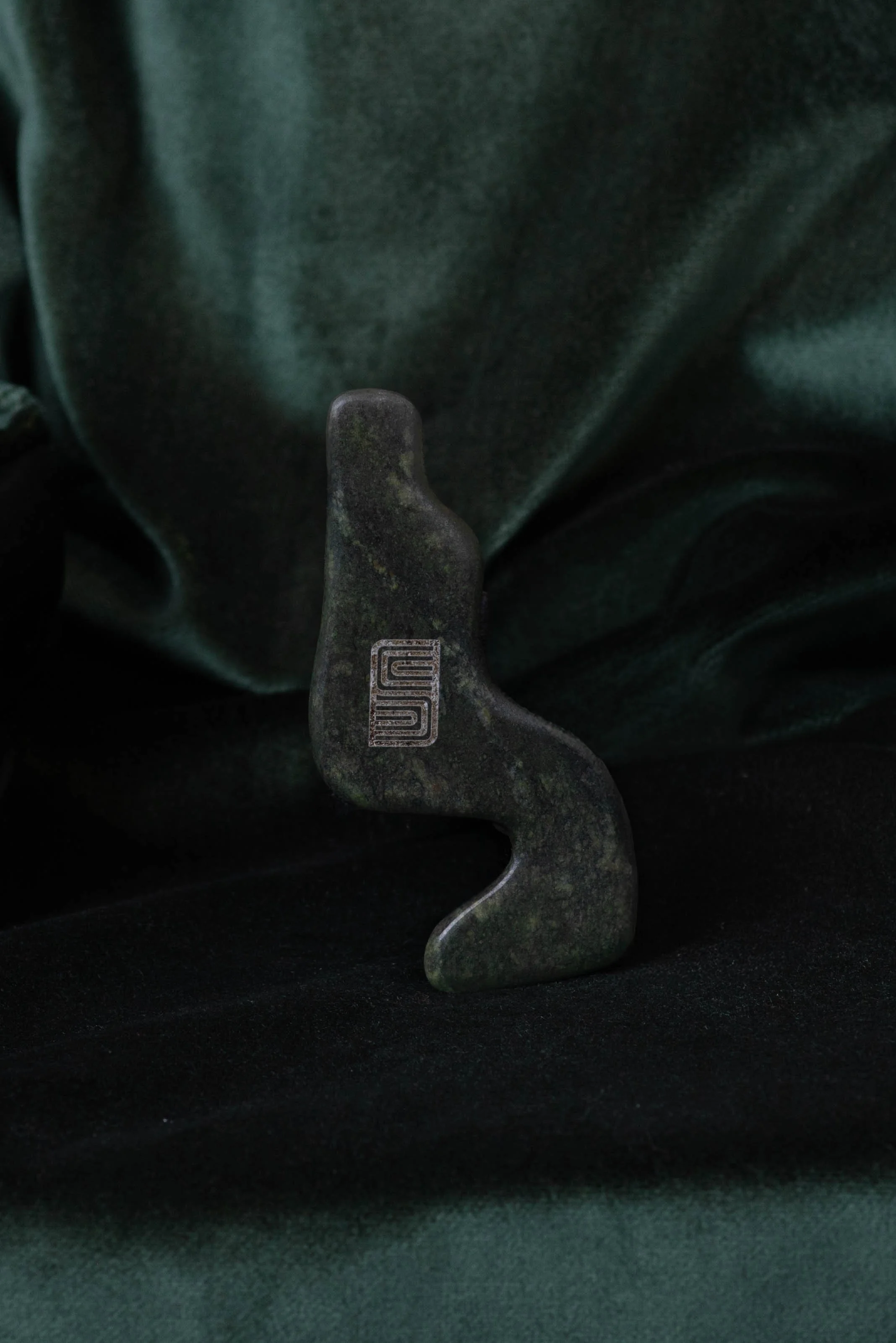
The SC Tool: A sculptural facial tool in rare Greek marble. Designed to lift, drain, and rebalance the skin. Courtesy of Sophie Carbonari.
Bonnie: How did you get started in this industry?
Sophie: I've always been a big fan of beauty. My mom was beauty obsessed, and my dad was really into his shaving rituals and putting oil in his hair. It pulled me in from a really young age, to the point that when I was a child, my favorite game was to play with my mom's creams and give her fake facials. I'm dyslexic, and when I turned 15 I couldn't continue in regular school, so I had to choose a professional school. I chose beauty because it resonated deeply inside me. When I finished school, nobody wanted to hire me as an aesthetician. There's nobody to blame, it was a different time. So I started as a waxing therapist, just to get my foot in the door. Deep inside, I knew I would arrive where I am right now. I loved my job to the point that I would do whatever it took. I was going to make it happen.
There's something very vulnerable about having someone's hands on your face. How do you approach that?
Sophie: It requires emotional intelligence. If you don't have that, you won't go far, to be honest. You have to translate touch and that sense of intimacy into a safety zone. There are people who are comfortable with themselves, and there are people whose body is a vessel but who aren't really connected to it. A simple thing I always say to my clients is, "If you feel any discomfort, please let me know. It's your moment." It's really interesting to see that it's not that common for people to express themselves when it comes to their body.
“I always REFLECT on what it is I really do and its impact: the social impact, and what my role is in from the moment a person comes in.”
I've heard you call yourself a skin intellectual. What does that mean?
Sophie: I always reflect on what it is I really do and its impact: the social impact, and what my role is in from the moment a person comes in. Think of the moments when we touch each other, like a hug with friends or family. There are families where people don't touch each other at all. But the moment you really receive that care, it goes deep. When you're a baby you're completely dependent on your parents, so touch brings you back to that root. You can more or less tell by the way people behave whether they have that confidence around touch. You can tell when someone lets go on your table. It's connected to the inner child we all have. It brings you back to a situation where you're safe. You don't have to care anymore, because someone else is in control. And that's part of my positioning too: I don't want to bring pain into what I do. I'm not using lasers and machines. I leave that to the others.
Your technique pulls from a lot of Eastern techniques as well, right?
Sophie: I self-educated a lot. When I moved to London, I became so obsessed with Japanese techniques and Chinese medicine that I said, I want to work in a Japanese wellness center. I emailed every day. Then one day, on my day off, I thought, maybe I can just walk by and see. I insisted so much that she gave me a try. She tested me, and she liked my hands. She said, "You have good hands, so we'll take you." There I learned shiatsu-based facial treatments, gua sha, jade rollers, face mapping, the meridians. It resonated inside me. I worked there for two years, and then I wanted a new challenge, so I moved to New York and got hired in a medispa. It gave me so much education: the injectables, hyaluronic acid, skin boosters. Before, I had no clue; I came out knowing all of it. But it didn't feel right. I kept thinking: what are you doing? You work with your hands. This is not you, and it's not what you've been working toward. Still, it was interesting to be inside that machine. And the same thing kept guiding me: the relationship with the client was really important to me. In my mind I was often thinking, "You look beautiful. Why are you even here?" And they loved me. They would ask, "Should I come back next week?" and I would say, "No, no, next month is fine." But they came back the next week anyway, because they said, "You're so kind. I want to talk to you."
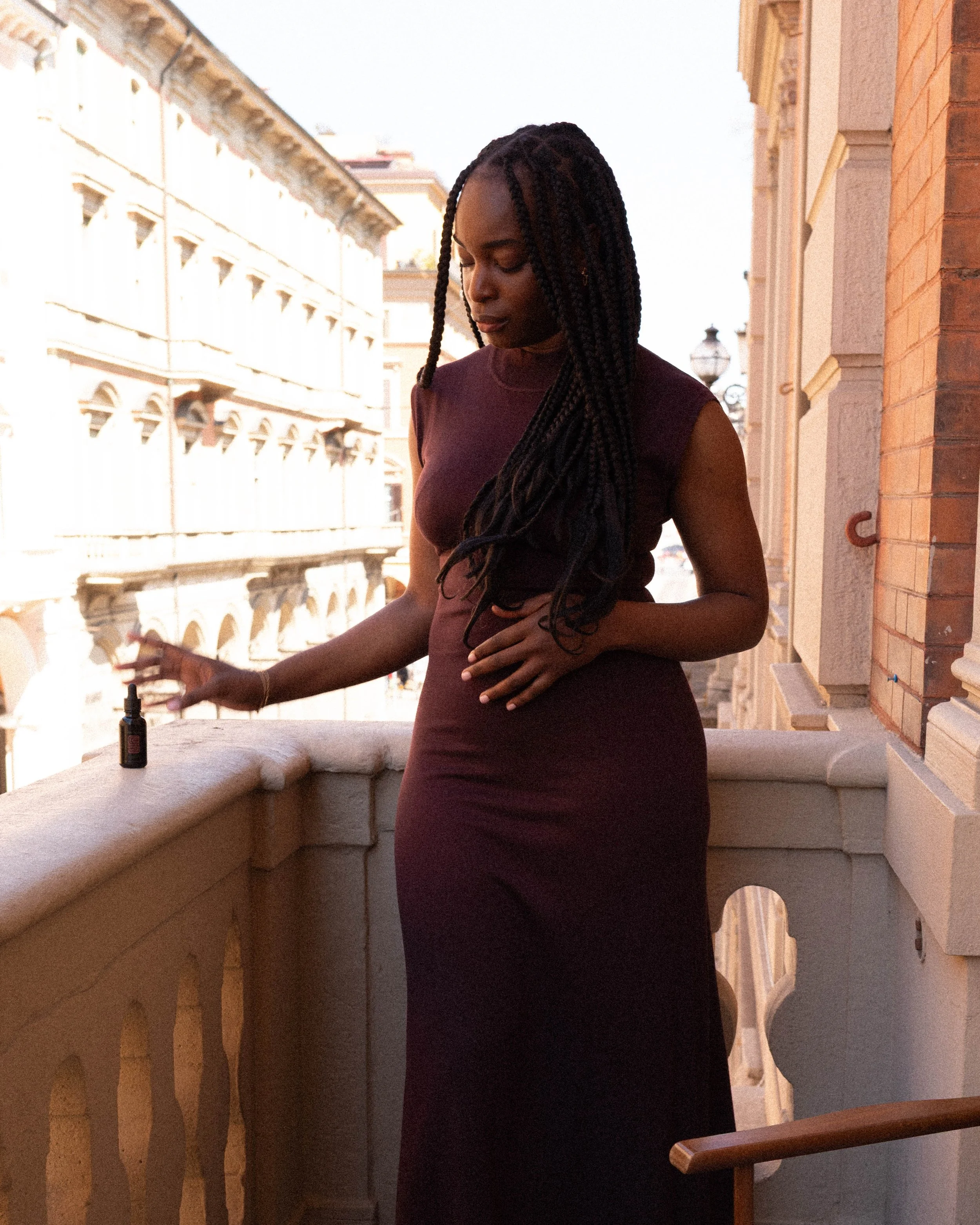
Courtesy of Sophie Carbonari.
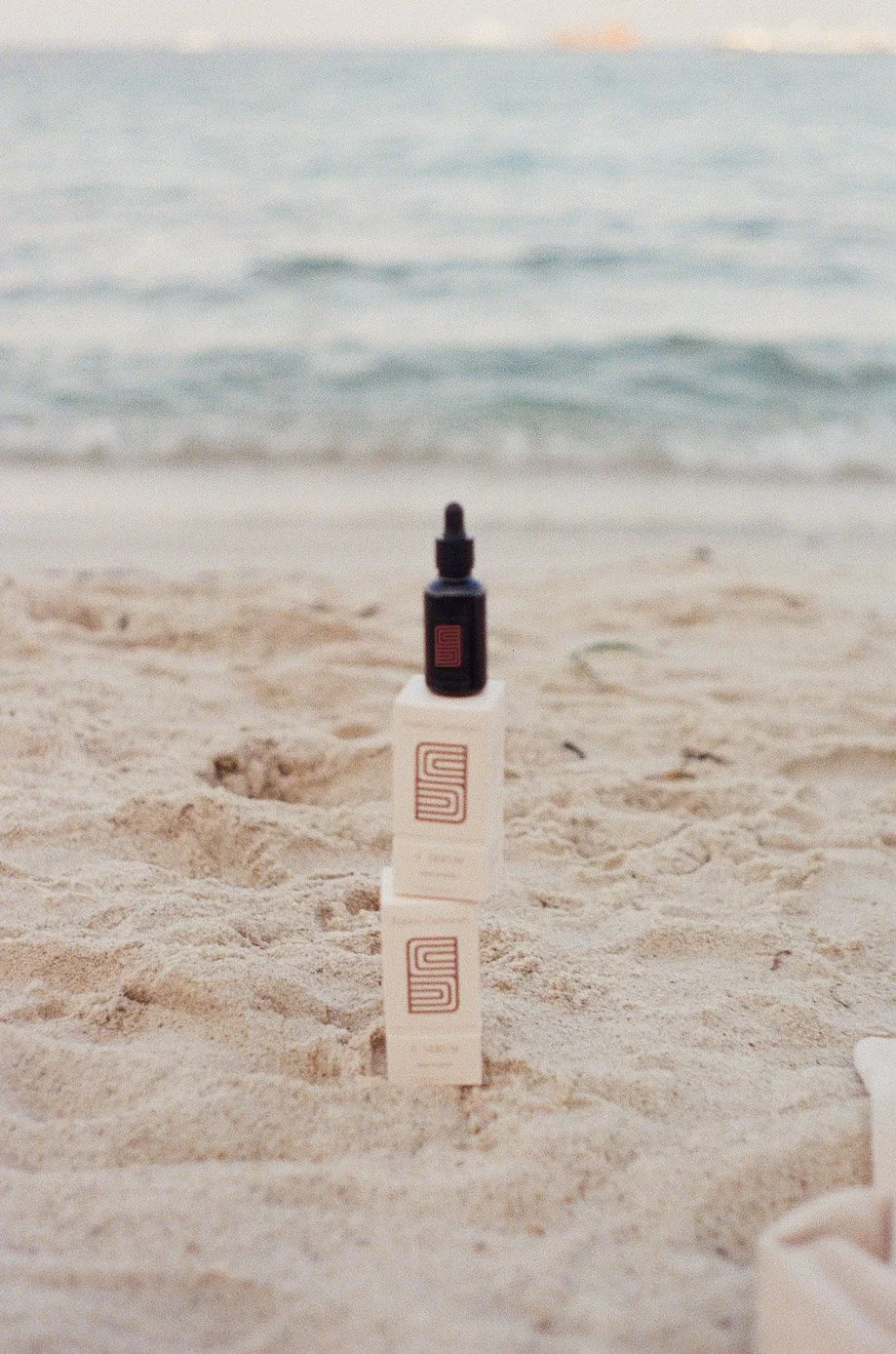
The S Serum. Courtesy of Sophie Carbonari.
That's so sweet. It's like, "I want a therapist, but one who works on my face at the same time."
Sophie: But then I had a visa issue and couldn't go back to New York. All my belongings were still there. I started working in the South of France, in the spa of a friend, and I was literally sleeping in my workspace. Honestly, there are worse places to be! One of my coworkers said, "It's strange, you're always here when we arrive." I did that for seven months. Then I moved back to London, worked in a med spa again, and within a month and a half I gave my notice and started the business as it exists now, completely from scratch. I was renting a little treatment room in Marylebone, by the hour. I had ten minutes before the client arrived to set up, and ten minutes after they left to pack it all away. But it made me the person I am now.
Was there a point where things really changed?
Sophie: It looks like an overnight success, but for me it's this long marathon that I started 20 years ago. There was a turning point, though. It was 2018. I started on my own in January, and in March Caroline de Maigret came, and she did a post. She gave me credit, and PRs started following me. Six months later a supermodel came to me, and the week after that I had my first quote in British Vogue. It took seven months. In a lifetime, seven months is nothing, but seven months can also be everything. You can close your company within seven months.
We're at such an interesting moment in beauty. On the one end, the holistic approach: what happens on your skin is connected to your gut, your stress, your sleep. On the other end, hyper-technology.
Sophie: For me, beauty is political. You have the people who “get fixed” and who are completely disconnected from their inside. And you have the people who choose the healing path, a balanced life, who want to understand what's going on. We were all thinking, when Elon Musk, Mark Zuckerberg and all those people went to the jungle to do ayahuasca, that the next generation of leaders would be connected with their inside. But the reality is… apparently there wasn’t enough ayahuasca! That's why I call myself a skin intellectual: I like to think these things through. And it's beautiful, because there is a place for everyone. I gave a talk at Cosmoprof about why I consider it a skin-brain axis. Again, this is science. Brain tissue and skin tissue have the same genesis. In the embryo, it's all connected. Then it divides, and one part becomes the brain and the other becomes the skin. They are born together, so they have an impact on each other. To deny this is to deny science.
I think it's the same with GLP-1s. This pursuit of youth and skinniness, this attitude of, "We don't care if we die ten years earlier, as long as I've reached that." It's so dark.
Sophie: People say, "I go to the gym, I do Pilates, and I have my shots, because with this, I'm not tempted to eat." First of all, let's make an appointment in ten years and see how it goes. And second of all: you'd rather completely neglect understanding yourself and get a shot to regulate yourself? Sometimes I'm talking with people and they say, "Oh, I'm taking it." And I like to understand, I don't want to judge. Don't get me wrong, it is a medication for people who need it. But this aspiration to look like we're 14 or 15 forever, denying the body's evolution just to belong to size zero, doesn't make any sense to me.
Agreed! For me, aging is a privilege. The people I find most beautiful are the people who have confidence and joy.
Sophie: And that's the interesting thing. It's not in the plastic. It comes from inside. We are built to have icons, and people think, "If I do this and that, I'll be an icon." But everything you do to be like someone else degrades your own charisma at the end of the day. We constantly say, "Do this and you will look like that." We just don't explain that you have to own what you have. You have to own your body, you have to own your face.
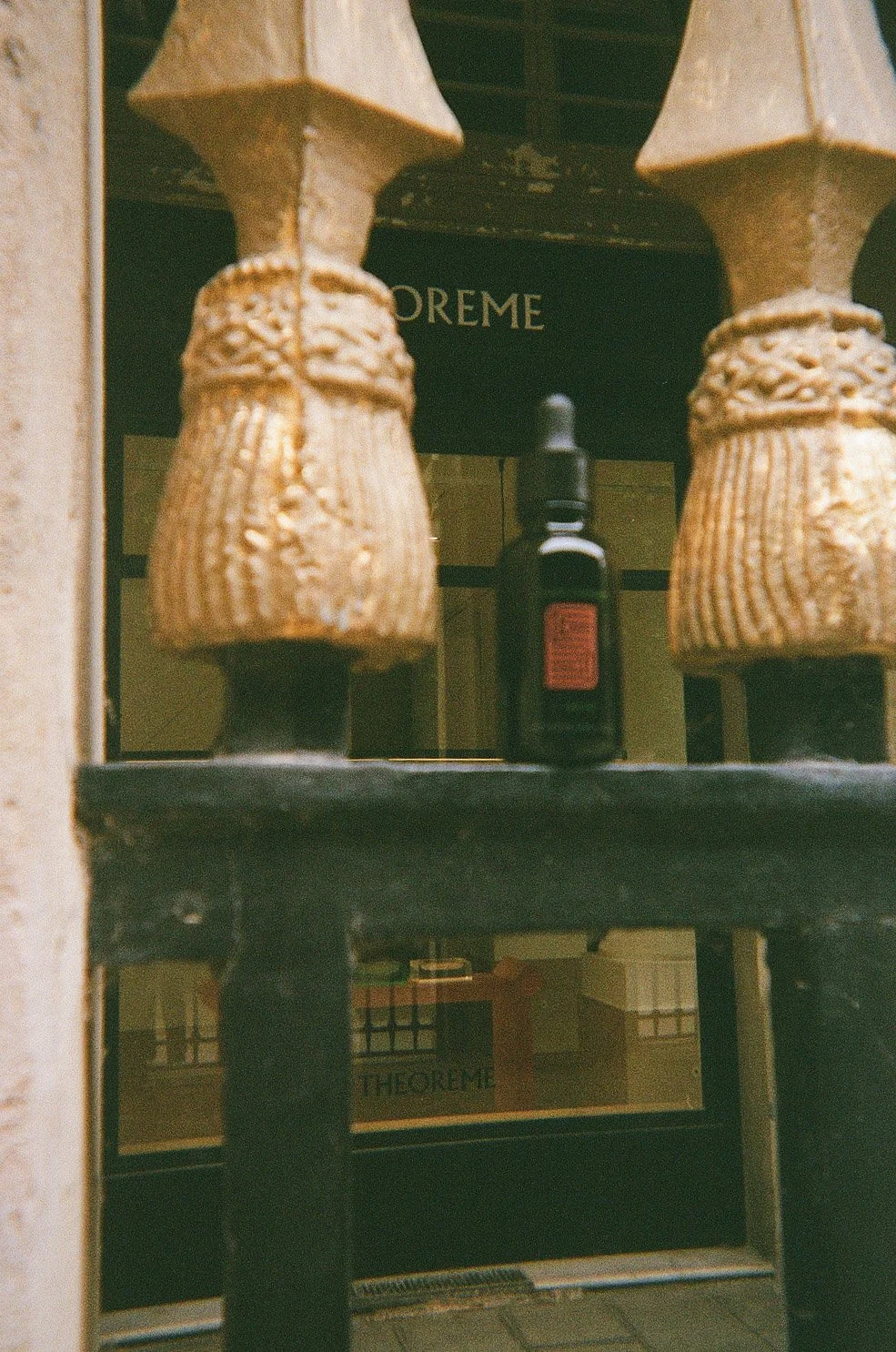
Courtesy of Sophie Carbonari.
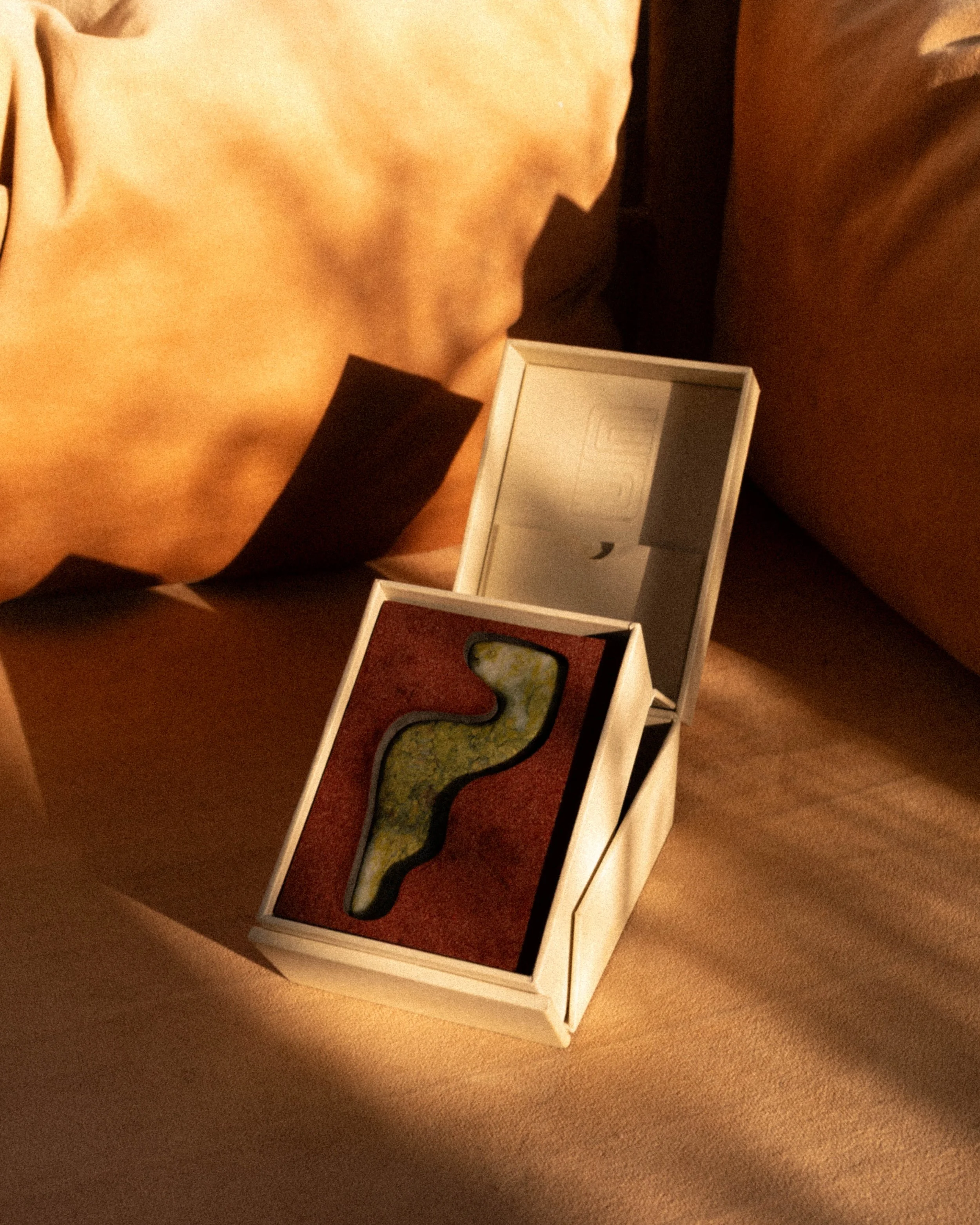
Sophie’s signature tool. Courtesy of Sophie Carbonari.
Speaking of icons, you work with a lot of people who are very image-conscious. Has that changed how you think about beauty yourself?
Sophie: Not really. It is another world, don't get me wrong. The first time you touch someone after signing a contract that says if something happens, you owe them a certain amount of money? Trust me, there's pressure! I think what they love about me is that, of course, you get results, but it's also this bubble where they don't have to be anything. They can let go. They're not judged. I'm not here to perform on them, and they don't have to perform for me. I'm not a makeup artist, I'm not a hairdresser. I'm really the person who takes care of them. And when people do expect an attitude out of me, weirdly enough, it's not the famous ones. It's people who are really wealthy, and then they feel weaponless in front of me, and they never come back, because there is no performance to be had. I'm not impressed by anything. I mean, I slept on the floor at my job! I'm not doing what I do for the fame of it. My mission is to bring what I have in here, out there.
It's so different from a hairstylist or makeup artist. They're putting your mask on for you, while you're taking it off.
Sophie: Yes. Sometimes they fall asleep. Sometimes they cry. It's their moment, and I'm here for that. The Cannes Film Festival is a good example, because there's a lot of pressure. I arrive, and they say, "Everybody out!" They turn their phone off and say, "I was hoping for this moment the whole day." It's not just the treatment. It's the whole meaning of being off your phone, in airplane mode.
You have a very joyous energy.
Sophie: Thank you. Life is not easy, so I don't see the point of having a negative attitude. They say that when you die, only a certain number of people remember you, and only for a certain time. I just feel like I want people to remember my laugh: the fact that I laughed a lot.
This interview has been edited and condensed for clarity.


Shaniqwa Jarvis on why photographs are beautiful liars, grief as a portal, and the moment she found her whole practice hiding in a childhood snapshot.