Cinema's Most Intimate Realist
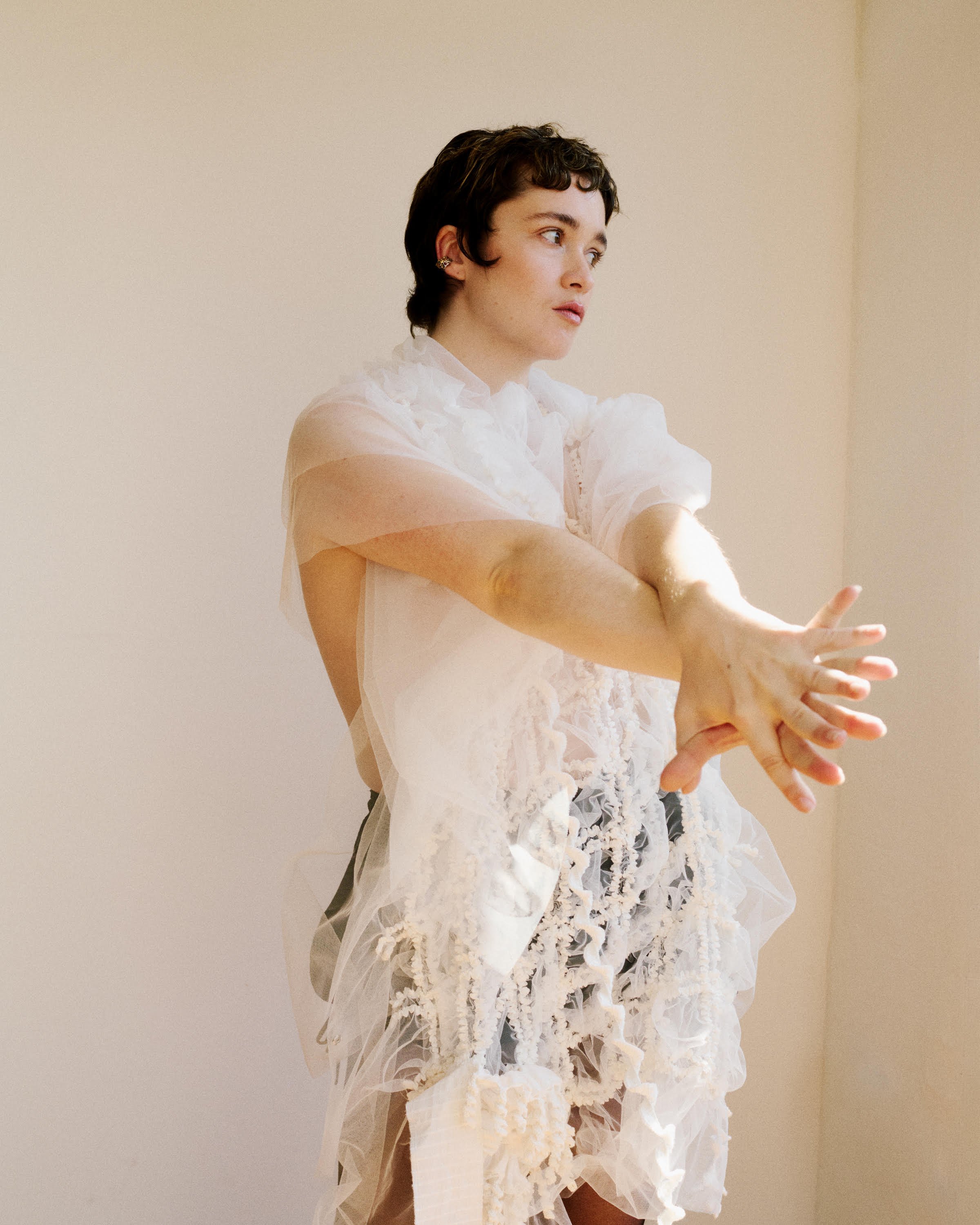
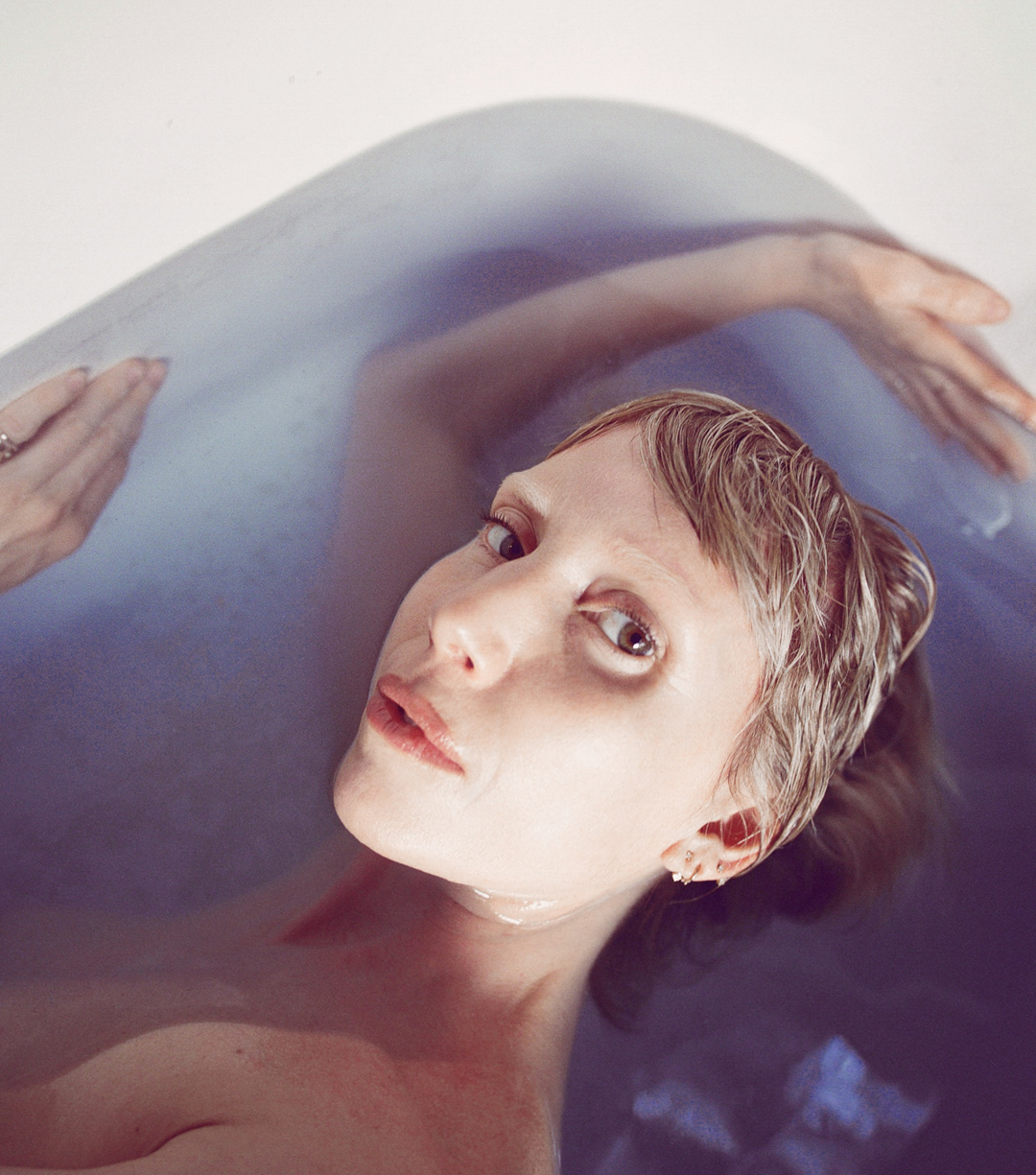
Alice Englert captured by Toby Coulson.
Alice Englert
Cinema's Most Intimate Realist
By Bonnie Langedijk
Alice Englert has built a career on the things most performers try to hide: the imperfect, the unresolved, the gloriously unpolished. Raised between Australia and New Zealand, she grew up around the work and has been acting since her teens, writing and directing not long after.
She wrote, directed and scored her Sundance debut feature Bad Behaviour, which stars Jennifer Connelly and Ben Whishaw alongside her; she played a photographer unpicking a friend's death in the Stan thriller Exposure; and she is currently in development on her second feature as a director. She also appears in Film4's Extra Geography, the Molly Manners film that recently premiered at Sundance.
First, though, she goes behind the Iron Curtain. In Star City, Apple TV's paranoid, propulsive spin-off of the award-winning For All Mankind that reimagines the space race from the Soviet side, Englert plays Anastasia Belikova, the first woman to land on the moon. It is a role that hands her exactly the contradiction she is drawn to: a cosmonaut paraded as a triumph for Soviet womanhood while the men around her quietly hold the controls, her legend outrunning any real autonomy. She built the part from the inside out, speaking to a working astronaut as research and, true to form, throwing herself front and centre into her own stunts.
But we’ll let Alice do the talking.
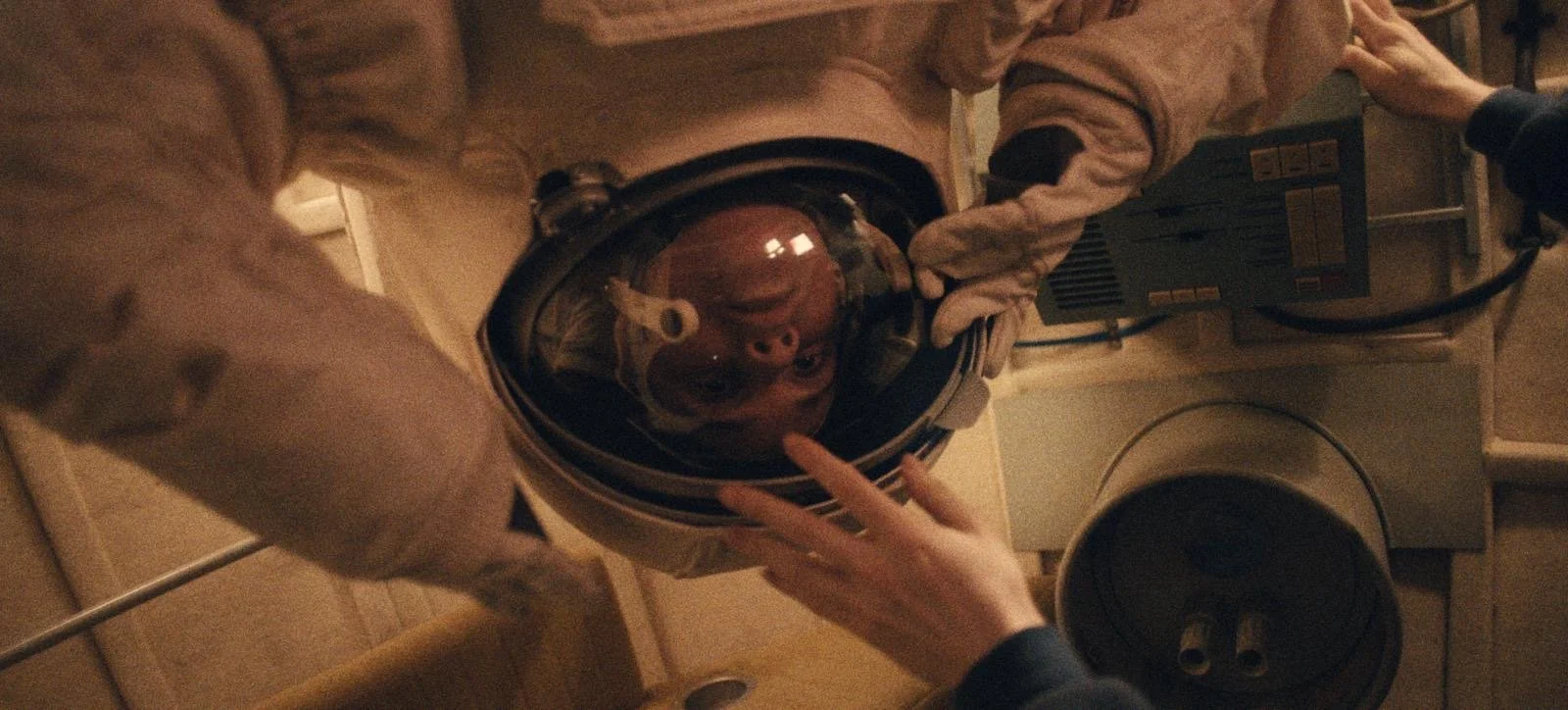
Scene from Apple TV's Star City. Courtesy of Apple.
Alice: HURS is so incredibly chic. I thought "I got to put some lip gloss on," but also I have to make sure my brain is lubricated.
Bonnie: I love aesthetics and things to look nice, but I'm also very much an advocate for imperfection. I hate to make it a gender thing, but for women, there's such a pressure to always be perfect and it's so fucking tiring.
Alice: I know. It lacks flavor.
Imperfection is what makes us interesting. I tend to gravitate towards the characters who are imperfect.
Alice: I think that's what separates it from propaganda. People are drawn to reality just slightly more than to their own delusions. That's what draws me to work generally: trying to find the thing that has a rhythm of reality, that makes you feel better than if you were given everything you wanted.
“There's enough that's MYSTICAL and weird about just trying to engage with the world around me.”
I very often feel myself pulled to the mundane, the very simple.
Alice: For me it's been a funny one, because I felt so at home as a child in fantasy and adventure. I've had a best friend in New Zealand since I was four. I grew up in Sydney, but there was this touchstone of seeing my bestie in Aotearoa. We'd play games where we were all-powerful and mighty and strange, and wolves. We'd turn good, turn bad, turn back again. We'd sometimes betray each other and then need a bit of time before we could have lunch. I've always been drawn to writing fantasy; I started when I was 13. And it surprised me that when I was 18 and started writing film, there was something about the limitations of the real world that made me feel I could trust what I was doing, not being able to wish-fulfil, having something to be accountable to. There's enough that's mystical and weird about just trying to engage with the world around me. That's what I'm drawn to now.
There's something special about that unbound creativity you have as a child, no limitations. Do you feel you can still hold onto that when you write?
Alice: It's the only thing I can hold onto. Anything else slips right through my fingers. I still love the things I always loved, but if you're going to be in this industry and actually evolve, you have to let go of whatever adolescent angle you had on it. I hate to use this word casually, but there's a cultural grooming of what you should want or think. We're living in a strange world; there are a lot of ideas we catch like colds. So it's important to let yourself change the dream. Often things have been better than I thought. One thing that's kept my foot in the door, which of course I was born with a foot in the door, is that I know what I love. Growing up around it, there was always a feeling that maybe at some point the eyes around the room will look at you, but they look away and that’s fine. Loving what you do is the only thing that will really protect you. Sometimes there's a feeling that all these other forces are coming to lead you astray, and I'm not sure that's the reality. We're all in the thick of it.
I can imagine it’s easy to get derailed and focus on the external, to lose touch with yourself.
Alice: I'm trying to be an emerging artist [laughs], but I think of myself as a submerging artist, constantly turning back into some swamp creature, because I find it so intense to perceive myself. People say actors just want attention, and that's true to a degree. I do, but not always. I still say to myself, "Alice, it's okay. Some people will never like you." For me, acting isn't so much about being seen. It's about disappearing from the world. The muscle you use on set is pretending no one's there; you have to dislocate yourself from the knowledge that people are literally watching, trying to figure out if it's connecting. I love doing that. It's something I learned as a kid. I don't do heaps of press because I like to just be in my thing. The other day I saw a photo of myself on the red carpet and actually thought I looked really good, and now I'm scared that's extremely unhelpful. My ego's getting a little titillated and I'm worried about becoming a bad person.
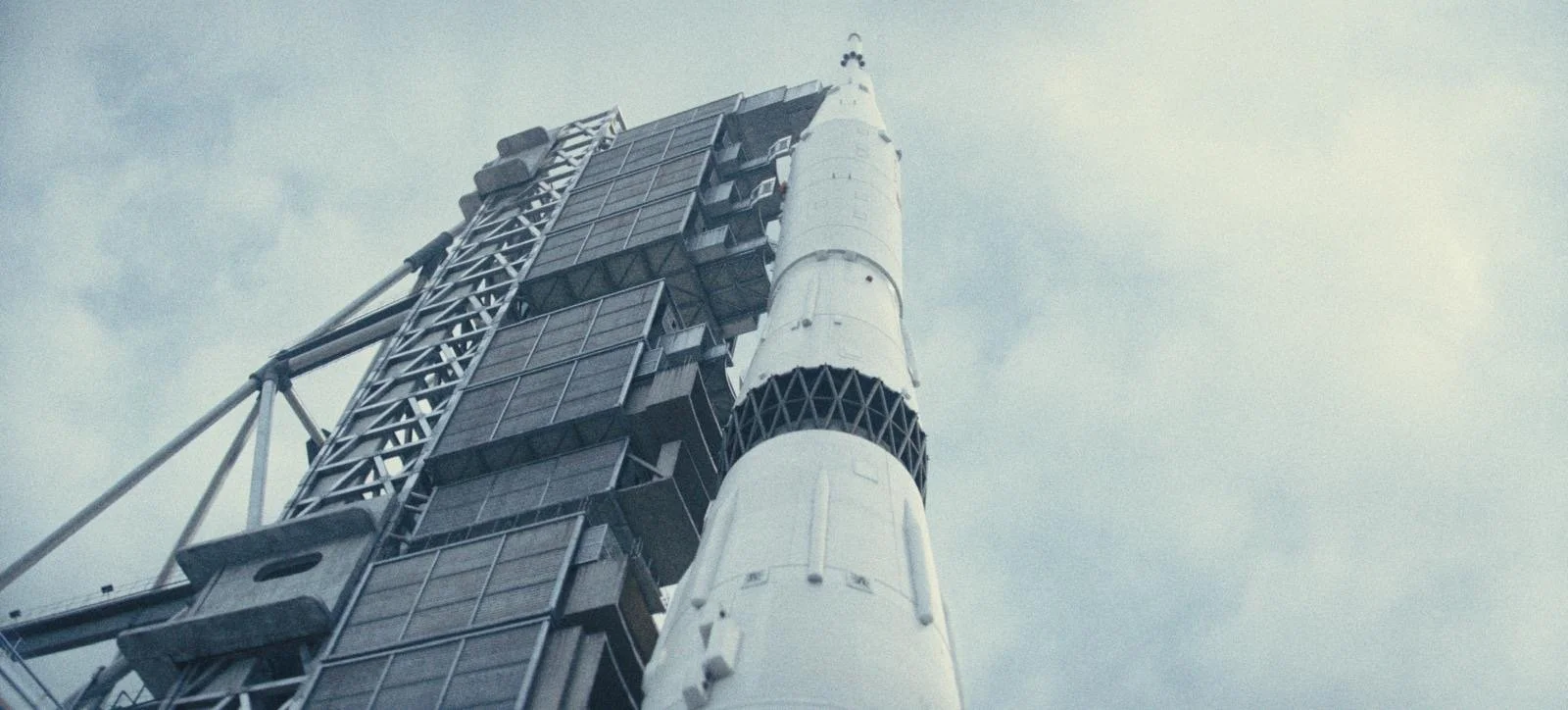
Scene from Apple TV's Star City. Courtesy of Apple.
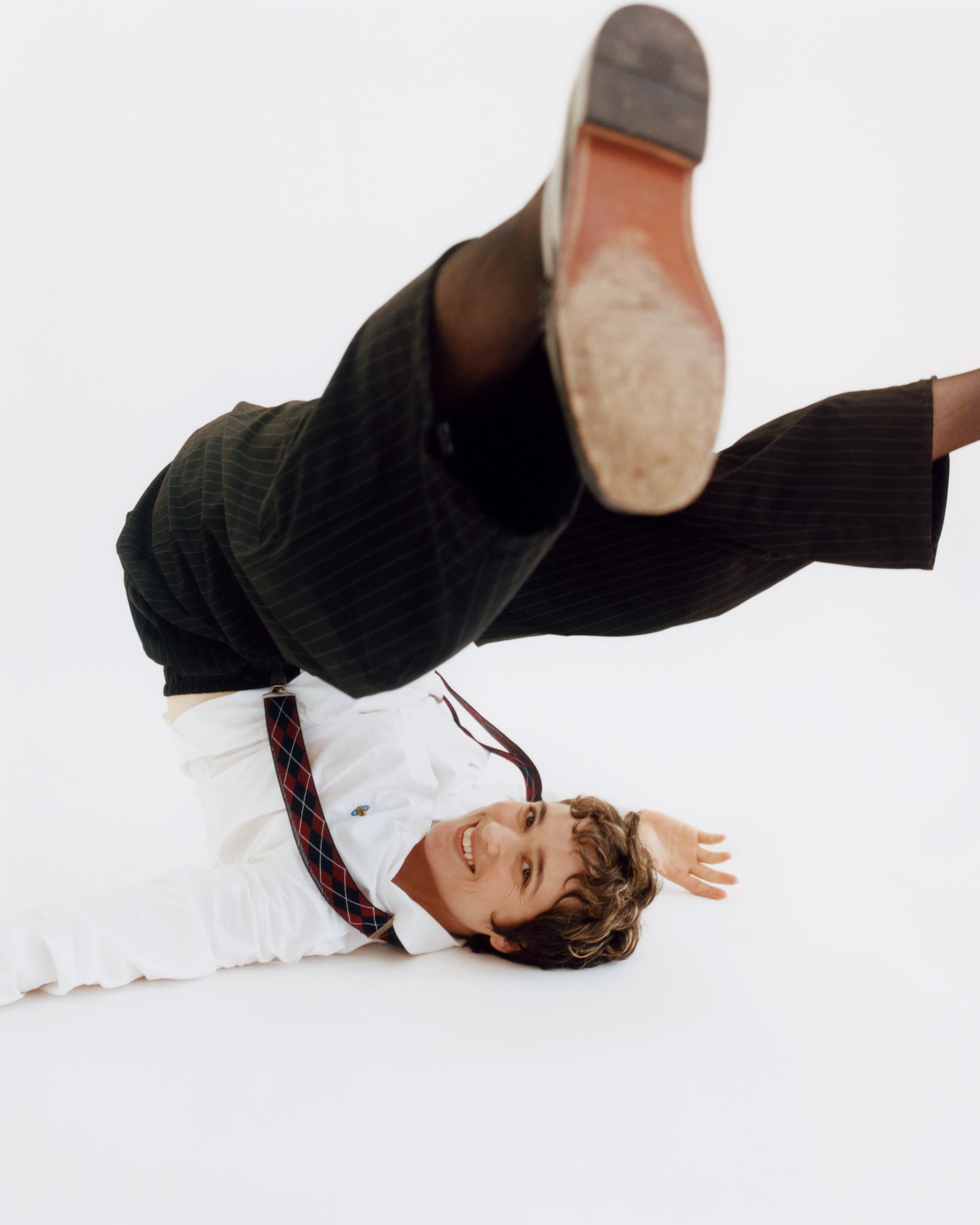
Alice Englert captured by Toby Coulson.
You don't seem like that kind of person. You write, you act, you direct. Does your process change depending on what you're doing?
Alice: They dovetail. Acting teaches me about directing and writing. I'm always quite loose about the language. I like to get some flesh on the bones, then get rid of what I was hoping for, because it's much more interesting when it dodges your desire and becomes something you didn't expect. With acting I don't look for perfection, I look for something interesting. Having directed myself, I know the take where you felt it was really good is usually the one where you were too in control. The one where you went, "Ah, I don't like that," is where you hit the real rhythm. I like to fail all over the place, because that's what real life is like.
There's a balance between having a framework and being able to colour outside the lines. That's where the magic happens, and I think especially when working with other people you have to let go of control.
Alice: Absolutely. Writing is almost just pointing at a mountain and going, "We're going over there." You think you know how it'll play out, but nothing's ever a straight line, and that's where all the good stuff happens. Directing is one of the most wonderful, collaborative things you can do; you just want to get out of your own way and work with people you adore. Kindness is really important. I don't believe in intimidation.
Do you still see that kind of leadership? Are things really changing, or still the same?
Alice: It's both, changing in tandem. What I thought was interesting with Star City is that I'm playing a character propped up as a feminist icon of the movement, but she's entirely puppeteered and controlled by men, and her own legend has completely eclipsed her having any autonomy in her own life. A tale as old as time.
Unfortunately, it is.
Alice: But Star City wasn't like that at all. Ben [Nedivi] and Matt [Wolpert] are two of the most generous, genuine showrunners I've ever met. I have definitely had some heartening experiences in TV. Exposure, the show I did in Australia, was wonderful and really difficult. Justin Kurzel and Nicole O'Donohue have a company there called Thirdborn and they're amazing and Bonnie Moir directed it and I just can't believe they even let us make it. It was so weird and wonderful and true. The writer, Lucy Coleman,was brilliant.
Is there something you always look for in a project?
Alice: It has to be a little instinctual. I want it to take risks and to entertain. That's a prerogative of what we do, it's about connection. In my own writing and directing, I look for high-stakes intimacy, and it often exists in that murky space between tragedy and comedy. In moments of tragedy in my life, terribly inappropriate, funny things happen all the time. It's sort of brain-breaking, and I love trying to pick up those pieces.
That's such a key part of the human experience. Like laughing at a funeral.
Alice: You hit the nail on the head.
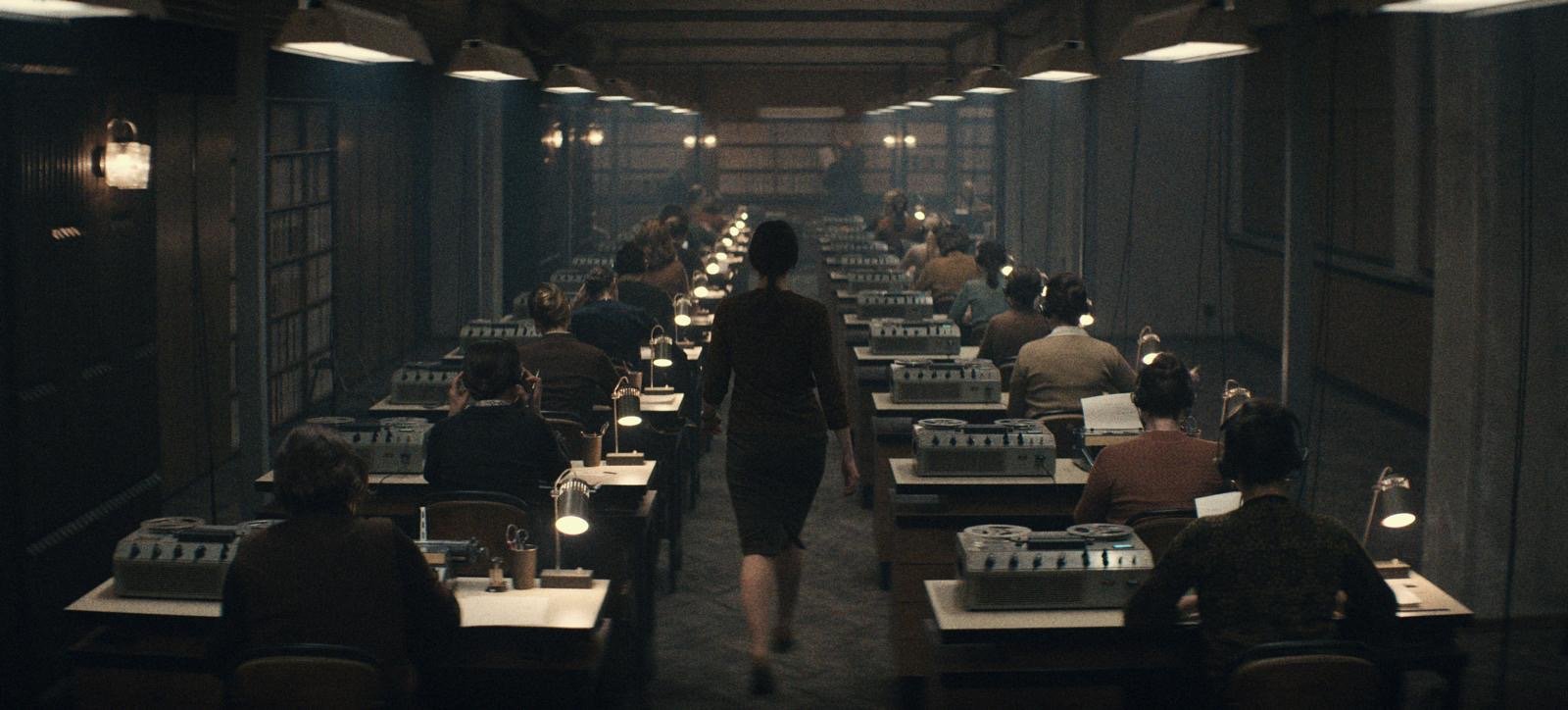
Scene from Apple TV's Star City. Courtesy of Apple.
Let’s talk about Star City. It's funny we started on fantasy, because being an astronaut or going to the moon doesn't feel like reality to me. Even with the last NASA mission, everyone's just in awe.
Alice: It's unbelievable. I've always had a crush on space, that's what drew me to Star City. I can't retain that many details, though I've read a bunch of books on black holes and quantum theory, and it dazzles me. When I finally wrap my head around an idea, it gives me that shiver, that blush.
You spoke to an astronaut to prepare, right?
Alice: I did, Garrett Reisman, a wonderful conversation. One thing I found fascinating is that when you come back down, your blood's been in your head the whole time. You come back fully floppy, like a little crawling baby again. I find that so endearing. So many astronauts feel compelled to be up there again. There's something about literally seeing the world as one that's quite affecting. People have moments of enlightenment, and then a void when it goes away. It's quite unsettling to find yourself forgetting something so fantastic.
Space is one of those things people are either terrified of or would love to see.
Alice: Sort of like snakes.
Or Marmite. Talking of opinions, someone mentioned you have a lot of them about fashion.
Alice: I don't know if I have that many, but the truth is I love clothes. I love that it can be a conversation, but also pure feeling. When something's beautiful it doesn't have to be cool, it just blows you away. My only other fashion thought: I got married and bought three dresses from Acne instead of a wedding dress, and it was cheaper. I wore one to the Star City premiere and it looked damn good, I thought.
You're such an Acne girl.
Alice: I love them. I am a girl, but I also feel like the little brother of the girl. When I dress more femininely, I feel like my big sisters dressed me up, and I love it. My heart is an androgynous, funny thing.
It's all about leaning into what makes you feel like yourself, especially now that fashion's become so formulaic.
Alice: I agree. Personally, I have to dress so that if I needed to climb a fence or run away for whatever reason, I could. Maybe you kick the shoes off, but hopefully even the shoes work. Though, because I'm a reality-television consumer, I do have love and respect for someone wearing heels they can't walk in. It's like skydiving for me.
Ha, you're full of surprises.
This interview has been edited and condensed for clarity.

Shaniqwa Jarvis on why photographs are beautiful liars, grief as a portal, and the moment she found her whole practice hiding in a childhood snapshot.