The Chef Who Lives for a Challenge
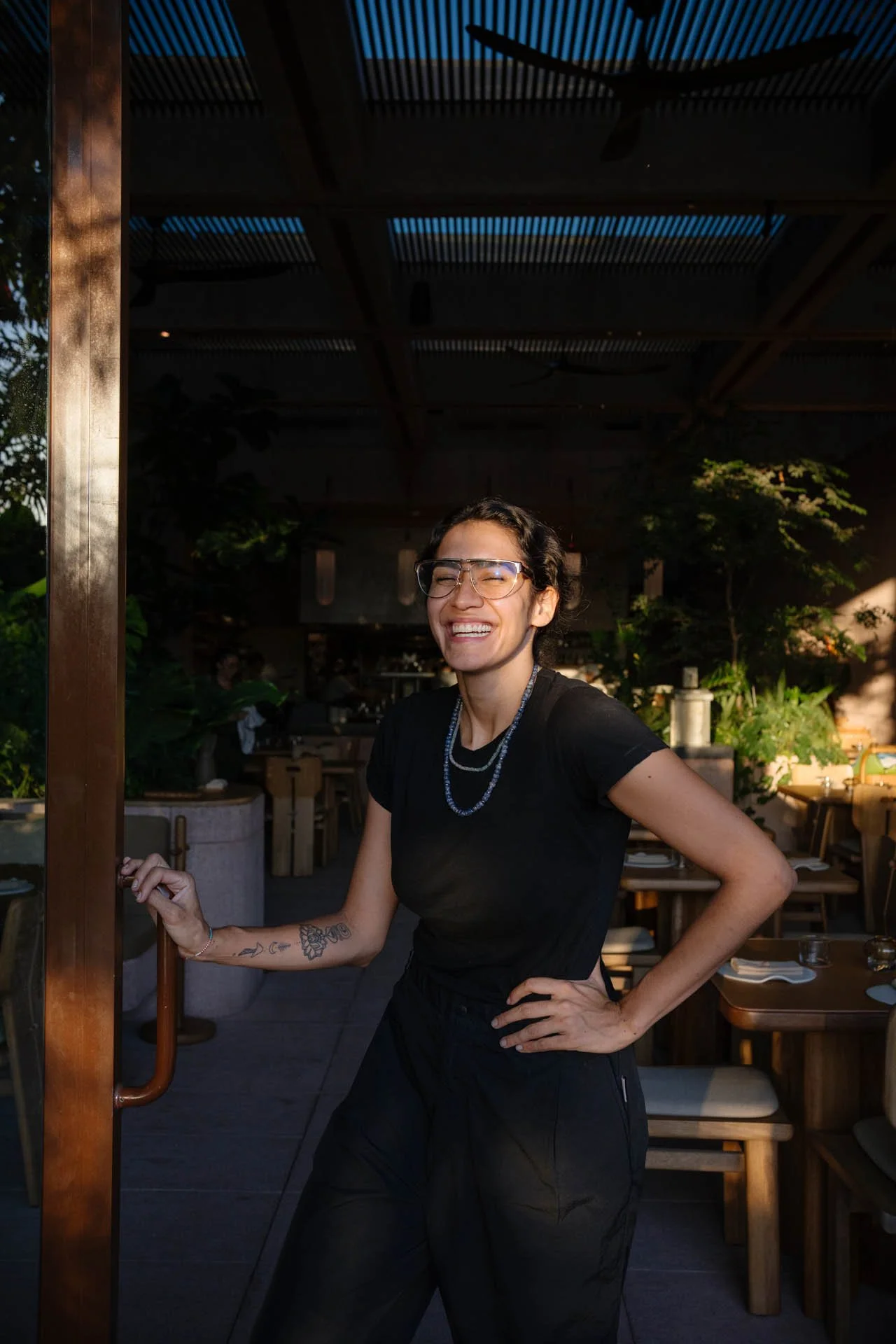
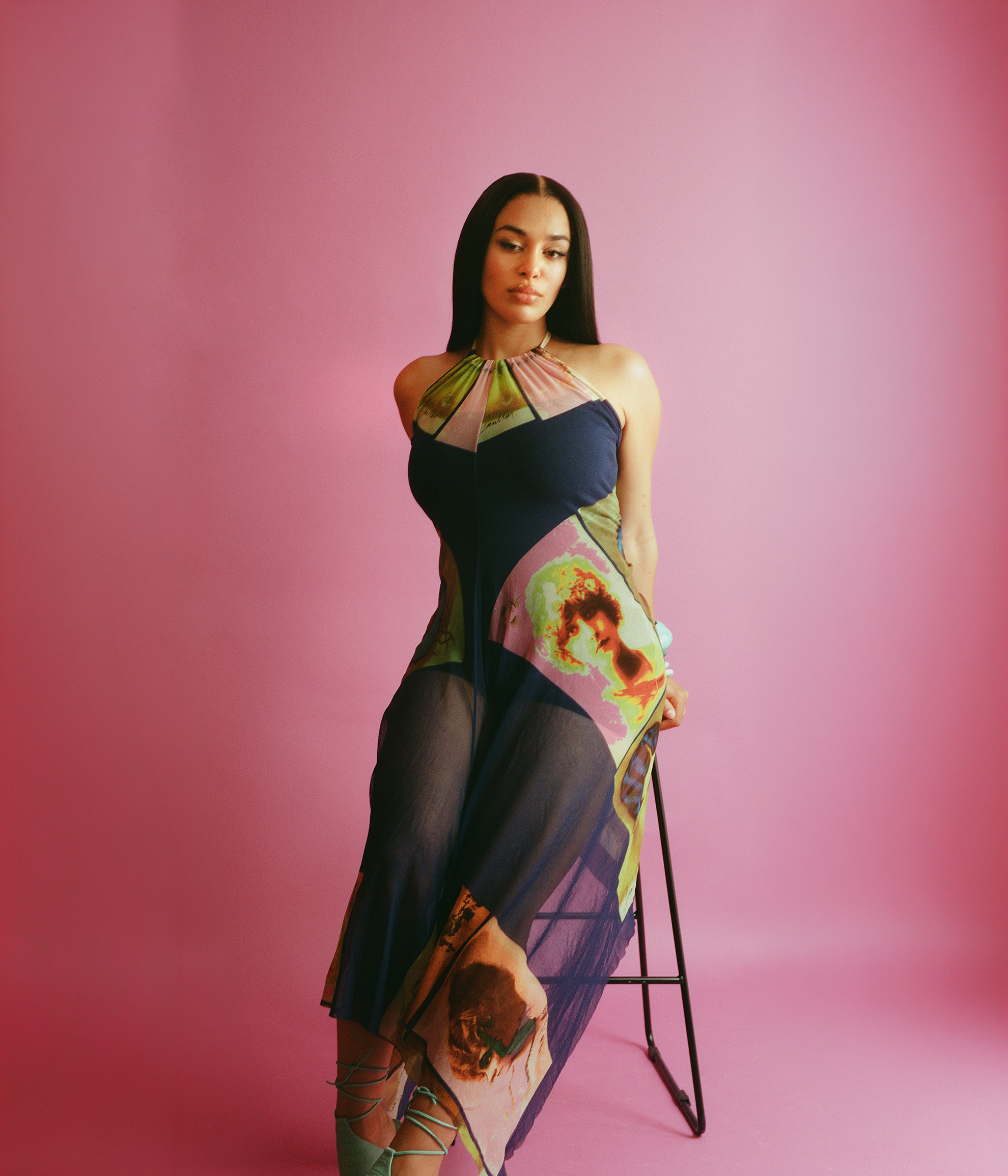
Daniela Soto-Innes captured by Ana Topoleanu
Daniela Soto-Innes
The Chef Who Lives for a Challenge
By Anna Prudhomme
Daniela Soto-Innes has always moved forward. Born in Mexico City and raised between Mexico and Texas, she built her culinary language through movement: across geographies, kitchens and cultures, absorbing each place as material for reinvention. By twenty-eight, she had already become the youngest chef ever named World’s Best Female Chef by The World’s 50 Best Restaurants, after helping redefine contemporary Mexican cuisine in New York through Cosme and later Atla.
That instinct led her back to Mexico. In Punta de Mita, far from the velocity of Manhattan, she opened Rubra, her first fully personal project: a restaurant bathed in tropical light, ocean air, garden herbs and architectural intimacy. Here, cooking is a dialogue between land, team and season.
There is something striking about the way Soto-Innes speaks about cuisine. For her, creation is a practice of attention focused on movement, people, and the conditions that shape a kitchen, as well as the energies that sustain it. Her philosophy is rooted in optimism, discipline and collective growth. One that sees hospitality as an ecosystem where food, health, design, and human connection are inseparable. We sat down with her to discuss the shifting dynamics of restaurant culture, the opening of her new restaurant Rubra on Mexico’s coast, and the importance of understanding hospitality as a whole.
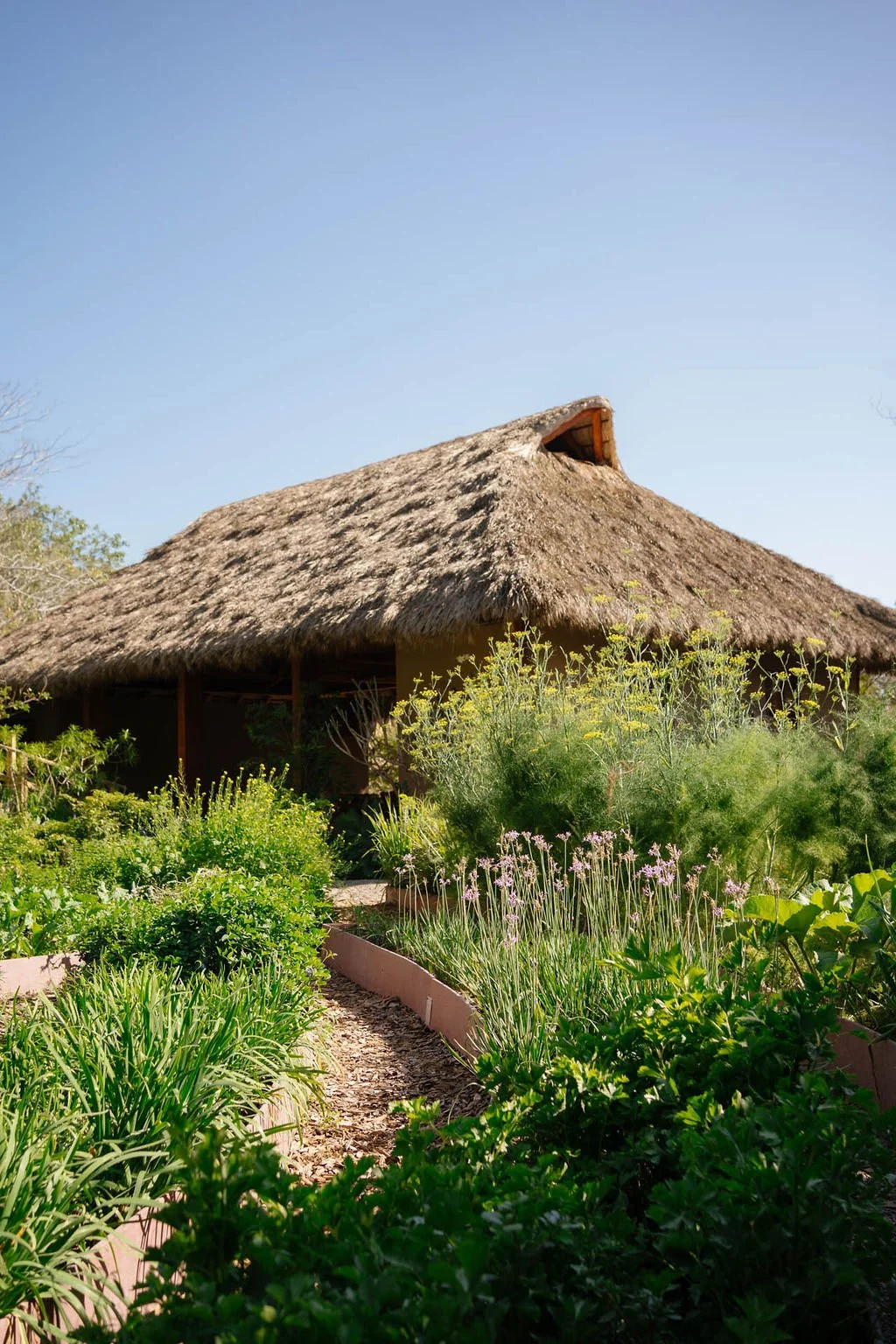
Rubra’s garden. Courtesy of Rubra.
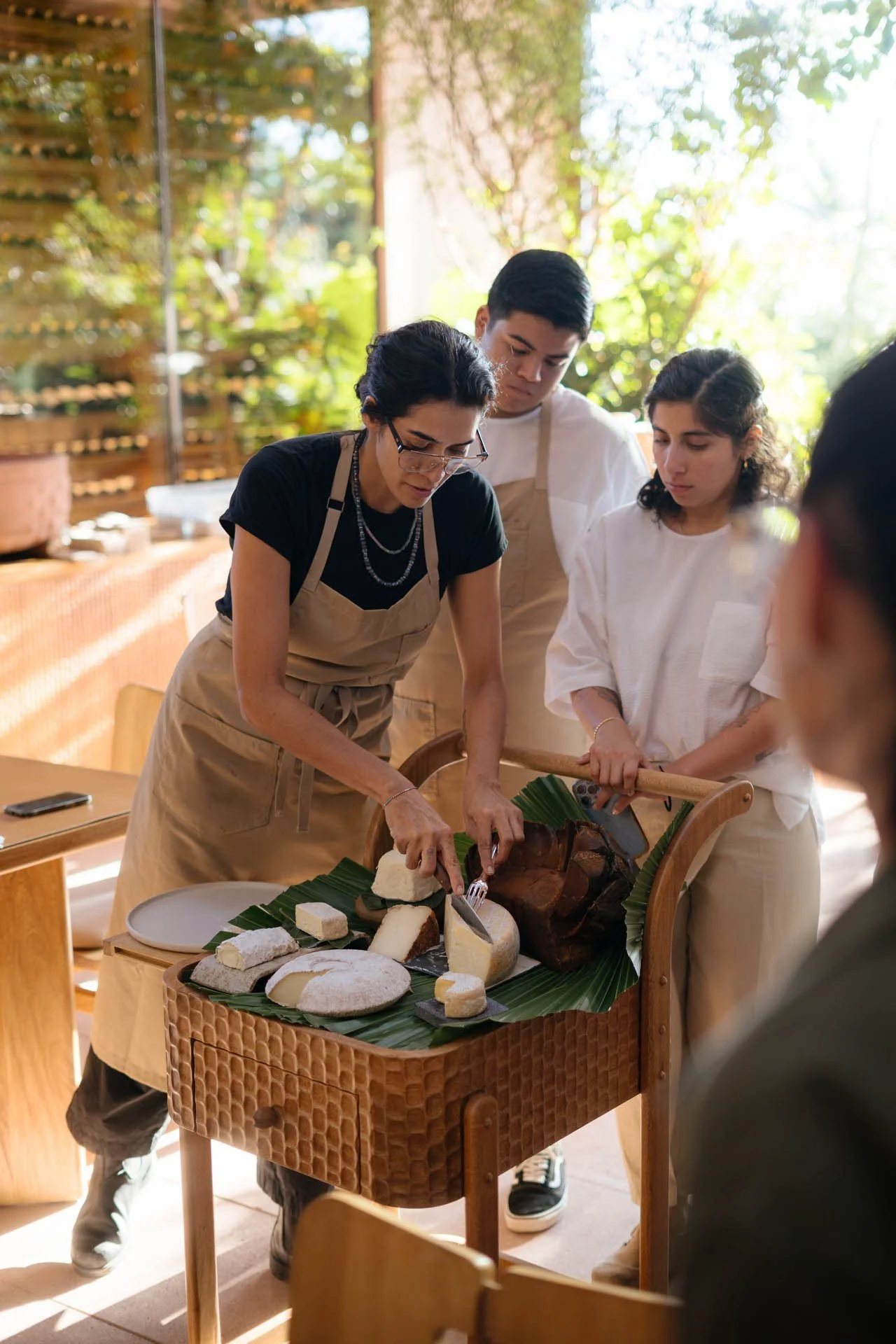
Daniela Soto-Innes at Rubra. Courtesy of Rubra.
You grew up between Mexico and the United States. Is there a specific memory — a taste, a dish, a smell — that marked you early on?
For me, it’s the smell of fresh blue corn dough for quesadillas hitting the comal (a traditional flat griddle used in Mexican cooking). That’s my favorite smell in the world. That’s the smell I always wanted to come back to.
How would you describe your culinary language today, and how has it evolved over time?
I think the most important thing for me is evolution; nonstop movement. I don’t feel comfortable being static. My style has obviously evolved with age, with experience, with travel. I cook with whatever I have around me and try to make it bright, bold, fresh. Today, I would describe it as tropical, fresh, and healthy.
Do you feel that the way people perceive and consume food and restaurant culture has changed in recent years?
Definitely. People don’t want to see overcomplication in food anymore. They want things to feel more natural, more raw, more effortless. You see that in the style of chefs, in the restaurants people go to, in the food they like. People are also drinking less. The younger generation goes more toward wine rather than spirits. Instead of long tasting menus, they want fresher food, smaller quantities, something lighter. And in Mexico especially, people have become much more open to seafood. Mexico City is far from the ocean, so seafood wasn’t always central, but now so many amazing places are opening with incredible shellfish and seafood.
“People don’t want to see OVERCOMPLICATION in food anymore. They want things to feel more natural, more raw, more effortless.”
In France, there’s been a growing trend of restaurants offering small plates to share, which isn’t traditionally part of the dining culture. What do you think about it ?
In Mexico, we share everything. It's about sharing and getting sauce on the table. I remember, when I was younger, going to France, or just in Europe in general, everyone had their own dish and didn’t really ask to taste from the others. But it’s beautiful to see that this is changing now. I think it’s a positive shift. Sharing is caring, in my opinion.
What has struck you the most in this evolution within the industry?
The simplicity. People don’t want very difficult food anymore. Everything exists online now, on Instagram, on TikTok, and everything feels immediately accessible. That kind of proximity has shaped a generation that feels instinctively fluent in making, as though anything can be learned, replicated, or mastered at the swipe of a screen. That changes how we teach and how we learn. You have to be patient and open to new ideas. But at the same time, because of social media, people often skip the process. They watch a ten-second reel and miss the caramelizing part for example. So you see a lot of things starting to look very similar.
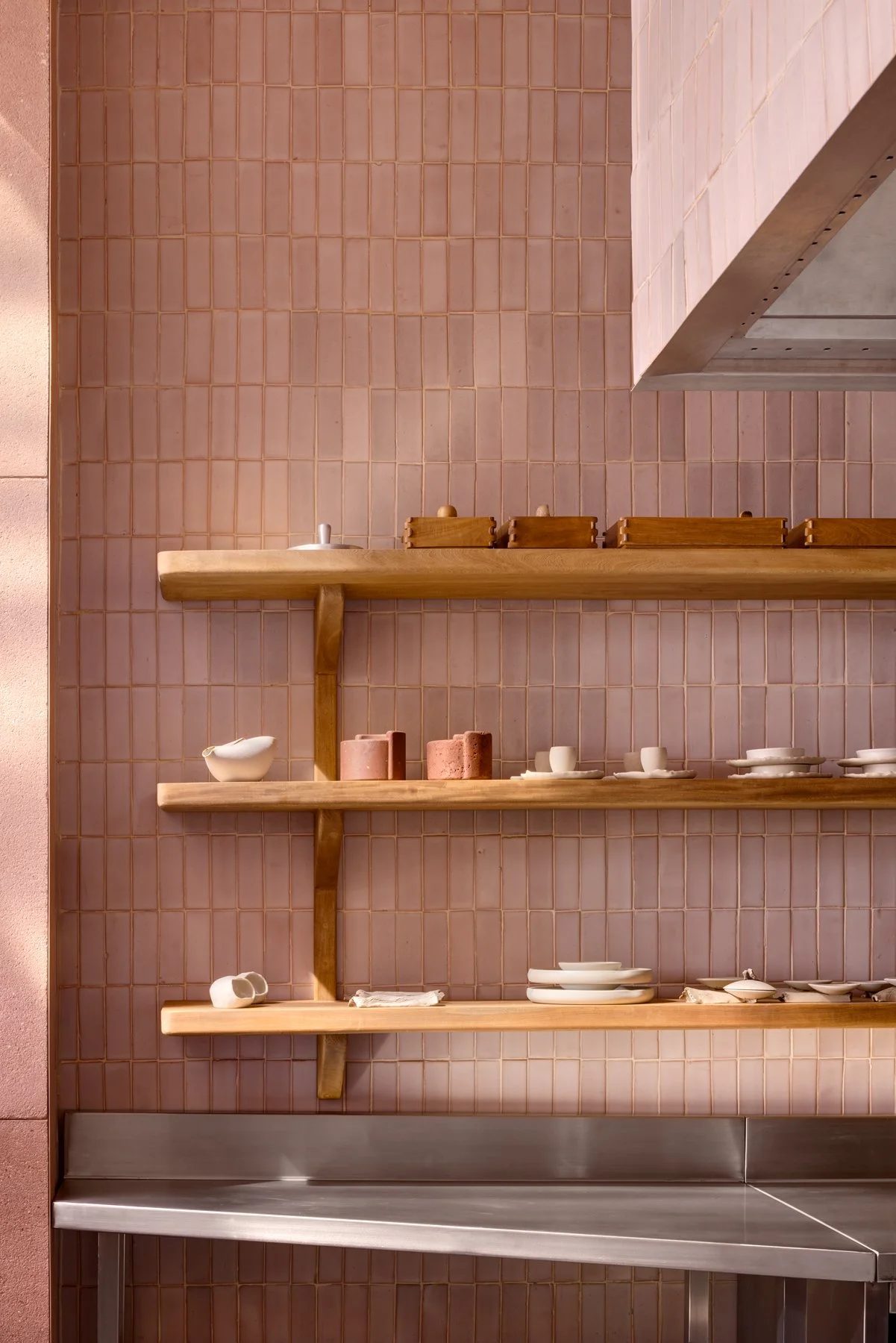
Interiors at Rubra. Courtesy of Rubra.
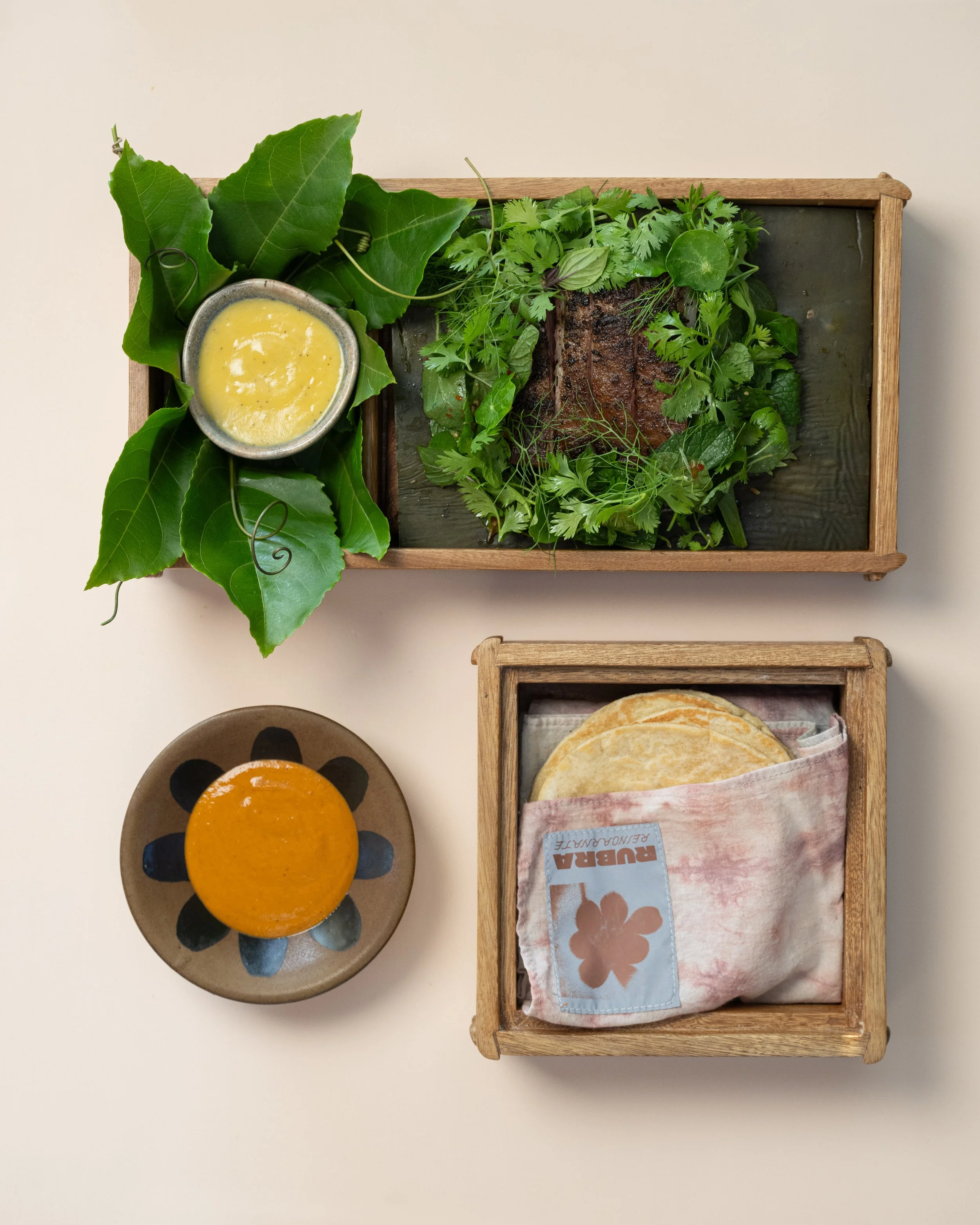
One of Rubra’s signature dishes: Shortrib, shishitos, grilled onions, guacamole. Courtesy of Rubra.
More broadly, what transformations in the restaurant world — working conditions, hierarchies, sourcing — have had the biggest impact on how kitchens operate today?
Restaurants are a really difficult business to be in, and after the pandemic everything changed. The way people eat has changed. The way people work changed. The younger generation wants to work differently, and that’s completely fair. I grew up working eighteen, nineteen hours a day. That’s a lot. As we evolve, we learn what’s wrong and what’s right, and then we move forward. Today, adaptation shapes every part of the process, even the way we cook, because kitchens are often operating with fewer hands. At the level of fine dining especially, the shift has been profound, forcing an entire industry to rethink its rhythms, its systems and the way excellence is sustained.
In a restaurant, creativity is always tied to constraints: time, team, profitability. How do these limitations influence your creative process?
I think creativity is like happiness. Being unhappy is easy. It’s easy to focus on everything that’s difficult in life and in the world. Choosing optimism is harder. I’m not a Buddhist, but I’ve always been drawn to certain ideas within Buddhism. There’s a quote from the Dalai Lama that says, “Choose to be optimistic, it feels better.” I think there’s something in that idea of making a choice. It’s harder to be happy, but you choose it because it feels right and good. It takes work, patience and a strong will. You can be surrounded by pressure: bills, problems, difficult conversations, and still choose creativity. It remains a decision you make, every single day. Sometimes, there are only twenty minutes to create, and there is something beautiful in that limitation. For me, it becomes a form of meditation. Something that keeps me alive and keeps me moving.
How does imagination actually emerge for you when creating a dish?
It depends on the restaurant. Right now we’re working in a little bar, so you think about your limitations first: your kitchen, your equipment, the kind of experience you want to give guests. At Rubra, we have almost every type of equipment you can think of. We have our own garden, we have the ocean. I love going there and thinking about what I could make. But honestly, sometimes having everything makes creativity harder. So you think about your story, your team, who’s cooking it. Then maybe you start with one ingredient: let’s say lobster. You ask: “what’s the best way to cook it? What does the menu need? Should it feel buttery or fresh? What’s in season? What citrus, what herb?” Then memory comes in. Someone says, “My mother used to make it like this,” or “I remember growing up with this.” You collect all of that information and fit it into the restaurant’s identity.
As a woman in a historically male-dominated industry, how has your relationship to leadership been shaped?
I grew up surrounded by strong women. At home, my sisters were all incredible women in the kitchen. When I started working professionally, I was honestly confused. I was wondering where all the strong and beautiful women were. It felt funny to suddenly see mostly men in kitchens. I never saw it as something that made me feel less then. It was the opposite. I thought: we need to find all these women, unite, make it feel like home. Now that I’ve been cooking for over twenty years, I understand what people mean when they talk about inequality. When I started being invited to festivals, often I was the only woman there. Now, with the younger generation, there are many more women, and that’s beautiful. We are more welcome. But there is still a lot of work to be done, and it starts with women hiring and uplifting more women around them. Today, I think of everyone that came through the kitchen with me at Cosme in New York, and some of them have their own restaurants, are chefs, or have become famous photographers, or winemakers and I like to take a lot of pride in that.
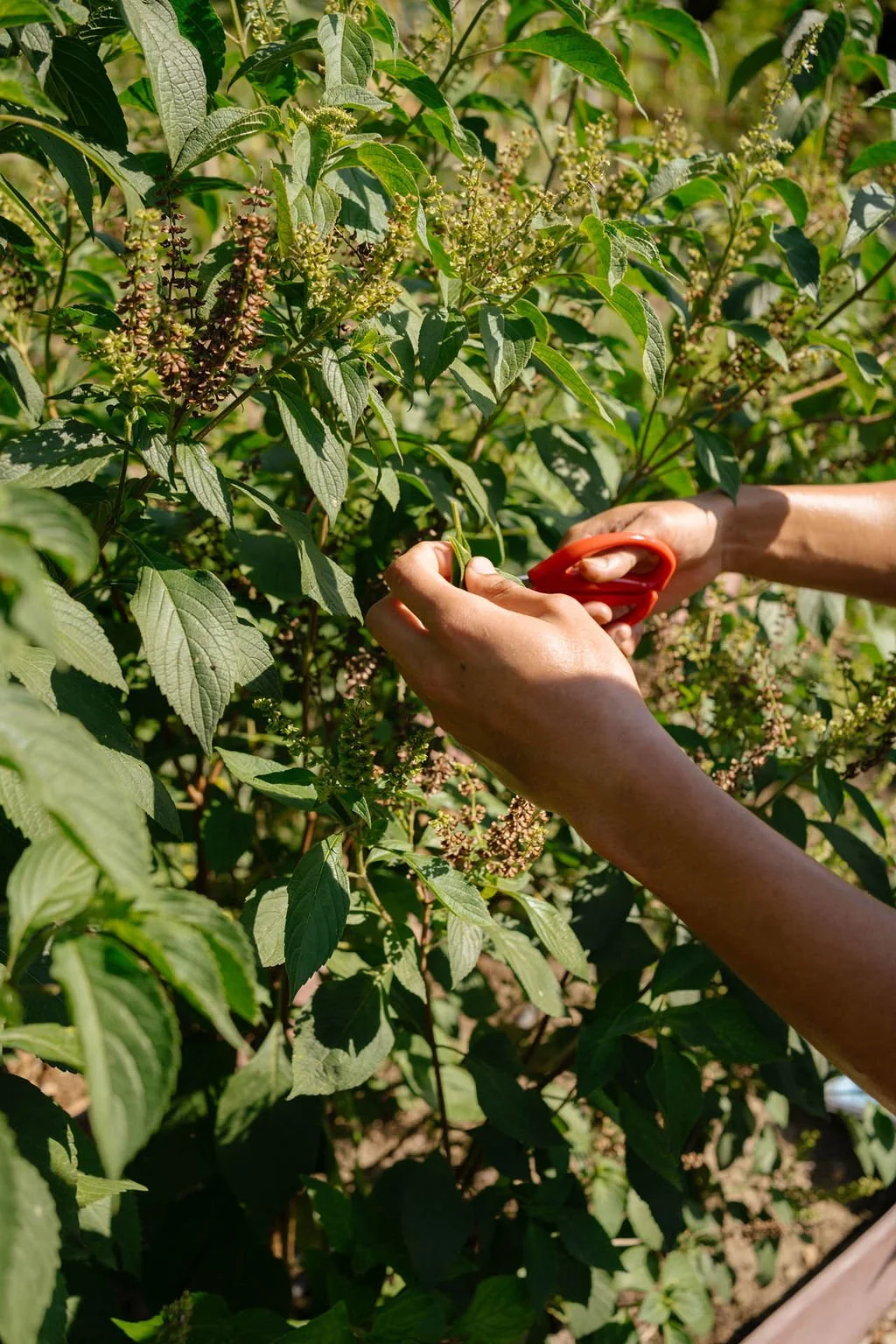
Rubra’s garden. Courtesy of Rubra.
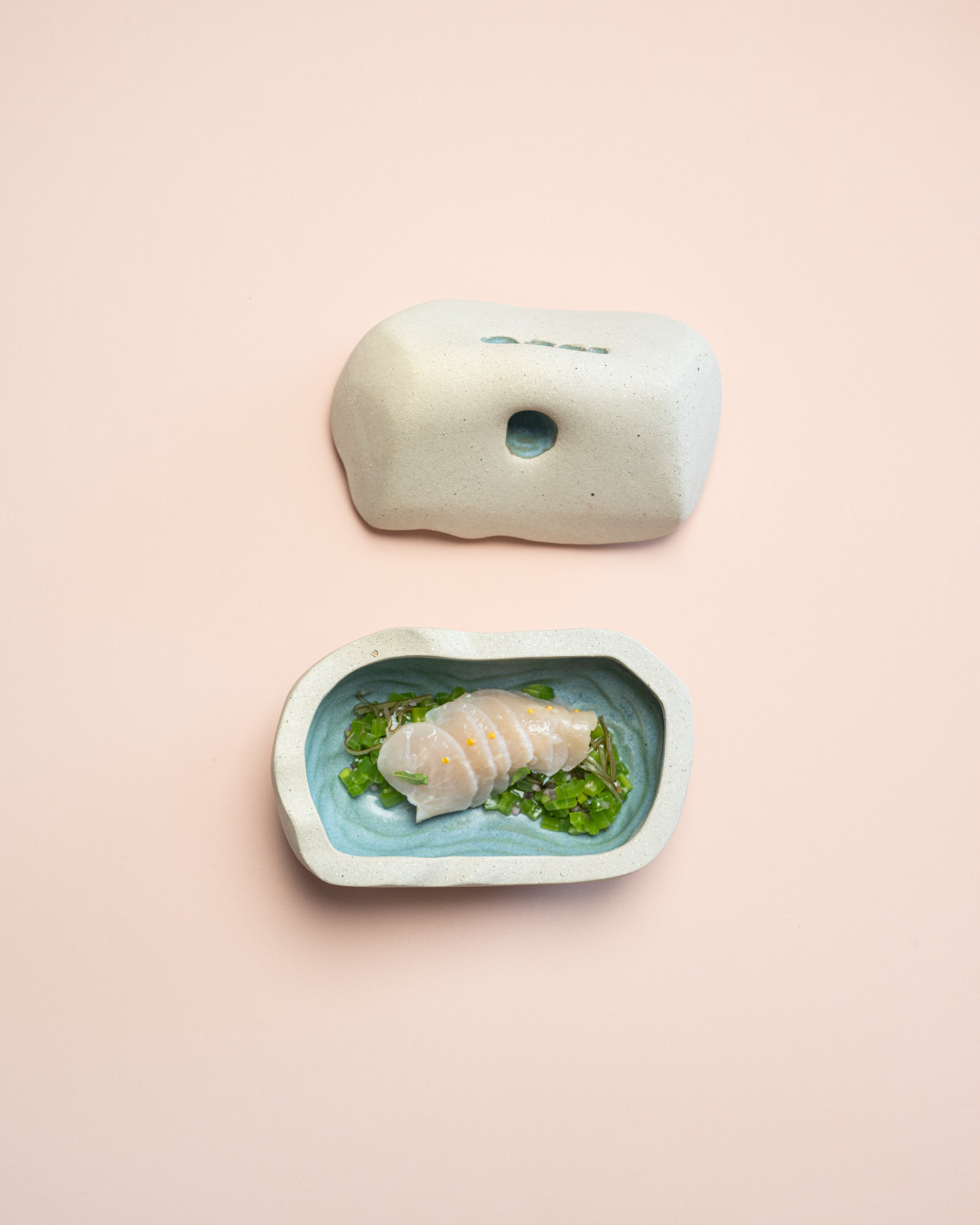
A Rubra signature dish: Scallop, cactus paddle, lemon verbena. Courtesy of Rubra.
You’ve often spoken about rethinking power dynamics in kitchens. What does a fair and healthy working environment look like to you today?
Anyone who tells you it’s easy is lying. Kitchen work is intense. You’re standing all day, cleaning, talking, moving fast. If you don’t pay attention, you burn yourself or cut yourself. It’s physically and emotionally demanding. For me, a healthy environment means understanding your team. Not everyone has the same energy. Not everyone wants the same path. I have a lot of ideas, and sometimes I have to step back and realize that it can feel overwhelming for people. You have to understand what each person needs, how they want to grow, and then put the right people in the right spots. And always remember that you're nothing without a team.
Your return to Mexico with Rubra marks a new chapter. What does this project allow you to explore, and why was it important for you?
Moving back was scary. I had the eyes of the world on me from a very young age. I was successful at twenty-five, and honestly, I didn’t ask for it. I just worked. And instead of thinking, I made it, I thought: Oh no. Start over. For me it’s never been about awards. It’s always been about challenges. Moving to Mexico was my dream, but moving to a really remote area I barely knew was terrifying. But I moved with my team, the people I love. I don’t always know what I want to do in life, but I know who I want to do it with. That’s what empowers me every day. I’m also a little bit of a nomad. I thrive on starting in new lands. There’s something beautiful about not knowing anything, because that’s how you wonder and learn. I never want to stop feeling that.
What are your hopes for the future?
For myself, I want to grow more into hospitality as a whole. It's not only about cooking, it's about everything that relates to cooking, whether it's farming, furniture, lighting, music, art. I want to be part of everything, and I want to be good at navigating everything at the same time. For the industry, I hope we keep evolving toward more respect, for people, for process, for every role involved. And if we move beyond the race for Michelin stars and the relentless pursuit of being the best, what remains is something far simpler: the child in all of us who first fell in love with cooking, wanting only to make something that would make our parents happy. I’d love to see a culinary community that feels more connected, less driven by the fussiness of awards. That would be a beautiful thing.
This interview has been edited and condensed for clarity.
Shaniqwa Jarvis on why photographs are beautiful liars, grief as a portal, and the moment she found her whole practice hiding in a childhood snapshot.