The Most Trusted Name in Fitness

Courtesy of Kirsty Godso.
Kirsty Godso
The Most Trusted Name in Fitness
By Bonnie Langedijk
Kirsty Godso is one of the most influential voices in fitness, and one of the very few not selling a shortcut. In a field organised around gurus and signature methods, Godso has never coined one, insisting instead that it was always about the individual body, its needs and its preferences. That she has become one of the industry's most influential voices by refusing its central sales tactic is the first of several things that make her interesting. Her magnetic presence and positive energy is hard to not be drawn in by, and has landed her a client list that includes some of the most successful women in culture
That she reads the business so clearly is no accident. Godso came to fitness through a finance marketing degree, selling training before she ever taught it; when she argued that high intensity work belonged to everyone rather than to athletes alone, the New Zealand gym company she worked for asked why she wasn't fronting it herself. She was twenty-two. Fitness DVDs followed, then Les Mills, Equinox, five years in New York, and thirteen and a half years as one of Nike's most recognisable global trainers, spearheading much of their programming, before she left for the activewear brand Vuori.
The businesses she has built for herself run on the same conviction, Pyro, her training platform, and Made Of, her protein line, each a rejection of the quick-fix language she has spent a career refusing, each unmistakably an extension of how she thinks.
But we'll let Kirsty do the talking.
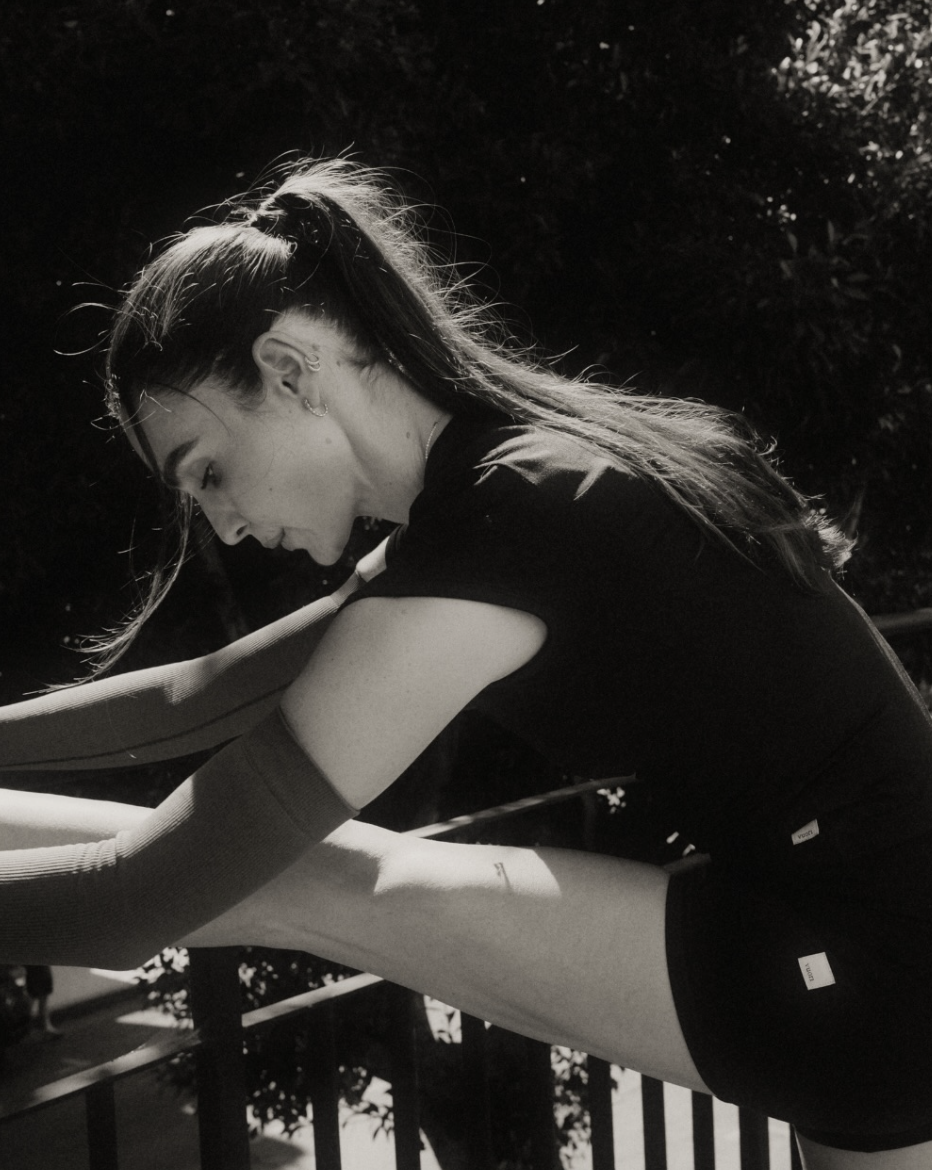
Kirsty Godso in Vuori. Courtesy of Kirsty Godso.
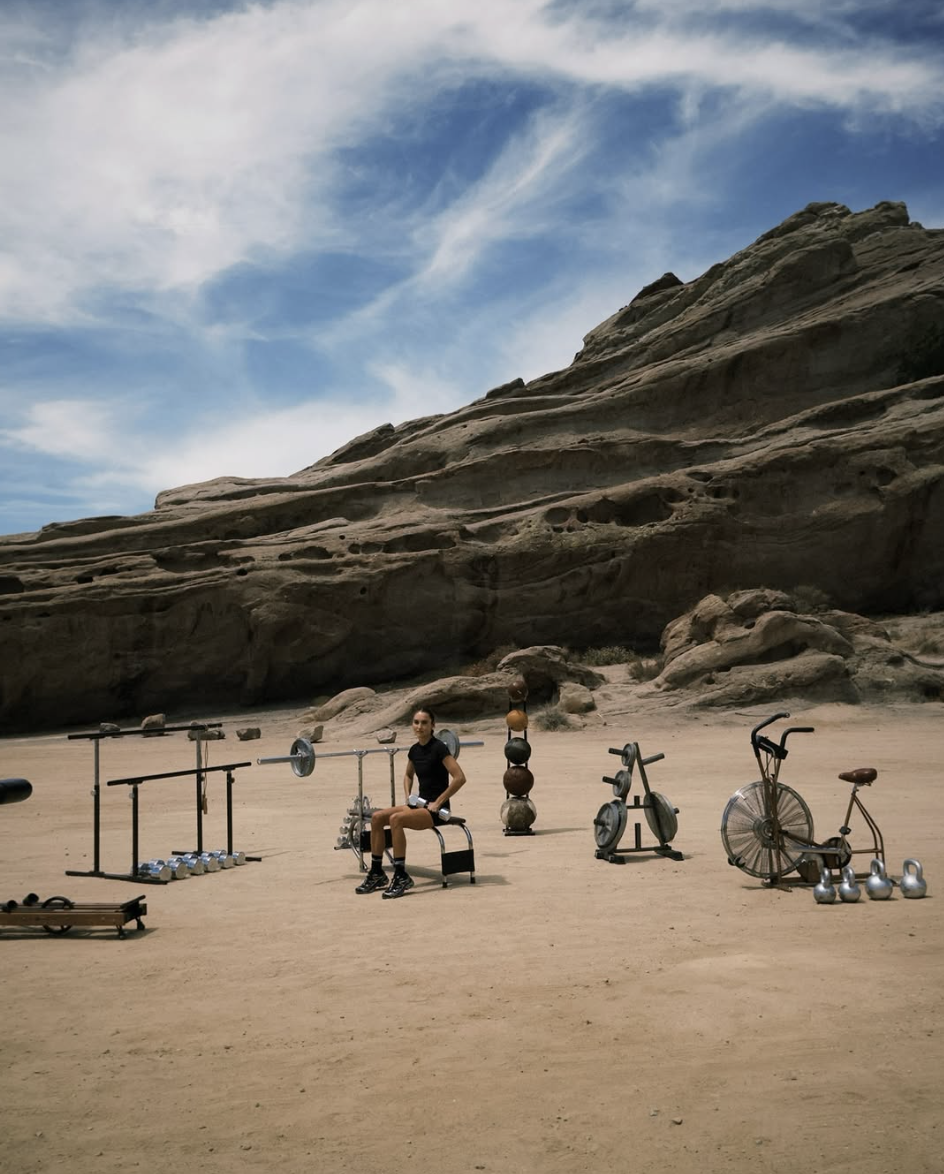
Behind-the-scenes of Godso’s shoot with Vuori.
Bonnie: We live in a world with a lot of distraction, and in your industry that's so prevalent right now. Everyone wants to create the singular blueprint of how to be healthy or how to be fit.
Kirsty: There's always some method, and that’s why I’ve never coined one. It's no one's method. It's exercise. It's movement. Everyone's going to have a slightly different take on it, but it doesn't need to be your method. No offense, you're not that significant. Someone very likely did it before you. I always say a great trainer knows it's not about them, it's about the person they're training. So I'm the least relevant person in the room, even if I'm the one telling you what to do.
That's what social media has made very difficult, because it's not at all about specificity to a single person. It's, how do I apply my knowledge to as many people as possible?
Kirsty: And you have to generalize, unfortunately. Call me old school, I still love handwriting notes. I don't enjoy short-circuiting the search function of my brain. I like humanness in things. And now there are all these apps where an AI creates the workouts. AI is never going to create a better workout than a person. With my clients, I know someone's left glute is a little lazier than their right, so we're always doing extra reps there. Even if you told an AI that, it might factor it in but it can't factor in my hand pushing against their knee to create the tension that gets that glute to fire. If I fed into every little trend I wanted to on Instagram, I could sell protein like crazy. I could sell Pyro subscriptions. "Here's the five moves that are going to tone up your stomach." But would I feel good about that? I've always said it is the business of wellness. Because it is a business.
“Fitness is such an invitation to CHANGE how someone feels, so I particularly don't like transactional language around the body.”
And that's what people forget. Often when someone is explaining to you how something works, in the end there's something they're selling.
Kirsty: I immediately have an issue with someone who says, "This is the only way to train," and there's a platform attached to it. I've said that on a podcast before and people were upset. They’re upset because that's what they’re doing. And I'm telling you, if people only did mat Pilates, it's not going to be very good for them. Every well-educated coach is going to say every single person's body is different.
I tried to do the workouts you filmed in your apartment during COVID. They were so hard, but you had a way of making people laugh through it. How do you approach filming yourself?
Kirsty: I started in fitness DVDs when I was 22. No watch, no clock anywhere, you had to know the timing of the music, and you weren't allowed to be a second wrong, ever. So now I know exactly what's happening, and I can feel it myself: by the time I'm a little sore, I know someone was probably not feeling great ten minutes ago. Even when I filmed for Nike, I was never scripted. It's truly just whatever flies out of my brain. That's why my workouts did so well. People would often tell me, "I feel like I'm hanging out with you, versus you telling me what to do." When you teach high intensity, it's already intense enough. I don't need to be intense with you too. And I don't stop when I make a mistake, I steamroll through it. It's refreshing to just be yourself for people. Maybe someone on the other end remembers to be themselves too, rather than a clone of everything else we see. Fitness is such an invitation to change how someone feels, so I particularly don't like transactional language around the body. People always say, "It's so interesting, you always say, 'You're going to lay your beautiful body on the ground,'" because so much of the day everyone is sitting there shit-talking their body.
Fitness is so personal, and language is so important. There are so many of these words: toned, snatched, juicy.
Kirsty: My favorite thing is when people say, "This is going to snatch your waist." Antatomically speaking, it's usually not even correct for the exercise they're showing. But it's funny you say it's personal. There is nothing more personal than a body. You can put whatever clothes you want on, you can drive whatever car but at the end of the day, your body is the thing everything else rides off. As much as you want to tell people to stop projecting when they attack someone else's body: yes, it's because a body is that personal. I didn't have body dysmorphia until I was in the fitness industry. Until my body became something that was allowed to be commented on all the time.
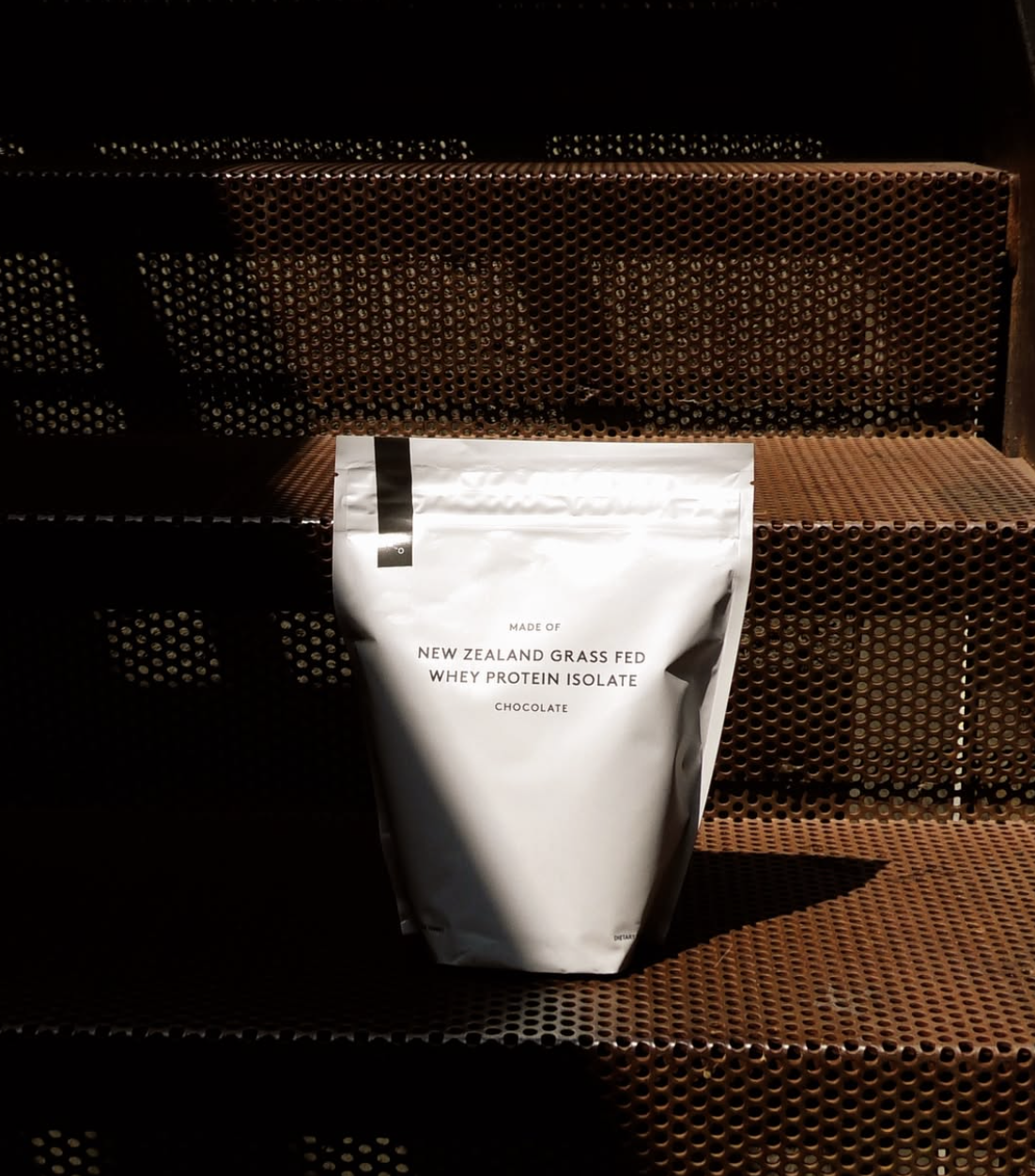
Kirsty Godso’s New Zealand grass-fed whey. Courtesy of Made Of.
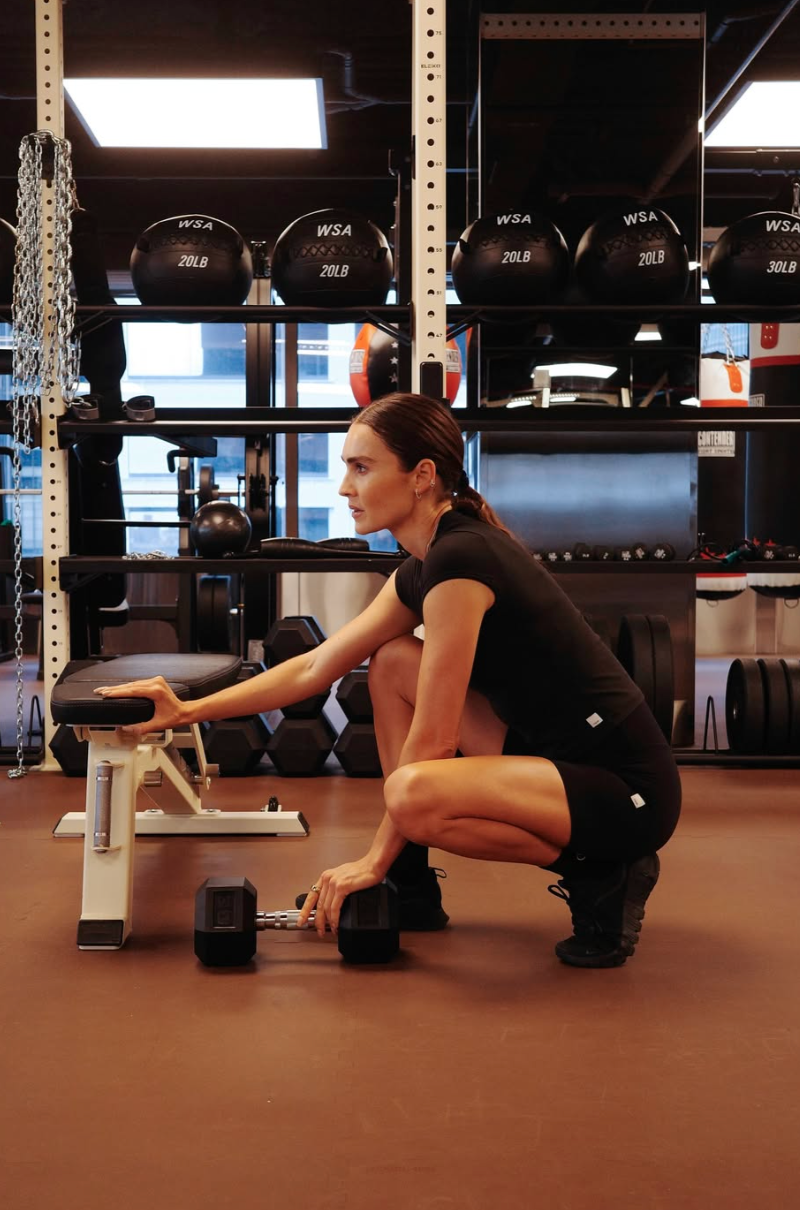
Courtesy of Kirsty Godso.
And the obsessiveness of it. Because you're a public person, it's a free-for-all.
Kirsty: That's why I'm so protective over my clients. You think you're pulling up on my page to talk shit about my girls? Let me tell you what's not going to fucking happen today. I'm their biggest fan and I will be their fiercest protector. They already have everyone commenting on their body. And if I, as the person who knows their body so well, doesn't protect them, then who? Everyone tells you not to worry, it's just one comment. But you never know when it's one comment too far. It's become so second nature that everyone feels it's their right to say how anyone's body should be. Can we zoom out for a second? This is not normal behavior.
And this is not to downplay the work you do with them, but their bodies are probably the least interesting thing about them.
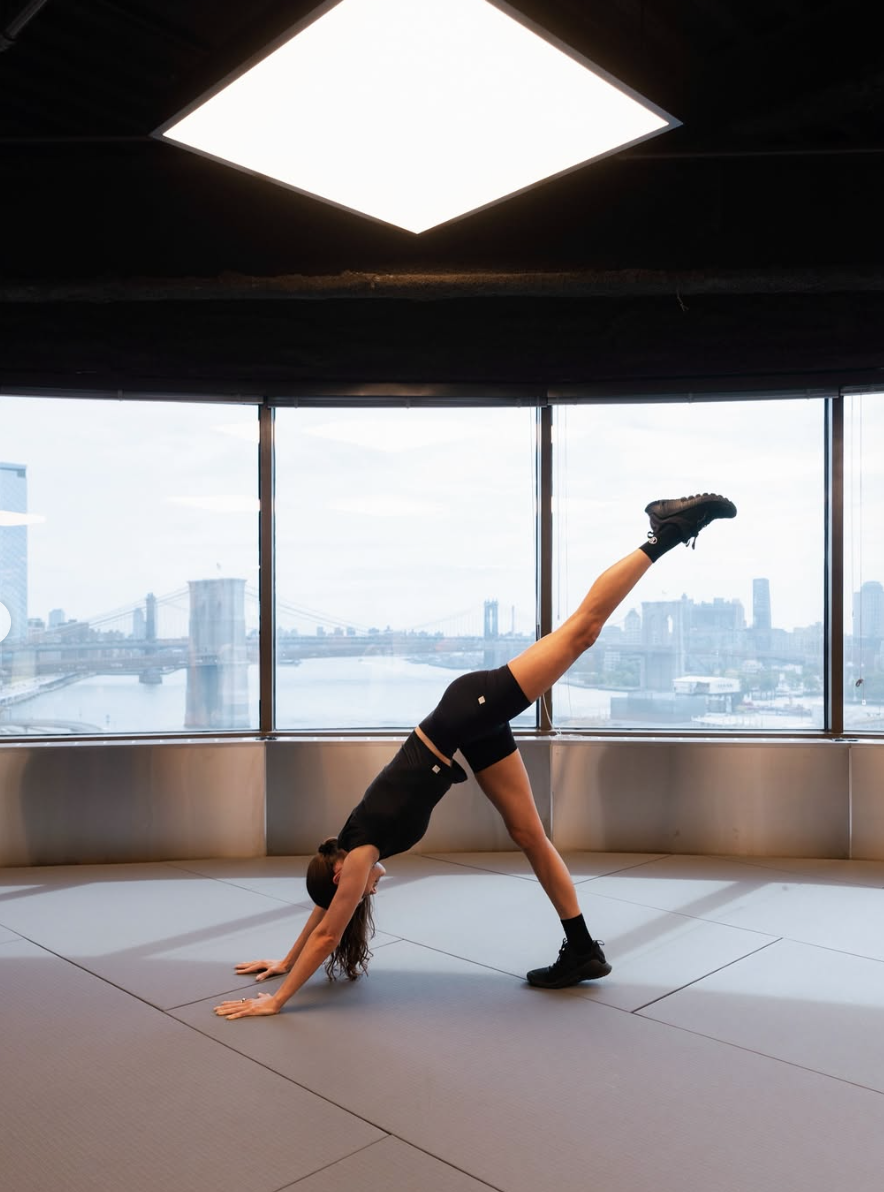
Kirsty: A hundred percent. So I made a rule very early on: I never teach with my top off. Every brand knows it and people never understand why. My body is not the point. It's my energy, it's the class you're doing. If me having my shirt off might make one person in the room feel a type of way, I'm not doing it. I get it, bodies sell. But I don't need my body to sell. That's why I wear a uniform: a black baby tee, little shorts or black leggings, a black crew sock, some trainers. That's my Lara Croft, what I go to war in every day. I don't care if the next color is coral pink. Even when I went to Vuori, the first thing I said was, I wear black.
I respect staying so true to yourself, and what you feel good in.
Kirsty: It’s a funny thing, working somewhere like Nike for so long. When you become so synonymous with a company, it's not yours. You're lending yourself to it. And the problem with Nike is that we foster your relationships: with media, with consumers, with the people who trust us. I was tired of arguing about my value every day. I don't need to come to work and have a sports marketing rep tell me she can't believe that's my day rate. They thought Pyro was a little side thing. I make more money from Pyro than I would from them. I'm a businesswoman at the end of the day. But first and foremost I'm a person, and I don't go backwards in my career.
That is the biggest mistake. I don't know how they let that happen, but good for Vuori.
Kirsty: It was a really funny moment to wrestle with: how much of my identity is actually Nike, and how much is actually me? And when I left, I realized: oh, it was always me. That was the biggest relief. I love Nike. I still love Nike, I always want them to win. I'm a big believer that you have to know when it's time to move on, even if that feels like a scary jump.
Courtesy of Kirsty Godso.

Protein powder arriving in style. Courtesy of Made Of.
And that's hard, when the people you work with don't see or respect how you've grown.
Kirsty: I want a brand partner that meets me where I'm at, not one that looks at me as the 22-year-old they signed.
Of course. I also wanted to touch on women's fitness, because there's so much noise about what's good and what isn't. Do we train with our cycle or not? What's the most misunderstood aspect of training for women's bodies?
Kirsty: I love Stacy Sims. She's a New Zealander as well, and I studied her course, Women Are Not Small Men, years ago. But there isn't data to support women training for their cycle. Cycle syncing is another subscription push, another product push. For me, every cycle is different. Maybe every second month I have crazy back pain, so I don't want to work out the day before my period. But then this month I had my strongest day in the gym on day one. Everyone's so determined to have a fixed plan that they can't go with the flow with their own body and creating unnecessary rules for yourself is putting yourself in a cage. If I wake up stressed, I'll go on a really big walk and call a friend, and do that workout tomorrow. Everyone operates as if, unless everything is done exactly as set out, they failed. You didn't fail. You fail every time you don't listen to yourself.
It’s so interesting to think about how we have so much more information about our bodies, but we also feel so disconnected from it.
Kirsty: I talk to my body all the time. I know that may sound weird. I talk and I listen, and a lot of people don't do the listening part. Maybe that came after blowing out all my hormones and my thyroid and having shingles, because I used to burn myself out so much with work. Now I won't even let myself get close to that again. And I can get over myself. My life continues if I take a rest day. So the biggest thing I say to women is: the best plan you can follow is being able to listen to your body.
Agreed! Is there a project or partnership you haven't done yet, but would love to do?
Kirsty: I've ticked off a lot of bucket lists. I loved physical education so much at school, and I think it's a dying art and yet we've got this rise of fitness. I wish there was a way to take people's favorite trainers and create a program that went back into schools, so kids feel like physical education is for them. I know that's a weird answer.
I think it’s a great idea.
Kirsty: It would be my give-back piece. It's sad we're losing that touchpoint, because it's so many people's introduction. And sport is community. You learn to work well with others, you learn drive, you learn discipline.
This interview has been edited and condensed for clarity.


Shaniqwa Jarvis on why photographs are beautiful liars, grief as a portal, and the moment she found her whole practice hiding in a childhood snapshot.