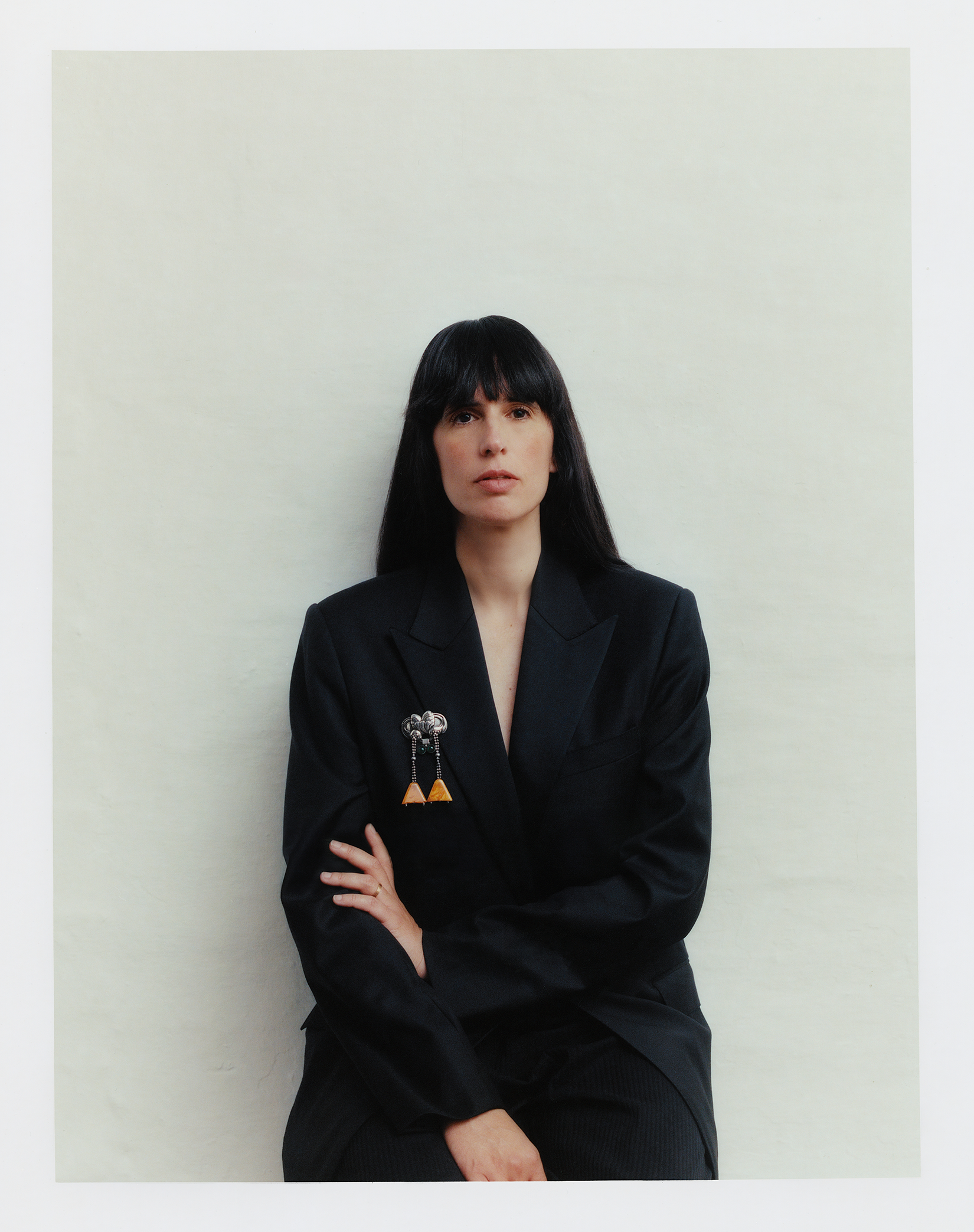
Paula Gerbase. Courtesy of Georg Jensen.
Paula Gerbase
Georg Jensen’s Sterling Rebel
By Bonnie Langedijk
Paula Gerbase comes from a family of doctors. She has spent her career treating fashion houses instead.
It is a fitting inheritance for a designer who prefers diagnosis to guesswork. Born in Brazil and raised in Switzerland, she left Central Saint Martins’ cult of self-expression for the cutting rooms of Hardy Amies, where on her first day she was told she knew nothing and would be making the tea. She went home delighted. Seven years on Savile Row followed, then her own label, 1205, and six years as artistic director of John Lobb, the Hermès-owned bootmaker. Each was a heritage house that wanted reinventing without being emptied out.
At the end of 2024 she took on Georg Jensen, the Copenhagen silversmith that has been making heirlooms since 1904. For more than a century the silversmith has drawn in sculptors, architects and artists, and kept a workshop where skills still pass from one generation to the next. Her job, as she sees it, is less about inventing a new house than about revealing the one that was there all along.
But we’ll let Paula do the talking.
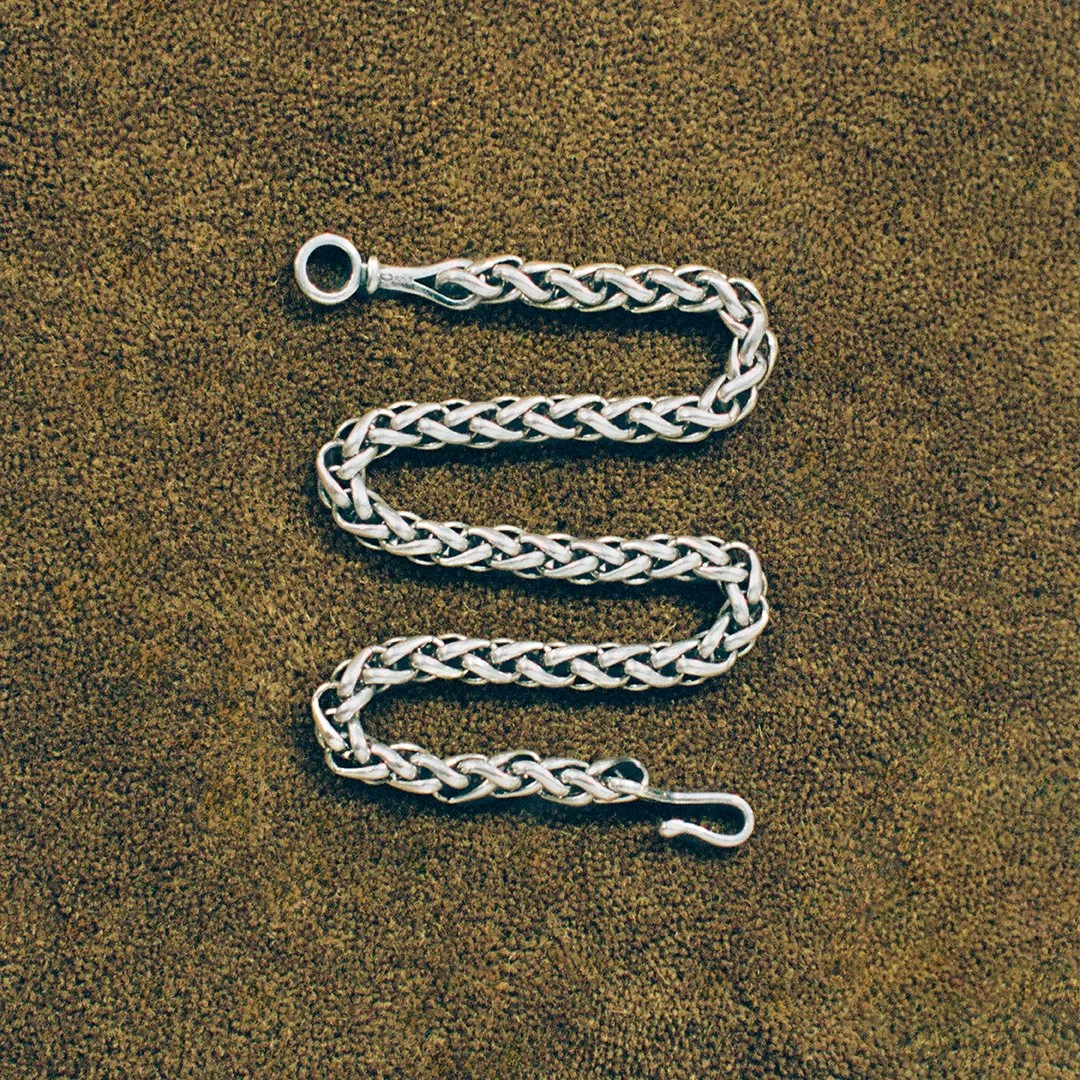
Designed in 1999 by Vivianna Torun Bülow-Hübe. Courtesy of Georg Jensen.

A silver telephone designed in 1942 by Sigvard Bernadotte for Georg Jensen. Created before the dial pad was widely adopted, the telephone was handcrafted in the Georg Jensen silversmithy as a bespoke gift for the Danish firm Brødrene Dahl. Courtesy of Georg Jensen.
What makes Georg Jensen special is its rich history. There are so many incredible, specifically women actually, in the history of Georg Jensen. And I think you’re doing a good job of bringing that to the forefront again.
Paula: I mean, I think most people, if you say [Georg Jensen] and they’re interested in design, their perception is Danish minimalist. And that’s a fraction of the history, really only starting from the ’90s. Prior to that, it was a rich heritage of anything from Art Nouveau, Rococo and Arts and Crafts to Art Deco, to some of the modernism-period pieces, which, yes, Henning Koppel, which is what a lot of people would know us for, which is what people like to call organic form, which drives me nuts. What is organic form exactly? A leaf with all of its veins and all of the intricacies and the imperfections and the rotting edges and all of that, that is organic form. I’m not sure why organic form has become synonymous with a singular curve. Something shiny. It’s a house that has been not just part of, but actually instrumental in many of the most important art and design movements in the last 120 years.
I’m also bringing people into my own education of the house, because perhaps when I was approached for this role, that was my immediate understanding of it: “Oh yes, Danish, minimalist, organic form.” But then you actually come into it and your mind is just blown. You have Vivianna Torun, an incredible Swedish silversmith and artist, working in Paris with wood and river stones and silver and bronze wire, and actually something that was almost animalistic and brutalist, and admired by the Picassos. And then you have, of course, Nanna Ditzel, a real icon of design.
When I find something that I’m excited about, I just want to share it. There’s the silver telephone designed by Sigvard Bernadotte.
Yes, I know which one you mean. It’s incredible.
Paula: It’s so eccentric and excessive and uncompromising.
“It’s a house that has been not just part of, but actually INSTRUMENTAL in many of the most important art and design movements in the last 120 years.”
And the opposite of the idea that most people have of Georg Jensen, which is functionality and minimalism.
Paula: Yes, exactly. But it’s also a culture of excellence and pieces of substance that are made to last. And within that, there is also a circularity to it. The first step towards sustainability is actually bringing something to life that is worth keeping. Which is a responsibility, I think, in design nowadays, but actually we’ve been doing it for a very long time: pieces that get passed down, that can be repaired, and that become better as they breathe and become weathered, that absorb a life well lived.
The challenge for you is almost how you shine a light on that rich heritage while also not getting stuck in the archive.
Paula: Absolutely. It’s finding the balance. It’s knowing when the job is to do nothing at all. Of course, there’s always a danger with a house like this that you start to feel that things have always been this way. And actually, tradition at some point was absolute, unbridled innovation. Although we take certain things for granted nowadays, simple things, a three-piece suit, that at some point was punk.
That’s true.
Paula: So I think it’s also being very mindful that this is a heritage also of innovation: of a man, a sculptor, who reinvented himself quite a few times (first sculptor, then goldsmith, then silversmith), always bridging the gap between art, design, being a maker and being a business owner. Not a very good one, I think. But one nonetheless. His first shop was a little frame that he would hang outside of his atelier on the street. It was just a glass box with a wooden frame, on the facade of the building. And he would just make things, a couple of brooches and a belt buckle, and display them there. People would approach him, he would sell whatever was left, he would take that money, buy more material, make some more things and put them into his little window. We still have that little shop. We always have something on display in it.
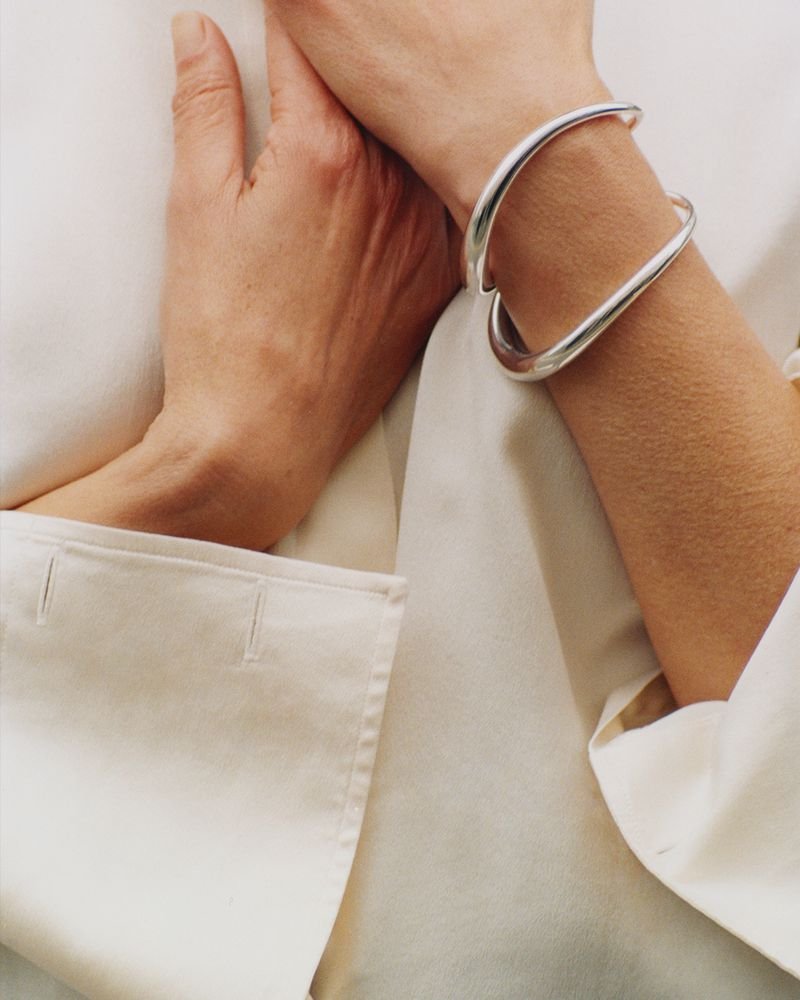
Offspring designed by Jacqueline Rabun. Courtesy of Georg Jensen.
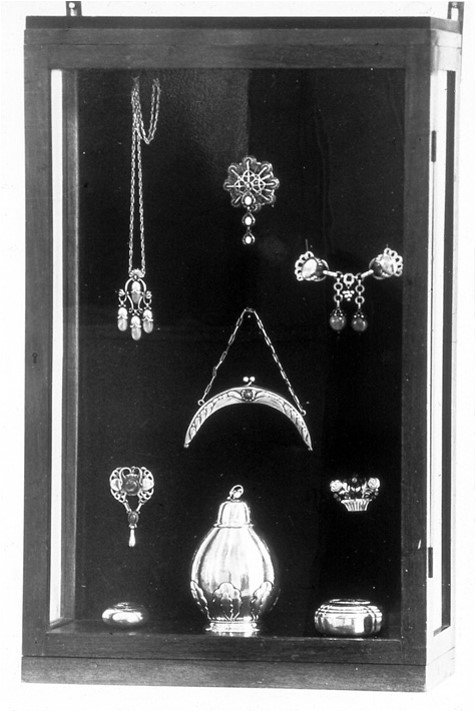
Georg Jensen’s original display cabinets. Courtesy of Georg Jensen.
I guess it’s also how you translate that spirit, right? Because when the founder leaves, it’s very hard to hold on to the philosophy or the spirit of a company.
Paula: I think what originally drew me to fashion, from a younger age, was its tribal quality. And I think what is interesting here is that there is actually a tribal quality to Georg Jensen, which not many houses have. When you say it to a certain type of individual, it means something beyond just “This is an earring that I like.” It’s a set of values. It’s about quality. It’s about a sense of individual style, actually. It’s about personal expression.
When I meet part of the tribe out in the wild, at completely unrelated things in my personal life, they don’t necessarily know what I do, but they find out that I work for Georg Jensen, and there’s just an immediate connection or recognition: “Oh, I love Georg Jensen. I inherited so-and-so from my grandmother.” It’s a house that’s ingrained in people’s small moments, and big moments, or the small moments that are actually big moments. And that is something that’s very, very beautiful to be the guardian of.
Your route to the position you’re in now. Maybe not the expected route there.
Paula: I think I’ve never really had a super conventional route, and I guess I always sought that. I was never interested in going to intern at Alexander McQueen, which was essentially the route my peers were going to take. In the first year, I thought, “I think I have to leave.” I would just like to learn how to set a sleeve. Nobody’s asking those questions. Instead, here we’re only really talking about the self. And it’s nauseating, actually.
I had been creative, I was sketching, but I was really lacking the rigor that I crave and need. I don’t want someone to tell me that I’m the next X, Y, Z. I’m not. I need to sit on my hands and learn, and that’s what I did.
Heritage houses were looking for someone who could think of reinvention, but do it in a way that truly, deeply understood history and craft. Not just throwing everything in the bin: “Now we do everything fresh, because I decided that next season it’s circus, and the next season it’s medieval times.” What you’re carrying on is not actually the craft that was started, for example, in 1904 by Jensen; you’re actually carrying on craft, silversmithing, back into the Bronze Age. That’s the skill. That’s the heritage.
Every house I go into, I research almost like archaeology. I need to know everything. I ask the most mundane and the most important questions. I really come into it thirsty for knowledge, and only then will I begin.
To take something from point A to point B, surely you need to understand where point A even is.
Paula: And why is it there?
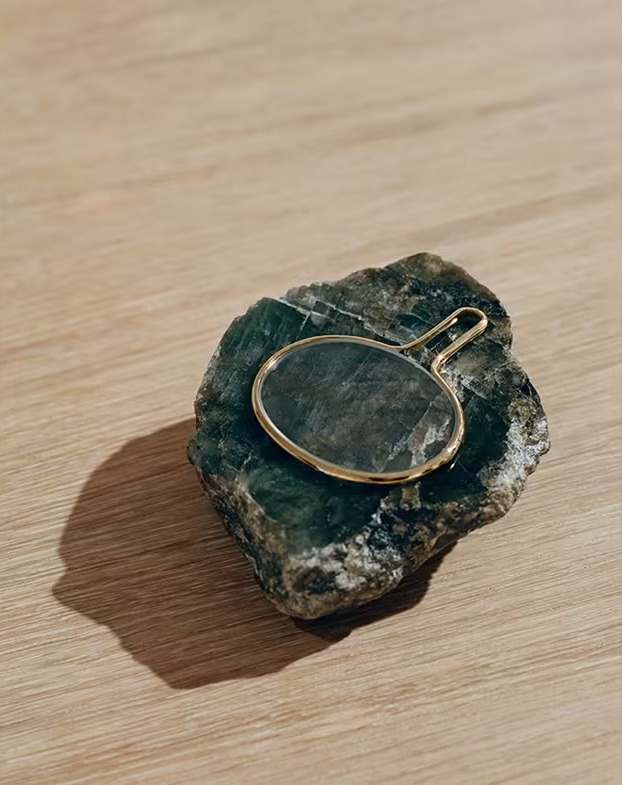
Magnifier pendant in 18kt yellow designed in 1979 by Swedish silversmith Vivianna Torun Bülow-Hübe. Courtesy of Georg Jensen.
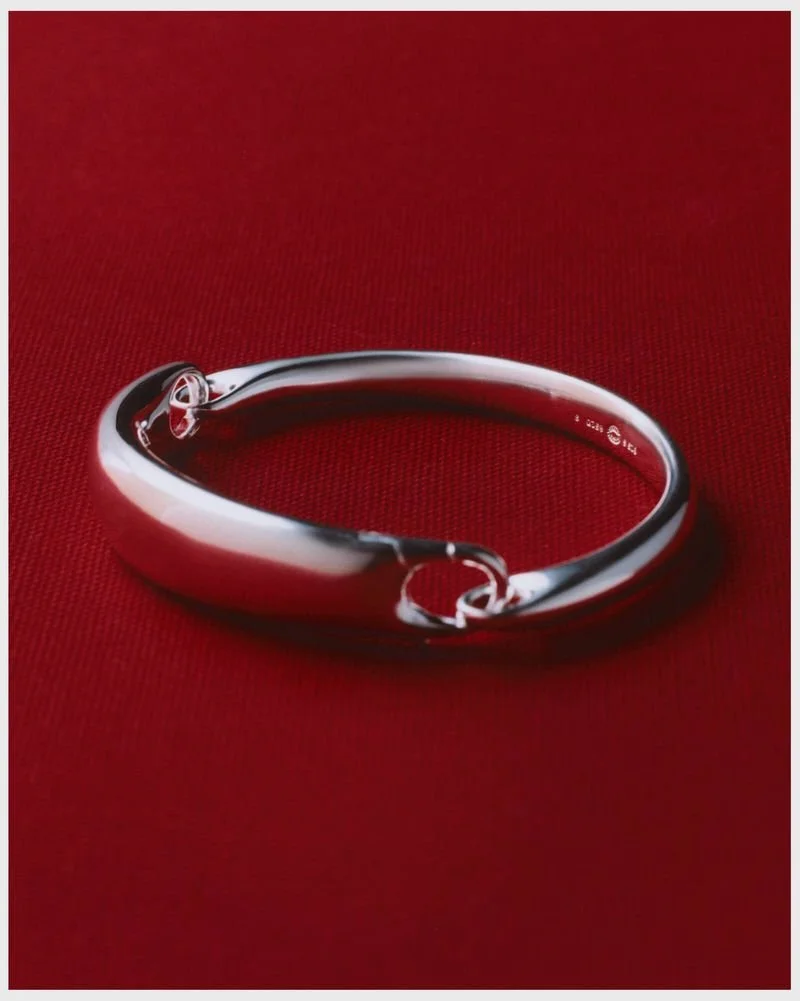
Reflect by Jacqueline Rabun. Courtesy of Georg Jensen.
We live in a world that moves so fast that no one really takes the time to do that anymore.
Paula: Exactly. But I’ve worked with leaders, houses and owners who understand the value of taking pause and not just running for the sake of it, who understand that you need to be respectful of what’s been, and also set these houses up for the next 120 years, not just the next quarter.
I always think we’re underestimating what people want or what they’re capable of.
Paula: Exactly. I think most brands underestimate the level of intellect of their customers. The collection that we did, called The Collector, was that. There have been incredible women who came through these doors and were just asked to play. And just by that simple question, and the space and the opportunity for them, with no real end goal, they created some incredible pieces of work that, for me, go beyond jewelry. Women don’t want to be head to toe in this one thing. You’re not one thing every day. You’re sometimes ten things in one day.
At the very origin of it, what is a collector? It’s someone who puts together (this word “curation” is so overused and awful, you know) a personal collection of objects, whether they are inherited, borrowed, stolen, self-purchased or gifted. Whatever it might be, they are not all the same.
No, and that’s the whole point. That’s what makes them interesting. A lot of brands want to keep everything behind a curtain. But I actually think people love to see behind the curtain.
Paula: Yes, and authentic. A lot of the time when you see it, it feels like a marketing strategy. And high-street brands talk about craftsmanship. I guess that’s why I end up talking about quality and not about luxury. Quality only a few can own. And that’s not just the quality of the way something is made, but quality of thought, quality of intention, quality in the way that we treat the world around us, in the way that we speak to our customers, to our peers, our colleagues.
My last question: is there a project that you haven’t done yet but would love to do?
Paula: There’s one that I’m doing next year. We had a prize between 1951 and 1970, which was really instrumental in bringing forward a lot of the talents in Scandinavia and the Nordics at the time. And we will relaunch it as the Georg Jensen Contemporary Prize next year. Our founder was a sculptor who came from humble beginnings and who received a scholarship when he was a sculpture student here at the Royal Academy. So I think we have a responsibility, especially now, when funding in the arts and education in the arts has really fallen off the priority list, to pay it forward, let’s say.
This interview has been edited and condensed for clarity.
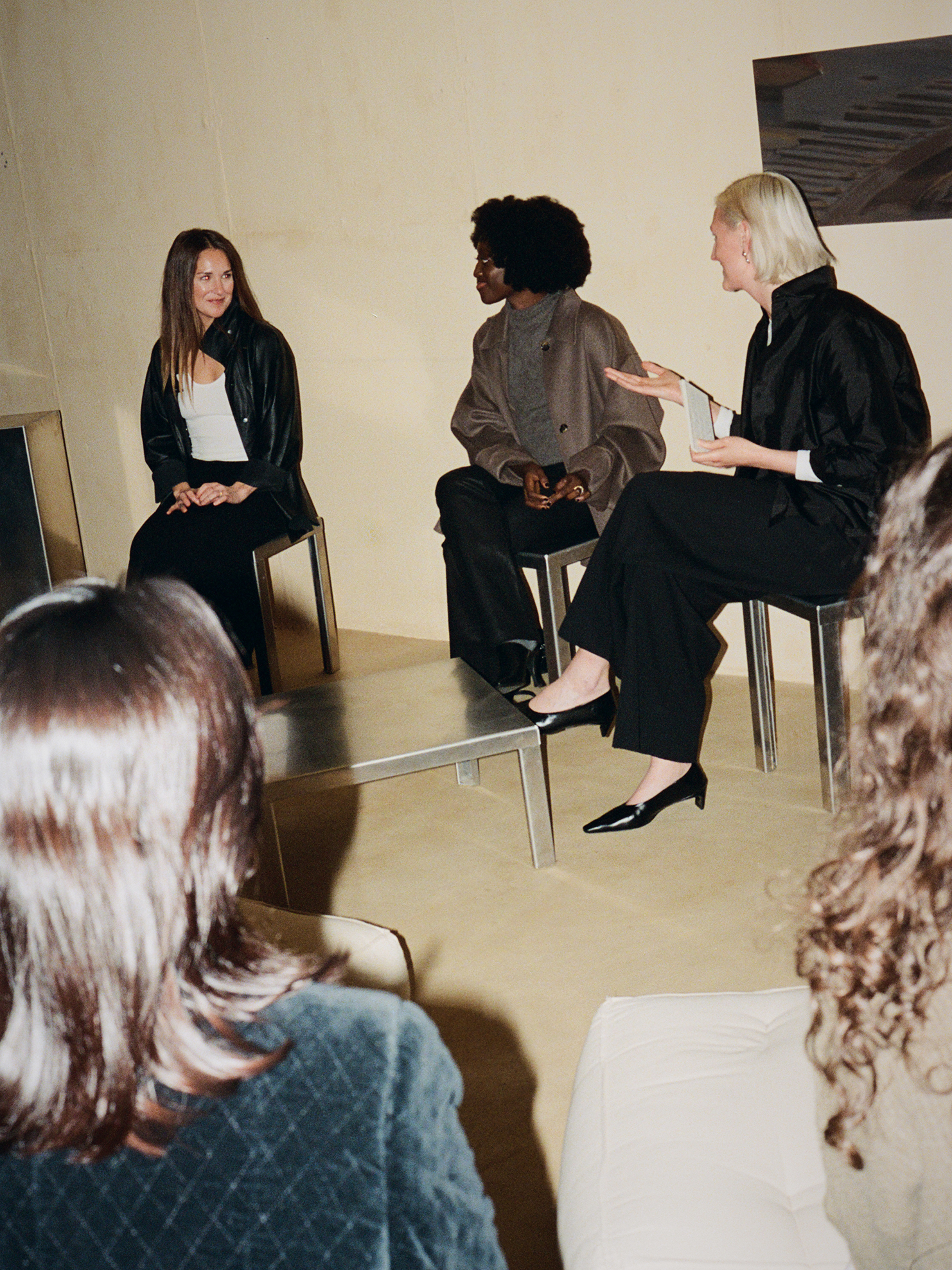


We spoke with Paula Gerbase about digging into Georg Jensen like an archaeologist, the eccentric silver telephone, and why the first step towards sustainability is making something worth keeping.