A Keeper of Ways of Seeing
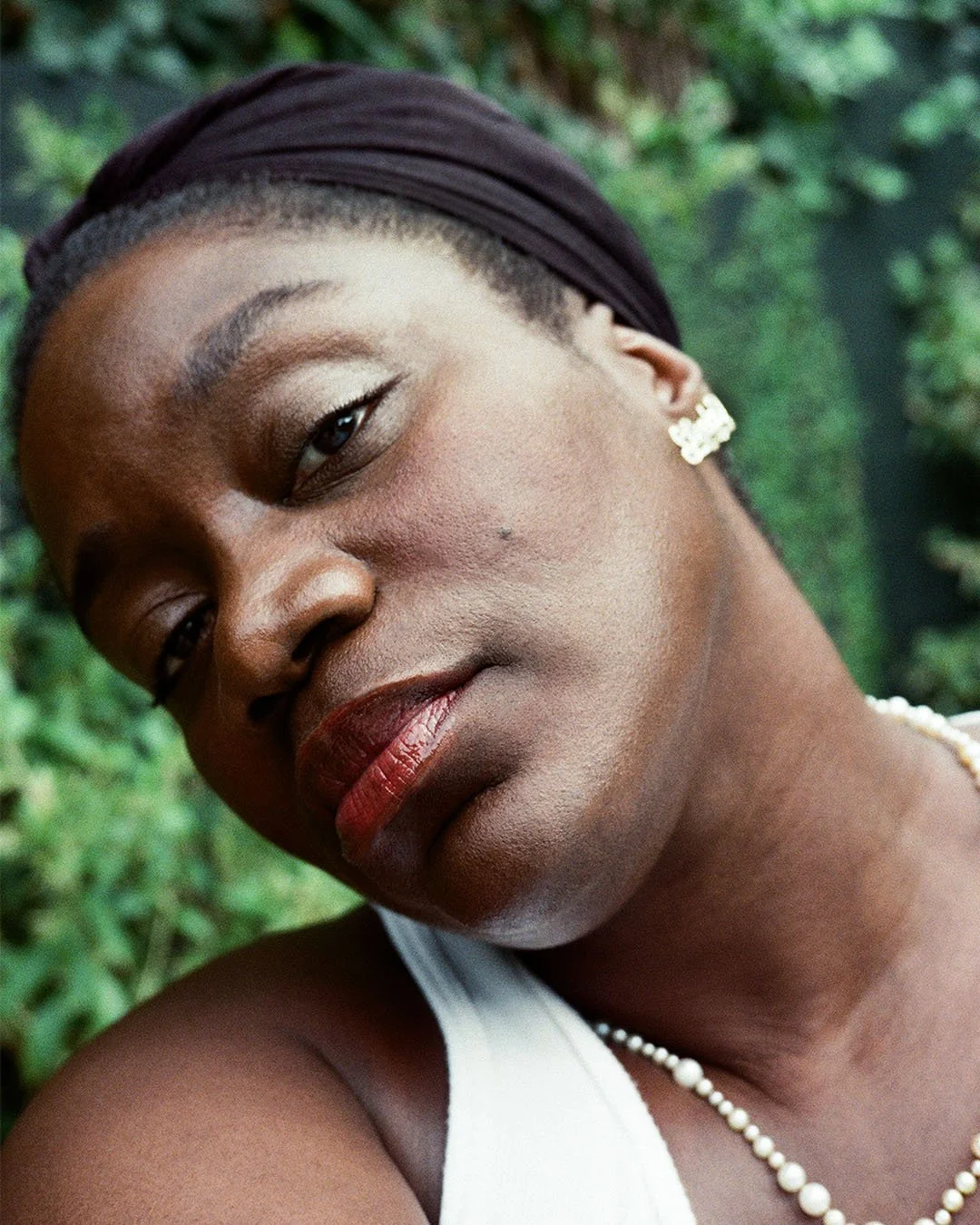
Courtesy of Shaniqwa Jarvis.
Shaniqwa Jarvis
A Keeper of Ways of Seeing
By Bonnie Langedijk
Shaniqwa Jarvis is allergic to flowers. She has spent twenty years photographing them anyway.
It is a fitting contradiction for an artist who has never accepted that she should be one thing. As a child she asked to see everyone's family albums, studying half-familiar faces and inventing the lives behind them. The habit stuck. These days the faces are better known: the New York-born, Los Angeles-based artist is culture’s trusted hand for a portrait, shooting for Jil Sander, Supreme, The Standard and a long run of magazines that like their subjects handled with feeling.
The commissions are only half of her, though. Away from them she makes florals, landscapes, silks and mirrors, and has let photography spill across two decades into textiles, painting and collage. Her exhibitions, among them Sleep to Dream and Everywhere You Go, There You Are, have travelled from London to Tokyo to Los Angeles, turning memory and identity into rooms you can walk through. Ask her how the fashion, the fine art and the snapshots she took as a girl hold together, and she offers no system, only that they have always come from one way of seeing.
The institutions agreed in 2025, when the Hammer, LACMA and MOCA bought her work jointly through their MAC3 fund at Frieze Los Angeles. This autumn she is in Amsterdam, where Rest Assured, Progress Is Being Made opens at Anthony Gallery on the 10th of September, revisiting old photographs, prints and paintings and trusting them to gather more meaning the second time round.
But we'll let Shaniqwa do the talking.
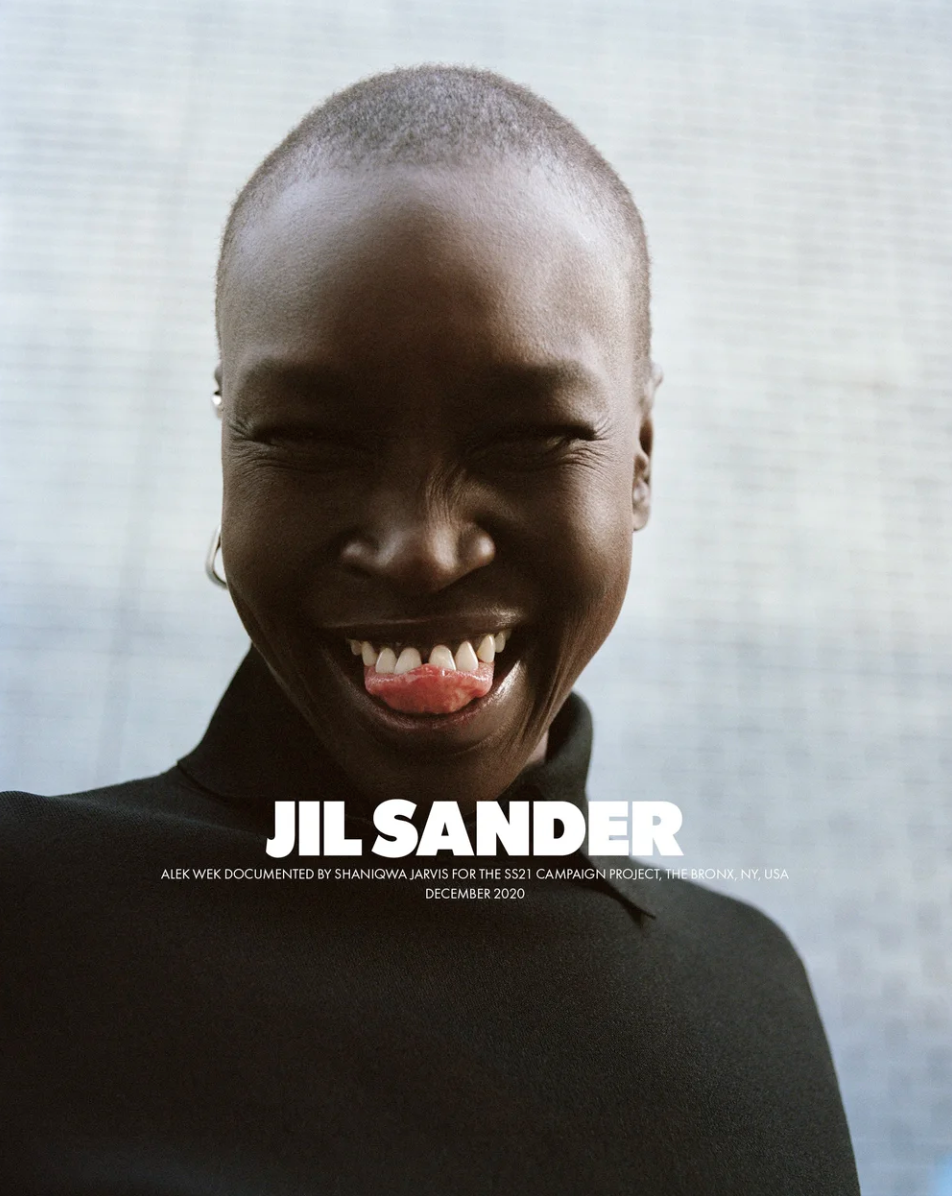
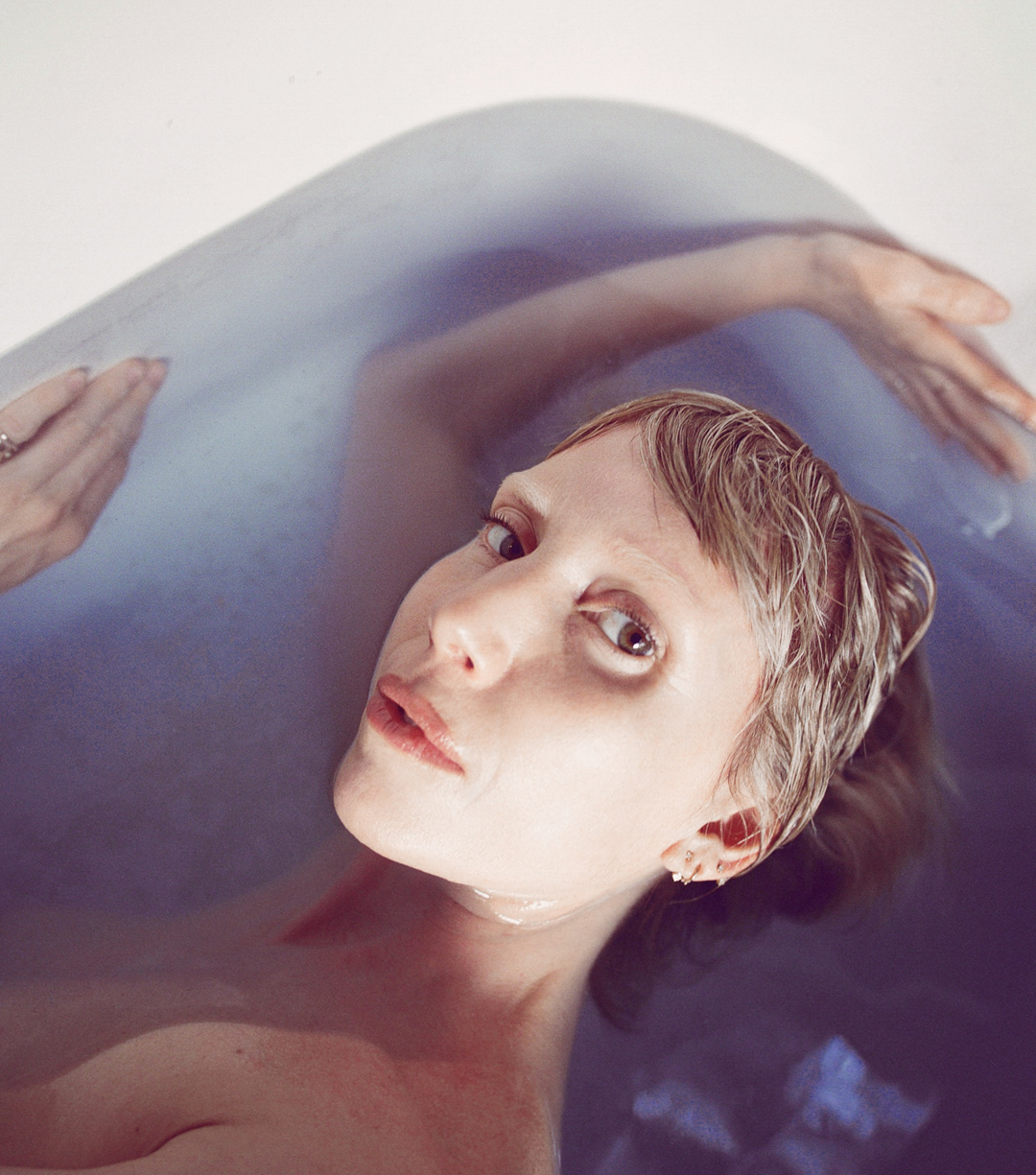
Jil Sander Campaign, photographed by Shaniqwa Jarvis.
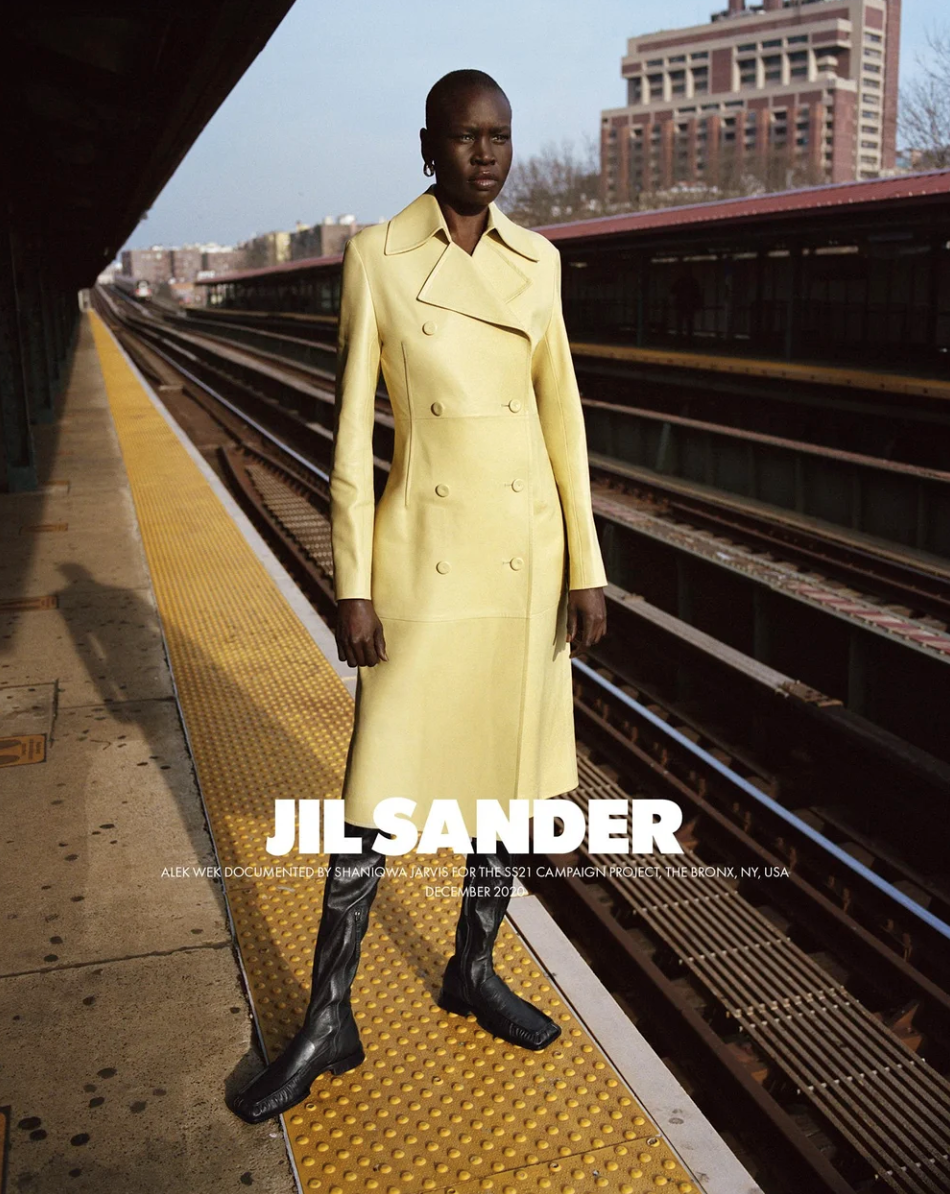
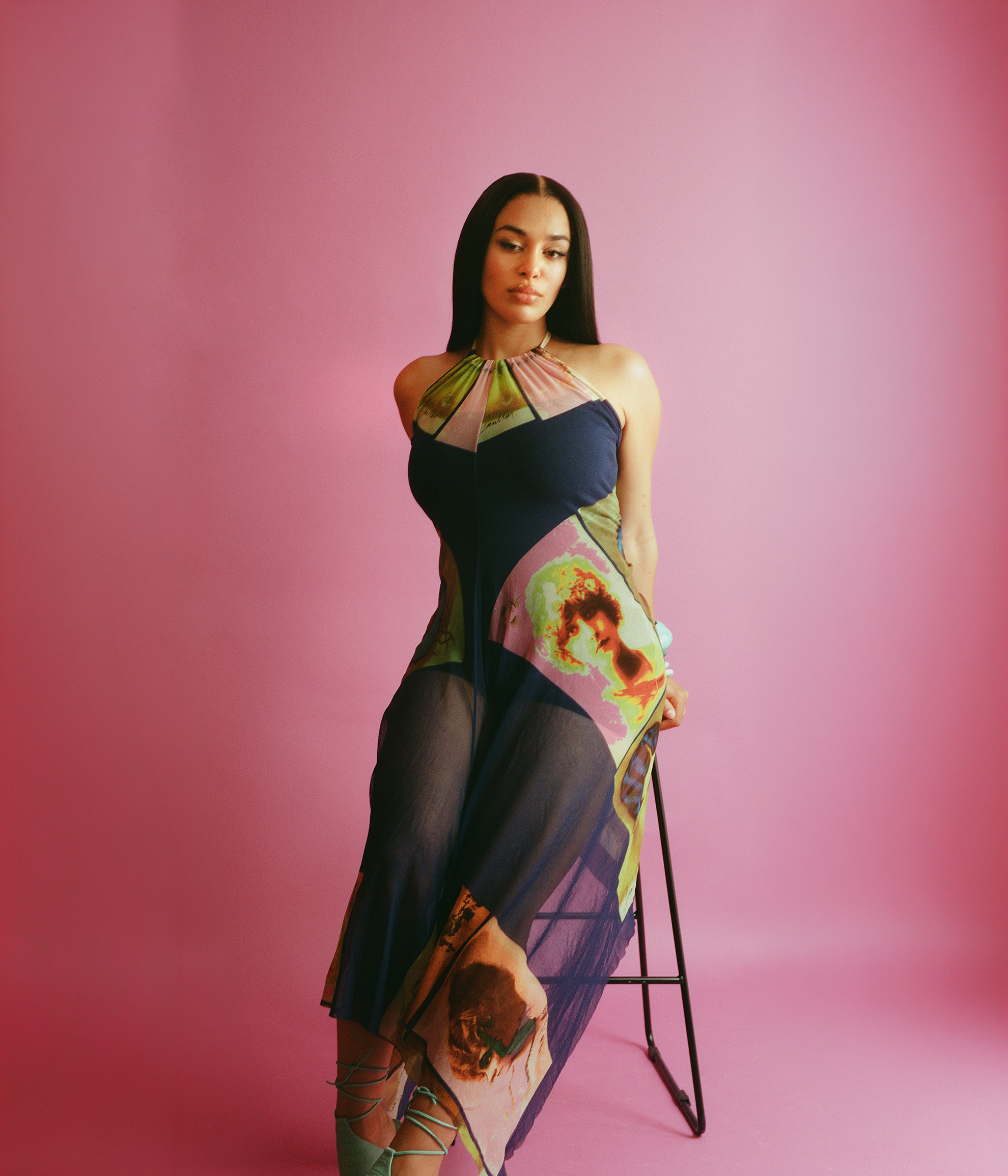
Jil Sander Campaign, photographed by Shaniqwa Jarvis.
Bonnie: I read about your love for family albums. What did those albums teach you about photography?
Shaniqwa: It’s hard when you’re asked to think about the inception of the thing you’re obsessed with, right? Every time I went to someone’s house, on either side of my family, I’d always ask, “Hey, do you have a photo album?” And my mom would always be like, “Why do you want to see it?” For me, it was about understanding where I came from. I feel lucky because I truly believe I come from a lot of people who took photography seriously. Within all of those images, it’s either a person I don’t know or a younger version of someone I do know staring back at me. I would craft a story from the image and then hear the real story behind it. There’s something about that that informs my entire art practice now—how I connect with people in my editorial work and even in advertising. That visual language has always been my strongest. I think it was passed down to me.
A family album often captures a moment of celebration or pride, something valuable enough to be passed down. How do you think our relationship with images has changed?
Shaniqwa: I look at photography as this thing that holds so many lies. A still image can show you so many things, but they can all be invented and shaped by how you see things. Even in a funny way, when people ask me what my shows mean, I always say, “I just want you to see what I see and see it the way that I see it.” But that’s also bullshit, because I do want everything that you come with, like, all your opinions, all your feelings. That’s really what dictates how you see things. With everyone documenting everything and having access to photography, I think it’s incredible. I love that people can craft their own stories, hold onto what they believe to be true, and decide how and when they want to share it. Everyone gets to have a distinct voice and a distinct way of seeing. That, to me, is the true democracy of photography: everyone gets to tell their own truth, in their own way.
“It’s FUNNY because in my career, I'm kind of known for my depression and my sad songs. I guess I just bring the real moodiness to the project..”
When you start a personal project, do you know what you want to create, or do you make work and find the through line in the end?
Shaniqwa: When I went into my archive looking for something to connect to the current story I thought I was trying to tell, I realized, “All these feelings I’m trying to capture—I photographed them over 20 years ago.” There was a stack of photographs from 2003, and I started wondering, “Why? Have you not learned the lesson? What is this thing that’s still troubling you?” And then, on the other hand, I’m not always conscious of when I’m being told by the spirit realm to press the button. Sometimes I’ll look at a photograph and think, “Whoa, was I there? Was I lucid? Or is that my mom? My grandmother? My dad?” It’s almost like I blacked out. I think the through line reveals itself to me as much as I’m consciously creating it.
That’s so interesting.
Shaniqwa: One of the things that made me laugh really hard last year was a photograph I placed on the last page of my new book, Guts, that my mom and I took in Woolworths. It must have been in the early ’80s. We’re both dressed up, it’s a serious family portrait, and in the background is a floral backdrop. You actually look harder at family photographs after someone is gone, looking for some clues or something. After my mom passed away last year, I was looking at that photograph and realized that these florals are what I’ve been photographing all along. It’s the same flower. I didn’t see it until then. It reminded me that we’re always looking but not necessarily seeing. You don’t know what you’re being told; you’re just moving along with the feelings you have and trying to capture them.
That's the beauty of being in flow, where you're so connected and disconnected with yourself at the same time.
Shaniqwa: 100%. I was going to say it has something to do with age and, as women, what we become aware of as we get older. When you lose a family member; your anchor, the door to your portal, I think you grow up in that instant, no matter what age you are. Everything you become aware of goes into your friendships, your art, what you eat. It all becomes part of how you craft an image.
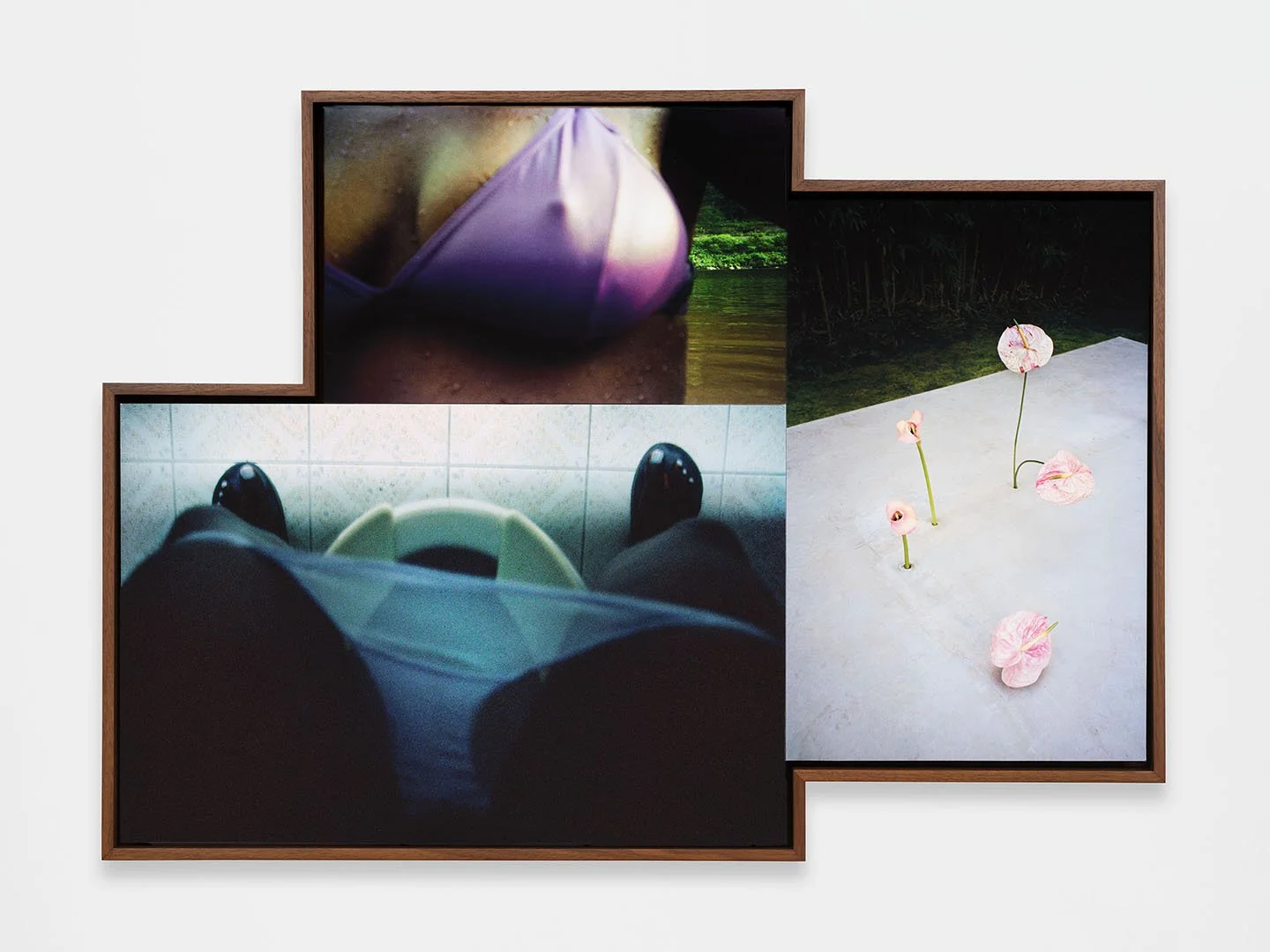
Shaniqwa Jarvis, Note to Self. Courtesy of the artist.
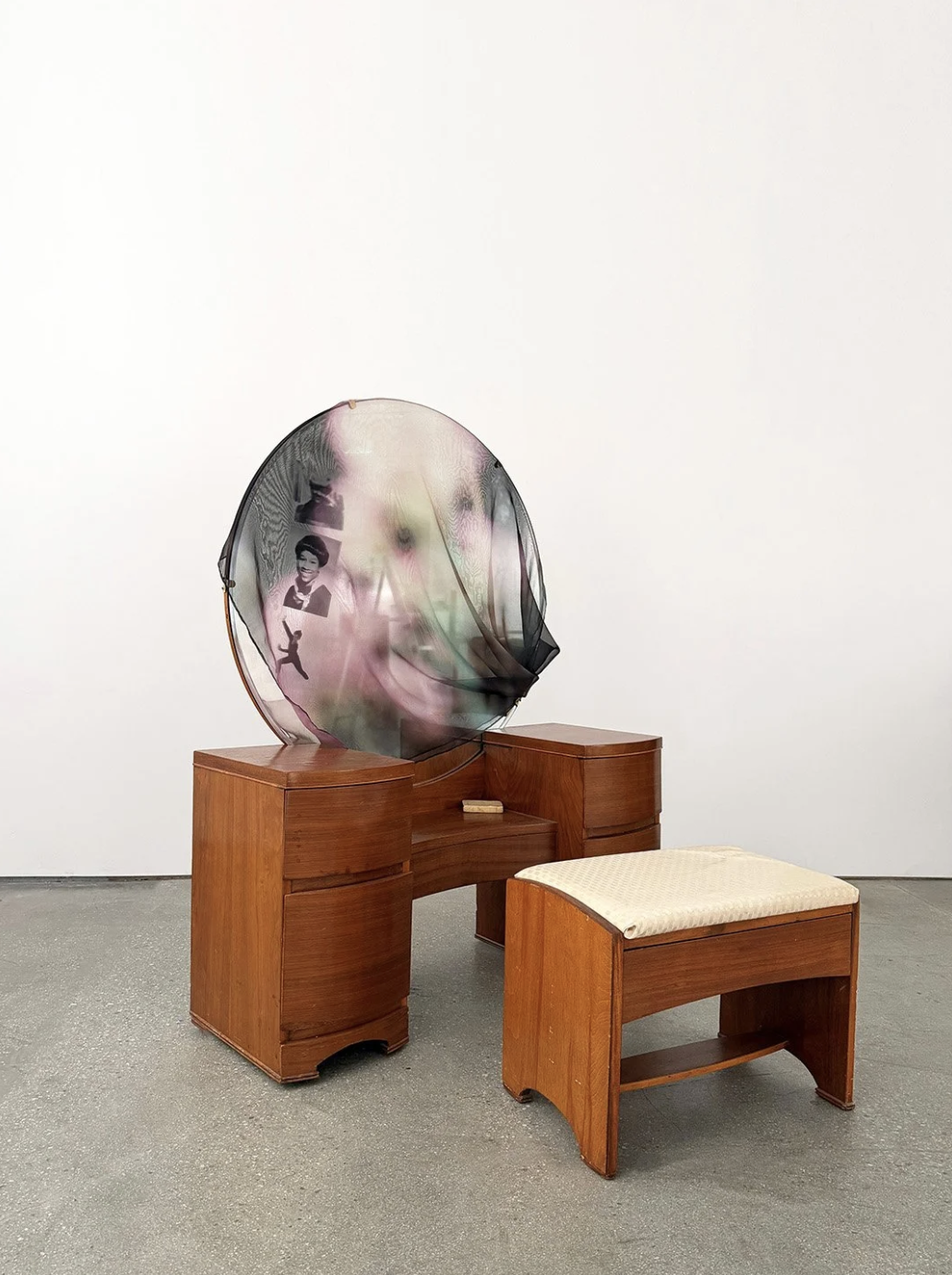
Shaniqwa Jarvis, Don’t Forget Us, 2025 Digital print on mirror, digital print on silk, walnut vanity. Driftwork, curated by Essence Harden, at Southern Guild. Courtesy of the artist.
I'm so sorry about your mom. I lost my dad five years ago. It's so interesting what images of that person start to do with you once they're no longer there. My dad was always taking pictures. When you lose the person who always captured everything, you certainly have this appreciation for that act.
Shaniqwa: For sure. My mom always laughed because she would say, “All those funny photos you put up of yourself as a kid, I took them. I think I’m the better photographer in the family.” And I’d always be like, “Of course. I got it from you.” My dad also took photographs, and he had a great eye. I definitely got my way of seeing from both of them, in equal measure. I’ve been looking at my mom’s photographs, and am surprised at the way she saw things, and how similar it is to the way I see things. We’re the same, but we’re not. There’s something about accepting the knowledge of the thing we never want to accept: that we so are our parents.
Shit, yes. That's the reality of it in the end. You keep going back to flowers, something I read you're allergic to. Why do you do this to yourself?
Shaniqwa: I don’t know. But there’s something about a cut flower that feels different from something that’s still in the ground. There’s something about a flower having the will and ability to regenerate, even after it’s dead. I think about the idea of continuing on and persevering no matter what. There’s something about the cycle of life that stays with me. My first memory of taking a photograph is of a photograph of a flower. I don’t know if I was born with that obsession or if it’s just my own lore that I’ve created for myself. Who knows?
Tell me a little bit more about the Only Love Will Break Your Heart show.
Shaniqwa: I started working on this last year. Nicole, one of the directors at Public Gallery in London, reached out to me right before my mom passed to include me in a group show. I was in the midst of caretaking, and there was something about her that made me feel safe enough to show certain works. At the end of last year they asked me to do a solo show and while working on the concept for Only Love Will Break Your Heart, I was grieving and trying to understand what life meant all of a sudden. I made some new imagery, including physical double exposures, and then went into my archive. With me, it’s always this beyond-the-veil kind of imagery: “Are there ghosts in there? Is there love? Is there spirit?” I gathered a bunch of work and just edited, sat with it, and explored what evoked this feeling of happiness and loss, but also that feeling of being right on the verge of something that felt almost like a breakthrough. That’s why some of the work became painted silks and mirror shadow boxes or collaged C-prints. I also recreated elements of two bedrooms I slept in including a video element, where I would often lie awake watching the lights and shadows bounce across the walls. Those were some of the first places where I started creating storylines in my head. Only Love Will Break Your Heart became about what grief really is. In the middle of making it, it all became very clear: it’s you remembering love. You remember that person. I generally never say this, but I was like, “You did a good job. You did exactly what you set out to do.”
What you've done in the show is really capture this feeling of grief. It’s a strange emotion because it's not all sad or negative. There's also a lot of beauty in it, relief, nostalgia. You've really captured the layeredness of what grief is like.
Shaniqwa: Thank you for saying that. Having the mirrors in so many of the pieces is so you remember to see yourself in the works. There are these little portals for the viewer to go into and to see themselves and to see others. I think that we are in a very insane place right now where people are refusing to understand the connection between each other, and they're refusing to see themselves in other people. Within my work, there's always that other layer. As a Black woman, I'm never like,"As a Black woman photographer artist…” To me, there's no denying what my name is, what I look like. And then you look at the work and it's like I don't have to be overt about what I'm thinking about, what I'm feeling because it is all layered and it's all there.
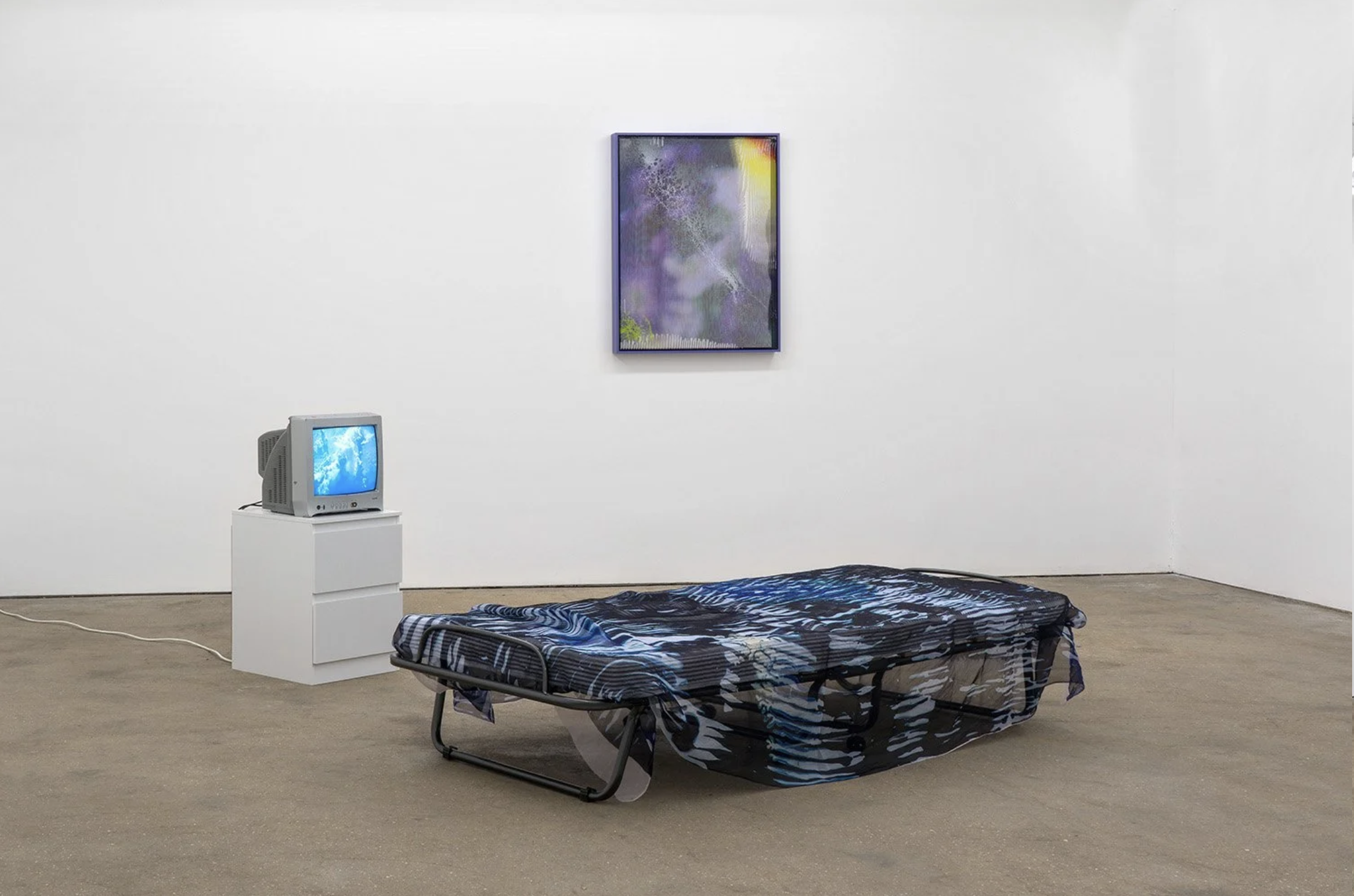
Shaniqwa Jarvis, Only Love Will Break Your Heart, Public Gallery. Courtesy of the artist.
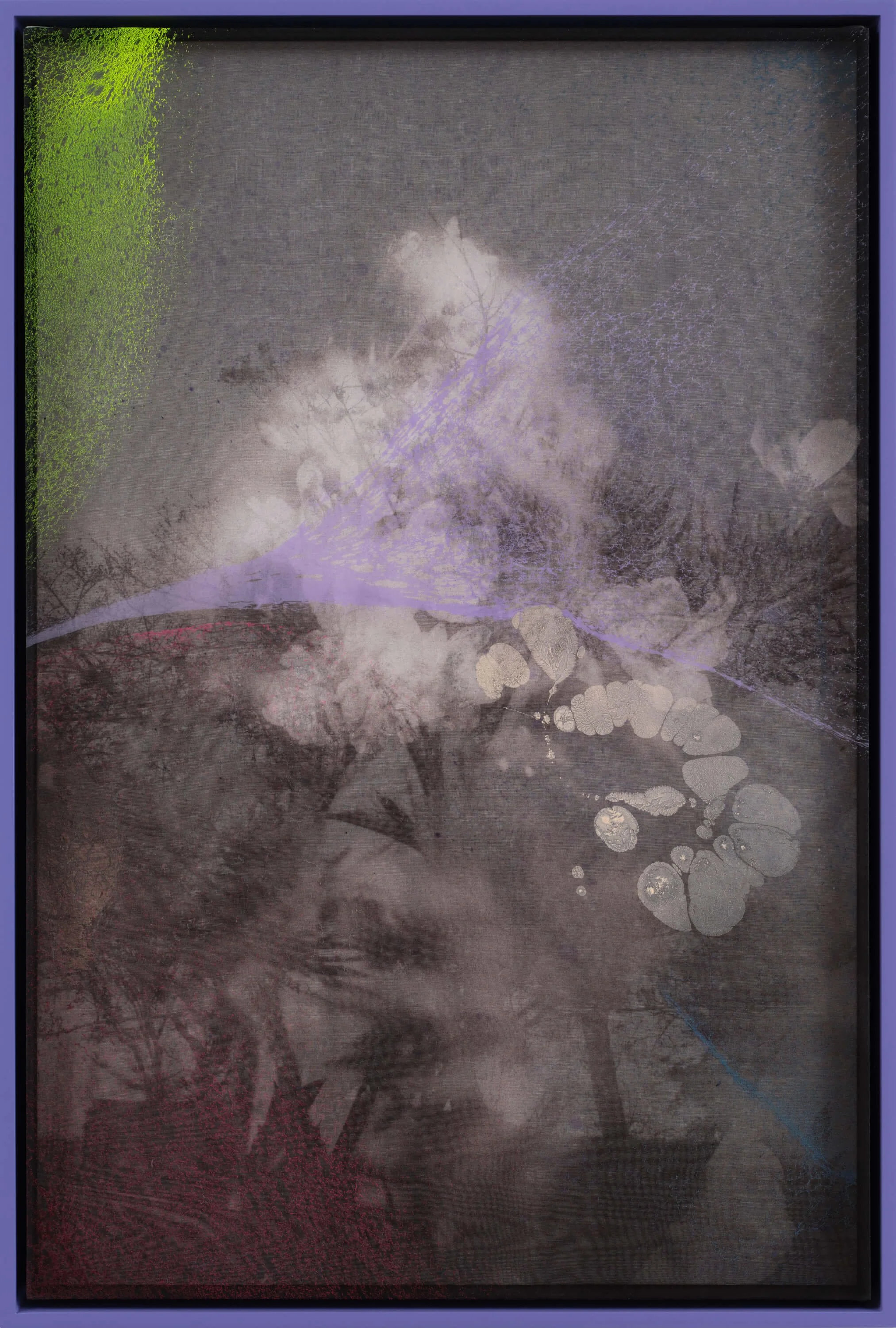
Shaniqwa Jarvis, Explosive Truths, 2026. Courtesy of the artist.
I think about that a lot. Not framing it as a female photographer, and then race as a whole other layer on top, like,”Oh, then you're a pocket of that pocket of that pocket. " Yes, all those elements are true, but you're an amazing photographer, period. Your experiences in the world are going to show up in your work. But to always use that as the lens someone is talking about, it doesn't make sense.
Shaniqwa: No, it doesn’t. When people look at my editorial work and then look at my artwork, they’re like, “How are you able to make all of this work with landscapes and florals, without people or portraits, when your editorial work is so centered around people?” And I’m like, “Well, because this is all me. You don’t have to just be one thing.” There’s a through line between all of it, even if it isn’t immediately obvious. I think that through line is showing up more and more in my work now. To me, they’re all self-portraits in a way. It’s just a different way of seeing myself and the world.
Is there a project you haven't done yet that you would love to do?
Shaniqwa: Yes. I’m hoping that this year I get to start working on them. I go back and forth between wanting to tell both of their stories, and I feel it’s important to speak for them because they’re no longer here. There’s a project about my dad that I’m dying to work on, and another connected to my mom. I feel like I can start both of them this year. Who knows when I’ll finish them? I have a solo exhibition in Amsterdam that opened September 10th at Anthony Gallery, called Rest Assured, Progress Is Being Made. The exhibition continues my interest in process, not as a means to an end, but as a way of understanding how meaning accumulates over time. Looking back across my practice, I’m realizing that my commercial work, fine art, and even the photographs I made as a child have always been connected by the same ways of seeing.
This interview has been edited and condensed for clarity.
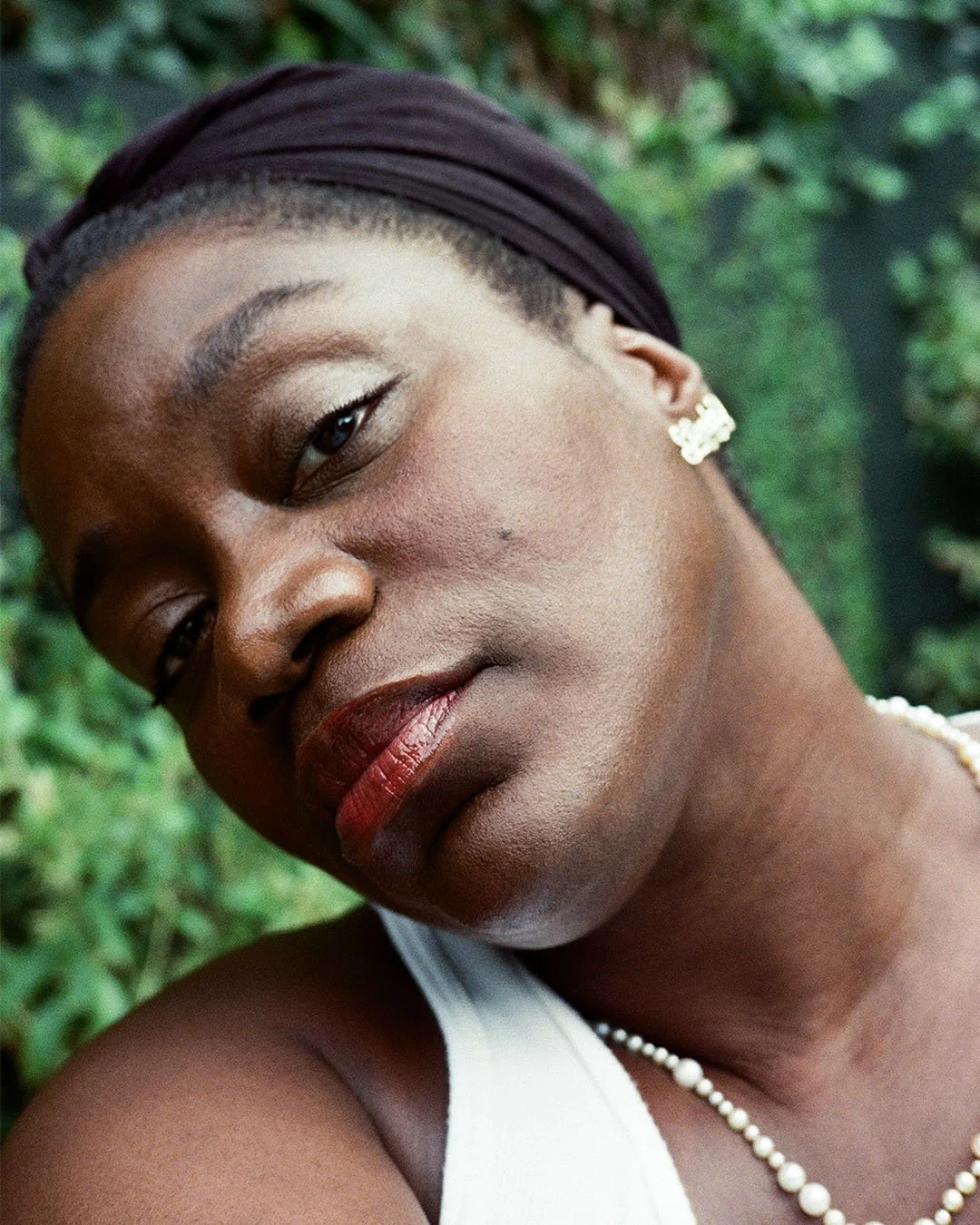
We spoke with Alice Diop about the books that have shaped her intellectual life, how literature becomes a form of freedom and resistance and the role of Chambre à soi in making space for the subjectivity of Black women.