The Filmmaker’s Reading Room
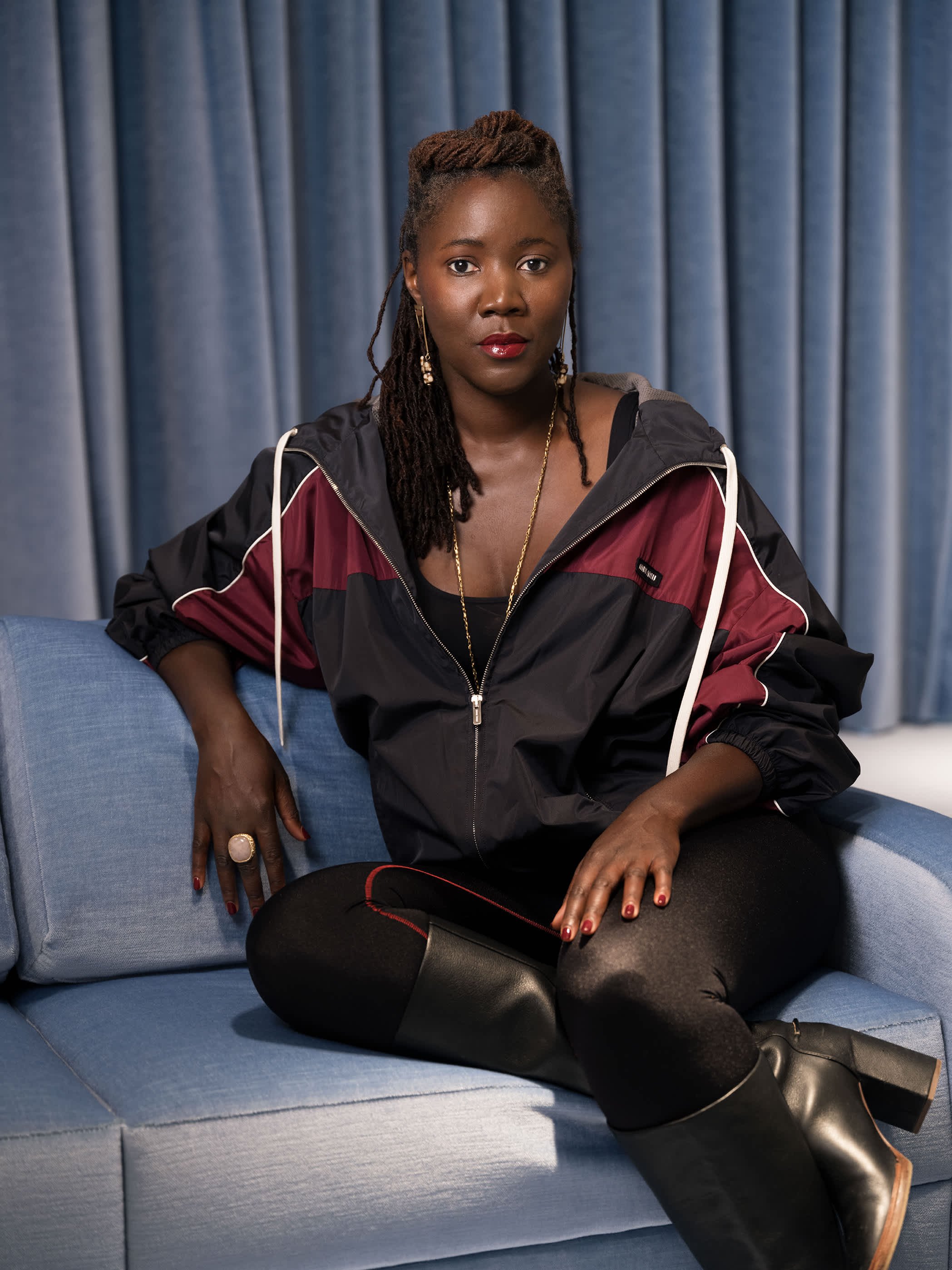
Alice Diop by Brigitte Lacombe.
Alice Diop
The Filmmaker’s Reading Room
By Anna Prudhomme
What does it mean to have a room of one’s own when the history of art has so often failed to make room for you? For French filmmaker Alice Diop, the answer lies in the books we turn to, the images we see, and the voices that have been left out of the stories we tell. Invited by Miuccia Prada to conceive Geste de Consolation for Miu Miu’s 2026 commission as Official Partner of the Art Basel Paris Public Program, Diop brings together film, photography, sculpture, poetry, dance, music, and performance in a project that questions how Black women have been represented, and how those images continue to shape the present.
At the heart of the exhibition is Chambre à soi, an open library and living room set within the monumental architecture of the Palais d’Iéna. Gathering the books that have shaped Diop’s intellectual life, it offers something rarely seen: a portrait of a Black woman thinking, reading, and making sense of the world on her own terms. Here, literature becomes more than a source of knowledge. It is a refuge, a space for resistance, and a way of imagining otherwise.
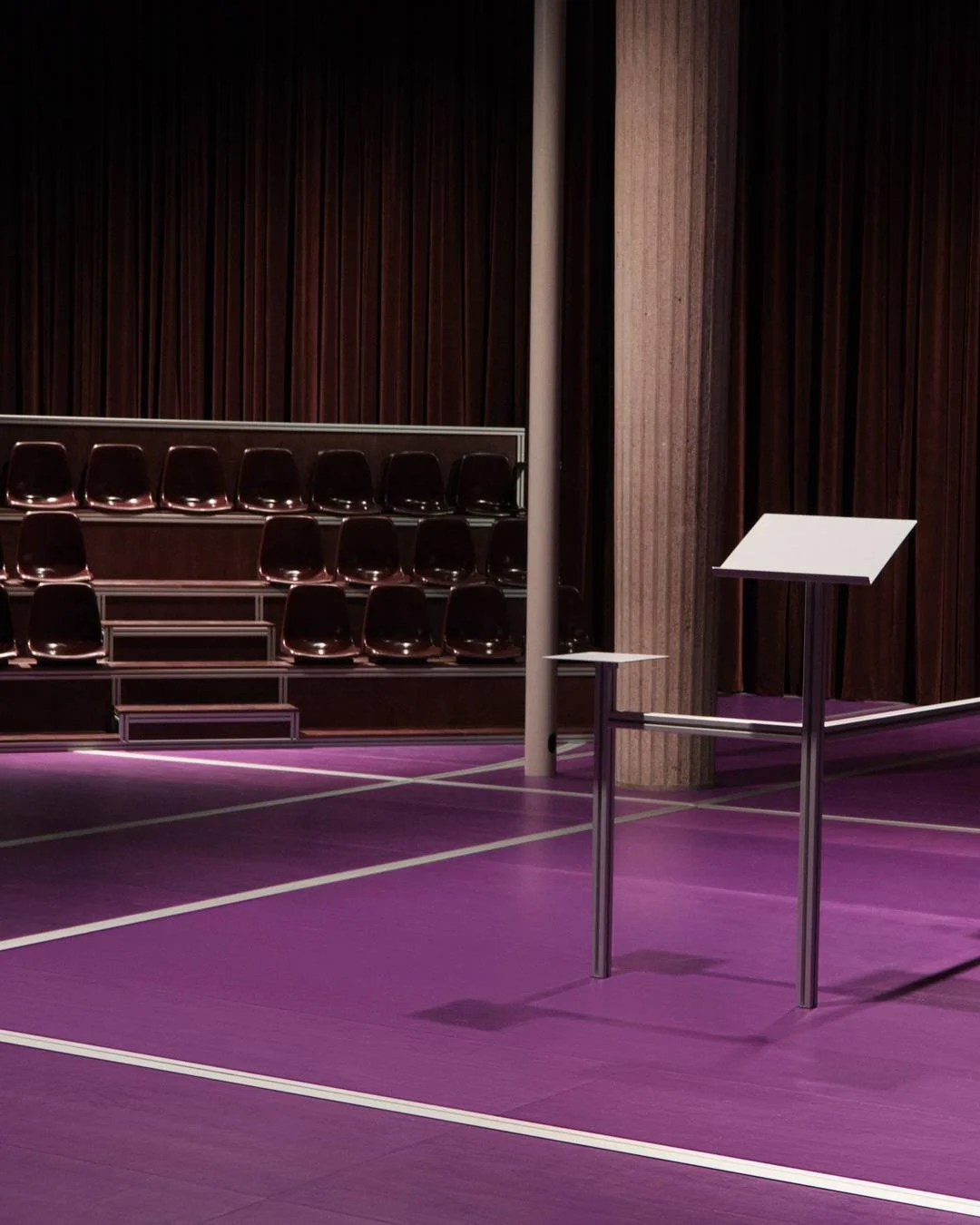
The Geste de Consolation space at Palais d’Iéna in Paris.
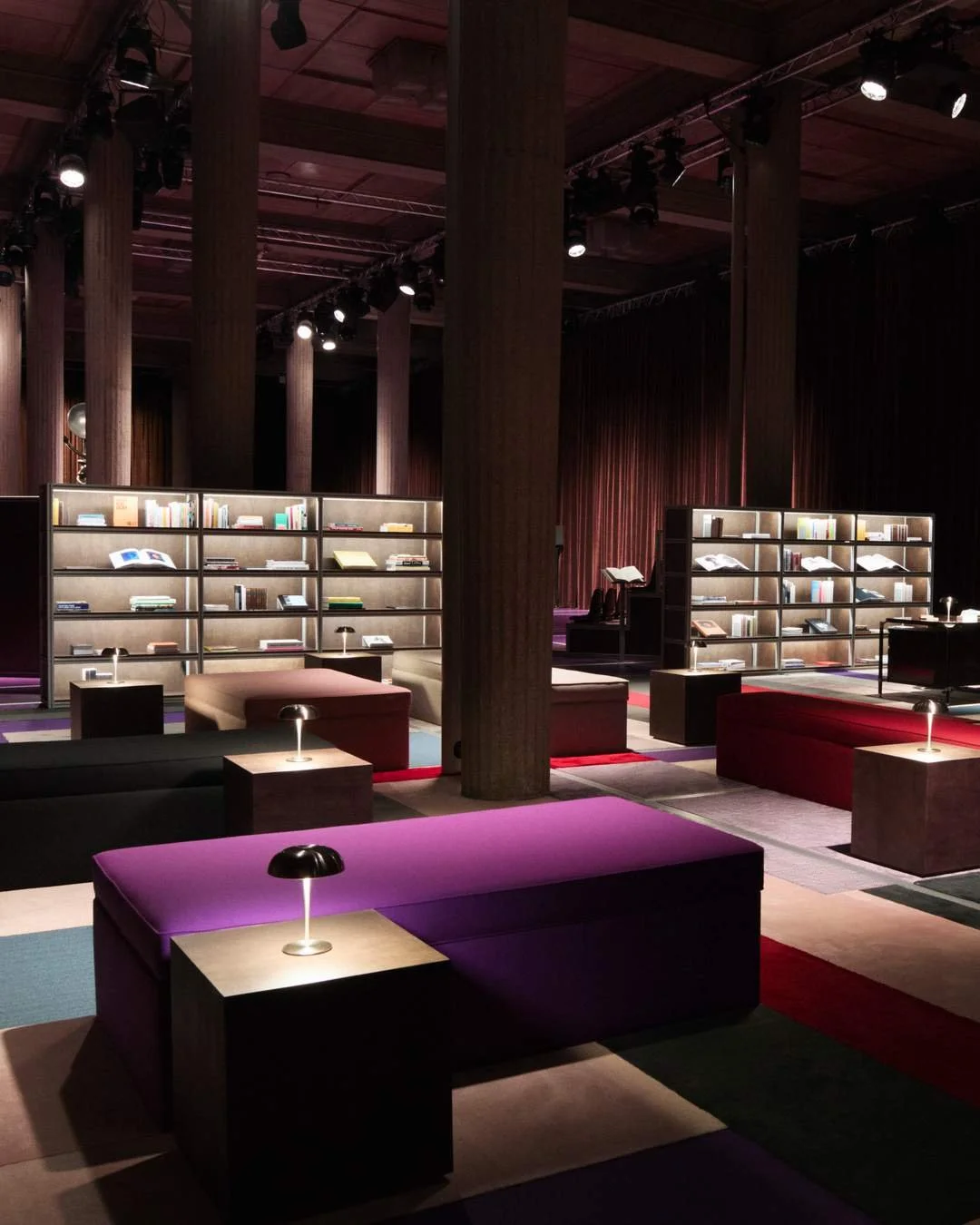
Chambre à soi, an open library and living room set, gathering the books that have shaped Diop’s intellectual life.
Anna: How did the idea for Chambre à soi [A Room of One’s Own] come about? What made you want to create this reference library and bring different art forms into dialogue through this project?
Alice: This library grew out of an experience I had last year with Nicholas Elliott, with whom I co-directed a performance-reading that I also performed as part of the Festival d’Automne in Paris. The piece toured extensively throughout Europe. It was based on a text by the poet Robin Coste Lewis: the afterword to her poetry collection Voyage of the Sable Venus.
I performed a one-hour monologue based on a very hybrid text—at once poetic, critical, close to an essay on art history, intimate, personal, dreamlike, and fantastical. A woman imagines herself traveling on a boat governed by a Black Venus, sailing across centuries and spaces to gather all the fragmented bodies of women who populate the paintings and the margins of art history.
It is a strange, hybrid, beautiful, and powerful text that I lived with for a year and lent my body to. The staging was very simple: I sat behind a desk, almost identical to my own, covered with books, essays, novels, notes, photographs, and reproductions of paintings.
Every time I came off stage, the audience would rush toward the set and photograph all the objects on the desk. Something we had not planned at all. I realized that the intimacy of a Black woman who thinks, whose thinking is shaped by the twentieth century, the subjectivity of a Black intellectual who works, thinks, and researches, was something theater and cinema had never really shown. Most people had no idea what the thinking room, the room of one’s own, of a Black intellectual in the twenty-first century might look like, shaped as it is by all these currents of thought.
When I was invited to curate this exhibition, my first thought was to show specific works. But I also wanted to recreate that experience and offer a form of autobiography: a subjective self-portrait built from the works that have shaped me and all the thinking that feeds my work. I wanted to give visitors the chance to spend time in this room of one’s own, to pick up the books, browse through them, read them on site, and let what they had seen resonate with what they found in the books.
That seemed like fertile ground to me. I really like the space in which the books are displayed: it follows the video installation, as though the installation itself had been nourished by all the texts and books present. It then leads to performers reading a selection of these texts in dialogue with the installation.
“I wanted to give visitors the CHANCE to spend time in this room of one’s own, to pick up the books, browse through them, read them on site, and let what they had seen resonate with what they found in the books.”
Is there a particular book or author who made a lasting impression on you and gave you a different perspective on the world?
Alice: Thankfully, there isn’t just one. Otherwise, I wouldn’t be here, and I wouldn’t be who I am. At every stage of my life, I have turned to books as a kind of medicine for the soul, something that came to my rescue at a particular moment. There are hundreds of them, which says a lot about how much I love literature.
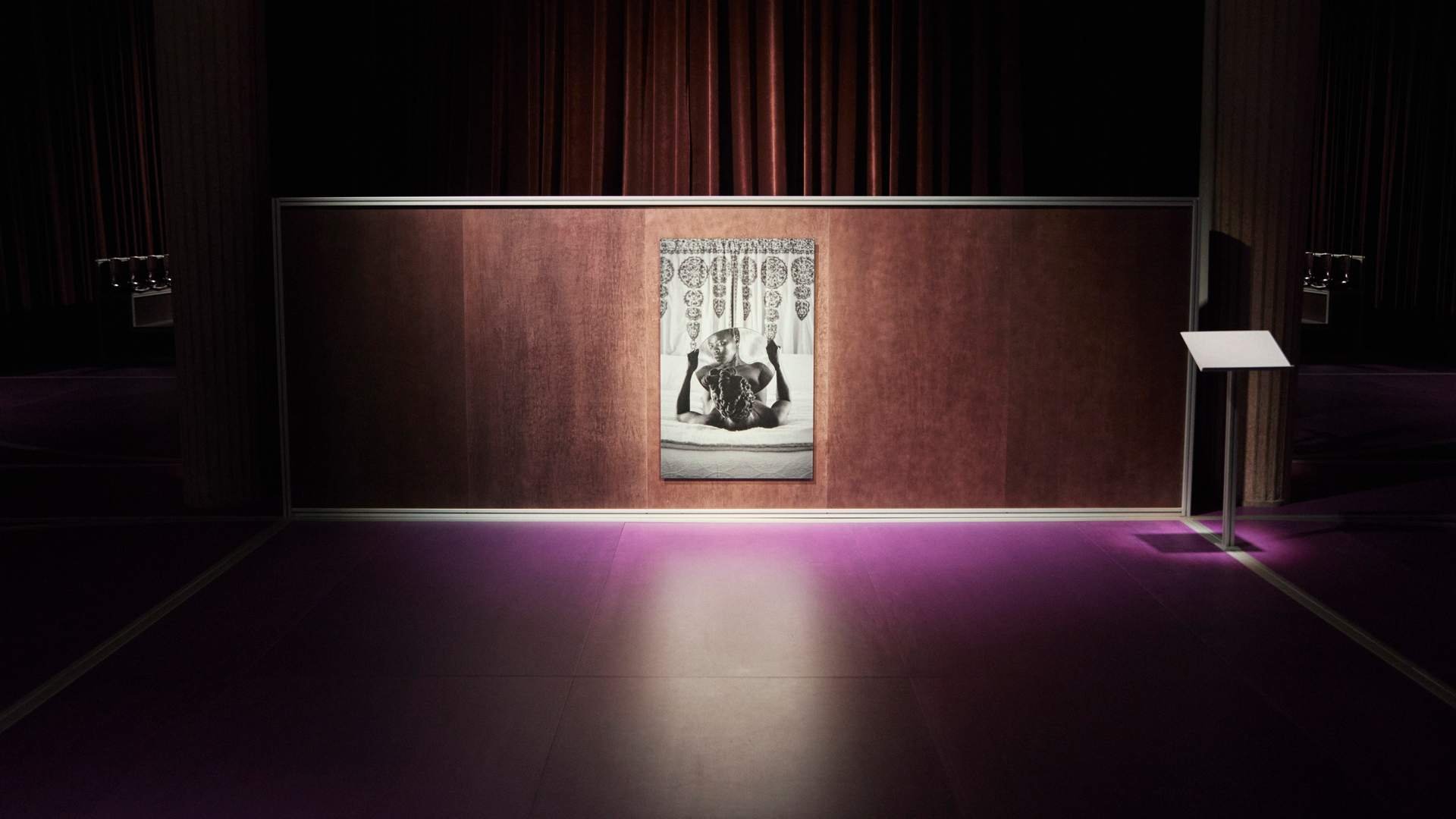
The Geste de Consolation space at Palais d’Iéna in Paris, featuring work by Zanele Muholi.
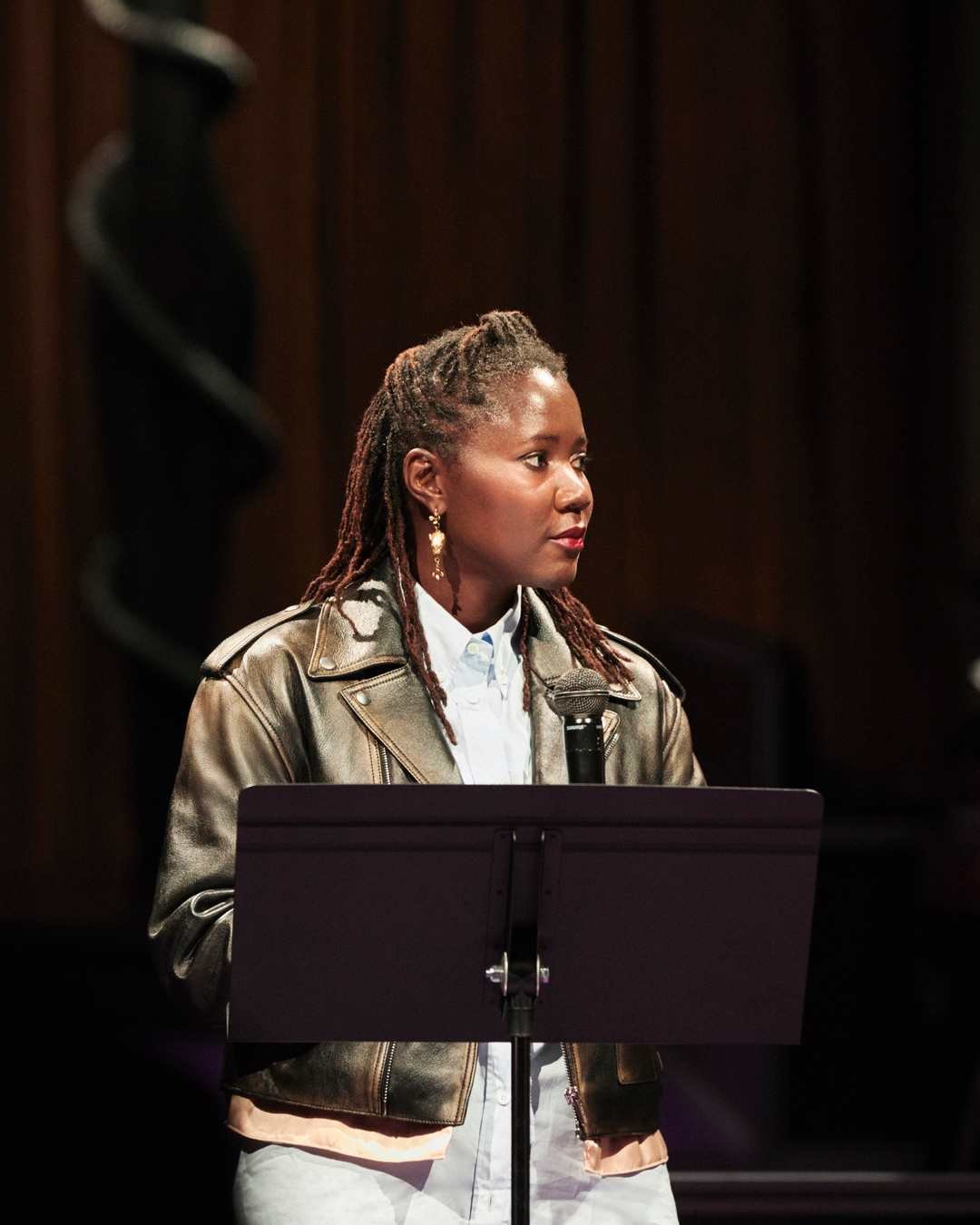
Alice Diop at The Geste de Consolation.
What does this room of one’s own look like for you, as an essential condition for women’s intellectual freedom?
Alice: It looks like the one on display. It is very close to my own, except perhaps for the photographs and objects in my office. What is on my desk changes depending on what I am working on. What was there a year ago is no longer there today, and it may not be there tomorrow either.
It is a constellation of very different thoughts, works, and currents of thought. People often assume that, as a Black woman, I only read Black women. But that is not the case: I read Marguerite Duras, and men too, like William Faulkner and Robert Musil. I look at artists’ monographs and read essays. That is what interested me: the subjectivity of a Black woman thinking in Europe is shaped by currents of thought far broader than one might imagine.
Whenever people interview me, they bring up Maya Angelou or Toni Morrison. I realize this is also a form of stereotyping: the assumption that, as a Black woman, I can only read those writers. I love Toni Morrison, although I know relatively little of her work—I have read Beloved and a few of her essays. I read Audre Lorde, but I am also in dialogue with Marguerite Duras and many other artists.
I was shaped in Europe, by European culture and literature. I have also drawn a great deal from the United States, from African American thought and critical race theory, which I could not find in the French cultural landscape when I was twenty. I traveled, and that broadened my horizons, before returning to France. I also turned toward African hopes and aspirations, even though I had little access to those resources. All these currents, and this entire history, are present in this room.
What connection do you see between reading and freedom?
Alice: I think reading is the very condition of freedom, especially today. It is a freedom to think, but also a form of resistance. Staying off social media allows me to protect my relationship with literature. It preserves the time needed for a thought to unfold, the time to enter another person’s subjectivity and reflect, without being poisoned by general truths, stereotypes, or binary thinking. That is probably what underpins the great faith I still place in the power of literature.
Across the different centuries of writing brought together in this room, what has changed most in the way women tell their own stories, and what has remained unchanged?
Alice: My first question is whether we truly have access to the subjectivity of a Black woman who thinks, under what conditions we can access it, and how I can help make that access possible.
I recently took great pleasure in rediscovering the character of Huckleberry Finn through Percival Everett’s work. I loved reading James, which I hadn’t read before. You experience the same pleasure, the same relish, as when reading Huckleberry Finn, but with a compelling character who overturns Mark Twain’s stereotypes of the enslaved person. That delighted me. What interests me in literature today is probably giving these voices time and space.
I think what remains to be done is to revisit the history of literature and make the voices that have been silenced heard.
In her latest book, The Fraud, Zadie Smith takes up the great tradition of the English novel and gives a voice to those who had not yet been heard within it. I find this approach very fertile in the history of literature, as in the history of cinema: making minority narratives heard through a contemporary, powerful, novelistic form.
How did you choose the texts and the women whose voices are heard in the readings?
Alice: The selection was made in relation to the installation. There is a text by Zora Neale Hurston, a text by Penda Diouf, and poems by Olive Senior and June Jordan. There is also an excerpt from an essay by Saidiya Hartman, published in France as Vies rebelles and in the United States as Wayward Lives, Beautiful Experiments.
Once again, it is a kind of montage that forms an intellectual autobiography of myself at work, at this particular moment, engaging with these questions.
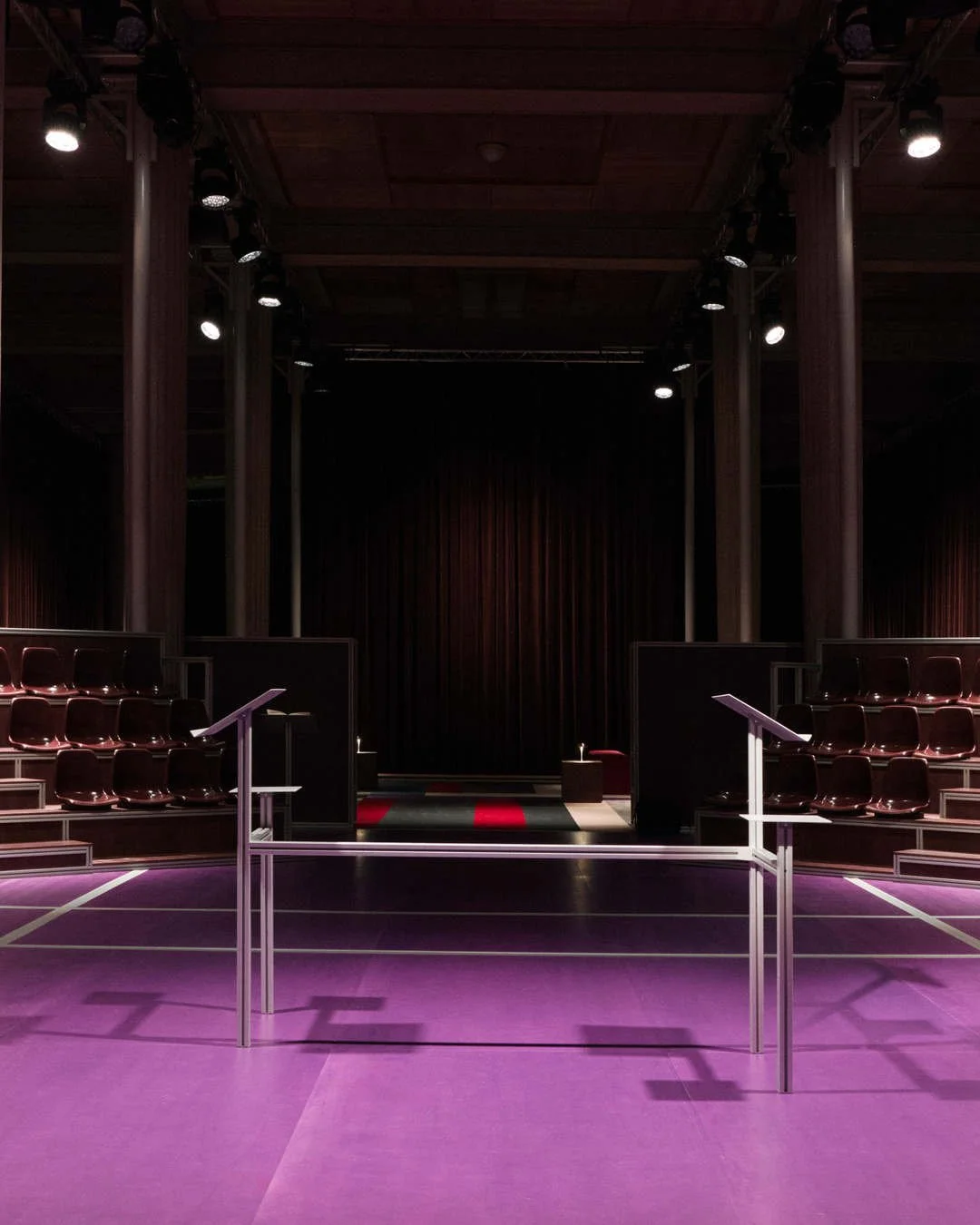
The Geste de Consolation space at Palais d’Iéna in Paris.
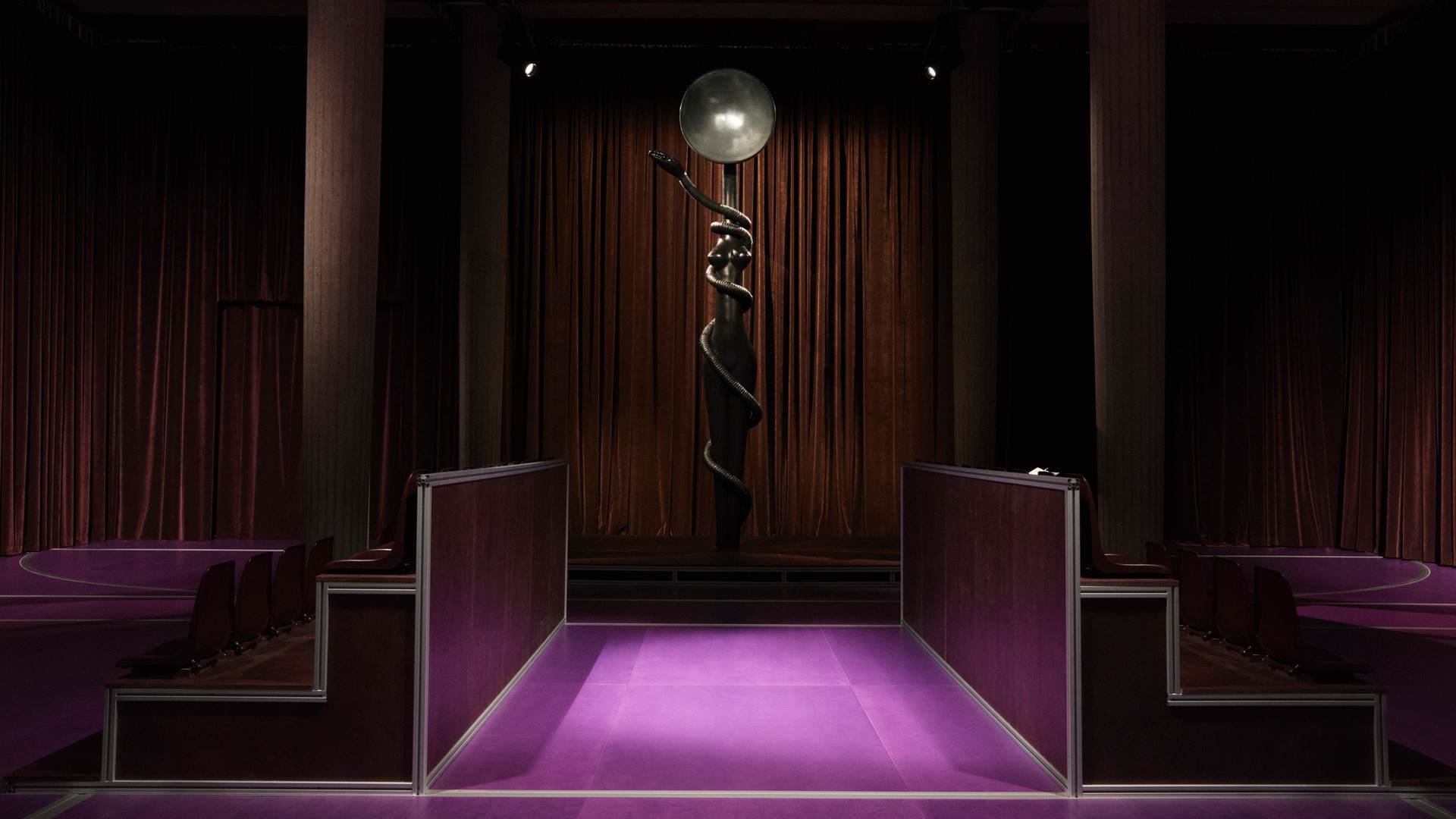
Sentinel by Simone Leigh for Geste de Consolation for Miu Miu commission by Alice Diop.
Why did you conceive of this gesture of consolation?
Alice: Saying “gesture” in the singular is important. It is the gesture of bringing together, in one place, all the thinking that occupies me, alongside the works that nourish me and the artists who ground their practice in repairing the fetishizing gaze I mentioned.
These are very specific works that enter into dialogue with one another along a journey from point A to point B, from a photograph by Zanele Muholi to a sculpture by Simone Leigh. It is an emotional and intellectual journey that seeks to heal these ways of seeing: to exhibit works that care, that heal, and that cleanse the violent imaginary we are forced to confront as Black women. We have to invent something else.
If you had to recommend a book to someone who had never really felt represented in the stories they read, which one would you choose?
Alice Diop: Sister Outsider by Audre Lorde.
This interview has been edited and condensed for clarity.
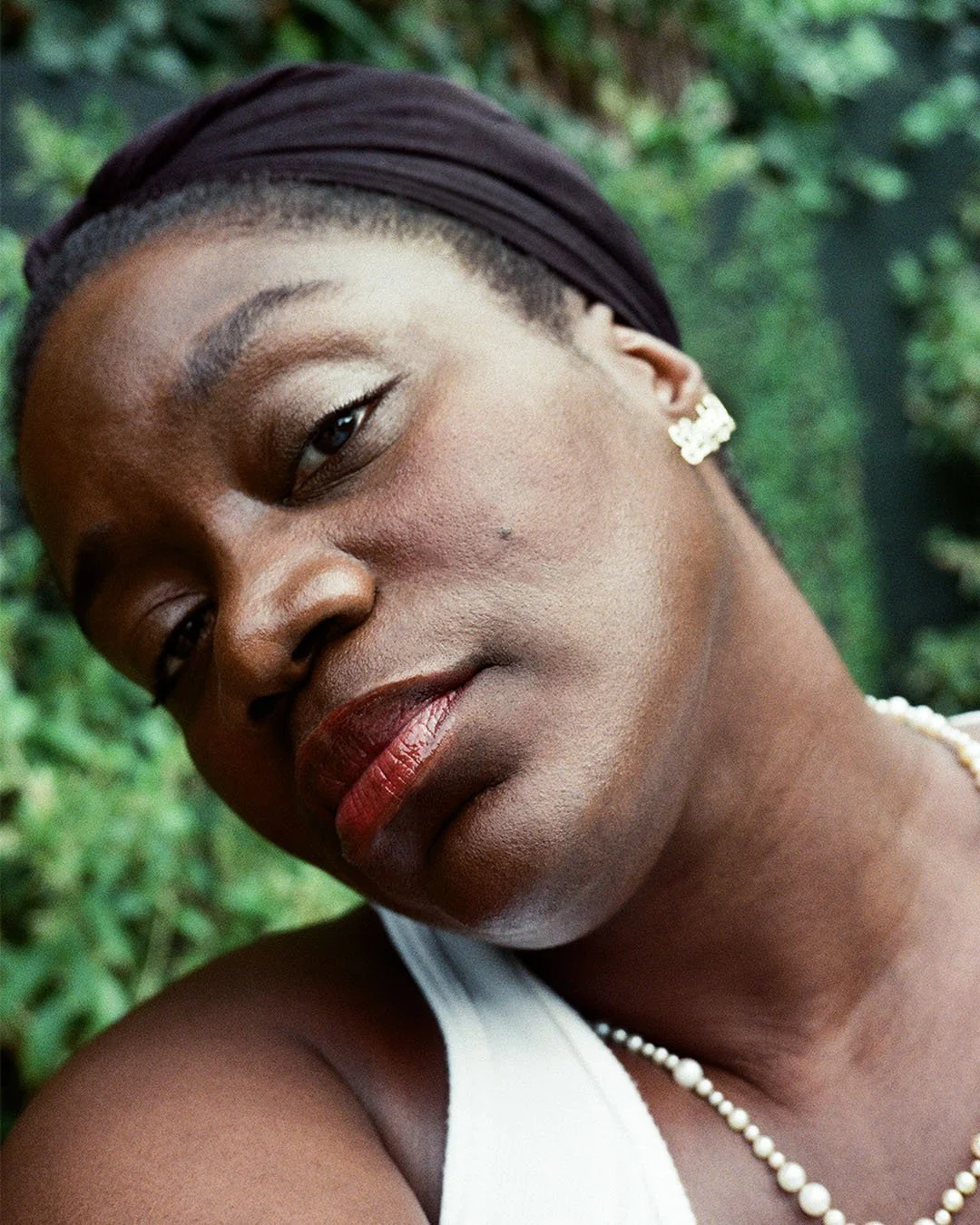
We spoke with Alice Diop about the books that have shaped her intellectual life, how literature becomes a form of freedom and resistance and the role of Chambre à soi in making space for the subjectivity of Black women.