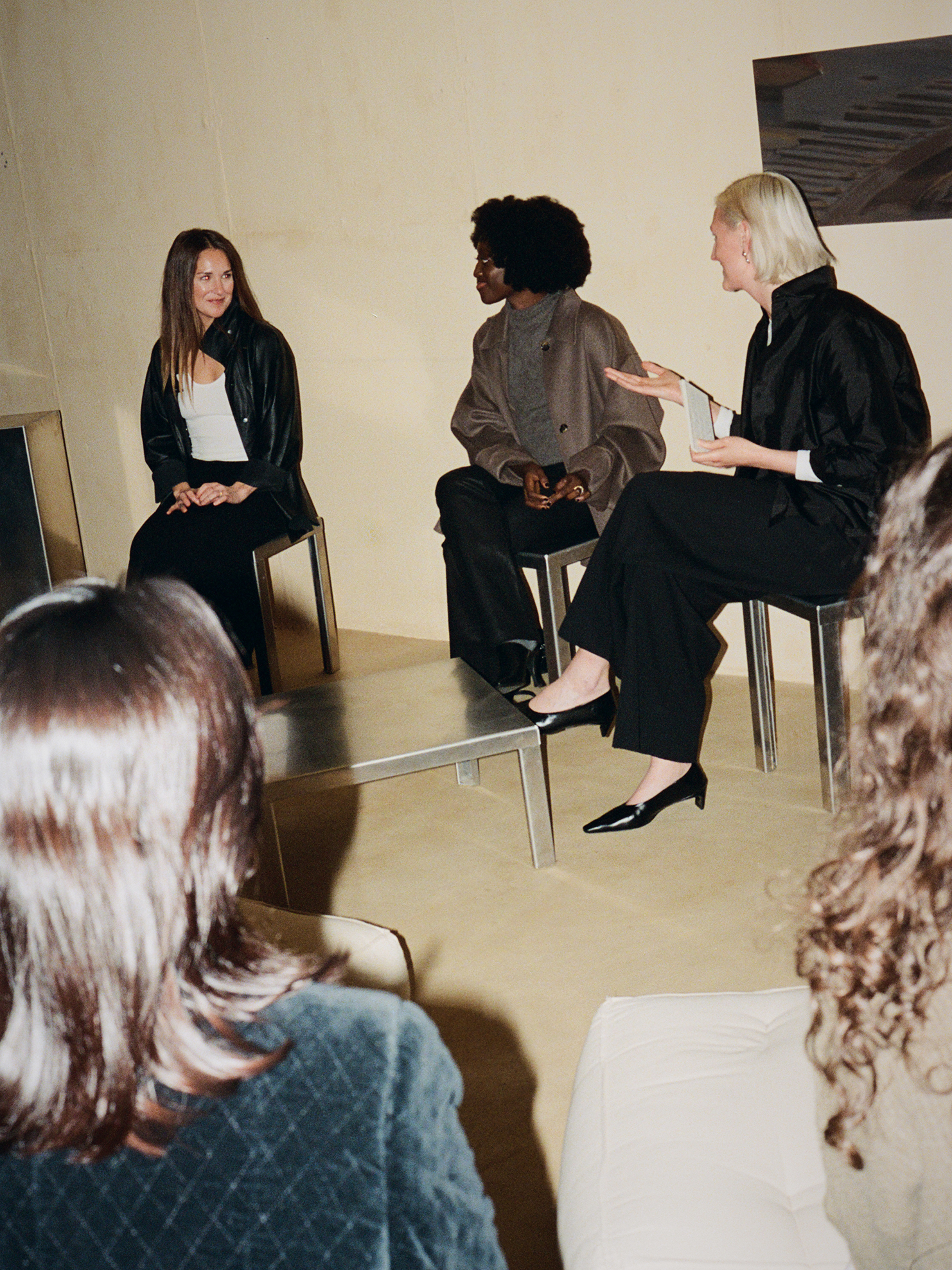
Alessandra Pelizzari and Binta Diaw at Villa Clea. Photography by Arianna Roda. Courtesy of HURS.
Should Art Be Less Intimidating?
In partnership with Massimo Dutti
By Bonnie Langedijk
What intimidates most of us about art is rarely the work itself. It's the silence around it: the hushed gallery, the feeling that there’s a right answer that everyone else seems to know.
Art has always been a conversation. It happens between an artist and whoever stands in front of the work, between cultures and between generations. It only becomes intimidating when that conversation turns into a lecture.
In partnership with Massimo Dutti, we hosted an intimate gathering at Villa Clea, a private home in Milan that opens its doors to artists, to have a conversation about art and whether it can, or should, be less intimidating.
I was joined by two women who know this conversation from very different sides. Alessandra Pelizzari, our host, trained as an architect, and her PhD on intuition explored how curiosity sharpens the way we observe. Villa Clea, founded and curated by her and designed by architect Matteo Corbellini, is where she puts that into practice. She also created LUNAA, a furniture collection made entirely from aluminium, conceived as a quiet background for art and everyday life.
Binta Diaw is an Senegalese-Italian sculptor and installation artist based between Milan and Dakar, Senegal. She sees her works as living entities and builds installations that ask for your body, not just your eyes. She works with soil and hair, familiar materials that carry heavy histories, and her research begins with her own body.
Together, we asked a simple question: should art be less intimidating, and what would we lose if it were?
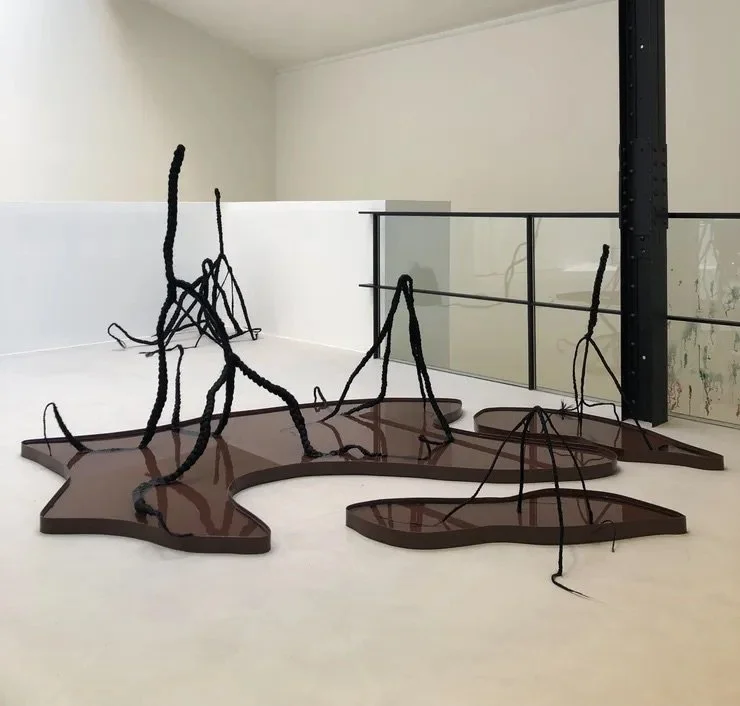
Binta Diaw’s Naître au monde, c'est concevoir (vivre) enfin le monde comme relation 2022. Extension hair, iron wire, iron. Courtesy of the artist.
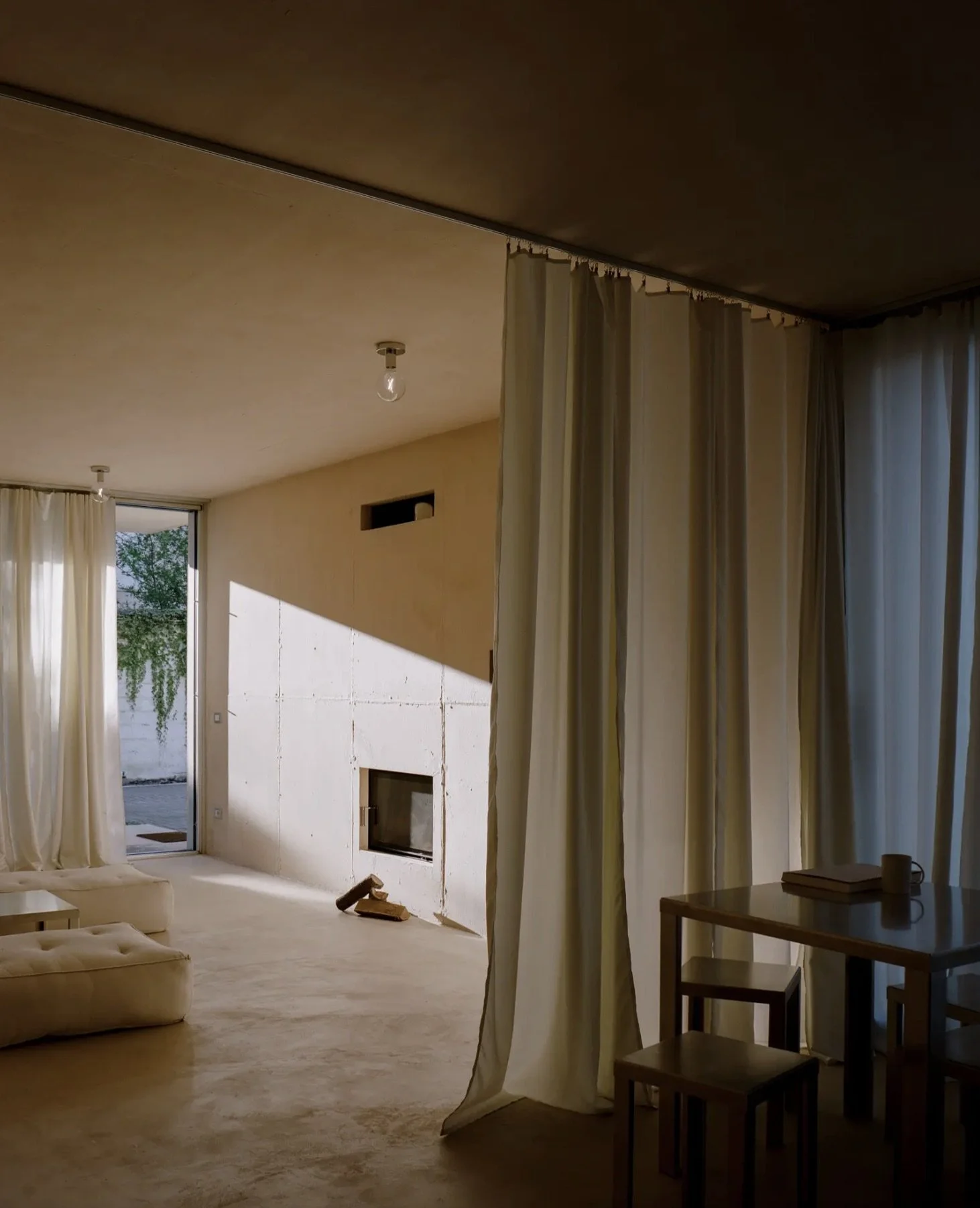
Villa Clea. Courtesy of Villa Clea.
Bonnie: What was your first experience with art, and does it still shape how you interact with it today?
Allina: I applied to an art residency in Italy because I needed a house and wanted to meet people, and I applied with architectural drawings. That's how I discovered contemporary art and its community. My PhD was about intuition, and how curiosity helps us observe and become more intuitive. When we built Villa Clea, we didn't know what the program would be. I just knew I wanted to keep sharing a domestic space with artists, and to let them be the link between the people I invite. My goal was to offer a time for reflection and observation through meeting people. Art is like a dialogue we can have among ourselves.
Binta: I've loved everything related to art since I was a child. My dad wanted me to study architecture; he had something specific in mind. But I was really into creativity, imagining things and materials. During my studies I had a professor, a woman sculptor, who became a very important figure for me at a time when it was very difficult to become an artist as a woman. I was lucky to meet the right people.
“When you go to a gallery, you go with the PURPOSE of looking at and receiving art. Here the encounter with art often begins differently. People come together, and art naturally becomes part of their conversations.”
You're both looking for a dialogue or exchange between an artist, a work and the person looking at it. Allina, Villa Clea is anything but a white cube. What conversations can people have here that they couldn't have in a gallery?
Allina: When you go to a gallery, you go with the purpose of looking at and receiving art. Here the encounter with art often begins differently. People come together, and art naturally becomes part of their conversations. I invite people who sometimes aren't connected to art at all, the way you'd mix friends from different fields at a dinner, and the dialogue brings us to art. Contemporary art is alive. You can speak with the people who are producing the work. For me, that's the most important part.
Binta: There are a lot of differences. Villa Clea is very intimate, and I think it's the right context to approach the work. I usually show at art fairs, but I love it when collectors organize exhibitions with their own people. It's outside the commercial dynamics, and outside the exploitation of images.
Binta, so much of your work uses familiar materials, like soil and hair. Some of your topics are heavy, but do those materials make them easier to talk about?
Binta: Familiar, but actually complicated. This morning I was talking with a museum that's showing one of my pieces about how to sterilize the soil, because insects can attack other things in the collection. There are a lot of technicalities. But everyone is attached to soil. Everyone has an intimate, personal connection with it. And it's the best material for understanding layers. Through soil we can talk about the past, the present and the future. We can talk about gardening, slavery, plantations. I'm fascinated by that. Hair is completely different, because I'm really into the body. My research comes from my body: the Black body, the female body. We often see hair as something external, but for me it's a real extension of the body.
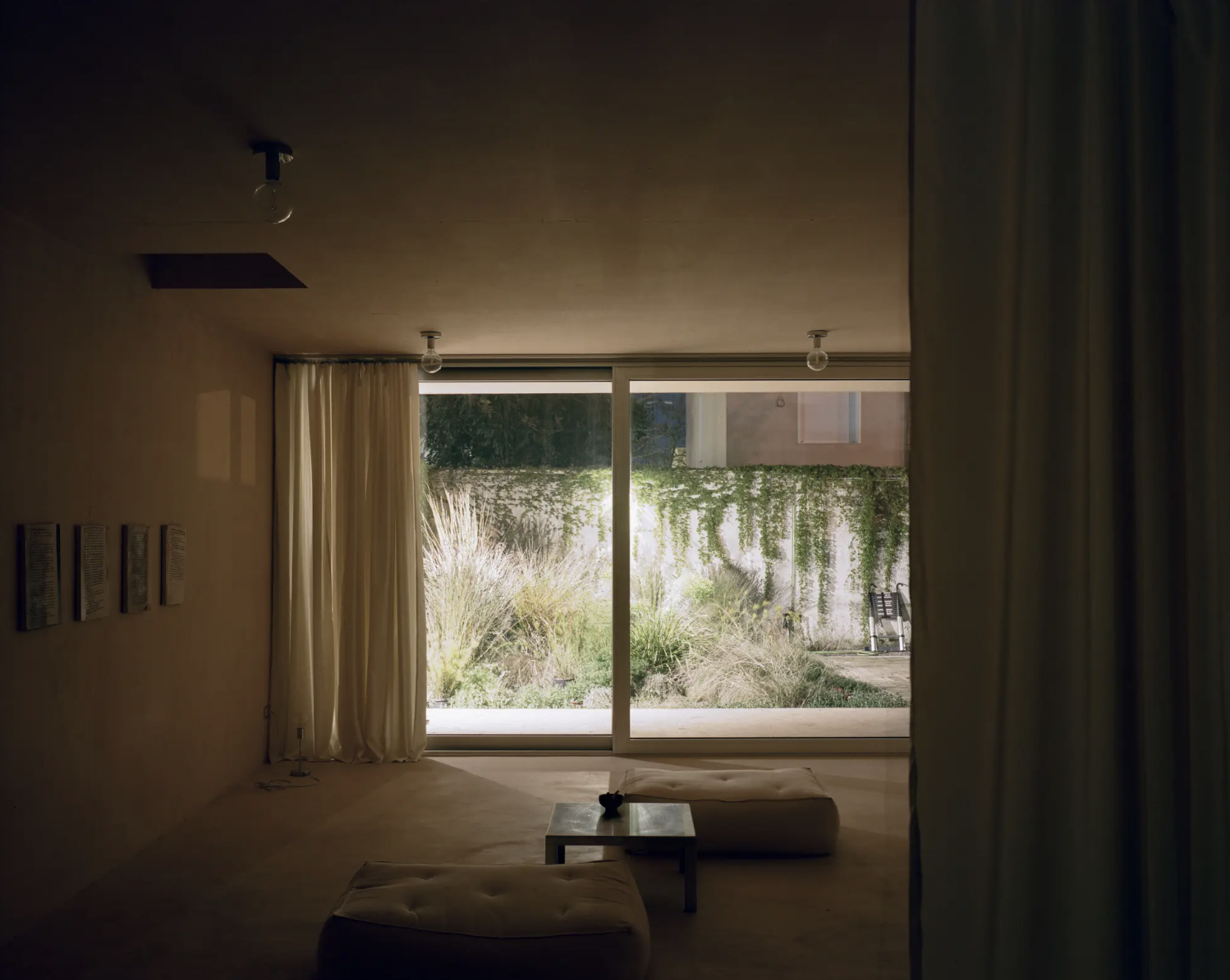
Villa Clea. Courtesy of Villa Clea.
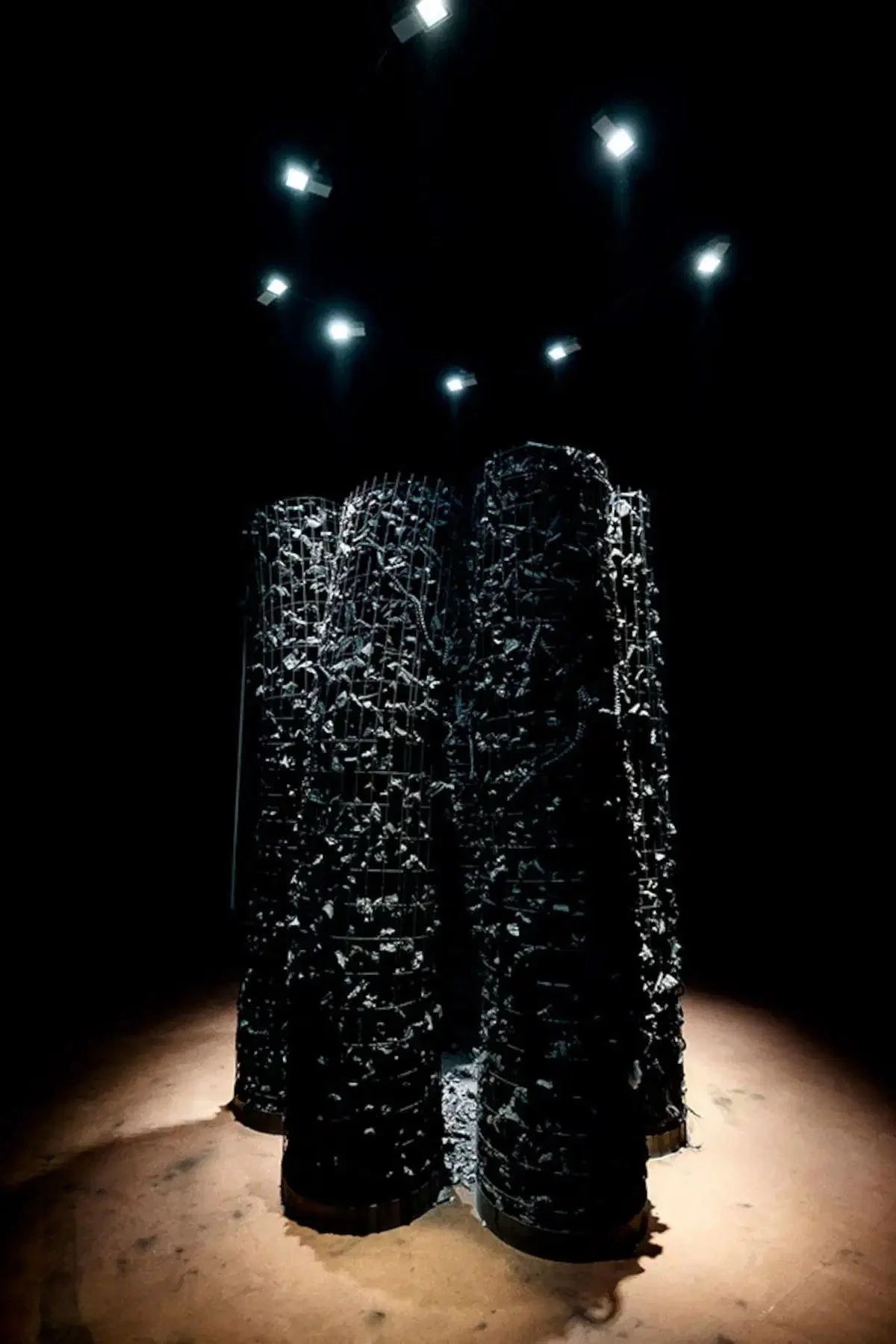
Binta Diaw’s Juroom ñaar, 2024. Charcoal, iron. Courtesy of the artist.
To circle back to the main question: should art be less intimidating, or is it the conversations around art that should change? Or both?
Allina: I think it's our role, as spaces, to create an atmosphere where people feel less intimidated in their relationship with art. But art itself shouldn't be less intimidating. It's okay if it gives you the feeling the artist wants. What I try to do is welcome people so they don't judge themselves. We don't necessarily need to understand a work immediately. We can begin by observing, feeling and allowing curiosity to guide us. Just be curious and be in relationship with the work. In a home you live with art longer than in a museum, and sometimes you meet a work when you aren't expecting to. That makes it more personal.
Binta: It's about atmosphere, of course, and about letting people understand the work through materials, sound and technique. But intimidation can be related to provocation, and provocation is part of art. Art provokes reactions and critical thinking. So art should intimidate people, but in a way that provokes something in their minds and their experience.
That's becoming more difficult in a world that social media has flattened, where you either like something or you don't. But you could also just be with something, and maybe it makes you feel…
Allina: Uncomfortable. It's the difference between judging and observing. When you observe, you accept the thing as it is, even if it hurts you. It's important to observe even the things we don't want to look at.
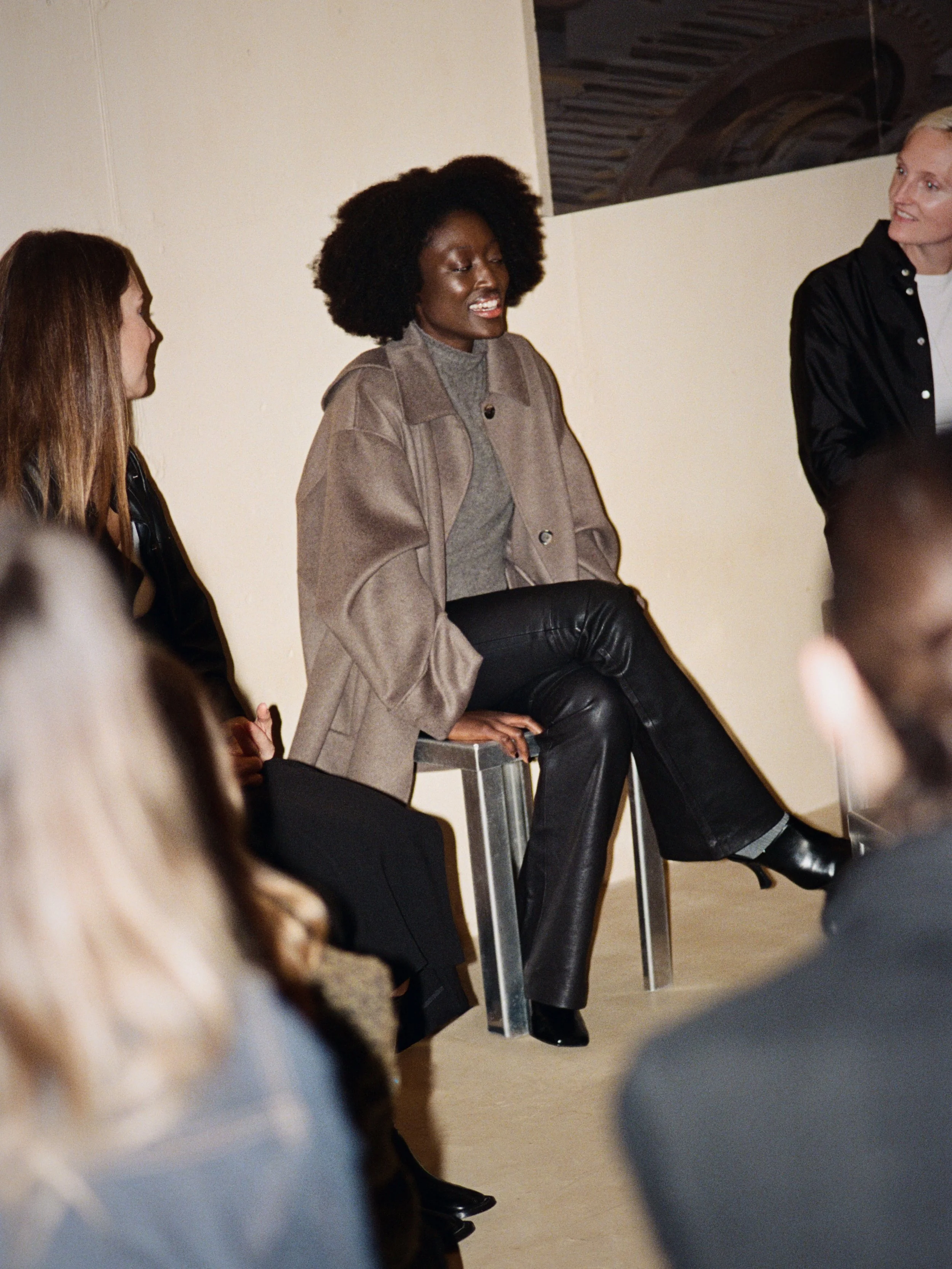
Alessandra Pelizzari and Binta Diaw at Villa Clea. Photography by Arianna Roda. Courtesy of HURS.
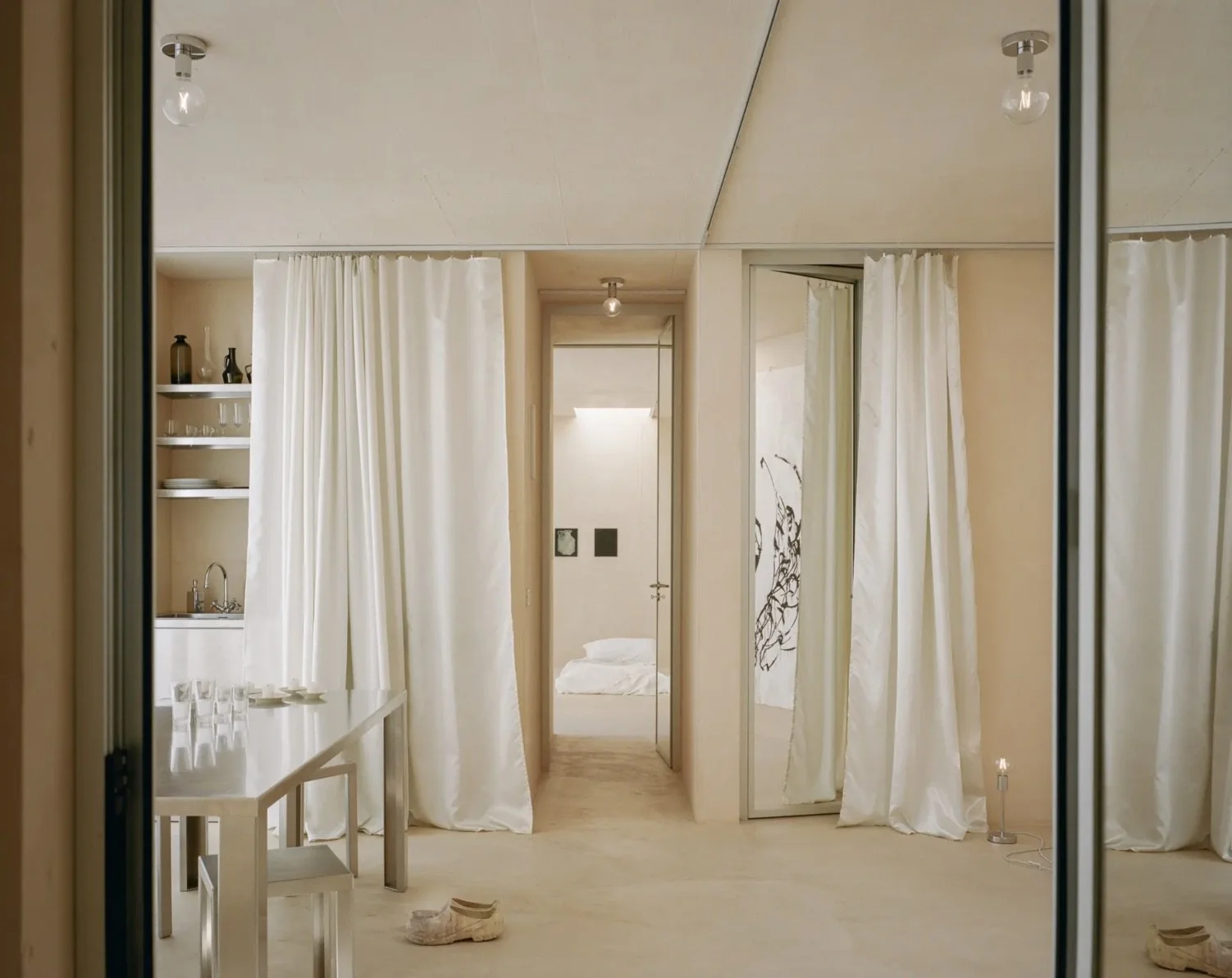
Villa Clea. Courtesy of Villa Clea.
Since we're in Milan: what conversations between cultures and generations is art starting here, and who is still missing from them?
Allina: When I came back, I was a bit scared. Milan is a great city for fashion, design and art, but I thought the circles were very divided and closed. Then I discovered a lot of private initiatives, friends holding small exhibitions in their homes. Things are happening. There's a political side too: independent spaces can offer greater freedom to experiment beyond conventional institutional structures, while an institution or gallery has to survive. I also love that artists who show here are often contacted afterwards by a fashion house or design brand. Contemporary artists are living, and we should mix them in. I think Milan does that quite well.
Binta: I was raised in Milan, but I'm not a real Milanese; I'm always traveling. I agree that the strength of contemporary art here is its connection to other fields. It's a dynamic city. But it's less accessible than others. I spent six months in New York and felt connected to the fabric of the city. Here people talk about community, community, community, but I can't feel it. There are many small circles, and they work, but they're always private.
Allina: Elsewhere you see the culture more openly. Here you judge more, because you have to underline where something comes from. It's more structural.
This interview has been edited and condensed for clarity.
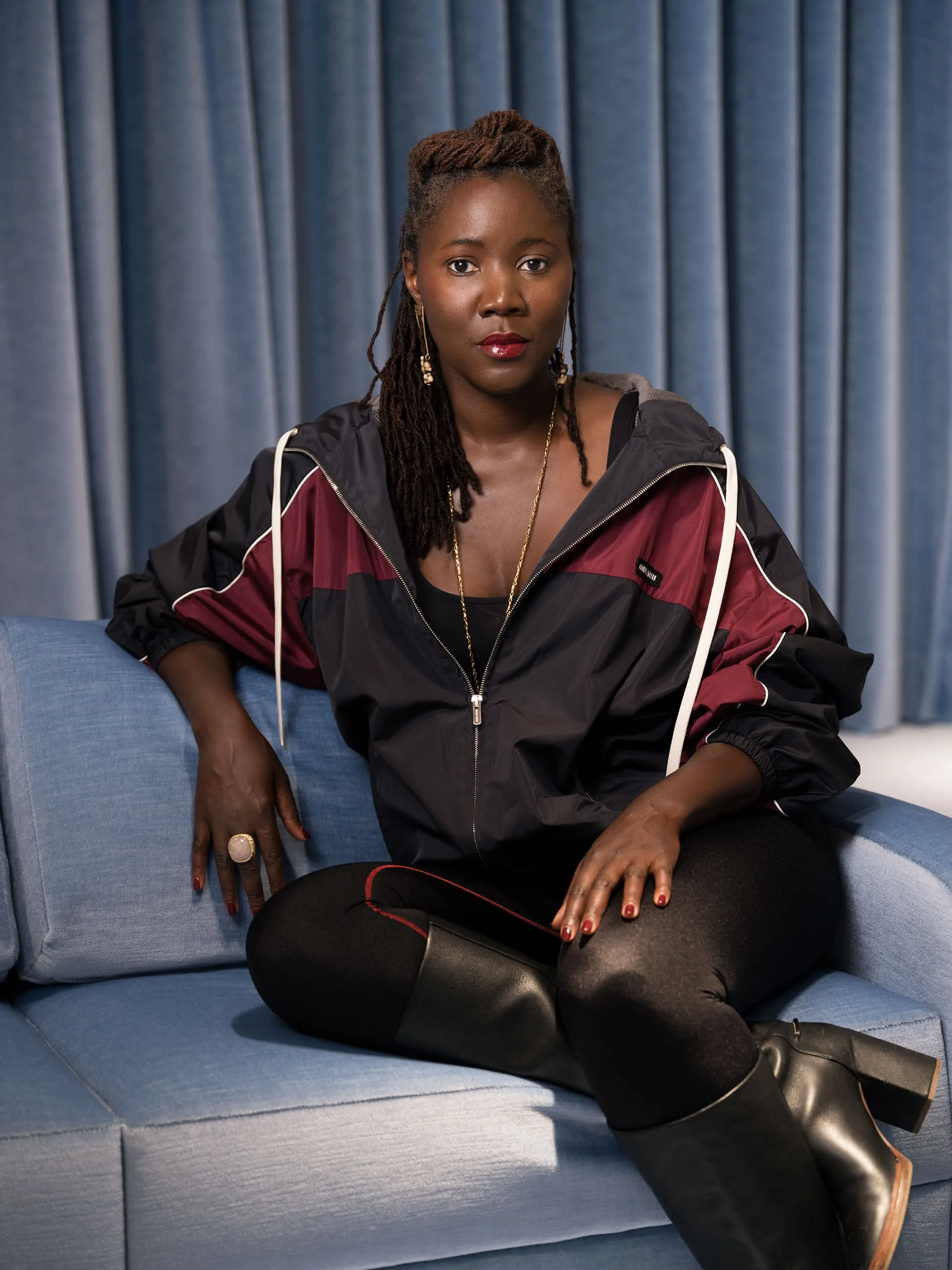
We spoke with Paula Gerbase about digging into Georg Jensen like an archaeologist, the eccentric silver telephone, and why the first step towards sustainability is making something worth keeping.