Are There Still Originals?
Are There Still Originals?
with Akanksha Deo Sharma, Rose van Zijl and Elora Joshi
By Bonnie Langedijk
We live in the most visually saturated moment in human history. And yet, somehow, everything is starting to look the same. The pressure to produce content that performs has rewritten the rules of what it means to create at all.
Originality, that once-sacred creative currency, is in crisis. Or at least, it's complicated. When we have infinite reference points at our fingertips, what does it mean to make something new? Some of the most boundary-breaking artists of the last century understood this tension better than anyone. Virgil Abloh famously worked within a 3% rule; the idea that shifting something just slightly could constitute an entirely new thing. Andy Warhol understood that in a consumer culture, the original and the copy were already the same thing. Cindy Sherman built an entire career out of becoming other people, asking whether an original self exists at all. Originality, they each understood, was never about working in a vacuum.
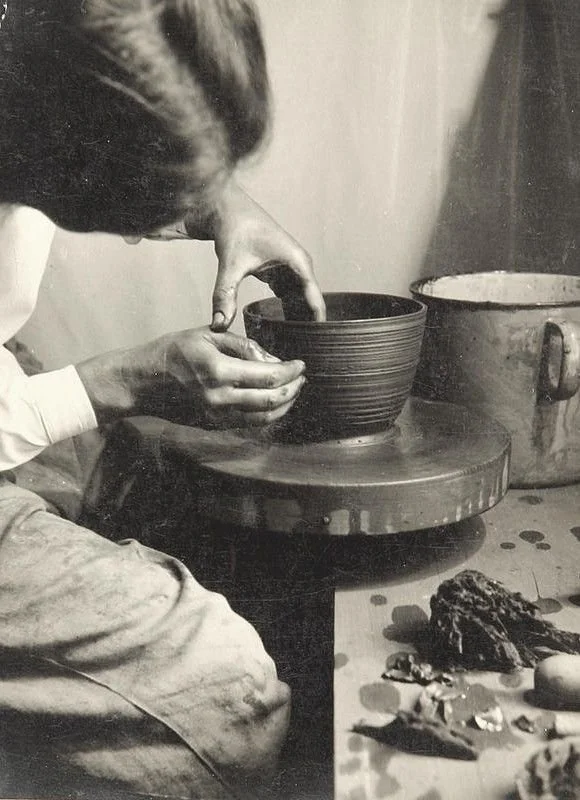
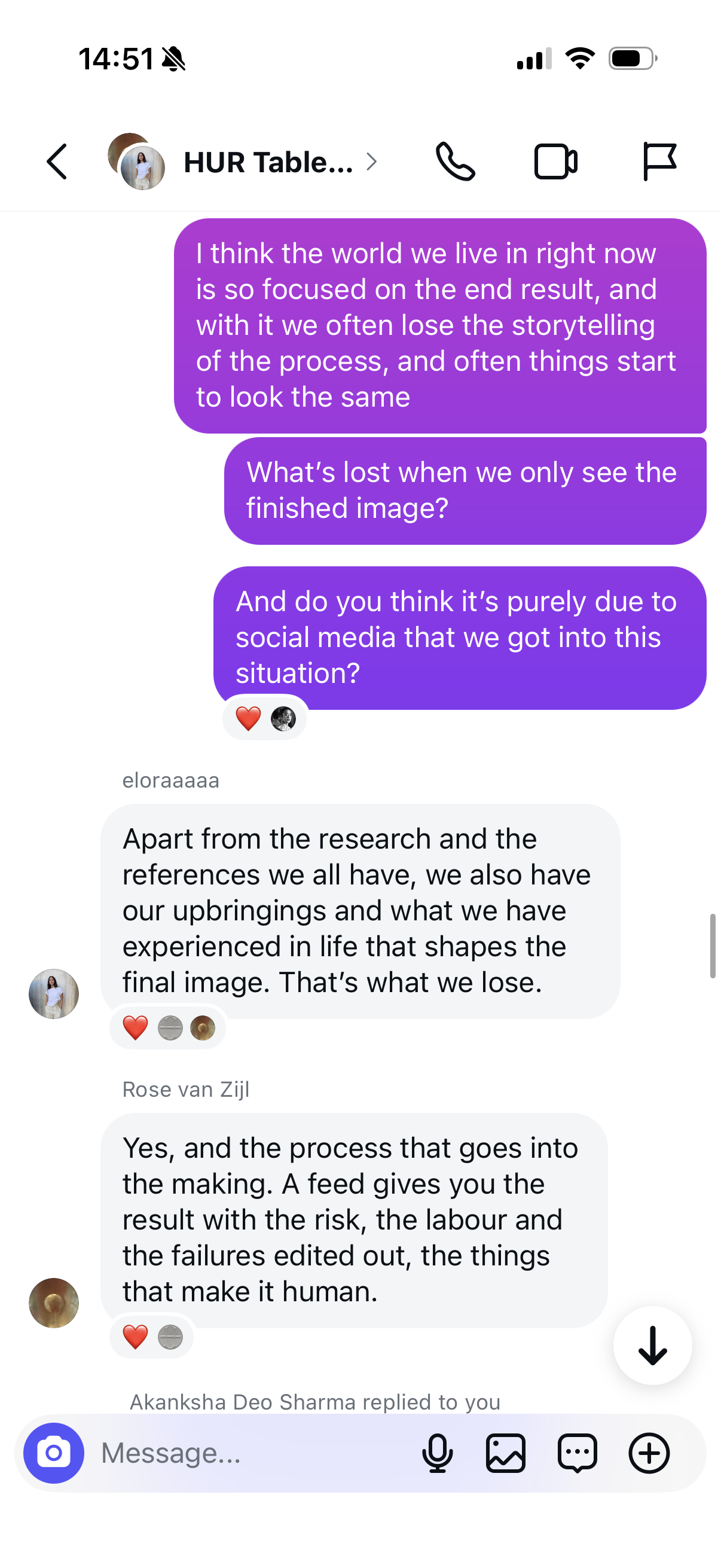
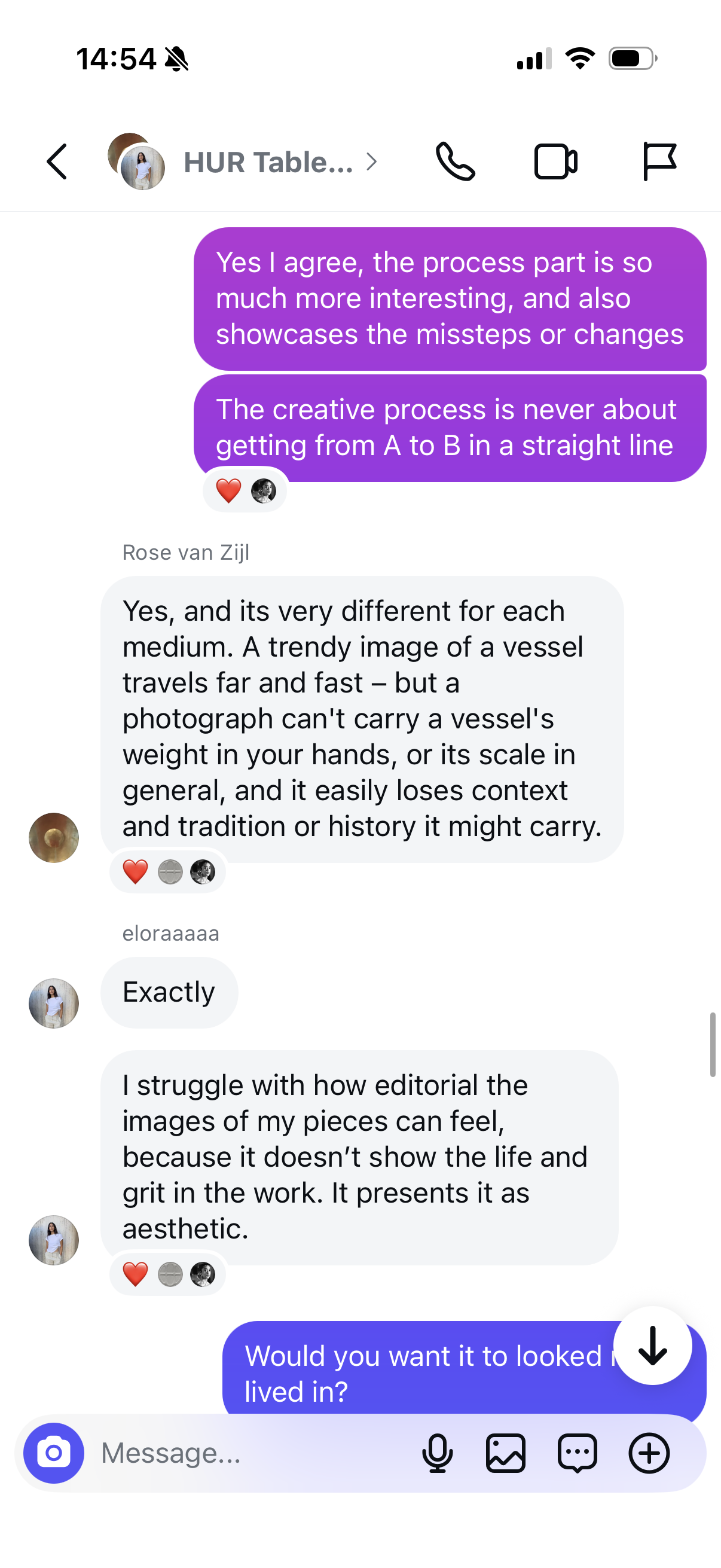
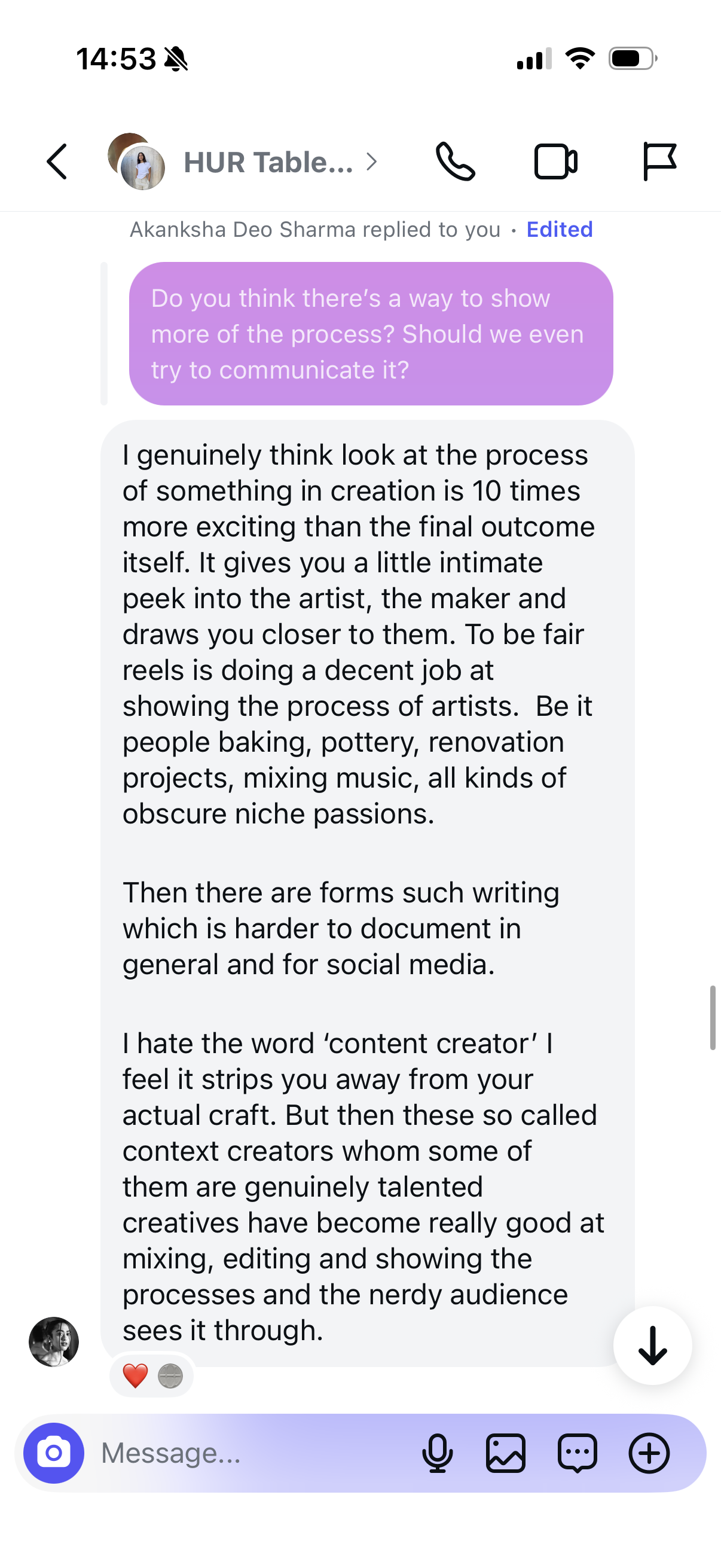
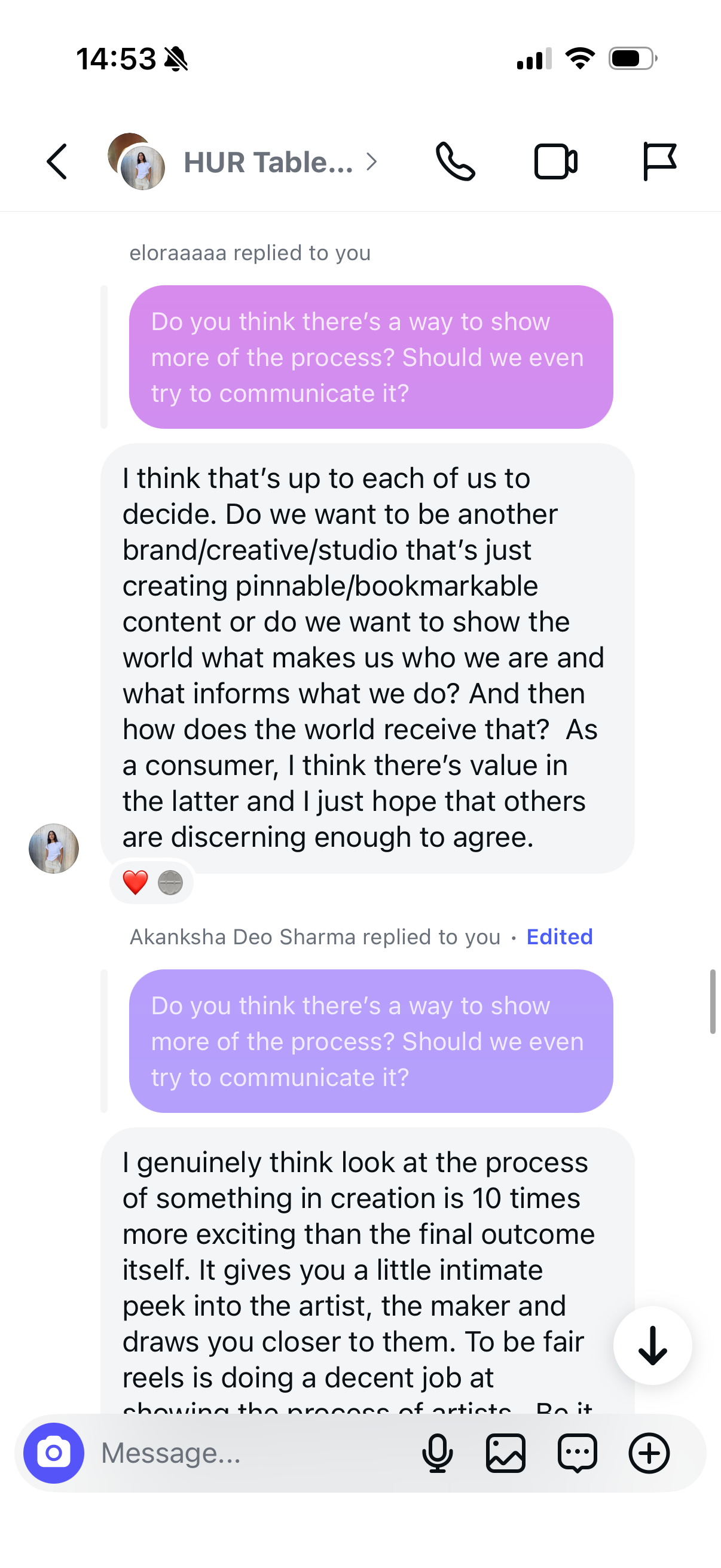
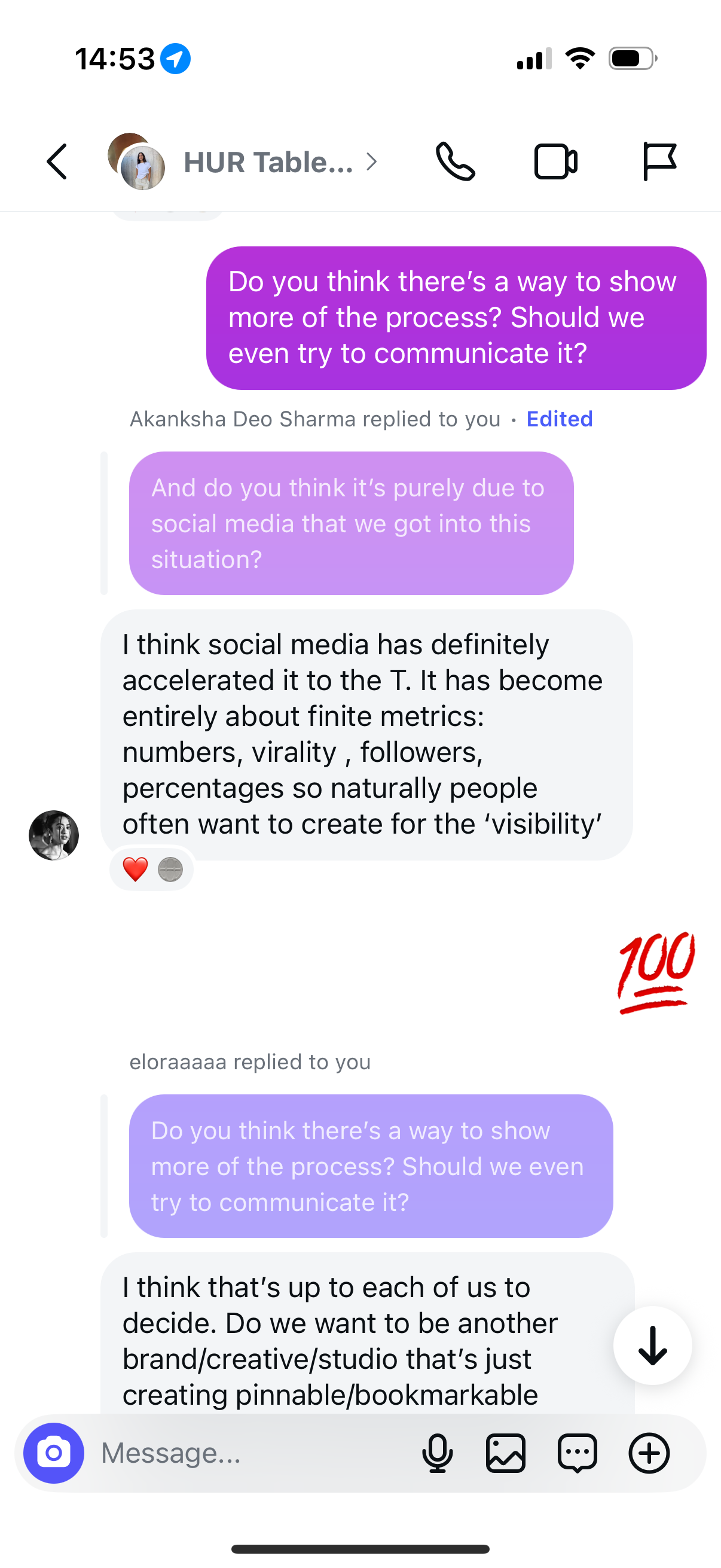
But something has shifted. In a world hyper-focused on the end result, the thinking behind the work has become invisible. Process gets acknowledged only insofar as it serves the outcome: a behind-the-scenes reel, a making-of moment, content about content. What it actually looks like to sit with an idea, to fail, to build something slowly, that rarely makes the cut. We've become fluent in the language of the finished image. And that has consequences for who gets to create and whose creativity gets recognised.
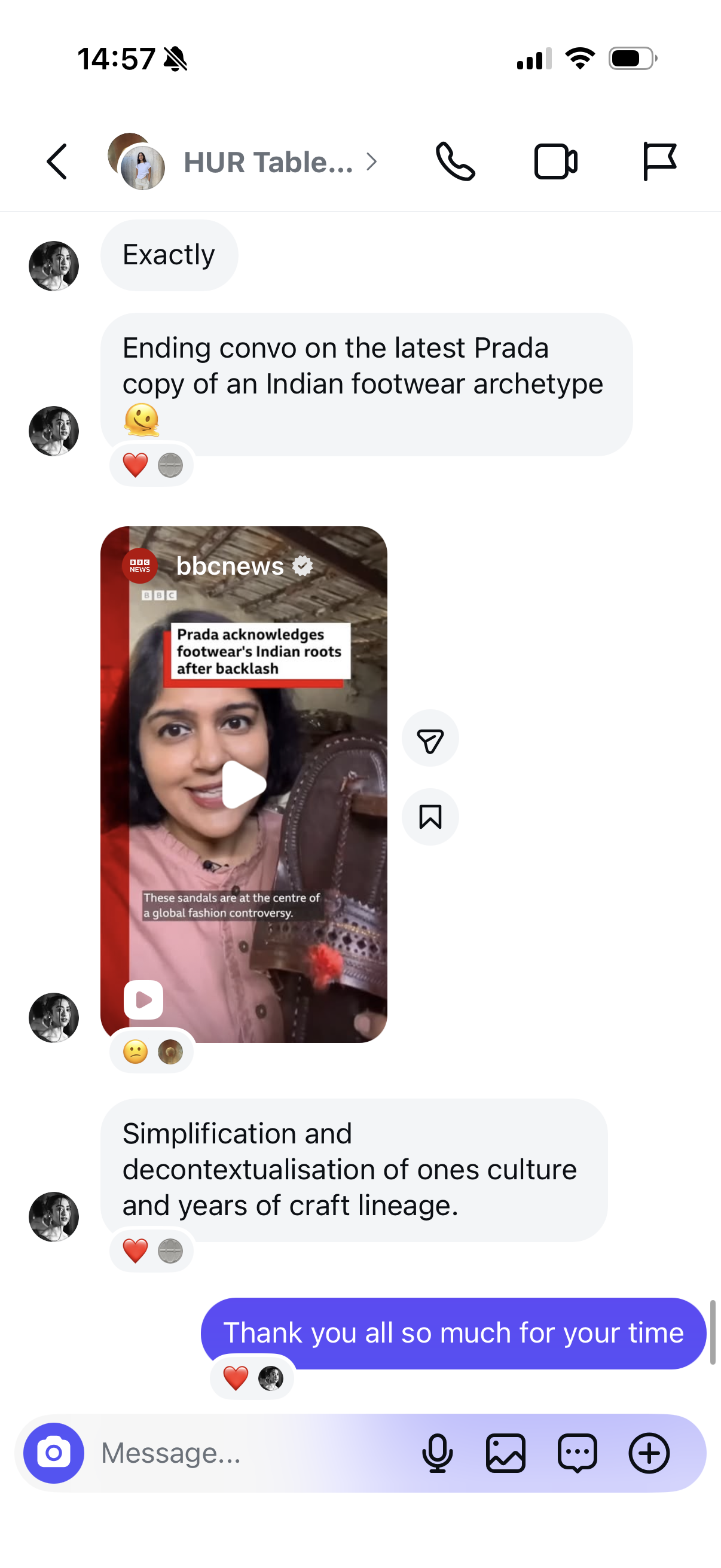
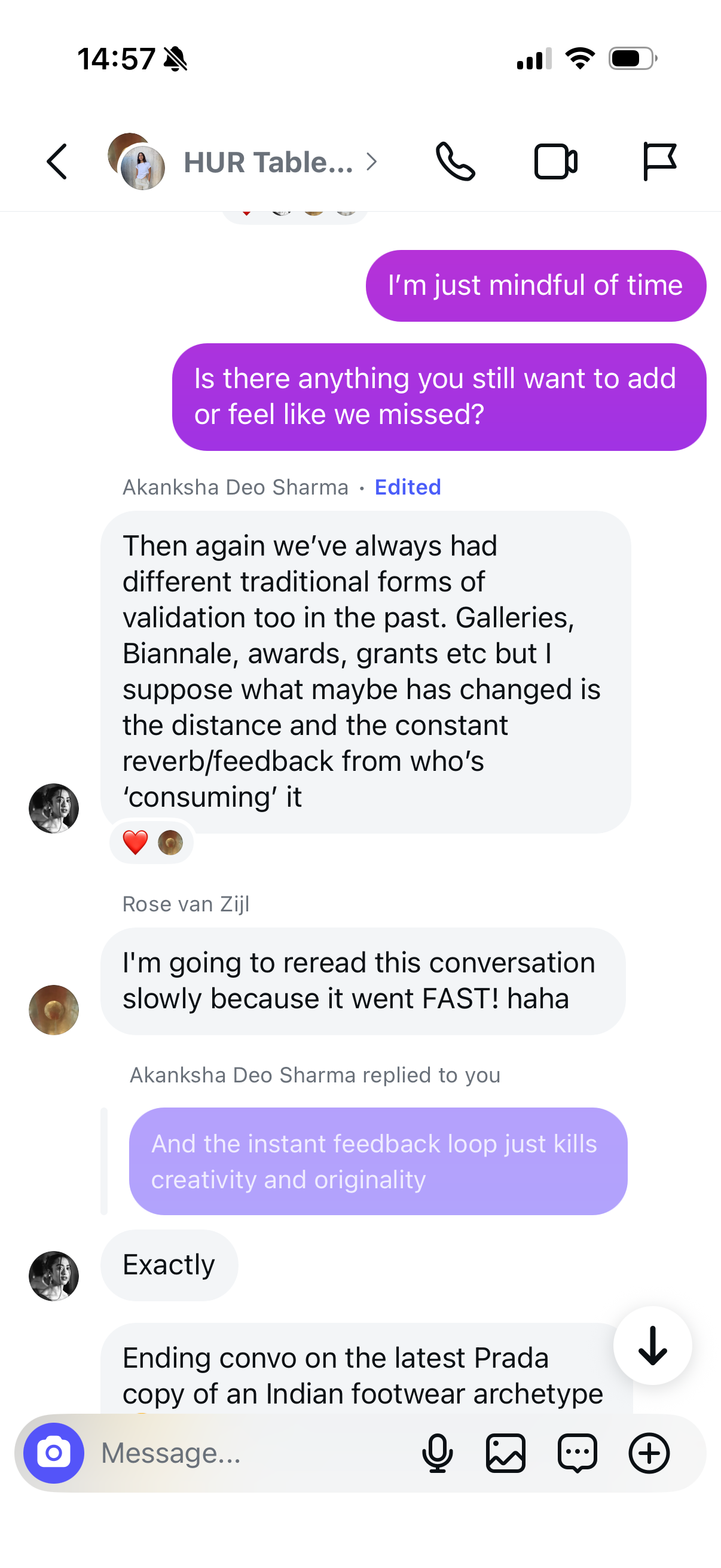
When there's a dominant visual language, a trending aesthetic, a certain kind of output the internet rewards, originality stops being a neutral playing field. For those creating across different cultural backgrounds and lineages, the stakes are particularly sharp. The creative process carries all of it: the past, the failures, the contradictions, the tradition. None of that shows up in the final image. But it's exactly what makes the work what it is.
So where does that leave us? We asked three women thinking deeply about creativity, culture, and craft to weigh in on what's lost when we only see the outcome, whether originality is still worth chasing, and what it would actually mean to value the process again.
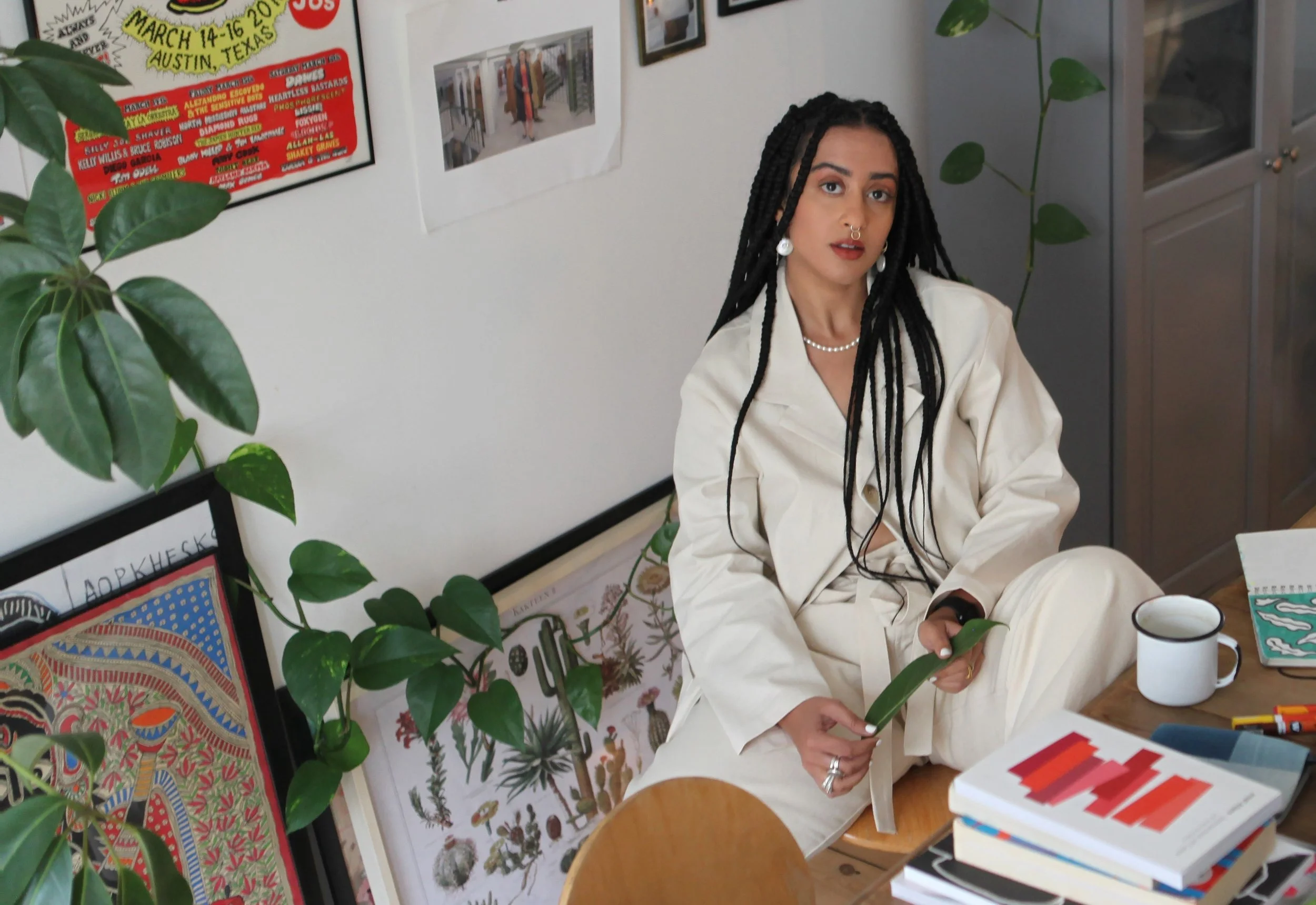
AKANKSHA DEO SHARMA
Akanksha Deo Sharma is an Indian multidisciplinary designer and artist working at IKEA. Her practice merges craft, technology, and sustainability, engaging vulnerable communities while rethinking materiality and innovation. Sharma was recognised in Forbes India 30 Under 30 for her approach to design. Her work has been featured in Fast Company, Wallpaper, Dezeen, FRAME, Vogue, and Elle, exhibited at the London Design Museum, as well as included in the juries of the Frame Awards and Danish Design Awards. A TEDx speaker and One Young World ambassador, she explores how design shapes society and behaviour, expanding conversations around identity, power, and inequality. Living between Copenhagen, Malmö and Delhi, she works across the Nordics and South Asia through mentorship and community-driven creative exchange.
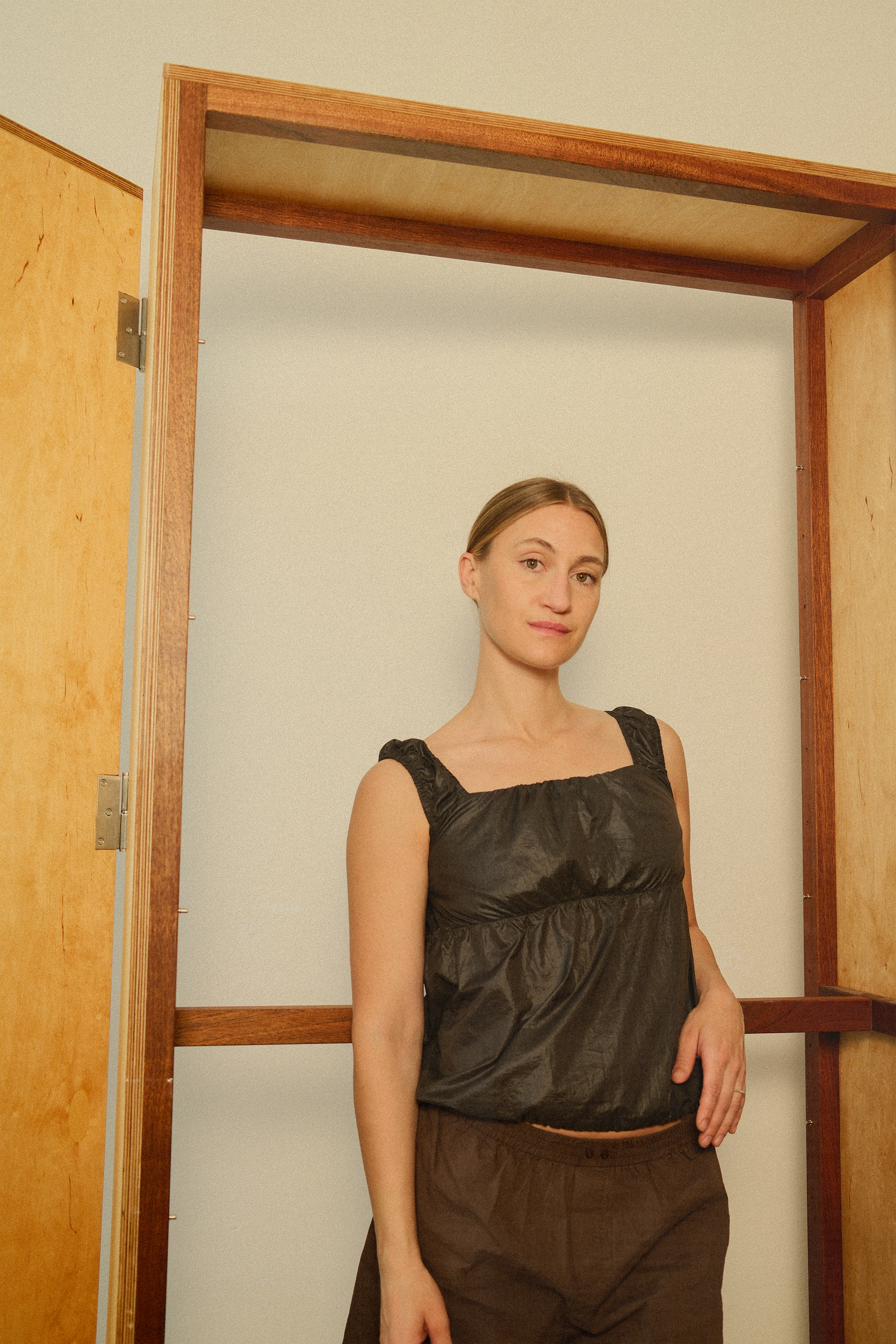
ROSE VAN ZIJL
Rose van Zijl is a designer and sculptor working between the Netherlands and New York. Her practice spans sculpture, functional ceramics, typography, books, and branding, with a focus on how material, language, and form can carry embodied knowledge. Working primarily in clay, she develops a tactile visual language shaped by questions of touch, movement, and physical presence. With her background in dance, van Zijl’s process is also informed by rhythm and the body in motion. Large-scale vessels sit at the core of her practice, approached as both objects and extensions of gesture. Her work holds a clear sensitivity to scale and interaction, positioning ceramics as things to be handled and engaged with in space.

ELORA JOSHI
Elora Joshi is a Los Angeles-based brand and digital consultant and co-founder of JOSHI / GREENE, an interdisciplinary studio she co-founded in 2025 with Andrew J. Greene. With an innate sensibility for design, Joshi moves between contemporary brand and digital consultancy and studio practice. JOSHI / GREENE explores functional design through contemporary objects and systems, alongside an ongoing process of researching and developing design ideas and commissions. As a consultant, she has over ten years of experience in fashion, with contemporary clients including CO, Matteau, and Tank Air. Her work has spanned creative and brand consulting, visual research, content strategy, ROI-driven marketing, and community building, focused on how brands are shaped and expressed.
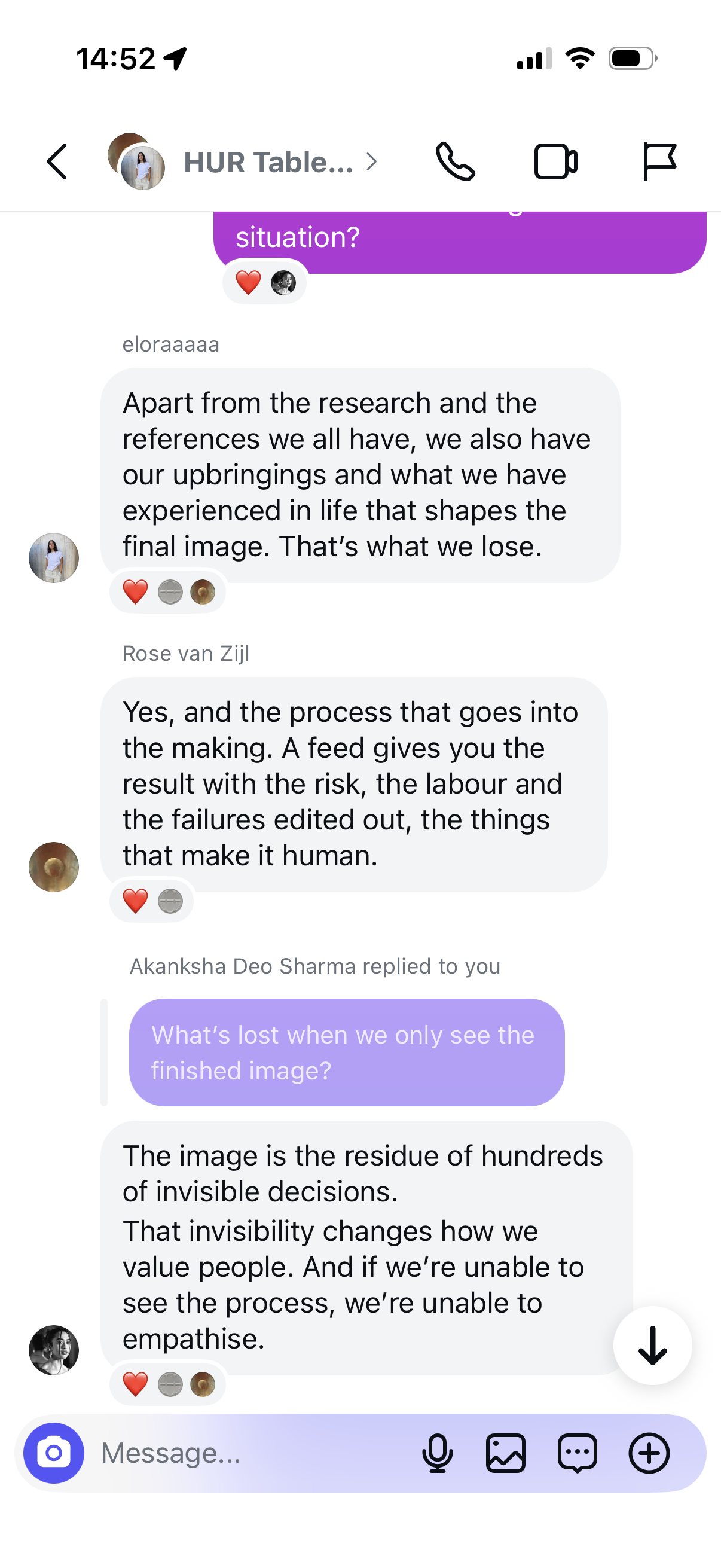
WHAT'S LOST WHEN WE ONLY SEE THE END RESULT?
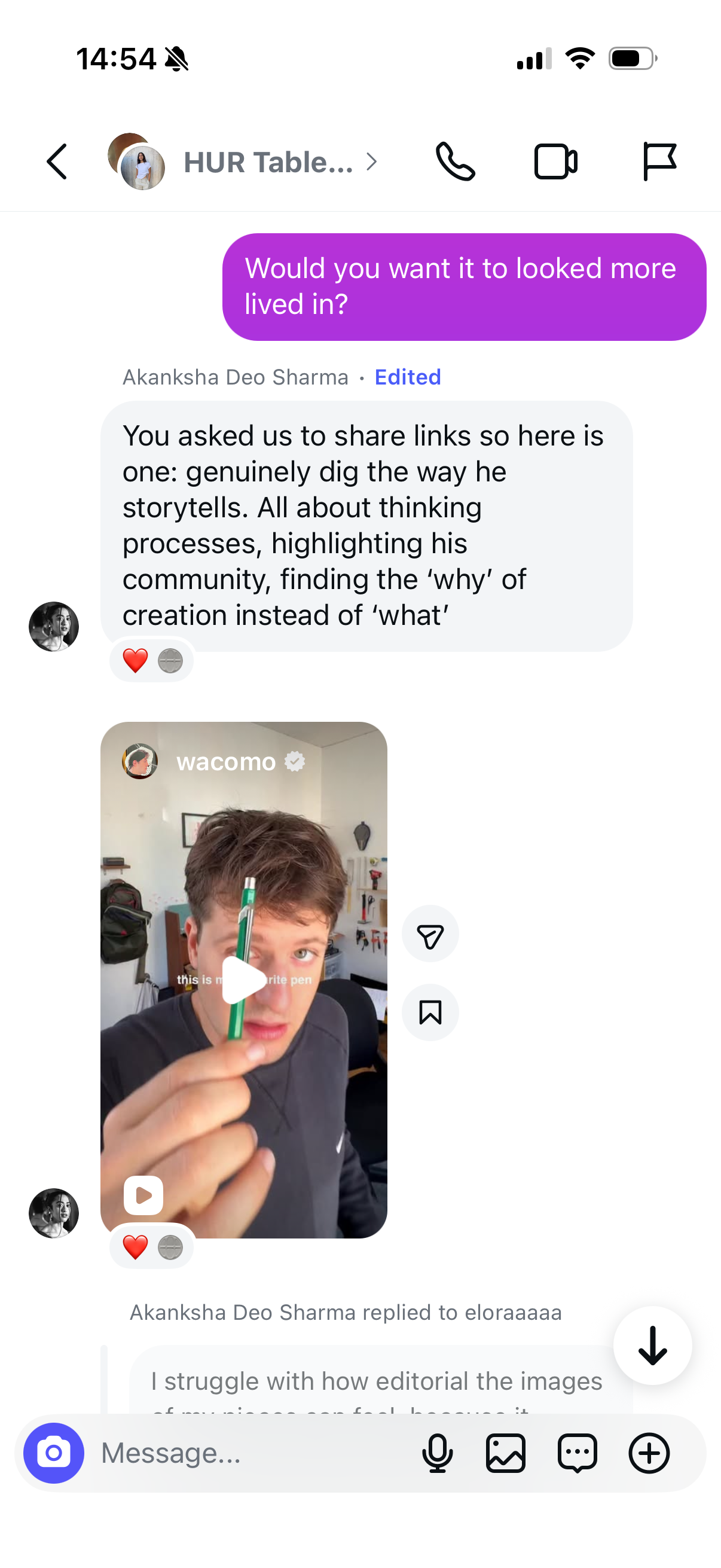
CAN YOU SHOW OR SHARE PROCESS?
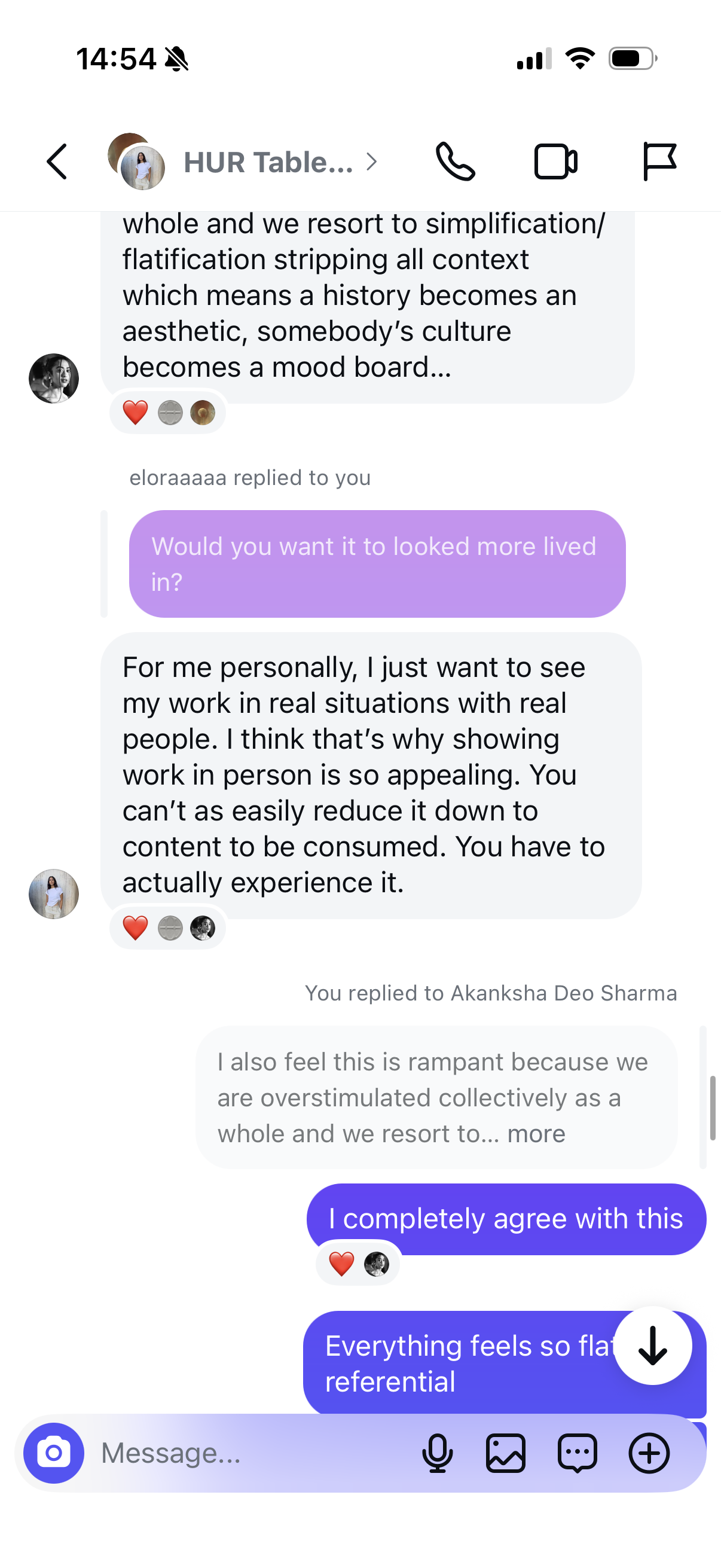
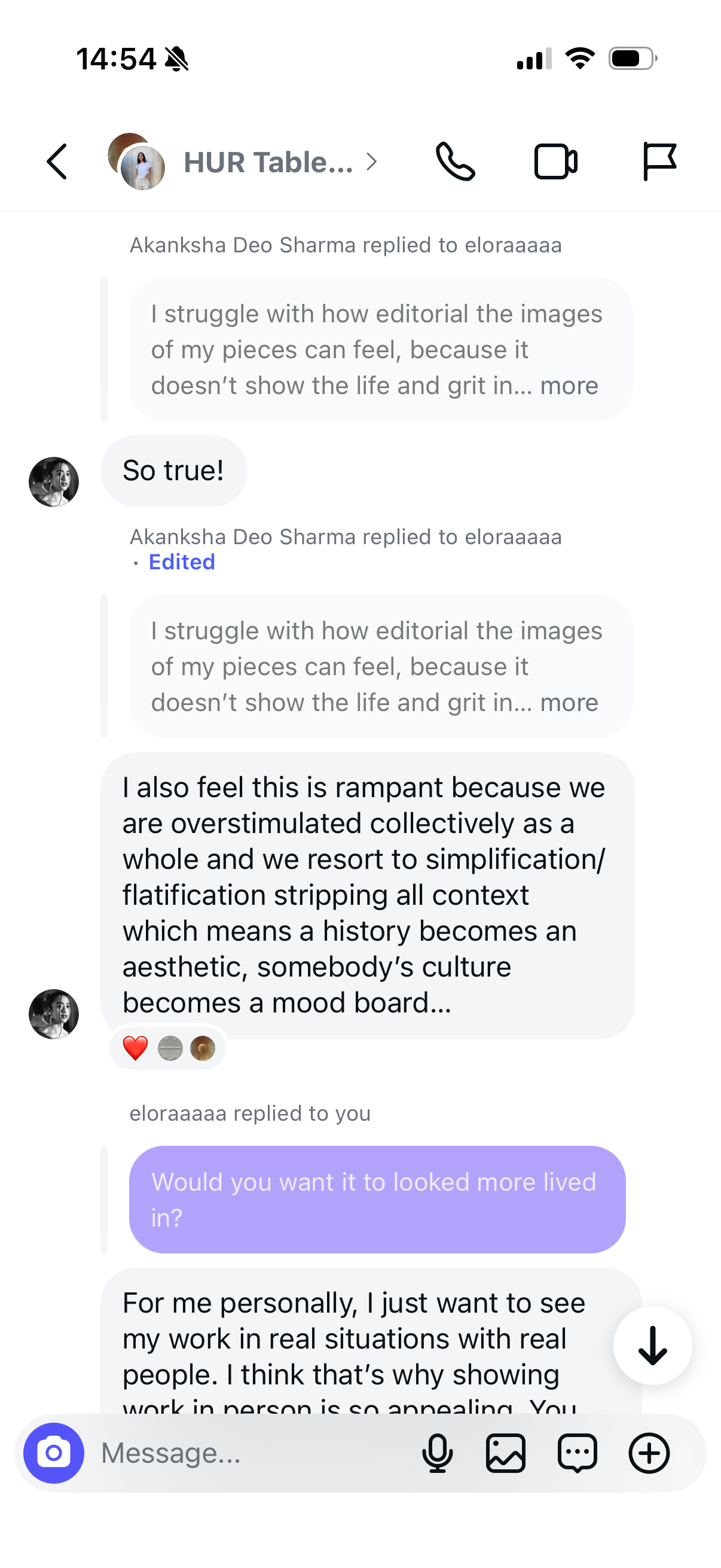
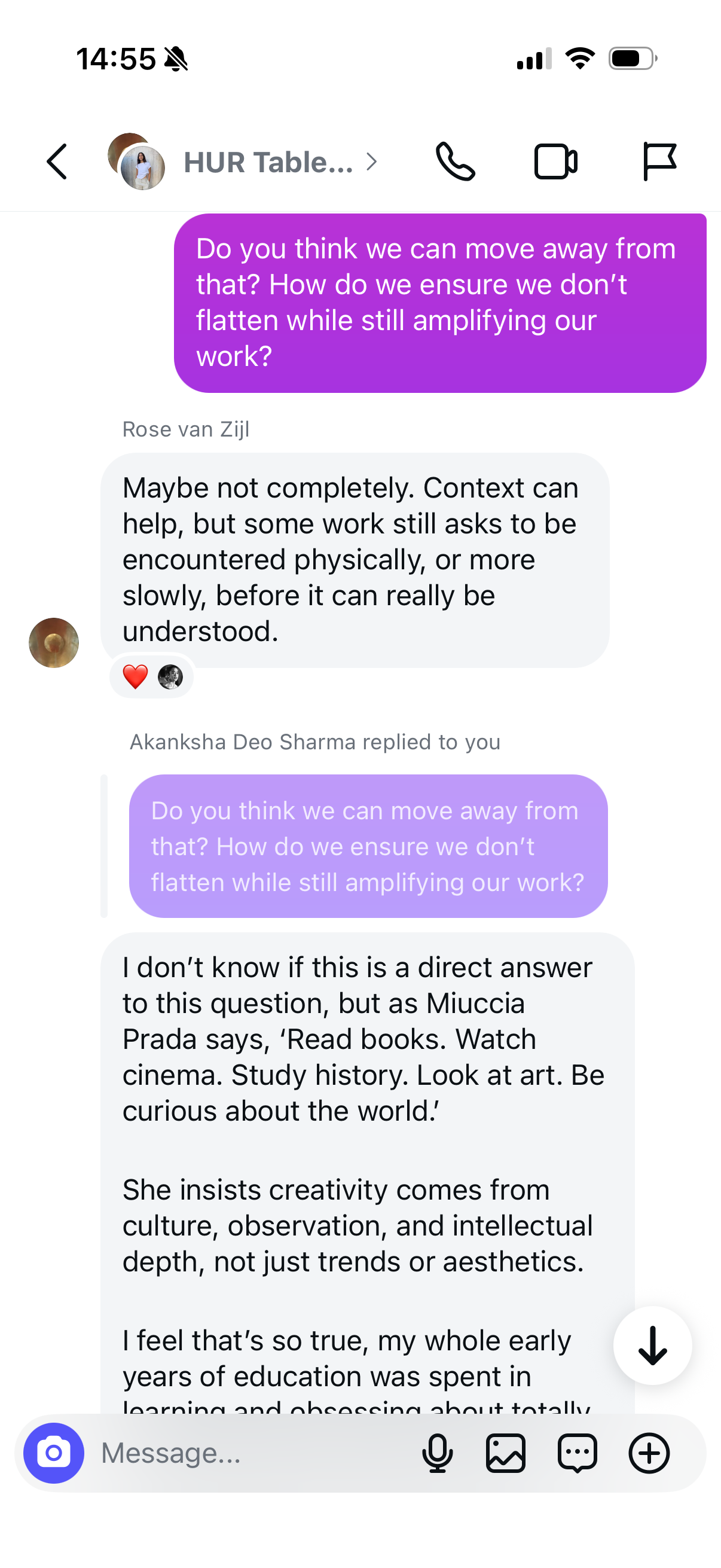
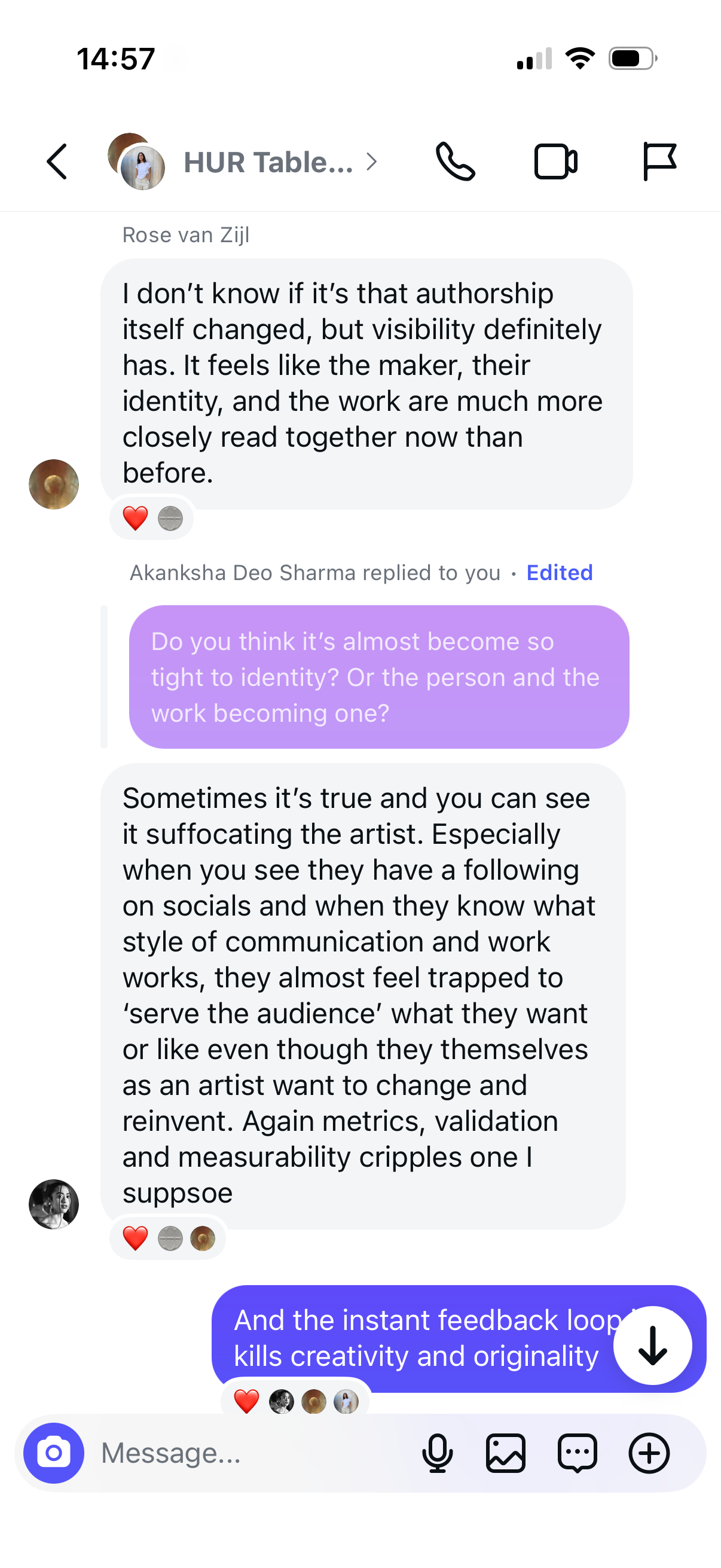
THE DANGERS OF FLATTENING WORK
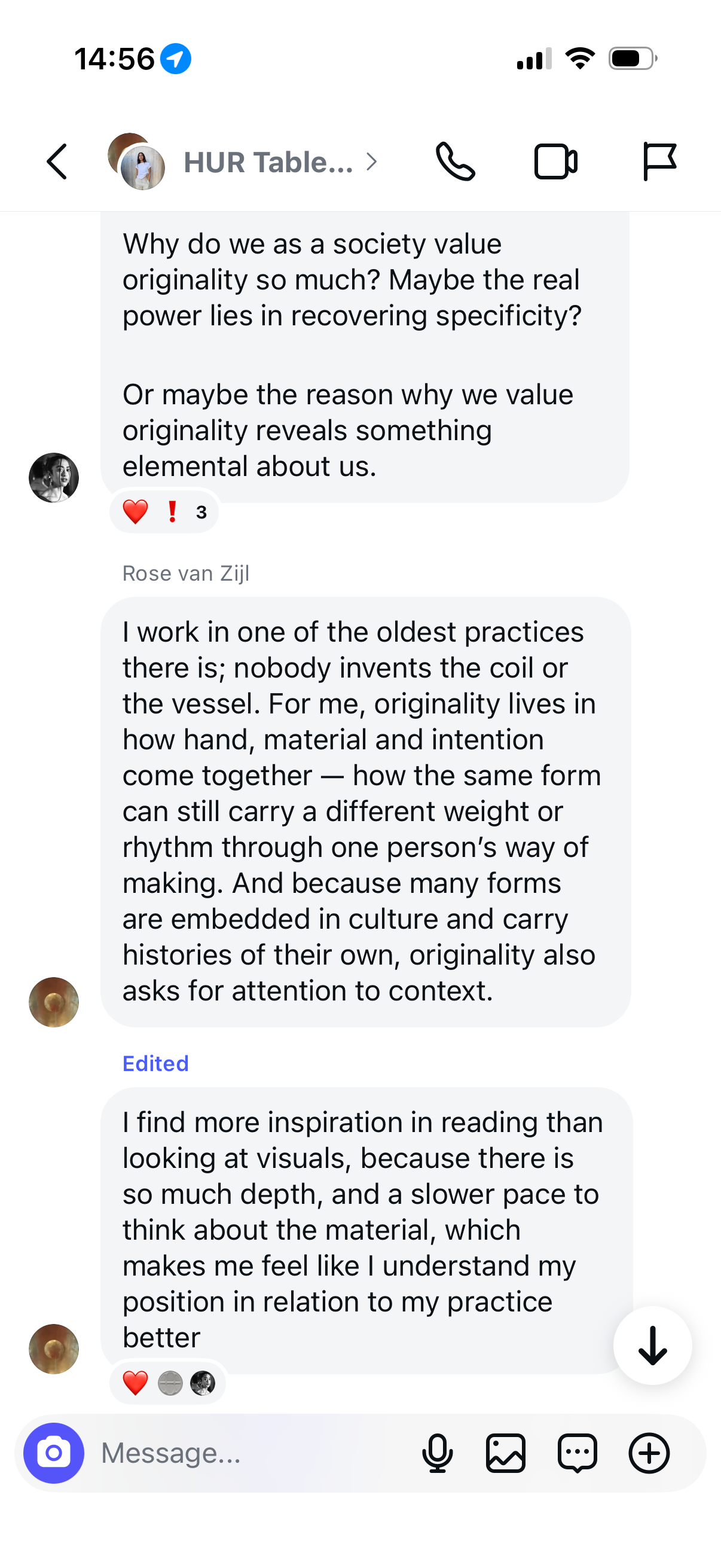
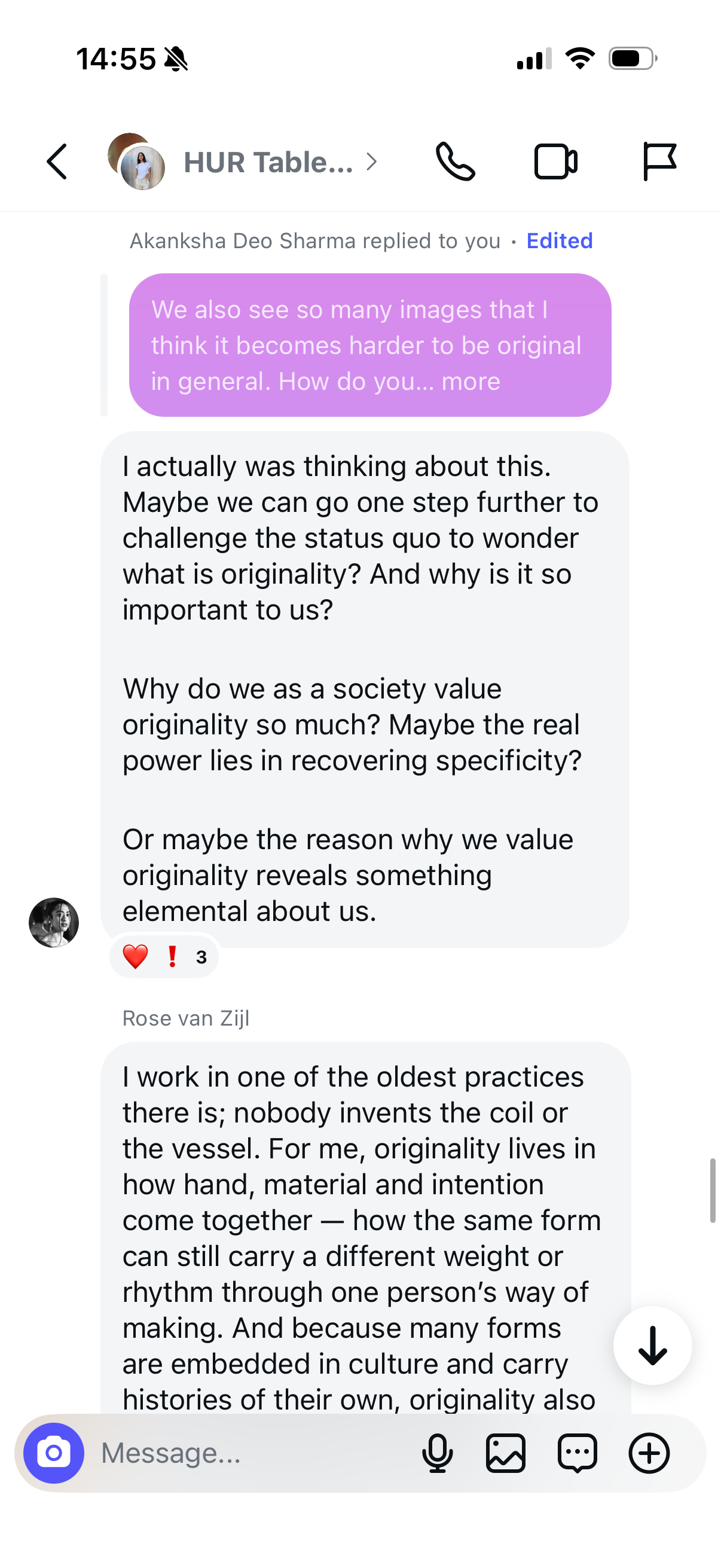
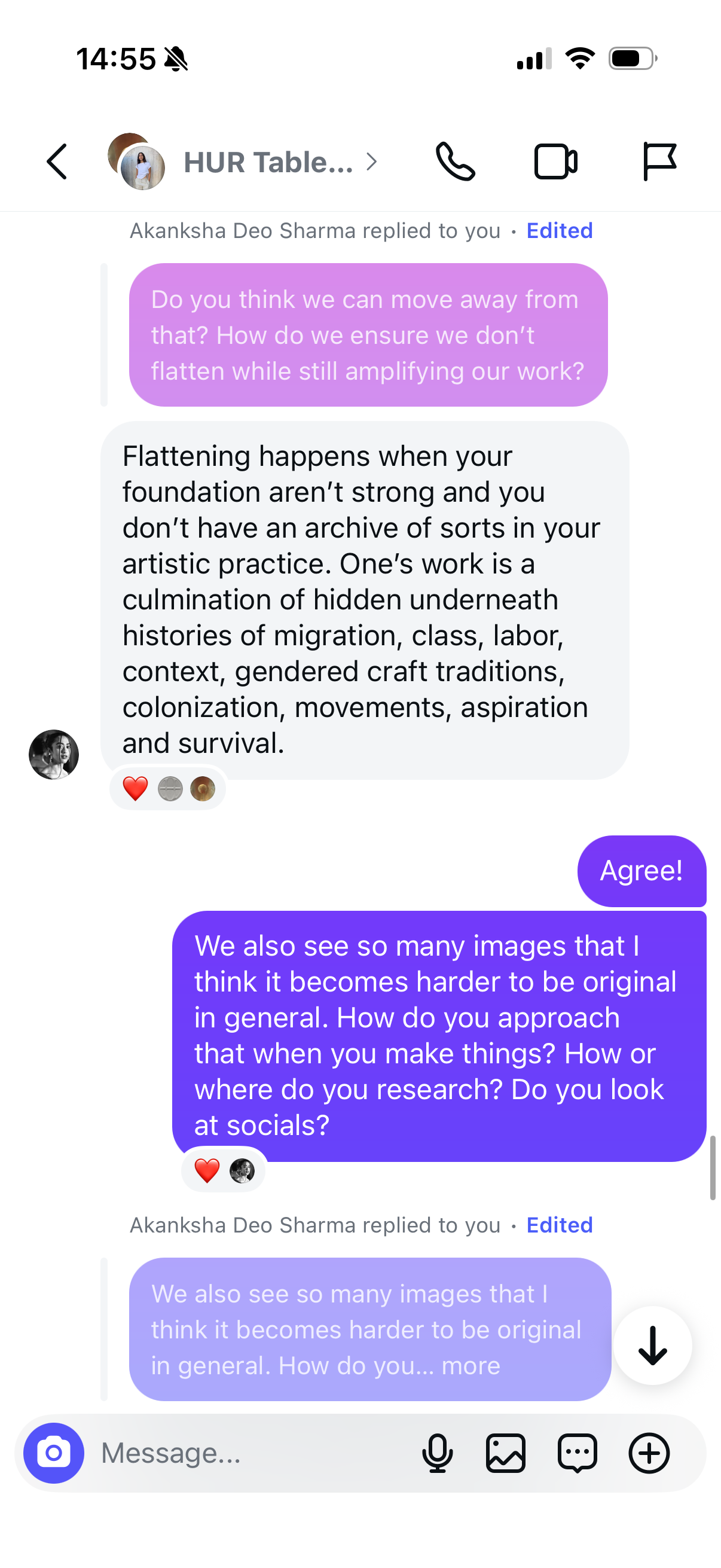
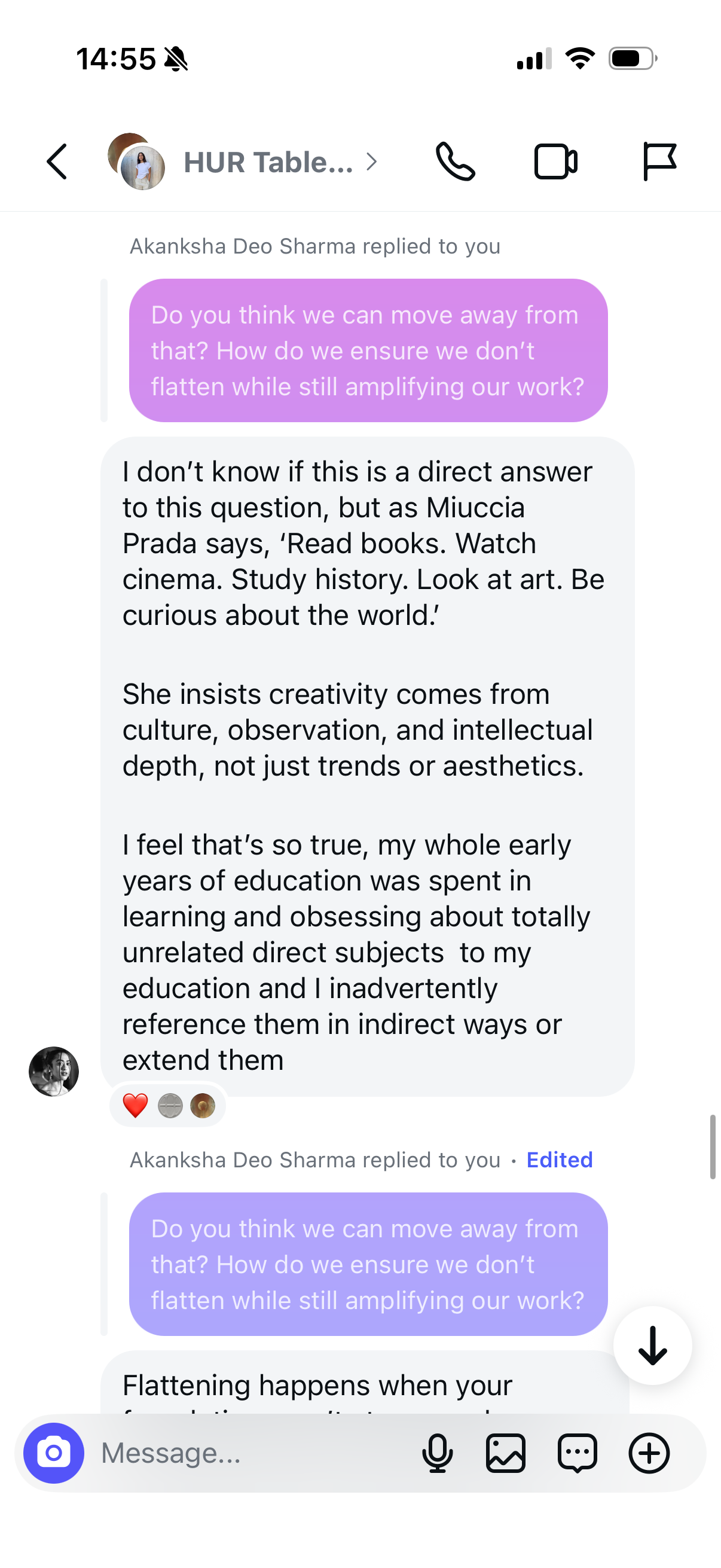
WHY DO WE VALUE CREATIVITY?
Valerie van Maarschalkerwaart, Isabel Ferreira de Sousa, Harriet Francis and Johanna Engvall, all HUR Club members, on the quiet cultural instruction to become smaller, what words like "clean" and "quiet" are really asking of women, and whether an aesthetic that liberates rather than contains us is even possible.