Clean, Quiet and in Control
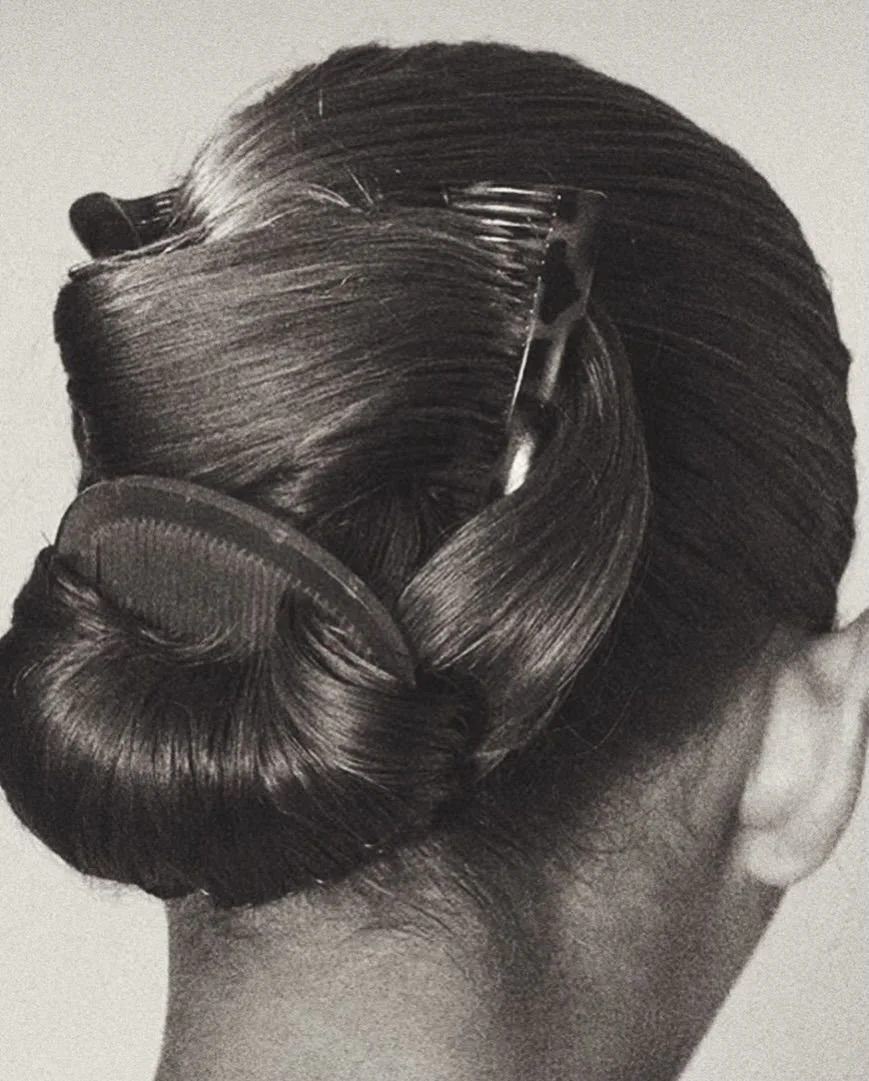
Clean, Quiet and in Control
with Valerie van Maarschalkerwaart, Isabel Ferreira de Sousa, Harriet Francis and Johanna Engvall
By Bonnie Langedijk
There is a certain kind of woman being sold to us right now, and she is getting smaller. Not only metaphorically, though that too. She is thinner than she was two years ago and she has learned to want very little out loud.
The strange part is the timing. By almost every external measure, women have never held more ground. Young women in the US are now considerably more likely than young men to hold a college degree — 47% versus 37% among 25-to-34-year-olds, according to Pew — and they take the majority of bachelor's and master's degrees awarded each year. The share of wives who match or out-earn their husbands has roughly tripled since the early 1970s, to nearly half of opposite-sex marriages. A record 11% of Fortune 500 companies are now run by women. And yet the look the culture keeps rewarding is the one moving in the opposite direction.
Clean girl, quiet luxury, the Ozempic body: the throughline seems to be about style, but really it’s reduction. The vocabulary gives it away — clean, quiet — each word arriving as a matter of taste, while actually asking a woman to take up less room. And taste has a way of passing an instruction off as a preference. None of this is new. John Berger noticed long ago that men act while women appear. Naomi Wolf argued that beauty standards tighten precisely as women gain ground. Susan Bordo read the slender body as a language of control. What's new is how frictionless it has become: Ozempic reads as wellness, restraint reads as confidence, and the whole performance of shrinking has been rebranded as self-care, which makes it far harder to argue with than a corset.
So it's worth asking why, at this particular moment, the reigning image of womanhood is one of taking up less: neutral, contained, edited down into something expensive and unobjectionable. Is that a coincidence of fashion, or the oldest response there is in this season's packaging: a backlash that looks so much like taking care of yourself you can hardly call it one?
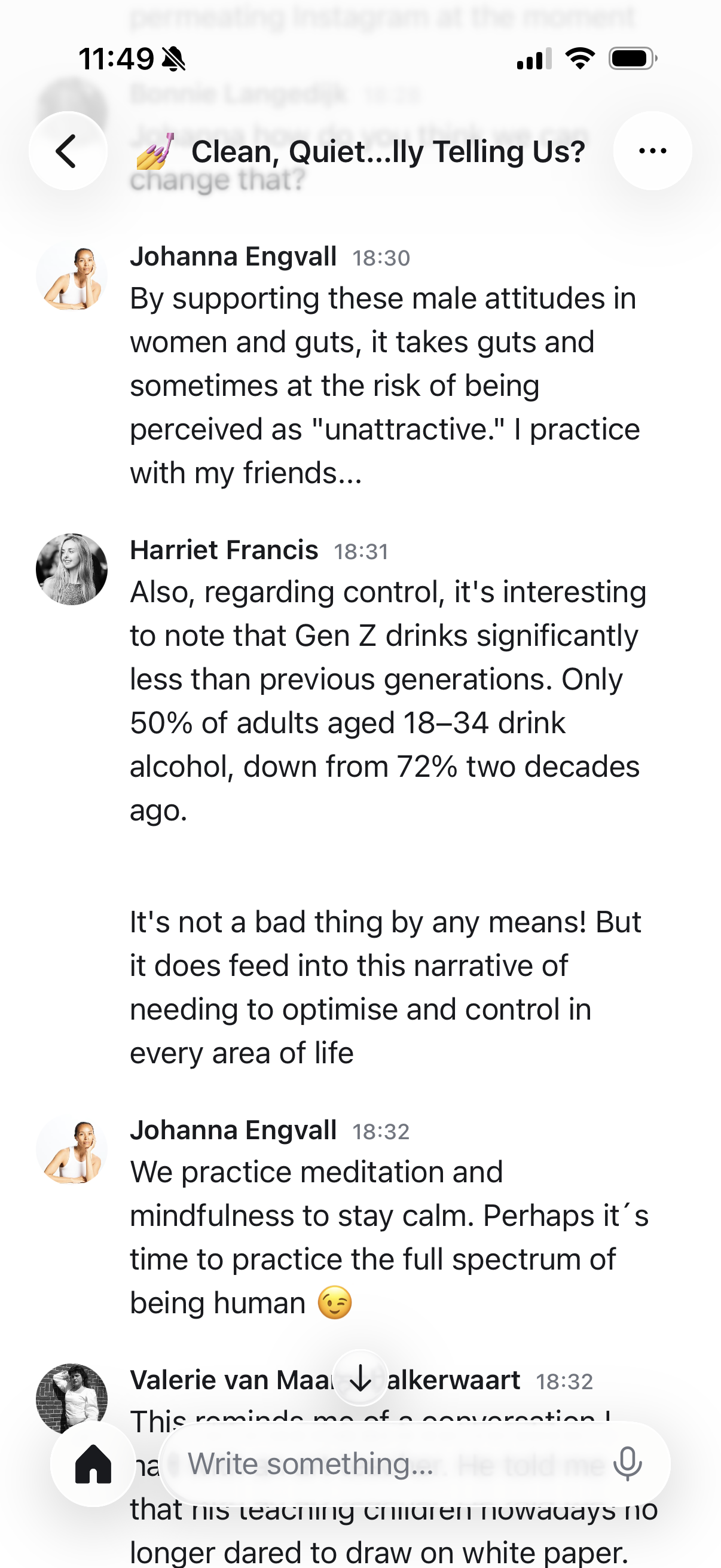
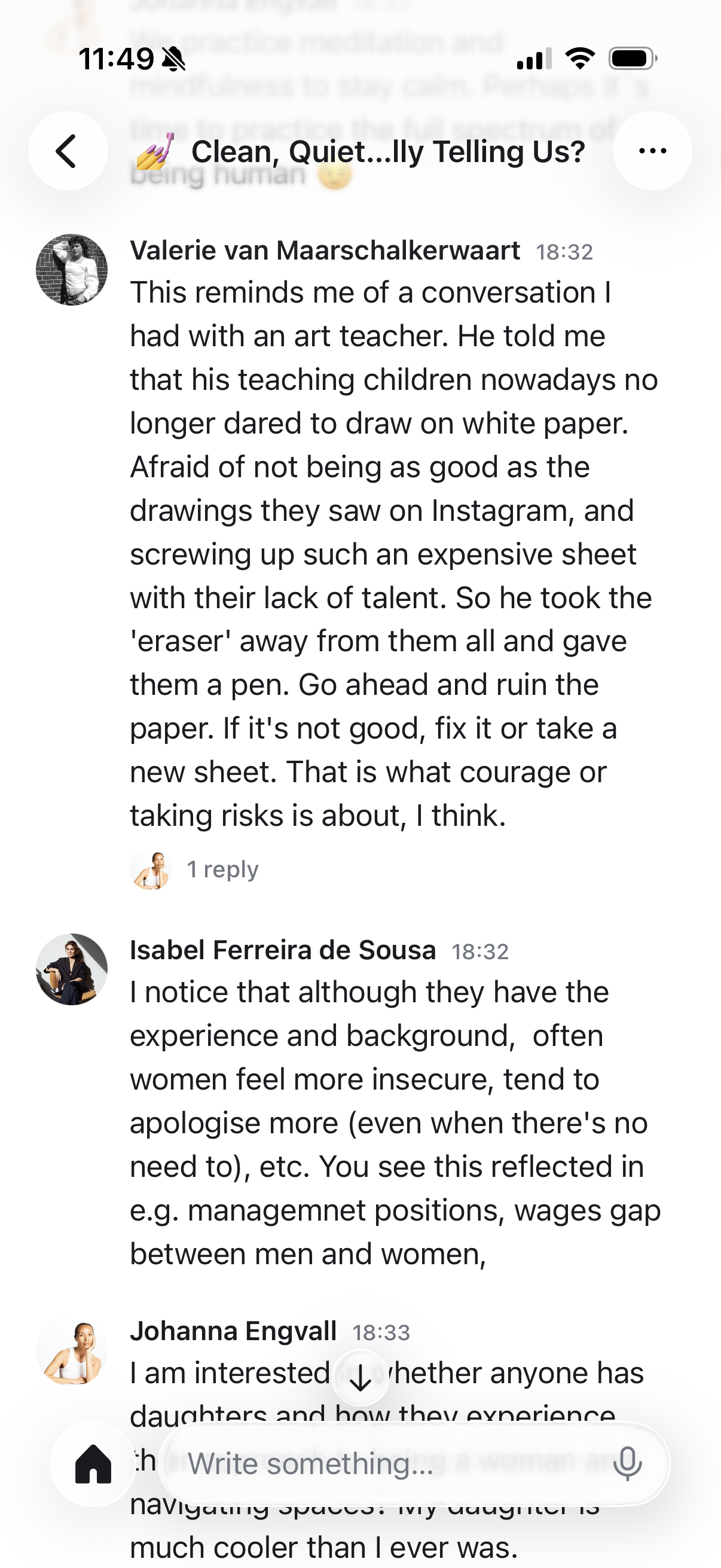
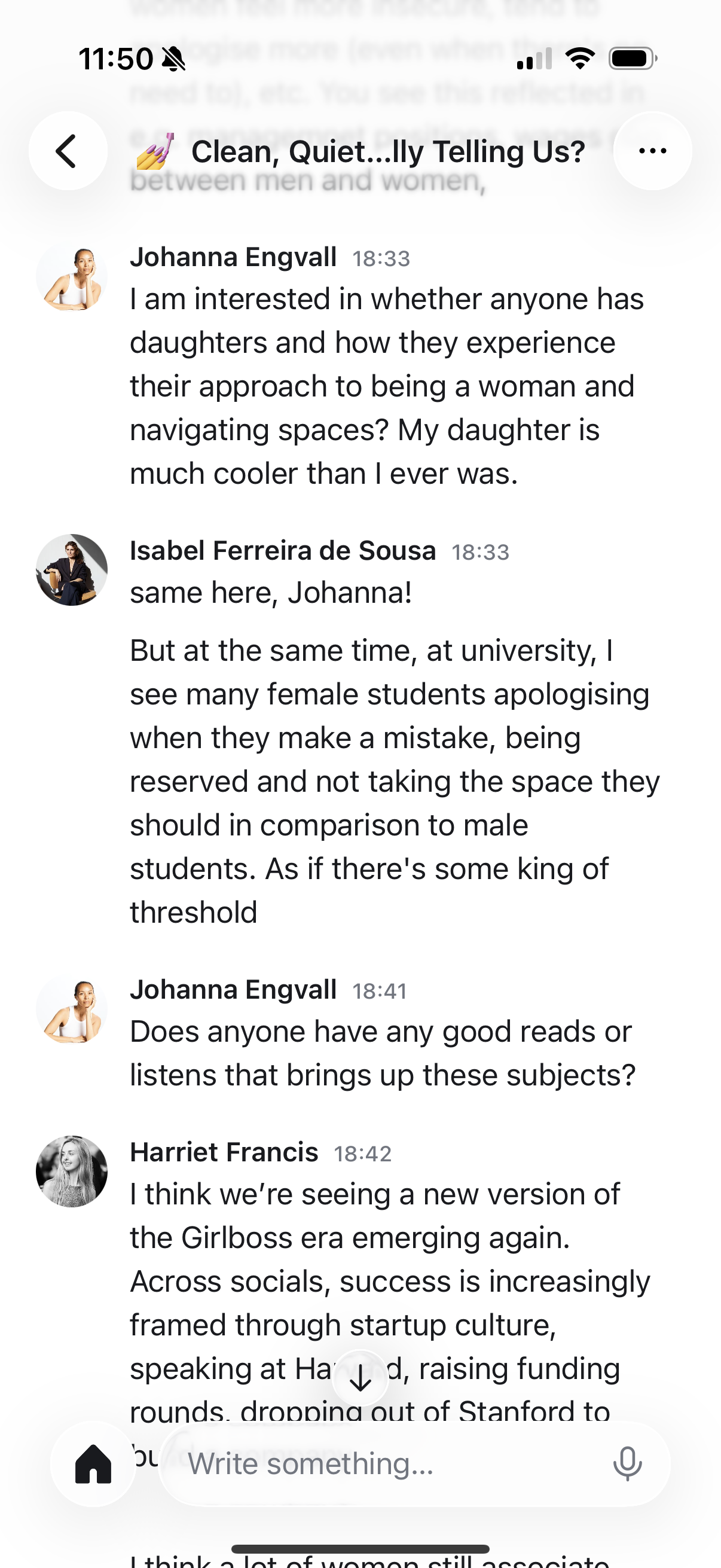
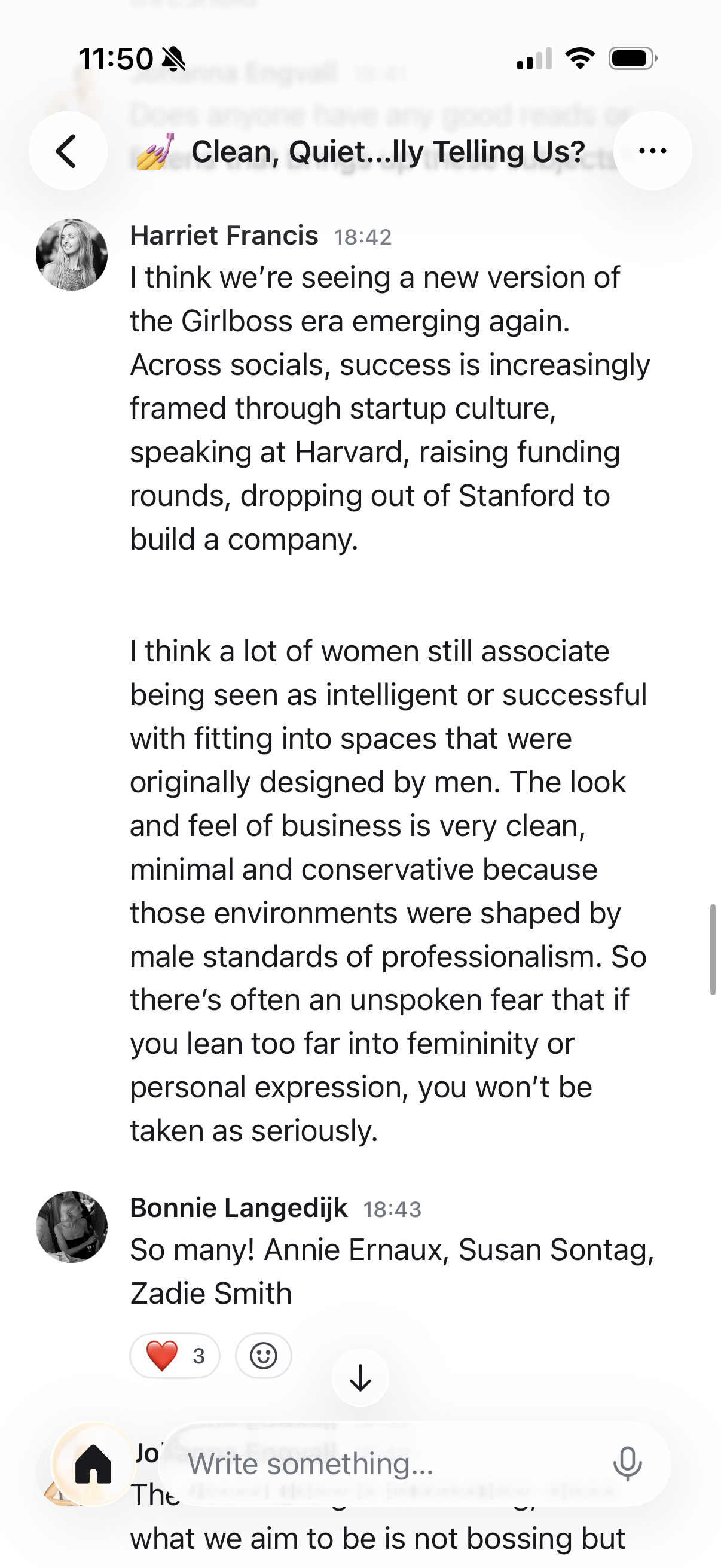
We asked four HUR Club members who think seriously about bodies, power and taste what "clean" and "quiet" are really asking of us, who benefits when a woman refines herself into the background, and what a genuinely liberated aesthetic might look like.
THE ORIGIN OF THESE TRENDS
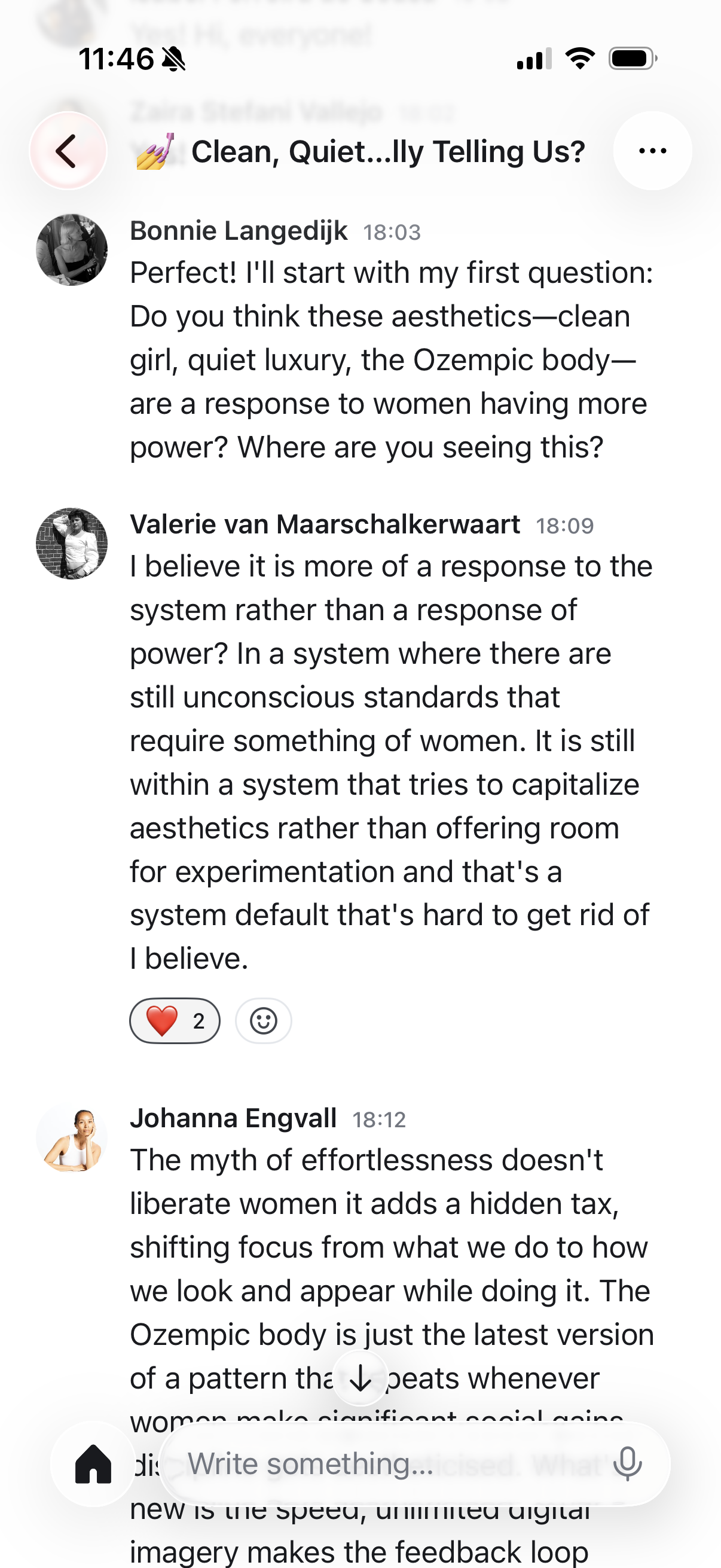
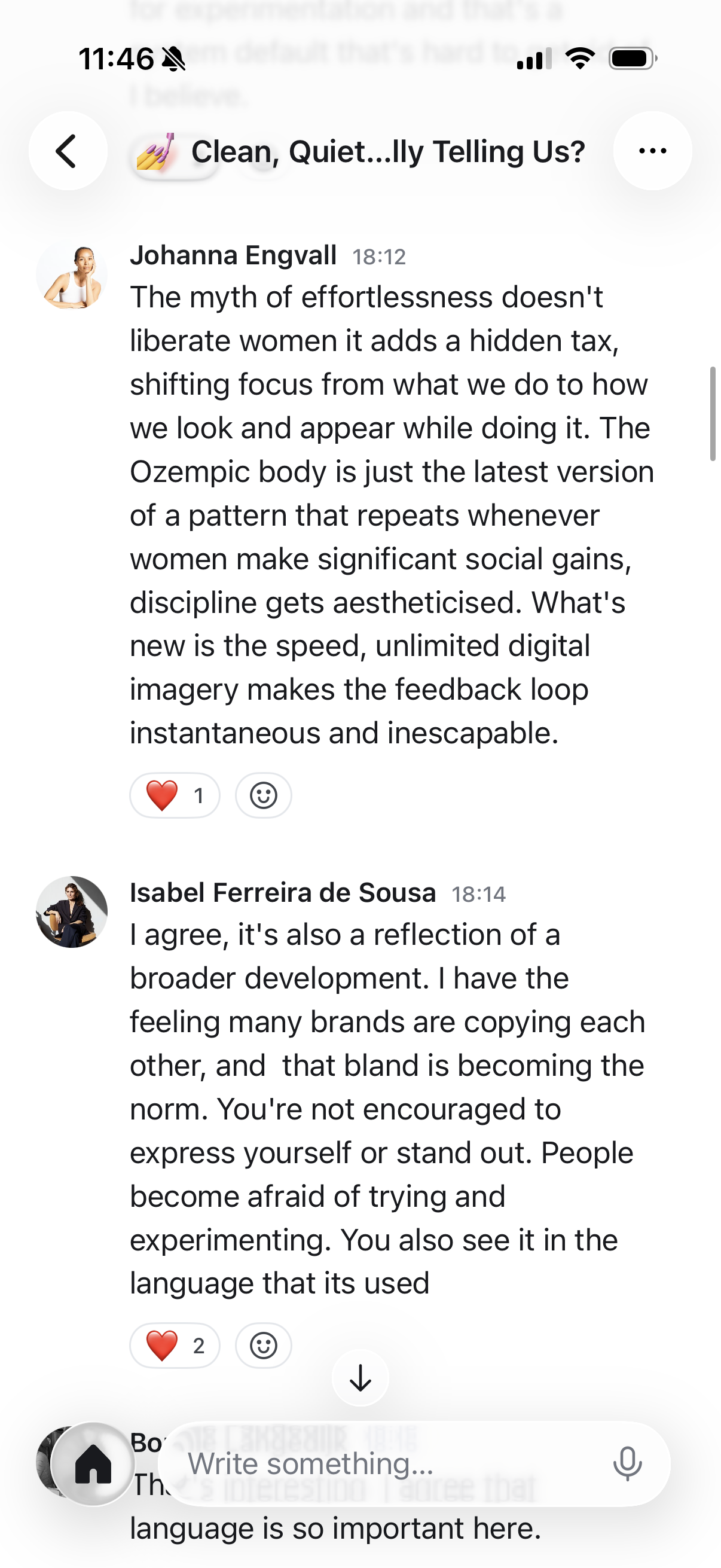
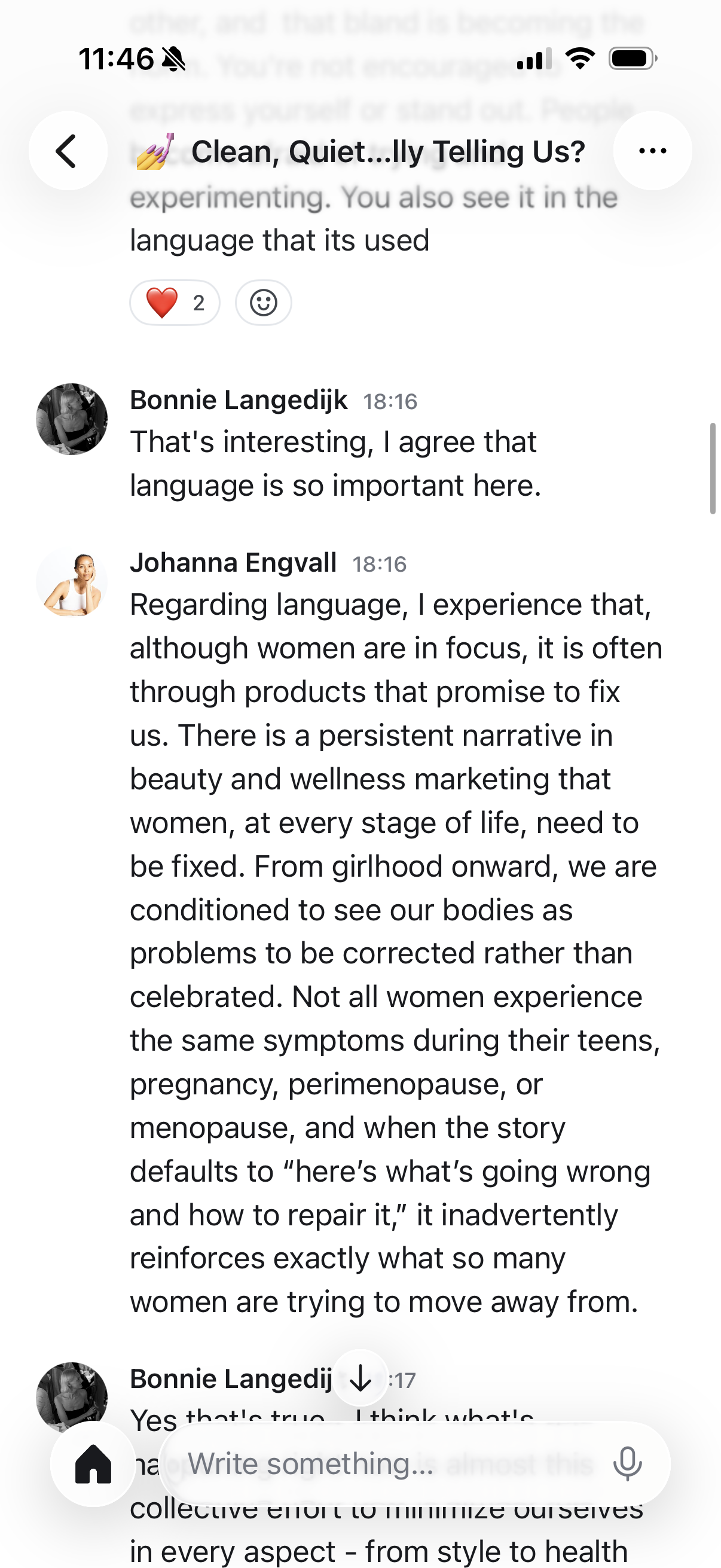
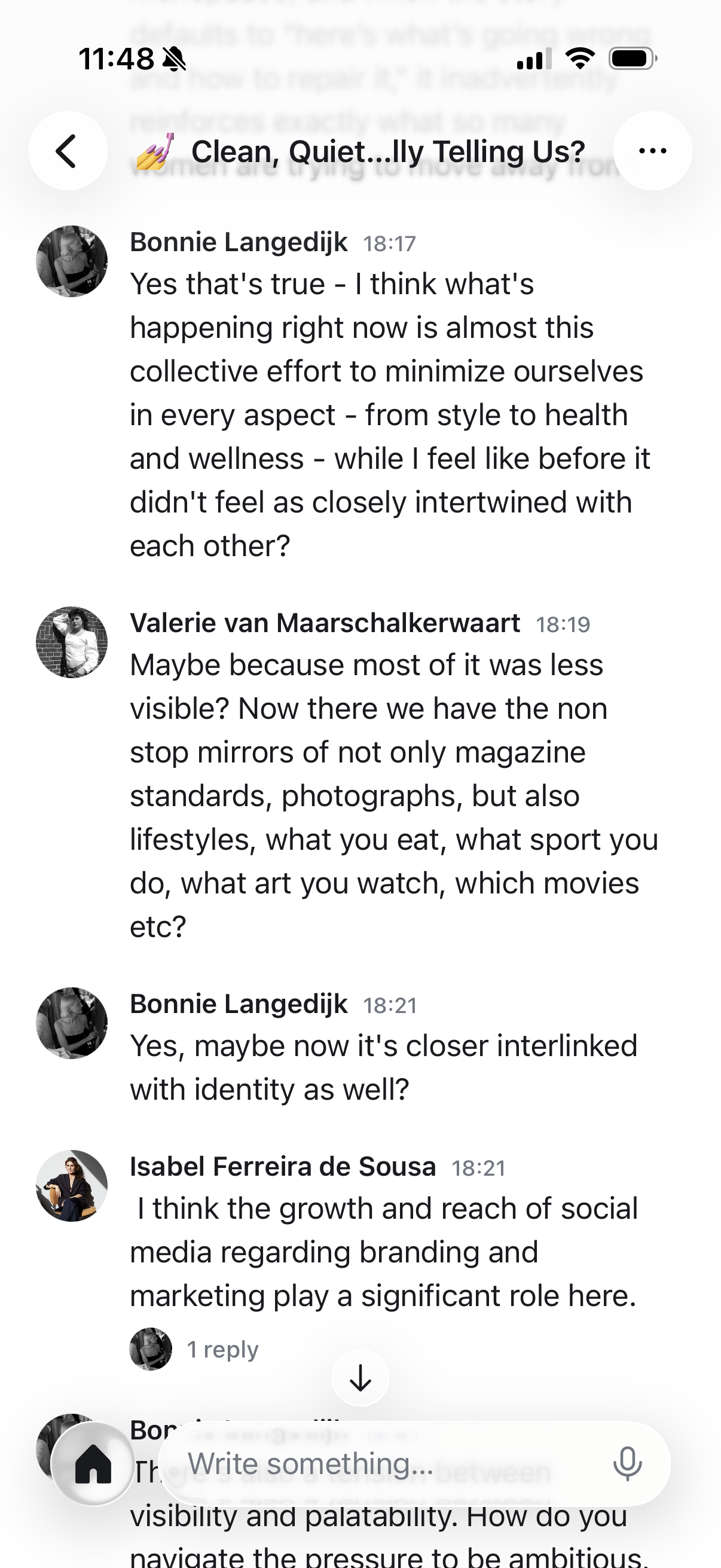
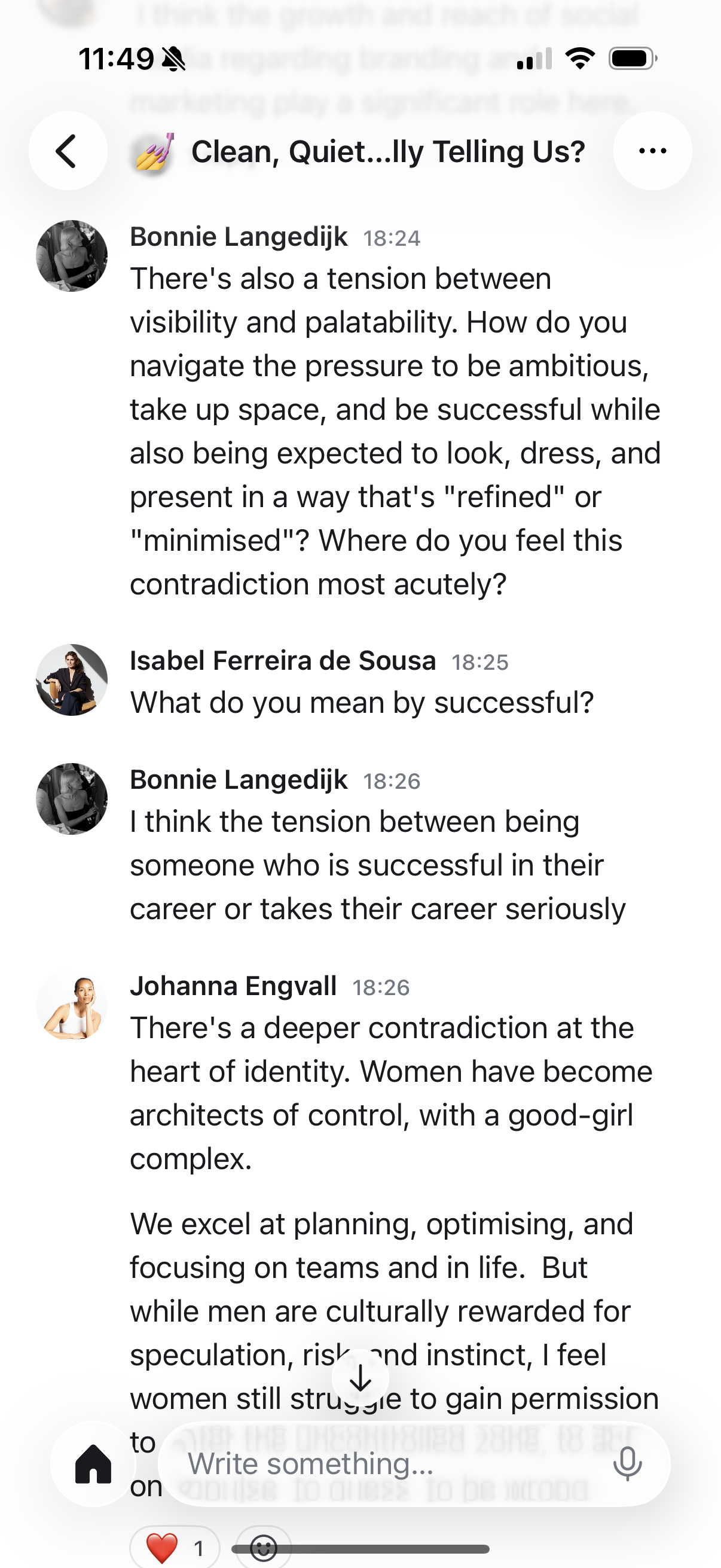
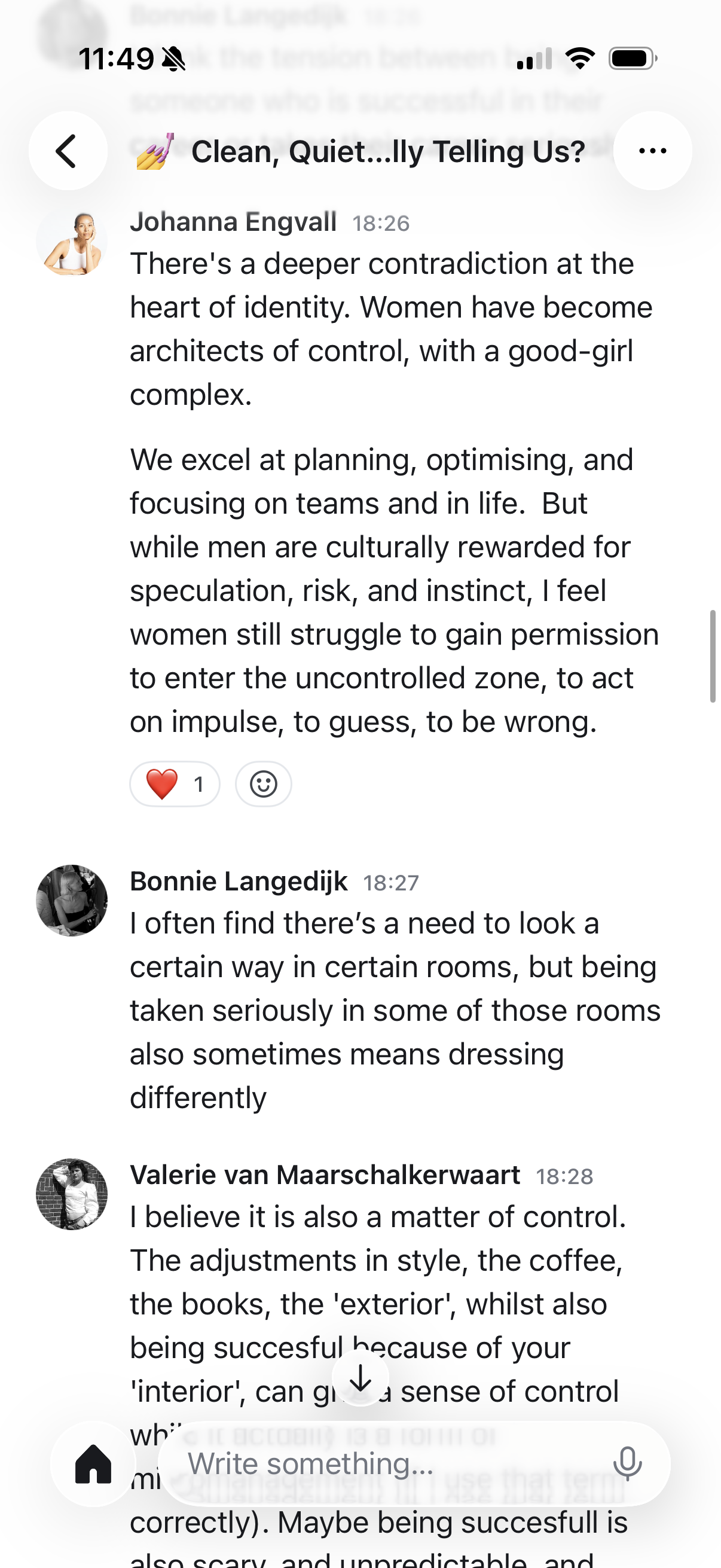
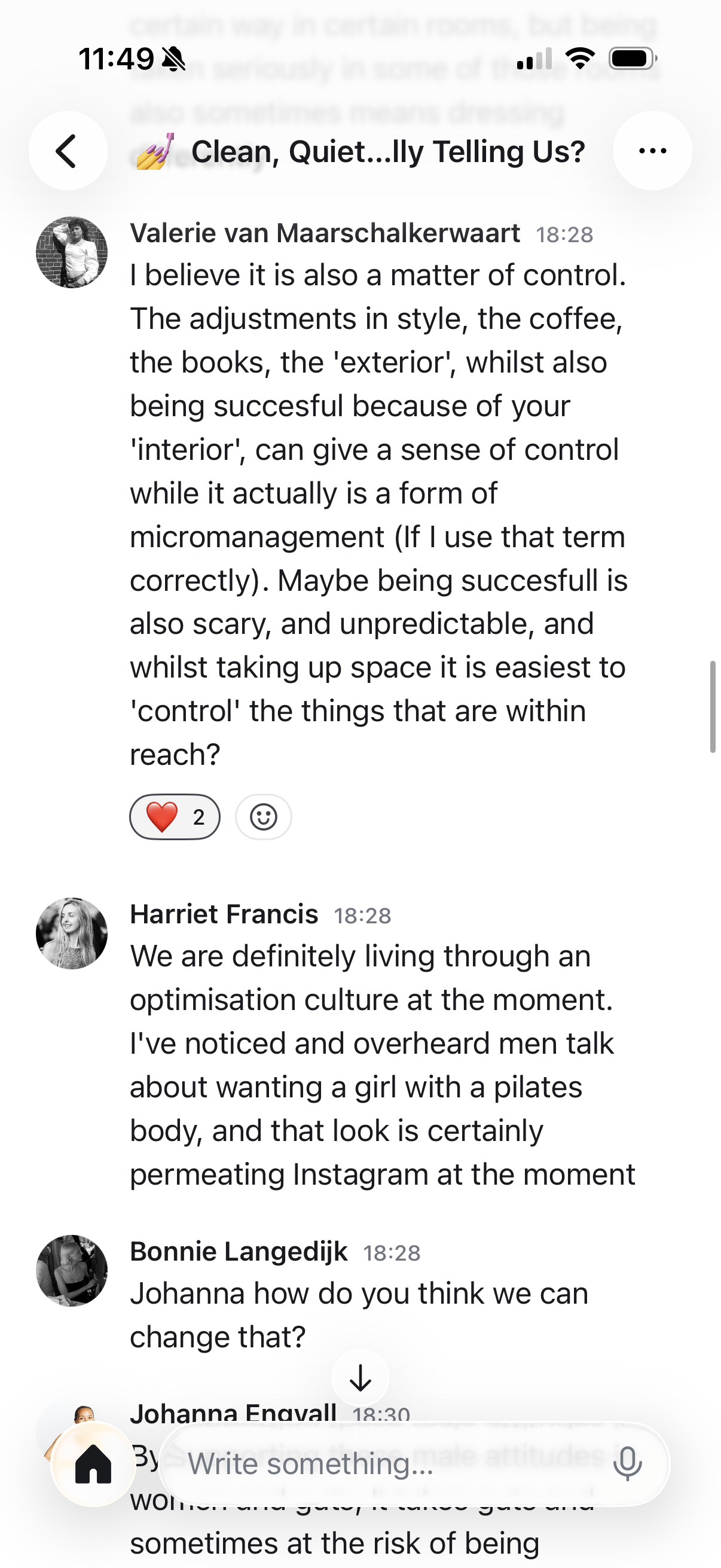
THE TENSION BETWEEN VISIBILITY AND PALATABILITY
A GENERATIONAL SHIFT
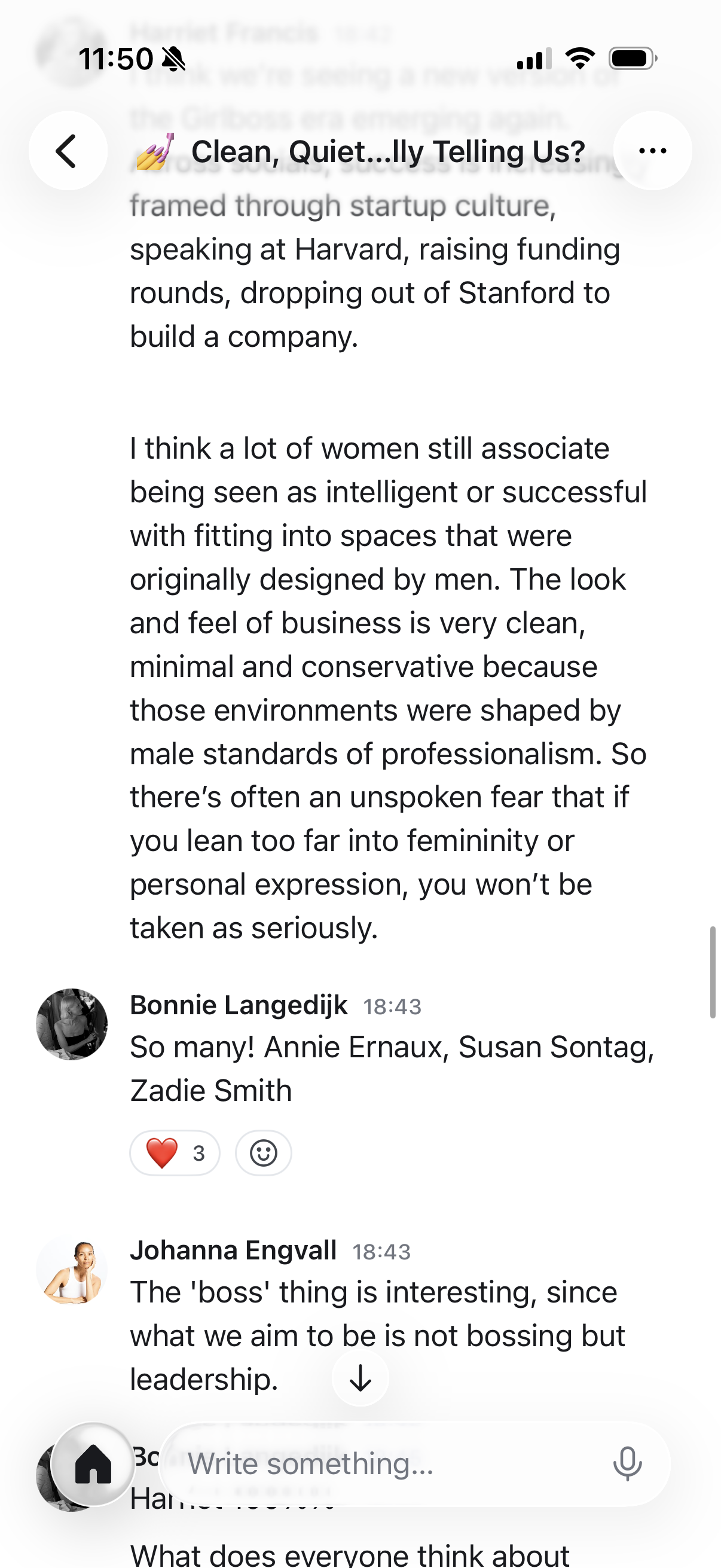
IS CHANGE EVEN POSSIBLE?
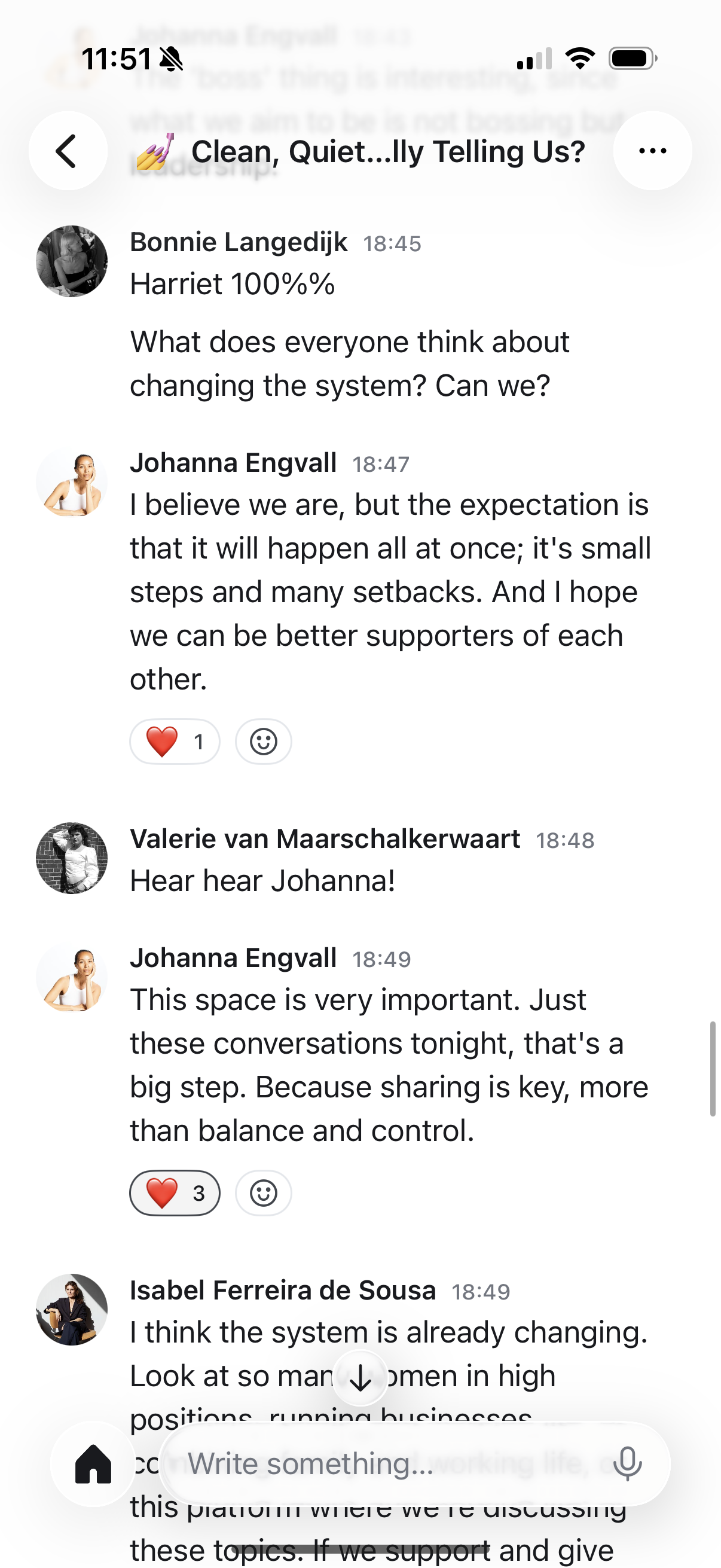
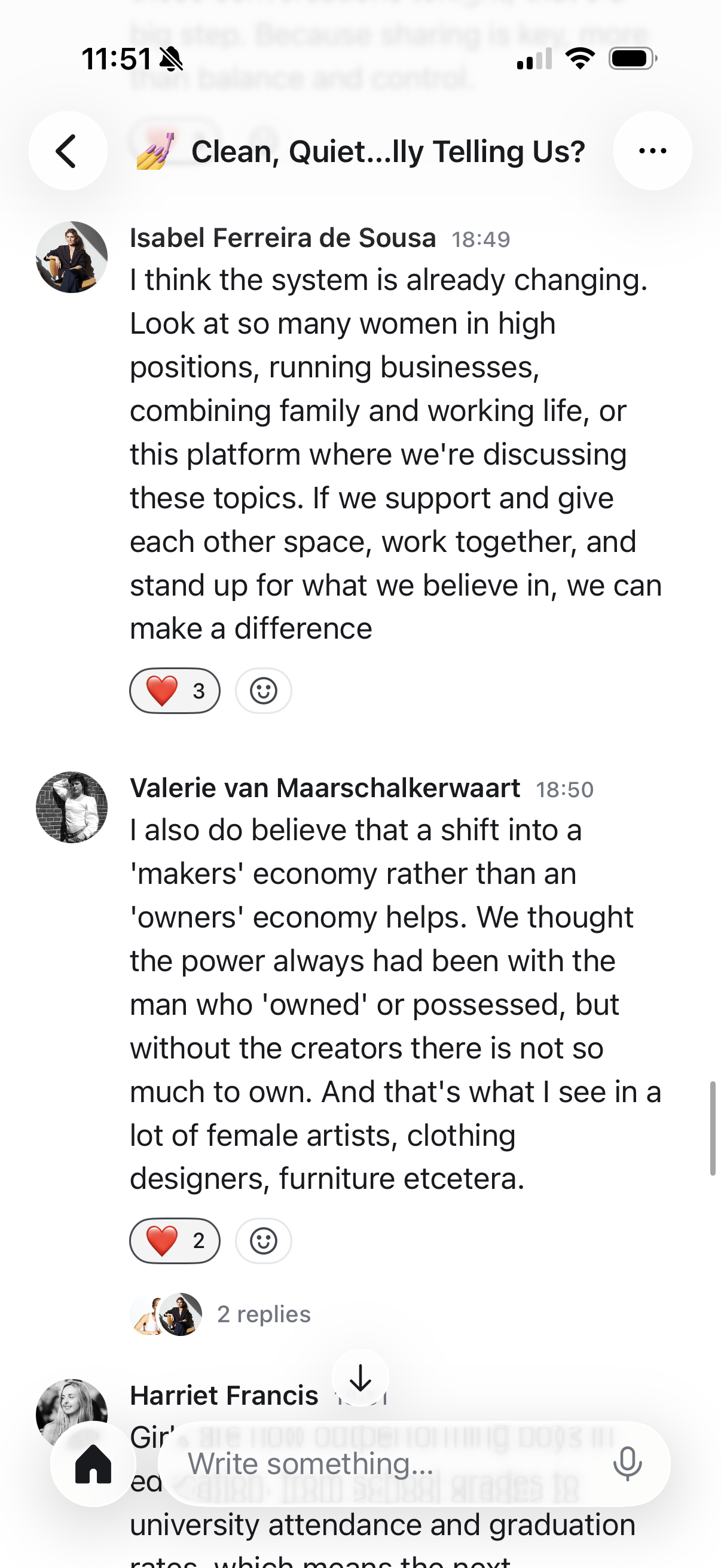
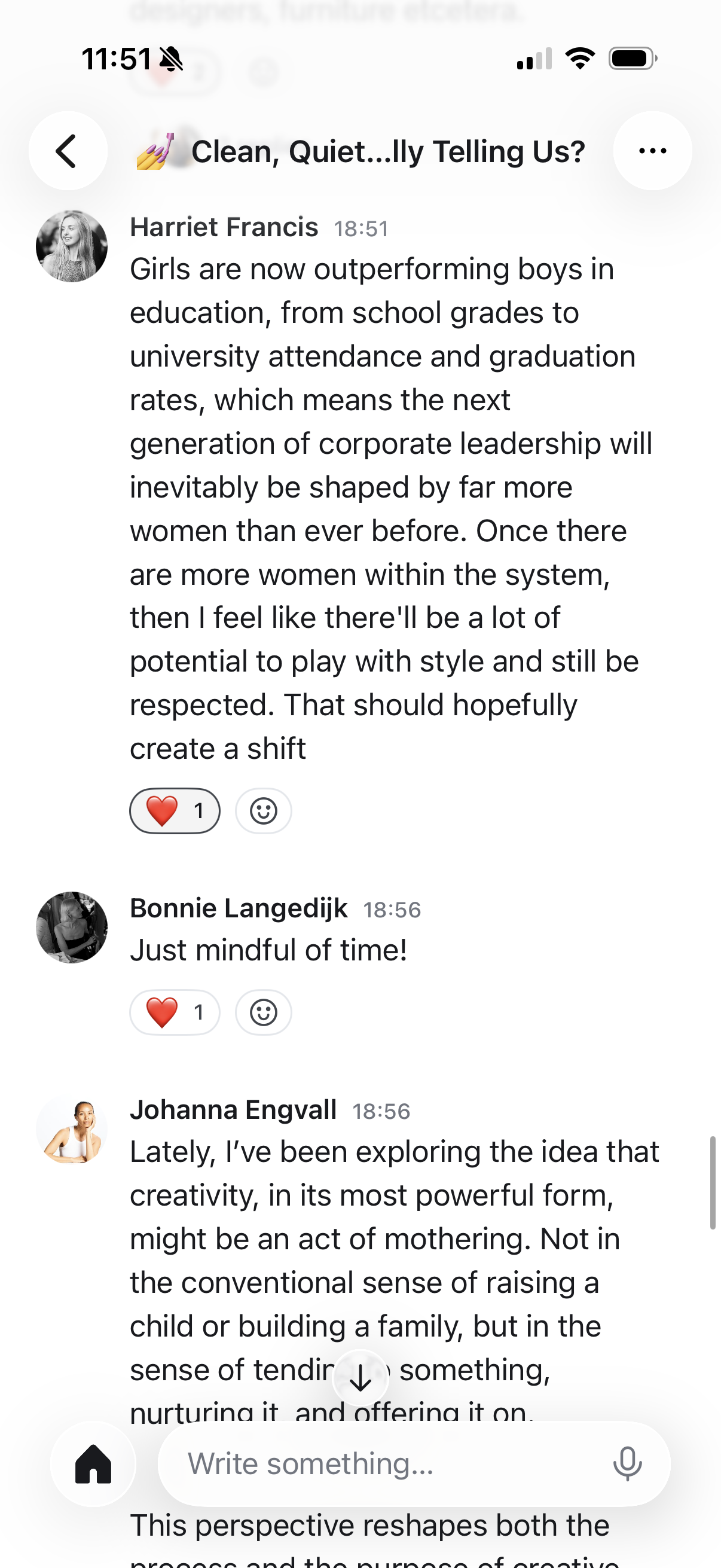
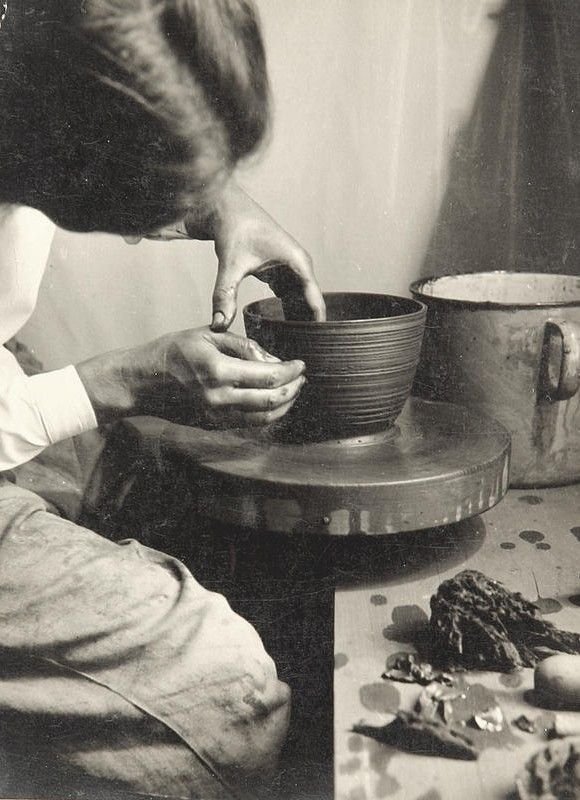

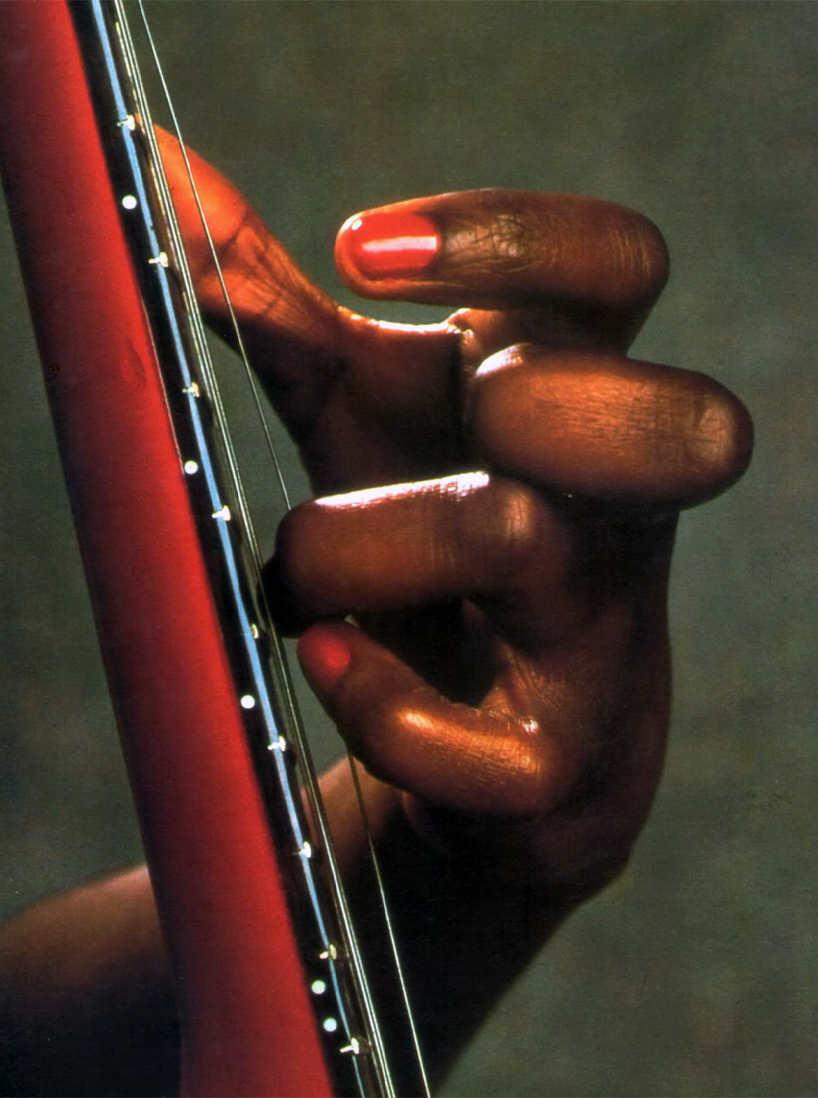
Valerie van Maarschalkerwaart, Isabel Ferreira de Sousa, Harriet Francis and Johanna Engvall, all HUR Club members, on the quiet cultural instruction to become smaller, what words like "clean" and "quiet" are really asking of women, and whether an aesthetic that liberates rather than contains us is even possible.