Where Did Messy Go?
with Elinor York Noble, Emily Petruccione, Elizabeth Giuggio, Giedre Kazokaite and Alexis Tuersley
By Bonnie Langedijk
For a while, we had permission. Man Repeller made dressing to repel a point of pride. Girls showed women making the worst decision available. Fleabag admitted she had no idea what she was doing. Whatever we think of them now, and there is plenty to think, they offered a picture of womanhood with texture: contradiction, error, the unflattering angle left in.
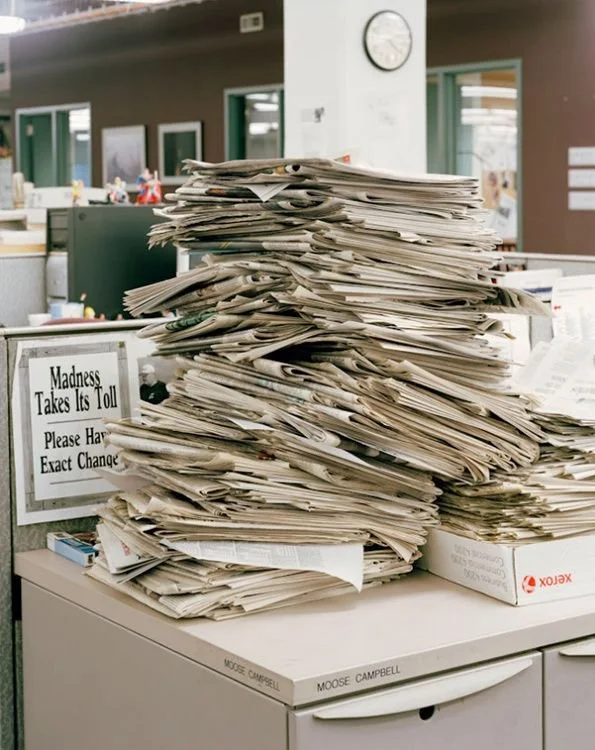
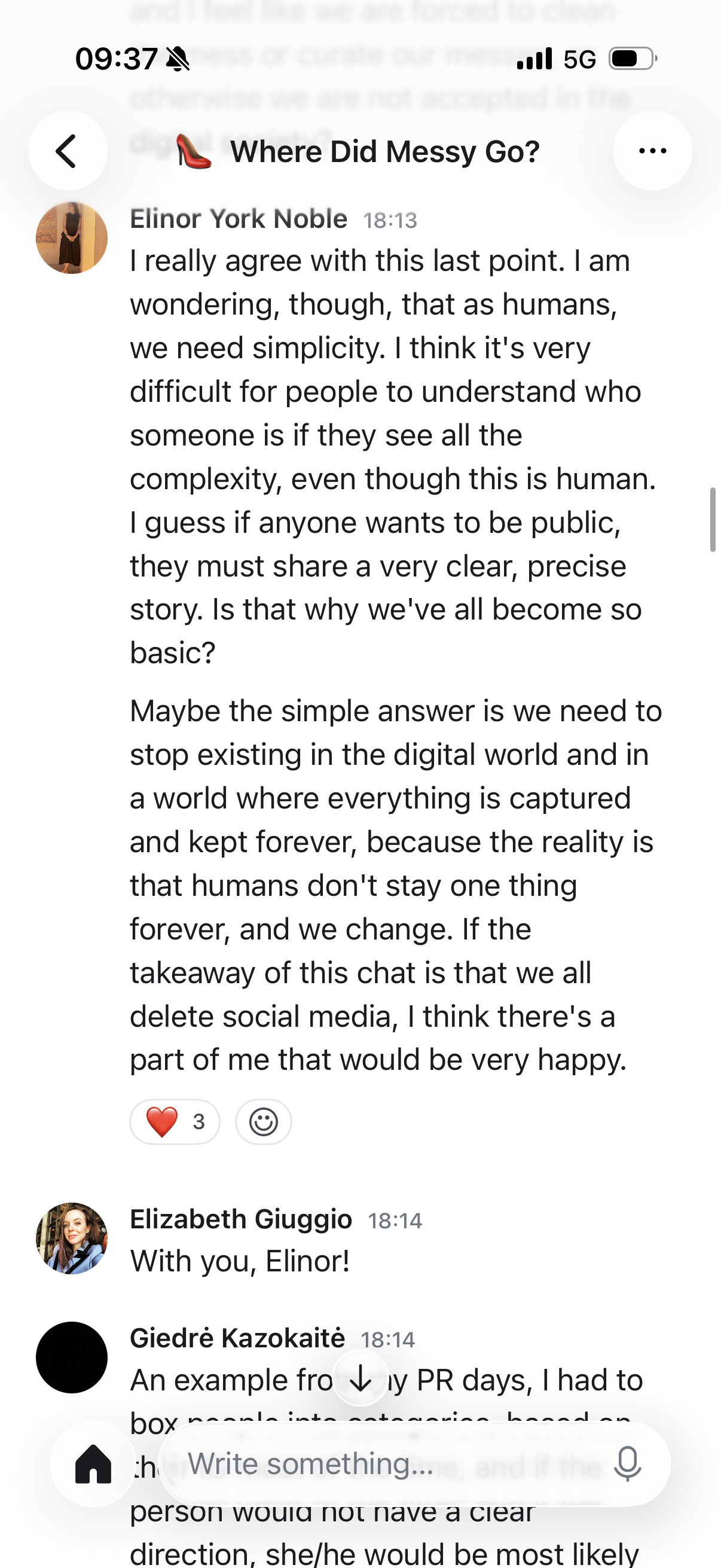
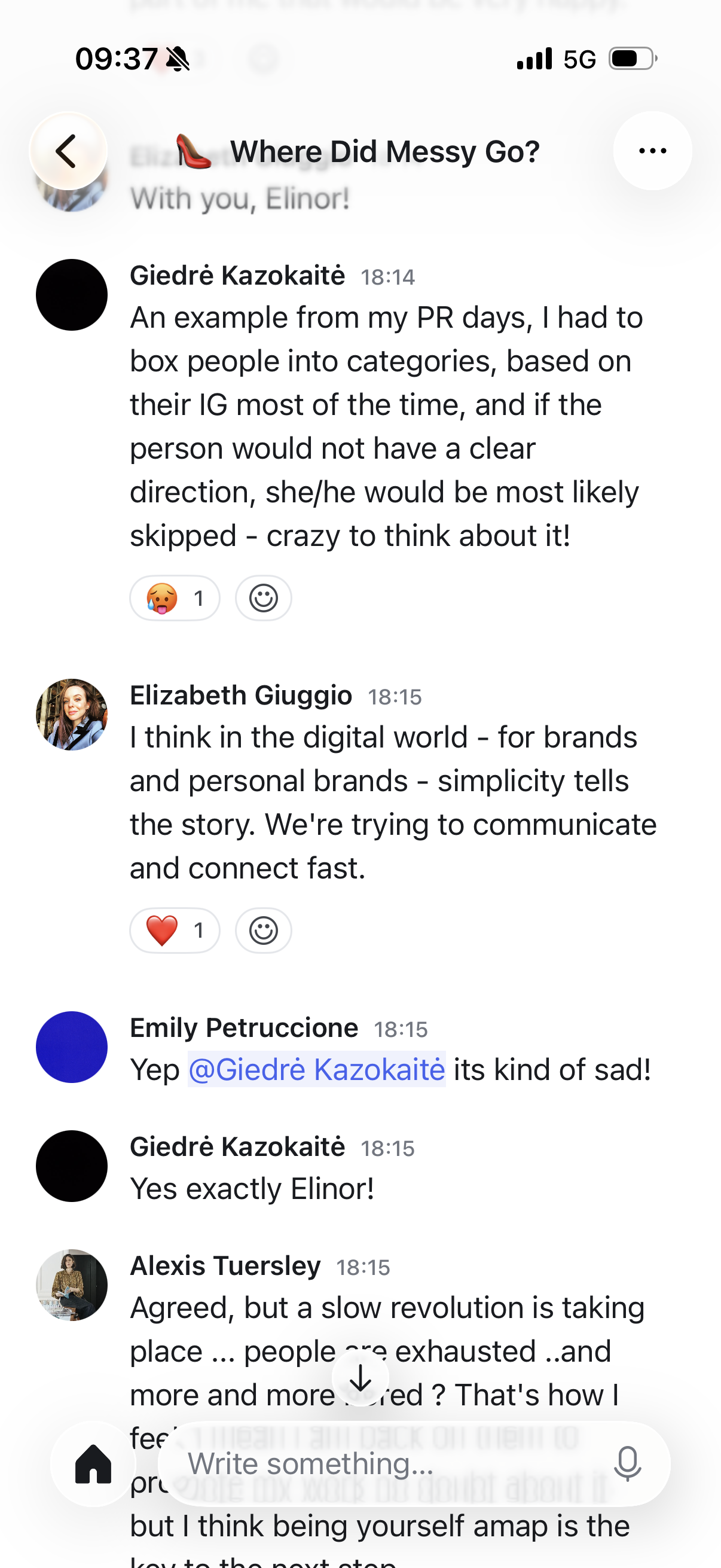
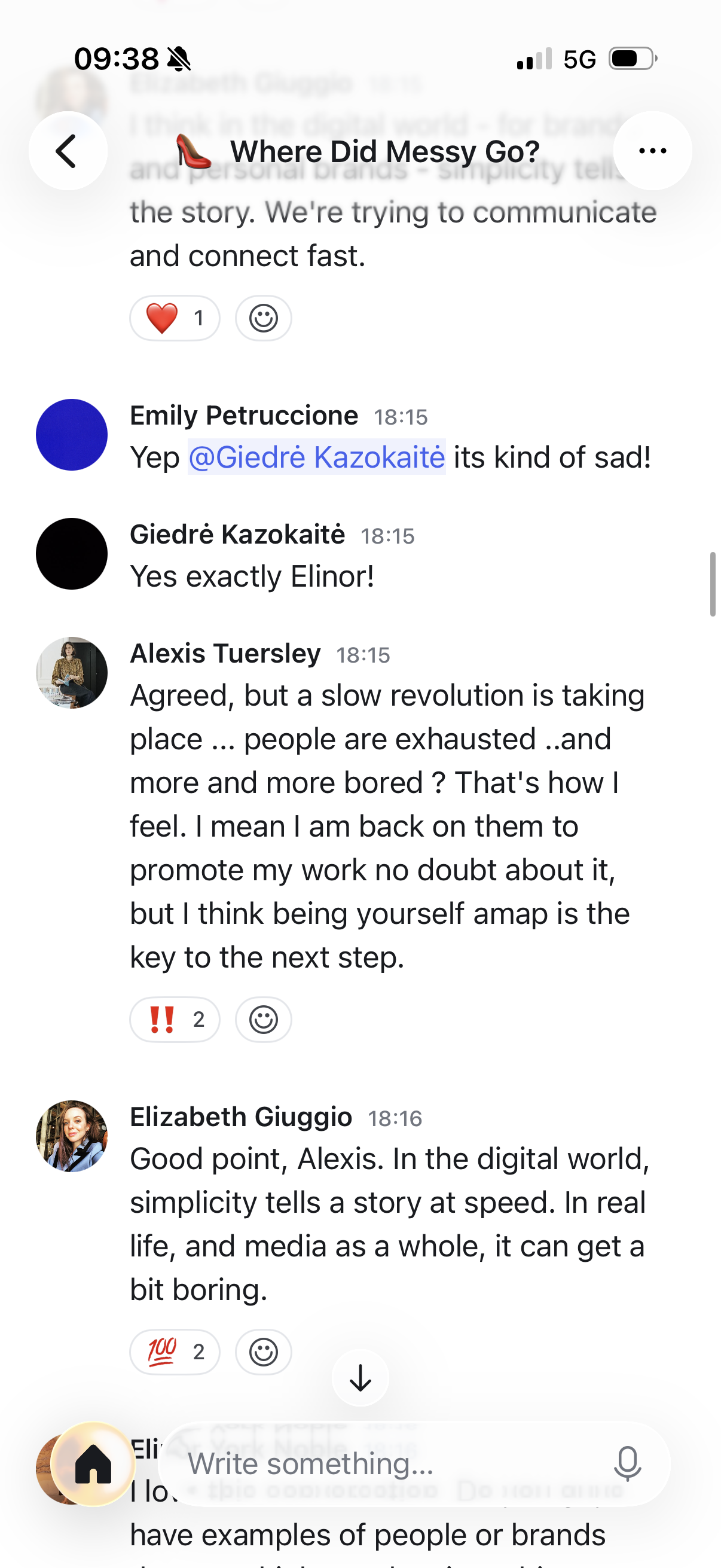
Somewhere in the last decade, that picture got tidied away. The mess is still there, technically. It’s in the photo dump, the “unfiltered” caption, the deliberately undone hair. But it has been art-directed. Imperfection has become a finish, like matte or gloss, applied after the fact. The morning routine is optimised, the apartment is a moodboard and the breakdown arrives with a lesson attached.
None of this is entirely new. In the 1950s, Erving Goffman described social life as a front stage and a back stage: the self we perform and the self we keep in the wings. In 2003, a Duke University study named what its female students were describing: “effortless perfection,” the expectation to be smart, accomplished, fit, beautiful and popular, with none of the effort showing. What’s changed is that the back stage has been absorbed into the show. When vulnerability performs well, even falling apart gets scheduled.
It’s also worth being honest about the nostalgia. The messy women we remember were mostly white, mostly well-connected, and mostly cushioned by the kind of safety net that makes a bad decision survivable. Mess has always been easier for some people to afford than others. So maybe the question isn’t whether messiness disappeared. Maybe it’s whether it was ever as free as it looked, and where it lives now: the group chat, the close friends list, the 1am voice note no one else will hear.
Where is there still room to be unfinished? Can we still make a mistake that doesn’t become content, or has realness become one more thing we have to get right?
For this edition of HUR Takes, we asked five HUR Club members about the messy women who shaped them, who actually gets to be a work in progress, and what we’ve edited out of ourselves to fit the picture.
WHO IS YOUR MESSY WOMAN
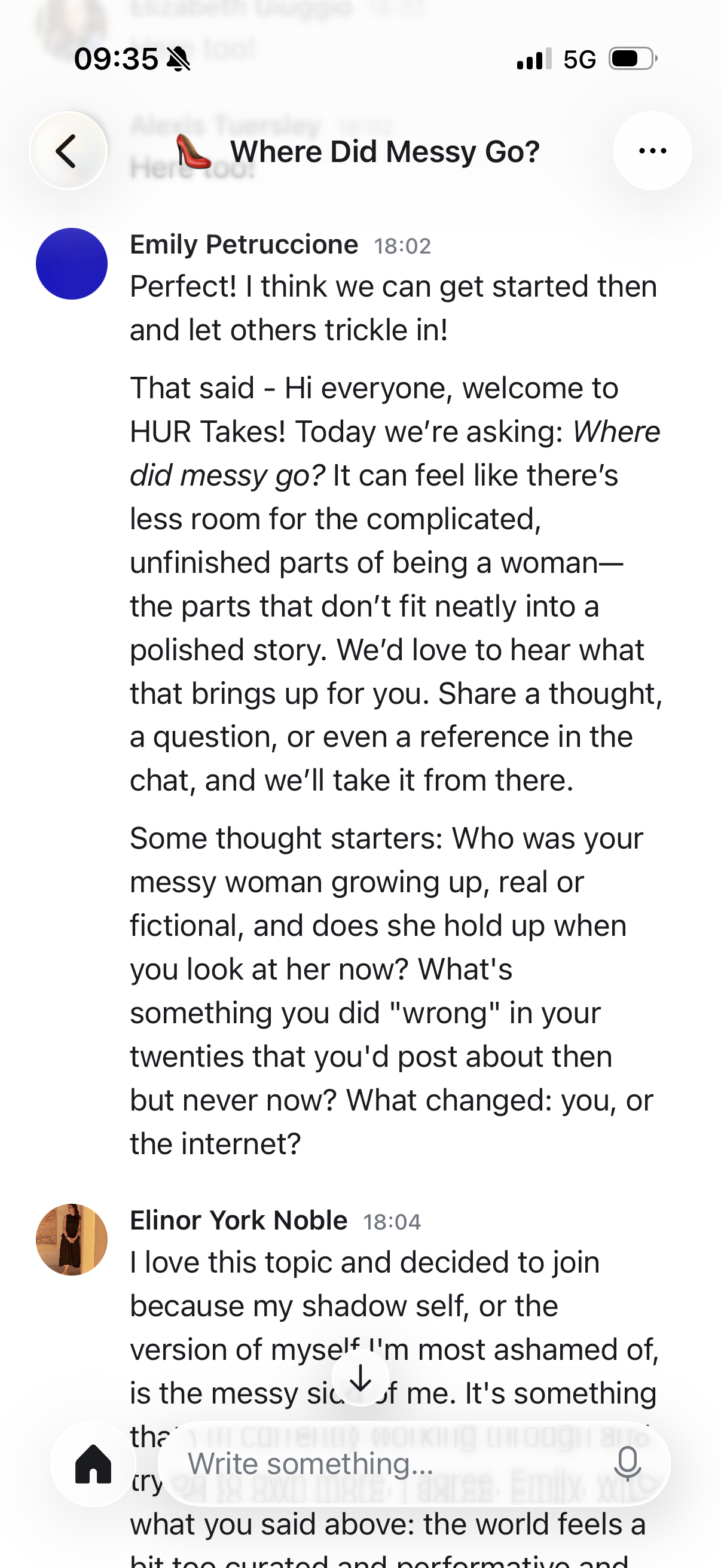
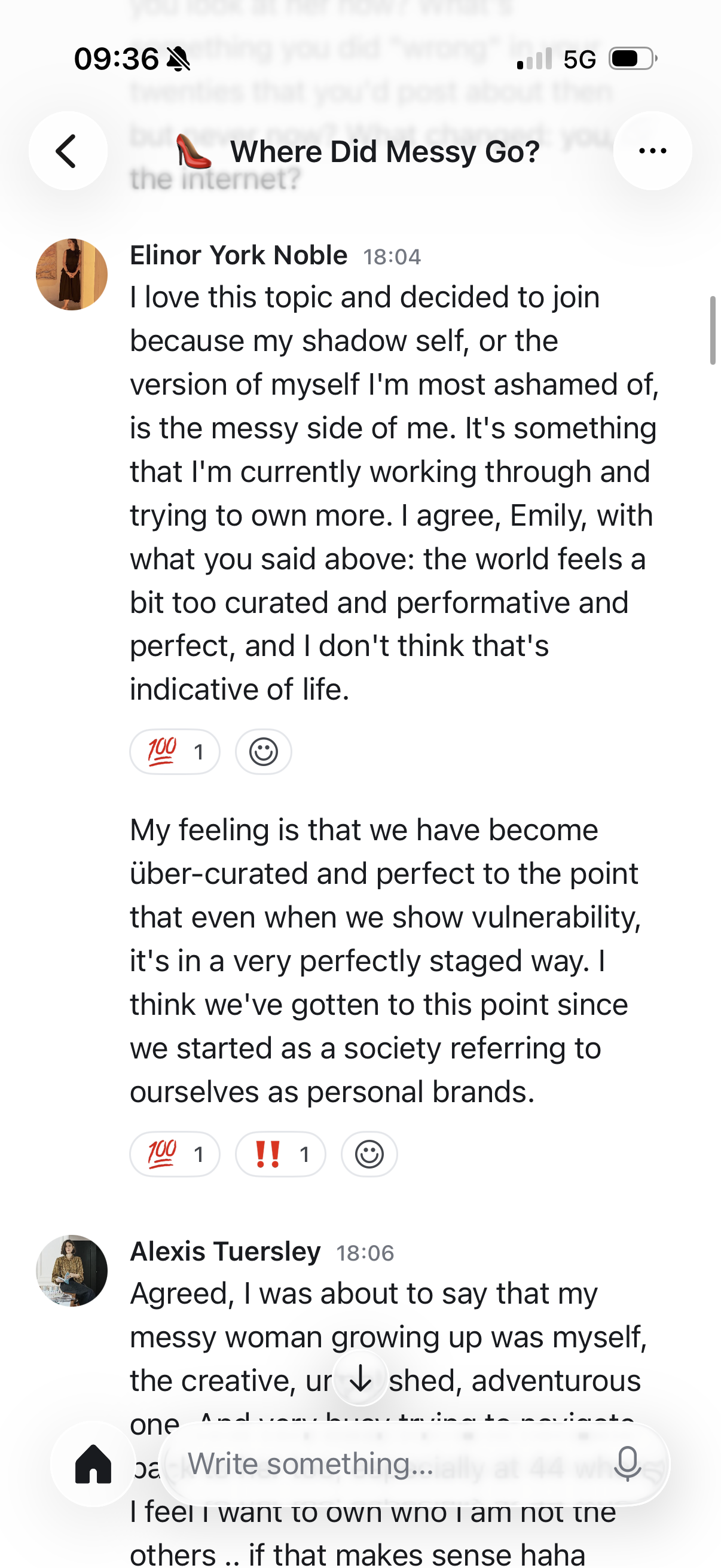
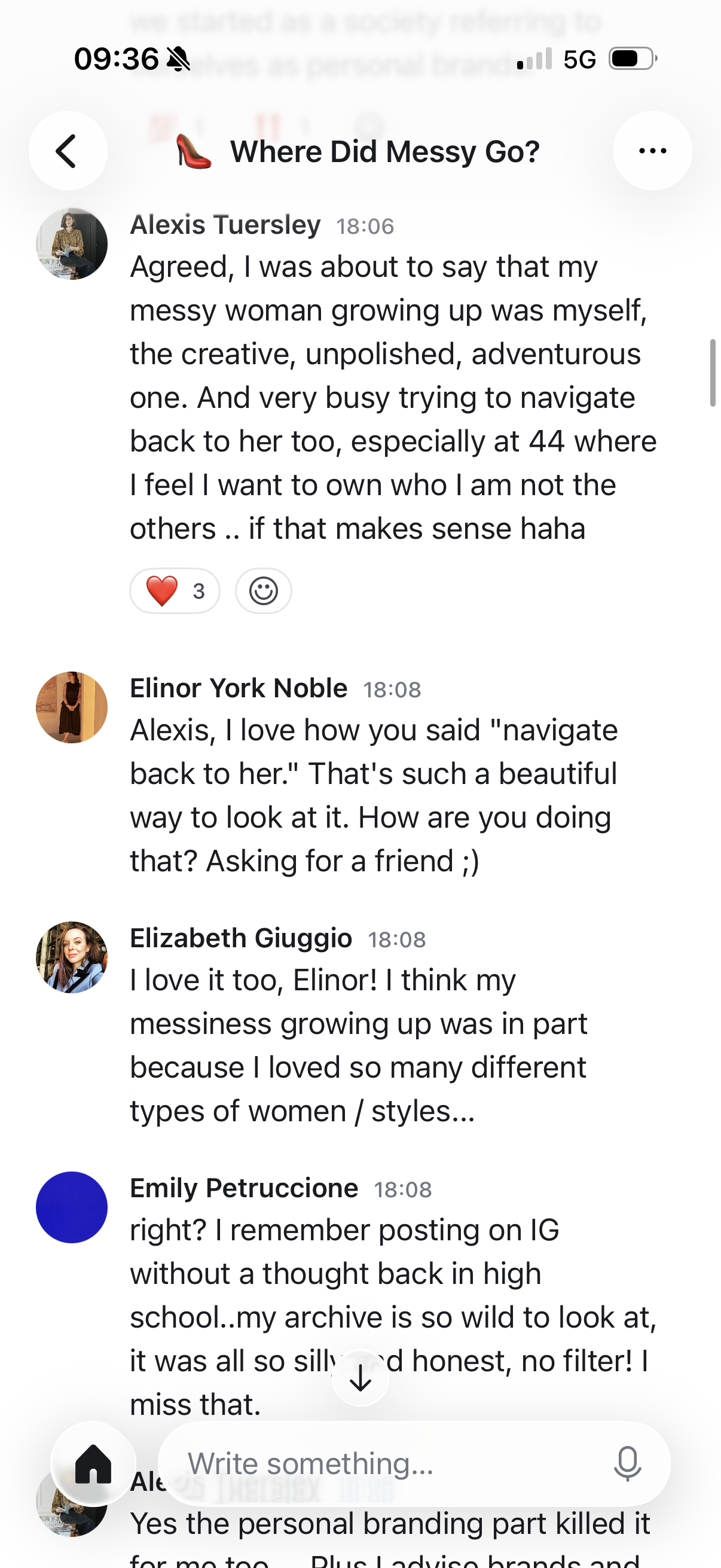
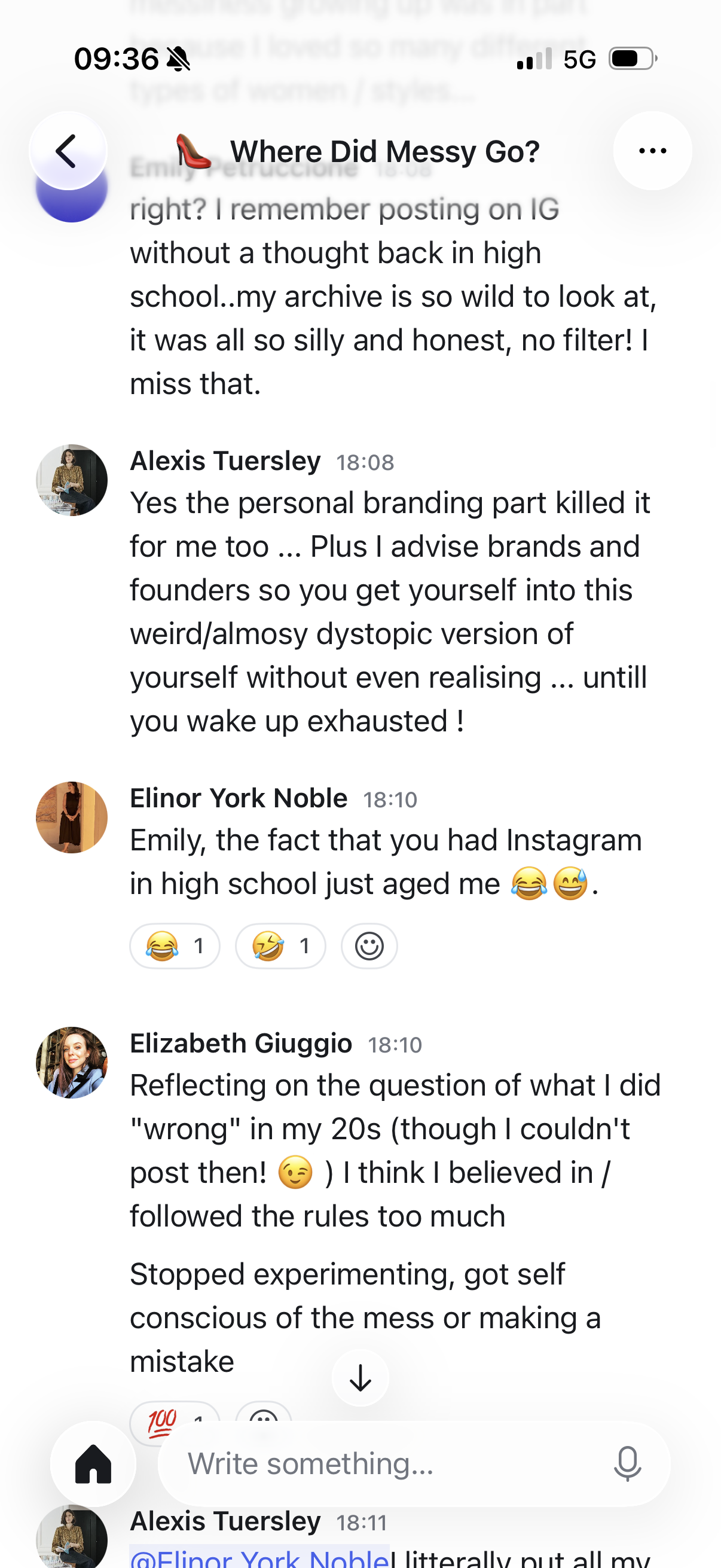
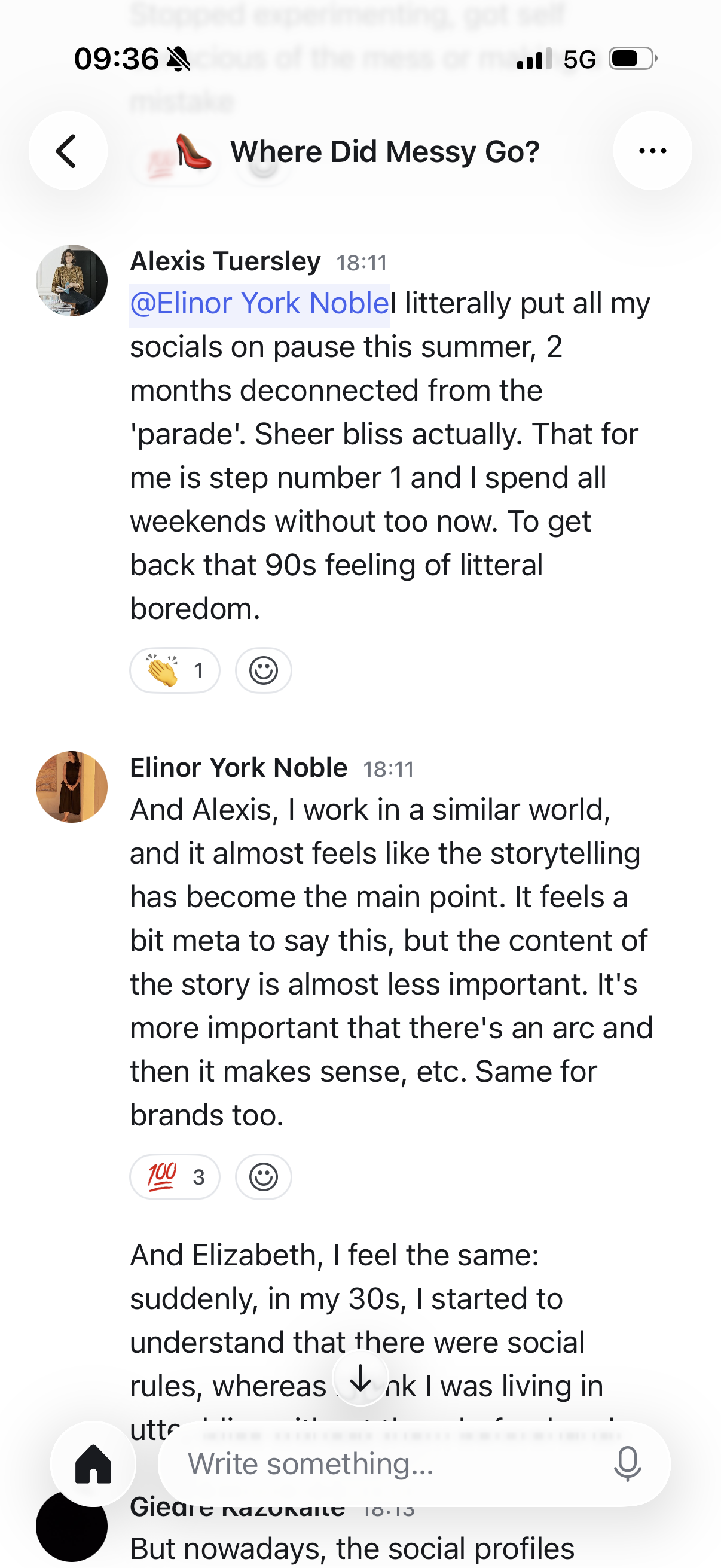
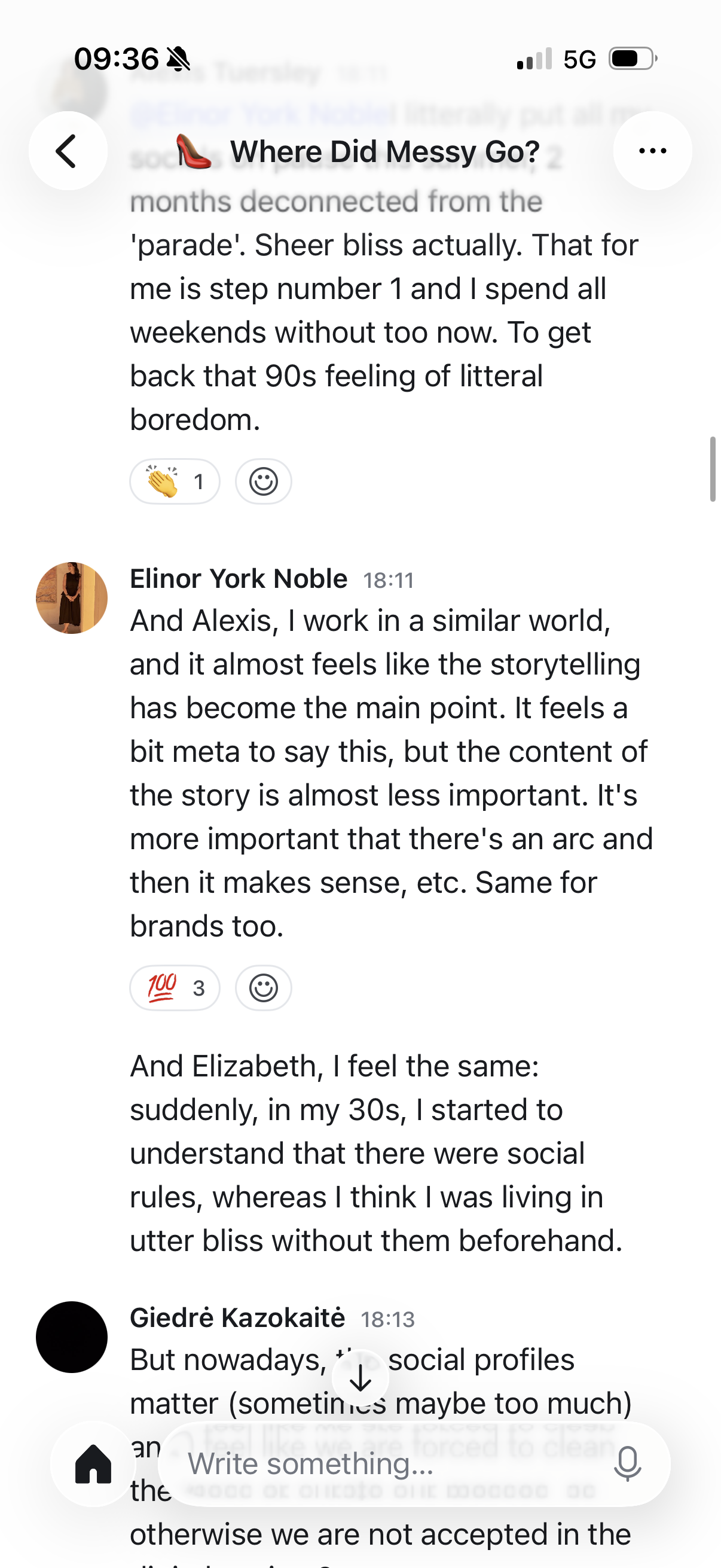
THE DIGITAL VS THE REAL WORLD SELF
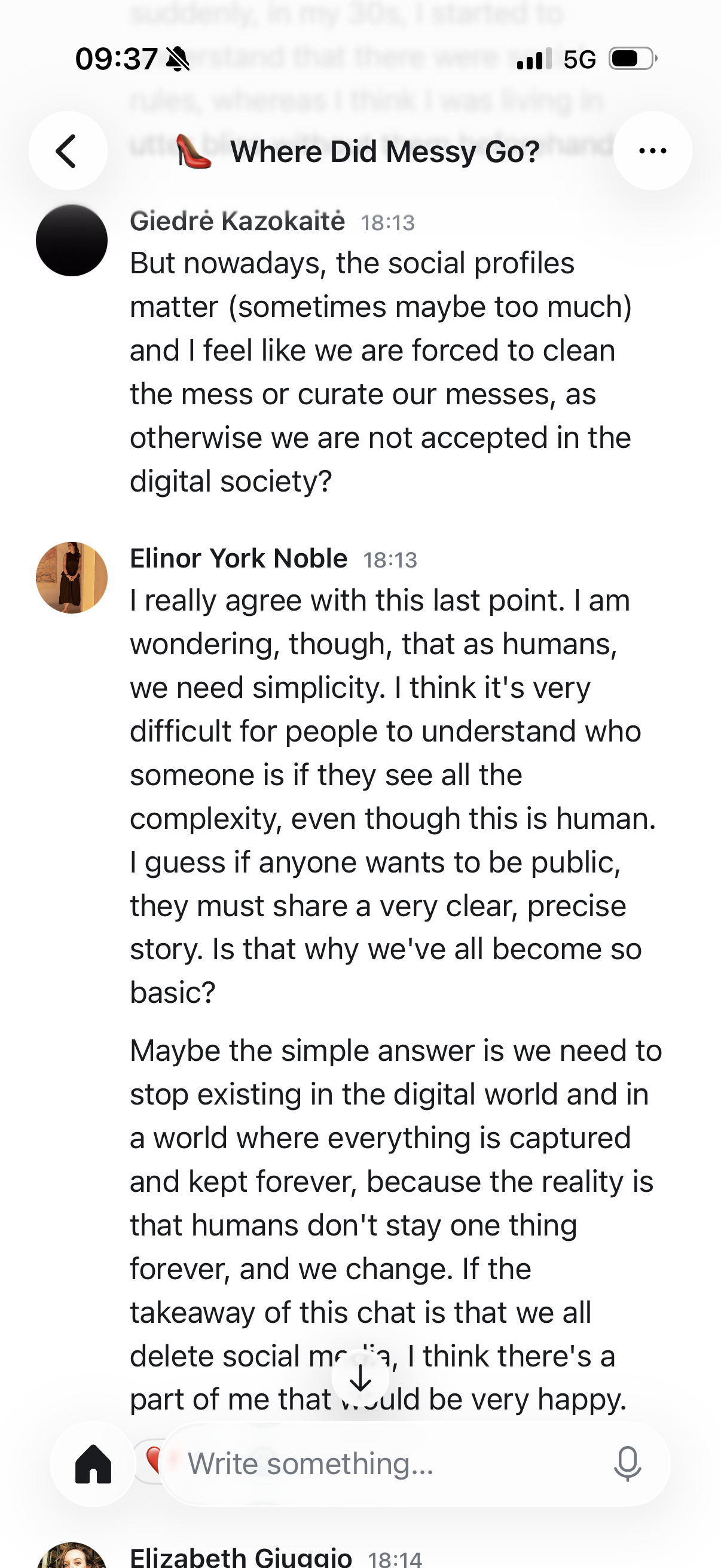
THE FREEDOM OF BEING REAL
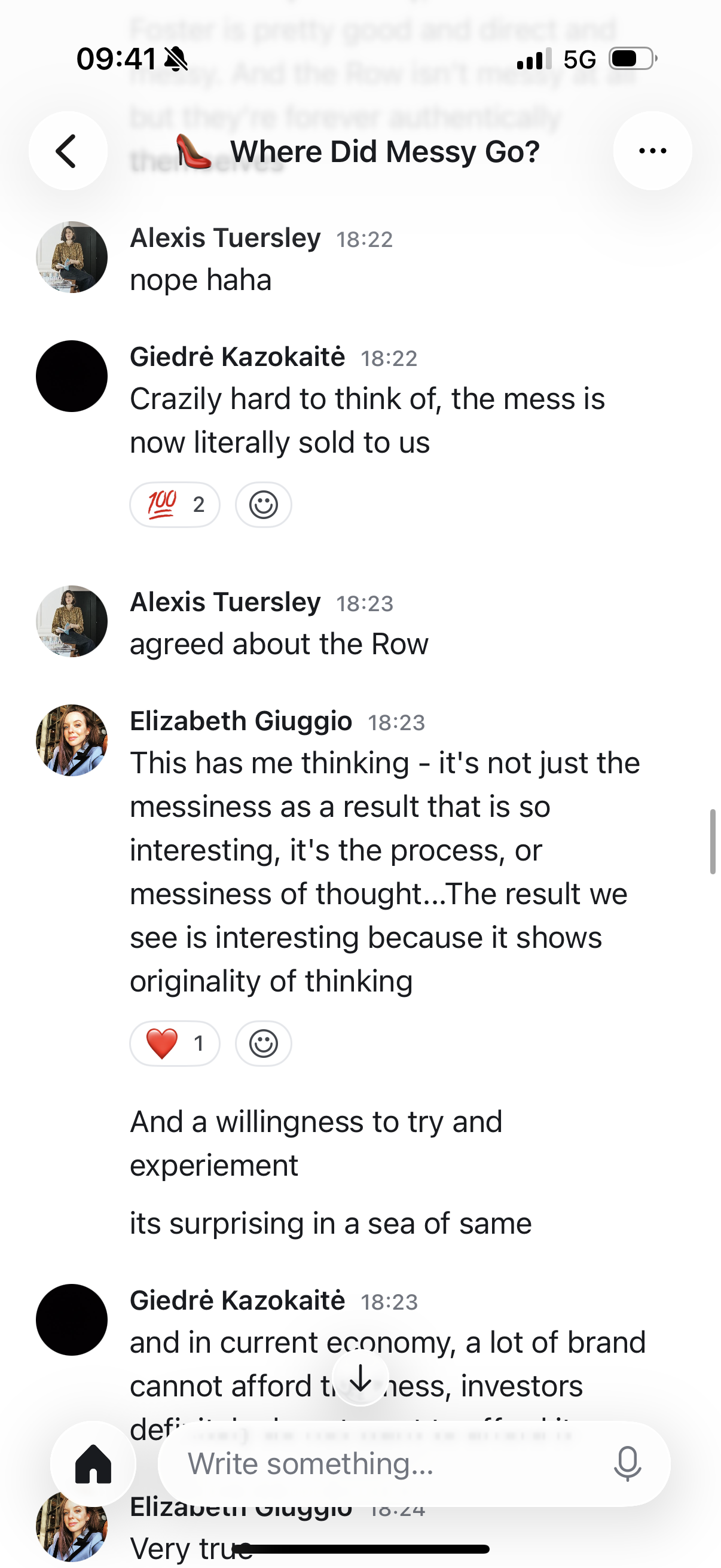
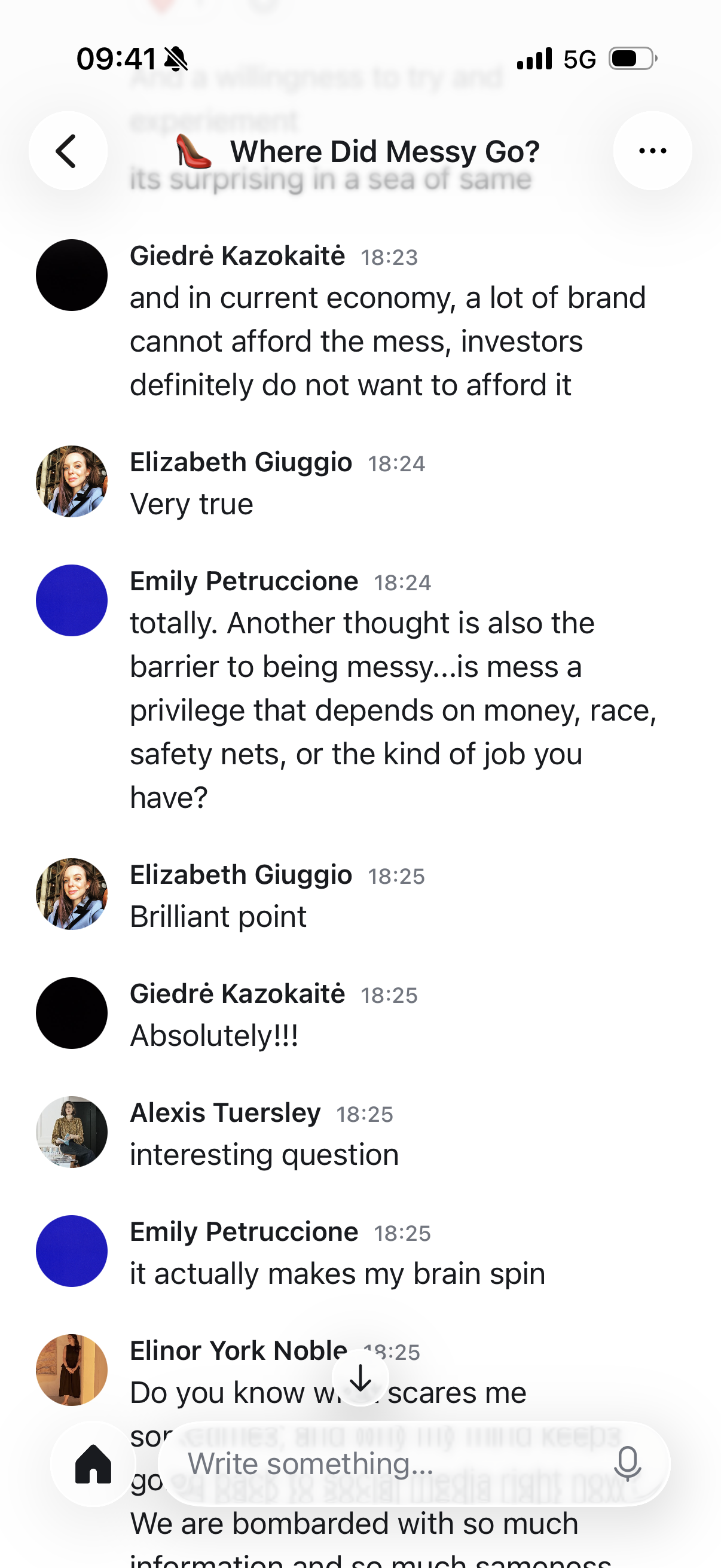
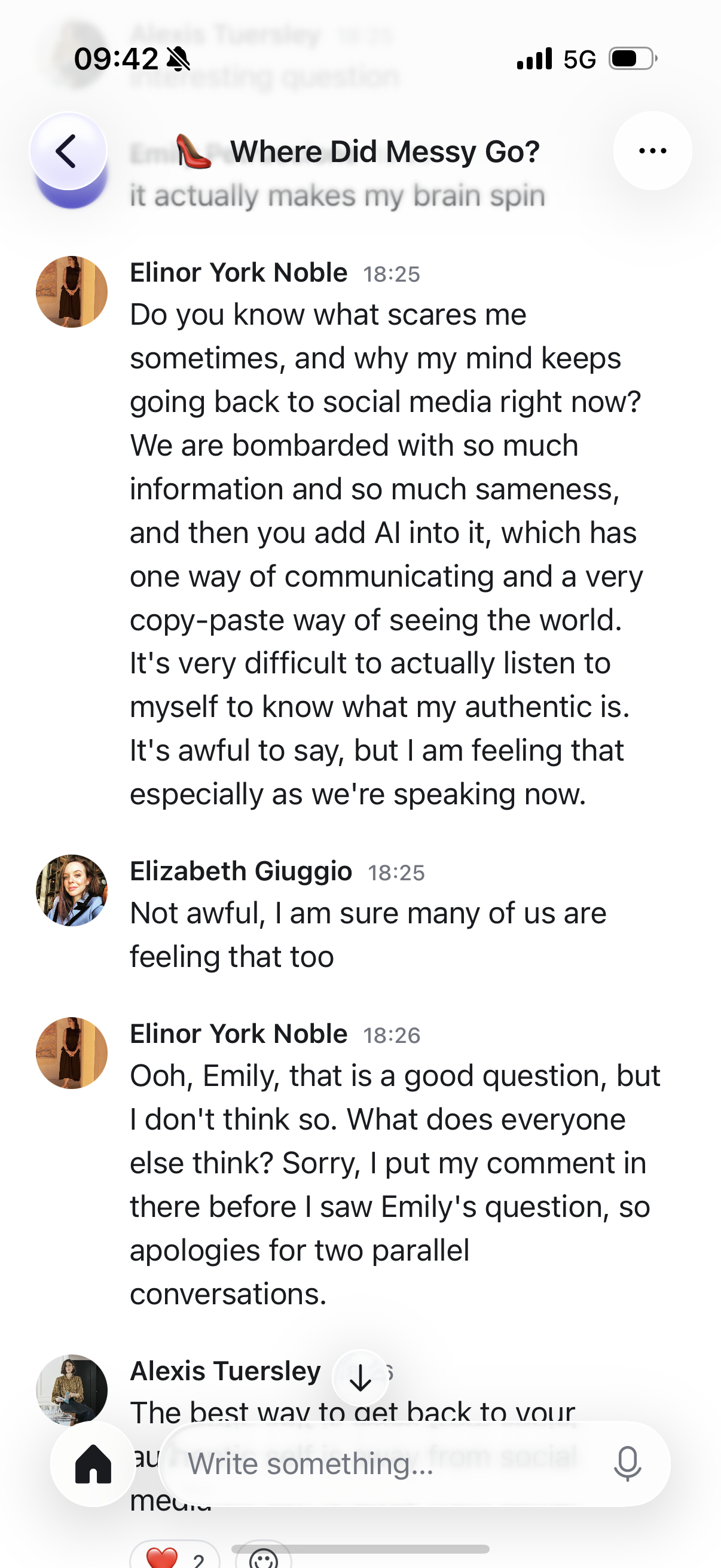
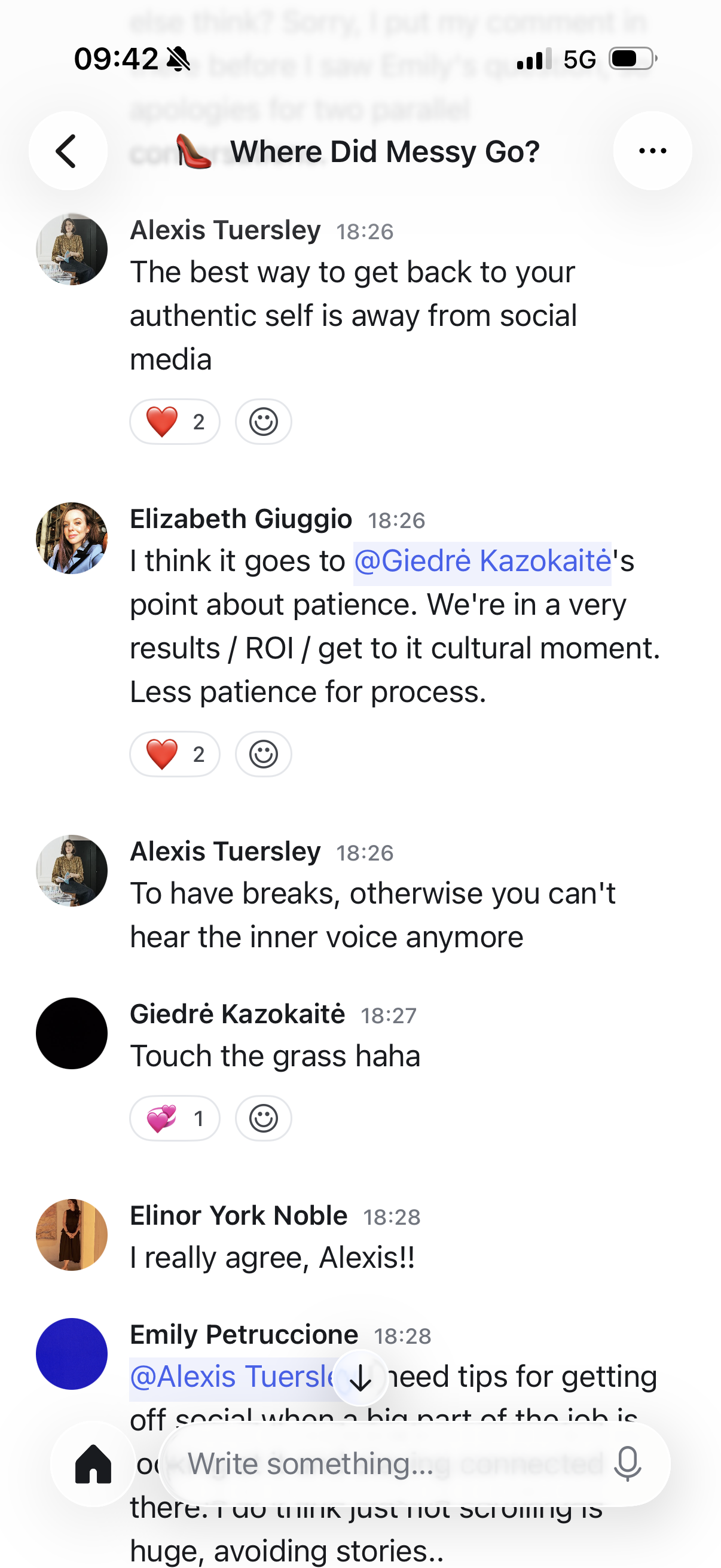
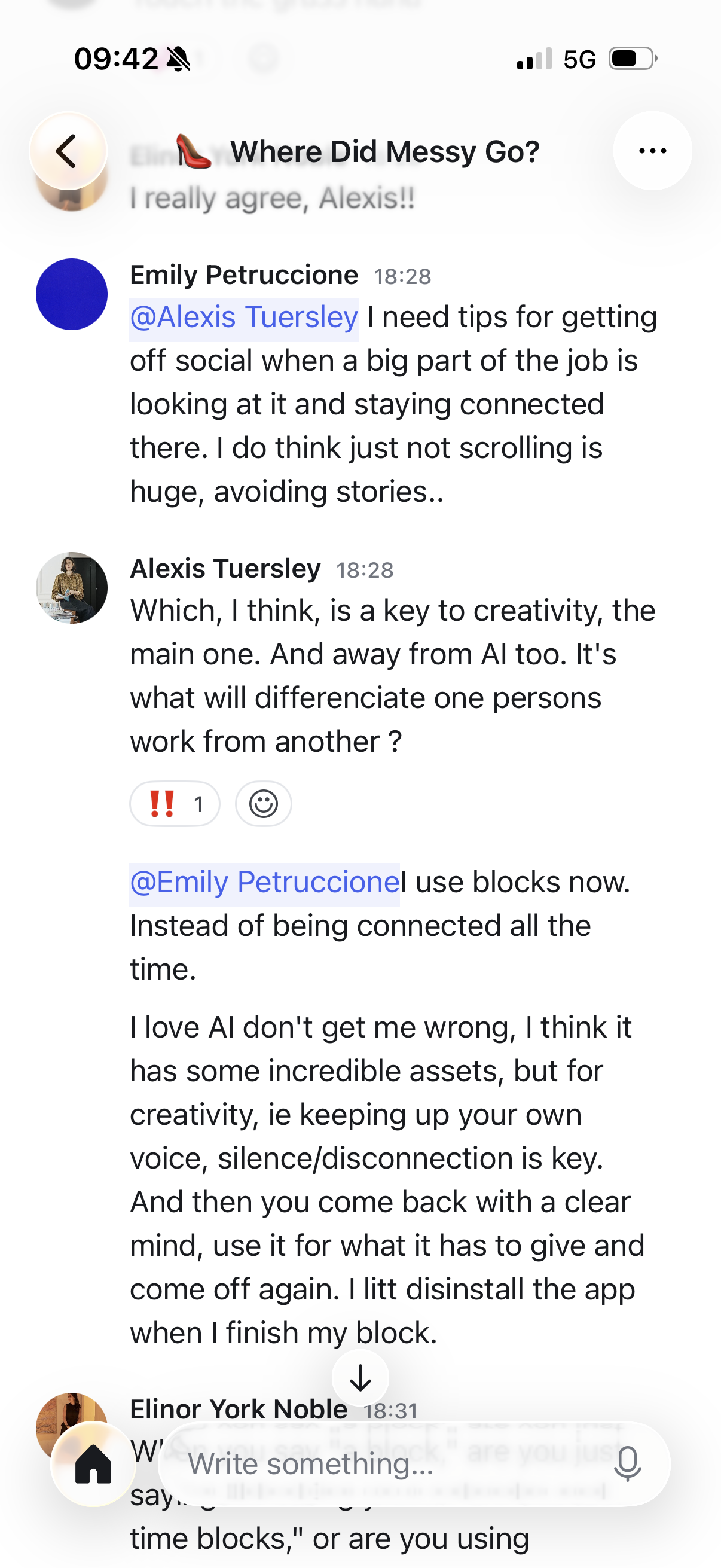
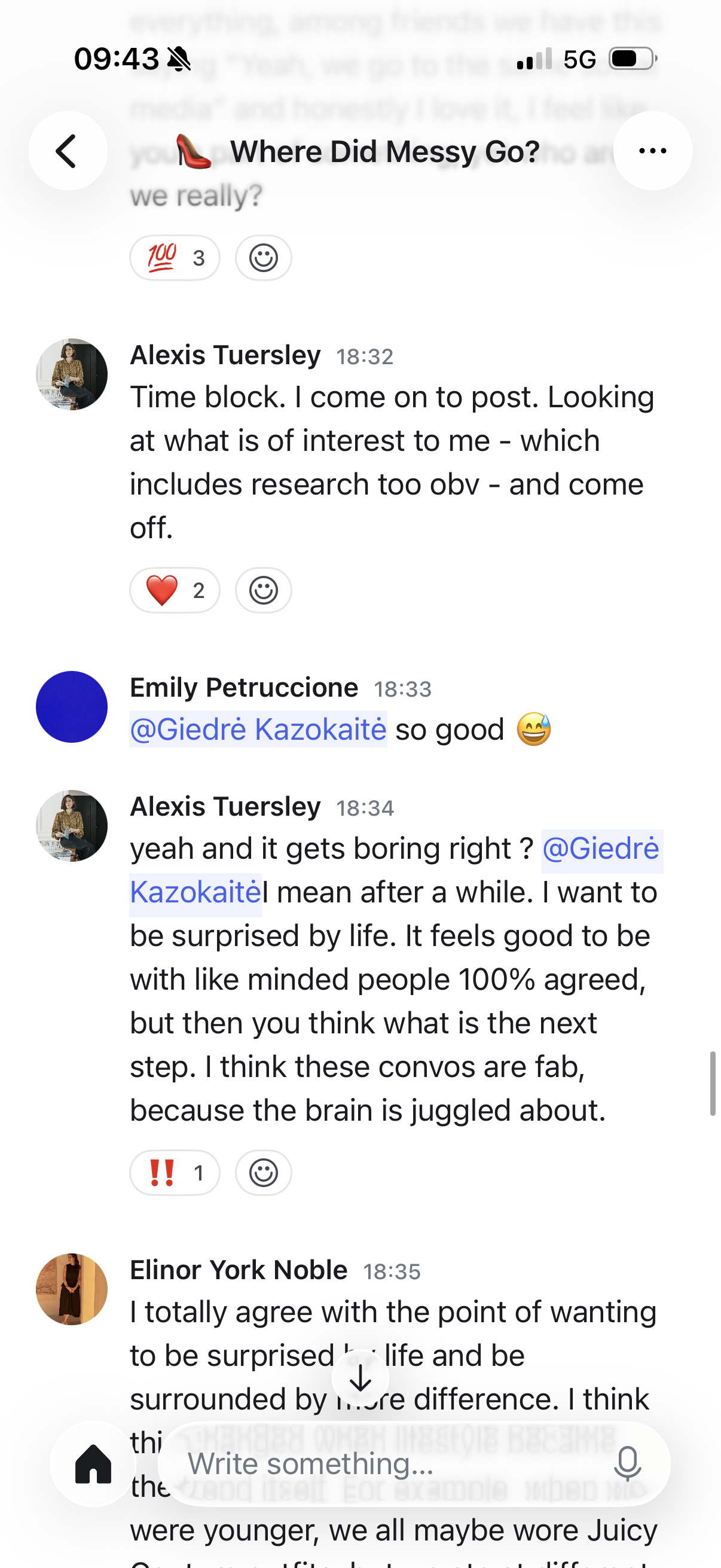
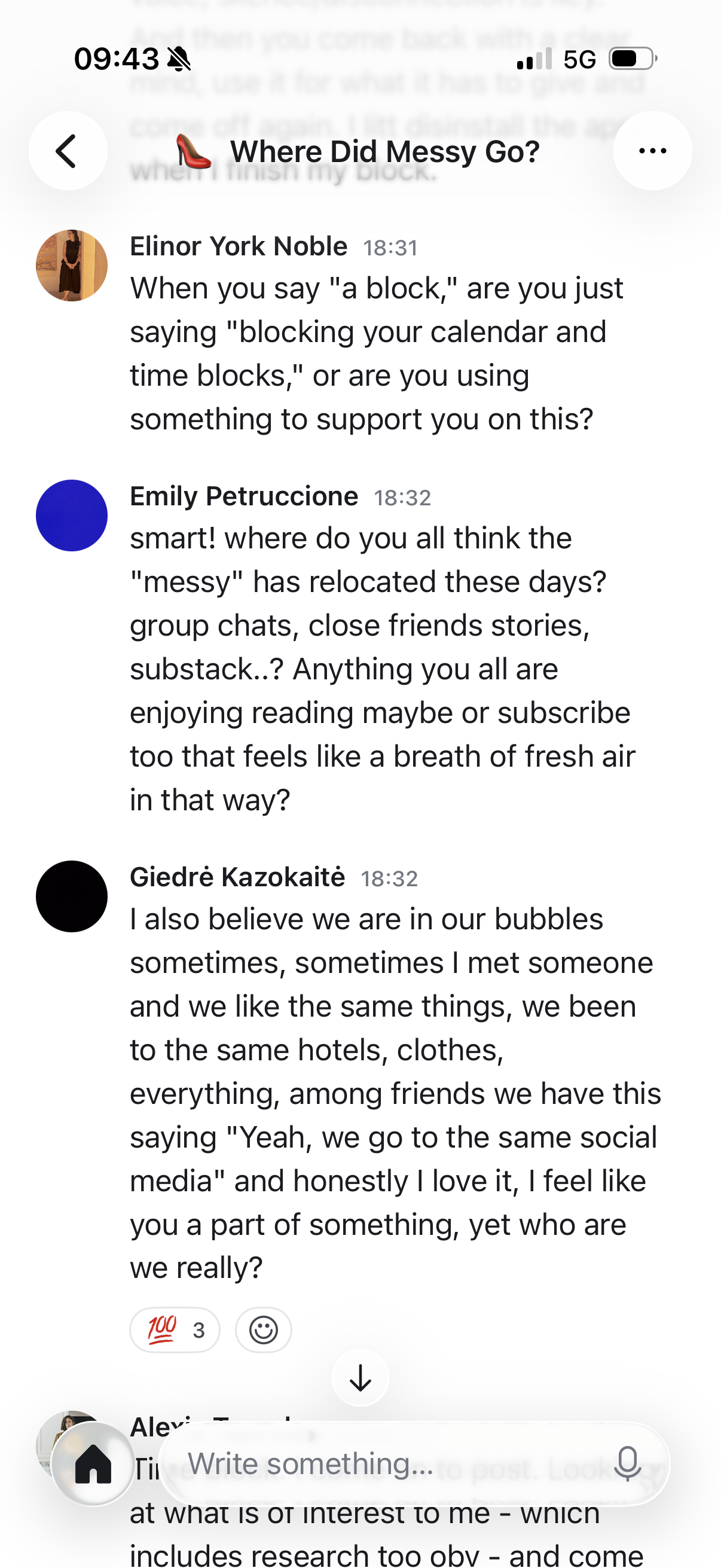
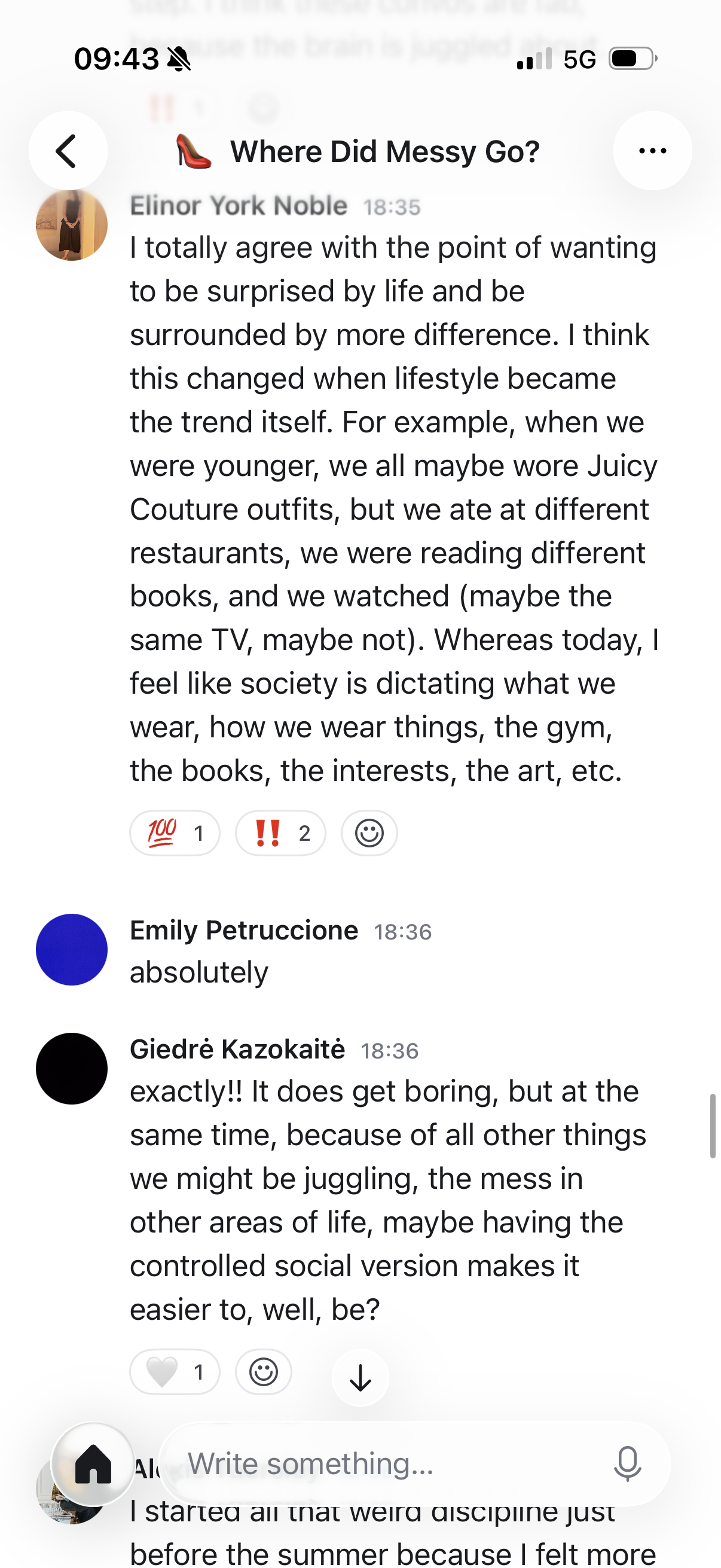
THE FILTER BUBBLE AND HOW TO GET OFFLINE
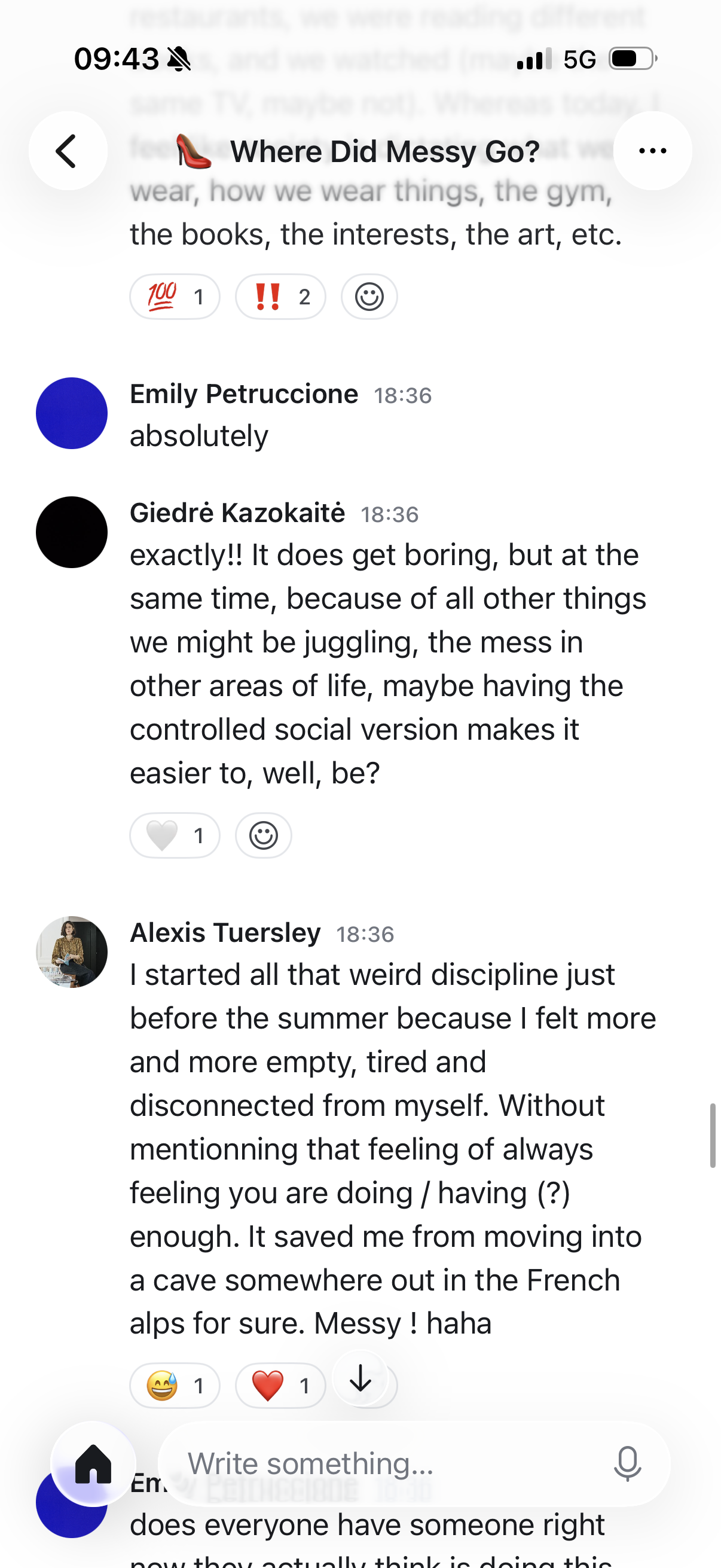
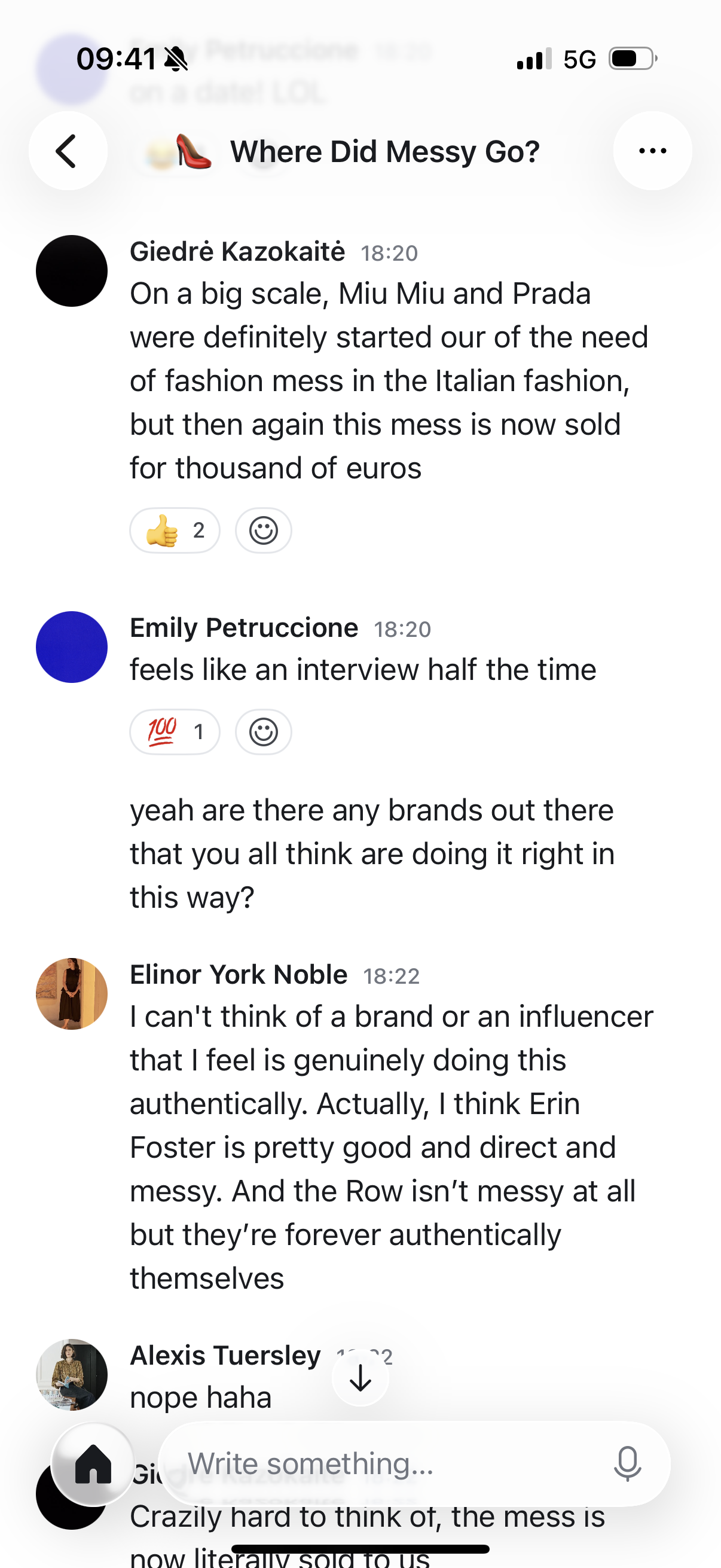
WHO DO IT WELL
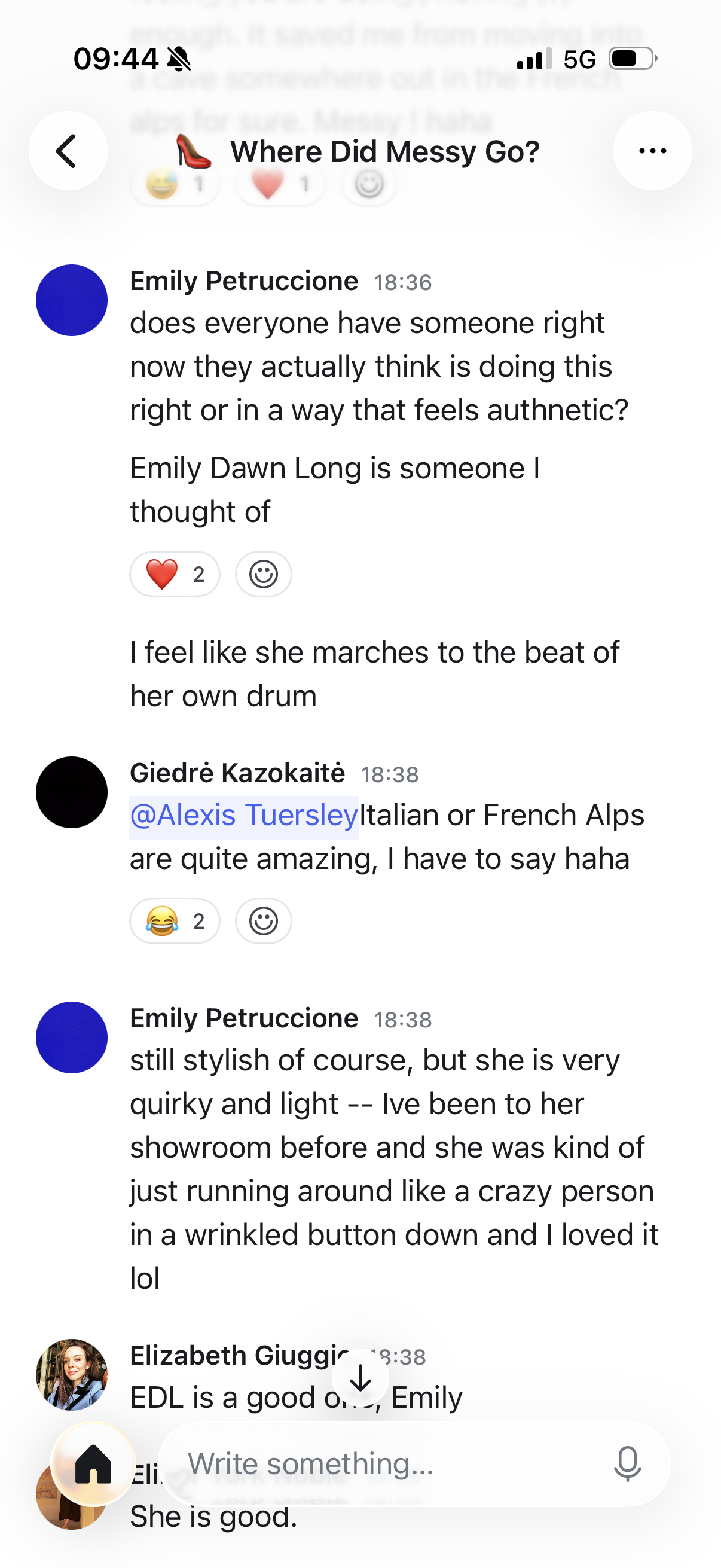
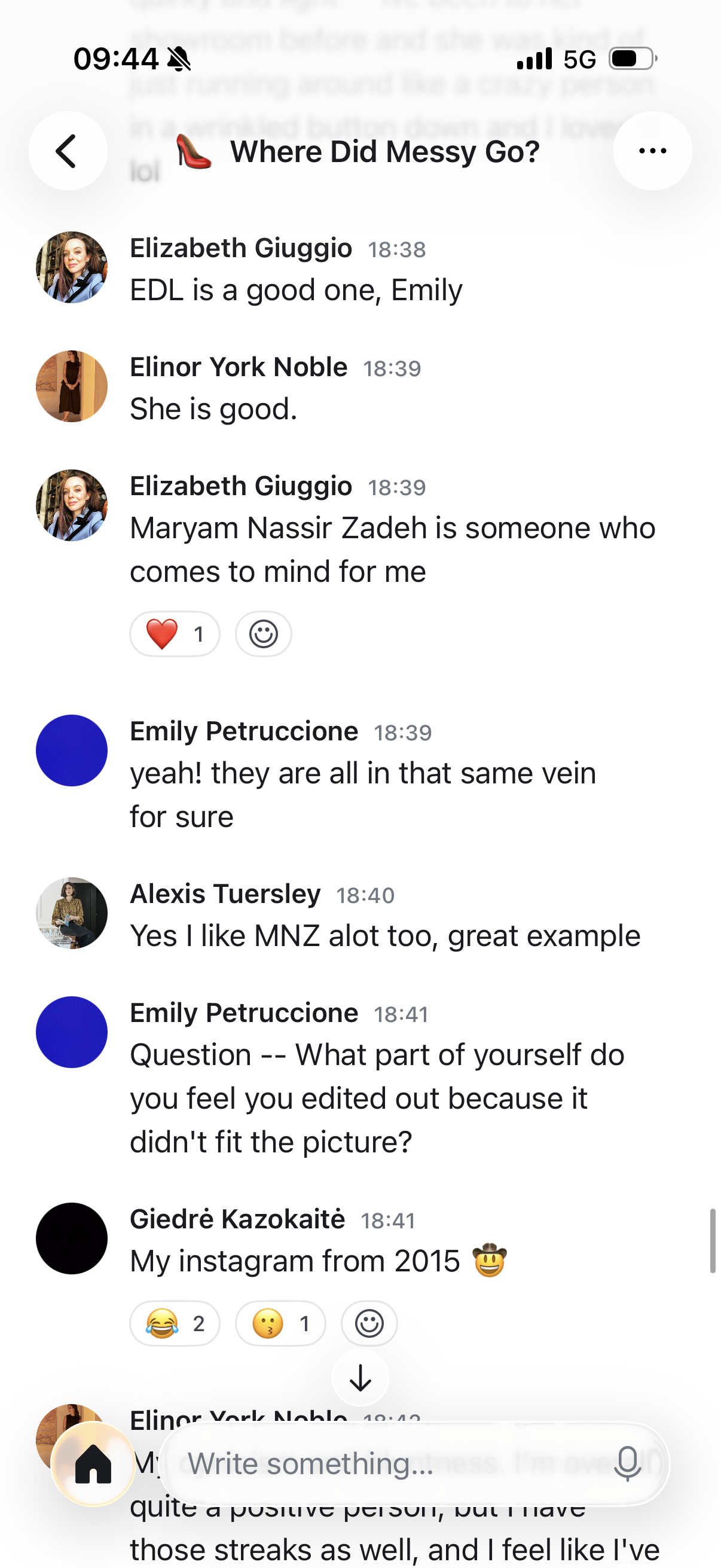
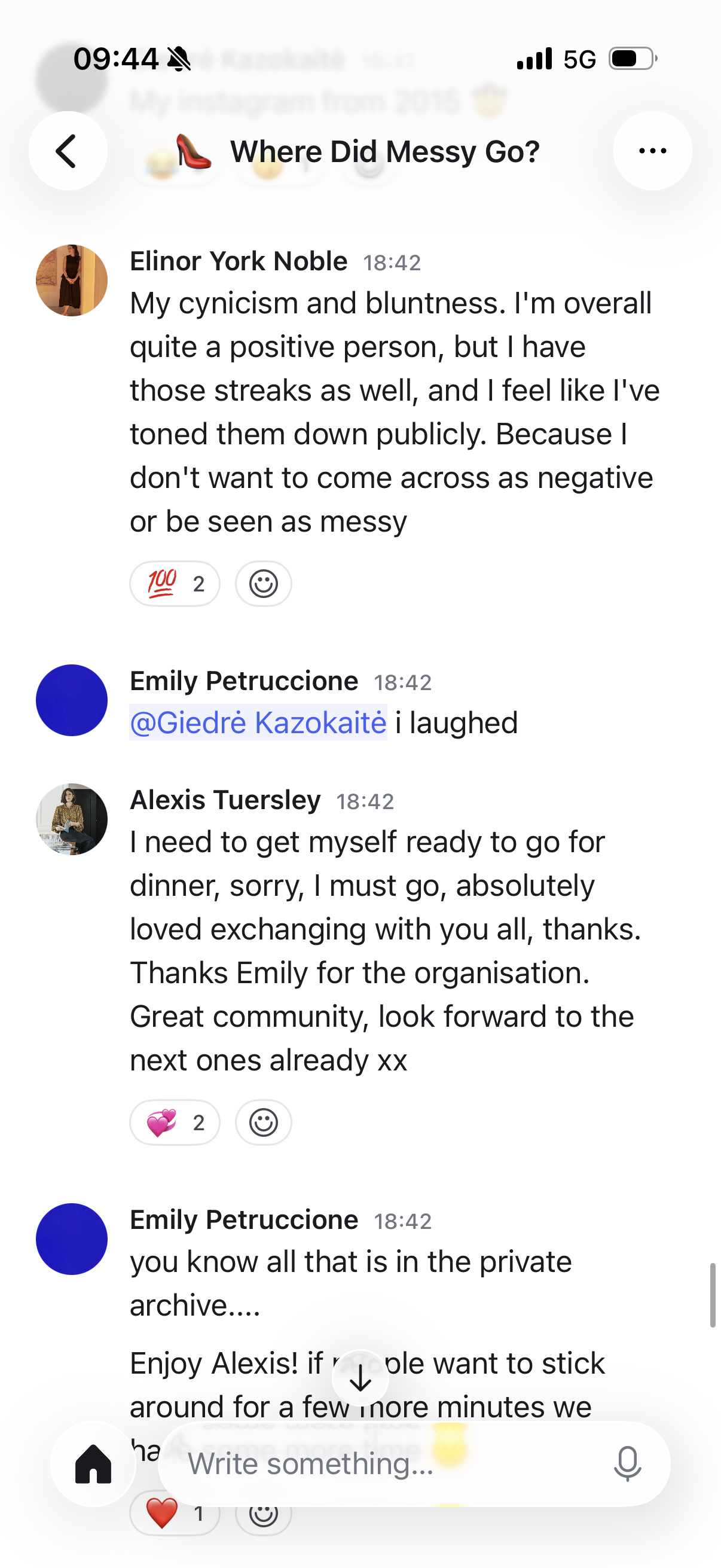
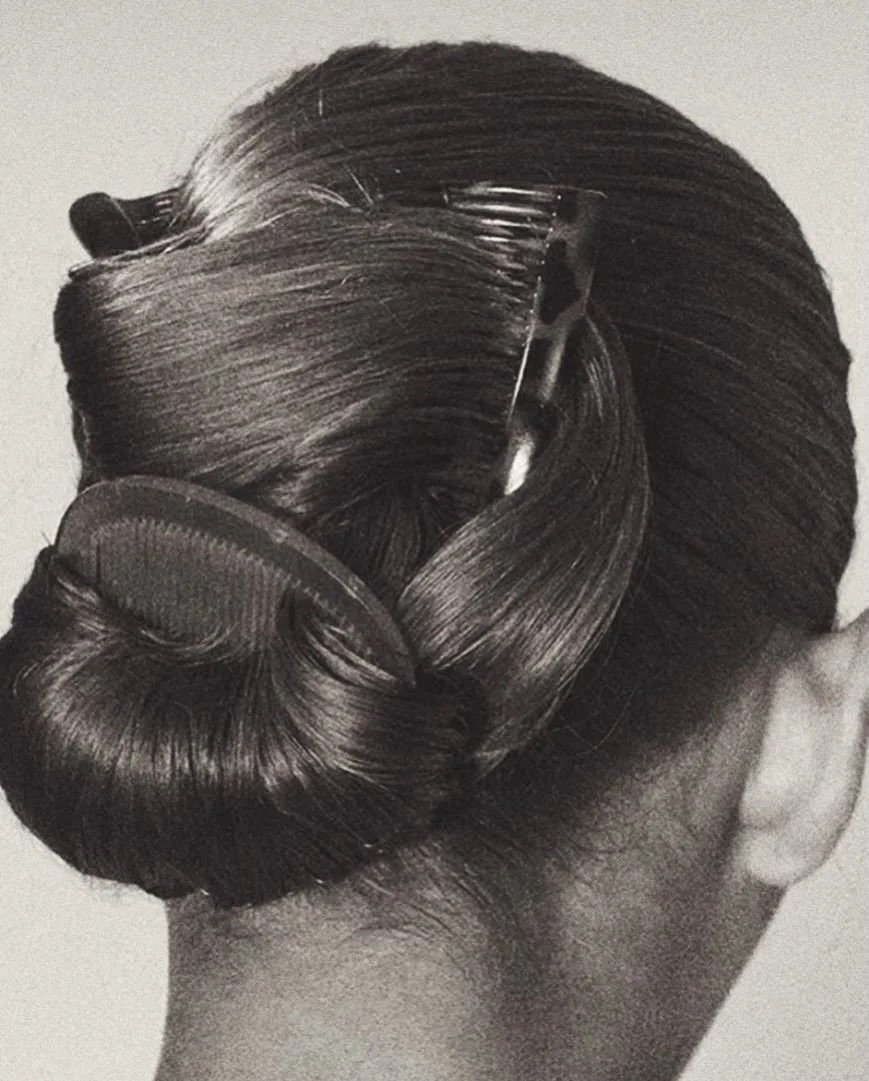
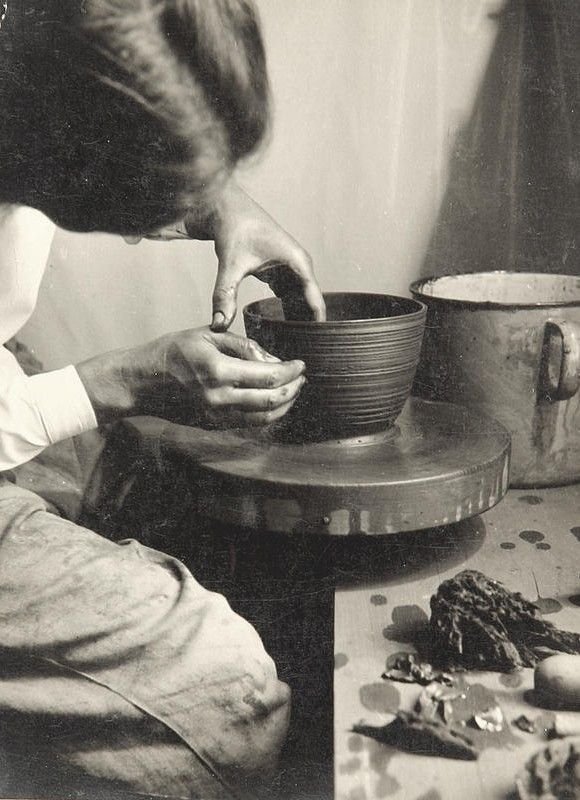
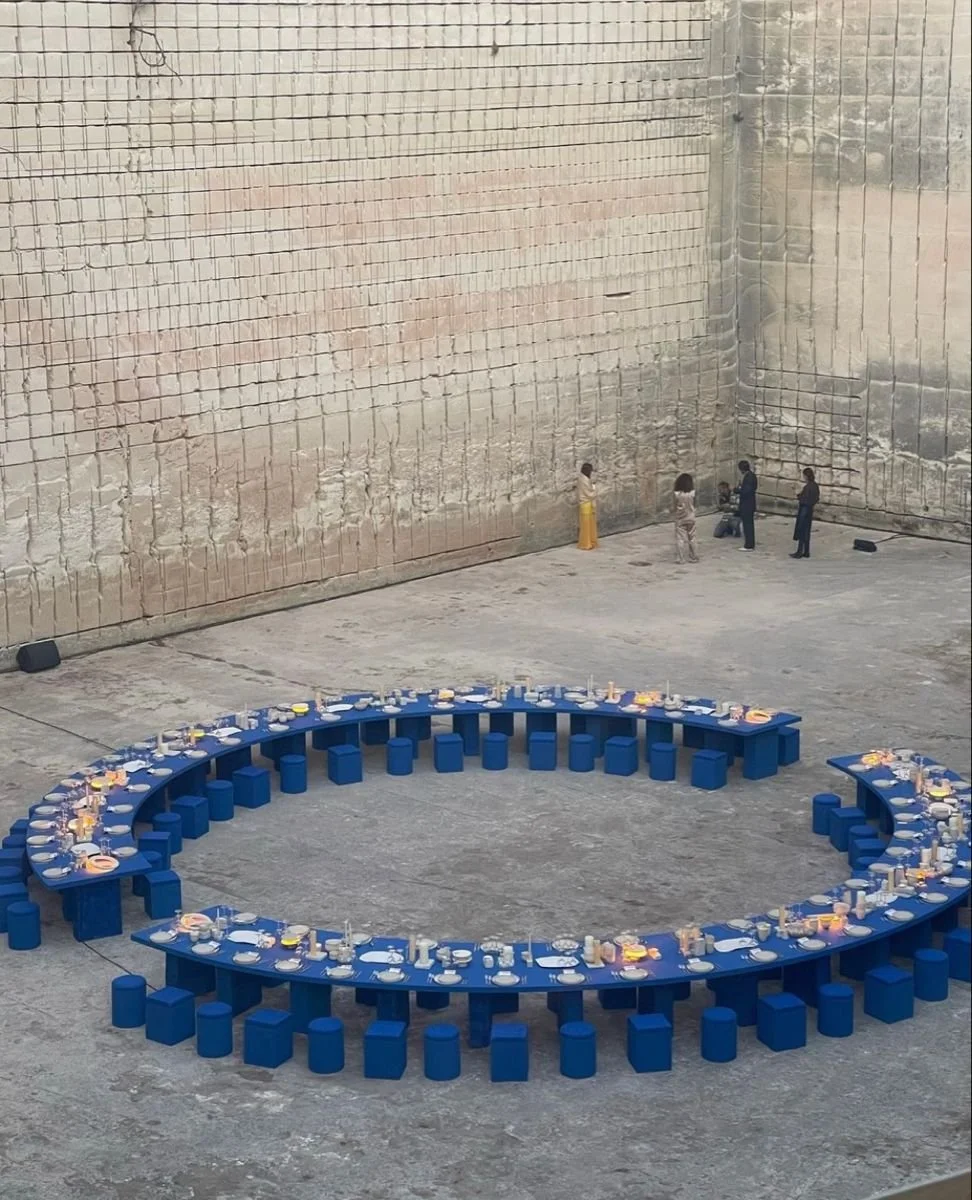
Five HUR Club members on the messy women who shaped them, why imperfection is now something we art-direct, who has ever really been allowed to be unfinished, and whether there’s still room to make a mistake that doesn’t become content.