At Frieze LA, the Most Interesting Art Is Free
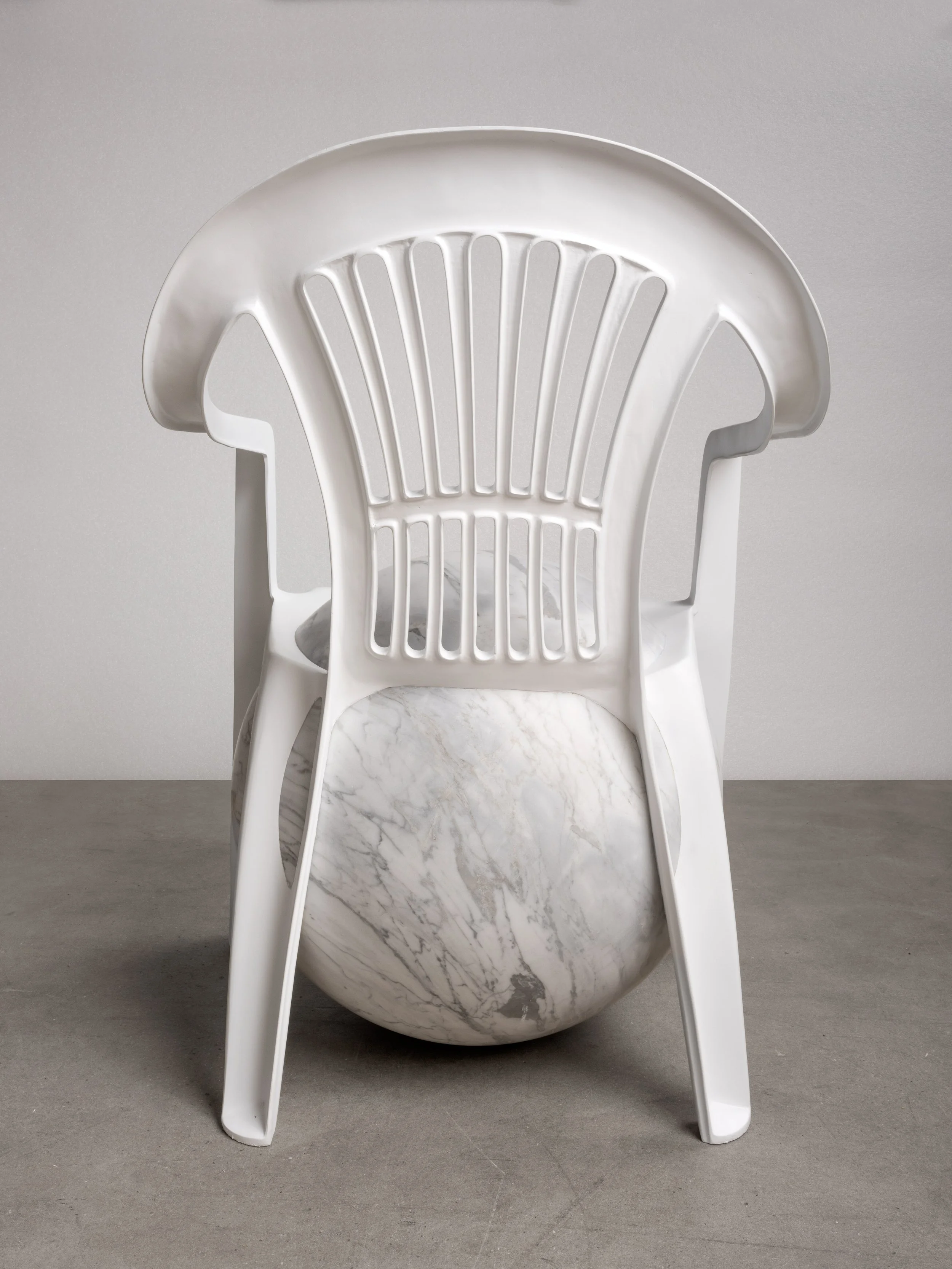
Alicja Kwade for 303 Gallery. Courtesy of Frieze.
At Frieze LA, the Most Interesting Art Is Free
By Bonnie Langedijk
Every cultural capital earns its title differently. Paris inherited it through centuries of institutional investment. New York seized it in the postwar years through sheer density of talent and money. London built it on a collision of class, commerce, and counterculture. Los Angeles has taken the most unlikely path of all: it simply refused to play by anyone else’s rules long enough that the world started paying attention. And now, with Frieze Los Angeles returning for its seventh edition at Santa Monica Airport from February 26 to March 1, bringing more than 95 galleries from 22 countries alongside a Frieze Week activating cultural spaces across the city, the attention has become impossible to dismiss.
The question is what it actually means for a city to become a cultural capital, and whether we have been measuring it wrong. We tend to look for the institutional markers: the blue-chip gallery openings, the auction records, the museum expansions. Los Angeles has those now. But what makes it genuinely worth watching is something less tidy and far more compelling: a creative ecosystem that grew from the ground up, without a masterplan, and is only now being recognized for what it has been building for decades.
Where Culture Refused to Separate
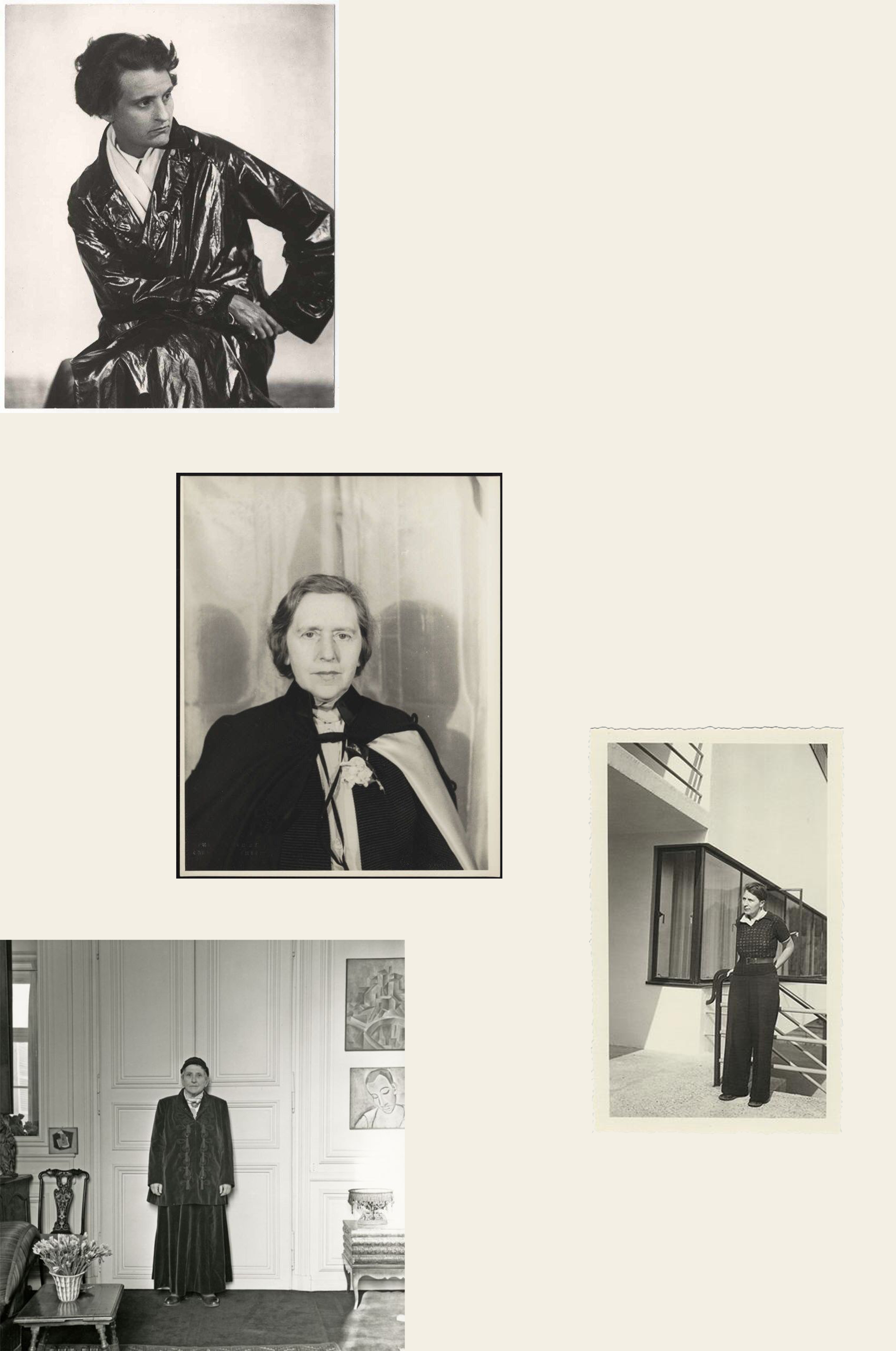
To understand what makes that ecosystem distinct, it helps to look at where it came from. In the late 1960s and 70s, Joan Didion and Eve Babitz were both writing about the same city, attending the same Franklin Avenue parties, and arriving at radically different conclusions. Didion observed Los Angeles with surgical precision and found it morally adrift. Babitz threw herself into the rock clubs and galleries and warm nights and found it electric. They died within days of each other in December 2021, and what both women understood, even through opposing lenses, was that this was a city where culture refused to sort itself into categories. Film bled into music bled into literature bled into visual art. The Ferus Gallery crowd, Ed Ruscha, Robert Irwin, Larry Bell, were showing alongside the Laurel Canyon musicians and the Didion-Dunne dinner party circuit. Walter Hopps was curating Duchamp retrospectives at the Pasadena Art Museum while Babitz posed nude at the chess table. There was no hierarchy because there was no single establishment to enforce one.
That porousness has defined Los Angeles ever since, and it is what made the traditional art world slow to take the city seriously. For decades, the assumption was that significant art happened in New York or London or Basel, and that LA was where artists went to decompress. Not to produce. “I think people are paying attention to LA in a different manner now,” says Christine Messineo, Frieze’s Director of Americas. “There’s always been a foundation with artists in Los Angeles. And I think that came a lot out of the education system there.”
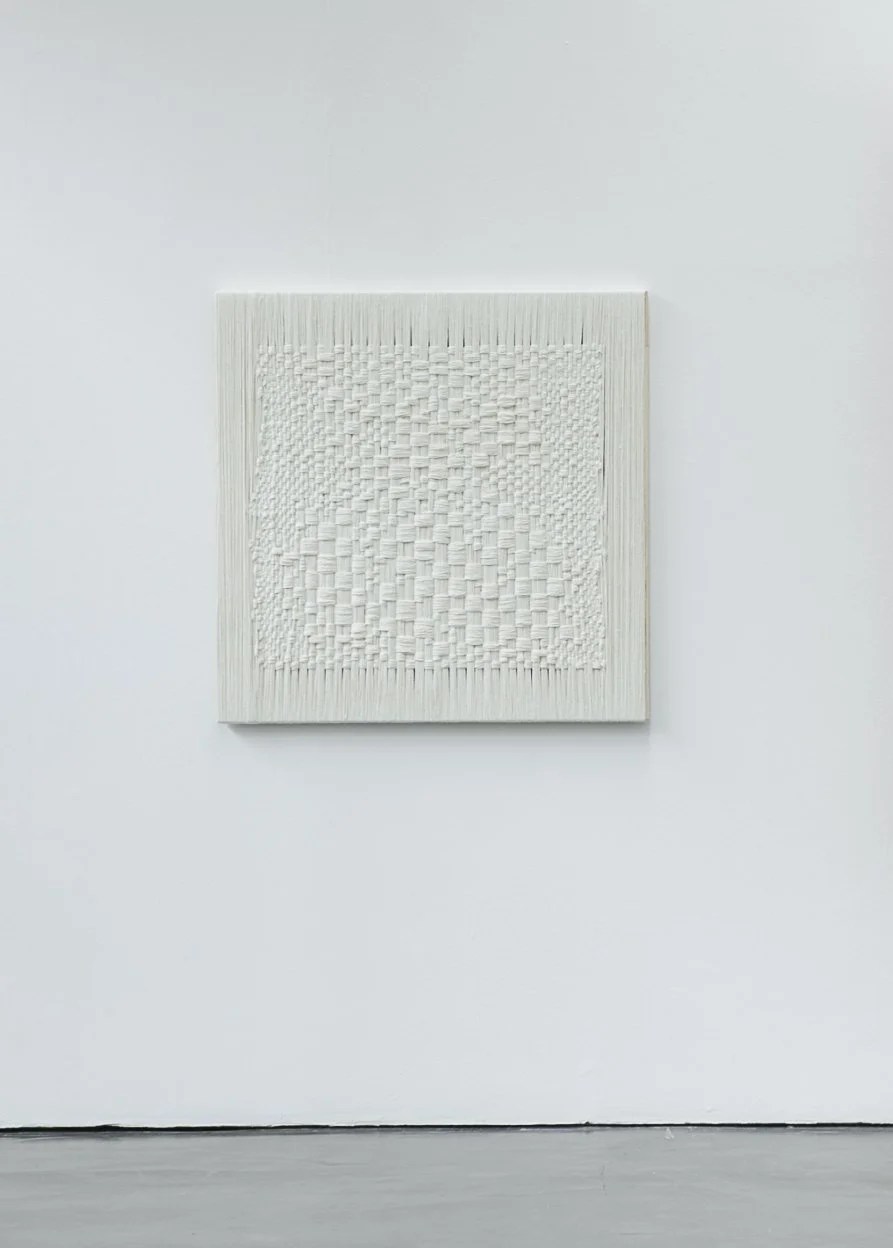
Sheila Hicks’ work a Galerie Frank Elbaz.
From Scene to Ecosystem
What has changed is that the infrastructure around those artists has matured into something self-sustaining. Messineo describes an intergenerational mentorship culture that runs through CalArts, UCLA, and Otis, and extends into non-commercial spaces, garage shows, and artist-run projects. “You see students putting up shows in the garages of their house,” she says. “Some of them move their way into a more commercial world, and some of them become these legendary stories.” She talks about how the collaborative spirit works in practice, how “people share kilns” and how “that kind of collaborative spirit is very much embedded in how it operates.” The scale of what is possible here, the physical and conceptual room to experiment, produces a kind of creative risk-taking that is harder to sustain in cities where the cost of entry is higher and the pressure to commercialize arrives sooner.
A thriving local ecosystem is one thing; CONNECTING it to the international art market, to the curatorial conversations that determine which artists receive sustained attention, is another entirely. This is where a fair like Frieze starts to matter.
This matters because a creative ecosystem is not the same thing as a scene. A scene is a cluster of interesting people. An ecosystem has roots, it regenerates, it feeds the next generation. And what LA has built, quietly and somewhat improbably, is the latter.
Casey Fremont, Executive Director of Art Production Fund, the non-profit that has curated Frieze LA’s public art program for four consecutive years through free, site-specific commissions, has had a front-row seat to this evolution. Now based in LA herself, she sees something in the city’s creative community that she thinks is genuinely different. “There’s an energy here that is so refreshing,” she says. “Everyone’s really championing the idea of the art world existing here. There’s a real sense of community, and maybe that’s because it is in its earlier stage of growth. There’s a freedom here that is allowing for incredible creativity right now.”
That freedom, however, comes with a vulnerability. A thriving local ecosystem is one thing; connecting it to the international art market, to the curatorial conversations that determine which artists receive sustained attention, is another entirely. This is where a fair like Frieze starts to matter.
What a Fair Can Actually Do
Frieze LA’s commercial program spans heavyweights like Gagosian, Hauser & Wirth, and Pace alongside essential LA galleries like David Kordansky, Château Shatto, and Commonwealth and Council. The Focus section, supported by Stone Island for the fourth consecutive year, champions emerging talent through solo presentations by younger galleries, a partnership that has now enabled 170 presentations globally. Messineo sees it as something more expansive than a marketplace: “Frieze is a catalyst moment in the city. Whether you’re in fashion, whether you’re in design, publishing, art, film, it’s a moment to have visibility and show up to a wider global audience.” That cross-pollination between industries, the refusal to treat art as separate from the rest of culture, mirrors the very quality that has defined LA’s creative identity for half a century. The difference is that now there is a structure to channel it.
And the structure extends beyond the tent. This year’s Frieze Projects edition, Body & Soul, curated by Art Production Fund, features an all-LA roster exploring the human form. Two works capture what makes the program distinctive. Cosmas & Damian Brown’s first major public installation is a fountain of ceramic heads surrounded by metal vessels that visitors can physically rearrange, changing the acoustics of falling water. Through APF’s Art Sundae program, Brown will also lead children in painting metal plates that get incorporated into the sculpture, so that the public literally shapes the artwork. “There are people who could look at it as an event to bring their children to,” Messineo says, “and then suddenly it’s an introduction to a much bigger world.”
Then there is Kelly Wall’s Everything Must Go, the first Frieze Projects work to extend off campus, which takes over a gutted newsstand in Westwood Village with 144 unique glass works whose covers have been replaced with fragments of sky forming a single sunset. As visitors buy the pieces over four nights at a flat $300, the sunset disappears, leaving only glowing silhouettes. “I think this idea of ‘the end’ can extend to many interpretations,” Wall says, “from the end of physical media to the end of celebrity culture, the end of free journalism.” Wall, who is presenting at a fair for the first time, sees her work as inseparable from the city: “There are a lot of artist-run spaces here and art happens in non-white-cube spaces. That feels particularly unique to LA.” The work is equal parts commerce and vanishing act, which feels about right for an installation staged at the doorstep of an art fair.
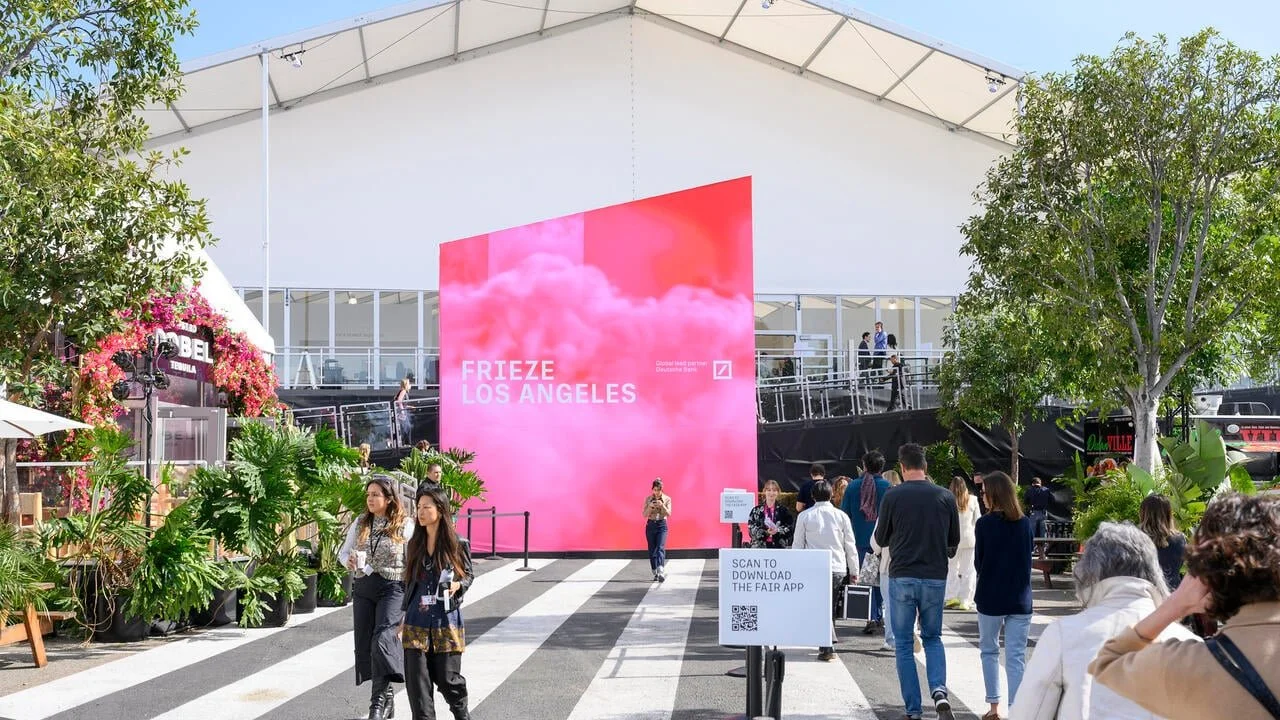
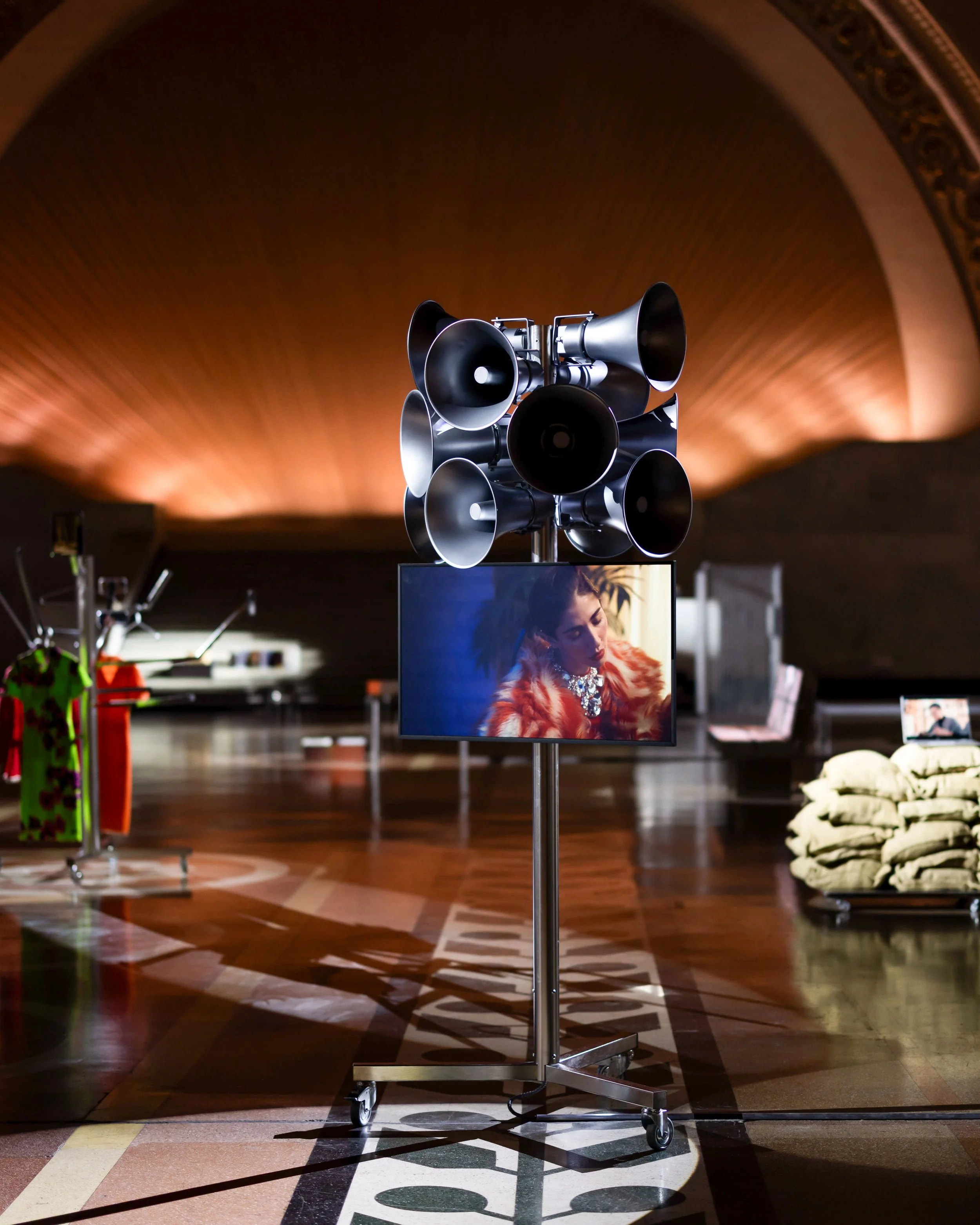
Frieze Los Angeles 2025, courtesy of Frieze.
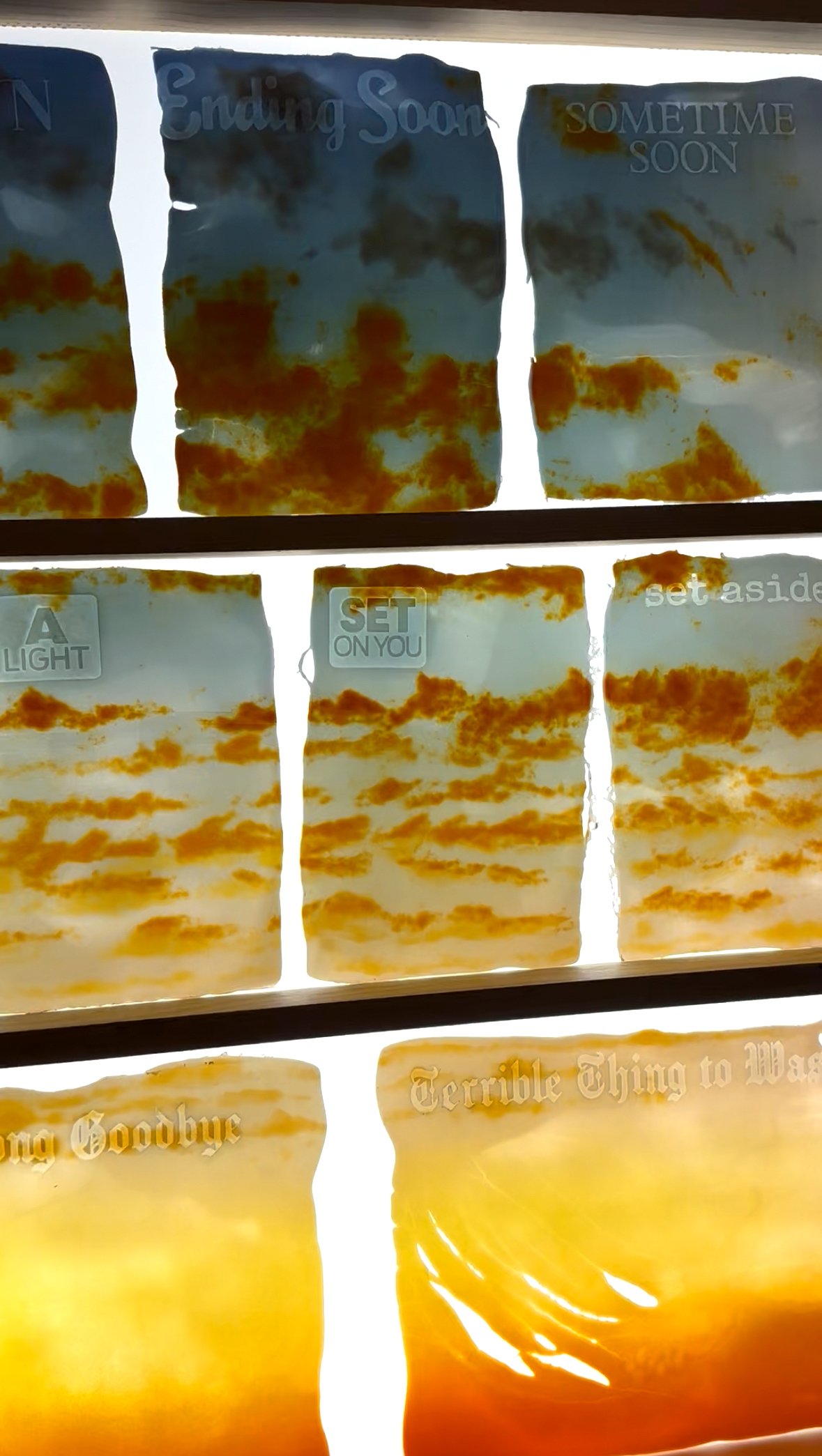
Kelly Wall’s Everything Must Go. Courtesy of Frieze.
Who Gets to Call It Culture
We spend a lot of time, in the art world and adjacent to it, debating who gets access to culture and whether that access should be broadened or guarded. Then a fair comes along that stages free public installations next to a $40,000 painting and the question stops being theoretical. Fremont is direct about what she thinks is happening: “Art fairs are becoming so culturally relevant that they’re mainstream, part of pop culture. And I think that’s a good thing for everyone.” She is equally candid about what makes the public program work: “What’s crucial is that it’s completely out of the realm of the commercial art market. That allows for such freedom. Artists often feel like they’re making work that they have to consider ultimately selling. A lot of the feedback we’ve received from artists in this context is that it’s so much fun to just create.”
If a fair can genuinely become part of popular culture, something people participate in rather than observe from a distance, the old distinction between high and low culture starts to look less like a meaningful category and more like a gatekeeping mechanism. Maybe LA, where culture has never been neatly sorted, has understood this all along. At its best, art does the same thing popular culture does: it reflects what is happening in the world, it offers a commentary on the moment, it makes the invisible visible. The difference is supposed to be one of audience. But what happens when you remove that barrier?
At the entrance to this year’s fair, Patrick Martinez will present neon signs responding to ICE raids across the city, transforming a medium traditionally associated with commerce into one of visual resistance, with companion billboards appearing on streets throughout Los Angeles. “It’s very much presenting the moment,” Messineo says. Martinez’s work does not require an art education to understand. It requires eyes and a conscience, which is to say it functions exactly as popular culture does, except it is standing at the front door of an art fair.
Infrastructure, Not Gestures
The momentum is real, but momentum alone is not enough. The city has been through devastating fires and political upheaval, and investment has to be structural if it is going to sustain what has been built. The Mohn Art Collective’s acquisition fund, channeling resources to purchase works by California-based artists for the Hammer, MOCA, and LACMA, offers one model. Frieze’s institutional alliances, which last year generated over $2 million in fair-week acquisitions, offer another. The difference between a moment and a movement is infrastructure.
“I hope that our audience continues to grow,” Fremont says, “and people really consider it a destination. Frieze is setting a great example in terms of getting behind a program that is for everyone.” Messineo sees it in simpler terms: “You’re walking through and you see people conversing in the aisles, sharing a pizza on a picnic bench. It really, truly is a point of reunion, of conversation, of connection.”
Didion and Babitz spent the better part of a decade circling the same city, attending the same parties, writing about the same Los Angeles, and failing, spectacularly, to agree on what it was. Didion thought the city was a void. Babitz thought it was a feast. The useful truth, maybe the only useful truth about Los Angeles, is that they were both right, and that the city has always been capacious enough to contain both readings. What it needed, and what it now has, is the infrastructure to make that capaciousness productive: places to collide, to argue, to show up, to make work. Frieze LA is one of those places. And Los Angeles does not need to become the next anything. It just needs to keep being itself, and to keep the garage door open.
Everyone is an expert now, and almost no one is. In her latest essay, Bonnie Langedijk asks how confidence came loose from competence, why we believe the ring light over the researcher, and whether real expertise can survive a culture that rewards speed over depth.