In HUR Levi’s: Julie Pelipas

Julie Pelipas wears the Baggy Dad Barrel. Photography by Georgia Devey Smith. Courtesy of HURS.
Julie Pelipas
There’s no doubt Levi’s jeans are a classic—worn by icons throughout history. But what makes an icon today? And what’s changed in how they wear their Levi’s? We speak with 5 modern day icons—women who lead where culture goes next—in their favourite Levi’s fit.
In partnership with Levi’s®
By Bonnie Langedijk
Julie Pelipas spent nearly two decades in fashion media, launching Ukrainian Vogue, before realizing she couldn't change the system from within. So in 2021, she founded BETTTER—an industrial-scale upcycling platform transforming the industry's deadstock into something new. Growing up on a farm where her only icons were her grandmother in reconstructed trousers and Björk on CD, Julie understood early: make something from what exists. She always acts against trends, wears baggy jeans as rebellion, and has one sacred white T-shirt she's worn through every life-changing moment. The last thing fashion needs is another brand. She's building a new system instead.
Has the idea of ‘the icon’ has changed in your lifetime? If so, how?
Life dynamics and social order have changed so dramatically. Everything and everyone feels like a replica of the original. We’re living in an era of “transparency society,” where authenticity and radical ideas are compromised to win algorithms. I don’t think it’s even feasible these days for someone to achieve the kind of historic footprint that was once possible. Maybe I’m just being too idealistic.
Do you think icons are born, made, or observed?
None of this, to be honest. In my opinion, true icons are carved from character, bravery, and passion.
“My only icons back then were my grandmother, who chose to wear my grandfather’s linen shirt with a skirt RECONSTRUCTED from his tailored trousers, and my mother, who was the opposite with her peroxide-blonde curls, long red nails, and eternal black eyeliner — that full-swing Soviet Union 80s look.”
Are there women—past or present—you consider icons? What do they teach us now?
Growing up in a small provincial city on a farm, I was completely isolated from media or cultural influences. My only icons back then were my grandmother, who chose to wear my grandfather’s linen shirt with a skirt reconstructed from his tailored trousers, and my mother, who was the opposite with her peroxide-blonde curls, long red nails, and eternal black eyeliner — that full-swing Soviet Union 80s look.
My only international icon back then was Björk, whose music in my CD player became my first introduction to the outer world. Later, at university studying journalism, my ultimate icon became Ruth Bader Ginsburg, and later Diana Vreeland. And I guess since then, growing older, I haven’t really discovered anyone else for myself. There are two reasons: I’m a different person now — it’s hard to make new friends and even harder to fall into someone’s legacy and call them an icon.
What's interesting about classics or icons is how each generation rediscovers them anew. How do you feel about younger people encountering your work for the first time?
This always comes as a surprise to me — perhaps because I still consider myself part of this “younger generation.” Or maybe because I never aimed to promote my editorial legacy the way creatives do today. When we were creating back in the days, our moves and intentions were never informed by algorithms. There was a pure sense of beauty and meaning. And we competed in that field in a very healthy way. That’s why, I guess, our generation managed to create the playbook for those that followed. I feel really confused when someone refers to me as an icon these days. Maybe I’m not that savvy when it comes to modern generational tastes and preferences. But I hardly associate myself (at least not yet) with someone who has built a meaningful legacy for history.
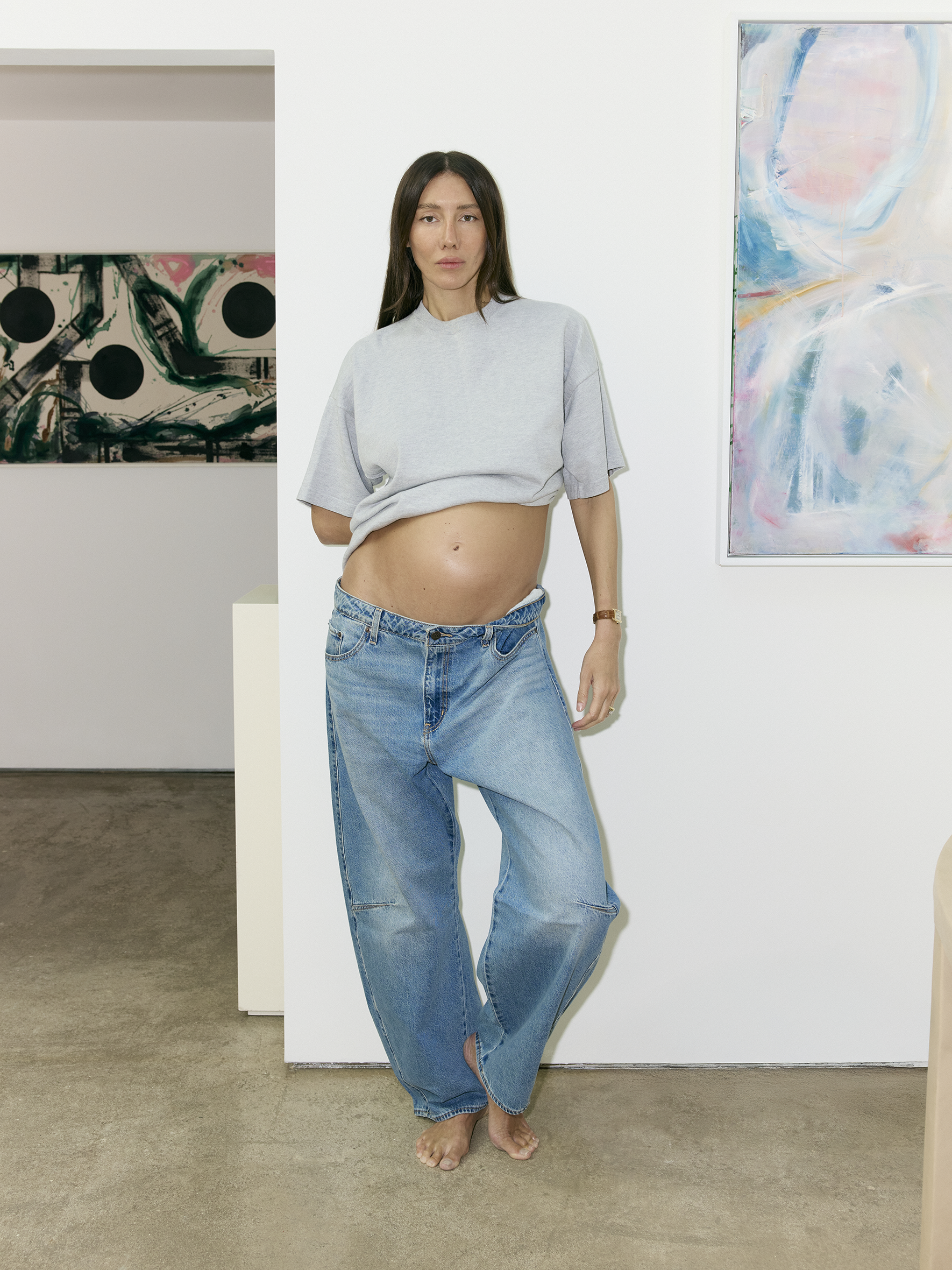
Julie in the Baggy Dad Barrel. Photography by Georgia Devey Smith. Courtesy of HURS.
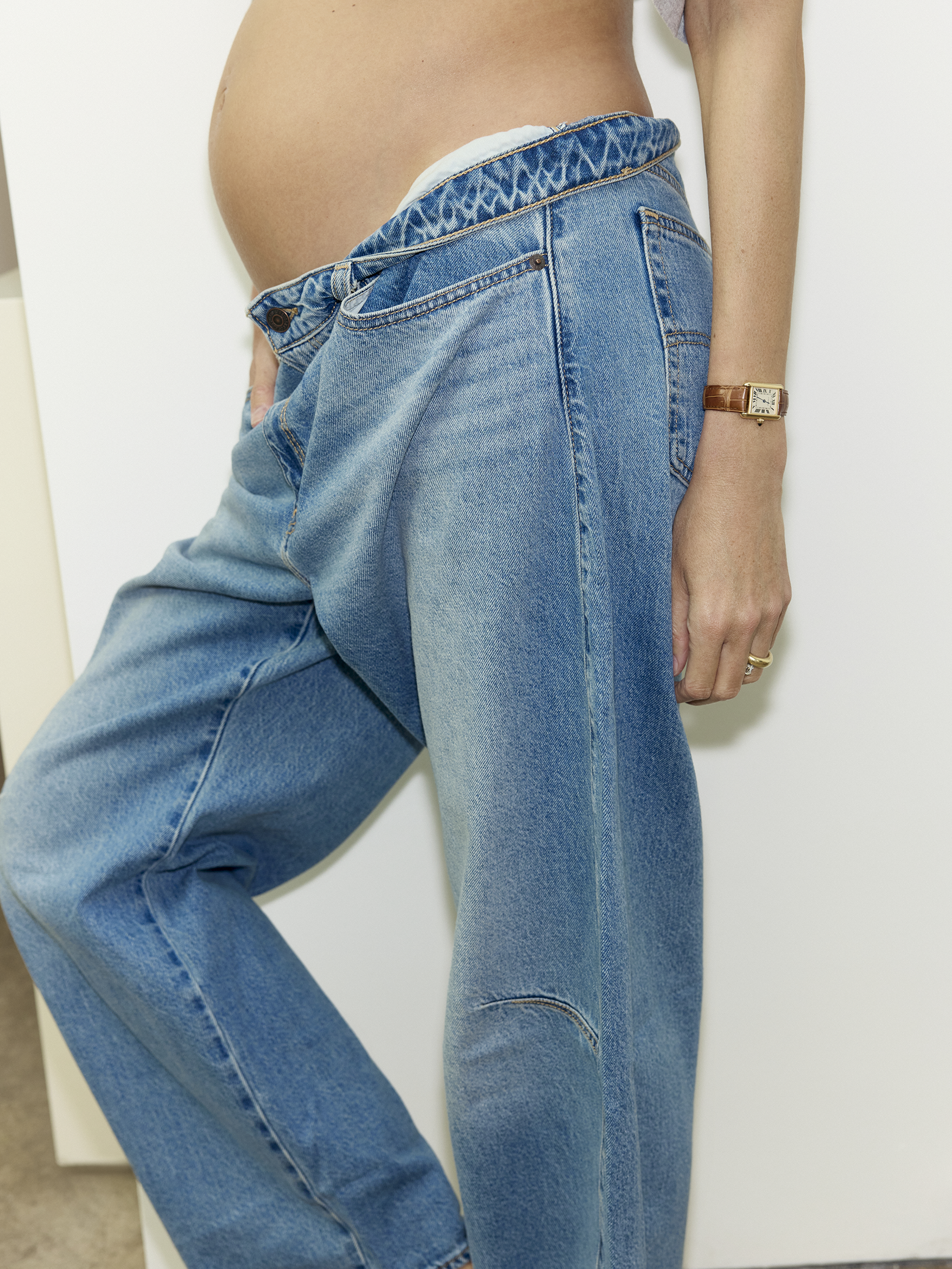
Julie in the Baggy Dad Barrel. Photography by Georgia Devey Smith. Courtesy of HURS.
How do you make a classic piece like Levi’s feel distinctly yours?
By pairing them with BETTTER tailoring. I believe contemporary tailoring can turn any classic piece into a statement.
There are certain pieces of clothing that make us feel like ourselves. Why these jeans? Why this fit?
Baggy daddy jeans, as a juxtaposition to the skinny fit, were always my act of rebellion. This fit perfectly translates my personality into a look.
Some things never go out of style because they speak to something fundamental. What do you think your work and the clothes you choose to wear have in common in that regard?
When a piece of work — whatever it may be — is informed by a message, meaningful research, and smart construction that withstands the test of time, it will never become outdated.
What’s one thing you always carry with you, literally or metaphorically, and why?
I regret to say this, but in full honesty — it’s my phone. But speaking of special events in my life — those life-changing moments such as a project pitch, conference, exams, or any sort of spiritual experience — I have one white T-shirt that became my sacred shield. It’s strange, but I’ve gone through the most powerful moments of my life in that T-shirt. It’s a James Perse Japanese-cotton basic, and it’s perfect. I’m ridiculously scared to lose it.
In a world of trends and content, how do you protect your point of view?
I always act against trends.
What do you hope stands the test of time—not just in fashion, but in the ideas you put out into the world?
The most honest and authentic act of creation is the one that encapsulates a lifetime of experience and research, without any intention to sell it.
This interview has been edited and condensed for clarity.


Shaniqwa Jarvis on why photographs are beautiful liars, grief as a portal, and the moment she found her whole practice hiding in a childhood snapshot.