In HUR Levi’s: Péjú Oshin
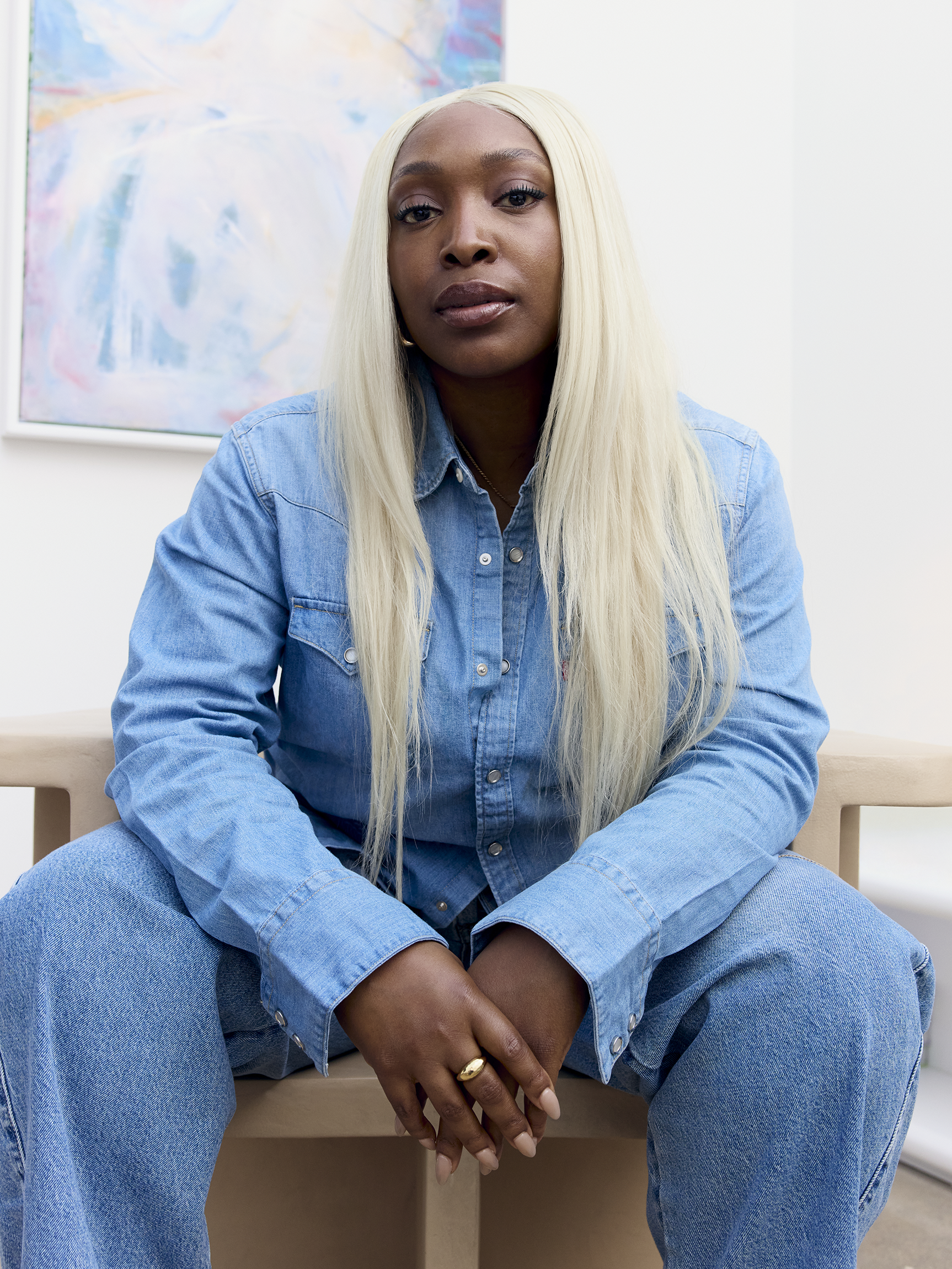
Péjú Oshin’s Canadian Tuxedo, with the Teodora Western Shirt and Baggy Dad Barrel. Photography by Georgia Devey Smith. Courtesy of HURS.
Péjú Oshin
There’s no doubt Levi’s jeans are a classic—worn by icons throughout history. But what makes an icon today? And what’s changed in how they wear their Levi’s? We speak with 5 modern day icons—women who lead where culture goes next—in their favourite Levi’s fit.
In partnership with Levi’s®
By Bonnie Langedijk
Péjú Oshin thinks about liminal spaces–the in-between, where art, style, and culture blur into something new. As the founder of Studio Sovereign, she leads a multidisciplinary practice connecting people, global brands and artists through storytelling and contemporary cultural strategy. Over the past decade, the British-Nigerian curator, writer, and lecturer has collaborated with over 100 artists and cultural producers through institutions like Tate, Gagosian, and the Barbican, while advising brands including Byredo and Universal Music Group on how to connect art with contemporary life. She reveres her elders, makes time for mentoring young people, and believes in knowing what came before you rather than claiming to be first. She wears barrel-leg jeans for their sharp bagginess and a Canadian tuxedo when the mood strikes. At 30-something, she's built a practice on constant reinvention. Of self, of culture, of what's possible when things blur together.
Do you think the idea of the icon has changed in your lifetime? And if so, how?
Yes. Previously icons were really inaccessible. There was always this sense of perfection around them, they were almost myth-like, whereas now I think contemporary icons are more accessible and lead with authenticity. A lot of the people that I admire most, when I think about how I want to be in the world, it's about being authentically me and presenting in ways which feel really comfortable to me in both public and private life.
What do you think are the key ingredients that make someone an icon today?
In modern life anyone can achieve celebrity status, especially with the amount of viral moments we see. The element that separates celebrities from icons is intention, the way they show up in the world. It's about the stance that they take, the consistency of their values, the way they carry themselves. I think all of those things are really important. For me, it comes back to authenticity. There's also this boldness. When I think of icons, there's this joy that a lot of them radiate, it's contagious. That really motivates me because I'm just like, okay, wow. Seeing other women being awesome in the world reminds me to stay rooted and keep showing up fully
Who are those women that you consider icons and what are they teaching us through their iconic-ness?
My list is really long, but I'll name a few. I love Tracee Ellis Ross. Every time I see a version of her out in the world, she’s unapologetically herself. She's goofy, funny, but also a really brilliant actress. There are all of these facets of her and also these really relatable moments. Talking of legacy and icons, even though her mom is Diana Ross, she's been able to forge her own way in the world and still be seen as herself rather than the daughter of. A couple of other women who I consider to be icons: Nina Simone. I remember watching this documentary about her and all the challenges that she faced, but then also overcame. She was a woman who demanded respect and to be paid her worth, essential traits for any woman intent on making it in the world.
“In fashion, everything is so QUICK, ever-changing and there's so much out there that it's nice when something cuts through the noise and people appreciate it for a longer time.”
Classics or icons are rediscovered with each generation. You work in the art space. How do you feel about these people encountering either artist’s work or your own work for the first time?
For me culturally, my heritage is Nigerian. I consider myself British Nigerian. I was born here, but I really keep in touch with my Nigerian heritage. For us, there's such a reverence of the elders within our community.
They're the icons, kind of.
Exactly. There's a Yoruba saying which translated to English essentially goes: “What an elder can see sitting on the floor, a young person can't see sitting in the tree.” For us, there's this real reverence of the elders within our community. In thinking about people encountering artworks by people who would be considered the masters or the greats, I think it's really important to know what came before you. Not necessarily to say that you have to remake that, but I think everyone's so keen to claim that they were the first to do this and that. In my practice, when I'm researching, I want to know what happened before the things that I'm doing now. Rather than reinventing the wheel, what can I use that came before me to really help strengthen what it is that I'm doing now? I think mentoring and making space for conversations are so important. I've always made sure within my career to always make time for young people.
How do you make a classic piece like Levi's feel distinctly yours?
Levi's has always been universal but also an aspirational brand in many ways. Jeans have always been for everyone, and I think that's what's so beautiful about it. That's really reflective of a lot of the work that I do because my work has been really about connecting people through these shared experiences. When I think about denim and its accessibility to everyone. Denim is democratic but expressive. I've always gravitated towards it, from its origins as workwear to how it now transcends space from studio to dinner. Now when I'm wearing it, I love a Canadian tuxedo. The accessories, the shoes are a big part of it for me too.
It's also something you wear throughout your entire life.
With Levi’s there always were lots of stories about how to make them yours. Like, boil the jeans and then wear them and wear them before they dry completely and they’ll fit forever. Looking back, I'm not sure if you're really supposed to do this, but I love the lore. I've also really just enjoyed denim as a fabric and just getting to know them in the different weights and how you can wear them, how they drape and fall.
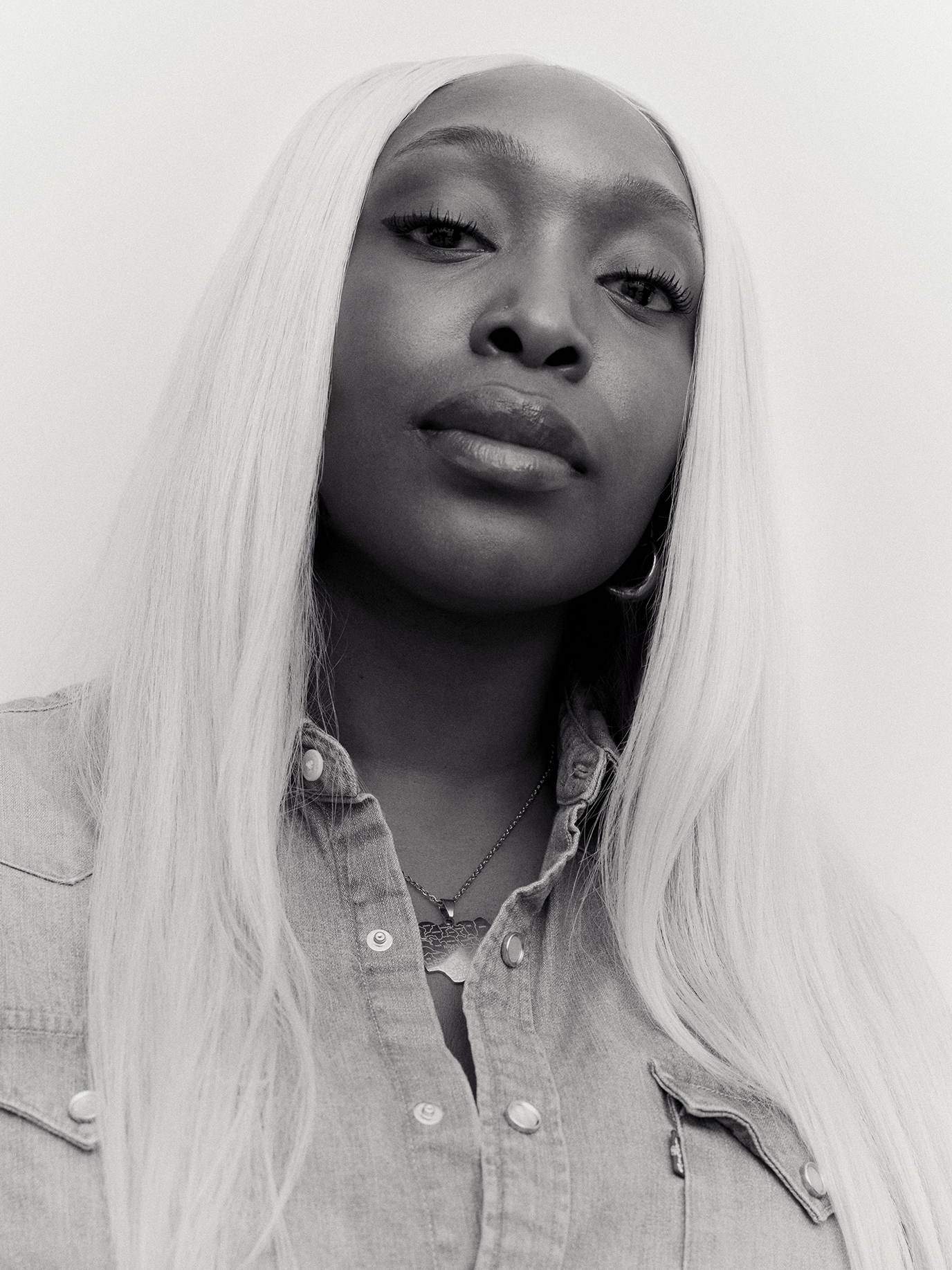
Photography by Georgia Devey Smith. Courtesy of HURS.
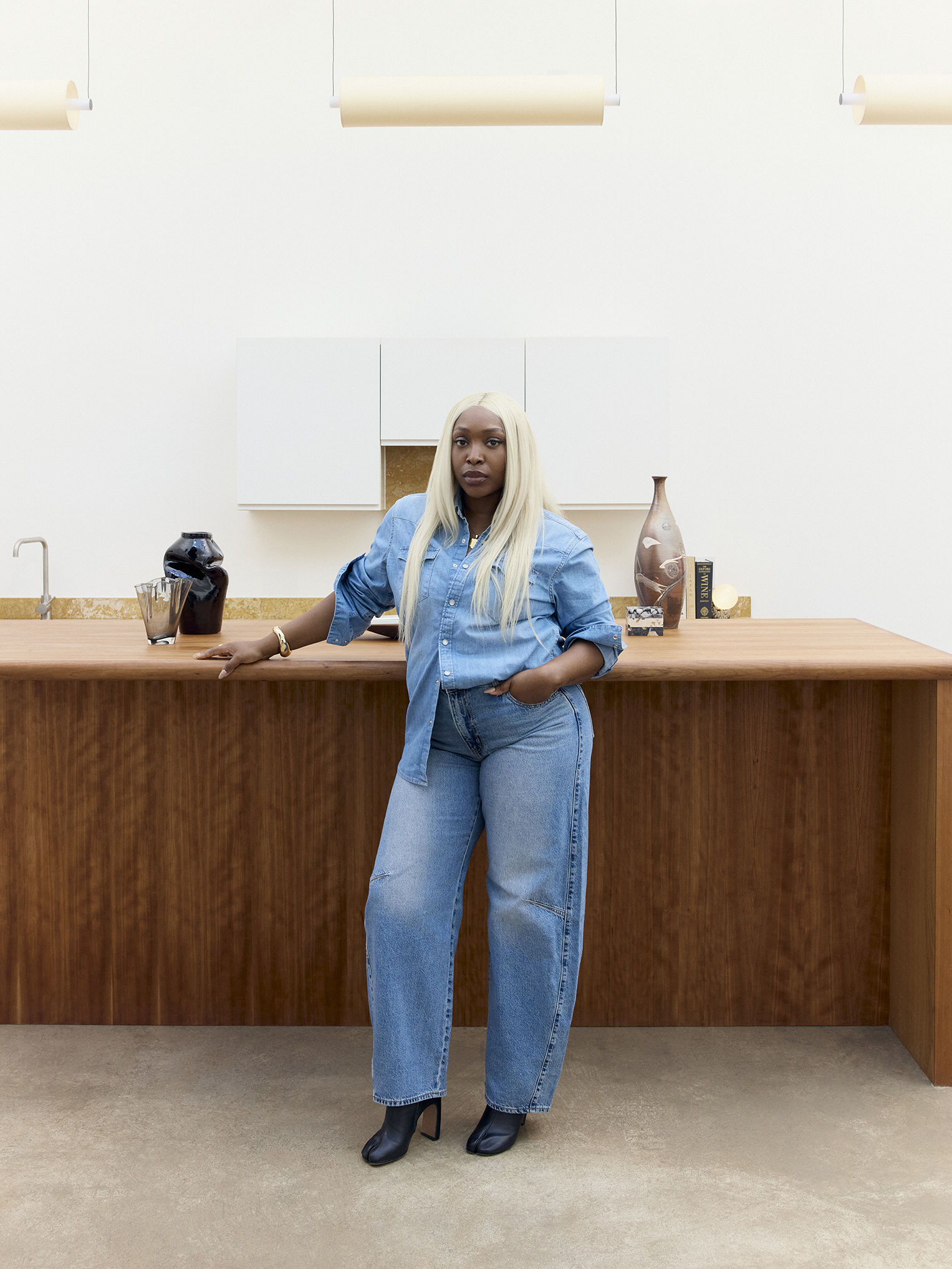
Péjú wears the Teodora Western Shirt and Baggy Dad Barrel. Photography by Georgia Devey Smith. Courtesy of HURS.
Do you have a favorite fit?
At the moment my favorite fit is the barrel leg. I used to gravitate towards a mom jean, but my body has changed over the past couple of years and now especially after just having had my first baby. Now I feel like it gives a bit of structure and it's slightly architectural, which I love. It's sharp and baggy at the same time. I think it's a great entry point for anyone looking to incorporate something a little more structured or statement into everyday outfits.
Some things never go out of style because they speak to something fundamental. I think denim is such a great example of that. What do you think your work and the clothes you choose to wear have in common in that regard?
Within my work, I'm interested in this idea of constant reinvention of self and reinvention of culture. I always talk about liminal spaces within my work and think about what's in between, the overlaps of this, that and the other. As I've been thinking about those ideas of liminal space over the past few years, I realized at this point that the in-between is really comfortable because it's boundless. It goes into all of these different crevices, but you can also see this constant reinvention or making of something new because it's blurring into something else. I feel that's what's happened with my sense of style and the clothes that I wear. It's the normal progression, right? For some of us, we get to a point where things are less trendy and you develop this sense of style. I think that's true of my work as well. There are these key pillars of the work that I do, and then there are places in which I decide to play. For me now, I know that I've got a long torso and shorter legs, so I wear this particular cut of trousers and this type of top. Within my work, these are themes which keep coming up, so I stick here and then from there I play outwards.
I love that. What's one thing you always carry with you?
In my handbag, most certainly aesop rinse-free hand mist, vaseline lip therapy, I'm obsessed, there are tins in most bags and multiples across the house and some sort of Byredo or Liberty of London fragrance. In my mind, I think often about the guest lecture we had whilst in University from the designer Steve Edge. He said, dress for the party and the party will come to you. It works on so many levels, in career, I translate that as you get what you put in. More broadly, it really was that idea of, you meet people all the time and it might be that short encounter on the tube, and they'll never see you again, but that's the version of you that they would've met. It’s that idea of really dressing for yourself, to feel good and not just dressing up for a special occasion.
What do you hope stands the test of time? Not just in fashion, but in the ideas you put out in the world?
We're in this strange moment in time where we've seemingly become resistant to change. But growth depends on it. I'm hoping that we can hang onto evolution because tradition grounds us but so does transformation. I really believe in the power of looking at what came before us because the past isn't behind us, it's beside us helping us navigate new terrain. Evolution is beautiful. Change is beautiful. And how beautiful is it to be an individual whilst connected to the collective?
This interview has been edited and condensed for clarity.

Shaniqwa Jarvis on why photographs are beautiful liars, grief as a portal, and the moment she found her whole practice hiding in a childhood snapshot.