In HUR Levi’s: Mimi Shodeinde
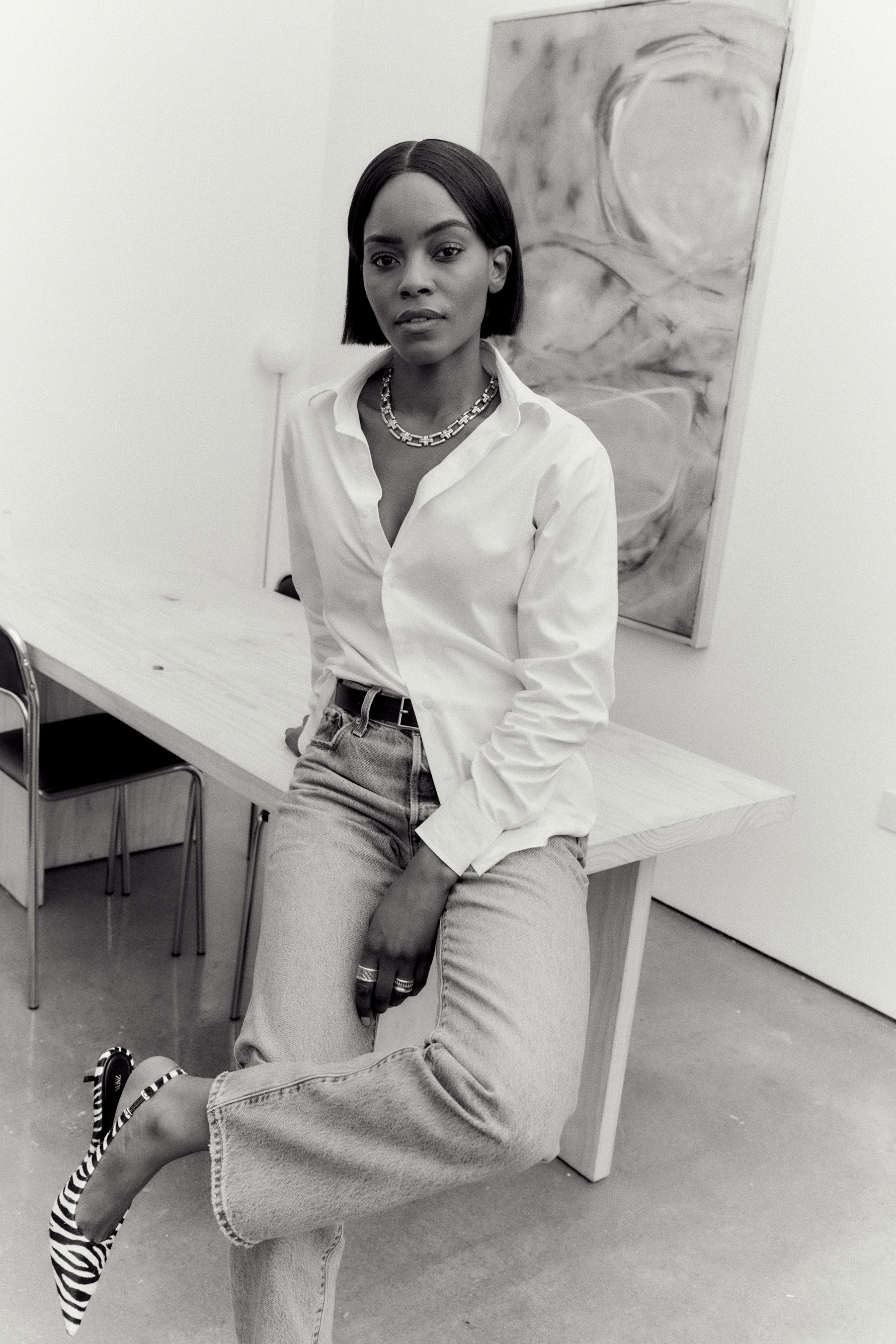
Mimi Shodeinde in the 501 Original. Photography by Georgia Devey Smith. Courtesy of HURS.
Mimi Shodeinde
There’s no doubt Levi’s jeans are a classic—worn by icons throughout history. But what makes an icon today? And what’s changed in how they wear their Levi’s? We speak with 5 modern day icons—women who lead where culture goes next—in their favourite Levi’s fit.
In partnership with Levi’s®
By Bonnie Langedijk
Good luck stopping Mimi Shodeinde. The British-Nigerian interior designer has built a practice on one principle: design what you want to see in the world. As founder of Miminat Designs, she crafts sculptural, modernist spaces that span continents. From London to Lagos, Kuwait to Los Angeles, each one a dialogue between art, craft, and architecture. Her work is handcrafted by skilled artisans, blending contemporary design with time-honored techniques, where the old speaks to the new, always. Her mother once told her that being iconic isn't about being seen, but about building something that lasts. Accompanied by her intellect, wit, and relentless ambition, that's exactly what she's doing.
Do you think the idea of ‘the icon’ has changed in your lifetime? If so, how?
Yes, definitely. Icons used to feel distant, untouchable. Now the idea is broader — rooted in authenticity, culture, and individuality. It’s less about fame and more about presence and integrity.
Do you think icons are born, made, or observed?
All three. There’s something innate about them, but also something shaped through experience. And ultimately, it’s how people see and connect with them that makes them iconic.
“I always strive to work on things that are TIMELESS. So when someone younger encounters my work for the first time — it reinvigorates me.”
Are there women—past or present—you consider icons? What do they teach us now?
My mummy. She’s strength, grace, and vision all in one. She taught me that being iconic isn’t about being seen, but about building something lasting.
What's interesting about classics or icons is how each generation rediscovers them anew. How do you feel about younger people encountering your work for the first time?
I find it like a breath of fresh air. I always strive to work on things that are timeless. So when someone younger encounters my work for the first time — it reinvigorates me. It renews my passion. It reminds me that design, or any creative endeavour, is not static. It moves, it connects, it finds new relevance.
How do you make a classic piece like Levi’s feel distinctly yours?
A true classic adapts to you. Whether casual or formal, it’s about how it’s worn and styled. I bring my own tone through detail and structure — that’s where the personality lives.
There are certain pieces of clothing that make us feel like ourselves. Why these jeans? Why this fit?
They just feel right. Effortless. I could have them in any shape and still feel myself in them.
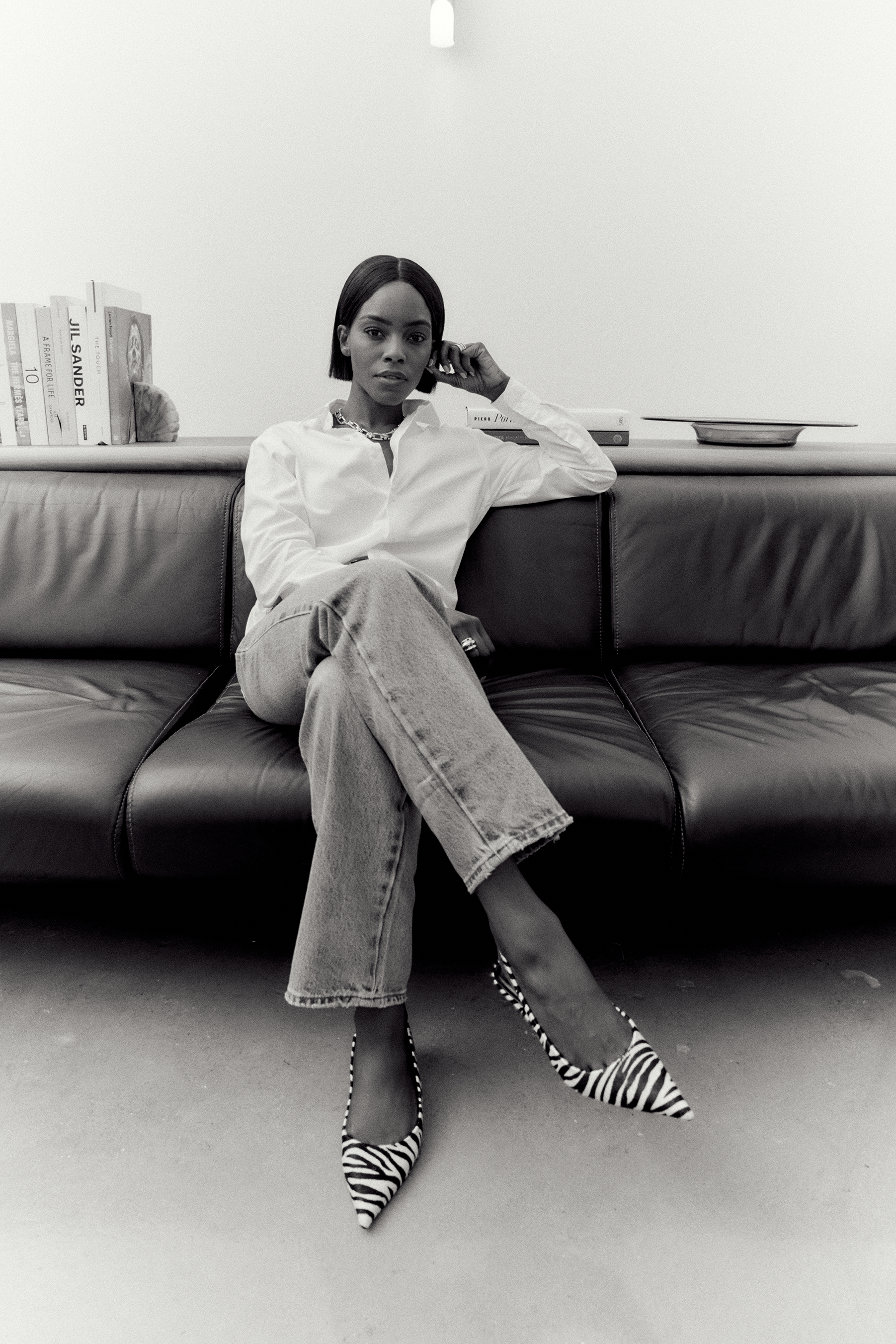
Mimi Shodeinde in the 501 Original. Photography by Georgia Devey Smith. Courtesy of HURS.
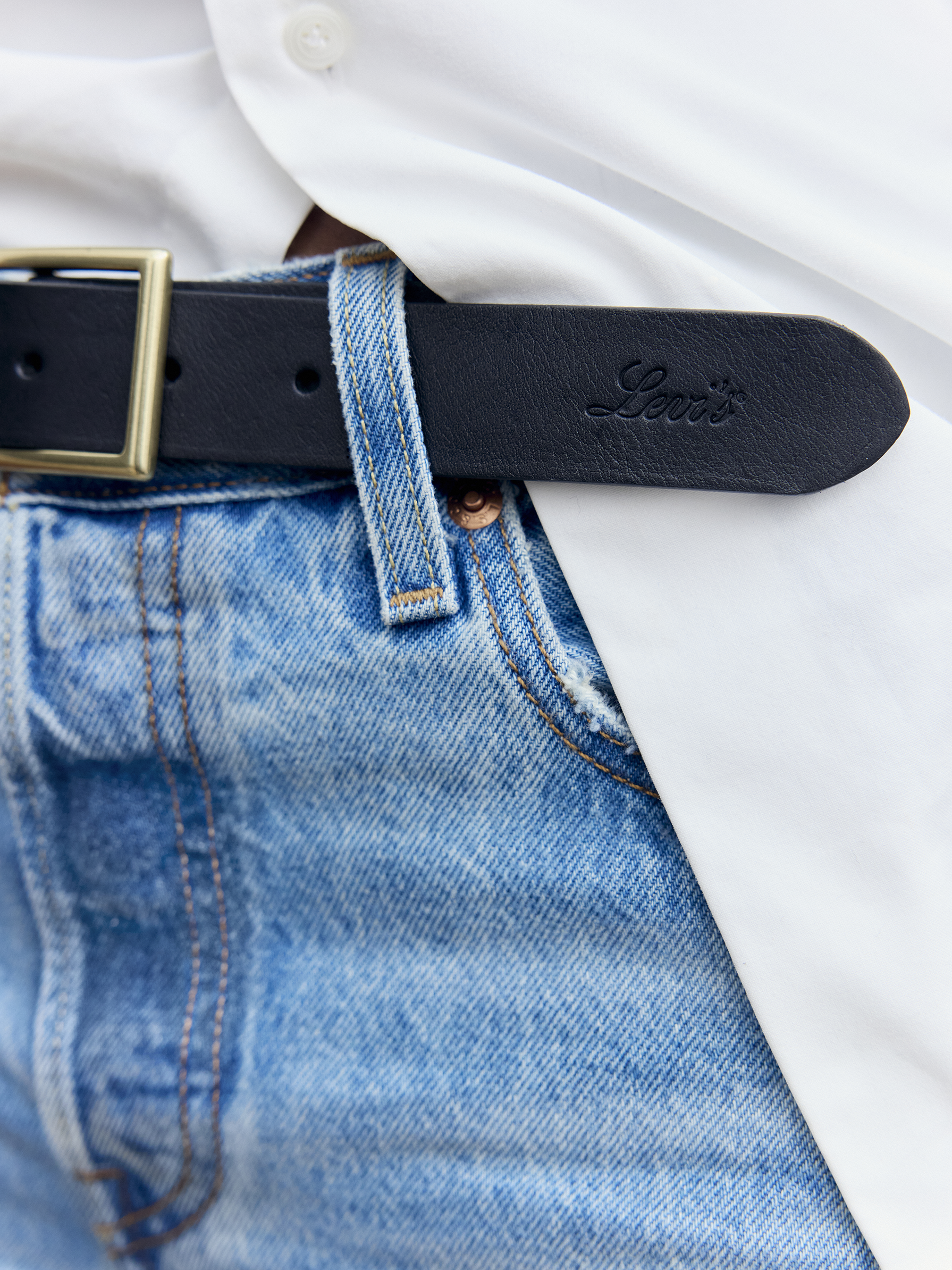
Photography by Georgia Devey Smith. Courtesy of HURS.
Some things never go out of style because they speak to something fundamental. What do you think your work and the clothes you choose to wear have in common in that regard?
My way of designing is often about layers — just as clothes are. There is structure and there is fluidity, there is what you present and what you feel. The materials, the craft, the way elements come together: That’s the backbone of both my design work and the wardrobe pieces I gravitate to.
What’s one thing you always carry with you, literally or metaphorically, and why?
Lipgloss — always. And a sense of curiosity. Both keep me ready.
In a world of trends and content, how do you protect your point of view?
By staying true to what I believe in. I design what I want to see in the world and highlight the beauty that surrounds us, not what’s trending.
What do you hope stands the test of time—not just in fashion, but in the ideas you put out into the world?
My intent of beautiful and art-led design — that’s something I hope stands the test of time. I hope the ideas of craft meeting culture, of the old and the new having a dialogue, of authenticity, of space and form being meaningful, of objects carrying story and soul — these are what I hope remain. In fashion, in design, in life — I hope what I put out is not just momentary but enduring.
This interview has been edited and condensed for clarity.


Shaniqwa Jarvis on why photographs are beautiful liars, grief as a portal, and the moment she found her whole practice hiding in a childhood snapshot.