In Her Time: Katja Pargger
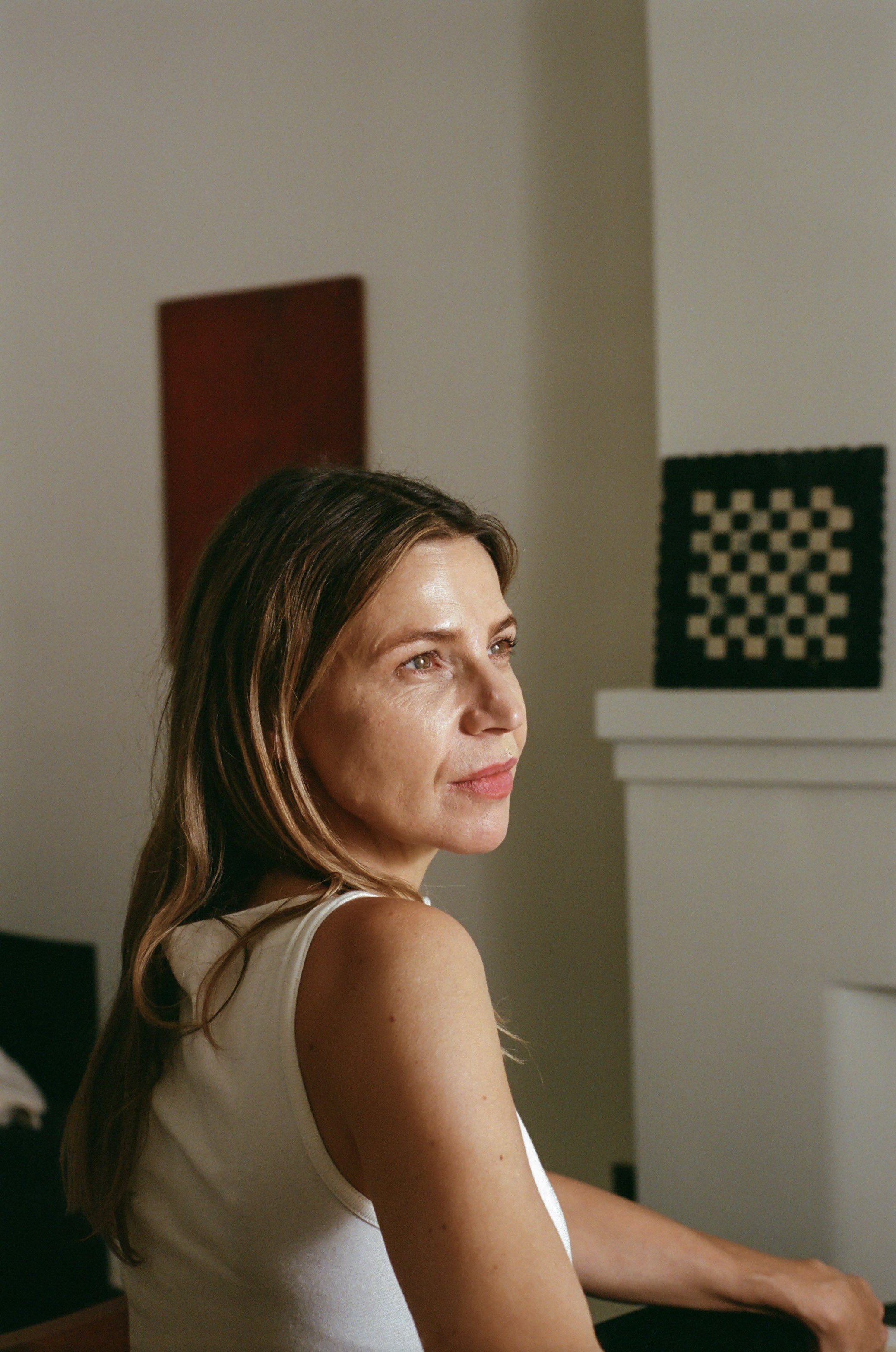
Katja in her studio in Paris, captured by Olivia Lonsdale. Courtesy of HURS.
Katja Pargger
In Her Time
There is a particular pleasure in watching someone spend her time exactly as she means to. These three women have made an art of it. A chef, an architect and a founder, each keeping her own clock, and happy to. We asked them how. In partnership with CHANEL.
By Bonnie Langedijk
Katja Pargger builds things designed to outlast her. Raised in the Austrian mountains and trained in Innsbruck, she has run her Paris studio since 2013, working across buildings, interiors and the singular objects she calls Items. She is unbothered by the deadlines that seem to govern everyone around her, on the grounds that a building is barely finished the day the keys change hands, the interesting part is how it wears in, catches the light a few years on, and develops a character no drawing could have accounted for. She chooses materials that age and designs for a room's fortieth year rather than its first. Very precise, until the moment she throws one unexpected thing at it and decides it's done.
Bonnie: Were you aware of architecture as a career as a child?
Katja: No, when I was a kid, I didn't know any architects. It was really far from what I would one day become. It started when I was 14 or 15, I would say. Everything started with art. I was really into art. I started to travel, and I discovered places and monuments, places where art is at home. I started to bring these buildings into my thinking, and I noticed their aesthetic. I got more and more into architecture. Then one day I had to decide between studying art history or studying architecture. What I really liked about the idea of being an architect was the functionality: there is a real need to build something for people and to find answers to social problems and cultural issues. That's why I chose architecture.
How do you think about longevity in your work?
Katja: Longevity is very important to me in architecture, but also in design. In architecture, you construct a building, so it has volume and it's seen from the outside. It has a big impact on a city or a landscape, socially and culturally too. So for me, it's important to understand how the architecture will stay connected to its surroundings, to its context. That's something we have to integrate from the beginning. Also the patina of the building, which is a very important issue for us in design as well. How will it age? When a project is finished, when we complete it, it's only the beginning of a building or an object. Sometimes that's a bit hard, because the client naturally sees it in the first year, when everything is new and finished. But what we do as architects and designers is think about how this place or object will be in a few years or a few decades. That's something we naturally integrate into our design process. In architecture, you have to think about how you place a window: what will be seen from it today, and what might be seen in 20 or 40 years. A tree in the garden might be small when the house is finished, but in a few years it may be very tall and become part of the room, part of the window. Material-wise, it's important for us not to treat materials as something that has to stay brand new for its whole lifetime. We choose materials that age naturally, like stone or leather, which develop a patina.
So an object or a building keeps evolving after you finish it. Maybe it even becomes better with time.
Katja: What I find interesting is how a building or an object slowly develops a kind of soul. That's part of longevity. You can't completely design that soul. It comes from the people around these objects, designs or buildings: their gestures, their habits, their memories, the light, and the imperfections that appear over time. For me, an architect can't really forecast how things will age, but they can create the conditions for it to happen.
“What I find interesting is how a building or an OBJECT slowly develops a kind of soul. That's part of longevity. You can't completely design that soul.”
What's your personal relationship with time?
Katja: For me, time is a real luxury today. I run a business. I have two kids who are still small, so they need a lot of time. And as a woman, as a person, I also need a lot of time for myself. I need to be very organised to have time for everything I want to do. When I think about time, I think there are different scales of time. There's the time to educate yourself, to live your vision, to become who you are. That takes time. It's something for the long run, I would say. Then there's a very dense time, when you're working on something: a new project, a deadline, a presentation, or even with your kids when there's an event coming up. That's when you have to stay focused, so things around you become a bit less important in those moments. And then there are moments that are denser still: when decisions have to be made. That's on a daily basis. I make a lot of decisions every day, and some I'm obliged to make on a particular day. But there's also time I give myself not to decide, because I need to think things over. I'd say that's my time, where things need to be processed, where I need time to doubt or to be self-critical, and that's very precious to me. It's not always easy, because clients, my team, always need answers and decisions. Sometimes you're quite alone with yourself and under pressure, but you know that to make a good decision, you need the right time. This is where you need a very strong character, so you're not eaten up by the world.
In your work, are there parts of the process that move very quickly and parts where you take more time?
Katja: It depends on the project. There are issues where people are waiting for decisions and I'm not able to make them yet. Sometimes I really have to force myself and say, "Okay, you have to set priorities. What's really important to you?" So there are things you let go of. You decide on them because you want to clear your head, and you say, "Okay, this one I can let go, I can decide." But there are also issues you just can't decide, even if people put you under pressure. If it's not the right time, if it doesn't feel right, I really refuse to decide, which can upset people around me. But I really need to listen to my gut feeling in those moments. Otherwise, I know I'll be so unhappy afterwards. I think at my age, you learn to build that into your daily life: you learn you can trust yourself.
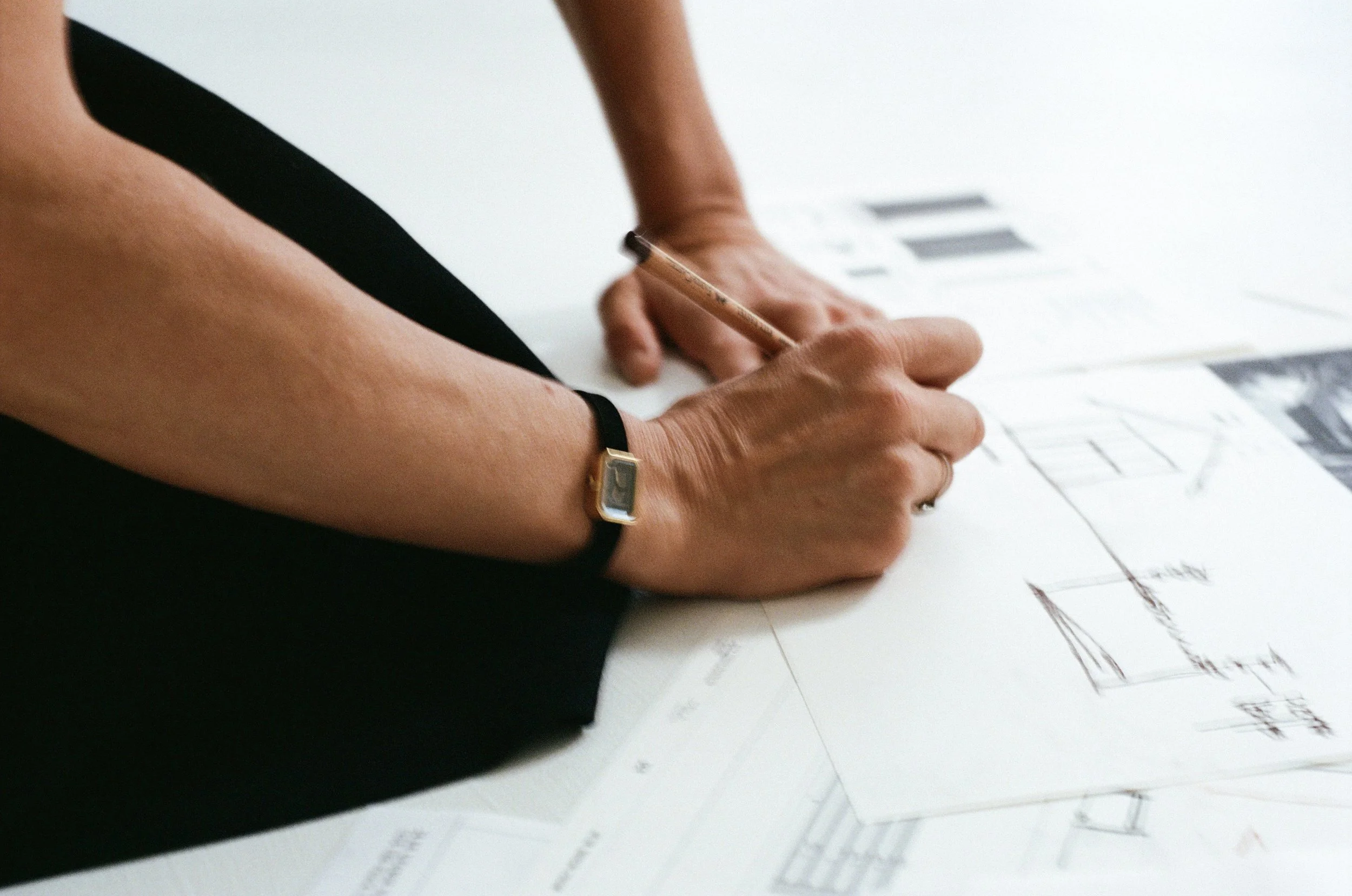
Katja in her studio in Paris, captured by Olivia Lonsdale. Wearing the PREMIÈRE RIBBON watch. Courtesy of HURS.
That takes a certain confidence and experience. To me, it feels like there's such a freedom that comes with age.
Katja: Yes, of course. There's an age when you get a bit afraid of aging, because you see your body changing and everything around you changing too. So it can be kind of disturbing. But once you're okay with it, you start to see the positive side of aging and of experience. You live with your patina, and you know its benefits.
In your work, since you talked a lot about gut feeling and making the right decision, do you also work very intuitively?
Katja: Yes, all the time. But it makes things difficult for me, because I'm never sure. I have this feeling that things aren't right, and most of the time it's very hard for me to explain why, because it really comes from my soul. It can be confusing for the people around me. It's something that's difficult to put into words.
I relate to that. Do you work mostly digitally or with paper and pen?
Katja: Both. Every project starts with books and drawings. Books are the most important thing for me. Then, as it develops, the computer comes in, and after that I always go back to drawing by hand. I also take a lot of time to walk through the city. I walk a lot. I go to see lots of exhibitions and galleries. I need to be inspired, especially when new projects come in. I can't stand still. I get completely absorbed by an idea, and I look for ideas everywhere, but mostly by walking.
How important is the space you're in while you're doing that?
Katja: I need a very clean space to work in, because almost every new project starts with a blank page. We don't repeat ideas or designs.
What I love in your work is that there's often a precision to it, but also something unexpected. Do you think there's a relationship between patience and precision?
Katja: Precision requires patience. When we start a new project, it's a bit chaotic: a lot of material, lots of different ideas, lots of references. Then, little by little, we ask ourselves what is essential. We reduce, and by taking things away, we become more and more precise. That's what takes time. But when it gets too clean and too precise, I feel, "This isn't human. Something is missing." So every time, even if I don't intend it, there's a gesture, something surprising that comes up. For me, that's the beginning of the end of a cycle, and then it feels right to me.
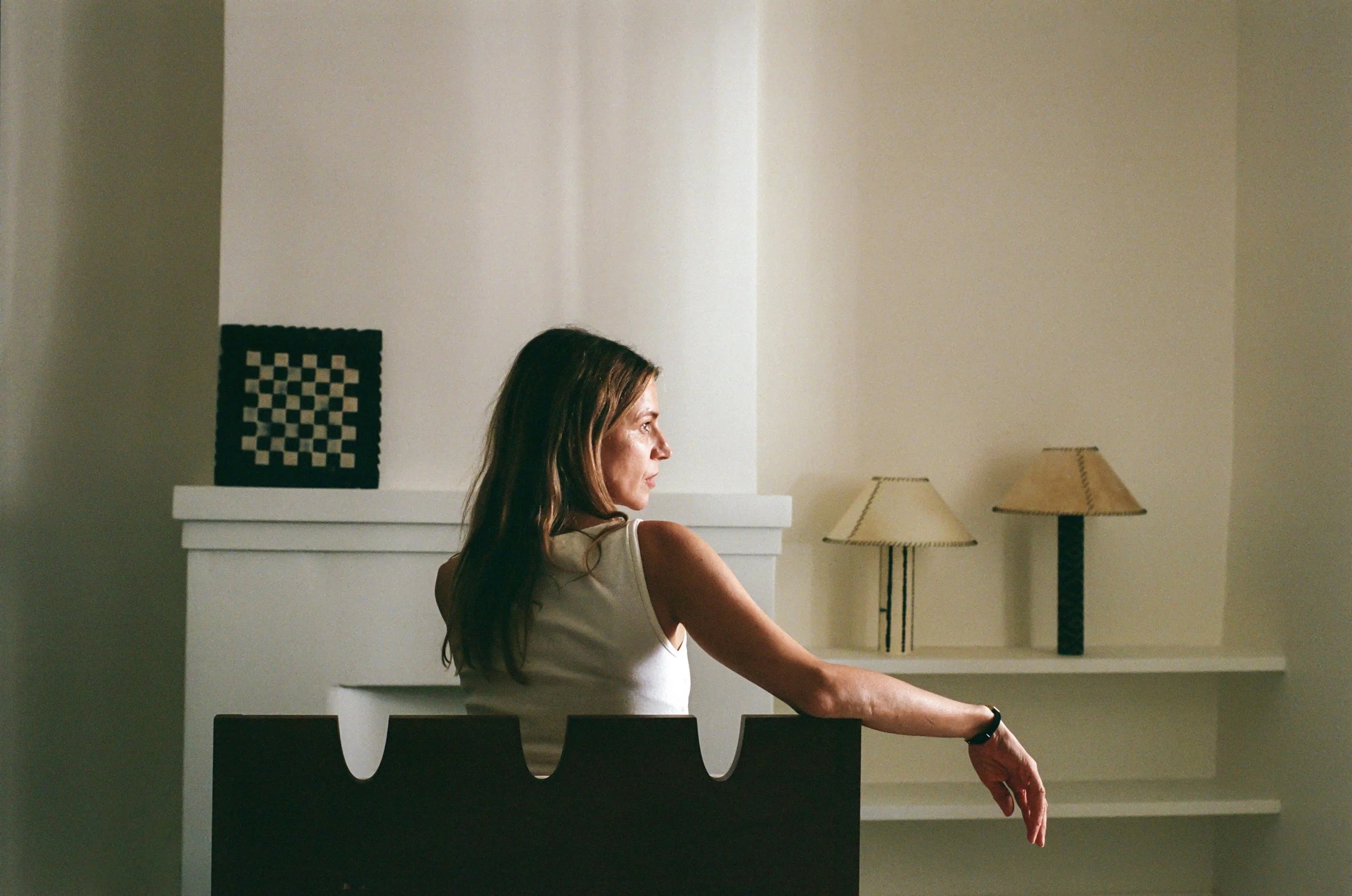
Katja in her studio in Paris sitting in her Mohair and Okoumé wood Mélodie Crown Chair, captured by Olivia Lonsdale. Wearing the PREMIÈRE RIBBON watch. Courtesy of HURS.
It's almost like it reaches a perfect point and then you want to do something that's... I love the human element you mentioned.
Katja: My partner says: "The Austrian girl makes a box, a clean box. Everything is super precise. And then what happens? She throws something on it and says, 'Now it's okay. Now it's finished.'" And he's right. My approach is very minimal, almost Swiss in its rigour. But on nearly every project, something else comes in: one element that unsettles the order a little. Over the years, that element has become my style. The rigour is the frame, and the disruption is where you find me.
What was the first thing you built that you would still stand behind?
Katja: The first decision I made that I still stand behind, which was also the beginning of me as a creative person with a vision, was my thesis. I studied architecture, so of course the idea was to make an architectural proposal for a building, but I decided my proposal was not to build. While I was doing the thesis, it felt right to me, but my professor said, "Yes, but you're doing an architecture diploma. You can't propose not to build. So what's your position? What is this all about?" It still felt right to me, so I completed my course with this proposal. But I didn't feel comfortable, because I didn't have that confidence yet. Now, years and years later, I think I really made the right decision. Of course, just saying "don't build" on its own doesn't make sense. The idea was to create a building in a very sensitive landscape, surrounded by lots of different problems: natural disasters, like floods and avalanches, a place where you shouldn't build. And today we see so many examples. We're now confronted with climate change, and so many disasters happen because we built without thinking about what nature could one day do to it. So I think it was a good decision, a vision actually. I'm quite proud of it.
Especially at such a young age. Very punk.
Katja: Super punk. And of course I still had to make some kind of proposal, because the site was next to a river. I designed an object made of earth that you could visit, but you could also watch it being destroyed as it aged, because the water would erode the building. Being made of earth, that was part of the visitors' experience: seeing how a building is destroyed by water. It came from the earth, and I gave it back to the earth. I think my practice today started at that moment.
It's interesting, because I think the latex kimono you made is also very punk.
Katja: Yes. For me, it was a premiere to design the Kimono, because for the first time it wasn't a functional piece. Design was always linked to architecture for me, so my pieces always had a function: something you can sit on, a table. With the Kimono, there was no client, no commission, no function. I just wanted to realise an idea I'd had in mind for so many years, and there was never time to make it. Then one morning I woke up and said, "Okay, let's do it."
This interview has been edited and condensed for clarity.


Shaniqwa Jarvis on why photographs are beautiful liars, grief as a portal, and the moment she found her whole practice hiding in a childhood snapshot.