The Voice That Moves You
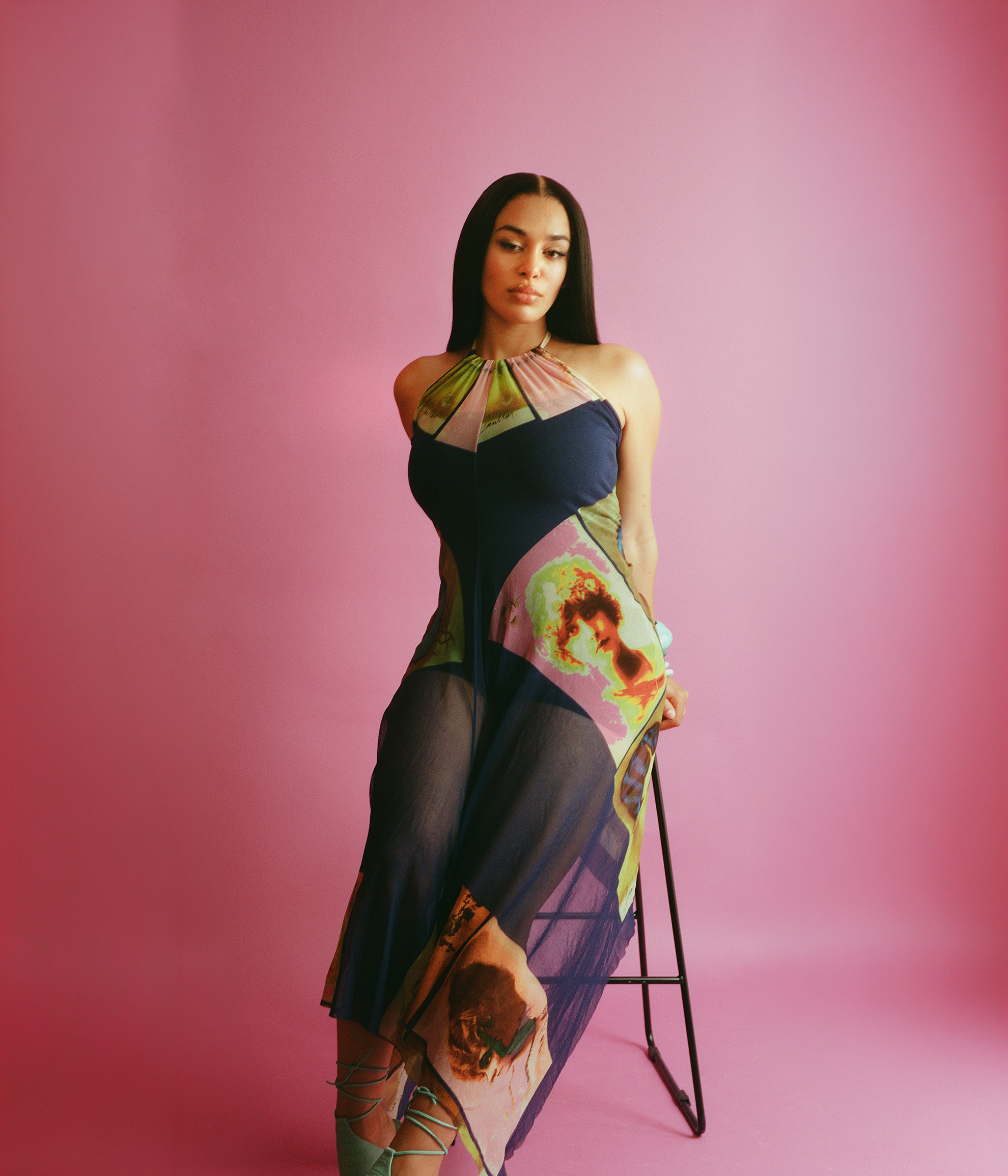
Photography by Ivor Lawson-Adamah. Courtesy of Jorja Smith.
Jorja Smith
The Voice That Moves You
By Bonnie Langedijk
Jorja Smith has never been especially interested in doing things the way they are usually done. At eighteen, the age at which most new artists are busy signing themselves away, she did the opposite and started a label. FAMM, which she has run since the very start of her career, remains genuinely independent, and its instincts run to soul, R&B and the broader spectrum of British music. It was, in hindsight, an early sign of how she would go on to move through the industry, on her own terms and rarely in a straight line.
The particulars of the career are, by now, well established. There was the teenager uploading covers from her bedroom in the West Midlands. There was "Blue Lights," which turned ten this year, and a debut, Lost & Found, that landed in 2018 to a BRIT, a Grammy nomination and no small amount of expectation. She has since sung alongside Drake and Kendrick Lamar, played festival stages around the world and become a fixture of the industry.
What Are The Odds, her third album, arrives on 21st August via FAMM, and it is very good indeed. Twelve tracks made with her longtime producer P2J, it reaches back into the sounds she grew up inside: garage, funky house, drum and bass, the warm end of British R&B. There are features from Wizkid and the grime lyricist Devlin, and yet the record never trades on nostalgia. It moves instead, bodily and by instinct. Few artists can hold all of these British worlds at once. Jorja can, because she has lived in every one of them.
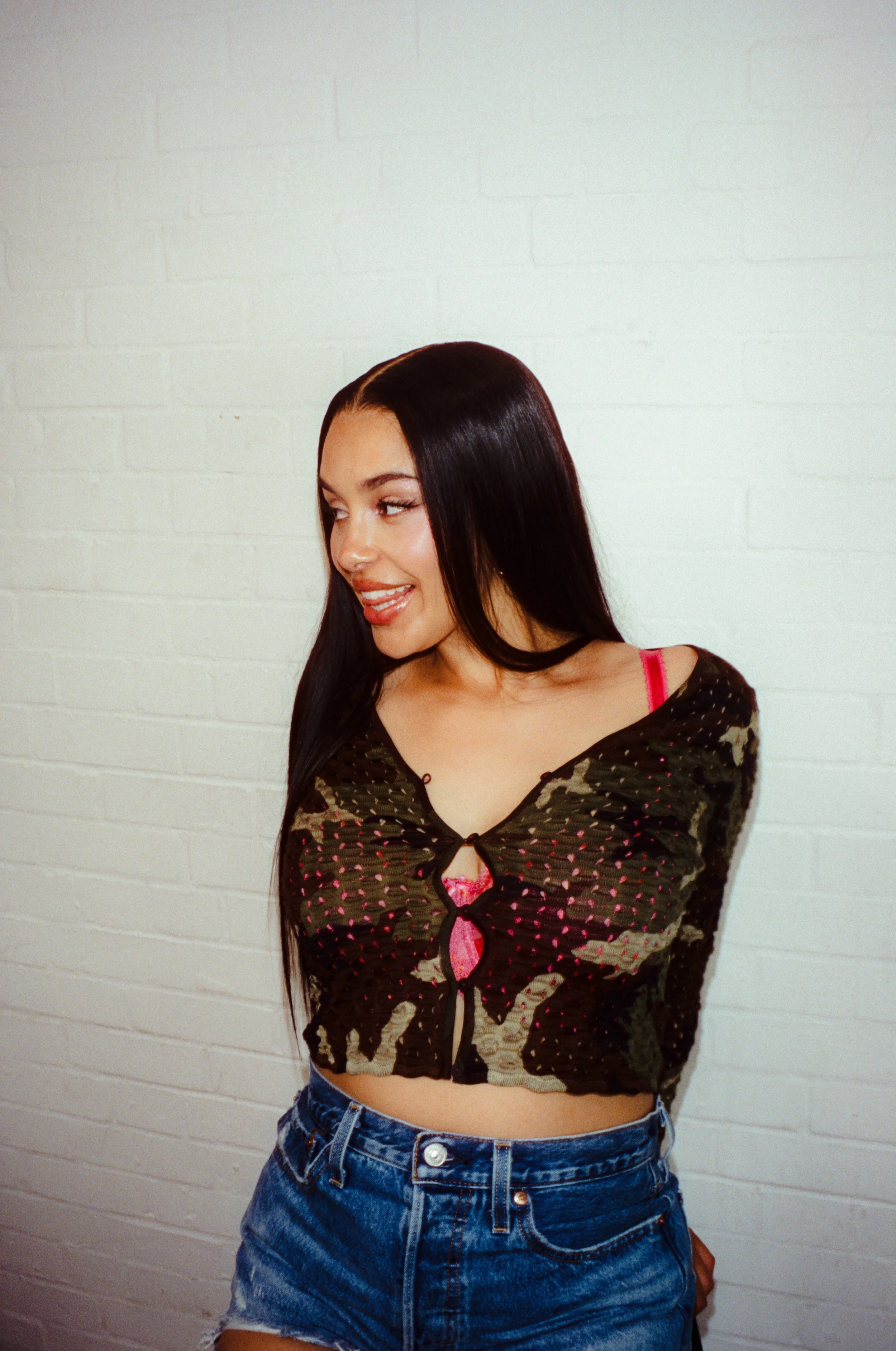
Photography by Ivor Lawson-Adamah. Courtesy of Jorja Smith.

Photography by Ivor Lawson-Adamah. Courtesy of Jorja Smith.
Bonnie: Congratulations on the new album.
Jorja: Thank you. We're rehearsing for All Points East, where I'm performing the day my album drops. I'm really just excited. And then hearing everything live…I'm just smiling because I literally just came out of the room and we're practicing the song "This City," which features Devlin. It just brings a whole different life to what it was in my head and in my headphones.
You stepped back from social media and some of the public-facing side of being an artist, while continuing to perform and release music. What did that change for you?
Jorja: I see a lot of, "Oh, I took time out, I'm back." But I've always done live performances every single year, and people assume I've gone away, but I've been releasing music. I did take a step back from social media. It just shows how much your presence online, or being out and about at events, can mean.
I can also imagine that when you're in the process of making an album, you want privacy and social media is so much about showing.
Jorja: When I get into the studio, I'm not putting my phone up to record. That's the last thing I'm going to do. I just want to be me, I've never been good at capturing things. But when I’m 50, I would want to look back at stuff. I definitely took some time away from online, because it's too much. But right now I've got a balance. I've got to move with the times. It'll be great to look back on, not just for people to see my creative process, but for myself as well.
“There's so much ENERGY and motion in this album, everything made sense. Nothing felt rushed, it was as it was meant to be..”
What was your starting point for this album?
Jorja: After P2J and I did "Little Things," we both had the idea of making a dance project. We'd gone back and forth for two years, just chatting, catching up, sending each other vibes, songs we liked, sounds we liked. And then we got in the studio in September 2025. P had created all this music from our conversations, and I couldn't believe how amazing everything sounded, and I sang to everything. Then I went on holiday for almost two weeks and I just wanted to be in the studio and write. I started writing in November, December. I wrote with a lot of friends: Katanas, Hope and Millie, they're twins and a group. Maverick Sabre, who I wrote with a lot. And Clementine Douglas. We started making this music in September and I wanted to put it out in summer. I usually like to take time, but for this I wanted it to be a collaborative process. We submitted it in April 2026. I loved this process. There's so much energy and motion in this album, everything made sense. Nothing felt rushed, it was as it was meant to be.
There’s this misconception that the creative process needs this element of struggle, but it can also be this flow, or process filled with ease.
Jorja: Me and P had a plan, but I didn't tell anyone. I didn't tell FAMM. I didn't tell my friends. I was just like, "Oh, I'm just in studio." It all just felt real natural. I can't say every process to make music is like this, but this was how this was.
The songs I heard, you can really hear that energy. You said you wanted to make songs you could dance to, and I can imagine that's maybe not what people expected from you.
Jorja: And I haven't done that before either. I just thought, this is what I'm drawn to, this is what moves me. I want to dance myself, I want the listeners to dance. If you strip back some of the songs, I'm singing about loneliness. Some songs are sad, but you're going to move your feet to it. I'm aware people will want to hear what they want to hear from you, and this might not be what everyone wants to hear from me, but you just got to trust me.
Being an artist now is about so much more than the music. How do you think about building the world beyond it: the visuals, the clothes?
Jorja: I'm trying. It's hard because I just want everything to reflect me, be me. Music always comes first. I'm extremely music-focused. So when it comes to styling and creative, I'm really excited. I'm working with Working Studio. It’s great because I get to work with some of my best friends, Erin [Corrian-Alexis] and Ivor [Lawson-Adamah]. Erin's seen me grow, and sometimes she can see me in a different light to how I see myself, so I trust them both. There's a lot to think about, sometimes too much. We've got certain words we continue to come back to: motion, glowing, movement, in the car.
And I think it’s hard sometimes to define or translate who you are into visuals, styling, creative when you have to do it yourself. The same goes for having to explain creative decisions or choices. Sometimes it’s just intuition.
Jorja: Sometimes it just is. There's one thing about being understood and wanting to be understood, but it's also nice to be interpreted. You take from me what you want to take from me. That's why I'm here. I'm a little vessel that my music comes out of.
I wanted to talk about FAMM. Has having your own label changed how you think about making music?
Jorja: I don't know any different. We started FAMM when I started. We used to have a group chat called FAMM, back in the day. We're figuring it out as we go along. I'm quite close to decisions and I'm learning a lot. I love being independent. I don't know the hardships that come with being signed to a label. We just want to develop and nurture and care for artists. That's how you get the best out of people, when they're cared for and happy. We're a family.
It's also what the role of a label is, right? Before, they got your music played in certain places, or got you on radio, TV.
Jorja: You can do things yourself now. You can promote yourself, but it's hard. I actually can't imagine putting out my first song now. Where would I start? It's so saturated. There's so much talent, and things get lost through the fact that there's so much out there.
Bonnie: And on being independent…
Jorja: I don't really talk about being independent. Because I started when I was 18, it was never a thing. So when I meet people, they're like, "Oh, who's your label?" I'm like, "I'm not signed." And they're like, "What?" I'm like, "I have my own label. It's called FAMM. That's me." It shocks people, so I'm super proud. But I want it to be more that it's not a shock that I'm independent. It should be like, "Oh, you're independent, duh. That makes sense for your moves and what you're doing."
There are many British artists who are doing very well right now, and a lot of them are independent too. How do you feel about British music?
Jorja: I love British music. There are so many genre crossovers, everyone's culture all mixed together. People just do what they want here, and are so influenced by so many sounds: jungle, garage, grime, UK rap, R&B, everything in a mix. I'm just thinking of artists I'm excited for, like Nia Archives. Love her. British music can be so unexpected, you don't know what you're going to get, which I love.
When you were 18 and starting out, did you ever expect to be where you are now?
Jorja: Nope. As a kid, I was so hard on myself. When I had Twitter, I was in school, I swear I wrote a tweet like, "I want to be on Jools Holland." And I did that. But I've never had goals since putting out music. As of recently, I’m thinking more about wanting to speak some things into existence, because I've got this far. At 18, I did not think I'd be performing all over the world, on magazine covers, making music videos, someone that people know, not just a girl from Walsall. I'm grateful. I just love making music and I won't stop.
Do you get the chance to speak to other artists?
Jorja: Everyone's on a crazy busy schedule. But I met Lola Young recently, she's incredible. I've seen her live twice. She's such a gem and I'm so excited for her. It's mad, I am not a new artist anymore. I met Sienna Spiro the other day in France and she was like, "I listened to you when I was 12." I was like, "What the fuck?" Now that I've been in this industry for 10 years, if I meet new artists, I'm here. There's no handbook, and everyone's experience is so different, but I'm sure there's something I might be able to give some advice on.
It seems like you've built such a family of people you can trust. As an artist it can be very isolating, so you need that.
Jorja: Definitely. With me, and probably similar to other artists, we isolate ourselves, then when we're out the other end we talk to people about how we've been down. I can always speak to Maverick Sabre. He's been in my life since I was 15. He did a really good talk on Mo the Comedian's podcast. I recommend all artists go check that out and listen to Mav. I'm really lucky I've always had him in my corner.
To end, is there anything right now you're curious about?
Jorja: Two things. I just decided yesterday that I need to start using natural skincare.
Really, why?
Jorja: I care so much about what I eat, and don't look at what I'm putting on my face. So I'm looking into some new products. And my other thing is I need to get back into making tea. I just drink loads of water at the moment, but I used to love tea and I don't know why I stopped.
Tea is a great note to end on.
This interview has been edited and condensed for clarity.
Shaniqwa Jarvis on why photographs are beautiful liars, grief as a portal, and the moment she found her whole practice hiding in a childhood snapshot.