Leia Sfez: In Her Time
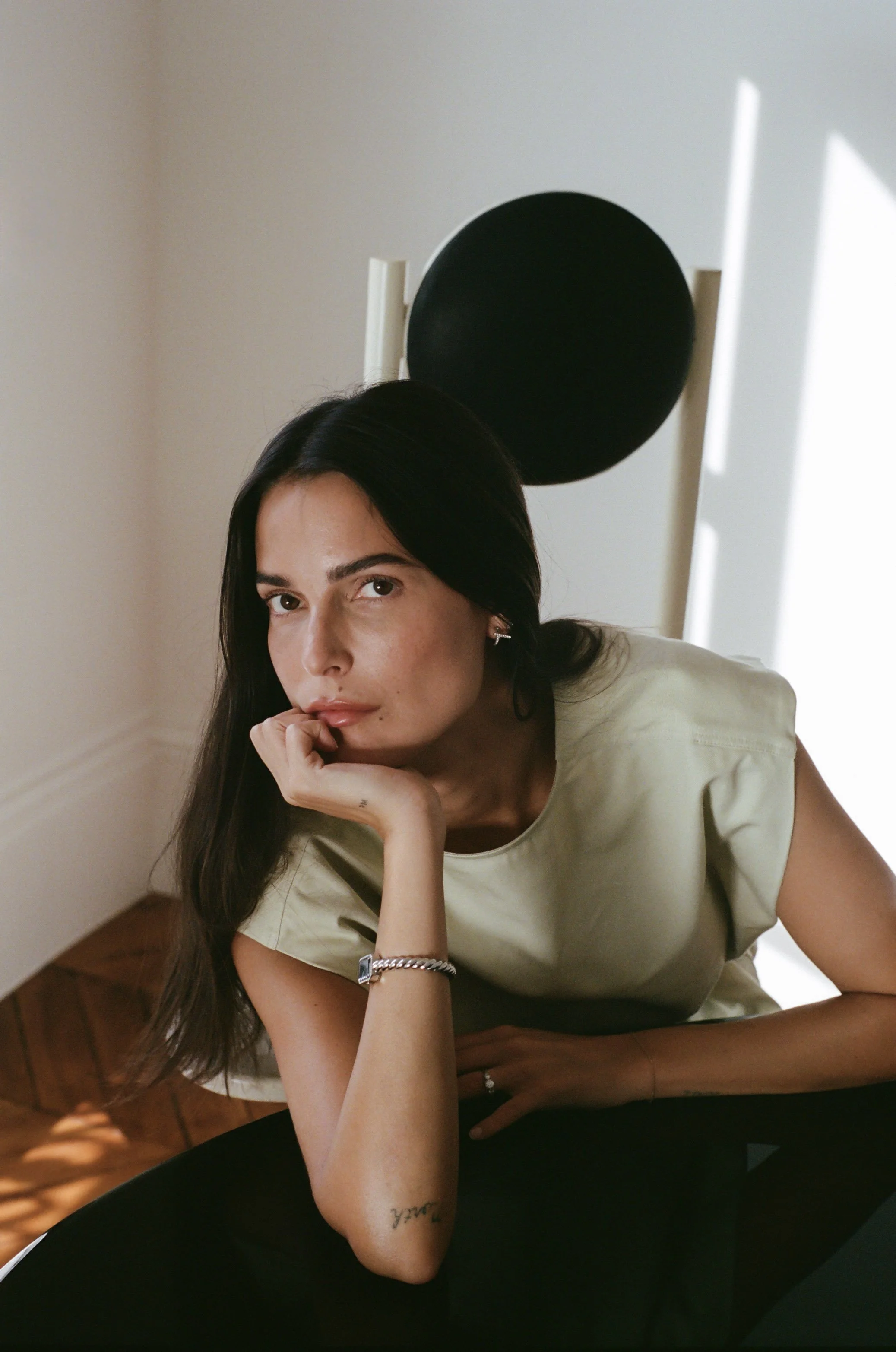
Leia Sfez captured by Olivia Lonsdale. Wearing the PREMIÈRE GALON watch. Courtesy of HURS.
Leia Sfez
In Her Time
There is a particular pleasure in watching someone spend her time exactly as she means to. These three women have made an art of it. A chef, an architect and a founder, each keeping her own clock, and happy to. We asked them how. In partnership with CHANEL.
By Bonnie Langedijk
Leia Sfez hunts for things worth keeping. Paris-raised and fashion-trained, she founded The Oblist in 2023 on a contrarian bet: that in a market addicted to the new, people would pay closer attention to the singular, the overlooked and the quietly old. She was right. The platform now sets emerging designers beside rare vintage as though the decades between are of no importance. She has an eye that treats a piece she dislikes as more interesting than one she feels nothing for, and a rule that anything she keeps must still be worth loving in twenty years.
When did you start The Oblist?
Leia: Three years ago. We had been working on the idea for almost two years before we launched, so it wasn't an impulsive decision. We took our time because we had a very clear idea of what we wanted The Oblist to feel like, from the selection to the way you experience the website. I remember being quite nervous about whether people would understand it. And then they did, almost immediately. That was incredibly rewarding.
You have a very clear direction, while still offering a wide range of objects and designers.
Leia: That's very important to me. I don't want 500 versions of the same good taste. I like contrast. Something very minimal can sit next to something strange or quite radical; a vintage piece next to something made yesterday. They don't need to look alike to belong together. What connects them is that they each have a strong identity. I also want The Oblist to take you somewhere you weren't necessarily expecting to go, and perhaps make you consider something you wouldn't normally have chosen.
“I don't want 500 versions of the same good TASTE. I like contrast. Something very minimal can sit next to something strange or quite radical; a vintage piece next to something made yesterday.”
I imagine that hasn't been the easiest commercial path.
Leia: No, definitely not. But I think we knew from the beginning that the easiest commercial path wouldn't necessarily lead to the most interesting place. One of the first questions we asked ourselves was how we could give independent artists and designers more visibility and help them make a living from their work. There is so much extraordinary talent, but finding it can be incredibly fragmented. You might discover someone through Instagram, another through a tiny gallery, another through a studio you happen to visit while travelling.We wanted to bring those voices together while allowing each of them to remain completely individual. That's still very much at the heart of The Oblist. We want to grow, of course, but never at the expense of what makes it recognisable.
Finding new designers and creators is the one thing that still brings me joy on Instagram. Where do you go to discover new talent?
Leia: Everywhere. Instagram is obviously part of it, but I find people through exhibitions, travelling, conversations, studio visits, friends. Now there's also this wonderful network around The Oblist. People send me names constantly: an artist they saw somewhere, a small studio they think I should know. I love that. I still spend a huge amount of time looking. Finding someone when their work is already very strong but their name isn't everywhere yet is probably one of my favourite parts of what I do. There's a particular excitement in arriving a little before the noise.
Is there something specific you look for in an object or designer?
Leia: It's difficult to define. Usually I want something to make me stop. It doesn't necessarily have to be immediately beautiful. Sometimes it's actually more interesting when I'm not quite sure how I feel about it. Or when it brings back a memory, like, "Oh, it reminds me of the pieces my grandmother had in her living room." And when it communicates something to me.
It must be very intuitive.
Leia: It's completely intuitive. What matters most to me is singularity. The singularity of a piece is the key.
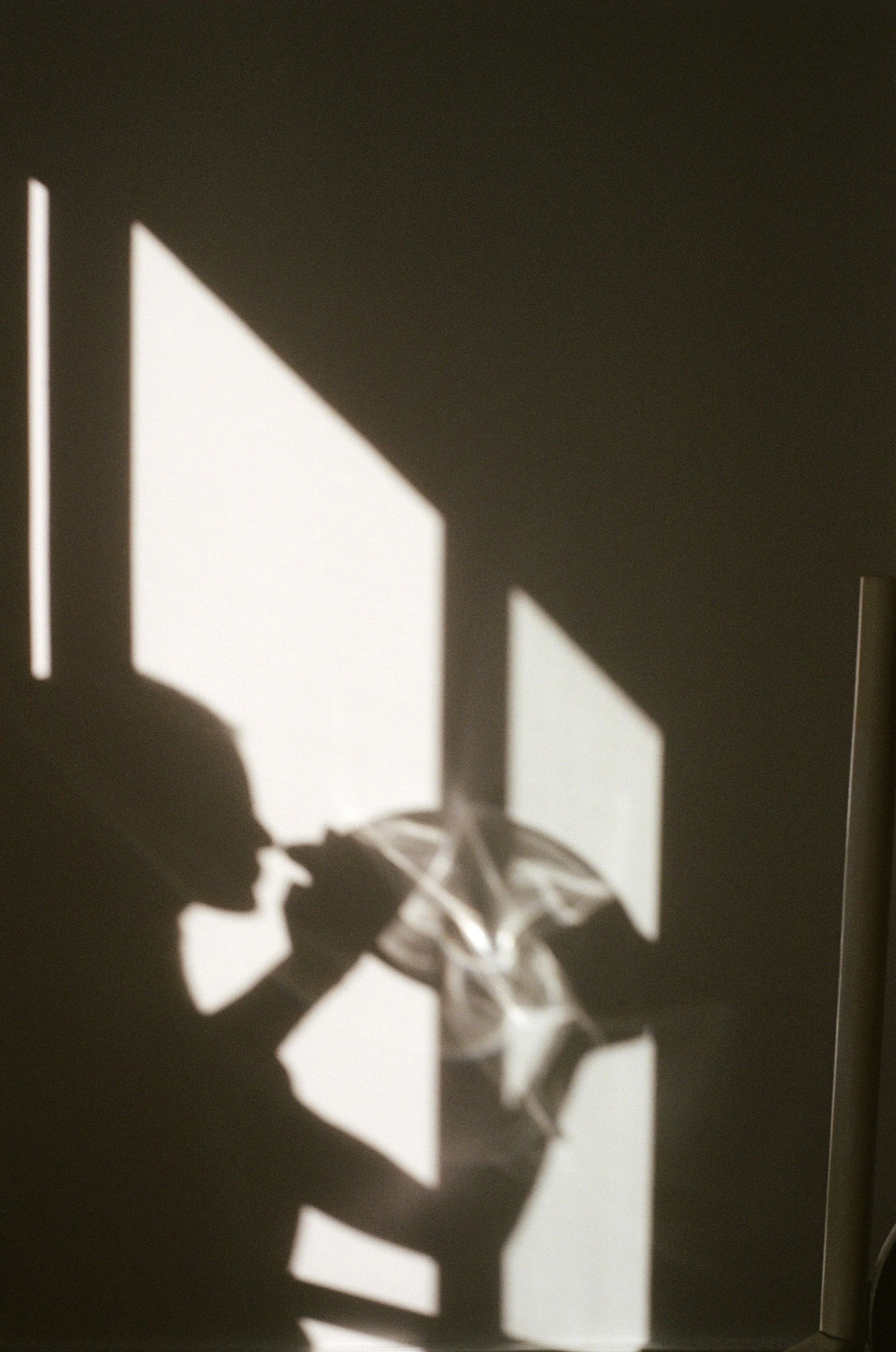
Leia Sfez captured by Olivia Lonsdale. Courtesy of HURS.
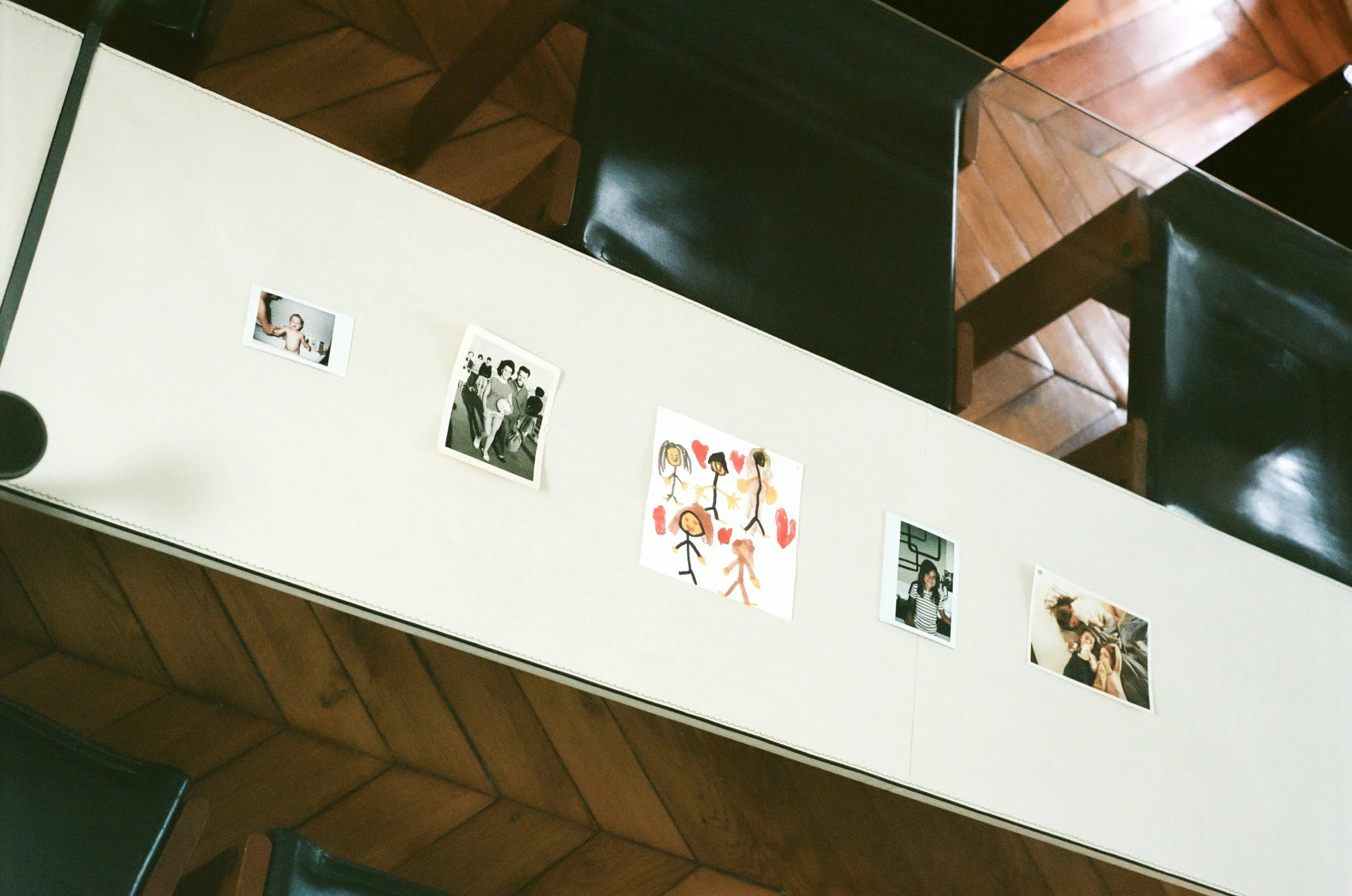
Family photos and drawings by Leia’s kids, captured by Olivia Lonsdale. Courtesy of HURS.
Has doing this every day changed your own taste?
Leia: A lot. I still have quite strong taste, but it's much less fixed than it used to be. Looking at so much work every day has made me appreciate things I probably wouldn't have considered a few years ago. And I've realised that I quite enjoy not liking something. If I dislike a piece, at least I'm having a reaction to it. I start wondering what bothers me, or why someone else might find it beautiful. Indifference is much less interesting. I think taste should be able to surprise you, otherwise it becomes very predictable.
There's so much new design now, but also a real appreciation, even obsession, with old things and their stories. Why do you think that is?
Leia: I think people are increasingly interested in the meaning behind what they choose to live with. It’s no longer simply about having something, but understanding why you want to have it in the first place. With an older piece, there are so many questions that come with it. Who owned it before you? Who loved it? What life did it have before entering yours? And with a contemporary piece, the questions are different but the curiosity is the same: who made it, what was the intention behind it, what did the artist want to express? I think we’re becoming more interested in the relationship we have with things, rather than simply owning them.
Fashion trends are slipping into design too. A few years ago everything was beige; now everything is Art Deco. Does timeless design exist?
Leia: When I choose something for myself, I often ask: will I still want to look at this in twenty years? Could I imagine giving it to one of my children one day? If the answer is no, it's not the right piece.
So the real test is whether it outlasts you. Is that how you've put your own home together?
Leia: Yes. I love to be surrounded by souvenirs, by things that have nothing to do with rarity. Family photos are the most precious objects in a house. I could cry just thinking about it: if your home were on fire, what would you save? Your family photos, and nothing else. That's the real meaning of objects: memories, and the time that passes.
How do you think about time?
Leia: My relationship with time has changed enormously. I used to feel that everything had to happen immediately. I was always rushing towards the next thing and probably not enjoying enough of what was already happening. I'm much more protective of my time now, especially the time I have with my children. Over the years, I learned to respect my own time and to set boundaries around it. I think a good relationship with time makes us healthier.
And in a world that moves so fast, what does it mean for you to take your time?
Leia: It's usually about people. A very long dinner, a conversation that goes somewhere you weren't expecting, being with people you love and suddenly realising it's much later than you thought. We're all obsessed with managing time, saving it, being more efficient with it. But some of the best moments are the ones where you completely lose track of it. That's probably my idea of luxury now.
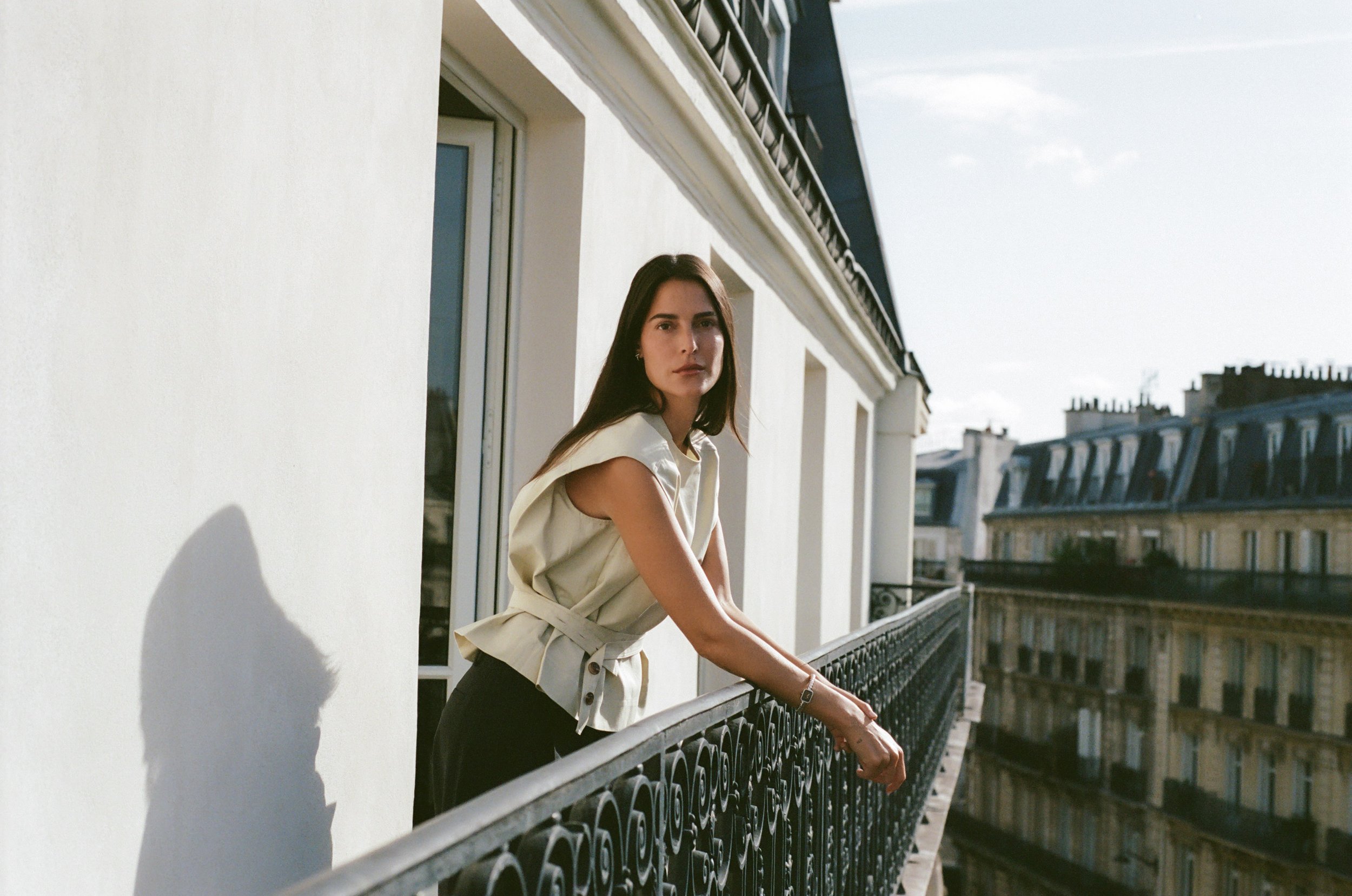
Leia Sfez captured by Olivia Lonsdale. Wearing the PREMIÈRE GALON watch. Courtesy of HURS.
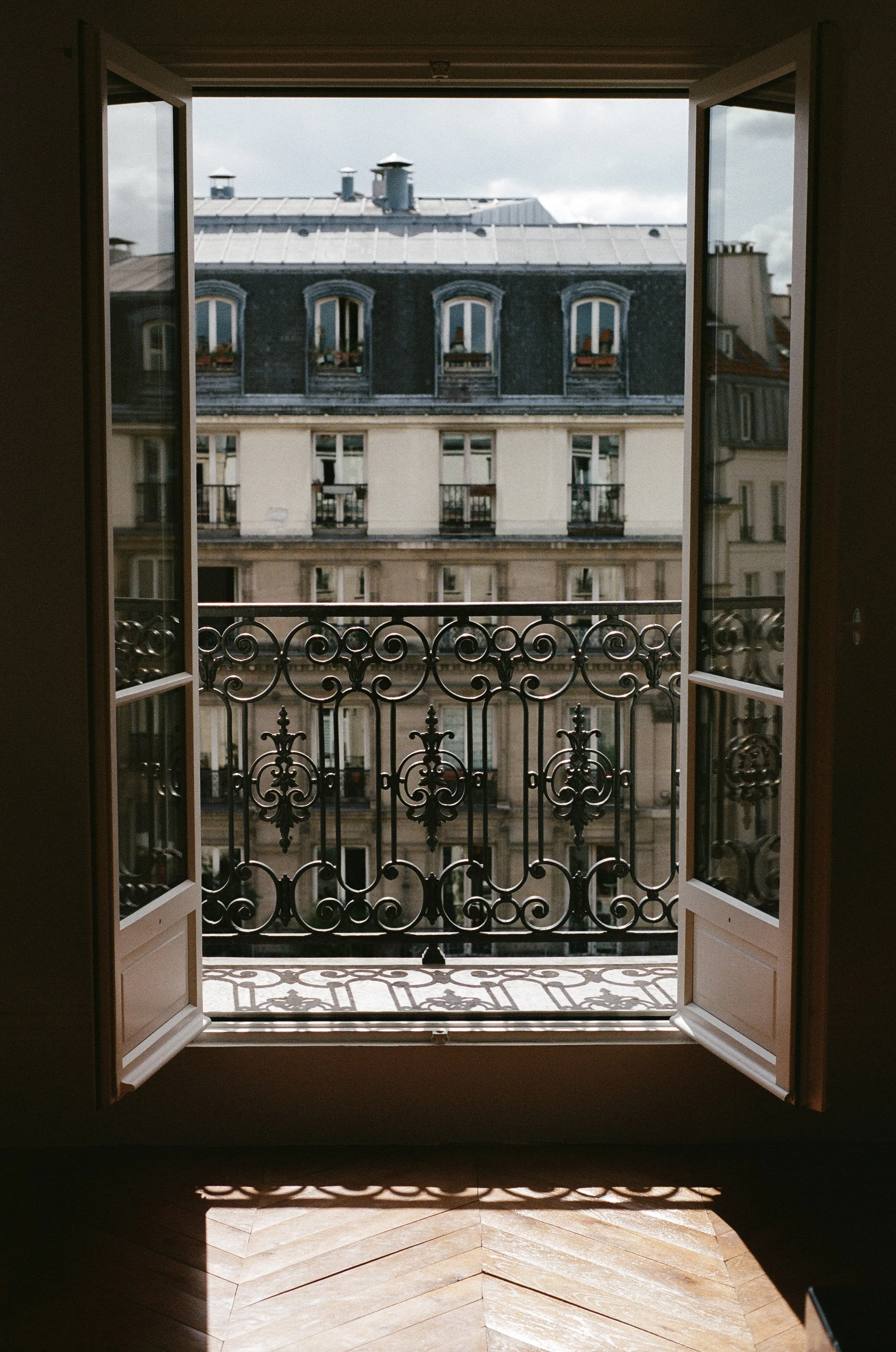
Captured by Olivia Lonsdale. Courtesy of HURS.
You write a lot. Is that part of how you reflect?
Leia: Yes, very much. Writing helps me get things out of my head. Sometimes I don't even know exactly what I'm thinking until I write it down. What I really love is reading something I wrote five or ten years ago. There are things I was completely obsessed with, or terribly worried about, that I can barely remember now. And then there are other thoughts that haven't changed at all. It's a strange but very useful way of seeing your own evolution.
It's like seeing your old self in who you've become.
Leia: Exactly. I used to be quite afraid of ageing. I was also very emotional about my children growing up because you have this feeling that everything is disappearing as it's happening. I don't feel that way anymore. I think there are extraordinary periods behind me and extraordinary ones still to come. I've become much better at accepting that life changes shape. You can't hold on to everything, and perhaps you shouldn't try to.
That's what I love about the timing of The Oblist. You'd already built a successful career and a family, and then you decided to start something new.
Leia: I think one of the most important things in life is to try, and not let the fear of failure stop you. I've felt that fear many times, and I still do. It can come at any moment. But if you're constantly afraid of making the wrong decision or hitting a wall, you end up not moving at all. At some point, you have to trust yourself enough to take the risk and then commit to the direction you've chosen. Life is really a succession of choices, some easy and some much harder. You can't always know where they'll lead, but you can decide which path feels worth taking. For me, starting The Oblist was one of those choices.
What do you enjoy most about what you do?
Leia: Freedom, definitely. The freedom to follow my instinct, to choose what I believe in and to collect what I genuinely love. I also love being able to introduce people to artists or pieces they might never have come across otherwise. And then there are the people. Meeting artists and designers, visiting their studios, understanding how they work and feeling the energy behind what they create. I’m constantly exposed to new ideas and different ways of seeing things. I think that sense of freedom, and everything it allows me to encounter, is what I value most.
When did you first feel that your life was truly your own?
Leia: When I moved into my own apartment. It was incredibly small, but it was mine. When I walked in, I felt completely free. And when I closed the door, I thought,"This is where my life begins, because I can make any choice I want."
This interview has been edited and condensed for clarity.
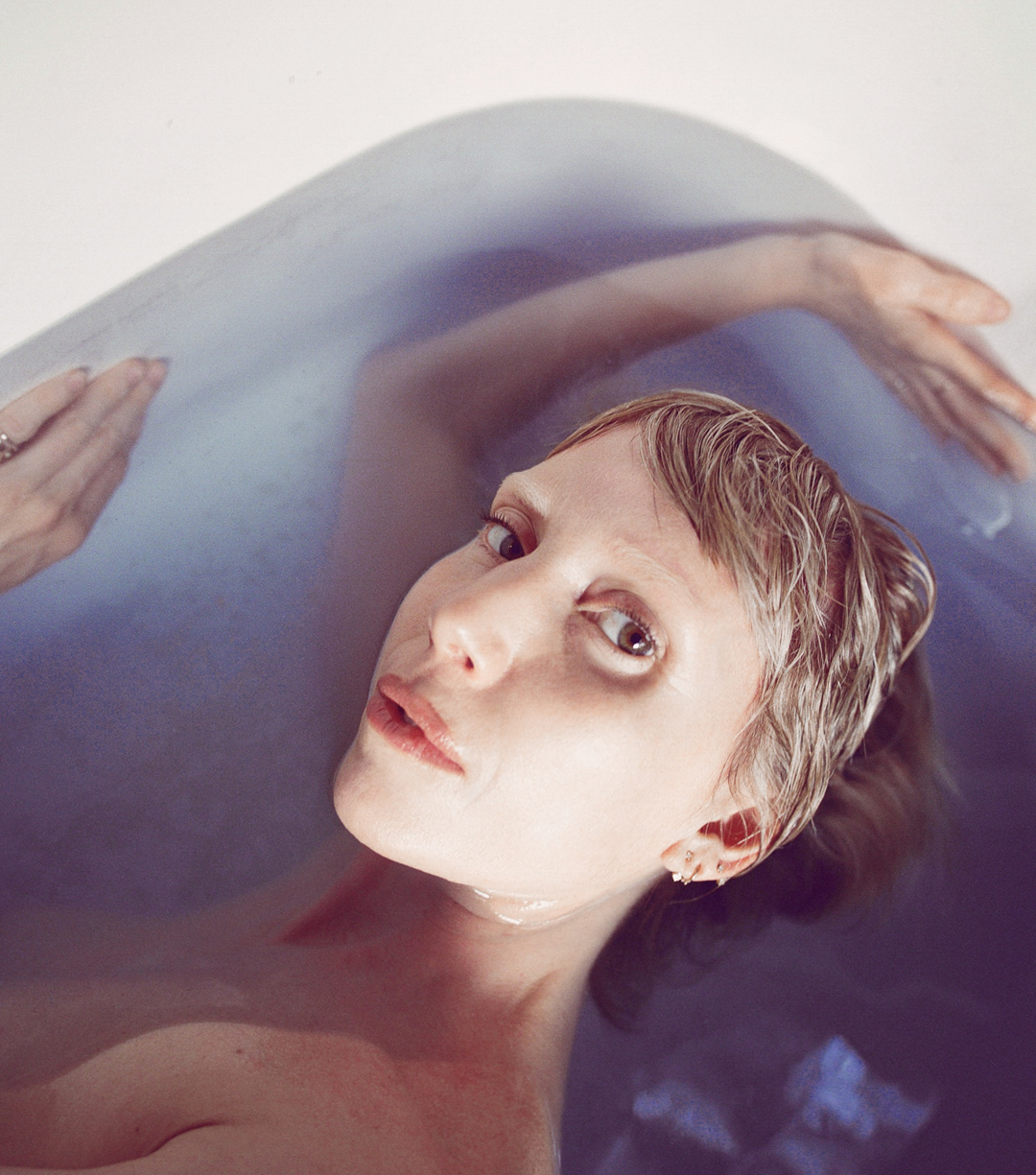
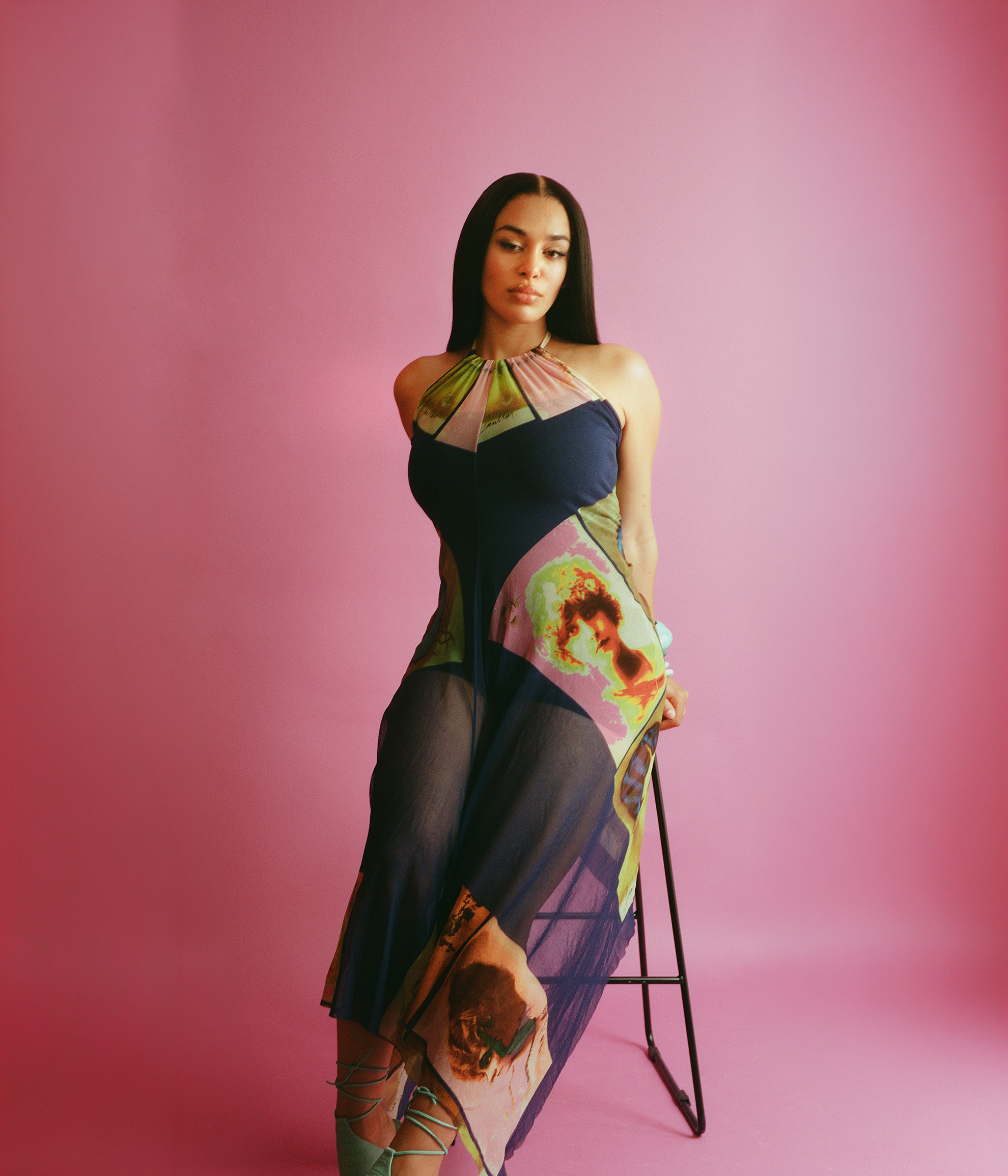

Shaniqwa Jarvis on why photographs are beautiful liars, grief as a portal, and the moment she found her whole practice hiding in a childhood snapshot.