On Beauty: Louise Roe
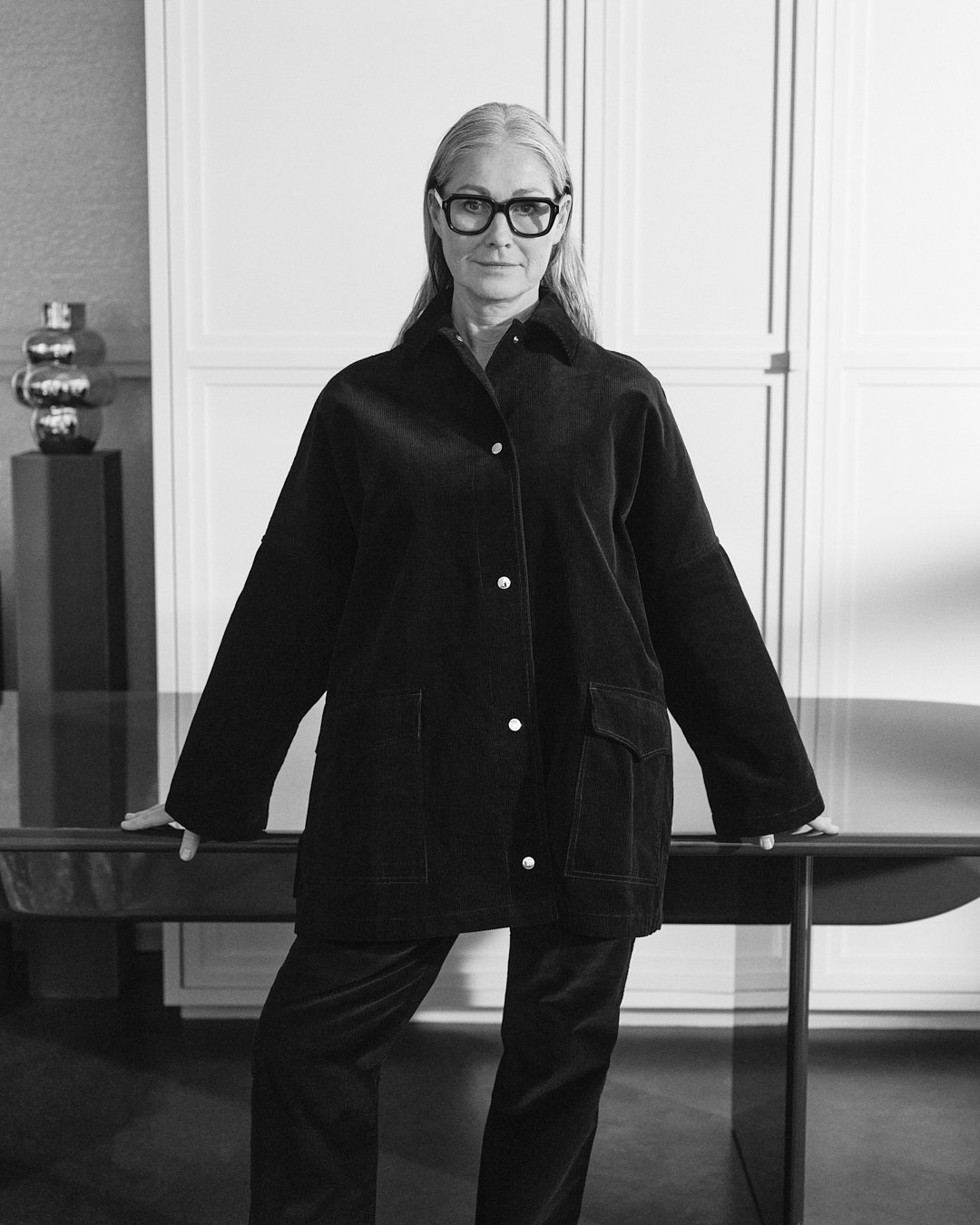
Louise Roe captured in her gallery in Copenhagen. Photography by Sascha Oda Adler. Courtesy of HURS.
Louise Roe
What does beauty mean today? And who gets to define it? We speak with five leading women who've built their lives around chasing it—a gallerist, a designer, a stylist, a chef, a founder—each redefining what beauty looks like on their own terms.
In partnership with Saie.
By Bonnie Langedijk
Louise Roe finds beauty in the in-between. The Danish designer, who founded her eponymous studio in 2010, works in the space where early art deco meets Brutalism meets Bauhaus minimalism. Her vessels, lamps, furniture, and objects are crafted by skilled European artisans, each piece a quiet study in proportion and material. In 2018, she opened a gallery and café in central Copenhagen—a space that feels like a natural extension of her practice, where design is meant to be lived with, not just looked at. The business has since become a family affair: her husband, her sons, her daughter, all in. For Roe, design has never been a solo act.
What do you think about the concept of beauty? Both in your personal life and profession?
Beauty, for me, is not simply an idea but a necessity. It is a word that carries great power, even if it is often overused. Still, it remains the clearest way to describe something instinctive and deeply personal. Beauty is not fixed - it shifts with experience, perception, and use. As an object designer, beauty guides my process. It lives in proportion, in materiality, in the weight of an object in the hand and in the way it occupies space. Beauty emerges when function and emotion coexist and when an object not only serves a purpose but also invites attention, balance, or curiosity. My work is about refining and questioning the final form until every element feels right. I seek a balance where structure, use, and feeling come together into a considered object. When nothing can be taken away without losing meaning, that is where beauty exists for me.
.
What are some of the key elements that have shaped your sense of beauty, style, and taste?
The key elements of beauty for me are natural materials shaped by the earth, time, and history. Each material is created individually, formed through exposure and change. In this, beauty becomes simple, natural, and intuitive. A soft glow, quiet tones, and the way these tones meet and interact feel both grounding and honest. Beauty is when you feel like you naturally feel like taking a bite of it.
“How we TREAT ourselves shows through the surface. When we neglect that, the absence becomes visible. In those moments, beauty loses its depth and becomes only surface.”
What makes something or someone beautiful to you?
Harmony, balance and a sense of depth, something beyond a quick fix, where nothing is merely covered to appear better for a moment. It reflects a state of honesty, where beauty is not applied, but lived. A personality with an open and inviting smile–visible, not only on the face but in the eyes and in the body language. How we treat ourselves shows through the surface. When we neglect that, the absence becomes visible. In those moments, beauty loses its depth and becomes only surface.
When did you start paying attention to design as something that affects how you move through the world?
From a very young age, I was inspired by my childhood garden. How my mother arranged it with variety, and how it grew and changed over time. I still remember my apple tree outside my window, how its shape and proportions were guided by nature. I’ve always noticed shapes and forms. How cars look, whether I find them beautiful or not, and how I have observed several shapes and styles over decades. Even faces left an impression and how a hairstyle, skin, or silhouette shapes the memory of a person.
At my grandparents house, I became curious about antiques, wondering why they looked the way they did and what purpose they had been made for. These early observations quietly shaped the way I see design and the way I understand beauty.
How did you train your eye for what makes good design?
Good design is when it touches the senses and when it gives a thrill that lingers. A memory that stays and leaves a footprint. Awakening emotions and bringing a quiet sense of happiness that remains with you… Beauty can, of course, exist in a single moment ”here and now” but when a moment of beauty stays with you, remembered long after, that is when good design has truly been created.
How do you look at the current state of the world of design and its approach to beauty and perfection?
I see that much of the current world of design is filled with attempts at beauty. Objects and spaces that try to be something, but often fall short. When design is overdone for commercial purposes or mass-produced without respect for nature, it can lose its soul. Yet contrast is valuable since it sharpens our impressions and clarifies our opinions. It reminds us what truly matters, guiding us to focus on what is essential and ultimately, to stay on the bright side of life.
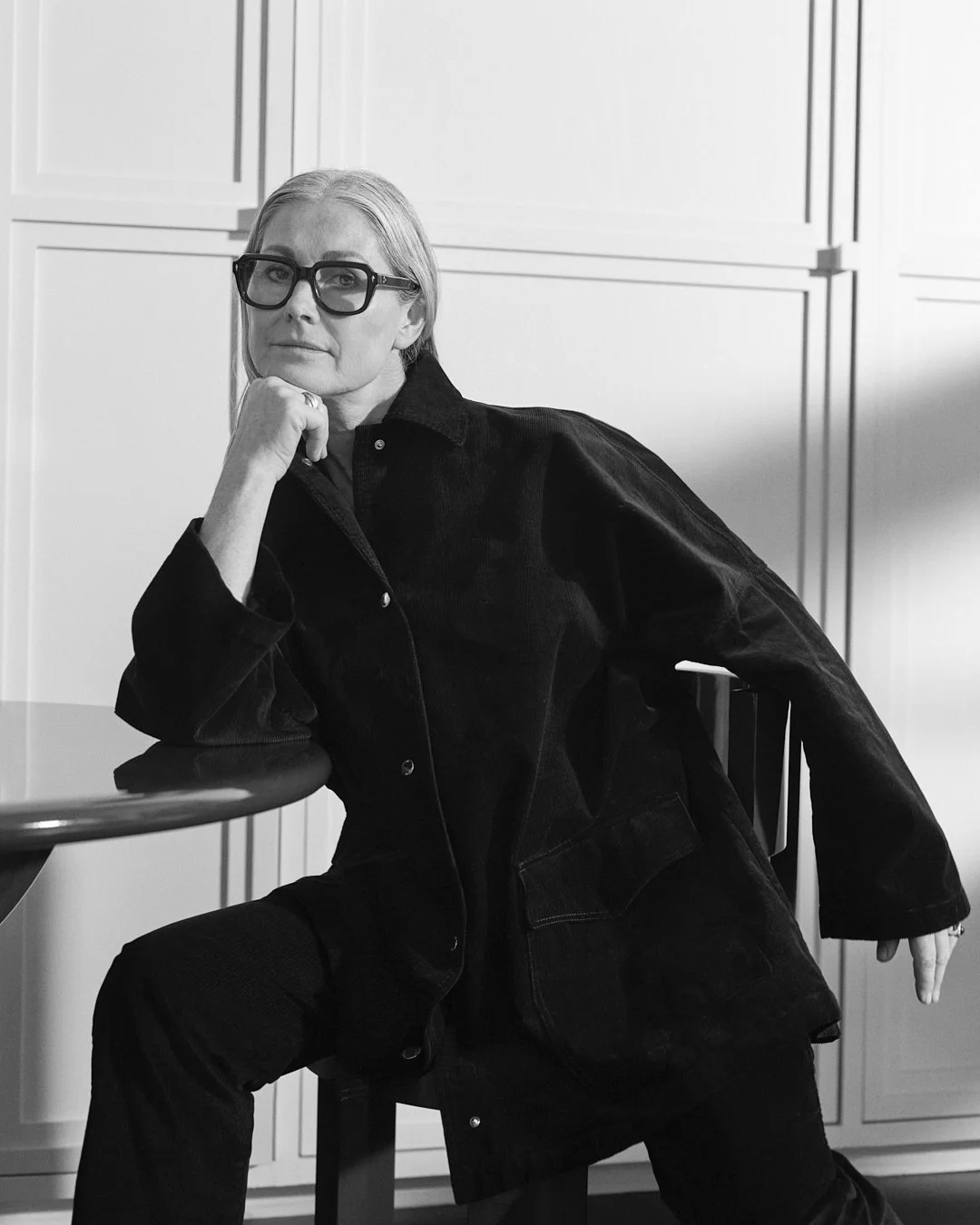
Louise Roe captured in her gallery in Copenhagen. Photography by Sascha Oda Adler. Courtesy of HURS.
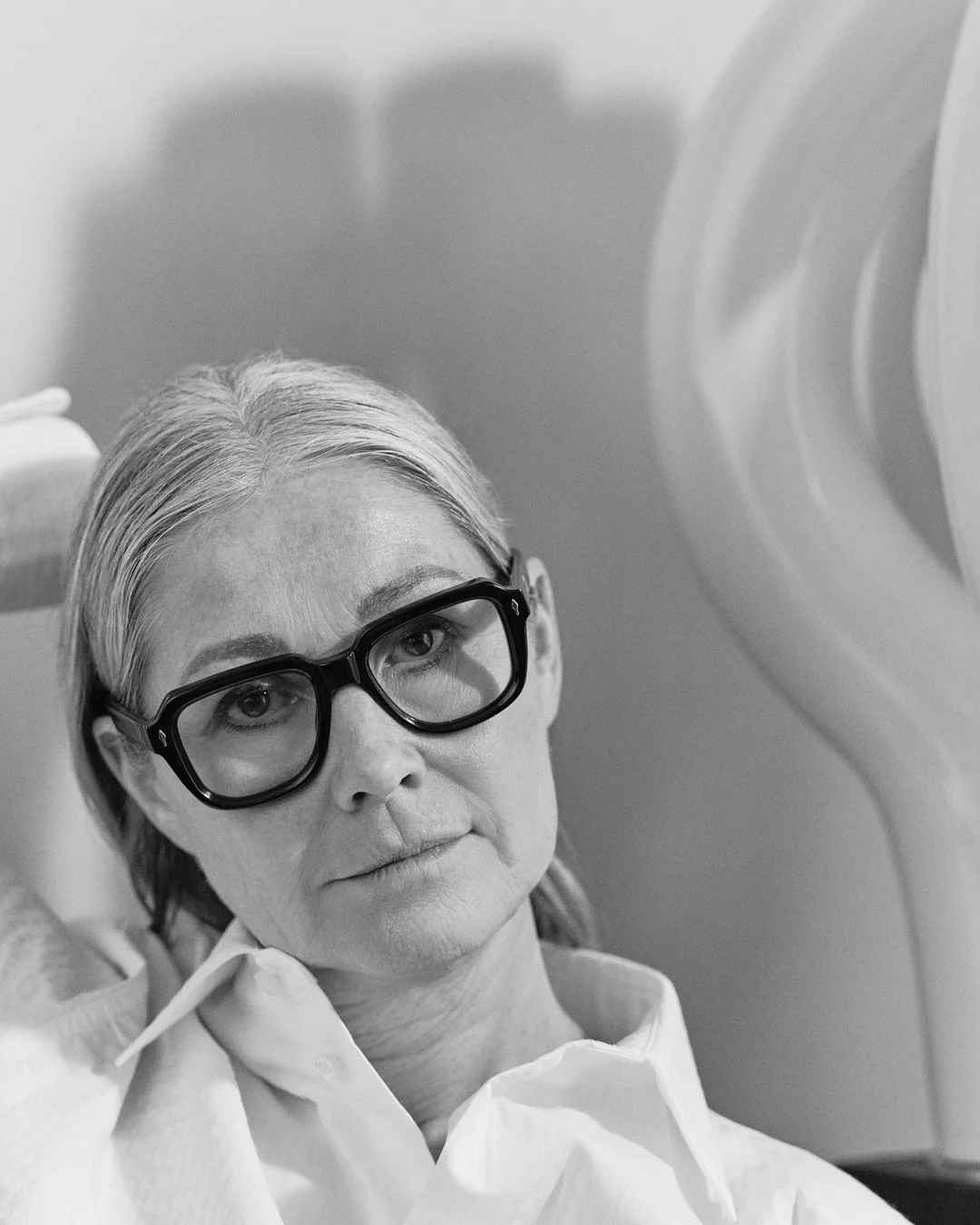
Louise Roe captured in her gallery in Copenhagen. Photography by Sascha Oda Adler. Courtesy of HURS.
Is there a designer or design movement that completely changed how you think about objects?
I have an eye for the decades around the 1920s and 30s–a period bridging Art Deco, Bauhaus, and early modernism. A decade where the masculin expression of Bauhaus meets the more feminin Art Deco. Bauhaus was minimal and beauty came from clarity, proportion, and usefulness against Art Deco, that celebrated luxury, glamour, and craftsmanship. I am drawn to the delicate balance between these two design movements. The elegancy of Art Deco and the rational simplicity of Bauhaus. One celebrates beauty and ornamentation, the other champions function and clarity. Finding harmony between them, where form and feeling coexist, is where my fascination lies.
How do you decide what's worth showing in your gallery versus what's just well-made?
I consider both scale and presence. With high ceilings and wide street-facing windows, the space calls for larger objects, and because it’s quite long, each piece must leave a lasting impression–hopefully also a footprint of beauty. Being well-made is essential in everything I create and choose, but craftsmanship alone is not enough. The work must also captivate, engage, and hold meaning–it must feel alive, not just perfectly executed.
Do you think the current embrace of "imperfect" or "organic" design is authentic or just a reaction to years of sleekness?
I believe embracing the “imperfect” has become a necessity. Especially as we see AI being used more and more. The human touch reflects a deeper understanding of material, time, and craftsmanship and makes every product more unique, each with its own, small variations. Yet, we should always be open to challenge, to evolve, and to push boundaries. Some may see it as a trend, something “of the moment,” but its true value depends on whether we dare to investigate and combine.
How has running a gallery changed what you want to live with in your own space?
I have fewer and bigger objects in my house somehow, which makes our private home feel more like a gallery too. It also feels like we haven’t quite settled yet. It’s an ever-evolving thing, not something to finish, but it’s also a home where we don't have to make decisions all the time. Instead, giving ourselves a break and room for wondering.
This interview has been edited and condensed for clarity.

Shaniqwa Jarvis on why photographs are beautiful liars, grief as a portal, and the moment she found her whole practice hiding in a childhood snapshot.