On Beauty: Rosa Park
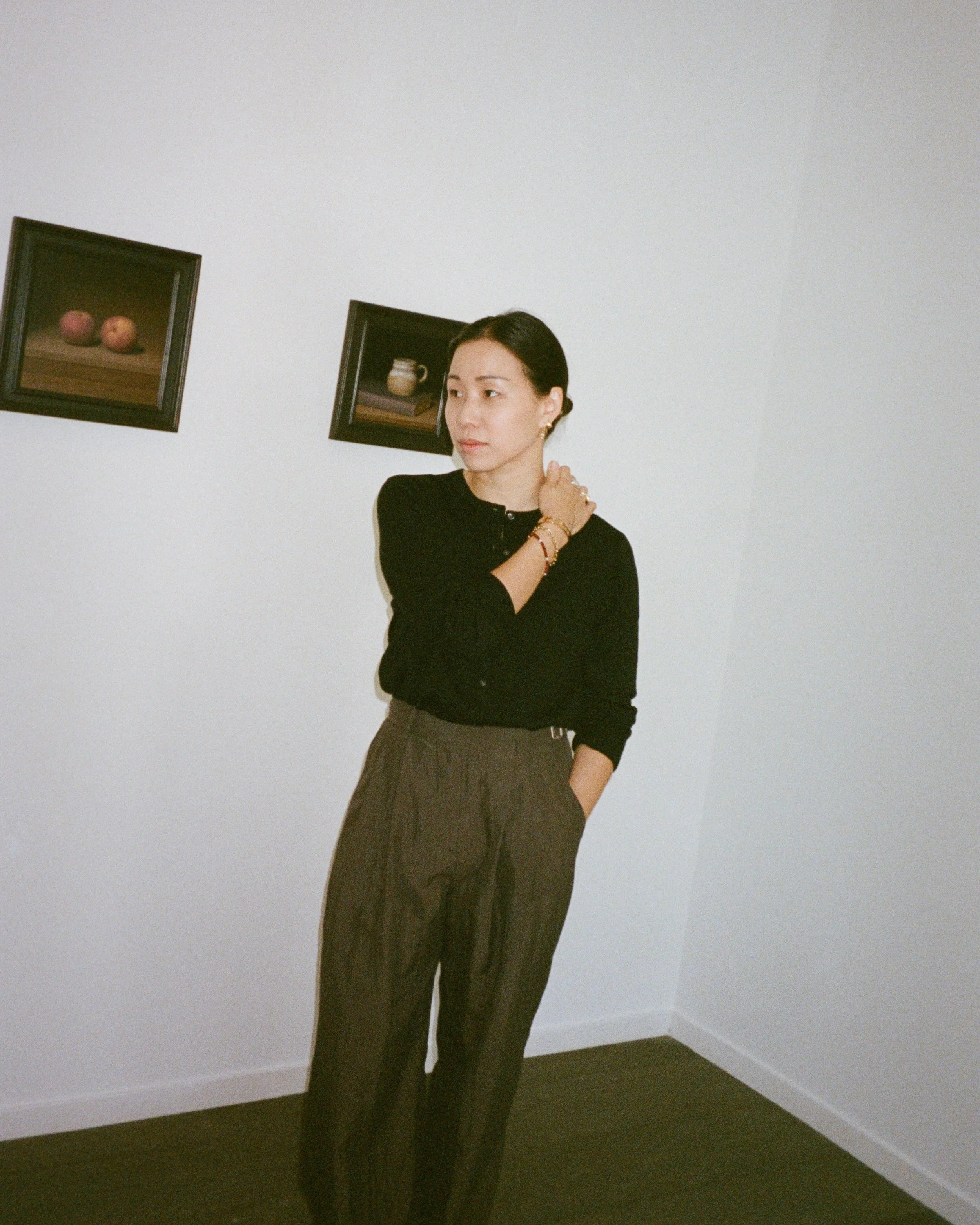
Rosa Park at Francis Gallery. Photography by Amanda Musacchia. Courtesy of HURS.
Rosa Park
What does beauty mean today? And who gets to define it? We speak with five leading women who've built their lives around chasing it—a gallerist, a designer, a stylist, a chef, a founder—each redefining what beauty looks like on their own terms.
In partnership with Saie.
By Bonnie Langedijk
Rosa Park has always trusted her own eye. Korean-born and Canadian-raised, she co-founded Cereal in 2012—a biannual travel and style publication that became a reference point for creatives worldwide. But it's Francis Gallery that feels like the destination she was always heading toward. Founded in 2019 with spaces in Bath and Los Angeles, the gallery represents 30 international artists, with a focus on material practice and the narratives behind the work. Park's curation is intimate, narrative-driven, more interested in how art sits alongside life than above it. She thinks about material, about environment, about the conversation between a work and the room it's in. The point isn't to impress you. It's to close the distance—between art and architecture, between gallery and community, between the people who make things and the people who might actually want to live with them.
What do you think about the concept of beauty? Both in your personal life and profession?
Lately, I find myself fixated on beauty being tethered to a certain effortlessness – when things fall into place with ease, whether that’s weekend plans or scheduling a transatlantic call with an artist, and when serendipitous encounters and opportunities arise. These are the moments where I find myself actually uttering the words, ‘beautiful’. In an ever-demanding world where the daily grind can feel akin to moving against the current, I discern beauty in moments of flow.
What are some of the key elements that have shaped your sense of beauty, style, and taste?
A classic trifecta: my family, my culture, my travels.
My parents were my first role models in how to dress, present myself, and create a home. My mother possesses an innate grace; it's her carriage more than the clothes she wears that defines her style, though I've always admired her elegant, timeless wardrobe. My father is, and has been, passionate about interior design and architecture, so I grew up watching him oversee both residential and commercial projects. And yes, as a surprise to no one, he has a pared-back approach, which has obviously left an impression on me. He taught me that simplicity is powerful.
I also firmly believe it's my Korean heritage – and more broadly, my East Asian culture – that has informed my preferred visual language. As a culture, we value silence as much as the words spoken, the empty space as much as what fills it. The intent behind what to leave untouched and what to embellish has been the impetus behind every creative endeavor I’ve taken on.
Travel feels like the final layer. There are elements from each formative trip that have made their way into our home, lifestyle, and the gallery. These build upon the foundation I've inherited from family and culture. I often wonder how much of this will be passed on to my son, Turner.
“Lately, I find myself fixated on BEAUTY being tethered to a certain effortlessness – when things fall into place with ease, whether that’s weekend plans or scheduling a transatlantic call with an artist, and when serendipitous encounters and opportunities arise.”
What makes something or someone beautiful to you?
I find age more beguiling than youth, so I'm attracted to objects, furnishings, and art with patina, or at least, the suggestion of it. The same holds true for people; I cherish friends whose perspectives come from lives longer and richer than mine, and old souls with a depth that belies their biological age.
When did you first realize you had a specific perspective on what art should do?
I can't pinpoint an exact moment. I think it came in waves – first an inkling, then a thought, and eventually a conviction: art should move, art should stir. It should elicit a visceral response.
How did you develop your eye for art?
Exposure and voracious consumption. Countless trips visiting museums, galleries, private collections, estates, and artist studios on my doorstep and around the world. Reading artist memoirs, biographies, and monographs. Over time, I learned to trust my instincts – to distinguish between what merely impresses and what truly resonates. The education continues.
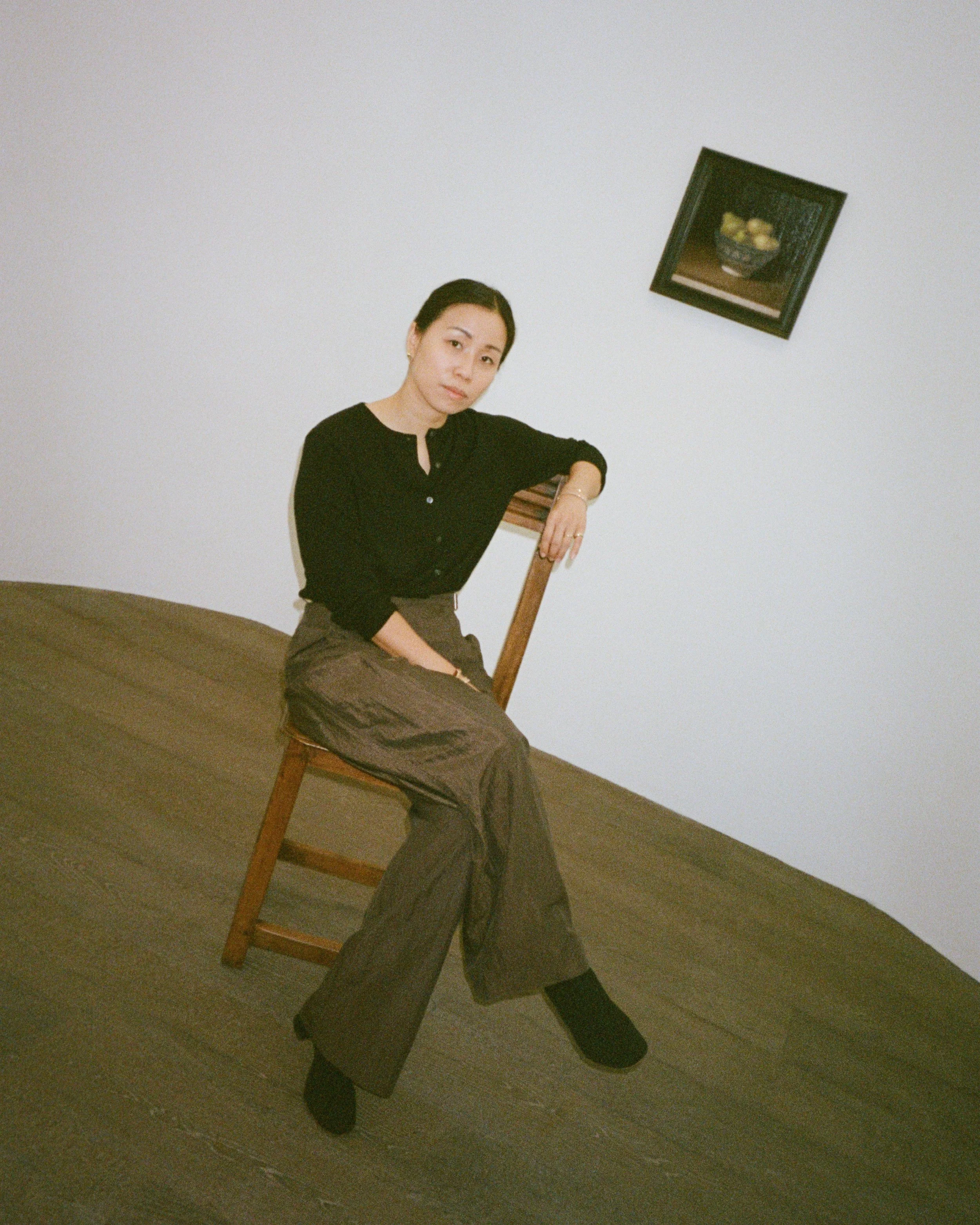
Rosa Park at Francis Gallery. Photography by Amanda Musacchia. Courtesy of HURS.
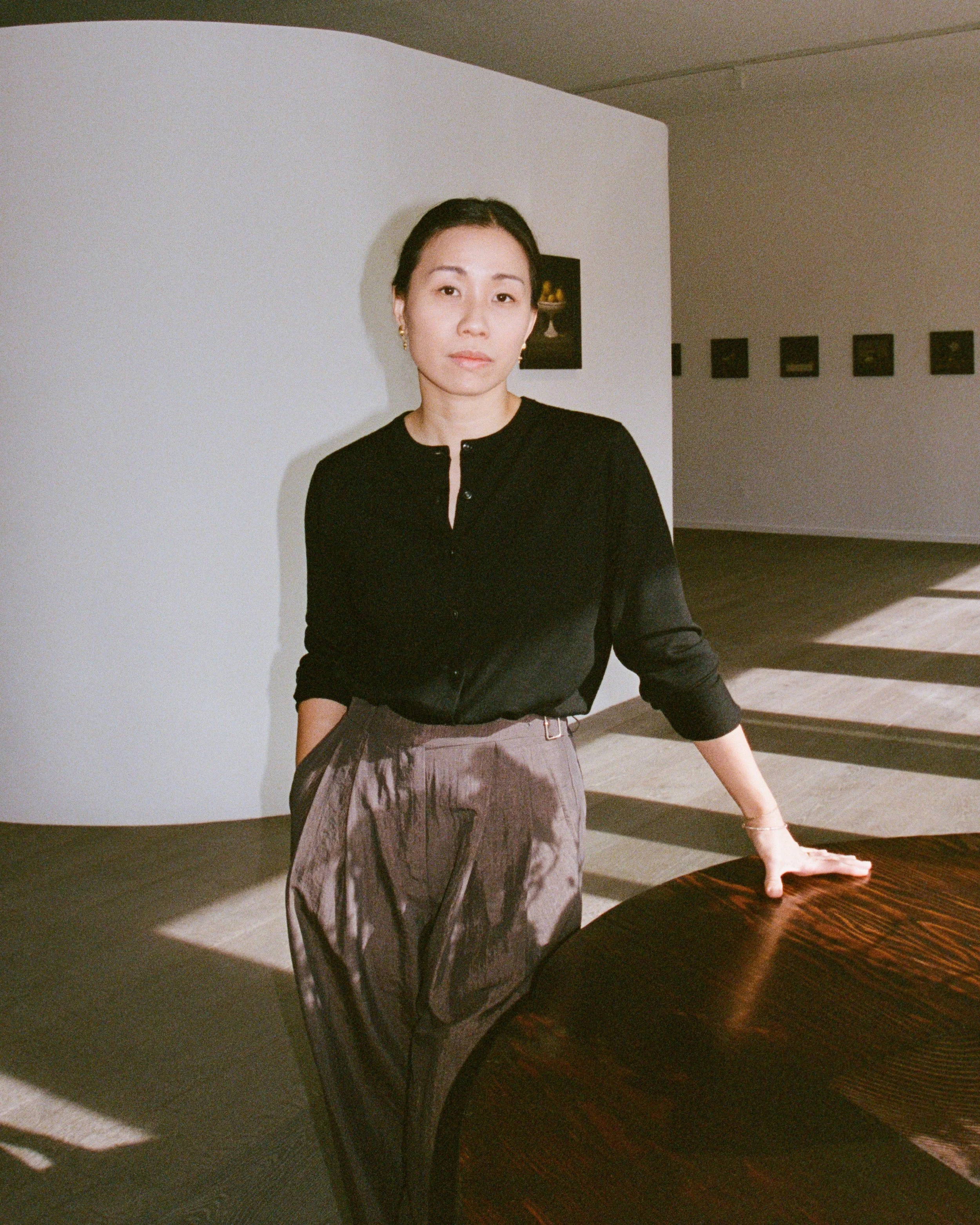
Rosa Park looking at works by British painter Will Calver at Francis Gallery. Photography by Amanda Musacchia. Courtesy of HURS.
Do you think the art world is genuinely opening up?
More than before, but it still has a long way to go. The changes so far feel more performative than structural. The question isn't just about opening doors, but about who decides what's valuable and why.
Is there an artist or movement that fundamentally changed how you look at things?
Three stand out.
The first is Agnes Martin. When I read her words, "the value of art is in the observer. When you find out what you like, you're really finding out about yourself," it was a paradigm shift for me at 18. Until that moment, I thought the meaning of a work—especially an abstract one—should be derived from artist intent, and yet those 21 words set me free from that misconception. It's become a north star for me: that the work reflects back to the viewer who they are, and becomes a vehicle for emotional clarity.
Second is the Dansaekhwa movement, which shaped how I engage with artists. These painters alchemized the political unrest of post-war Korea into resilient, transcendent paintings that emphasize process over outcome—treating artmaking itself as meditation and reconciliation. They taught me to value process above all; that the act of making holds as much weight as the finished work.
Third is J.M.W. Turner. He taught me to love English skies—their drama, their constant transformation. It's what I miss most about England now that I live in LA, where the sky is an unblemished blue nearly every day. We even named our son after him.
What’s your frame of reference when it comes to deciding what you show at the gallery?
The primal, emotional reaction I have to a body of work—that immediate sense of resonance. But equally important is the honesty and integrity of the artists themselves: their commitment to process, their willingness to be vulnerable in the work.
How has running a gallery changed what kind of art you want to live with personally?
It hasn't at all. I started Francis to share the art I love and want to live with, so the mission remains intact.
This interview has been edited and condensed for clarity.
Shaniqwa Jarvis on why photographs are beautiful liars, grief as a portal, and the moment she found her whole practice hiding in a childhood snapshot.