A Woman’s Work
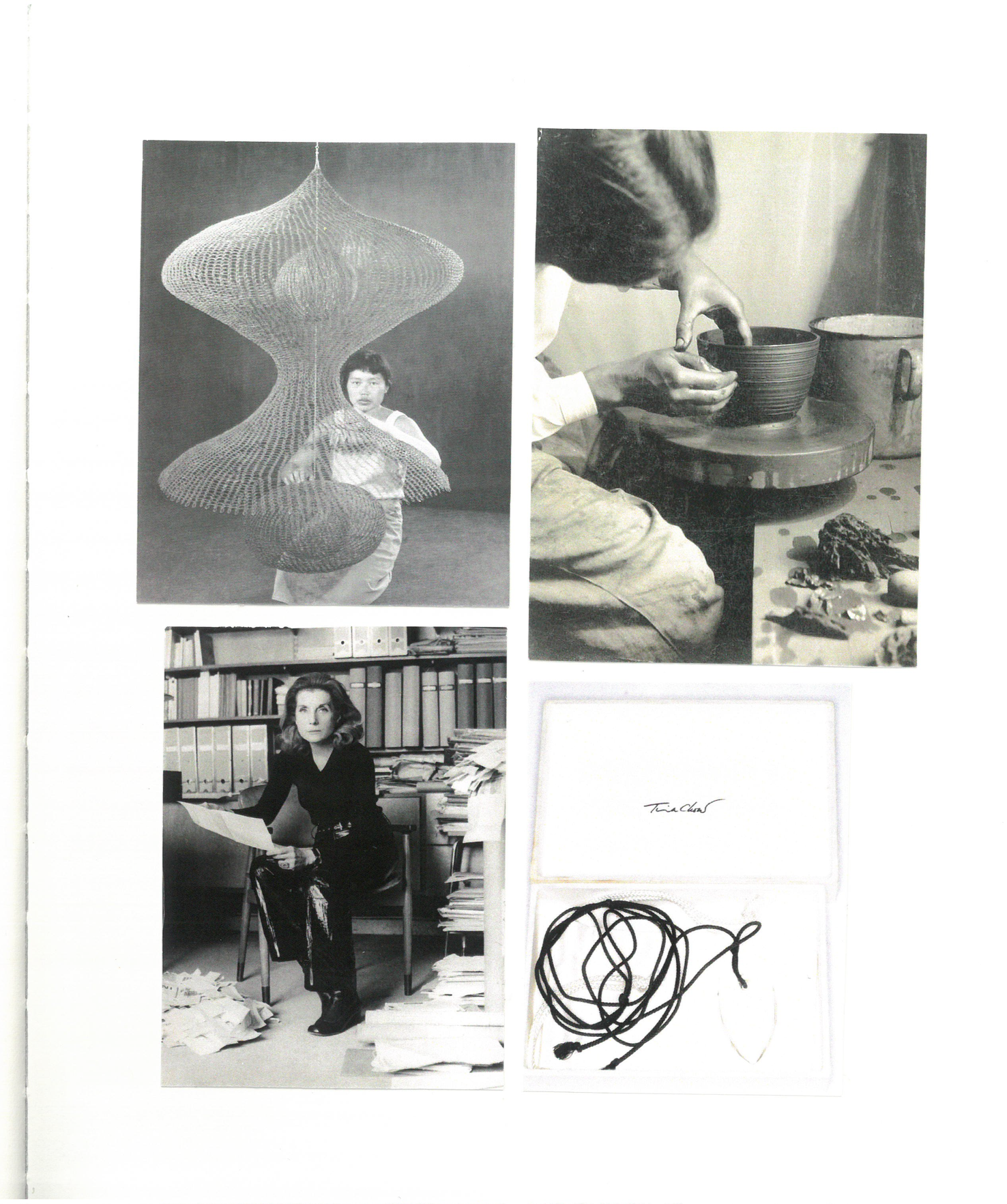
Collage by HURS.
On A Woman’s Work
To mark the opening of A Woman's Work at Basic.Space Los Angeles — a curated space by HURS showcasing furniture, design objects, and books made exclusively by women — we're speaking with the galleries and makers featured in our booth.
By Bonnie Langedijk
There is a sentence that has followed women through history like a shadow. A woman's work. Said with a sigh, or a shrug, or the particular tight smile of someone explaining something obvious to someone who should already know. It is three words that have functioned, for centuries, as a complete argument. Here is the work. Here is who does it. Here is what it is worth. The sentence contains its own verdict, and the verdict has always been the same.
What the sentence meant, for most of history, was this: the labor of the home. The cooking and cleaning and child-rearing and quiet holding-together of everything that would otherwise fall apart. Essential work, total work — and work that the economy, for a very long time, simply declined to see. The first economists measured productivity and looked straight through it. A woman's work was the infrastructure nobody wanted to count because counting it would have required paying for it, and paying for it would have required admitting it existed, and admitting it existed would have complicated a great number of convenient arrangements.
But the sentence didn't stay in the kitchen. It followed women into the studio, the workshop, the gallery, the archive. It followed them into every room they entered and rearranged itself to fit.
Consider what happened to craft. Weaving, embroidery, ceramics, textile art, tapestry—practices so old they predate most of what we call civilization, traditions that developed technologies of structure and pattern and material that would take other disciplines centuries to catch up with. These were, for most of recorded history, women's work. Which meant they were not, by the logic of the same sentence, art. Anni Albers understood this better than anyone. Her textiles were rigorous investigations into abstraction, into the behavior of material, into what a surface could structurally and visually do. They were also consistently received as something nicer and lesser—beautiful objects, certainly, but not quite the real thing. The Bauhaus, where Albers studied, directed its women students toward the weaving workshop and its men toward architecture. Nobody announced this policy. Nobody had to. Gunta Stölzl ran that workshop and built a body of work that helped define modernist visual language; history absorbed her contribution and handed the credit elsewhere. Harriet Powers made quilts in post-Civil War Georgia that were, in any honest assessment, narrative paintings—compressed, cosmological, visually extraordinary. She had to fight simply to keep them. When they were eventually recognized, the word used was discovered, which is the art world's preferred way of acknowledging that it wasn't paying attention.
The WORK is the same work it always was. What changed is who decided to value it, and when, and on what terms. That's worth keeping in mind.
The craft conversation is shifting now. Galleries that once wouldn't look twice are suddenly eager. Which is good, and also clarifying. The work is the same work it always was. What changed is who decided to value it, and when, and on what terms. That's worth keeping in mind.
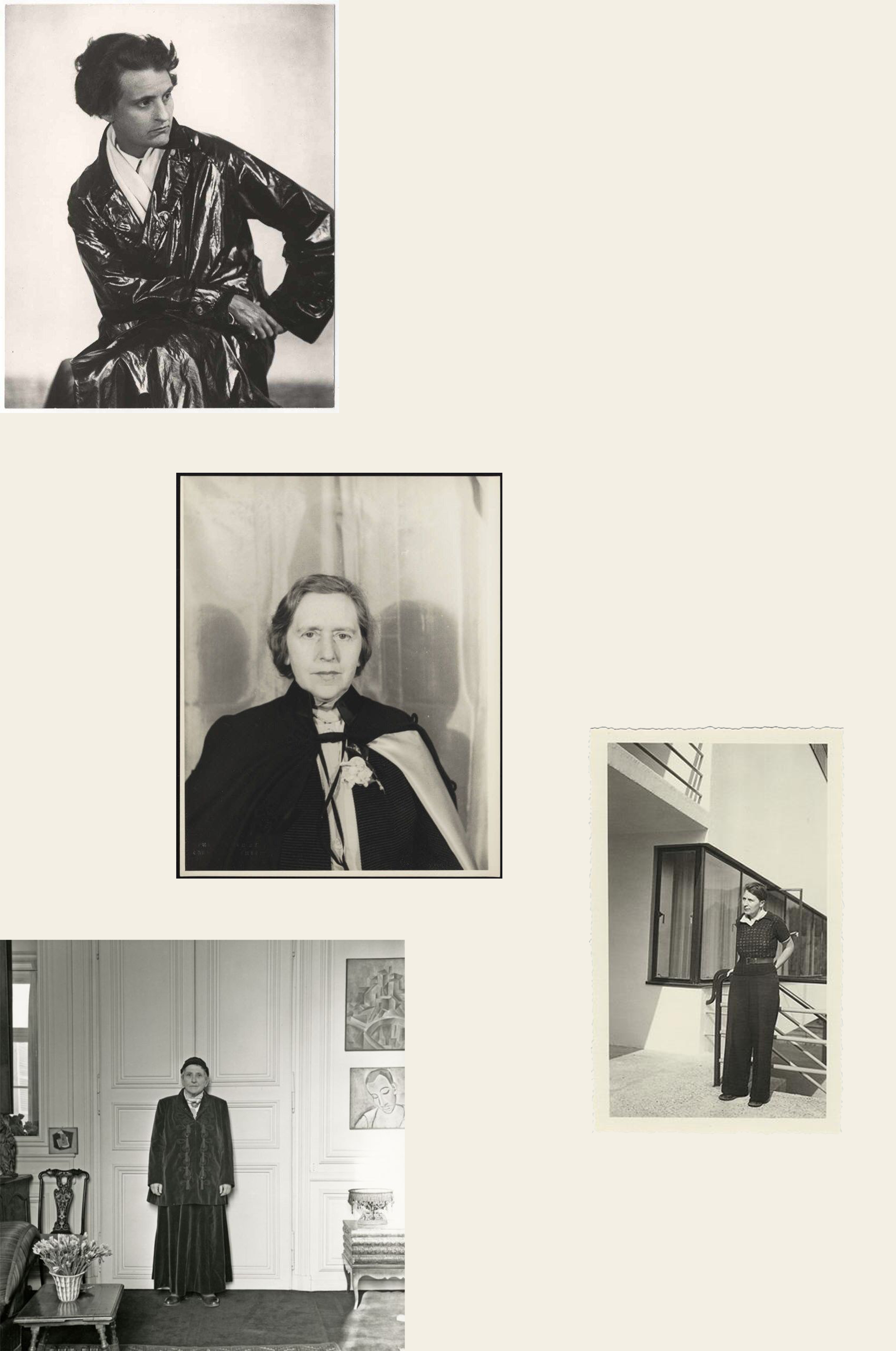
And then there is the disappearance of women from their own work altogether. Eileen Gray designed E-1027 over the course of years: a villa on the Côte d'Azur that remains one of the most spatially intelligent buildings of the twentieth century. Le Corbusier didn't design it. He did, however, paint murals on its walls without asking, return to it repeatedly, and write about it in ways that suggested a proprietary relationship he had no right to. He wants to destroy it, Gray said. The building survived. The attribution took considerably longer to correct. Charlotte Perriand arrived at Le Corbusier's studio looking for work and was told, memorably, that the studio did not embroider cushions. She was hired anyway. The furniture she went on to design—canonical, much-reproduced, still immediately recognizable—spent decades credited primarily to the men she worked alongside. Edmonia Lewis carved marble in nineteenth-century Rome with a technical and imaginative authority that left critics visibly uncertain how to proceed. The line of reasoning they landed on—that the work was too accomplished, too serious, too much to have come from a Black and Native American woman—was an attempt to detach a maker from what she had made.
What all of this has in common is a habit of arrangement, a way of organizing value that consistently places certain work, and certain people, at the edges of the story.
Susan Sontag wrote that women have always had another option—to be wise rather than merely nice, competent rather than merely helpful, strong rather than merely graceful. What she was describing, I think, is the option that women have always in fact been exercising, whether or not anyone was paying attention. Simone de Beauvoir rewrote the terms on which Western thought understood women's existence. Toni Morrison built a body of fiction that extended what the novel was capable of feeling and saying. Frida Kahlo turned autobiography into iconography. Ruth Asawa made sculpture from wire that captured light like nothing before it. Zaha Hadid designed at a scale and ambition that the profession had declared, in various quiet ways, unavailable to her. Sheila Hicks has spent sixty years asking what thread can hold — structurally, emotionally, historically. Leonora Carrington made paintings of such complete internal logic that the Surrealists, to their credit and discredit, didn't quite know what to do with her. These are not exceptions to a rule. They are evidence that the rule was always wrong.
So here is a different sentence. Not a replacement—the old one has too much history to simply swap out — but a reorientation.
A woman's work is the quilt that holds a family's cosmology in its stitching. The novel that expands the minds of everyone who reads it. The textile that taught abstraction to modernism. The meal, the archive, the form that didn't exist before she invented it. The tradition maintained for a thousand years in clay and thread, and the complete rupture with tradition that only she saw coming. It is the domestic and the monumental, the functional and the transcendent—categories that were always more porous than the people managing them wanted to admit.
A woman's work is never done.
Good. There is so much of it left to see.
Everyone is an expert now, and almost no one is. In her latest essay, Bonnie Langedijk asks how confidence came loose from competence, why we believe the ring light over the researcher, and whether real expertise can survive a culture that rewards speed over depth.