London's Most Discerning Treasure Hunters
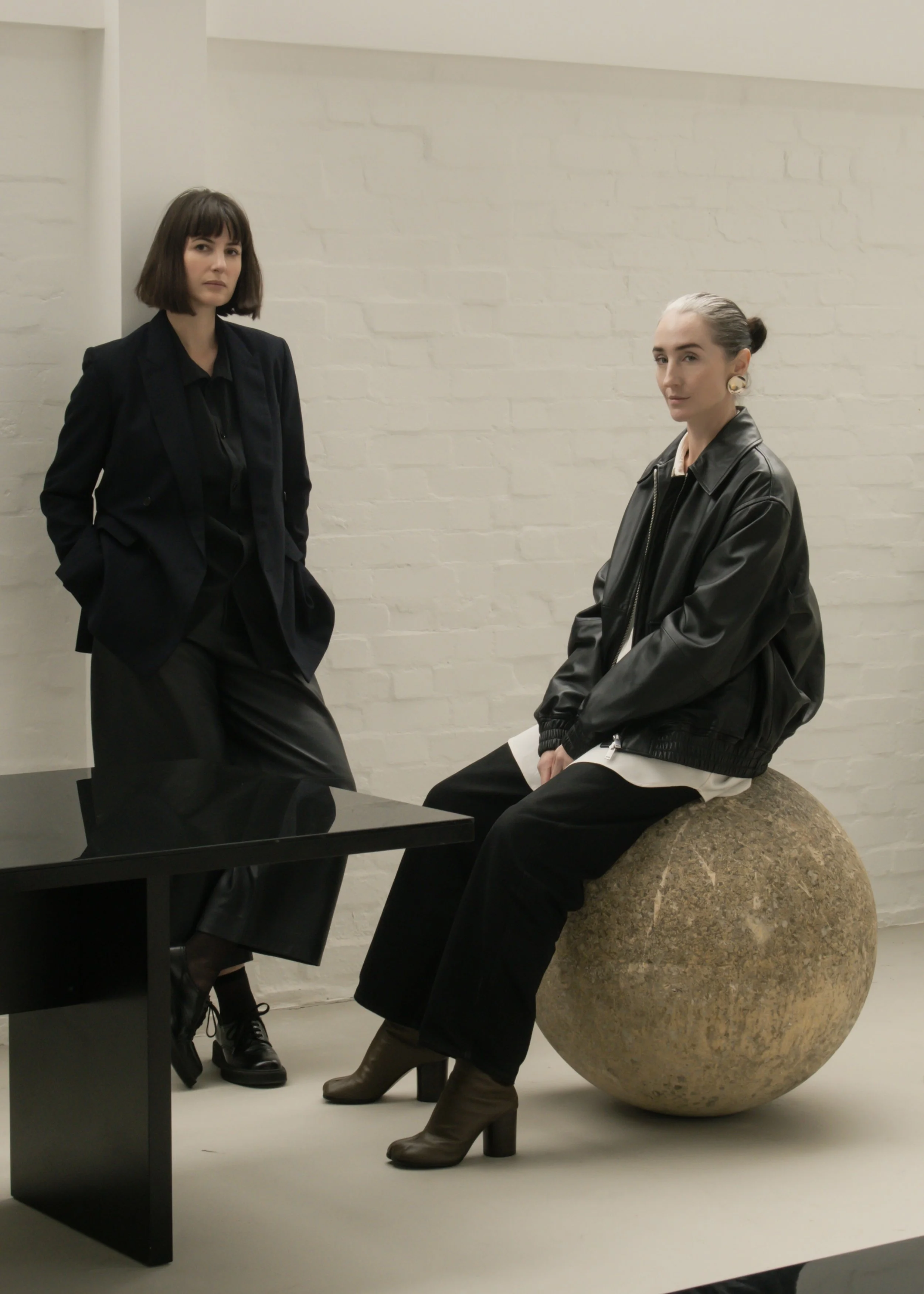
Courtesy of Monument, photography by Genevieve Lutkin.
Monument's Leah Forsyth-Steel and Victoria Spicer
London's Most Discerning Treasure Hunters
By Bonnie Langedijk
Leah Forsyth-Steel and Victoria Spicer first crossed paths in an Auckland gallery that Forsyth-Steel was running. It would be years before they properly connected, reuniting in London through mutual friends, bonding over a shared obsession that no one else around them seemed to match: the hunt, the provenance, the story behind the object. In early 2020, Forsyth-Steel made the call. Spicer didn't need long to decide.
Monument, the London-based gallery they have built since, is guided by three principles: form, materiality, and gravitas. Each piece, whether a bold postmodern chair or a stone abstract sculpture, is individually chosen for its story, its personality, and its permanence. The curation is deliberately eclectic, encouraging viewers to encounter objects outside of any traditional domestic context. Monument celebrates works that have withstood the pressures of time, use and fashion, presenting them with the kind of consideration more often reserved for a museum than a showroom.
Since its inception, the practice has expanded to offer full-service sourcing, curating and styling, but at its core, the proposition remains the same: that building a collection should be a purposeful, considered act. One acquires with thought, intention and longevity in mind.
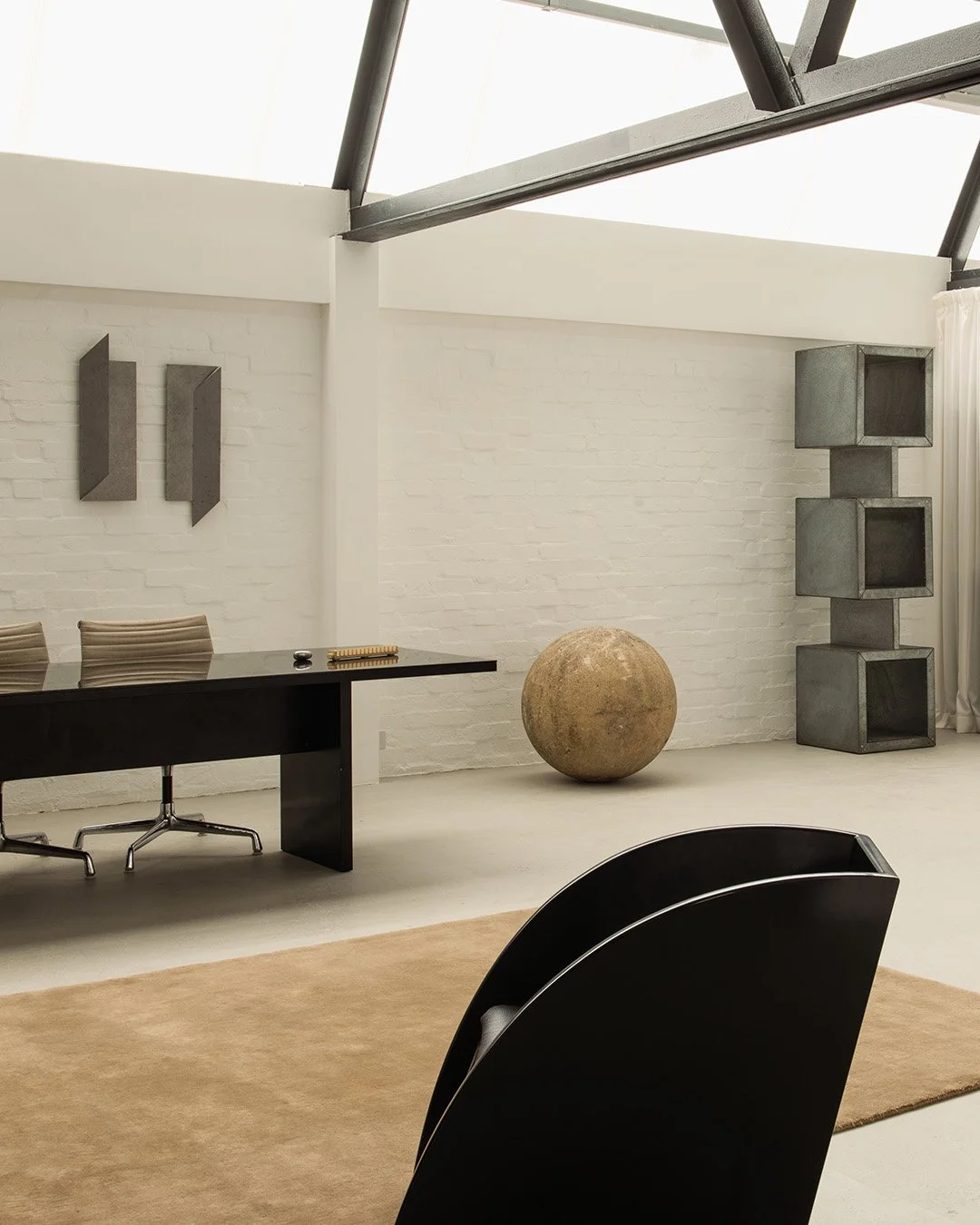
Monument in London. Courtesy of Monument, photography by Genevieve Lutkin.
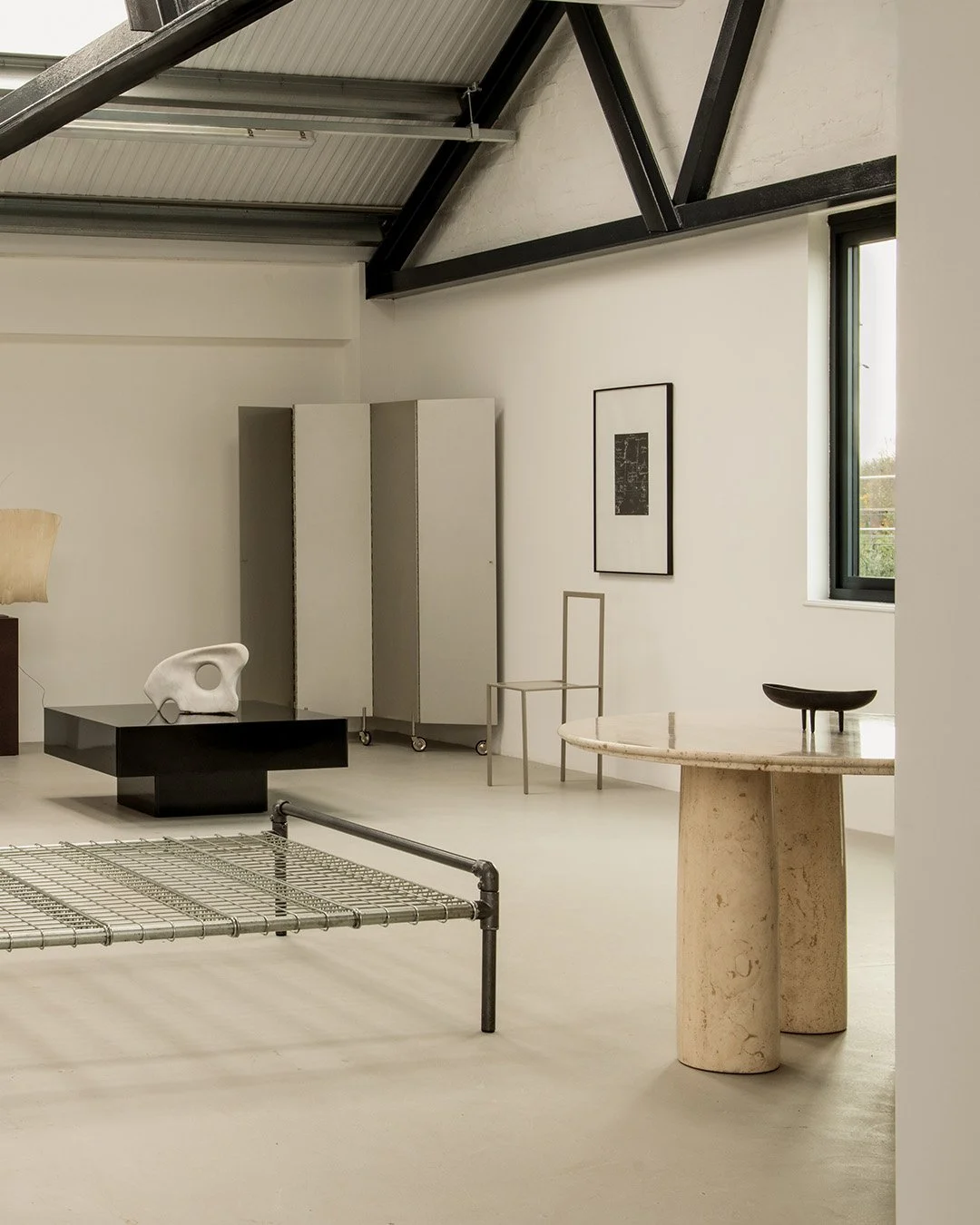
Monument in London. Courtesy of Monument, photography by Genevieve Lutkin.
When you started out, what did the gallery and design scene look like in London?
Victoria: Béton Brut and The Peanut Vendor forged the path. There weren't that many dealers practicing at that time. It was definitely an emerging scene, but I think a lot of people came to similar conclusions at the same time.
Leah: What's interesting about 2020 is, it's the year that Two Poems, Spazio Leone, all of us came up together at the same time. There's been a few articles and things written about the new gen reinventing how it's done because traditionally, collectible design and art isn't sold digitally. It's always been at fairs, markets or the antique passageways.
Victoria: All of those interior designers would have their black book of antique dealers and things. It was definitely a small market. And like Leah said, we all emerged together. It was a good time because homeware sales were up by 800%.
Leah: We started midyear and didn't launch until November. It was important to us that we took the time to develop the concept and what we wanted to focus on. Our initial sales approach was very online focused and highly Instagram concentrated due to COVID. When I lived in the Netherlands, I did a lot of work with Nike, and I was inspired by the collection 'drops'. So every Sunday night at 6:00 PM the new collection would land and because the algorithm was different then, it really built up a lot of energy.
Especially right now, people are so eager to be a part of that singular moment.
Leah: These are treasures, right? When we go to the dealer's fairs, it's a race and literally we've seen people on segways, racing off.
Seriously?
“It's competitive in its nature and all of these things have been UNEARTHED, have been sourced, been found, and some of them are design classics and some of them are more unknown. When you see something online or in someone's store or gallery, it might be the only time you ever see it.”
Leah: It's competitive in its nature and all of these things have been unearthed, have been sourced, been found, and some of them are design classics and some of them are more unknown. When you see something online or in someone's store or gallery, it might be the only time you ever see it. That's super exciting. Immediacy or quick thinking is important, but that has slowed down for us. Now that we're a gallery, we made the decision last year to stop selling online. That is still very much in its experimental phase. We're still testing and learning which is nice because it allows us to change our mind — as we learn in real time.
Going back to the deck building and developing the point of view for Monument, how would you describe it?
Leah: When we first started, we asked, "What are we looking for?" And we landed on three points: form, materiality, and gravitas. Form and materiality is something most dealers will answer to, but for us, the gravitas was key. That's where the name Monument comes from. Sometimes it's a literal heaviness — we have a lot of stone. It's pieces that resonate, pieces that feel timeless. We made the decision very early on that we weren't going to stick to a certain period. It's very instinct driven, very personal. We're not going for the popular. We have a strong view on not presenting things in a domestic context. I worked in museums for a few years and I think that had an influence. We like to give each object space for consideration. We talk a lot about furniture as object. Most of these pieces are functional but they're not necessarily designed with ergonomic intention. The contemplation bench by Christoph Siebrasse, it's steel, it's marble, the idea is that when you're reclining on the chaise, you are completely immersed in the experience.
Do you ever get tired of treasure hunting?
Victoria: I can't keep up with Leah's insatiable appetite.
Leah: The space we operate in, everything is constantly moving. You have to move really fast. We have found absolute treasures in unexpected places by repeatedly checking, checking, checking. Some of those are design icons and some of those are actually unattributed but you have to get a forklift out to a field out by Manchester and figure it out. And you've got to figure out how to get it back.
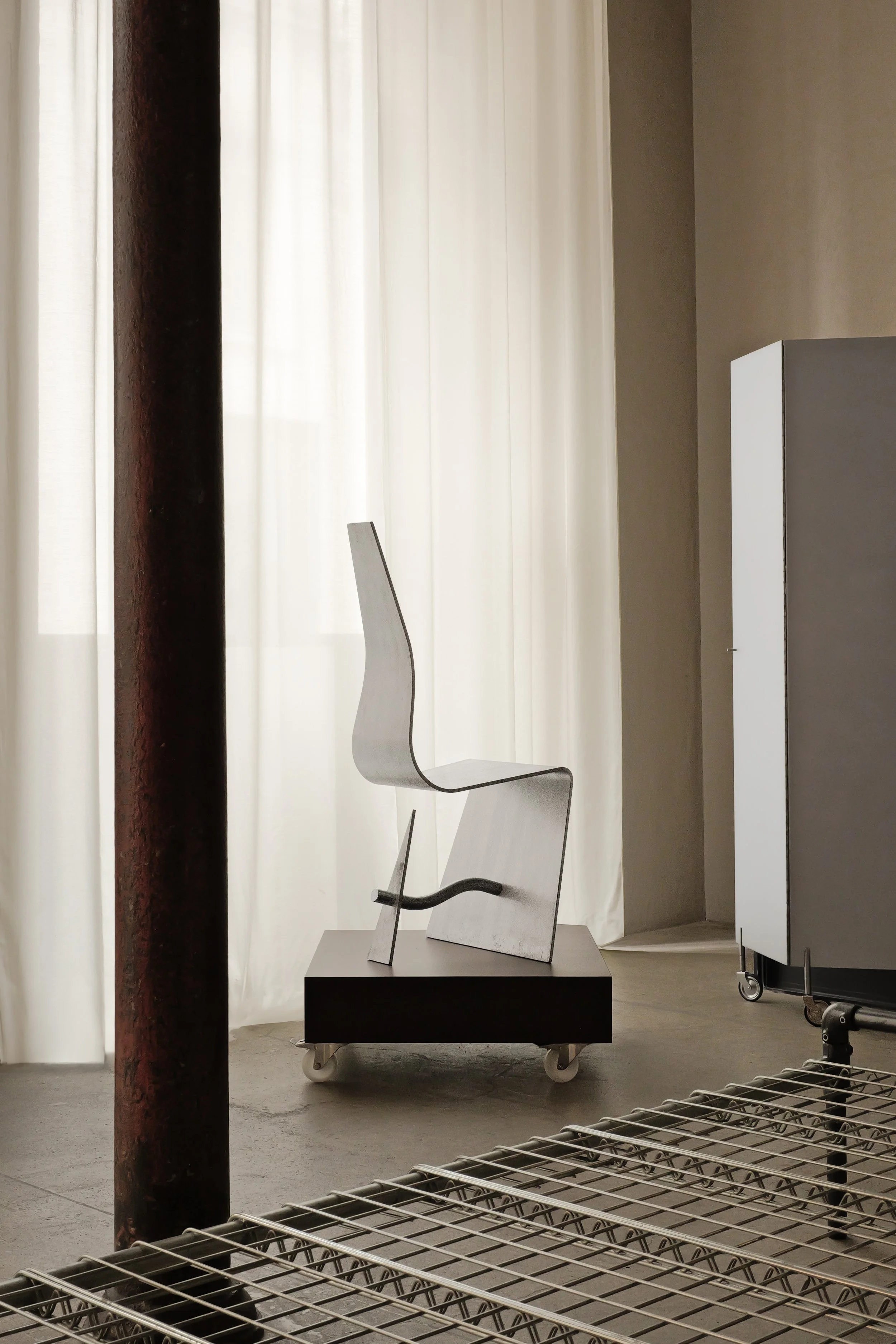
Image from Monument's exhibition Im Zwsichen at COR Studio, Paris in 2025.
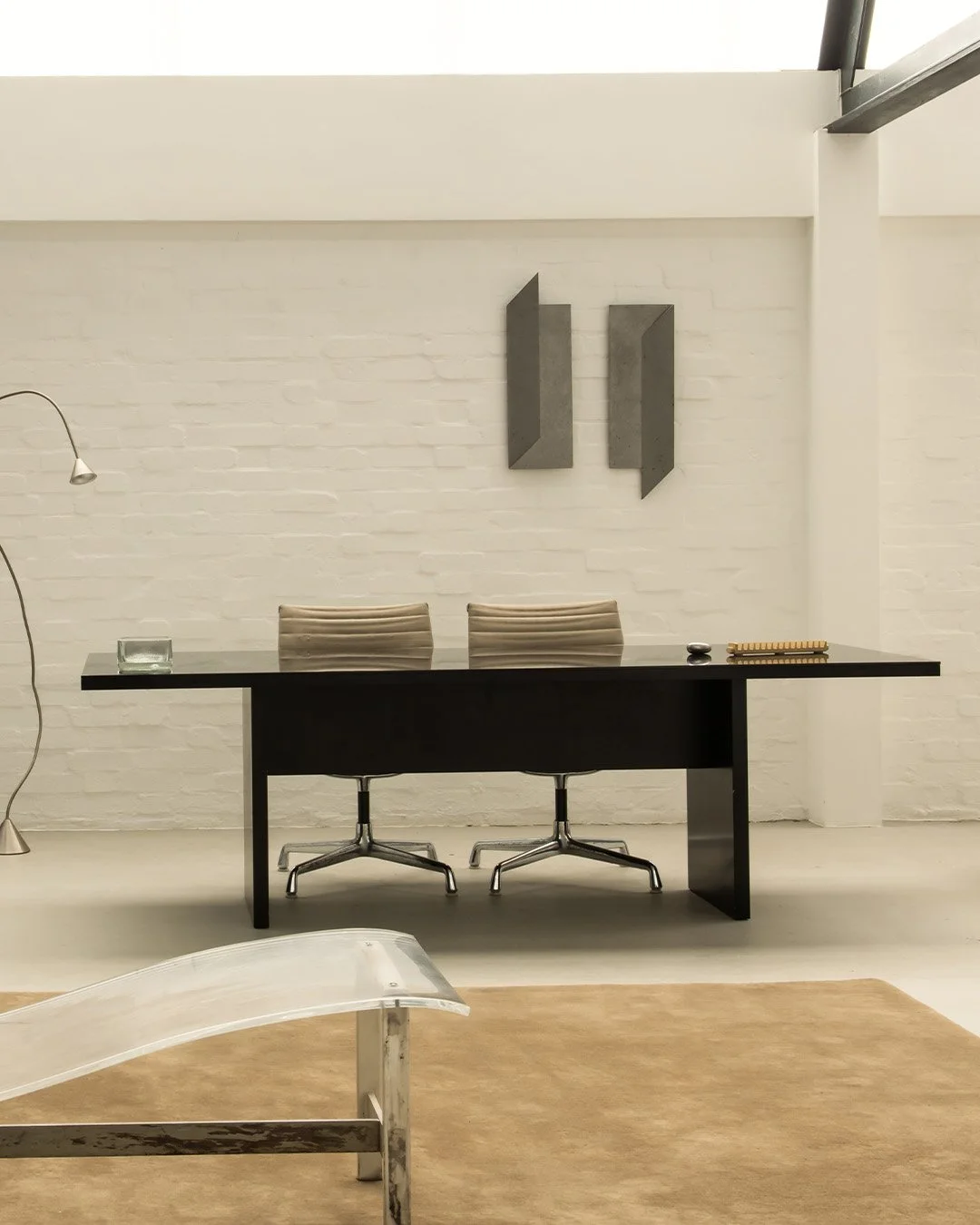
Monument in London. Courtesy of Monument, photography by Genevieve Lutkin.
How do you look at the relationship between consumers and collectible design today?
Leah: We're all absorbing the same information visually and you can find yourself really influenced by that. Sometimes you need to put your blinders on to not get distracted. We try to keep ourselves untainted in terms of not veering away from what our vision is.
Victoria: It's so easy today to 'come around to' something you didn't initially like because of the repetitive exposure. That's quite terrifying. But equally, it works the other way, falling out of love with pieces, because of their visual oversaturation
Leah: If we go back to that 2020 moment. Homeware was booming because people were showing up on social media and instead of having places to go, they started showing their home, and then they understood that it was a further expression of themselves. There's a certain competitiveness there in terms of what we have, what we found, what other people don't have. You see all the kinds of interior references. And then there's the CGI images, and then you're like, "Is that real?"
Victoria: Charlotte Taylor really championed that. Her work is layered and gorgeous.
Leah: You start to get this repetition and homogenous source pothole of influence. What I notice now in 2026 is actually more and more people want humanness. They want authenticity. Everyone is starting to post more raw and more real because it's a relief. Everyone is scared of this AI world we're heading towards. The response to that is kind of lovely. It's bringing us back to what creates oxytocin, not just dopamine. And that translates in homes with a personal collection, things from your mom or grandma, something you bought in your early 20s that you've hauled to several different countries, the thing you and your partner saved up for. Those environments strike a much stronger chord than something overly styled.
It's become so easy for things to look good that we've become scared of imperfection. There's this pressure for everything to instantly be finished.
Leah: It's not till things have aged and weathered, things have changed out, something starts to feel like a home. We sell things that go from really distressed with a heavy patina to things that are in really incredible condition, particularly for their age, but the buyers range in terms of what their tolerance is. People expect it because it's within a gallery to be really immaculate and you have to try and explain to them, "Well, this thing was outdoors for 30 years." There is a bit of education that needs to happen.
Hopefully at one point it's like with the Hermès bag where people actually prefer the beat up version more.
Leah: Absolutely. Working in museums, you see that in a lot of the objects. I used to work in a museum that was known for its ethnographic collection. And there is this kind of beautiful aging, the way things have been handled, the way that the edges of the wood smooth down because of the oils of hands that have touched it. I think some people value it, for some people it's an aesthetic choice and for others, it's very alien. They want that immaculate home from the photograph.
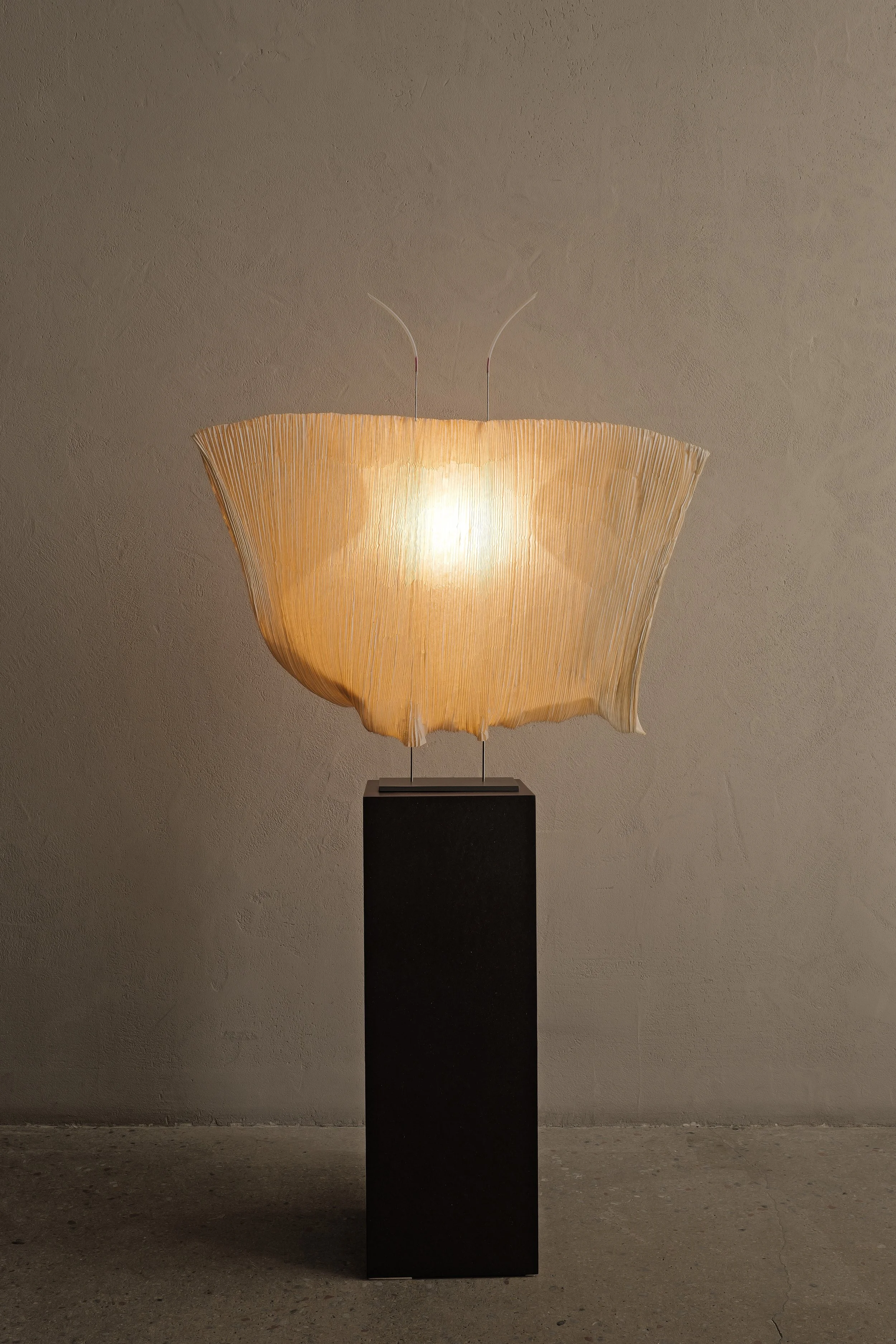
Image from Monument's exhibition Im Zwsichen at COR Studio, Paris in 2025.
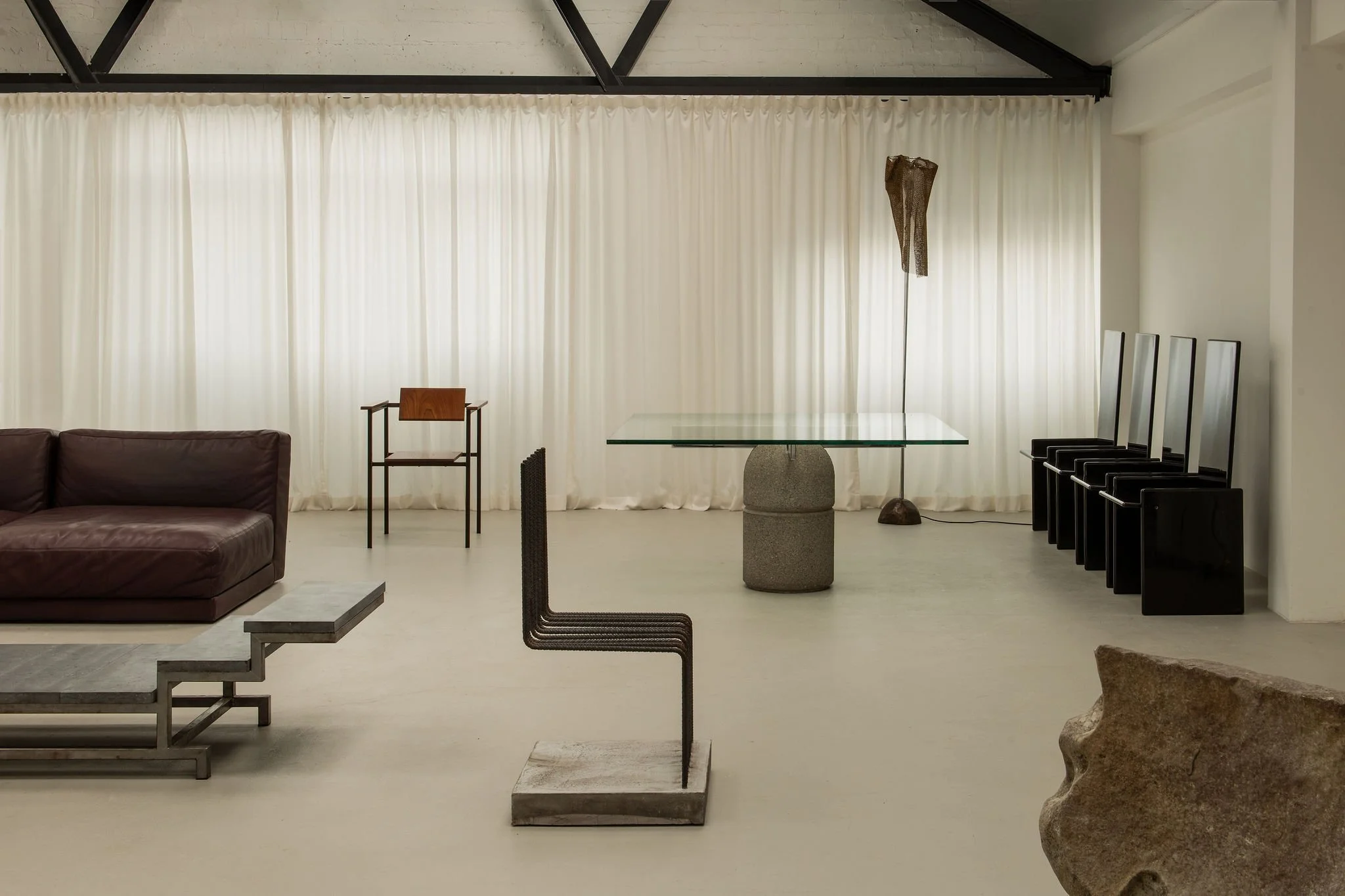
Monument in London. Courtesy of Monument, photography by Genevieve Lutkin.
In terms of the wider design industry, what's your perception of where it's at?
Leah: We acquired these Tom Dixon pieces from the early '90s and we were discussing how many furniture or object designers there were at that time per capita. You fast forward to today and it's growing so significantly. Everything is saturated, it's difficult for people to stand out. What's interesting is a lot of the people that do break through are being true to their heritage, materials and practices. Artists and designers such as Minjae Kim, Rooms Studio.
Victoria: It helps with their story. It's not just someone making a chair. There's more depth.
Leah: Having a depth and a substance behind it, I think is exciting when those works emerge. In terms of the secondhand dealers, I think within the UK a lot of us have reached these points. We've all got our own galleries that reflect our selves and you can see that it's clearly defined for each of us. What's interesting now is what do we do with that? And how does it extend and manifest beyond the gallery? We made a decision a few years ago that we wanted to stay really connected with Europe and we've really enjoyed cultivating and being part of that community. It is a very old, established community in terms of understanding design and having appetite and appreciation.
I also want to connect to the Basic.Space project we're working on, curated around the concept of A Woman's Work. How do you relate to this concept?
Victoria: We deal in archival objects and times are evolving and changing for the better in terms of women having a platform and
Leah: Representation...
Victoria: And validation. From an archival lens, there's less to choose from, which is really disappointing. But it's exciting when we discover new artists, like Eva Sjoberg.
Leah: The piece in the HURS booth is the fourth piece of hers that we've had, and whilst we've really struggled to find information about her as an artist, we still really want to champion her work for its craftsmanship and vision. We can recontextualize by having them in our collection, we can elevate them by sending them to fairs. Sometimes, when we put something out in the world, we get people coming and telling us more information about it, which is amazing.
Victoria: It just happened with a chair, which is incredible. It was artist made and it was signed, but it was hard to tell what the signature was and we couldn't track it.
Leah: Another one is the Anna Mizak sculptures. She was Swedish, Polish. She was very inspired by abstractions of the human form. It's exciting to find pieces where these people may not have been commercially very big, but they're given a second life. They're next to a Ron Arad or a Philippe Starck. We're celebrating and highlighting them, but we don't make a point of seeking out female designers.
Victoria: No, but it definitely is a bonus.
Leah: It's also super interesting how many iconic female designers people still aren't familiar with, like Ray Eames or Cini Boeri. People are like, "Oh, I remember the moment I found out they were women." Or Natalie DePasquier, who did all the patterns during the Memphis movement. If someone said to you, the Memphis movement, one of the first things you’d say is the pattern, the colors and she was the mastermind behind that. She was a teenager when she started working with them.
Victoria: I was surprised by Cini Boeri.. We've got a couple of her lights in our entranceway. A Woman's Work also touches on and challenges how the softer arts are seen as less important. Because craft has historically been associated with women, it has been dismissed as inferior and denied the status of 'real art'. A position that is both outdated and deeply patronising. When a man makes a chair, it's a chair. When a woman makes one, it's got this "female sensibility" about it. It's very frustrating. We should adopt the experiment they did with orchestras, where you audition behind a curtain anonymously so the panel can't tell who's playing. When they started adopting that audition process, suddenly all these talented yet overlooked women were selected
Leah: We've been asked a lot for favors from brands, from people. And I'm always curious to know how many favors men get asked. I think there's this assumption women are more open to gestures of kindness and generosity. It's often dressed up as an opportunity, but are we low-hanging fruit because we're women?
Victoria: I haven't thought about it like that. I've always just thought we've got the strongest brand.
Leah: Traditionally this world has been mostly run by men. There's this unapologetic negotiating and it's been quite a learning curve for us because our instinct is to be super friendly. We'd pay full price and never negotiate, but we'd give everyone discounts. Is this a gendered response? How do we make sure we're not framing everything as an apology? I actually had a browser tool that would highlight any apologetic language in my emails. As we've developed, we are definitely less apologetic these days while still trying to do everything with warmth, because that's the whole joy of working with people.
This interview has been edited and condensed for clarity.



Shaniqwa Jarvis on why photographs are beautiful liars, grief as a portal, and the moment she found her whole practice hiding in a childhood snapshot.