On Courage
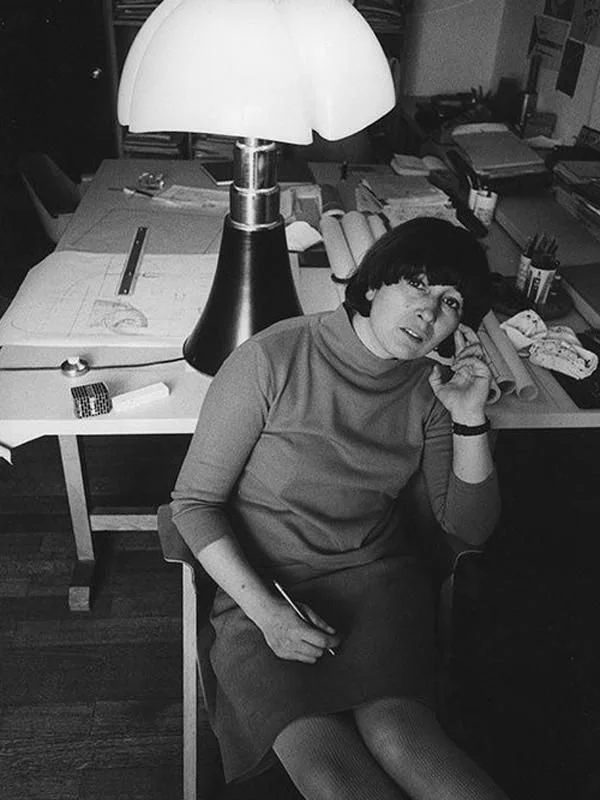
Gae Aulenti with her Pipistrello lamp, created for Olivetti’s Paris showroom.
On Courage
An essay by interior designer Brigette Romanek on Gae Aulenti
In celebration of Making Space: Interior Design by Women by Phaidon—a groundbreaking survey of 250 leading interior designers spanning the twentieth and twenty-first centuries—we invited four women featured in the book to reflect on the visionaries who shaped their practice.
By Brigette Romanek
When I look at Gae’s work, the pieces I enjoy ever so much, I am moved in ways hard to express. There is strength and boldness, an undeniable confidence. Her work stands proud and full of life. This gift she has given us is more than enough. However, what moves me most about her is her courage. She trusted her own vision and created pieces that were bold, and unexpected. Her famous Pipistrello lamp, for example, is both practical and playful. It shows that design can be functional while also emotional, curious, and joyful. To me, that lamp represents her ability to blend imagination with purpose, which is something I strive to bring into my own work on a daily basis.
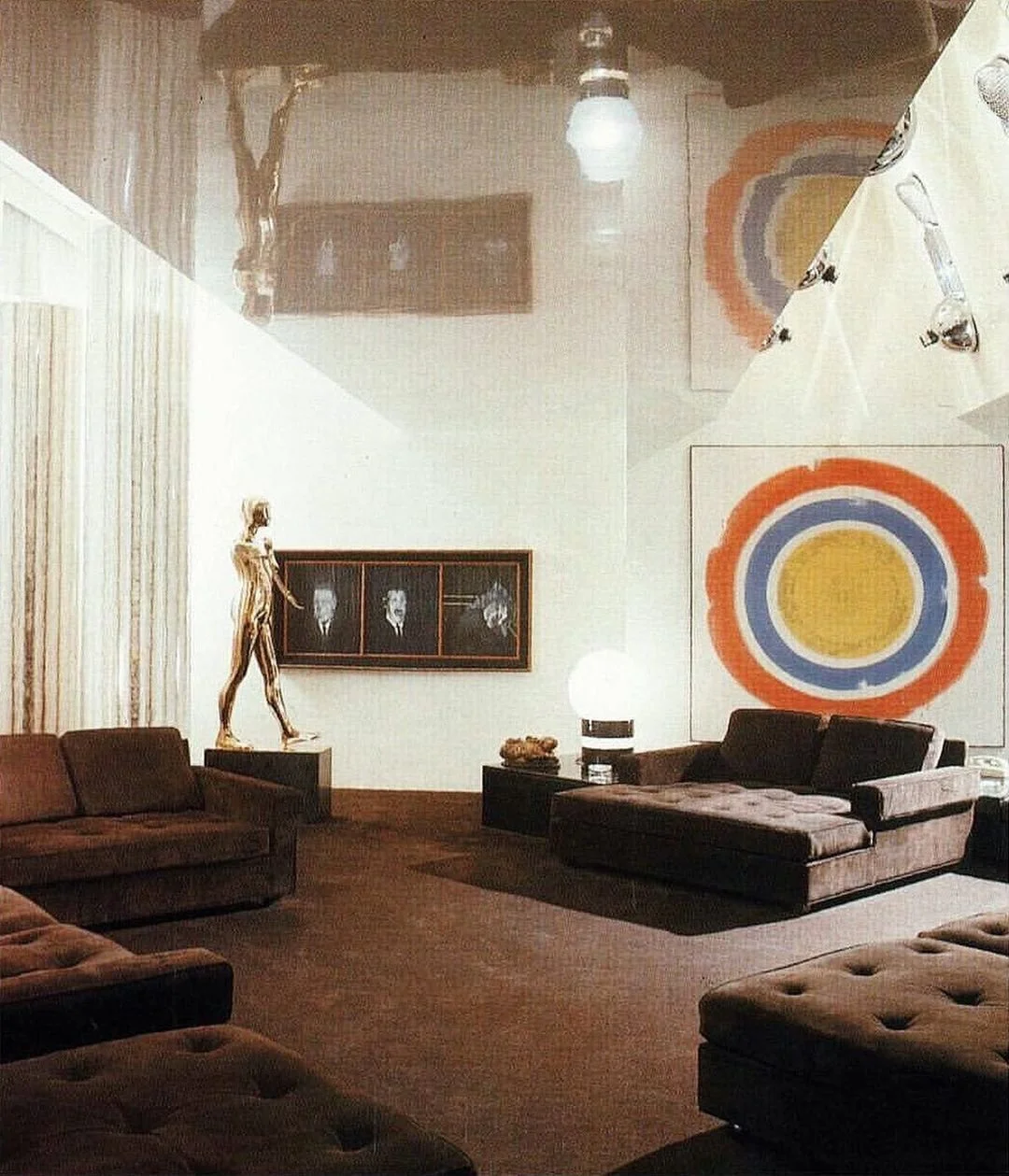
The Milan apartment of Marella and Gianni Agnelli, designed by architect Gae Aulenti in 1968.

Altana Palazzo Pucci, Florence 1971, designed by Gae Aulenti.
I think what makes Gae’s influence so personal to me, is in showing that being different isn’t something to hide, it’s something to celebrate. Her work gives me permission to take risks, to mix the unexpected, and to trust my instincts even when others don’t understand my vision yet. In that way, she’s more than an inspiration; she’s a reminder that the best design comes from authenticity and heart. Sometimes, when I doubt myself or feel overwhelmed by the pressure to make something “perfect,” I think about her confidence and resilience in a field that was often dominated by men. She didn’t let anyone’s expectations limit her creativity, and that gives me strength. Her story reminds me that it’s okay to take up space, to have a voice, and to create things that reflect who I truly am.
“Design has become a way for me to EXPRESS what I can’t always say out loud. To tell stories of warmth, healing, and hope. Like Gae, I want my work to make people feel something.”
Design has become a way for me to express what I can’t always say out loud. To tell stories of warmth, healing, and hope. Like Gae, I want my work to make people feel something. Whether it’s a sense of comfort, curiosity, or peace, I hope the spaces I create help others connect with themselves and with each other, and of course bring joy.
I obviously didn’t know Gae, but she has helped me. She reminds me that great design begins with courage and ends with compassion. But beyond her courage, it inspires me just how human-centered she was. She believed that design was about people, not about making a name for yourself. This matters so much to me because I don’t want to create spaces that only look good in pictures, I want them to feel alive, welcoming, and meaningful to the people who use them.
Interior design isn’t about perfection; it’s about connection, and that’s the kind of legacy I hope to leave behind, like her.
Everyone is an expert now, and almost no one is. In her latest essay, Bonnie Langedijk asks how confidence came loose from competence, why we believe the ring light over the researcher, and whether real expertise can survive a culture that rewards speed over depth.