The Women of ASICS: Cecilie Bahnsen
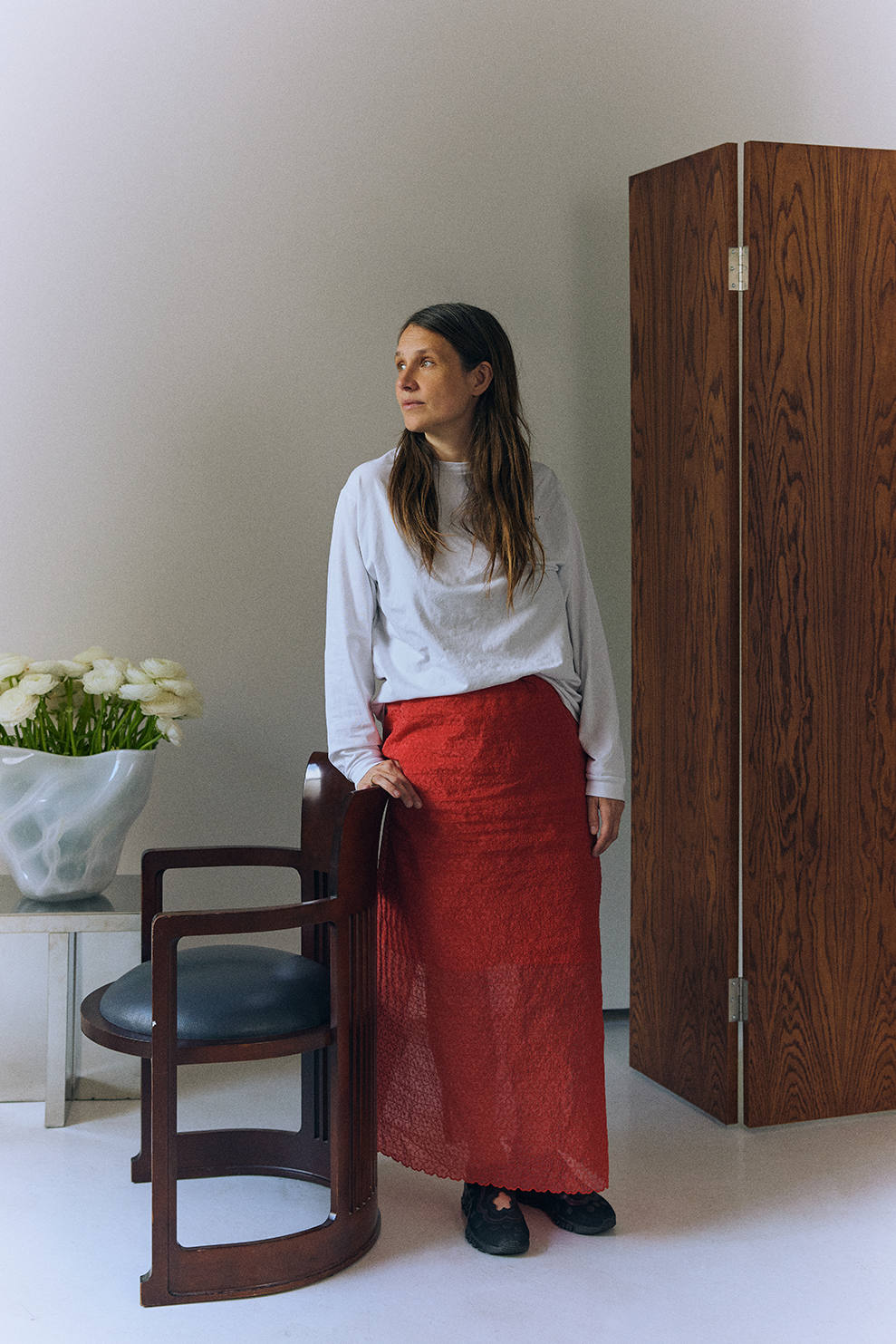
Cecilie Bahnsen at her store in Copenhagen. Courtesy of HURS, photography by Morten Nordstrøm.
Cecilie Bahnsen
The Women of ASICS
In partnership with ASICS, HURS presents The Women of ASICS: a limited podcast series sitting down with five creative partners who brought their own world to the brand and expanded it.
By Bonnie Langedijk
Listen to the full podcast episode here
Cecilie Bahnsen designs clothes for a woman who wants to feel beautiful without being stopped in her tracks.
Trained under John Galliano and Erdem, the Copenhagen-based designer has spent a decade building a world where couture-level craft meets Scandinavian ease. Since launching her label in 2015, Bahnsen has become one of Denmark's most celebrated designers: an LVMH Prize finalist, a fixture of Paris Fashion Week, and stocked in over 70 of the finest doors worldwide. Her universe is built on a deep commitment to textile, developing fabrics in-house with mills in Italy and Switzerland, layering handfeel and florals and structure into garments that are as considered up close as they are from a distance.
That same eye extends to her longstanding partnership with ASICS, now in its seventh chapter. The latest collaboration takes the GEL-QUANTUM 360™ I and does what Bahnsen does best: strips it back, then adds one thing that makes you look again. Here, it's a sculptural flower cut-out in the neoprene upper, soft and precise all at once. Footwear designed by someone who thought carefully about how a woman actually moves through her day.
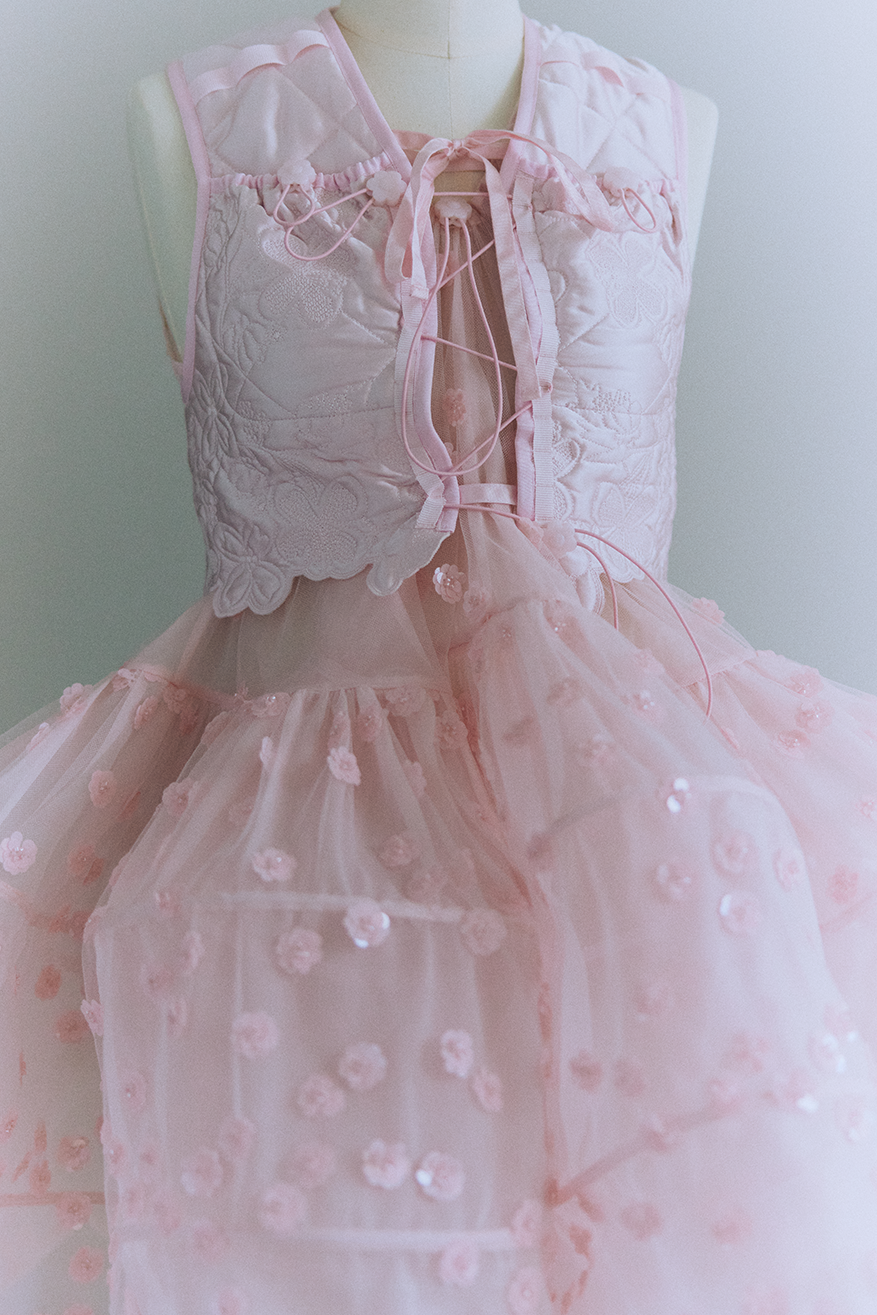
Courtesy of HURS, photography by Morten Nordstrøm.
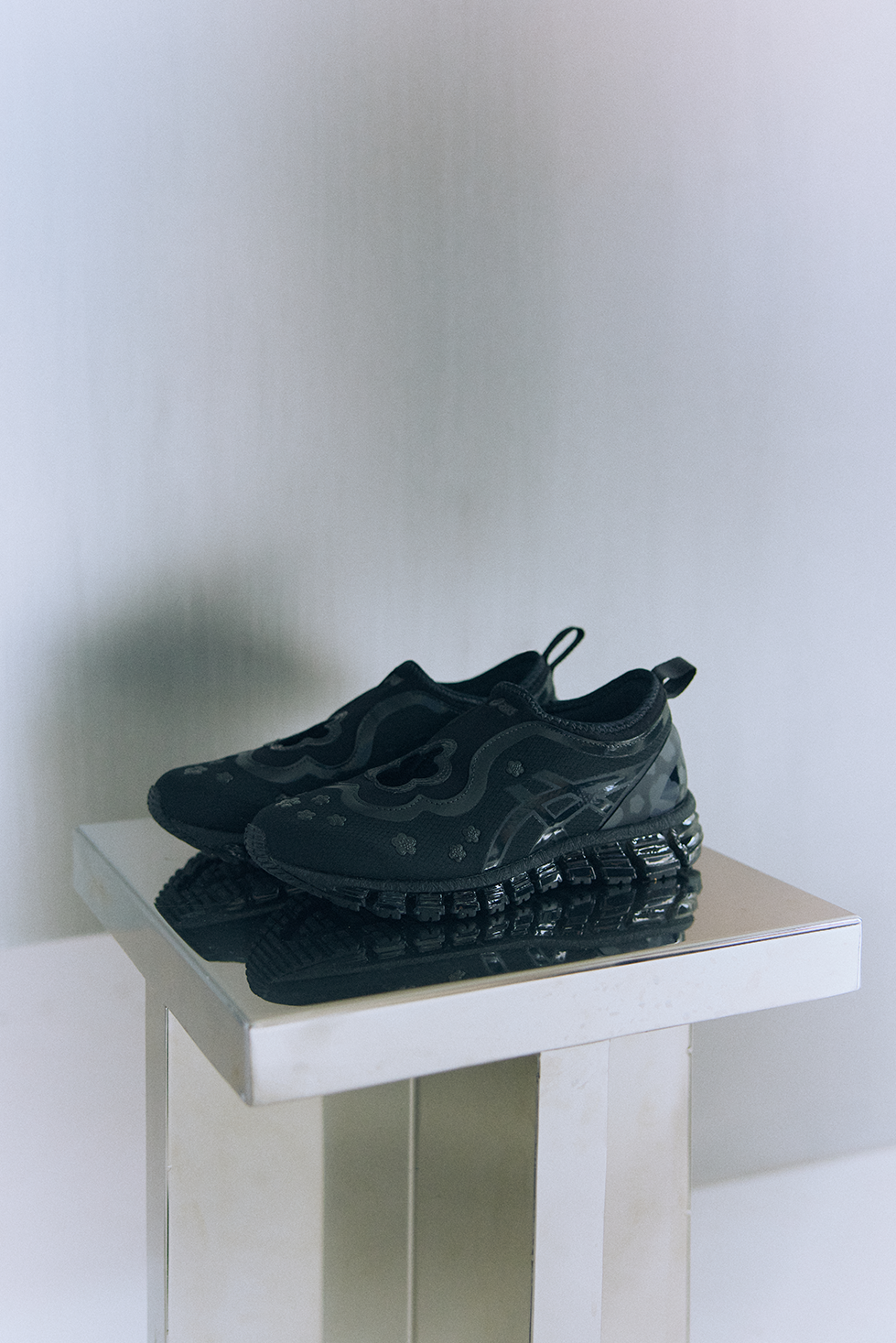
Cecilie Bahnsen x ASICS GEL-QUANTUM 360™ I. Courtesy of HURS, photography by Morten Nordstrøm.
We're in your store in Copenhagen. Tell us a little bit more about this space.
Cecilie: The store is in this beautiful courtyard where you can see some of the towers of Copenhagen and the light of the city. It's really an extension of our atelier and how we work. It has some of my favourite art pieces on the wall, collection pieces that are part of the current collection, and archival pieces. The girls that work in the store also work in the studio, so everybody knows what we're passionate about. I hope it's a place that is welcoming, that people want to come and explore and take in and be part of the family.
I read you used to crochet with your grandmother. How has that experience shaped your work today?
Cecilie: My grandmother and I would create many things together, but it was a very special moment for me. It was what I would do after school, come to hers and we would crochet or do embroidery together. There was a calmness with her and seeing things coming to life. As I got more and more into fashion, she would also help me make some of those things I'd seen in magazines that I really wanted to wear but didn't know how to make. That really stayed with me and was how I fell in love with it first, but also how I found a mindfulness in creating that's been important for me today as well.
You trained under Galliano, you worked with Erdem in London, and then at one point you decided to move back to Copenhagen and go out on your own. What led to that decision?
Cecilie: I wanted to learn from some of the best and understand what it means to run a business beyond creativity. I'm totally grateful for what I got to learn and the craftsmanship and the romance of, especially, the studio of Galliano. It's so different from a Scandinavian approach to things. But I also knew that I wanted to do it closer to home and at a different pace. I wanted to have that time to find what my voice was within it, which Copenhagen Fashion Week was a very important way for me to do, choosing locations and finding your way of expressing yourself, not just in clothes, but also in universe and atmosphere. London and Paris have such a big focus on either the history of fashion or on talent. But Copenhagen and Denmark in general have deep values in design and craftsmanship, and the timelessness of that. I wanted to explore that within my creativity.
“I am deeply intrigued by the HUMAN experience—understanding the emotional challenges we go through, and how we accept, overcome, and heal from them.”
You're really building one collection on the next, one collaboration on the next. It's not about newness for newness' sake. Did you have that wide vision from the beginning?
Cecilie: There was this timeless approach where I wanted to create a collection where eventually you would wear a skirt from one season with a top from another. It's been really amazing and rewarding to see that that's also the case. When you meet the women who wear it, they are not hung up on a season. They buy what they're passionate about and how they want to put it together. For me there's a security in building on what you have instead of doing something new every season. It's about being stubborn about your aesthetic, but you also push yourself and see how you can stretch it. We're really focused on creating with purpose and discussing as a team, what does this do or do we need it now? Is that idea okay to also save for the next collection? With some fabrics we develop it for over a year, year and a half, and then that's when it makes sense that it fits in.
There's so much depth to the techniques you use. The studio develops all the fabrics in house, right?
Cecilie: Textile has always been a very important part of the process. We start with sketching them out. We work with really incredible mills in Italy and Switzerland, whether it's from the archives or with new ideas we have, and it really starts from the sketches and the swatches. You look up a flower or a new handfeel, and the creative process has its phases because first those 2D drawings go out, then they come back as 3D swatches and rolls, then we move on to the mannequins and drape it, and then eventually onto the body to make sure that it also feels comfortable. It's a phase in every creative process that really informs each other.
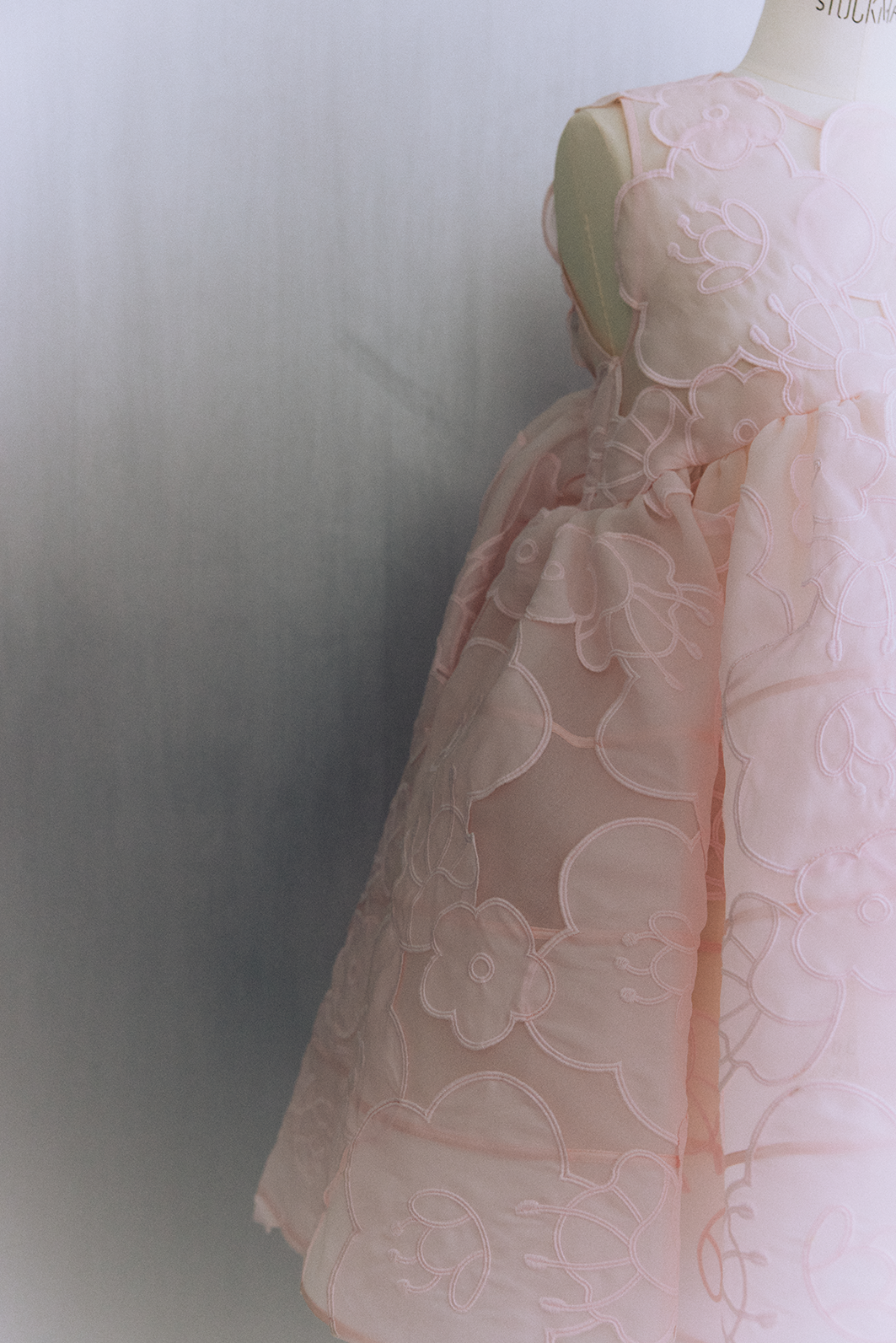
Courtesy of HURS, photography by Morten Nordstrøm.
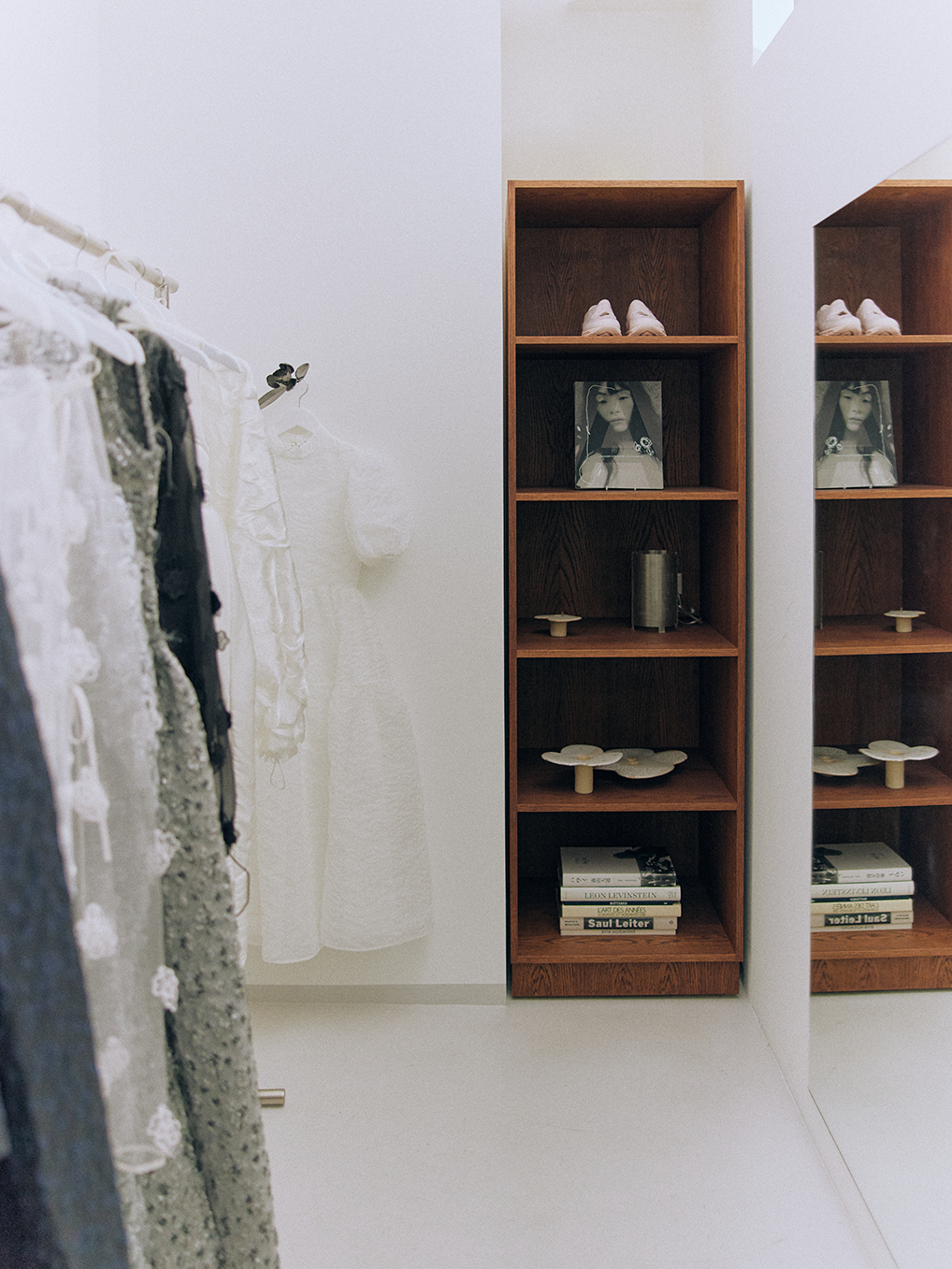
Courtesy of HURS, photography by Morten Nordstrøm.
The fabric is already kind of an artwork in itself, and then you have to create almost like a sculpture out of it.
Cecilie: Exactly. And it's also why they're so dear to me. I keep pretty much every fabric we've done and every swatch so that we can bring them back for made-to-order pieces or use them as references. We have a couple of dresses that have fabrics from ten different seasons and when you buy a dress like that, you get a diary about what we're about.
Flowers are so central to your work. Where does that obsession come from?
Cecilie: It's definitely grown bigger with the brand. It used to be just the things I would doodle or collect. Now it really feels like such an engraved part of the brand and I have a deeper curiosity about it. I now have a summerhouse with my own garden and I'm starting to grow the flowers and collecting vintage books about them. The flower is an icon for us. It's been amazing to see how with the collaborations, you add your DNA, you transform something maybe very masculine into something very feminine, but it can be in those small details that it's so readable that it's yours.
You've been a longstanding collaborator of ASICS. This is your seventh project. What first attracted you to this partnership?
Cecilie: It's two different things. There's the craftsmanship and the technology and the comfort of ASICS, which would be what I wore with my dresses, and that takes me to the other one, which was we needed a partner to tell the story of how to live in the dresses and the universe. At the first show, everything was styled with flats but people kept talking about the collection as only occasionwear. And I was like, "It's not just occasionwear, it's also easy and it's super comfortable and a dress feels like a cloud and you can move in it." And I was like, "Oh, that's all the things ASICS are talking about too." So I feel like our values are really aligned. I was so amazed when we started working on the first shoe with the team in Amsterdam, seeing all these women behind the scenes who worked on the shoes and who didn't get scared of my ideas and the things I wanted to try. Looking at the first Mary Jane we did with them, it's incredible that we could take the tongue out and create a shoe that had the same lightness as the dresses where you could see the craftsmanship and the lines and the florals, all of that in one product. It was very enlightening for me about how you can look at shoes as an object and translate as much DNA into that, not just as a dress or full silhouette, but as one object.
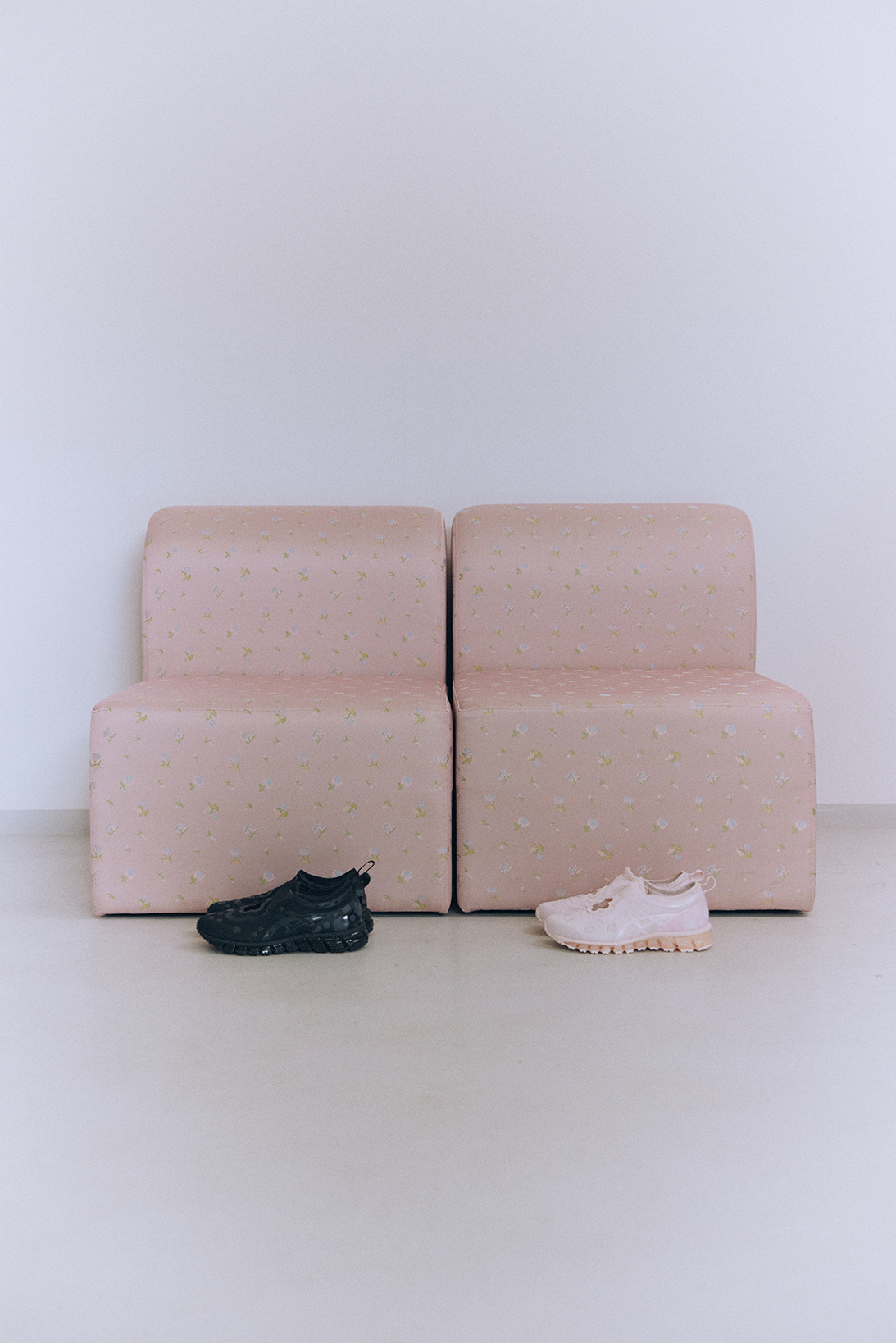
Cecilie Bahnsen x ASICS GEL-QUANTUM 360™ I. Courtesy of HURS, photography by Morten Nordstrøm.
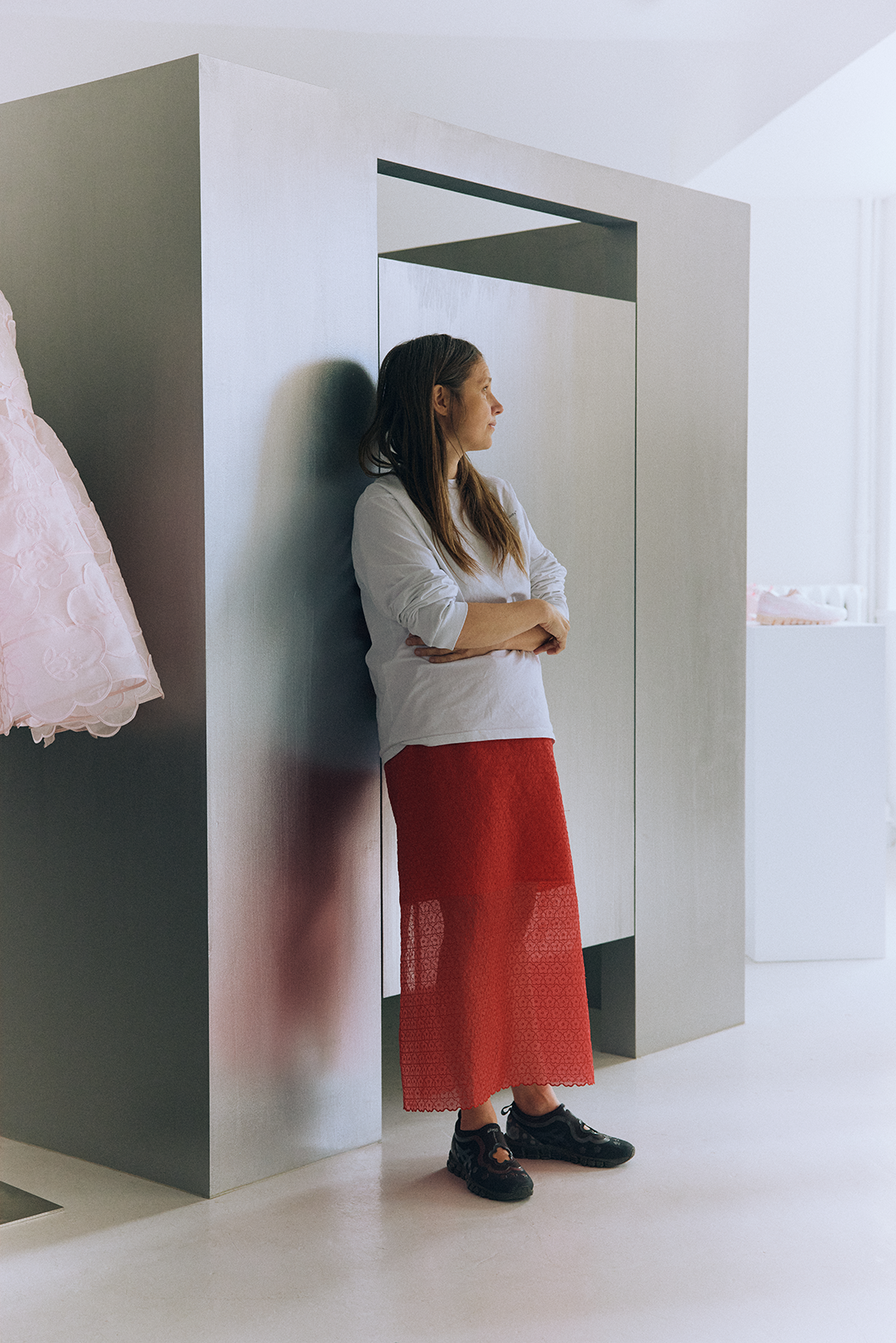
Courtesy of HURS, photography by Morten Nordstrøm.
How do you find the balance between where your world starts and ends and where their world starts and ends?
Cecilie: Within the collaboration now it's so interlinked, which I love. It can be decorative, like the red shoes with all the 3D flowers on, but it still needs to go past quality control and make sure you can wear it and it lasts and it's functional and it's comfortable. None of the things compromise on each other. You learn from each other's craftsmanship and nerdiness and you make something really beautiful and functional together. As brands we've grown incredibly together as well, which is the beauty of the collaboration. It really has informed each other and feels like a natural extension of what we do.
Tell us about this specific shoe, and how do you evolve the idea of what the shoe can be after having worked on so many?
Cecilie: The first starting point was that the sole has a ten year anniversary, which I thought was super interesting, telling that same story of the history of a product. But then the other thing was working with the comfort of this, that you can just slip it on, it nearly feels like a sock. How much could you strip back the details? How much could it just be about that one flower cutout? As much as this looks like one of the simplest things we've done together, it's probably been the most complicated to achieve that ease of just putting it on. And how different people wear it when you have a pink sock, suddenly you have the pink flower coming out and you can mould it to be part of your look. It's always a good year, year and a half to develop. You go through three prototypes before it's finished. I love that with ASICS it's not like we create this and then it has to land that day in store. It has to launch when the product is finished and good enough. If it needs that one more tweak to be perfect, it gets that one more tweak to be perfect.
Has working with ASICS changed how you think about your own collections?
Cecilie: Definitely looking even more at the flowers and how that's now part of our DNA, where maybe before it was just, oh, I'm into this, it's beautiful, it feels right. I've become more aware of my own codes within the brand by working together in this way and how little it takes and how those codes can also be refined within my own universe. Shoes as a category for us, not just with ASICS but also our own, has become a way of creating these objects where there's space for so many trinkets and love and explorations. I love that you might just see one thing when you first fall in love with it, but when you come closer, there's something else. The sole might have a floral print, but only she who's wearing it knows that.
This interview has been edited and condensed for clarity. Listen to the unedited conversation here.
Shaniqwa Jarvis on why photographs are beautiful liars, grief as a portal, and the moment she found her whole practice hiding in a childhood snapshot.