The Real Work and the Real Questions of Tourism
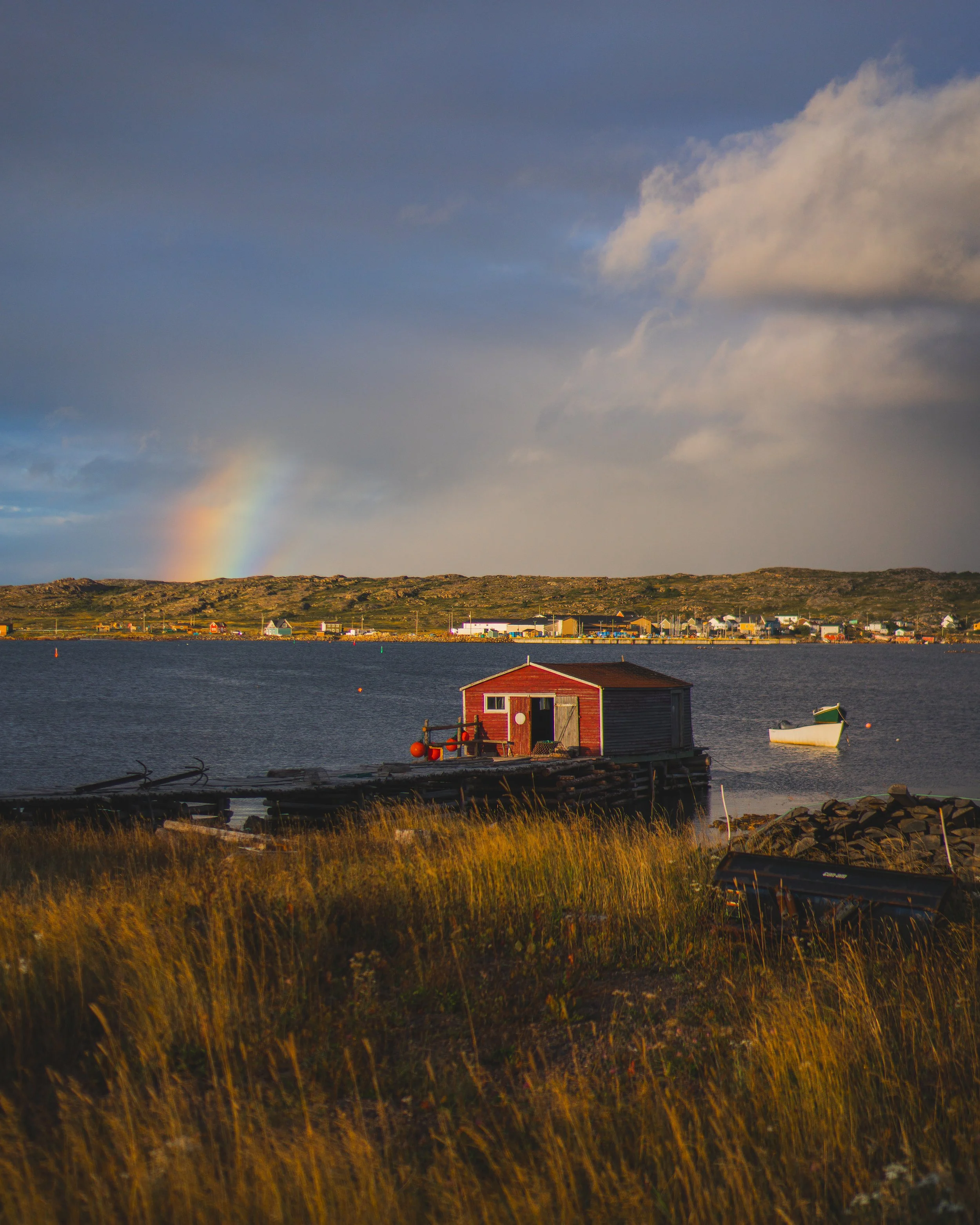
Courtesy of Fogo Island Inn.
The Real Work and the Real Questions of Tourism
In celebration of HERitage — SmartFlyer's founder-to-founder collective spotlighting the women at the helm of hospitality — we invited five leading women from across the industry to write about the rooms they've built, the ones they've walked into, and the ways hospitality shapes — and is shaped by — the women who run it.
By Zita Cobb
Too often, we skip past the questions that matter most in tourism. They are the ones that come up every time I talk to someone starting a tourism venture: What are you actually building? Not the hotel or the tour company or the restaurant—those are just structures. I mean: What are you building, who is it for and will it still matter in a hundred years?
Most of the time, people don't quite know how to answer. They talk about business models, market positioning, and competitive advantage. All valid considerations, but they're not really answering the fundamental questions. The real work of tourism—the work that matters—isn't about capturing market share or maximizing revenue per guest. It's about developing places in ways that make them stronger in themselves, more hospitable, resilient, more able to sustain the people who call these places home. We should never forget that tourism isn’t a right and that hospitality starts with an invitation from local people.
This distinction matters more now than it ever has. Tourism has become one of the most powerful economic forces shaping—and misshaping—communities around the world. We need to be very clear about what kind of force it has become and dedicated to making it more positive for the places it touches.
About Money…
Let me start with something that seems basic but gets confused all the time: money is not an asset. Money is a resource—a tool you deploy to develop actual assets. This might sound like semantics, but it changes everything about how you approach tourism development.
The assets are what already exist in a place: The landscape, the knowledge embedded in local practices, the skills of local people, the ecological health of the place, the social fabric that makes a community function. These are real. These have inherent value. The job of money is to develop these assets respectfully and properly, to create the conditions where they can flourish and evolve.
But too often, we get it backwards. We treat money as the asset and places as the resource. TOURISM then becomes extractive — designed to pull as much financial value out of a place as efficiently as possible, with little concern for what's being developed or depleted in the process.
But too often, we get it backwards. We treat money as the asset and places as the resource. Tourism then becomes extractive — designed to pull as much financial value out of a place as efficiently as possible, with little concern for what's being developed or depleted in the process. We can see it in the metrics the industry monitors: Visitor numbers up, revenue up, occupancy rates up. But are the assets being developed? In most cases they are being diminished.
Tourism development with asset development (place development) as the primary goal, starts with the question: How can visitors contribute to creating the enabling conditions that allow this place to thrive? How can this economic activity develop local assets and capacity?
Through the Prisms of Care and Stewardship
I want to talk about care because it's a word the industry doesn't use much, preferring terms like sustainability or responsibility. But care is more immediate, more personal, more relational. Care is the foundation of stewardship. Proper tourism development is built on care and is long-term stewardship of the place.
Tourism built on care and stewardship looks different from the ground up. It starts with deep attention to what already exists—not just the obvious attractions, but the nature and culture of the place. It seeks to support less visible infrastructure that makes a place work. Who are the makers, the growers, the people with embedded knowledge? What practices have sustained this place for generations? What would need to happen for those practices to continue and evolve?
This kind of approach doesn't just ‘buy local’; it invests in strengthening local capacity. It doesn't just employ local people; it creates the conditions for dignified work where people can build careers without leaving home; it looks for ways to expand local ownership and local wealth building. It doesn't just preserve traditions; it provides the economic foundation for those traditions to evolve naturally rather than be reduced to producing nostalgic trinkets.
I've seen this work in practice: more than a decade ago, I returned home to Fogo Island, Newfoundland and partnered with the community to open Fogo Island Inn using this model. We are now one of only two properties in Canada with the Three-Michelin Key distinction.
When a tourism project is properly integrated into a place—not sitting on top of it, but woven through it, made of the fabric of the place—the whole system becomes more resilient. Local ownership isn't a nice-to-have; it's foundational. Decision-making stays in the community. Knowledge flows in multiple directions. And young people can imagine futures here.
This is what applying care and stewardship to development actually looks like: not just growth in numbers, but growth in capacity, in skills, in relationships, in the ability of a place to adapt and thrive on its own terms.
Building on this model, we have just launched the Shorefast Institute for Place-Based Economies so we can collaborate with like-minded people, governments, and businesses who want to develop the assets of their communities.
The Specificity Advantage
One of the great paradoxes of tourism is that the industry keeps chasing scale and replicability when what travelers actually want is specificity. They want to encounter something they can't find anywhere else. They want the particular, not the generic.
This is excellent news for place-based tourism development because specificity is what places naturally have. The challenge is creating the economic conditions that allow that specificity to flourish rather than get sanded down into marketable “experiences.”
Most tourism investment is not development.
True development demands deep engagement with a place. It is in the details: The way food is prepared using techniques passed down through families, the materials used in buildings that come from the approximate landscape itself, the stories told by people who've actually lived them. And most importantly a business model that supports economic dignity, that grows wealth in the place.
You can't manufacture this through branding or marketing. You can only create the conditions where it emerges organically. That requires patience and a different relationship with time than the industry typically practices. Place-based development is slow. But what you get—if you're willing to give it the time and respect for the place—is something genuinely differentiated and genuinely valuable.
What's Actually Working
There are places getting this right, and they share common features.
First, they're oriented toward the true development of the place and its assets—from the start. Every business decision gets evaluated against this question: Does this develop inherent assets or does it deplete them? This creates a completely different decision-making framework.
Second, they maintain local agency and control. Not just local employment—that's important but not sufficient—but actual ownership and decision-making power in the community. This ensures that the benefits of tourism accumulate locally and that development decisions reflect local priorities.
Third, they think in systems, not sectors. Tourism isn't separate from fishing or farming or craft production; it's one element in an integrated economy. A guest at an inn eats fish caught on locally owned boats. The furniture is built by craftspeople. The guide interpreting the landscape is someone whose family has worked this land for generations. Everything connects. One more thing: Tourism should never be the sole industry supporting the community.
Fourth, they're transparent about where money goes. Not just in annual reports, but in daily operations, making deliberate decisions about where materials and ingredients are sourced, who benefits from the expense. When guests understand that their stay directly supports local people, it's no longer a transaction but rather a contribution to something real and meaningful.
These places prove that another model is possible—and not just possible, but economically viable. They're not charity projects; they're functioning businesses. They just define success differently.
Rethinking the Model for Good
We’re at an inflection point in tourism. The accepted model is a path that is well-worn and well funded, and it will keep working until it doesn't—until communities revolt (and that has already started), until resources are exhausted, until the places worth visiting have been ‘loved’ to death.
The other path requires a shift: A fundamental reorientation of what we optimize for. It means building business models where local prosperity and agency is the measure of success. It means accepting that not everything needs to scale. It means getting comfortable with slowness, optimizing for specificity and being dedicated to the patient work of being a good steward of places and communities.
This is the harder path, certainly. But it's also the only path that leads anywhere worth going. And I believe that there are enough people in this industry who understand that. They are the people who came into tourism because they love places, who want to build something that will outlast them, and who are ready to do the real work.
Everyone is an expert now, and almost no one is. In her latest essay, Bonnie Langedijk asks how confidence came loose from competence, why we believe the ring light over the researcher, and whether real expertise can survive a culture that rewards speed over depth.