Emma Grede Means Business
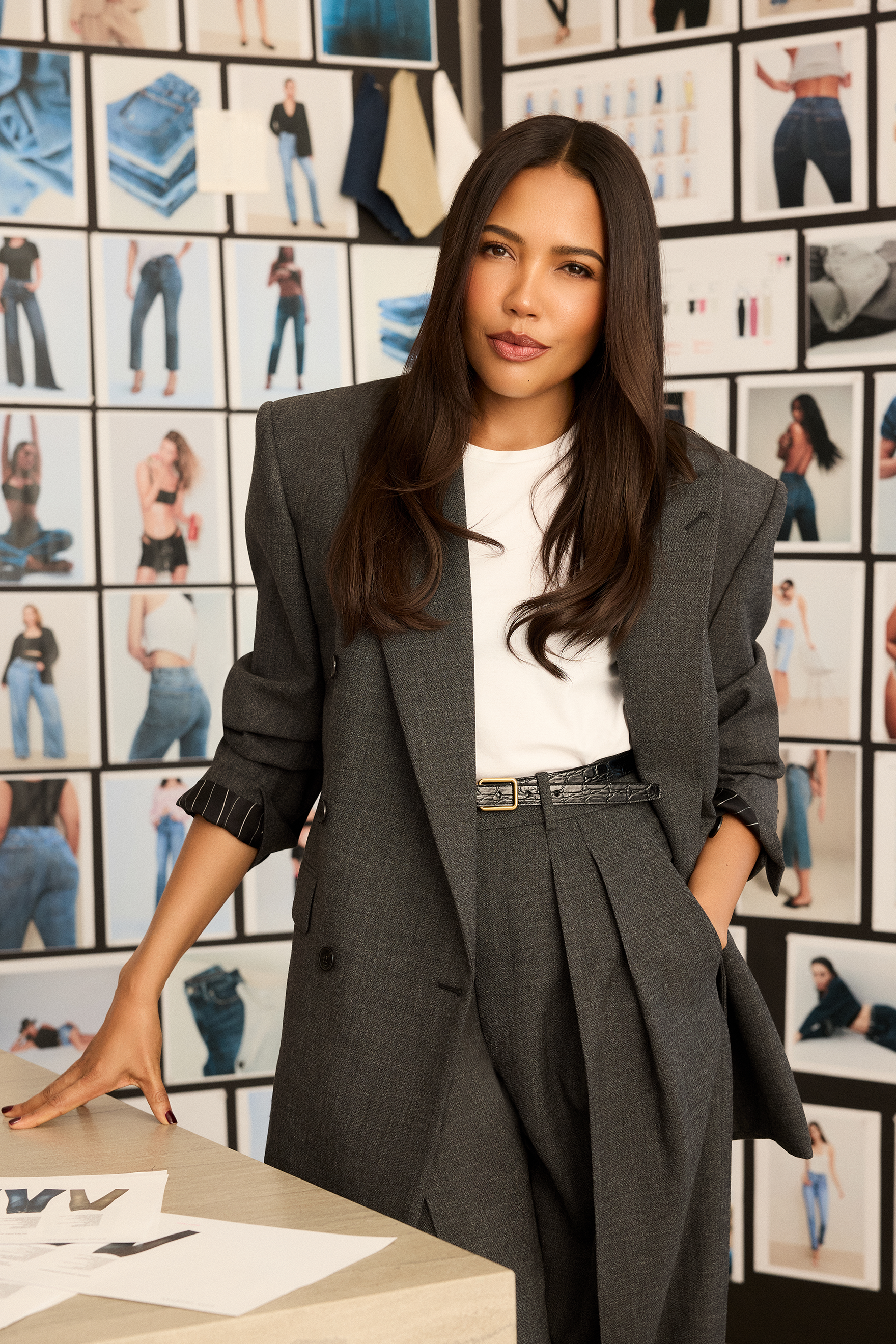
Courtesy of Emma Grede and Good American.
Emma Grede
Emma Grede Means Business
By Bonnie Langedijk
Emma Grede doesn't follow culture, she anticipates it. The East London native, working-class, high school dropout, who looked nothing like the archetypal American success story has become one of its most compelling protagonists. Co-founder of Good American, the inclusive denim brand that made size diversity a commercial argument. Founding partner of SKIMS, the $4 billion empire that proved basics could be at the center of culture. Forbes' Richest Self-Made Women, three years running. Shark Tank's first Black female shark. The woman does not miss.
What sets Grede apart isn't just the wins, it's the thinking behind them. She has always understood that commerce and culture are the same conversation; that if you listen closely enough to what people are reaching for, the business almost builds itself. Now, with her debut book Start With Yourself, she has turned that same forensic attention onto her own story. A bracingly honest account of what ambition really looks like up close: the trade-offs, the self-belief required, the old thinking you have to burn down before you can build anything new.
We sat down with her in London to get into it all.
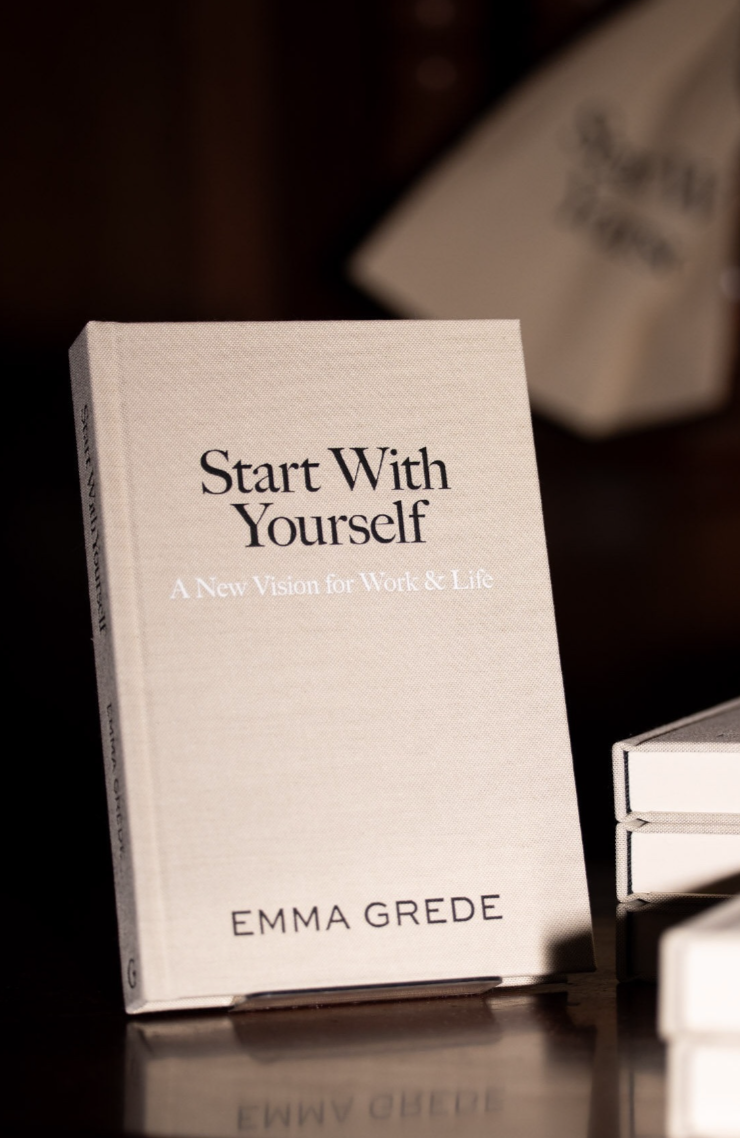
Grede’s book Start with Yourself. Courtesy of Emma Grede.
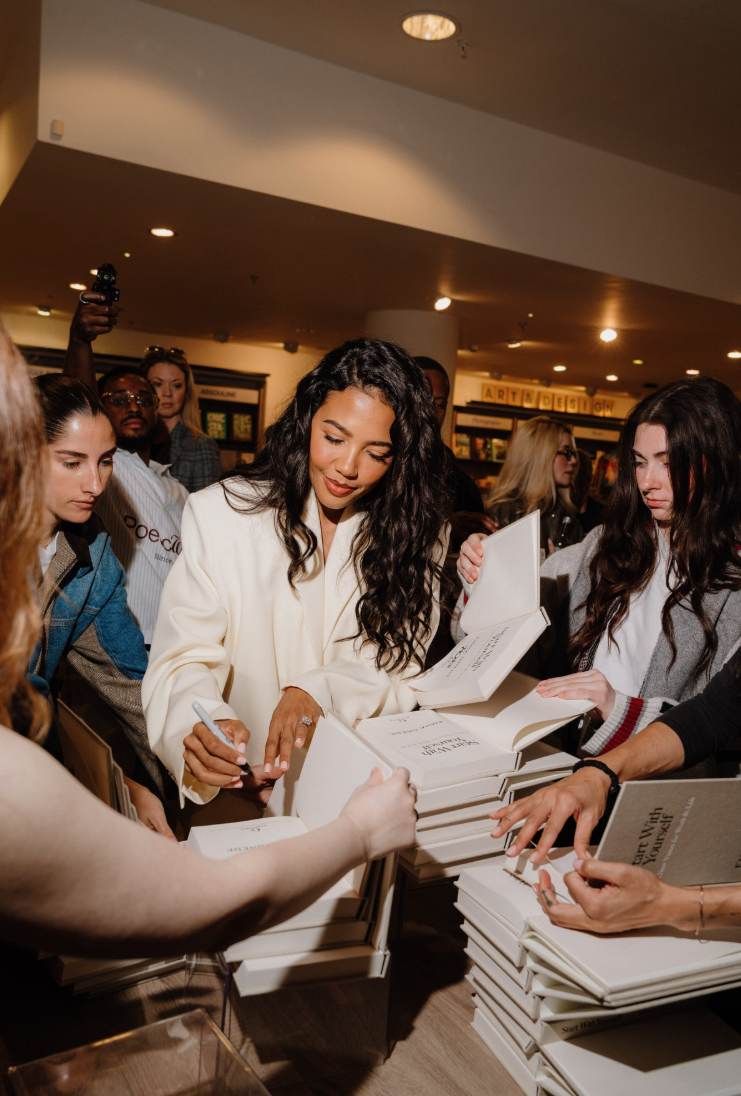
Emma Grede signing books during her London book tour. Courtesy of Emma Grede.
Since releasing the book, you've done a lot of press. Has anything surprised you about how it's been covered?
Emma: I did a lot of press before I moved to the US and it wasn't until I got to America that I realized, now I'm a woman in business and I'm a black woman in business. You get the same questions over and over again. What's so interesting after writing this book is that nothing has changed. If I speak to a business-focused publication, their headline is about how much I'm mothering. I get it if it's a fucking gossip-driven weekly. It’s extraordinary that you could speak to such a publication that should really be interested in other things like how the business is doing. No, no, no, no. They want to focus on me being a three hour mom.
I saw the reel where someone who interviewed you pulled that up and I hadn't seen it yet. I immediately wondered if a man wrote the article, but it was a woman.
Emma: It was a woman. It's true that they would never have asked a man. But the point for me was that she was very sympathetic to me. I think she had a headline editor that went in and was like, "Here's the clickbait for this story." That led all of the press around the book, so immediately that was the anchor for everyone. And I was like, A, it was a fucking gift and B, I wrote it, so I'll take it.
Why did you decide to become more of a public facing person now, or build a personal brand?
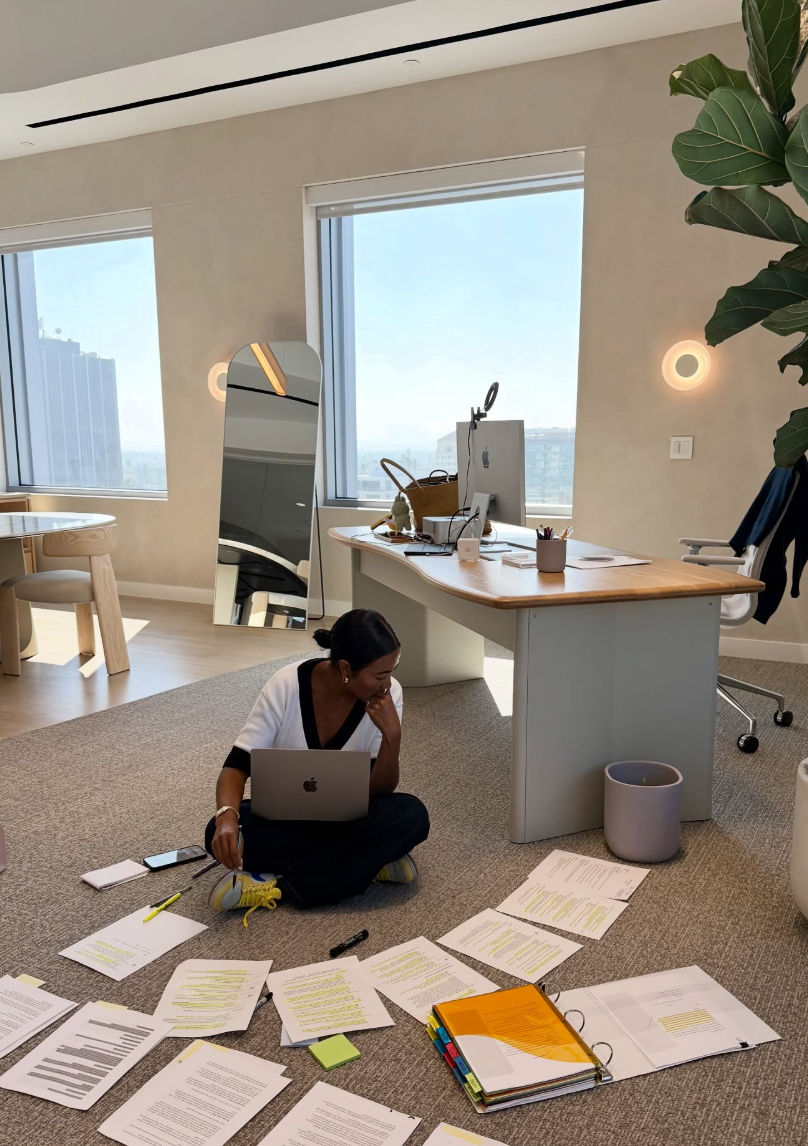
Emma: It was a very conscious decision. I felt very strongly that the narrative that was out there for women in business was so skewed. Because I look a certain way and I'm on Instagram, there was this idea that I was some kind of girl boss, that when my feet are up on the desk, that there was nothing on the screen. What I focus on is very rarely glamorous and my day is a series of problems. I've been working since I was 12. I felt that story wasn't being told. I wanted to take responsibility for it, because I'm feeding into that narrative to some degree. So I thought, I'm just going to start being honest. I got so much pushback. I got so many people that said, "But wait in a minute, what do you mean that you put yourself first? What do you mean that you have to make all of these trade-offs?" It frustrated the life out of me, and it made me understand that there isn't a model for this in the culture. Everybody's lying and with it we’re not creating the conditions for other women to make similar sacrifices. If I'm honest about what it takes, then other people will put their energy into the things that actually build a business. I've done the work. I've built the businesses. This isn’t a house of cards. I'm standing on top of the work and talking about what it is. I'm not launching a business around a face. I saw that so much in female culture as it pertains to starting businesses. Everybody thinks they need to be the face of everything. All the brands we love and used growing up, we didn't know who was behind them.
No.
Emma: I'm obsessed with actual progression, not women supporting women, but actually moving the needle.
“It’s IMPERATIVE that we get back to what makes a successful business. Marketing is the last thing to me. It's a cherry on the icing on the cake. It's not the cake. Let's focus on logistics and distribution and pricing strategy and making an excellent product and all the unsexy shit that is hard.”
That’s also what I loved about your podcast episodes with Donna [Langley] and Mellody [Hobson], the focus on the women who are behind the scenes or that some people might not know about yet. As you said, there's such a one dimensional thing of what a female founder looks like. Even that word makes me-
Emma: Cringe.
Exactly! Why do you think women feel like they need to be the face of a company or brand?
Emma: We have kind of led people to believe that marketing is the thing. That the event, the influencer strategy, the glossy thing, that is the business. I came into business through marketing, I'm a marketeer first. There's a comfort level with that side of things and outsourcing of the other parts of business. I think it’s imperative that we get back to what makes a successful business. Marketing is the last thing to me. It's a cherry on the icing on the cake. It's not the cake. Let's focus on logistics and distribution and pricing strategy and making an excellent product and all the unsexy shit that is hard. That's why I talk about money so much, because if you shy away from those things, you'll never have a successful business.
I talk to a lot of my friends who are founders and some of them are very, “I'm going to build my personal brand because it's going to help my brand.” Possibly.
Emma: Maybe. But you only have a finite amount of energy. If you focus on absolutely blowing the socks off your customer, if you make excellent shit, get it to them fast, and are true to your customer base, that is where you should put your energy. Read every single comment about your brand, every single review, instead. I was obsessed with what everyone was saying. Not about me, about the product.
And that's the thing, are you selling yourself and your lifestyle or are you selling a product with a specific value for a specific group of people?
Emma: Totally. And guess what's going to have more longevity? The focus should be on how you can create a sustainable business that makes a profit.
You always put customers first. You've created products within different categories, brands of different sizes, does the foundation of that customer first approach ever change?
Emma: Everyone asks me, how do you do so many different things? I think I just do the same thing over and over again. Create something incredible, make it the best it can be, price it really well, distribute it properly and care the most about what the customer says. It's one playbook.
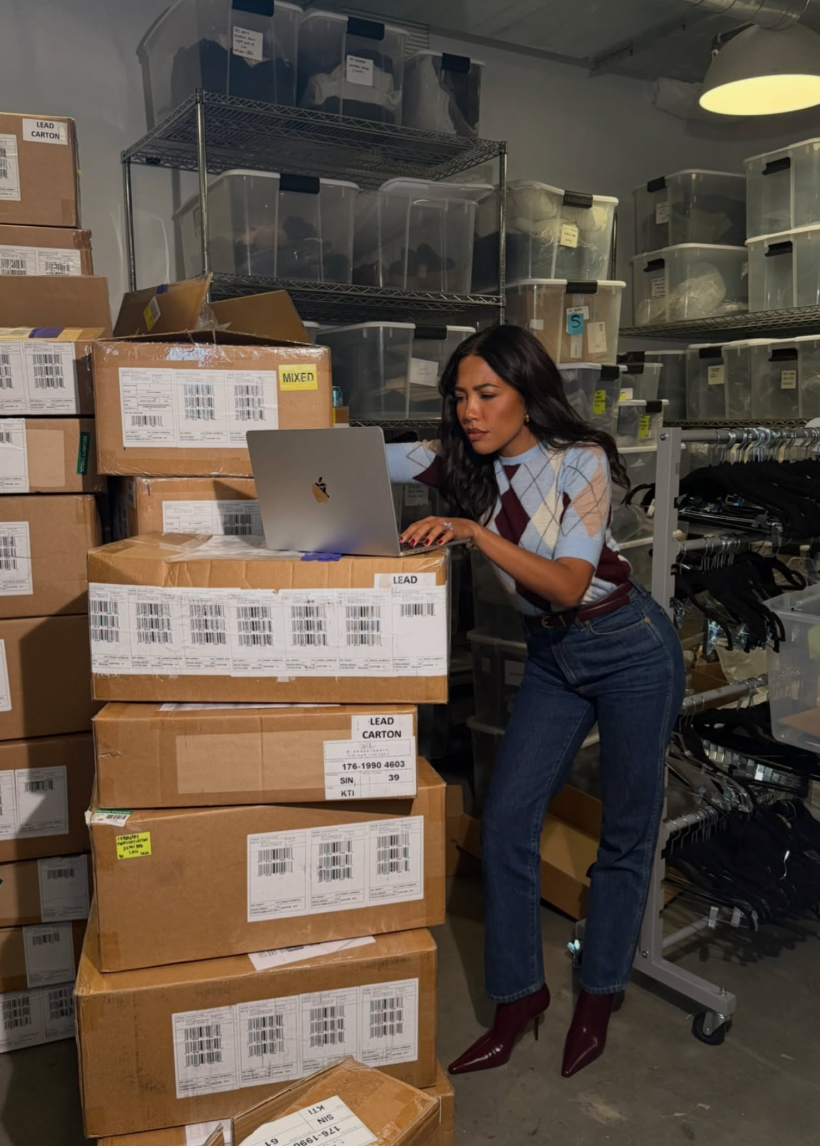
Courtesy of Emma Grede.
Courtesy of Emma Grede.
Commerciality, especially in fashion, is still such a word people shy away from or get very nervous around.
Emma: Isn't that so sad?
It is. You've been able to build luxury brands with price points that are very accessible. What does it take today to build a brand that feels aspirational while still being accessible to the masses?
Emma: I grew up in London and there was always this aversion to being commercially led. When you looked at the brands that were thriving, Gucci, Saint Laurent or Issey Miyake and Yohji, they were all fiercely commercial. Yet all of these designers that existed in London didn't think about merchandising. They thought, I'm going to create an incredible collection, make an amazing show, and then let's toss a coin and see what happens. The best and most successful brands in the world are the most commercial ones, and at the very top of fashion, that divide doesn't exist at all. What I saw in London was incredible creative talent that couldn't get past a million dollars in sales, nowhere near their aspiration. When Kim [Kardashian] had the idea for Skims, I knew in the first conversation, "This is a billion dollar brand." You could see it because the landscape existed for it to be as such. I'm very commercially minded and I always choose, and I learned this actually from my husband and his business partner, that we would take aim at something, that we would say, "This is the competitor, and there is a very clear target and an opportunity because they don't do X or Y." And it helps you to fine tune what it is that you're doing. When I started Good American, denim brands had a real problem getting over the 150 to 200 million dollar mark, my aim was to get beyond that. We were literally in white space. We could do anything and then you just have to listen to people. That's been the guiding light in so many things I've done. Customers were buying the jeans but there was nothing in the department store in their size, so we created a top for them too. Everybody does jeans and a t-shirt, so we did jeans and a body suit.
And in the end, that's the people you have to bring value in too. In fashion we can be a little overly obsessed with what the industry thinks.
Emma: I care about value. It’s so important when customers talk to you about how they feel. We all have a feeling about what we're buying. Does that feel like the right price? How do I feel wearing that item? What does it give me?
The whole inclusivity element, or lack thereof, in fashion is mad.
Emma: It's still mind boggling, isn't it?
The opportunity is seismic. Especially for the luxury fashion segment. Do you think what consumers want today from brands has changed?
Emma: It depends. When I was a kid, I aspired to buy into the whole lifestyle of one brand, head-to-toe. Customers are so savvy now. They're more item driven. They want the cotton jersey t-shirt from SKIMS or The Always Fits Denim from Good American. They're not coming to you for everything. They're much more focused and they have more choice. With choice comes this opportunity to see and think about brands differently, which is what makes it so important that you stand for something. People have to be willing to come and believe in more than just buying jeans that make their butt look good. They have to believe in the founder, the ethos.
With that brands are becoming the cultural gatekeepers in a way. As a brand you are a media company. People want to know who's the team behind the brands they buy into, who does the music. They want to peel back the onion.
Emma: That's quite threatening for the old school. Our point of view is totally the opposite. If you look at Good American's social, it's the Good American social team, they are our best advocates. I know I'm going to have a hit when my internal sales figures go up, because if they aren’t feeling it, what are we doing? I think the power dynamic has completely shifted. What mattered back then just doesn't anymore. We all used to wait and read show reviews. When did you last read a show review?
Ha, never. I don't think we question enough why we do things. A show, for example, if it's a marketing moment and you have the budget, great, but that's money that probably should be spent elsewhere.
Emma: When you have a company for 10 years, it goes through peaks and troughs. That is absolutely normal. But how you address those things, that's what it means to really be in business. I believe strongly that you should be in this constant mode of changing and flexing and reimagining. The only thing that should stay the same is your purpose and your principles.
You don’t really have a choice but to change as the world changes. One of my favorite parts of the book was when you talked about the employee mindset.
Emma: For women, it's so easy to outsource our decision-making to somebody we feel knows better. A lawyer, a bank manager, somehow some dude has a better idea than we do. It's never true. I have done it so many times. At the beginning of ITB, I ran the company for two years and it was doing well. I brought in this guy from a bigger entertainment company and paid him three times what I was paying myself. Nine months in, I thought, Emma, have some self-belief. You have to have an awareness of the patterns, the stories that you tell yourself, so that you can find a new thought to replace the old way of thinking with.
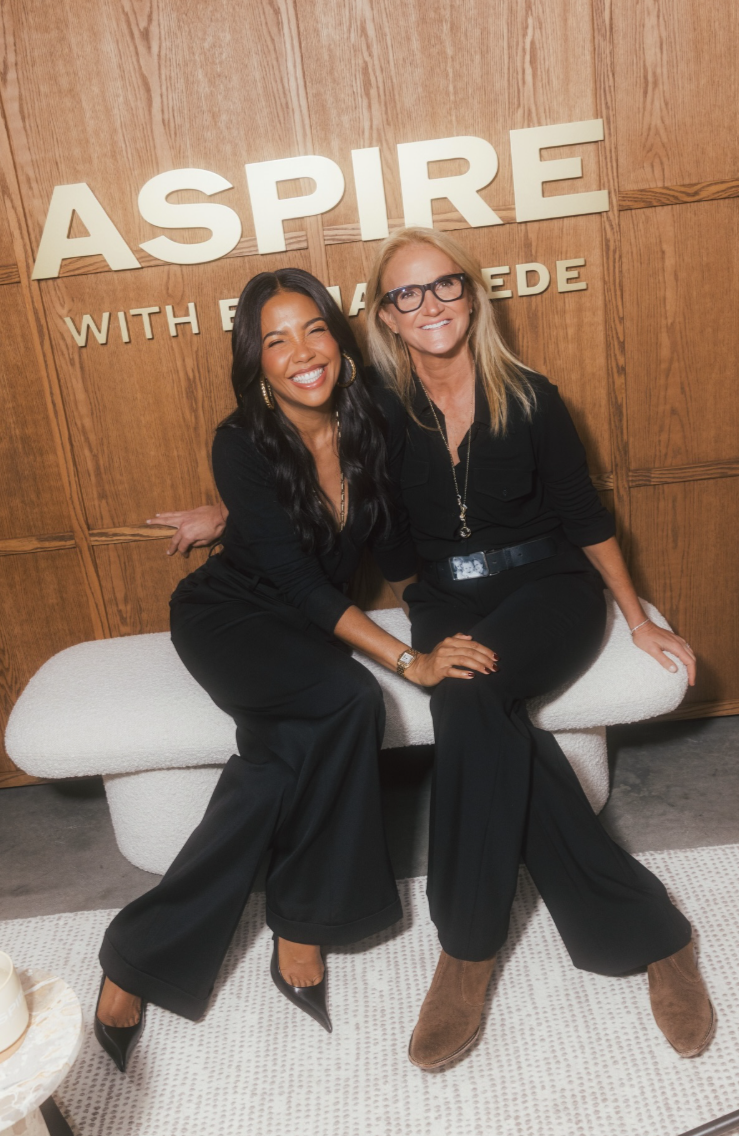
Emma Grede and Mel Robbins for Aspire with Emma Grede.
Courtesy of Emma Grede.
I loved your honesty in the book and I think that's so rare now. Everyone's trying to be so perfect and polished.
Emma: And pleasing.
I mean, the people pleasing is on top of that.
Emma: I get it because the internet is a really dangerous place. Since I released the book there has been a barrage of opinions. If you are less self-assured or believe in the internet, it could really get to you. I think it is making people feel something and instead of thinking about it, they're just spewing and having a reaction. The reason we don't tell the truth often enough is because there's such an inability to have nuanced conversations when the media landscape is driven by a 30-second clip. You might have to read the book. God forbid you read 300 pages.
But that's why people are going to podcasts, that's where you can have nuanced conversation.
Emma: It's my favorite thing. The fact that it's my job to handpick any lady and talk to her for two hours. It's a dream. Can I tell you something insane?
Of course.
Emma: I was in Atlanta and it was the last leg of the book tour and my team wanted to go to the club. We end up in a strip club. Four of the strippers came up to me and said, "Are you Emma Grede?" They're entrepreneurs. Women trying to stack money. They all have aspirations, side hustles, kids. With the Cardi B episode, people loved it. It was our biggest episode ever but it was also critiqued heavily, because people didn’t believe she belonged on a business podcast. She's renegotiated her record deal three times. She just launched a brand that is going to be a hit because she understood there was an entire market that wanted hair growth and couldn't afford a Nutrafol. We should stop with the snobbism. It's a little akin to fashion, right?
It is.
Emma: Who gets to do it, who gets to play, who gets to have a voice? That snobbism is what keeps women out of a conversation. If we decide that raising capital is for one set of people that were educated a certain way, and yet you have an incredible idea and you have no access and no way and no information, what are we doing? That’s why we're going to have Mellody Hobson, Dame Donna Langley, Gwyneth [Paltrow] and Reese [Witherspoon] on the podcast, but we're also going to have women who had an unlikely start, or a failure, whose business didn't work out. That's equally important to learn from.
It’s so important to broaden the spectrum of who gets to be seen as a founder. What does a founder look like? Where does she come from?
Emma: Exactly. A lot of the things that I've been talking about recently is having an understanding of the size of the opportunity that you're building. Not everything needs to be a billion dollar unicorn. Not everybody needs to go out and raise capital. When you raise capital, that's an obligation. That isn't a feather in your hat. Now you're answering to somebody else who's trying to get a return on that investment.
I'm actually thinking about raising capital. I would love all female investors, an all-female board.
Emma: Okay, but can I challenge you on that?
Yes, 100%.
Emma: If I was truthful about who have been the biggest unlockers for me. It's all men. Women aren't always so straightforward with the information. There's a scarcity mindset. For so long, it has been you or me. I look at the men on my board and there's been a real value to the difference in the way that they think, the conviction in the advice. And honestly, the sheer audacity of it. I have an amazing investor, Andrew Rosen, and the way he would deal with a landlord, I would be like, what are you doing? It taught me so much and changed my perception of how you should behave.
It’s kind of a worse version of gatekeeping. That's something we really need to change.
This interview has been edited and condensed for clarity.


Shaniqwa Jarvis on why photographs are beautiful liars, grief as a portal, and the moment she found her whole practice hiding in a childhood snapshot.