Has Hospitality Become Too Predictable?
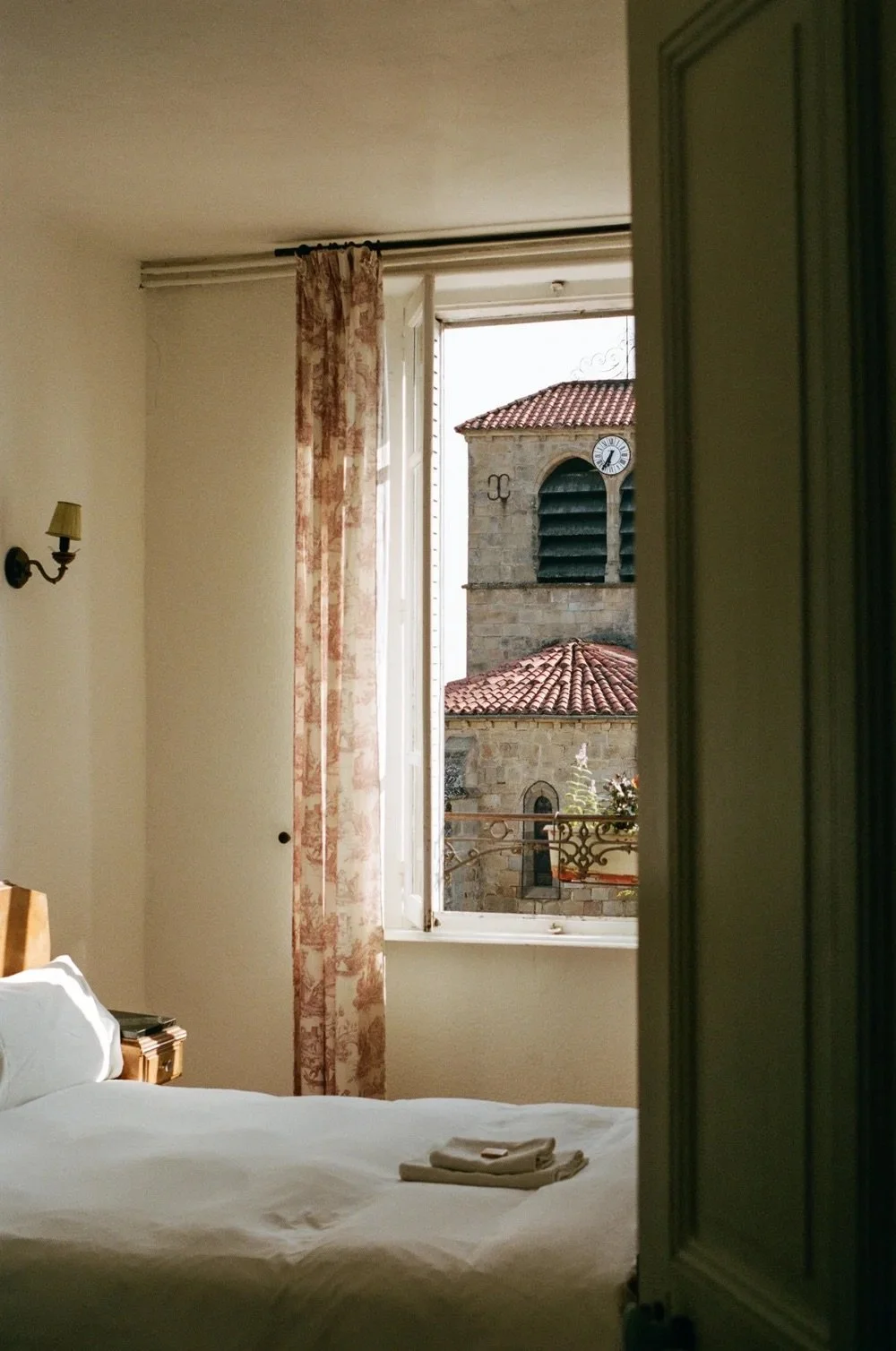
Auberge de Chassignolles in the Auvergne, a place that’s anything but predictable. Photography by Anne Claire Héraud.
Has Hospitality Become Too Predictable?
By Anna Prudhomme
For years, homogenized beauty was the promise. The linen curtains, the travertine bathroom, the muted palette that seemed to belong simultaneously to Paris, Menorca, Mexico City, and Copenhagen. The boutique hotel, once imagined as a rebellion against the anonymity of mass travel, has itself become a category. Its signs are now instantly recognisable: the irregular plaster wall, the custom scent, the lobby designed to feel like a living room. What began as a search for character has increasingly been absorbed into a wider hospitality economy, one in which individuality can be scaled, packaged, purchased, and repeated.
And yet, alongside this, another movement has been taking shape. Over the past years, a growing number of hospitality projects have appeared that seem to resist the logic of scale altogether. They are not hotels in the conventional sense, nor are they simply holiday homes. They exist somewhere in between: private estates opened to guests, historic residences restored with personal conviction, guesthouses with hotel services. Their appeal lies in authorship. They carry the trace of some person’s decisions, memories, and taste.
They are not hotels in the CONVENTIONAL sense, nor are they simply holiday homes. They exist somewhere in between: private estates opened to guests, historic residences restored with personal conviction, guesthouses with hotel services.
In these places, hospitality is about offering something specific: A rhythm, a worldview, a way of living. For Sofie Thompson, co-founder of Hands in London, a hospitality and event production service, travel is shaped by food, wine, and a search for local culture. For her, the most memorable stays are rarely the most spectacular. “I’m less focused on chasing the newest openings and more interested in finding places with a genuine sense of authenticity,” she explains. “Somewhere I can experience local culture properly, eat regional food, discover great wine, and feel connected to the everyday rhythm alongside locals.”
Her words capture a wider fatigue. Not with luxury itself, necessarily, but with a certain kind of frictionless luxury: places where every detail is correct, every surface tasteful, every interaction efficient, and yet very little remains once you leave. The guest may be perfectly looked after, but not particularly moved.
Thompson recalls Auberge de Chassignolles in the Auvergne, a place she has returned to several times, as one that has stayed with her precisely because it resists the coldness of performance. “The auberge operates with a skeleton team, and by the end of a stay, everyone feels less like staff and more like friends you could easily share a drink with,” she says. “There’s an incredible warmth and generosity to the experience that feels completely genuine.”
In hospitality, “authenticity” has become one of the most overworked words of the past decade. But in the context of these smaller, owner-led properties, it seems to point toward something more precise. A sense that someone is there, even when they are not physically present. A sense that the house has not been emptied of its particularity for the comfort of the guest.
At Maison Légère, an owner-led hospitality project in Perche, France, that presence is inseparable from the lives of its founders. The project began in 2021 after a trip to Lanzarote, where the island’s desert landscape created what its founder Anouck Leclercq describes as a “reset.” The couple returned to France with the desire to recreate, closer to home, the feeling of being inside a bubble: removed, slowed down, reconnected to simple gestures.
They found the house in November 2021 and received the keys in February 2022. What followed was not a conventional renovation. “We did practically everything ourselves,” Leclercq explains. “That was not the project at all at the beginning.” Two bathrooms and the roof were delegated; the rest became an extended act of experimentation. Walls were broken down. Raw concrete posts were left visible. Beams were reused. A garden sink became a bathroom basin. The kitchen, after nothing available felt right, was drawn and made from scratch.
“Everything is found in the house,” she says before adding, “and when we weren’t sourcing second-hand, we were making things ourselves.” Because alongside Maison Légère, Leclercq is also the founder of Superchinerie, a vintage project dedicated to second-hand furniture, tableware, and found objects.This refusal of uniformity is central to the project. The furniture mixes unsigned pieces, a farmhouse dining table, a 1950s Baumann screen, an 1980s Roche Bobois futon-style bed, and a cast iron Art Deco bathtub from the 1920s. Nothing seems assembled to communicate a single period or style. In this sense, Maison Légère offers something that many hotels attempt to simulate but rarely achieve: the feeling of a lived-in intelligence.
At Casa del Limonero in Seville, intimacy takes the form of a urban sanctuary. Directed by Martina Cam, the property was conceived as a luxury guesthouse within a historic Sevillian residence. And also serves as the setting for a highly personal contemporary art collection, assembled over many years by its discreet French owner. Its owner, a collector of modern art, selected materials, finishes, paintings, fittings, ceramics, antiques, and contemporary works according to her own vision.
Located in one of the city’s most prestigious districts, close to the Cathedral and the Royal Alcázar, the house carries the history of noble families, local architecture, and strict preservation requirements.The restoration sought to preserve as much of the original structure as possible while enhancing the property’s space and volume. Coffered wooden ceilings, marble floors, wooden doors, the garden, and the swimming pool were restored.
Casa del Limonero is described by Cam as “a vast oasis of beauty and tranquillity, the two pillars of contemporary luxury.” The large historic wooden door opens only for guests. Passers-by cannot enter. Guests are encouraged to feel as though the palace-house is their own during their stay in Seville. Many, Cam notes, spend significant time inside the property, using it as a refuge from the movement of the city. One North American guest, Cam recalls, was nearly moved to tears while expressing gratitude for having been able to experience such beauty and inspiration. Casa del Limonero, she says, is a place where visitors “do more than simply stay, they feel, experience, pause, breathe, and savour the present moment.”
This emotional response matters. It suggests that the future of hospitality may not be defined solely by better amenities, smoother booking systems, or more elaborate programming, but by the capacity of a place to produce feeling.
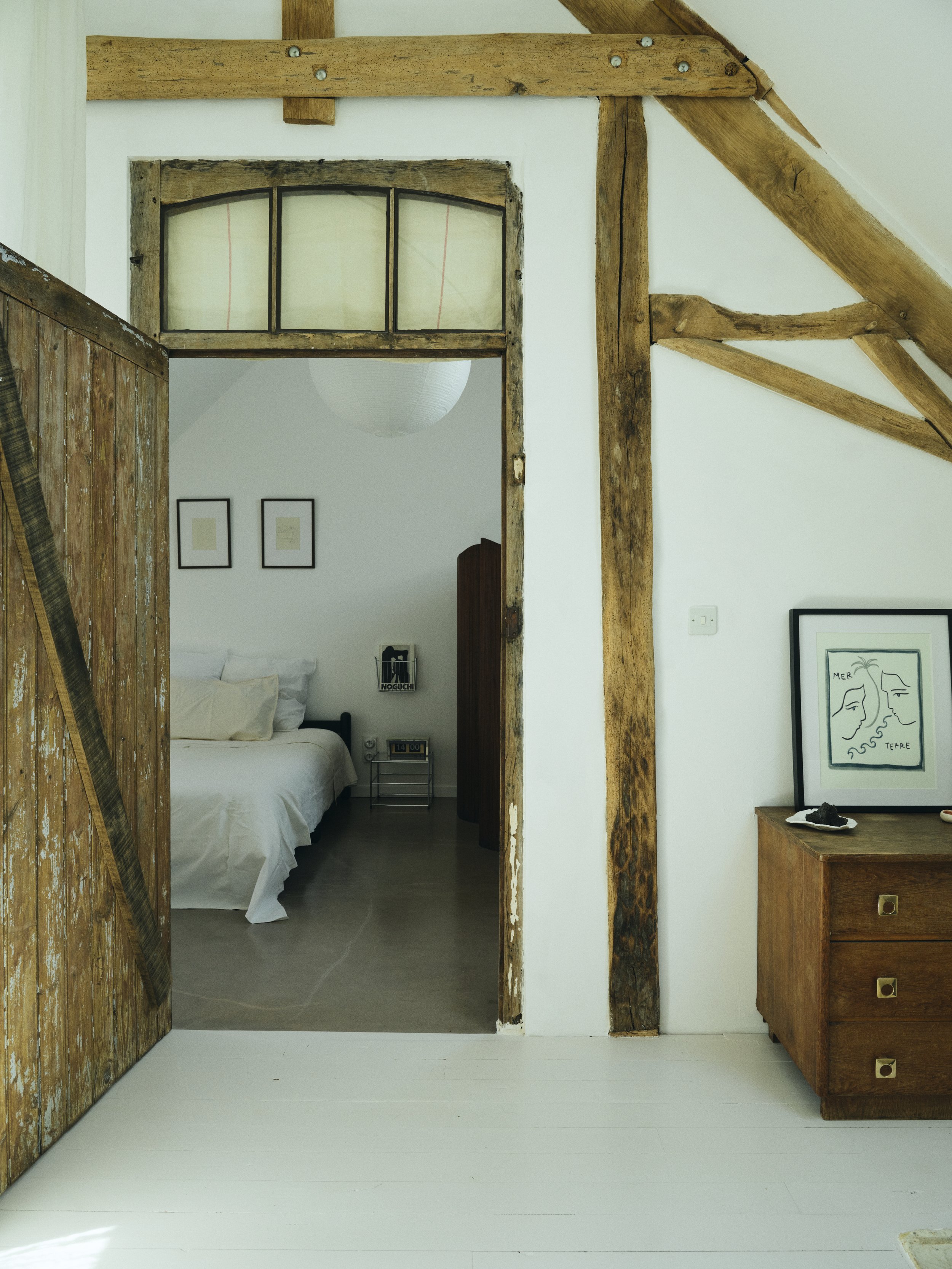
Maison Légère. Photography by Nathalie Mohadjer
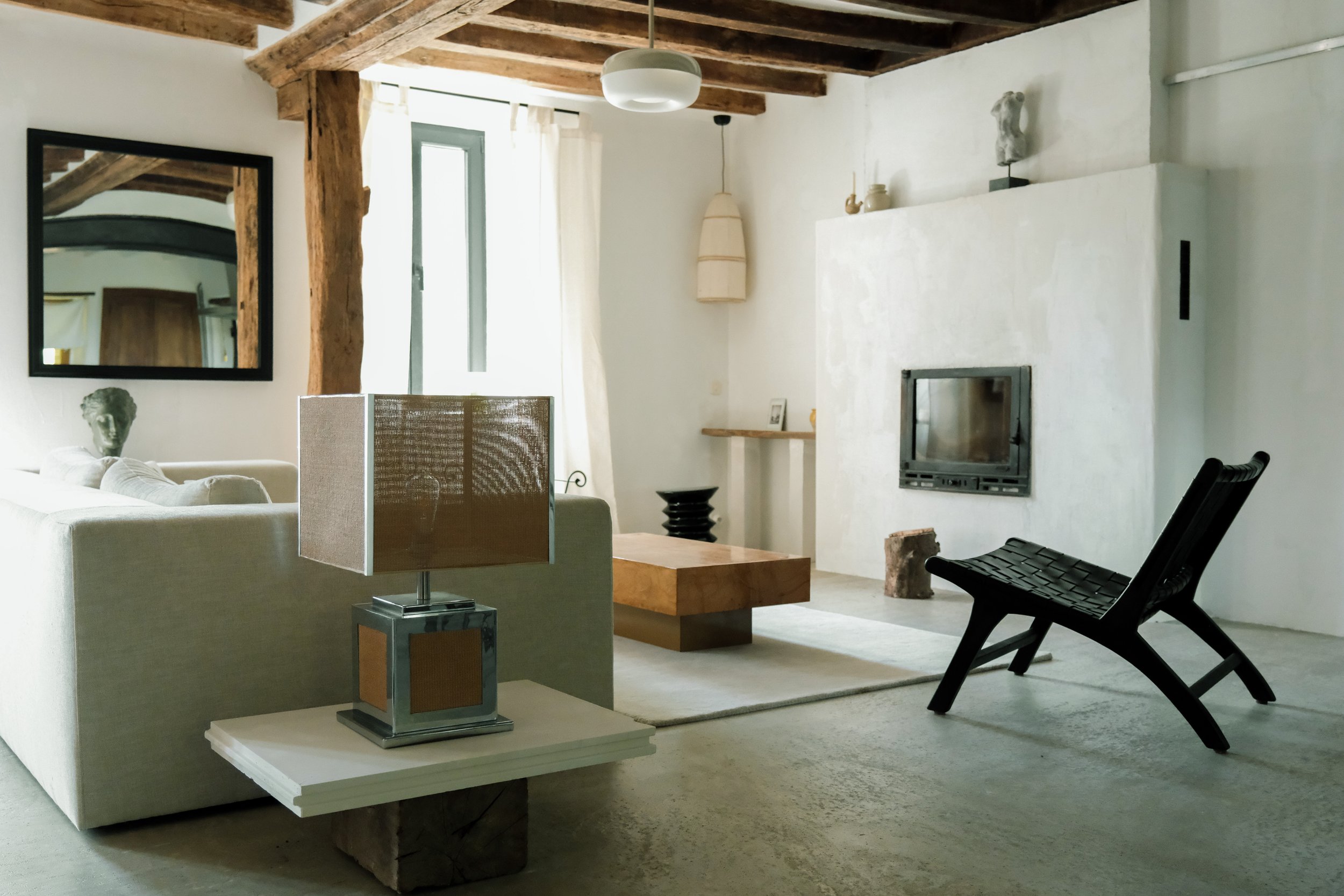
Maison Légère.
For travel enthusiast Thompson, what creates that feeling is often small. “Design alone only carries an experience so far,” she says. “What really makes me feel at ease is genuine hospitality.” She mentions handwritten welcome notes, sparkling water waiting in the room after a long journey, and personalised guides to local markets, cafés, and restaurants. “None of these things are necessarily expensive, but they show care, attention, and a sense of generosity from your host.”
The point is not that luxury must become modest. Rather, it is that the signs of care are shifting. This is perhaps why the home —as a social and emotional structure— has become such a powerful reference point in contemporary travel.
“I’m generally not a traditional hotel person,” Thompson says. “I rarely leave hotels feeling like I’ve had a truly personal experience. No matter how luxurious they are, hotel rooms can often feel transient. When I travel, I want to feel at home.”
To feel at home while away is, of course, a paradox. It is also one of the oldest promises of hospitality. But today the phrase seems to carry new weight. In an age where travellers can see almost everything before arriving, where destinations are consumed visually long before they are physically experienced, the home-like stay offers a different kind of discovery.
In an age where travellers can SEE almost everything before arriving, where destinations are consumed visually long before they are physically experienced, the home-like stay offers a different kind of discovery.
Social media has changed the way places are imagined. “It’s become almost impossible to travel now without feeling, to some extent, like you’ve already seen a place before arriving,” Thompson says. “Social media is so evocative and often presents a highly romanticised version of destinations and cultures.” It can inspire and help with discovery, she adds, but it also creates the temptation to reproduce a holiday seen on social media. “The best advice I’ve ever heard was: ‘You’ll have the worst time trying to recreate somebody else’s holiday, so don’t try to.’”
The new private hospitality seems, in part, to answer this exhaustion. It offers a stay shaped by the owner’s references rather than by the algorithmic repetition of what already performs well.
This logic extends beyond private estates and countryside retreats. In Mexico City, Pensión Casa Bosques shows how hospitality can emerge from a broader creative ecosystem. The ten-room guesthouse in Roma Norte was created by Savvy Studio, the design and branding studio based between Mexico City and New York, led in Mexico by Bernardo Dominguez. Set above the Casa Bosques bookstore and chocolate atelier, the project is described as “a home shaped by its neighbourhood and its rhythms,” drawing from art, food, and design rather than from the conventions of a hotel. Its rooms were assembled, according to Savvy Studio, “with the instinct of a collector rather than the logic of a hotelier,” through artist-designed wallpapers, custom furniture, books, chocolates, natural wines, and objects that make the stay feel closer to a lived-in world.
At Maison Légère, guests often come for the design, but they also come for everything behind it: the renovation, the objects, the choices, the visible traces of a house made by hand. “They want the backstage, the details of the work,” Anouck Leclercq explains. Often, they end up spending much of their stay at the house itself. “They really want to enjoy the place.” The relationship does not always end at check-out either. “I have WhatsApps that follow,” she says. “We often stay in touch.”
But the intimacy that makes them special is also what makes it hard to separate from the owner’s life. At Maison Légère, the main challenge is the balance between personal and professional life. As the founders split their week between the house and some work in Paris. Anouck Leclecq dedicates her time to Maison Légère and her vintage project, while her partner still has another job.
At Casa del Limonero, the challenges included managing technical requirements for modern luxury comfort, overseeing maintenance after opening, and developing marketing strategies to reach guests who would understand the property’s singularity.
Seen from a wider perspective, this movement is not isolated from the market. Large hotel groups have increasingly turned toward lifestyle, boutique, and soft-brand models, recognising that travellers want spaces that feel local, design-led, and emotionally resonant. At the same time, affluent travellers are seeking more exclusive, personalised, and experience-driven forms of travel. The independent house, the restored estate, the private guesthouse, and the owner-led stay all sit within this larger transformation.
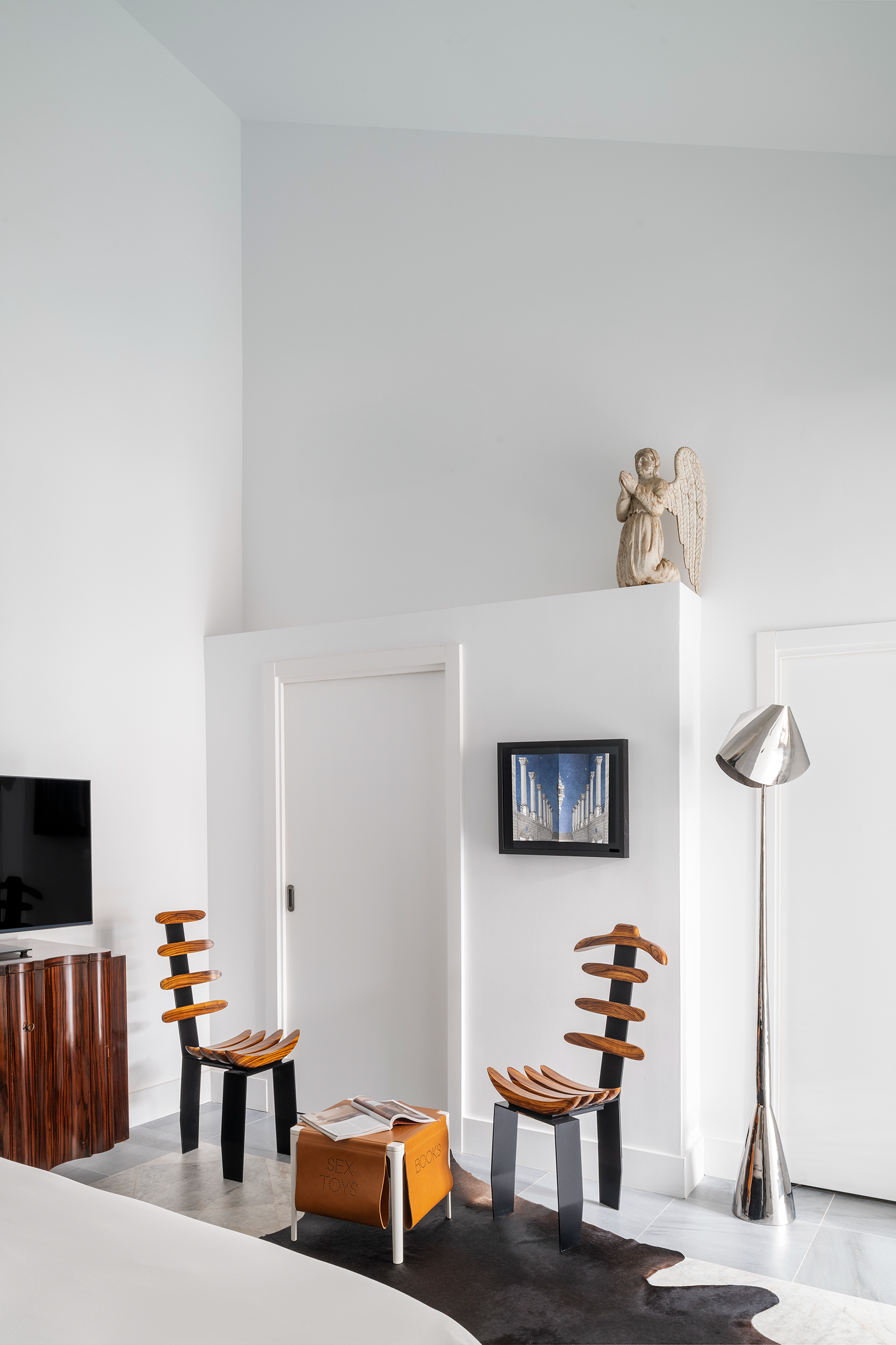
Casa del Limonero in Seville.
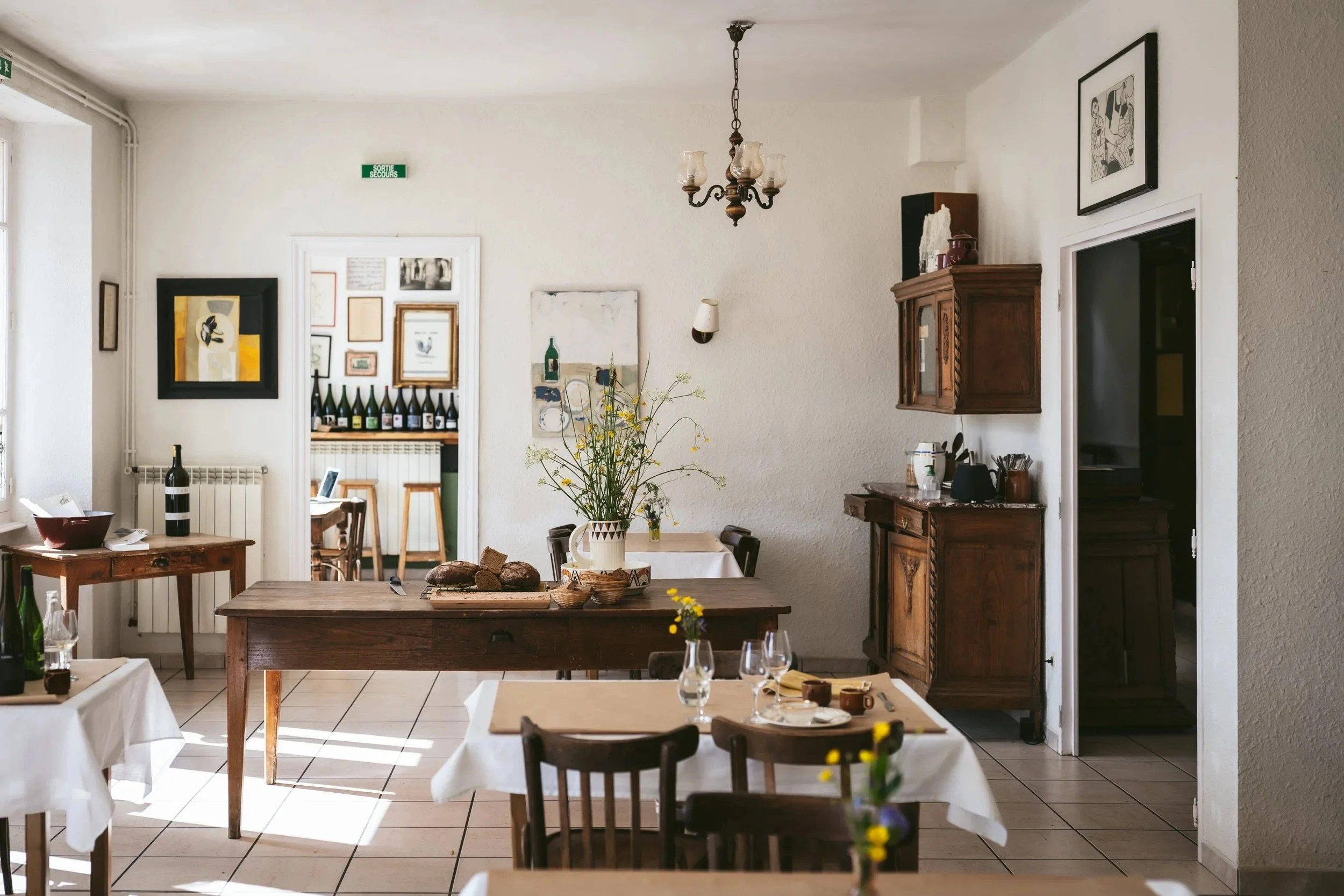
The dining room at Auberge de Chassignolles. Photography by Anne Claire Héraud.
At Maison Légère, ecology and rest were foundational. The founders wanted isolation, no neighbours, two hectares of land, animals, and a slower rhythm. The house received a “maison hôtelière” label because it offers hotel-like services while still allowing guests to feel at home. “I think that’s what people like and what makes our difference,” the founder says. “There is a quest for authenticity. In the morning, you don’t want to find yourself next to someone doing exactly the same thing.”
In a world where everyone watches everyone else online, travel can become another form of comparison. To step into a more personal, private place is to step away, briefly, from that mirrored economy. “If we can live a more personalised experience, it feels good,” she says. “We don’t like that sanitised side you can have in certain hotels. Wrinkled linen, we like that.”
The ecological dimension appears in the way the house has been renovated, furnished, and lived in. Many of the objects were sourced second-hand; and the same logic continues in smaller gestures, like the bucket placed in the shower so guests can collect unused water for the plants.
In a world where everyone watches everyone else online, travel can become another form of COMPARISON. To step into a more personal, private place is to step away, briefly, from that mirrored economy.
This preference for the meaningful gesture does not mean a rejection of comfort. At Maison Légère, comfort appears through small, practical pleasures : breakfast and aperitif baskets can be delivered to the house, guests can discover a selection of natural wines, or “go to the market” and collect “a basket from our market gardener.” Casa del Limonero offers attentive service, 24-hour reception, breakfast, and refreshments throughout the day. Maison Légère continues to evolve, adding a small basin, a vegetable garden, and a terrace. Guests still expect care, functionality, and beauty. But the hierarchy has changed. Comfort serves the atmosphere, not the other way around.
The future of these places may depend on how well they maintain that balance. The challenge is to offer enough service for the stay to feel considered, without removing the freedom that makes it feel like a home.
The founder of Maison Légère imagines creating an independent studio nearby in order to find a better balance, while also developing more creative residencies. Some have already taken place: upcycled plates made in collaboration with an illustrator, ceramics, wood sculpture. There is also the desire for a second place, to explore other architectural ideas.
Casa del Limonero’s future, according to Cam, lies in becoming more widely recognised by travellers inspired by history and art, those seeking a discreet and exclusive destination. As more large, standardised luxury hotels open in Seville, she believes the property’s distinctive identity will become even more valuable.
Thompson’s hope for the future of travel is simpler and perhaps more radical: “Less of what we have in excess right now. More mystery and organic discovery. Trusting word of mouth recommendations.”
What these places preserve is the possibility of surprise. They are not built to give every guest the same experience, or to reveal everything before arrival. Their value lies in the small discoveries: the object with a story, the recommendation that was not on a list, the corner of the house that becomes your own. These are small gestures, but they point away from hospitality as a machine of seamless consumption, and toward hospitality as a human exchange.
Not every traveller will want this. Not every owner can sustain it. But for those who do, the appeal is clear: a stay that feels less like a product, and more like an invitation into a place with its own life.
Everyone is an expert now, and almost no one is. In her latest essay, Bonnie Langedijk asks how confidence came loose from competence, why we believe the ring light over the researcher, and whether real expertise can survive a culture that rewards speed over depth.