The Death of Expertise
The Death of Expertise
By Bonnie Langedijk
Everyone, lately, is an expert. Open any feed and they arrive in procession. The nutrition expert, the sleep expert, the productivity expert, the healing expert, each explaining, with the placid certainty of a person who has never been contradicted, exactly how the rest of us should eat and rest and work and grieve. People have always been eager to tell one another how to live. What is striking is how little now stands between wanting to be an authority and being treated as one. The distance between the claim and the credential has all but vanished, and into that gap an entire economy has rushed, built on a simple discovery: you do not need to know very much to sound as though you know everything. You need only to remove the hesitations.
The same machinery that lets a charlatan flourish also handed a stage to people who, in a narrower arrangement, would never have been allowed near one: voices kept deliberately quiet for centuries, now able to simply speak and be heard. There is no honest nostalgia for the old order and its small committee of anointed authorities deciding, on everyone's behalf, whose knowledge counted. Two true things sit side by side. The door that let the silenced in is the same door that let the frauds through, and there is no version of it that opens for only one of them.
Still, a tell emerges. Ask someone who has actually spent twenty years inside a subject what they know, and the answer comes fringed with doubt: it depends, we don't fully understand this part, I used to think so and I'm less sure now. Real knowledge has been humbled too many times to speak in absolutes. The counterfeit has no such history and no such humility; it will not blink, because blinking is a symptom of thought and thought is bad for the brand. Somewhere in the last decade confidence came loose from competence and floated free, and the two are now nearly inversely related: the less a person has genuinely been through, the more smoothly they explain it.
And we believe them. A broad suspicion has settled over the slow institutions, over science and medicine and the press, sometimes for reasons and often for none, and into that vacuum the confident stranger has walked unopposed. The doctor who says we're still studying it is waved away; the person with the ring light who says I have the answer is believed, because the answer, however invented, is easier to hold than the honest shrug. Jimmy Iovine said we’re now focused on being famous rather than being great. Reward has detached from the quality of the thing and reattached to the size of the crowd watching it get made, and those were never the same measurement, though we behave as if they were.
The result, at scale, is sameness. If fame is the prize and a proven format the surest route to it, the rational move is to copy the format, so nearly everyone does, and the landscape fills with interchangeable voices saying interchangeable things in the same rehearsed cadence, none willing to risk the one move that might set them apart: to be strange, or slow, or visibly wrong on the way to being right. The apprenticeship has gone out of fashion, the long unglamorous stretch of being bad at something before becoming good at it, because nobody wants to film that part. The machine gets fed anyway, relentlessly, not because anyone has arrived somewhere worth reporting from but because the feed is hungry and silence, online, reads as death.
The apprenticeship has gone out of fashion, the LONG unglamorous stretch of being bad at something before becoming good at it, because nobody wants to film that part.
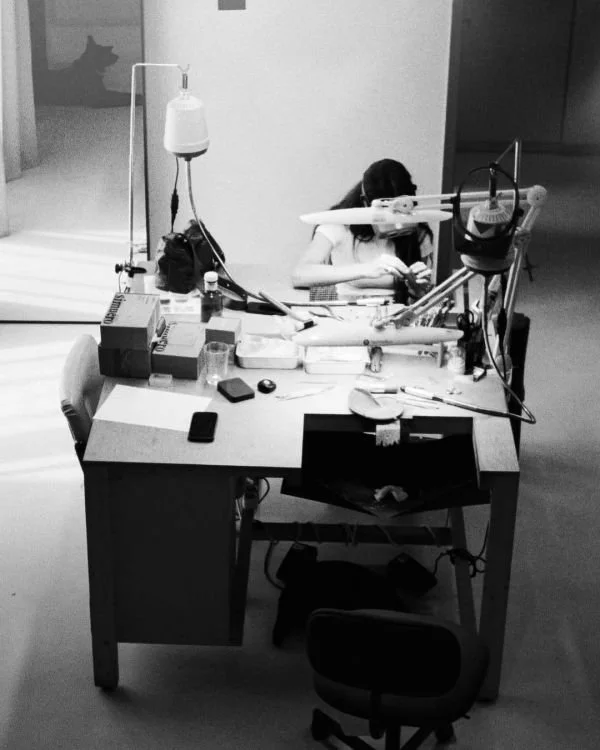
There is enormous, underrated power in the opposite of all this: in listening, in turning a thing over privately before releasing it, in making something because it is good rather than because it will perform. The things most worth trusting are the ones that cannot be rushed. Bread that needs its hours, a friendship that has weathered a decade, a hand that has repeated a craft until the knowledge lives below thought. Nobody wants a chef to hurry the meal. In the kitchen it is perfectly understood that time is not the obstacle to the thing but the ingredient of it, and it is strange how completely that understanding evaporates the moment we start claiming to know the world.
AI makes it worse. It turns us all into generalists, fluently conversant in everything and rooted in nothing. It is a fine sparring partner, but it is also, more often than its confidence admits, simply wrong. The real worry is what leaning on it does to us: how it trains a mind, one shortcut at a time, out of the very patience from which every real expertise was ever made.
Underneath all of it sits the quietest loss: it has become genuinely hard to tell what is true. We are so continuously soaked in fakeness that the muscle once used to separate the real from the counterfeit has gone slack. This is why the hunger for the unmediated thing has grown so sharp: the dinner with a friend, the conversation that cannot be edited, the teacher in an actual room. When everything on the screen might be invented, the unscreened thing, the face, the voice, the person who was actually there, becomes the last reliable instrument left for measuring the world.
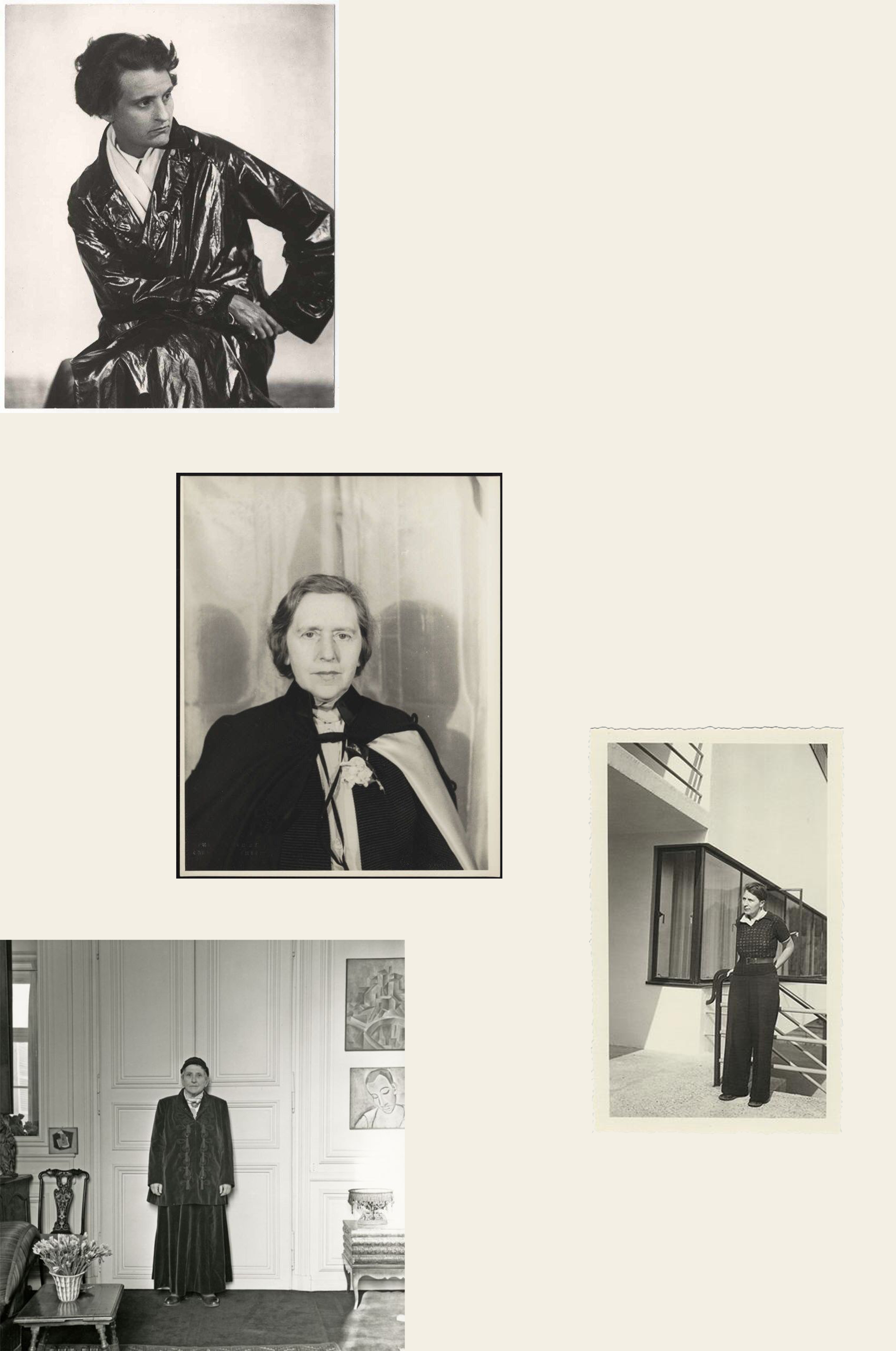
And so, to me, the oldest voices have started to feel like the freshest. The books written decades ago, the long unhurried conversations with people a generation ahead, carry an authority the present cannot manufacture. Those voices were formed by time in a way no confidence can fake. An expert was never the person with the loudest claim or the cleanest framework. It was the one left standing after the long, humbling business of actually going through the thing, carrying, as the residue of a real life, something that held.
Everyone is an expert now, and almost no one is. In her latest essay, Bonnie Langedijk asks how confidence came loose from competence, why we believe the ring light over the researcher, and whether real expertise can survive a culture that rewards speed over depth.