The Myth of the Perfect Home
The Myth of the Perfect Home
By Katie McCrory
When I was a little girl, I learned to distrust women who paid too much attention to the state of their homes. A tidy home was a boring home, I was repeatedly told, as we pushed the daily detritus to the end of the table so we had space to eat dinner. With two parents who worked in the arts, scratching out their living from a studio that was technically the airspace between the bedroom and the bathroom, our tiny home was never tidy—and it wasn’t boring either.
I was raised in a feminist household that bucked a fair number of the social norms of the 1980s and ‘90s. I had a mother who worked, a father who cooked, and two married parents with different surnames who equally tended to their children’s needs. All told, we made a fine home together, but no-one living there would have ever called themselves a ‘homemaker’. Life was busy, money was tight, and there were evidently far better things to do than clean and style interiors all day.
So it goes that my parents simply assumed joint responsibility for maintaining our home. This had the effect of both neutralising any gendered expectations of who would be pushing the vacuum cleaner around at our place, and presenting homemaking as something no one with any wit about them would actually choose to do. After years—centuries—of women being confined to small lives within domestic walls and quite often losing their minds as a result, my mother’s generation of feminist activists had walked the sisterhood out of the house and expressed no desire to return.
As a girl growing into womanhood, the lesson I received was clear: to willingly make a home was to actively participate in your own subjugation.
Now that I have two children of my own, and I live and work in a small home, I understand the futility of trying to keep things clean and tidy. My children also have a mother who works, a father who cooks, and two married parents with different surnames who equally tend to their children’s needs. I’m well-versed in the language around the mental load, and the research which shows that working women in heterosexual relationships still perform far more housework than their working male partners, on average. I know that in the year 2026, four decades after my parents brought me back from the hospital to a home they had both cleaned, homemaking is still a heavily gendered activity that centres on women. I know that being a housewife is an occupation whilst being a househusband is a joke.
And yet. Today, I find myself obsessed—for there is no better word for it—with the act of homemaking. What took place in the years between then and now is a kind of unlearning, I suppose. A recalibration of home as it pertains to me, specifically, and to women and men generally. To extend a metaphor, it’s been a process of looking at this edifice of received wisdom—the house built on injustice and shame and anger that was not my own—and realising that it was no longer fit for purpose. I needed to pull it to the ground and rebuild something that reflects what I actually know and feel about home. Like all great renovations, it feels like the work of a lifetime. It has become my living, no less.
At the heart of my research and writing is a single question: what is the feeling of home? For a long time I laughed that trying to find the answer was as impossible as trying to explain what love feels like, until it stopped feeling like a joke. The realisation came quietly: the feeling of home is the feeling of love. In fact, my research shows that there are eight universal and quite specific emotional needs we’re reaching for that, in combination, create what we all call the feeling of home—control, comfort, security, belonging, nurturing, accomplishment, joy and aspiration. Many, if not all, of these needs are the ones we look for and cherish in our most important relationships, and yet we’re often prepared to tolerate living in a home that fails us on many counts. If a friend told you their partner made them feel uncomfortable, insecure, or lonely, you would tell them to leave immediately. So why do as many as one in three people globally persist in living in places that don’t feel like home?
This single data point alone is both a tragedy and a reckoning. How and where we live is often a consequence of many intractable and systemic biases and preferences which cut across race, class, education, wealth, politics, mobility, and—yes—gender, but addressing the emotional landscape of home can be a great leveller. Just like love, the feeling of home is available to us all regardless of who we are or how we move through the world. But I cannot make you feel at home, just as I cannot make you love me—we must each open ourselves to the possibility, and from there we can close the emotional gap.
Why, then, do only WOMEN seem to be tasked with the emotional labour of homemaking? Why do men build houses but women make homes?
Why, then, do only women seem to be tasked with the emotional labour of homemaking? Why do men build houses but women make homes? Why are women more likely to say they are most frustrated by domestic chores, whilst men say their biggest gripe at home is the lack of space to do their hobbies and relax? This distinction between the functional and emotional, ultimately a distinction between practicality and desire, severs the head from the heart and leaves us appraising the value of home with missing criteria. How can we quantify the spaces and places we occupy, and the people and things we have around us, unless we can find the words to express how these elements make us feel?
My research reveals a powerful truth, that the way we feel about home has a significant bearing on how we feel about ourselves. As many as 40% of people who make proactive changes to their home are more likely to report better mental health outcomes, and people who see their identity reflected in their home are twice as likely to see it as a source of good health and wellbeing than those who don’t. I also know that people who feel at home where they live are more likely to feel positive about the future.
I’ve been tracking these kinds of insights for almost a decade, peeling back assumptions and archetypes and myths until the knowing knocked louder and louder at my door and I could ignore it no longer. How we make a home is how we make a life—this is surely the most important work of all.
It’s an extraordinary thing to be able to look at your own life through the lens of a research study. This opportunity has, quite simply, radically altered my experience of home. For a while I got livid about the distortion of gender along domestic lines, but then I got focussed. My mother was wrong about the implication of a tidy home, but she was right to see the sisyphean task of domestic perfection for what it was—a way of keeping women occupied.
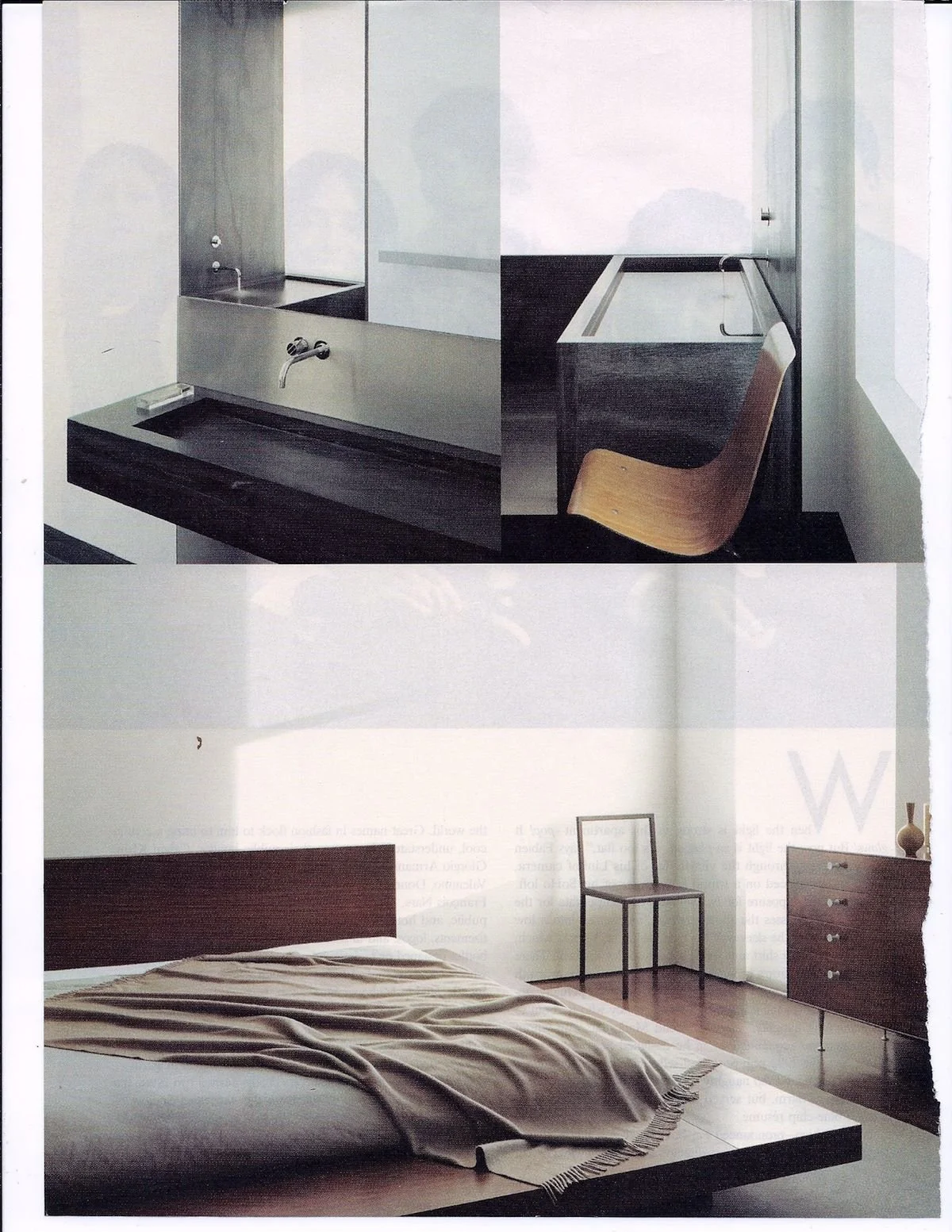
If it was bad in the early ‘90s, the problem is surely on steroids now given how much content we are forced to consume that places unrealistic homes as a perpetual and impossible point of comparison. On any given day, on any given app, I can witness someone boil a three-year renovation into some snippy little 90-second reel or take a tour of some A-lister’s mid-century modern ranch conversion where the bathroom tiles cost more than my annual take home pay. Layered into this is the insidious rise of the TradWife, where the intersection of power, politics and presentation manifests as homemade apple pie, perfectly dressed children, and the complete absence of agency. We’re told it’s inspiring. I beg to differ.
All this content pushes the same implausible narrative, that a beautiful home will guarantee a beautiful life. After the daily chores are done, and the bills are paid, and the children are fed and loved and tucked up in bed, this rotten belief is what women are left holding. We stare into the looking glass of our phones, whilst life rages around us, and wonder why what we see on the other side bears no relation to our own home.
Let me save you the agony: there is no such thing as a perfect home. There is only the home that meets your needs exactly where you are. This doesn’t come with a prescription for how it should or shouldn’t look—that’s up to you. This simple rewiring has helped me reclaim homemaking for myself and opened it up for everyone else in my home. I’ve learned that you get to choose how you show up in your own life at home, and that there are no absolutes. A tidy home doesn’t mean it’s a boring one, when keeping things clean means you are realising comfort, control, accomplishment, nurturing or belonging. I tidy up precisely because I have better things to do.
Life isn’t fixed, and neither is home. We regularly experience expansion and contraction as life events shape the path we walk in big ways and small. The best we can do is stay authentic and make a home that feels like love, no matter if we’re up, down or anywhere in between. This may be women’s work—but it’s everyone else’s too.

Everyone is an expert now, and almost no one is. In her latest essay, Bonnie Langedijk asks how confidence came loose from competence, why we believe the ring light over the researcher, and whether real expertise can survive a culture that rewards speed over depth.