Matriarchy, Done Properly
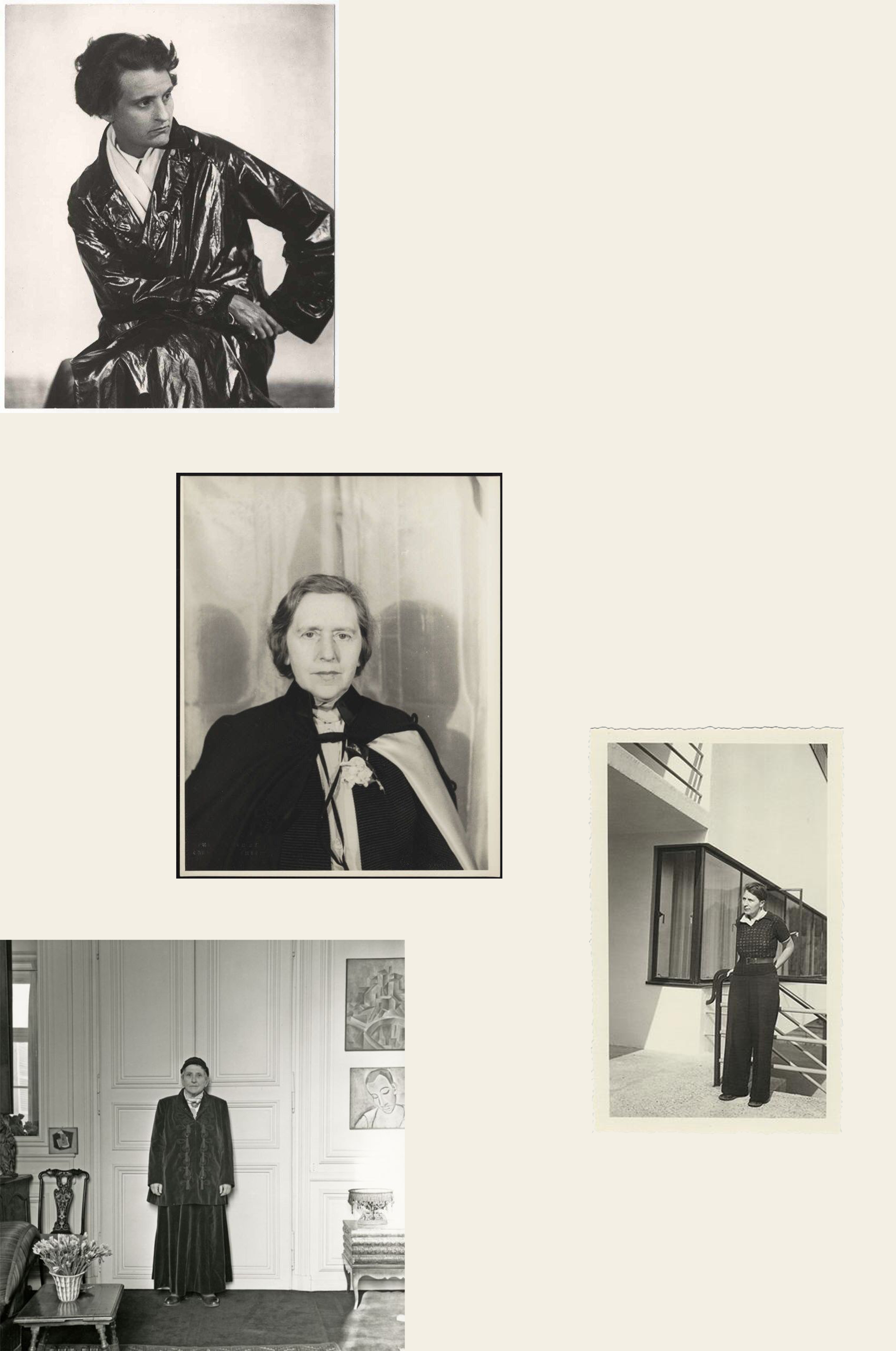
Sylvia Beach, Natalie Barney, Gertrude Stein, and Bryher
Matriarchy, Done Properly
By Julieta Ruiz
In 1920s Paris, four women decided the existing cultural infrastructure was not built for them and built their own instead. Sylvia Beach published James Joyce’s Ulysses when every commercial publisher refused. Natalie Barney hosted her salon at Rue Jacob for sixty years and founded the Académie des Femmes as a direct counter to the all-male French Academy. Gertrude Stein broke the mold of English prose and quietly advanced the careers of everyone around her. And Bryher, born Winifred Ellerman and the daughter of the richest man in England, transferred a significant portion of her inheritance to a writer named H.D., who had none. She did it deliberately, from one woman to another, because she understood that talent without infrastructure produces nothing, and that the infrastructure was going to have to come from somewhere.
History called that patronage. The root is pater: father.
Matronage has existed in English since the 1500s. It comes from mater: mother. For five centuries it sat in dictionaries meaning the supervision of women and children, confined to the bottom of a hierarchy that placed profit, accumulation and extraction at the top. A civilization that organizes itself around what can be taken has no interest in centering what sustains. The raising of children, the holding of community, the transfer of knowledge and wisdom between generations: this is the work that determines whether there is a next generation at all. There is not even a civilization to extract from without it. And yet this is precisely the work that a system built on extraction must devalue, because valuing it would mean being accountable for the damage that system causes. That accountability never comes. Instead, the cost of a broken system is quietly transferred onto the bodies it broke. The wellness industry steps in with the solution: retreats, therapists, breathwork, coaches. And if you can afford it, some of it genuinely helps. But the bill lands on the woman. The responsibility for fixing a systemic problem is placed on the individual body that the system broke. And for the women who cannot afford the retreat, the therapist, the coach? The architecture remains, and so does the burnout, with the added weight of being told that their inability to heal is also their own fault. The more we accept that framing, the more we participate in our own erasure. And the cost is not just personal. A world that continues to extract from women without supporting them to raise the next generation with wisdom, care and full presence is not sustainable, less alone if that responsibility solely lies on women. It is the end of something. Bryher practiced matronage in its fullest sense. She just was never given a word for it. A hundred years later, I burned out. I did the recovery work, which is real and necessary. I came back to myself and I walked straight back in.
What happened next is a story I have since heard from so many women that I have stopped being surprised by it. I took a “leader role”. A founder and a CEO, both men, both with different ideas about what I was there to do, neither of whom had communicated those ideas to me or to each other. When I followed one direction, the other was furious. When I pointed to the reports, the emails, the paper trail of someone doing exactly what she said she would, they talked over me. The verdict came fast: “I was a poor leader”. The evidence, in their own words, was that I hadn’t been chasing them enough. Two adult men who hired me to lead, whose central complaint was that I wasn’t pursuing them with sufficient urgency.
Three months in, I had a panic attack. I tried to leave twice by phone. Both times they talked me back in, full of openness to my approach, my vision, my way of leading. Nothing changed. The third time I resigned by email. Clear, documented, fully within my rights. They didn’t read it. Two days later they were waiting on a meeting I had already cancelled, a cancellation they hadn’t noticed either. When I simply wasn’t there, the calls started. Then the messages. Then the threats: they would speak publicly, ruin my reputation, take me to court for the rest of my life. I blocked them, nothing escalated. But something had already cracked open in me.
Women started coming. Brilliant women, one call after another, each carrying a version of the same story. The details changed. The architecture was identical. That was the moment I stopped treating this as a personal problem.
–
I had been reading during those months of slowing down. Diana Souhami’s No Modernism Without Lesbians had found its way to me the way certain books do, at exactly the moment they are supposed to. It tells the story of the same women I opened with: what drove them, what they were done with, and what they were reaching toward together.
What connected them was beyond solidarity or shared circumstance. It was a vision of a world that did not yet exist for them, “a modernist world”. A world where they could be fully themselves outside the normalized definitions of what a woman was, what a relationship looked like, what financial inter-dependence meant, who got to create culture and on whose terms. They were living through their own revolutionary moment: the collapse of old certainties, the violent emergence of new ones, the terrifying and intoxicating sense that everything was being remade. They consciously chose to be the ones doing the remaking.
Some came with resources. Some came with nothing but clarity. All of them were done with asking permission.
I cannot help but see ourselves in them. We are also living through revolutionary times. AI is remaking every industry and concentrating its power in fewer and fewer hands, even as the spaces for women to shape it are being actively narrowed. The rights we spent decades fighting for are being dismantled in real time. And at the same moment, something else is happening. The nuclear family as a fixed organizing principle is loosening its grip. Women are building new structures for living, single mothers are creating networks of mutual support that look like the matriarchal community models that long predate the industrial framework. New ways of relating, being, coexisting. The old forms are cracking and women, as they have always done, are holding what matters together while something new is being born.
WOMEN are building new structures for living, single mothers are creating networks of mutual support that look like the matriarchal community models that long predate the industrial framework. New ways of relating, being, coexisting.
Reading about Souhami’s women while sitting with all those calls, I felt the click. The problem was architectural. So the solution had to be too.
In this century’s 20s, we give matronage back its full meaning. It is not only about money, though money is a big part of it in the capitalist society we still live in. It is introductions made with intention. Knowledge shared without gatekeeping. It is the deliberate pooling of whatever a woman has, resources, access, time, vision, toward something neither could build alone. The word was always there. We are the ones deciding what it gets to mean now.
We still find each other the way Souhami’s women did, through salons, bookshops, and the kinds of introductions that only get made when someone trusts someone else completely. The “rooms” just look different.
What Sylvia, Natalie, Gertrude and Bryher built was so different that the existing framework became beside the point. That is the only kind of change that lasts. We are doing that again, as Annette Peacock once put it in a song that fundamentally influenced my life:
Hey man, my destiny is not to serve. I’m a woman. My destiny is to create.

Everyone is an expert now, and almost no one is. In her latest essay, Bonnie Langedijk asks how confidence came loose from competence, why we believe the ring light over the researcher, and whether real expertise can survive a culture that rewards speed over depth.