What Is Art Worth?
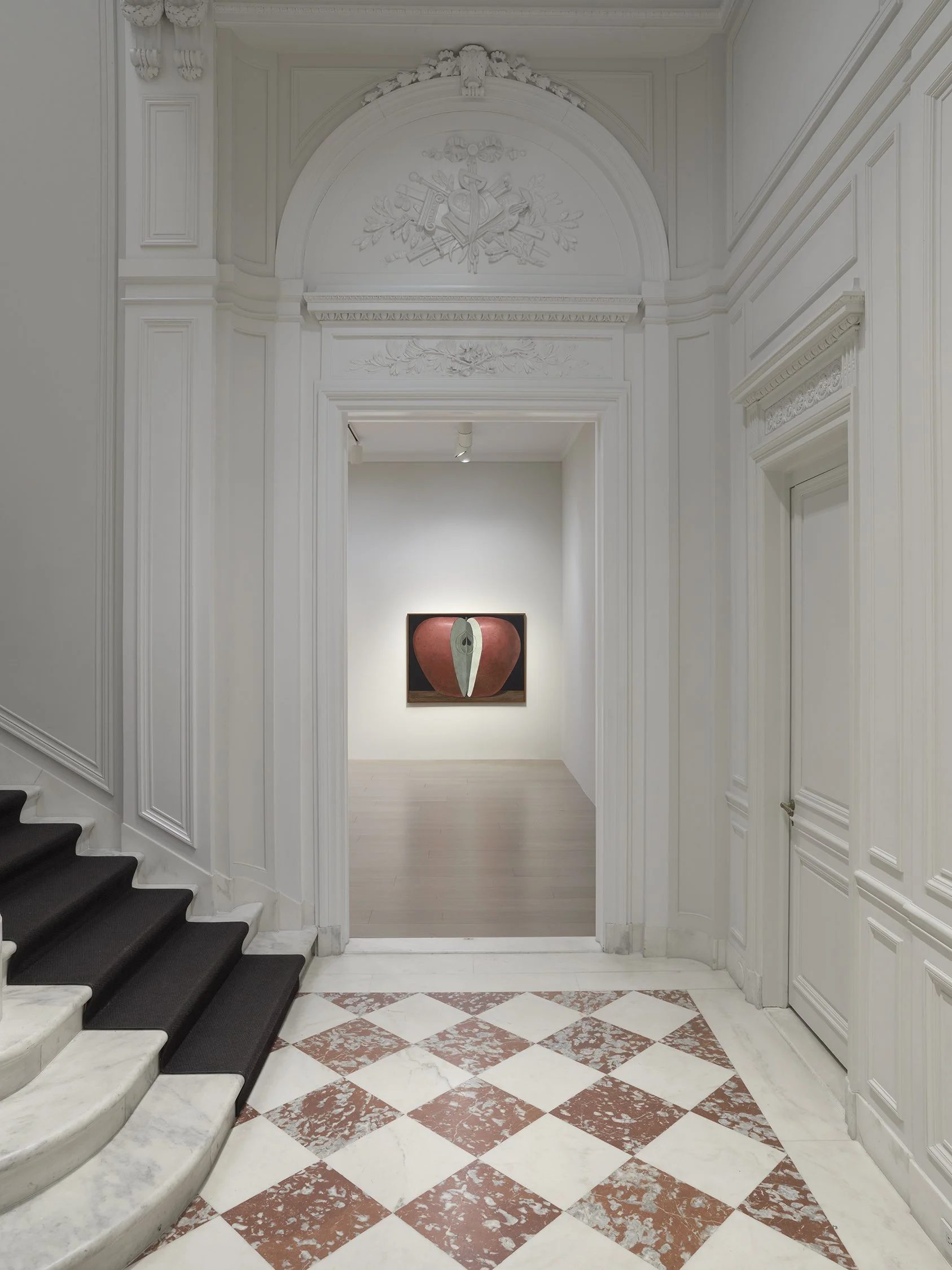
Courtesy of Lévy Gorvy Dayan.
What Is Art Worth?
By Valerie van Maarschalkerwaart
The art world is a mirror of our paradoxical times. This year's Venice Biennale, In Minor Keys, conceived by the late Koyo Kouoh, made a case for slowness, realness and sensory experience. It was a place where art asked us to question the resonance of the present. Nine days after it opened, Jackson Pollock's Number 7A, 1948 sold at Christie's in New York for $181.2 million, and the conversation was all about its value as an investment. Not bad for a canvas painted in a barn on Long Island.
In an ever-accelerating market, shaped by geopolitical pressure, speed and speculation, the ecosystem is up for a change. Who will define the value of art in the future? Three gallerists, Pilar Corrias, Dominique Lévy and Hannah Traore, point to the same answer: the gallery.
“New FORTUNES are being made by people who are really young, and also there are hundreds more female collectors now.”
A New Market Architecture
Ask Pilar Corrias how the art market has changed, and she starts with who is buying. 'New fortunes are being made by people who are really young, and also there are hundreds more female collectors now,' she says. In her own experience, collectors are much younger than they were twenty years ago.
Corrias opened her London gallery in 2008, in a Rem Koolhaas-designed space in Fitzrovia, and today represents 39 artists, among them Christina Quarles, Tschabalala Self, Sarah Ball and Philippe Parreno. Her programme moves well beyond the traditional European-American exchange, mixing emerging and established artists.
The numbers back her up. Nearly three in four collectors surveyed by Art Basel and UBS in 2025 were millennials or Gen Z. New buyers are arriving from growing economies such as China, Brazil and Japan, and new galleries keep opening: in 2025, openings made up 42% of reported gallery activity, against 25% for closures. For most of the last century, Americans and Europeans dominated both sides of the market. That era is ending.
'You have all these different continents in the world, who have valid contemporary art histories and valid modernist histories now, that are represented in the market,' Corrias says. As collectors spread across the world, her artists need to move with them. To be truly commercially successful, an artist needs 'to have an active market in Asia, in Europe, in the US, not just in one place'. A gallery can't be everywhere at once, so it needs the right partners, and for most galleries, the place where partners, collectors and curators meet is the art fair.
The Price of Access
A good fair can make a gallery's year. 'The amount of people who are able to see your work over four days is just exponential compared to the amount of people who are able to come and see a show in the gallery,' says New York gallerist Hannah Traore. Fairs connect galleries with collectors, writers, curators and institutions from all over the world, and they now account for 35% of dealer sales, their highest share since 2022. They can also be overwhelming.
Dominique Lévy has watched the fair economy from the inside for four decades. The Swiss dealer launched Christie's private sales department in 1999 and today runs Lévy Gorvy Dayan in New York and London, with a programme that ranges from Pierre Soulages to Wangari Mathenge.

Pilar Corrias, Portrait captured by Charlie Gray Studio.

Booth Hannah Traore at Frieze LA with artist Turiya Adkins. Courtesy of Hannah Traore.
Lévy has always seen her fair presentations as a way to let people connect with her artists' work, and to create a place 'where you can discover, you can reflect, you can feel uncomfortable, you're provoked, and it's a third place'. The price of being there keeps climbing, though. In 2025, dealers' fair costs rose 9% and packing and shipping 10%, while their sales grew just 2%. Lévy sees how these costs squeeze everyone on the fair floor, until the commerce of art takes precedence over the aspirational. 'The definition of the more has created some sort of divisiveness,' she says.
The race for more fairs, more works and more sales has weakened the collaboration that once held the market together. Some galleries are pushing back. At Art Basel Paris this month, a record 12 pairs of galleries will share booths. If the rent is too high, get a roommate. Sharing a booth helps with the bill. The bigger question is what a gallery is for.
Galleries represent their artists, so they are RESPONSIBLE for conveying the meaning of the work, and museums come to them to meet new ideas first. In that sense, the gallery is where history begins.
The Gallery, More than Walls
'Putting art on the walls is just 1% of the work,' says Hannah Traore. She built her gallery around the other 99%. Traore opened on Orchard Street, on New York's Lower East Side, in January 2022, after stints at MoMA and Fotografiska, because she felt something was missing in the market. Laid out like a salon, her gallery shows artists from underrepresented groups without reducing them to their identity. Her collectors want to live with the art and support the artists, and that loyalty matters: in 2025, the smallest galleries lost 40% of their buyers.
For all three, a gallery must be a place where questions are asked and risks are taken. Corrias wants hers to act 'as a mouthpiece and presenter of the outside world for contemporary questions and ideas'. Galleries represent their artists, so they are responsible for conveying the meaning of the work, and museums come to them to meet new ideas first. In that sense, the gallery is where history begins.
Galleries like Traore's form a counter-movement to the European-American market of the 20th century, and a genuine addition to the mega-galleries that already hold much of our art history. Yet they compete at the same fairs, at the same costs, on a fraction of the budget, and when one booth can make or break a year, it is the younger galleries that carry the risk. So why does it matter that they survive?
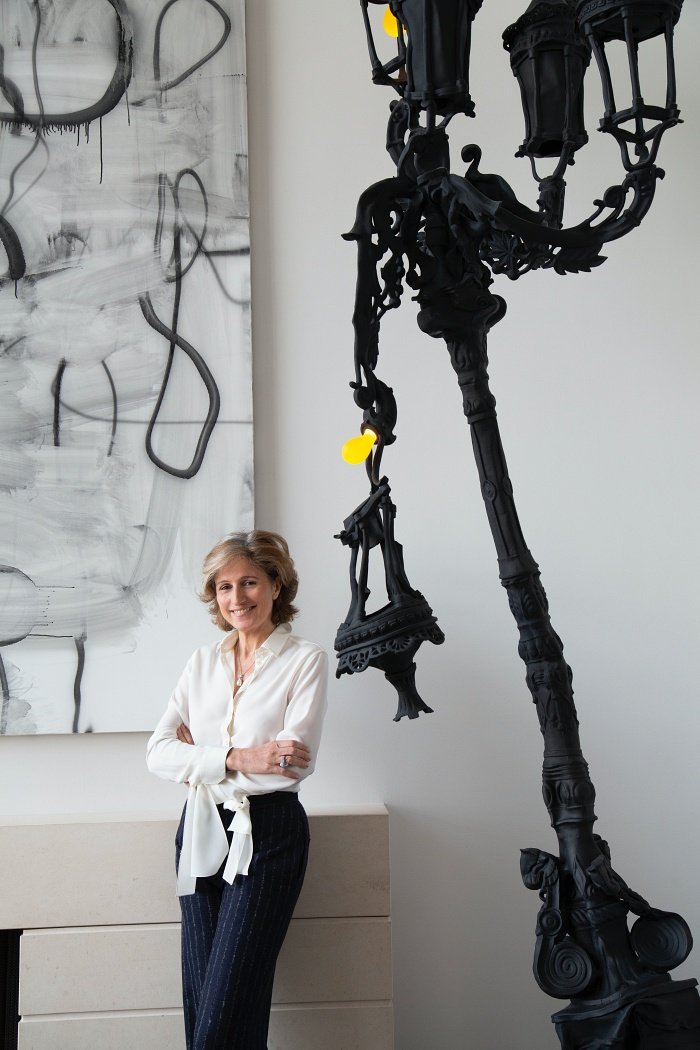
Dominique Lévy. Captured by Jean-Francois Jaussaud, 2019.

Hannah Traore in front of her gallery in 2022, for TonedMag, captured by Stanley Collins.
Meaning and Value
Art is a verb. It is meant to do something: to offer hope, faith, knowledge and ideas. With wars in several parts of the world, many of us are questioning what humanity is, where we belong and what the future will look like. Artists are always a little ahead of their time, confronting us with that future, and with our past. For Lévy, 'artists are the most precious link we have to humanity, the most precious antidote to cynicism, to any kind of isms'. Corrias puts it another way: 'great art should ask questions, but should not tell you how to think'.
For some people, though, art is above all a symbol of wealth. Every artwork is one of one, and by definition a luxury. Experiencing art is something else: it belongs to everybody. So how do we keep seeing critical art if only the very wealthy can own it? Sales keep galleries alive, but demand ultimately follows the most compelling offer: art that makes an impact and represents a community you want to be part of or support.
Each of the three gallerists has her own answer, and all of them come down to time. Lévy now makes longer shows, each conceived as a salon, a conversation, a discovery, with experimental media and poetry alongside the work. Traore looks for artists doing something she has never seen before. Corrias builds her shows and booths around artists who ask questions about the environment, identity and what it means to live in a capitalist society, and makes sure those themes come forward in how the work is presented.
At Art Basel Paris, Corrias is bringing a solo booth of Christina Quarles, including a monumental triptych whose panels change every day of the fair. Anyone who wants to see the whole work will have to come back. Slow looking, built into the booth. The market is moving the same way: online sales fell to 16% of dealer turnover in 2025, as higher-value sales moved back in person. In a world where every work arrives as a JPEG, standing in front of it has become the rare thing.
Return of the Salon
Later this month, more than 200 galleries will fill the Grand Palais for Art Basel Paris. The building has hosted this conversation before. The Paris Salon, born in the Louvre in the 18th century, was held under the same glass roof by 1901, bringing collectors, critics, artists and the public into one room.
That conversation matters more than ever. Access to art is unlimited, while ownership sits with a small group of people. If we don't want them to define what we see, galleries need room to take risks. And just as artists once found stages outside the official Salon, from the Salon des Refusés of 1863 to the artist-run Salon des Indépendants of 1884, the satellite fairs around the Grand Palais matter just as much.
It is a good moment to make time again for looking, debating and discovering. The market needs places where art is valued for its meaning, where people buy for support, for recognition, for community and for conversation. Those are the places where our future history will be defined.

Everyone is an expert now, and almost no one is. In her latest essay, Bonnie Langedijk asks how confidence came loose from competence, why we believe the ring light over the researcher, and whether real expertise can survive a culture that rewards speed over depth.