The Women of ASICS: Caroline Fish
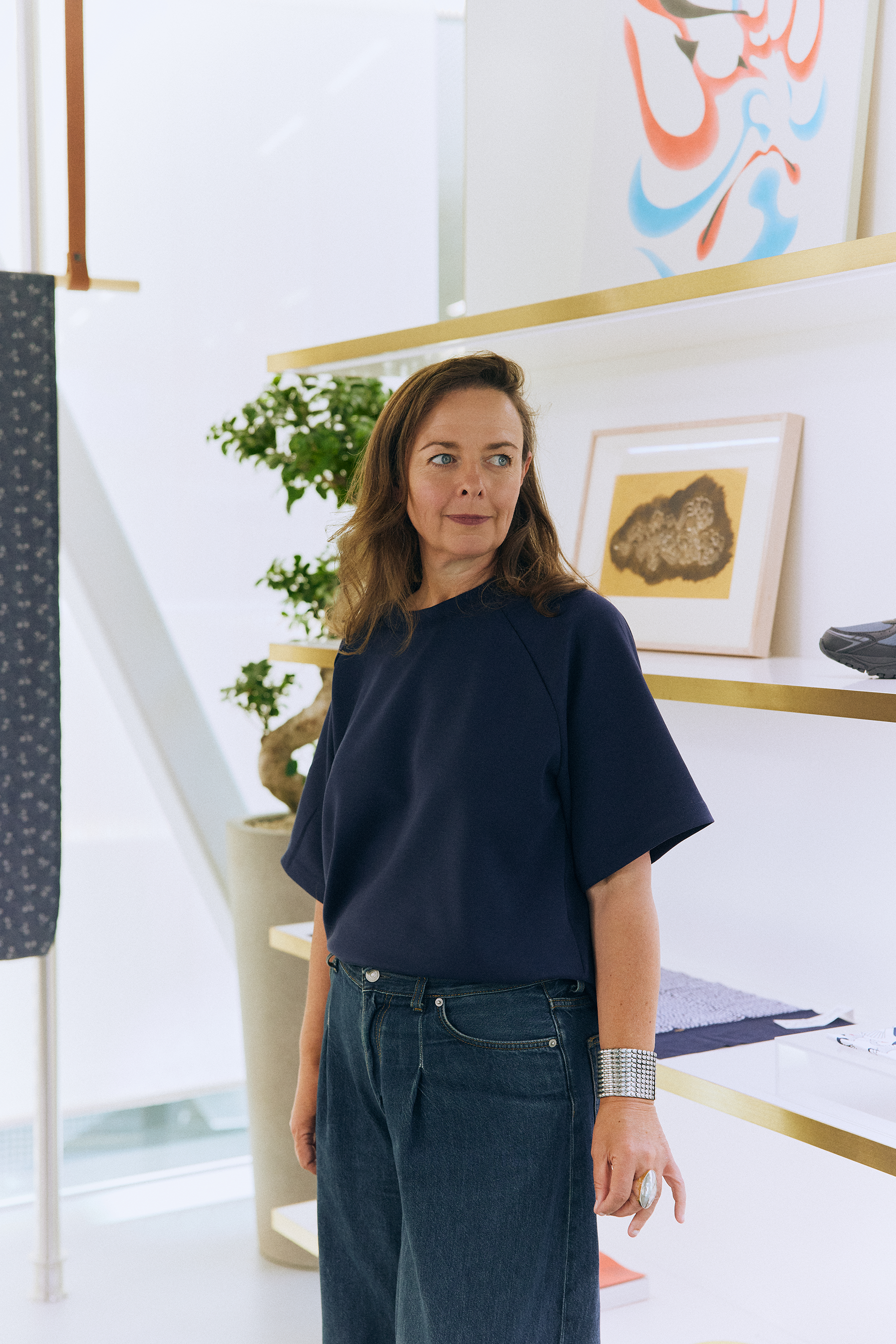
Caroline Fish at ASICS’ HQ. Courtesy of HURS, photography by Morten Nordstrøm.
Caroline Fish
The Women of ASICS
In partnership with ASICS, HURS presents The Women of ASICS: a limited podcast series sitting down with five creative partners who brought their own world to the brand and expanded it.
By Bonnie Langedijk
Listen to the full podcast episode here
Most sportswear brands sell winning. ASICS has always sold something harder to bottle. Founded in post-war Japan in 1949 to give a despairing generation hope through sport, its name is an acronym for anima sana in corpore sano: a sound mind in a sound body. The brand wants to win too, but, as Caroline Fish puts it, not at all costs.
Fish, its global brand communications director, is out of step with her industry in much the same way. Where most marketers assume the world is listening, she assumes it isn’t. That’s a useful humility for someone who cut her teeth at a London PR agency, where attention has to be earned rather than bought. Her answer is the unexpected: pairings so unlikely, and so entertaining, that they’re impossible to scroll past. Mental health and movement are serious subjects, but Fish sees no reason they should be told solemnly.
When she joined ASICS in 2019, its founding philosophy was relatively hidden. Fish has since made it the red thread running through everything the brand does. In an industry that chases every new trend, she has kept her nerve: the brief barely changes from one season to the next. What changes is the messenger. Brian Cox, Succession’s Logan Roy himself, ordering the nation away from its desk in running shoes. A team of seven-year-old exercise influencers on the cover of Men’s Health. A dog called Felix, appointed brand ambassador. One message, never told the same way twice.
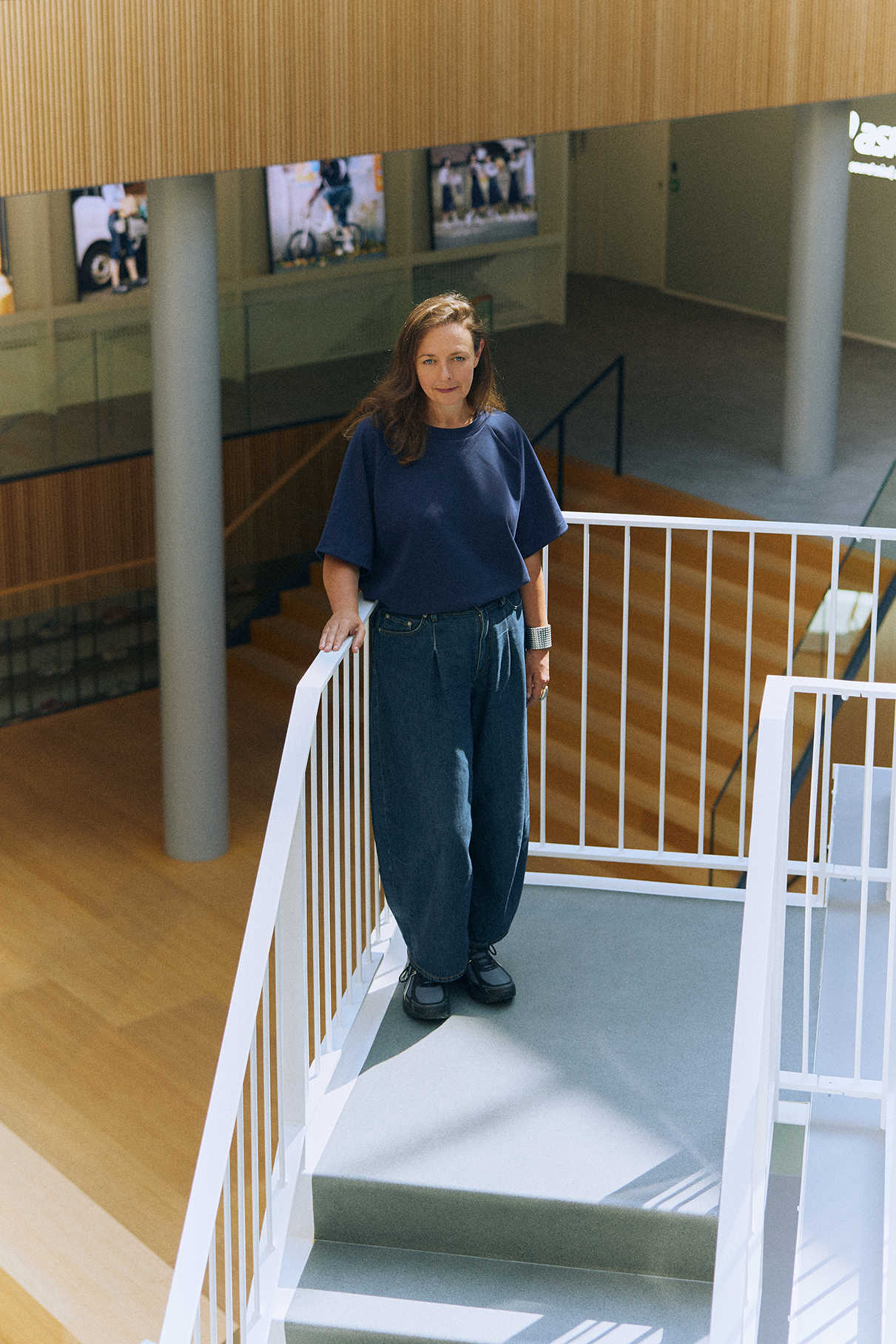
Caroline Fish at ASICS’ HQ. Courtesy of HURS, photography by Morten Nordstrøm.
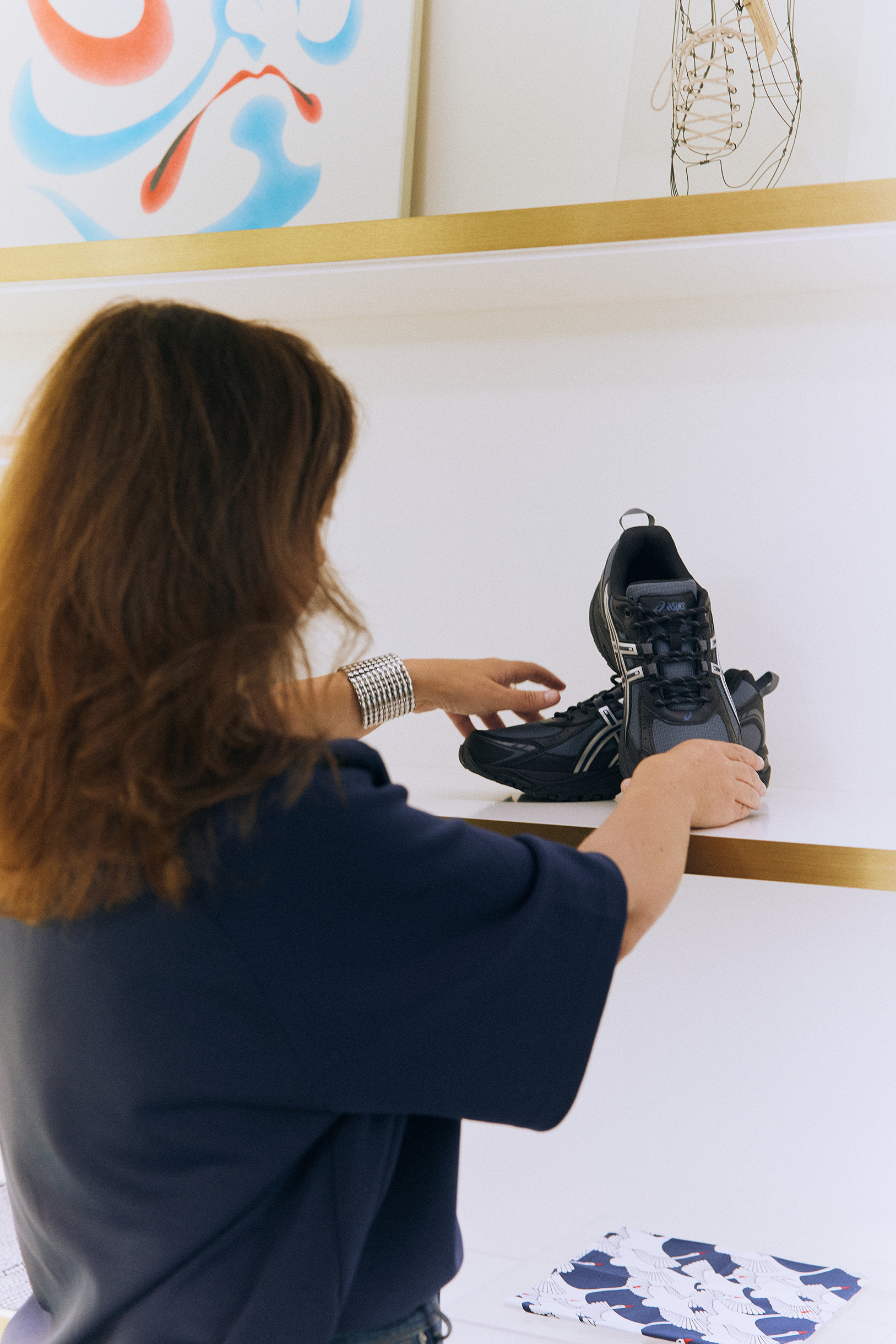
Caroline Fish at ASICS’ HQ. Courtesy of HURS, photography by Morten Nordstrøm.
Bonnie: We’re in the ASICS office today. What should this space tell us about ASICS as a brand?
Caroline: We’re in our European headquarters, just outside Amsterdam. The whole design brief for this office was centered around sound mind, sound body. All of the staircases that are around this building are slightly off, and they’re off for a reason, because we want to encourage people to move more. There’s lots of light and lots of plants. There’s also lots of bamboo, which speaks to our Japanese heritage. As a brand, it’s really tempting to just put what you stand for on the wall. It’s much harder, but much more meaningful, if you can weave it into every part of the building.
You’ve been here since 2019. How much has changed since you joined?
Caroline: The brand has grown tremendously. It’s an incredible growth story. And we are just much more confident about who we are and what we stand for. Probably the biggest change is that we’ve gone back to our roots. Sound mind, sound body has always been there, since the very beginning. But when I joined, it was relatively hidden. It wasn’t something that we were putting front and center. Over the last few years, we’ve really used it as a red thread, internally, externally, across the business, to unify not just what we do, but why we do it.
“XXXX.”
Not everyone knows the backstory, for example, that ASICS is an acronym.
Caroline: ASICS’ founding was in 1949. We were founded in post-war Japan, and really we were founded out of adversity. Our founder, Kihachiro Onitsuka, looked around and saw a nation that was in despair, and people, especially young people, had lost hope. But he also saw that sport and movement had this amazing ability to lift people’s spirits. That is why he founded ASICS, to bring hope to people through sport. He was ahead of his time in recognizing that it wasn’t just the physical, but also the mental benefits that sport gave. ASICS is an acronym for the Latin anima sana in corpore sano, which in English means a sound mind in a sound body.
After COVID, a lot of sportswear brands understood the importance of wellbeing, but with ASICS, it’s always been the foundation. How do you apply that thinking to today?
Caroline: I would argue that what we stand for is more relevant today than ever before. People are moving less and less, especially young people. The World Health Organization came out with figures showing that over a quarter of adults, but wildly, 81% of adolescents, are not getting the recommended movement levels. At the same time, stress and anxiety are at massively high levels. And movement can be a really low cost, accessible way to address that mental health crisis. Yes, other brands talk about it, but often it’s a campaign and it comes and goes. For ASICS, it’s this thread of steel that runs through everything that we do. There is also a sea of sameness when it comes to the world of sport. Many sports brands sit in the ruler and hero categories, where it’s all about winning at all costs. ASICS wants to win, but absolutely not at all costs.
Was brand and marketing something you were interested in from a very young age?
Caroline: No. Like most people, I ended up in, for me, the world of PR, with no idea what PR really was. First job, in London, in a PR agency. When you had to pick up the phone and pitch a story to someone, you quickly worked out what is a good story and what’s not. The thing that I feel is core in all my roles has been: how do you make someone care enough to actually pay attention? What is it that’s going to get somebody to actually stop scrolling? I’m often really rude about most marketing communication. It’s lovely and it looks nice, but it’s total wallpaper. We always start from the position of no one cares. We spend every waking hour thinking about ASICS, and obviously we recognize that no one is waking up wondering, “I wonder what ASICS is up to.”
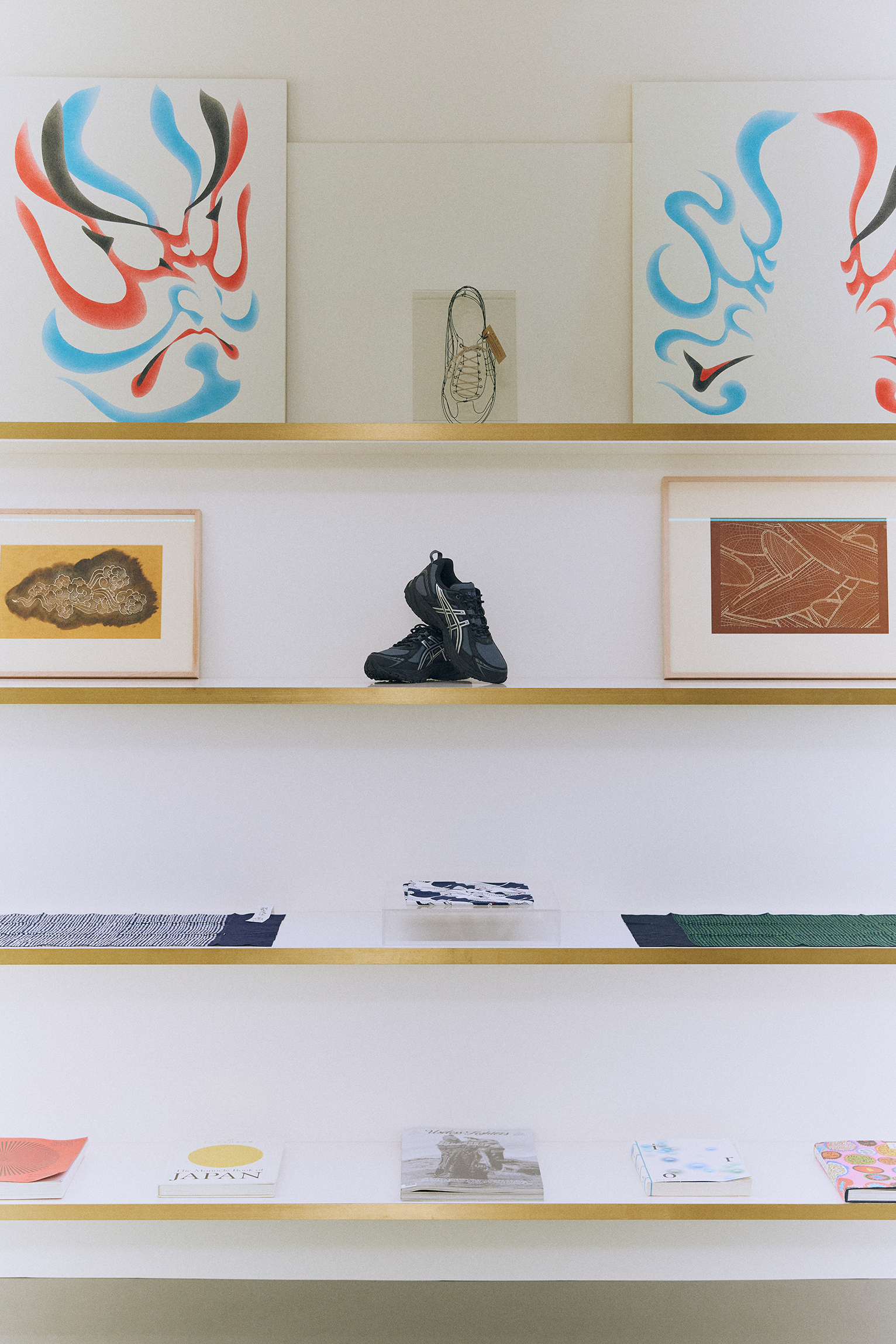
Courtesy of HURS, photography by Morten Nordstrøm.
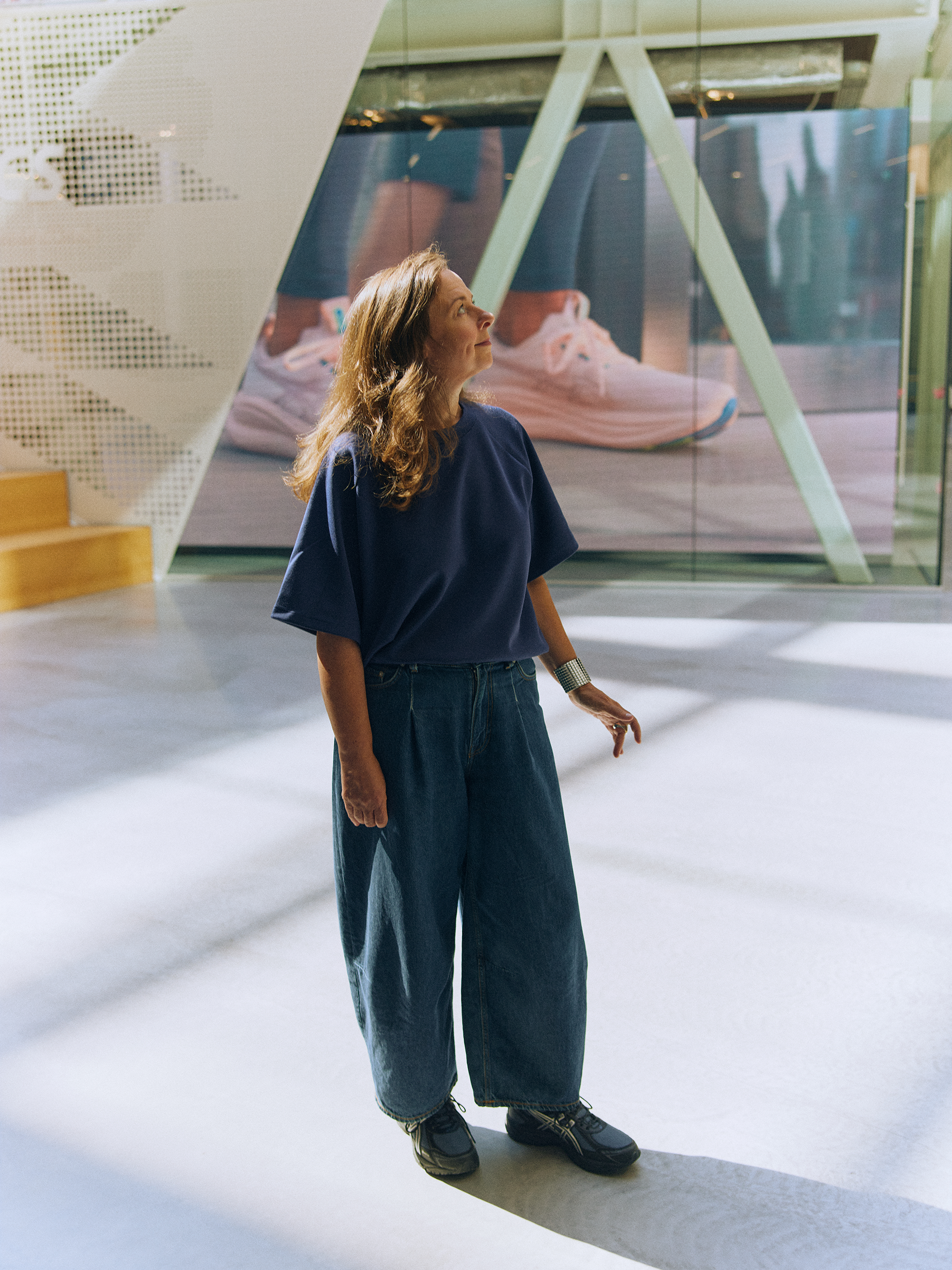
Caroline Fish at ASICS’ HQ. Courtesy of HURS, photography by Morten Nordstrøm.
I think you have done that with, for example, Brian Cox.
Caroline: That campaign was all about telling people to take a break from their desk. Had we just as a brand said to people, “It’s great if you took a break from your desk, you’d feel better,” no one would’ve paid any attention to us. A great message, but totally boring. But when we thought about who would be the most unlikely workplace wellbeing ambassador in the world, Brian Cox, Logan Roy, Succession, the world’s most terrifying person, we instantly knew we had to try and make that happen. Mental health is a very serious topic, but you don’t necessarily have to have the message or the medium be so serious.
We live in a world that moves at such speed. How do you find the balance between being long term and having your finger on the pulse?
Caroline: Consistency is probably the most underrated thing in marketing and communications. We’re all trying to chase the new, jump on the latest trend, and it takes an enormous amount of discipline and rigor to keep focused on that one thing. Those really strong brands pick a lane and then they stick in it. I always come back to Dove. Real Beauty is still there in everything they do, but every year they bring it to life in a way that is culturally relevant, whether that’s addressing AI or any of the topics that are really specific. So it feels fresh. Our message doesn’t change. But the stories that we tell are going to be really different, and different by design. We’ve had the world’s youngest exercise influencer team, a group of seven-year-olds, whose job was to go out into the adult exercise world and remind adults that just moving can be amazing and fun. We put them on the cover of Men’s Health Magazine. Last year, we announced a new ambassador, not an athlete, not a celebrity, but a dog called Felix. Why? Because dogs are the ultimate exercise influencers. Two wildly different creative ideas that communicated exactly the same message. The tighter your brief, the bigger the creative idea is going to be.
The sneaker industry for a long time applied the pink it or shrink it mantra to everything. What do you think happens when you have a team of women designing for other women?
Caroline: You start in a different place and end up in a different place. But even more fundamental is the idea that you really listen to whoever your target audience is. In the UK, teenage girls drop out of sport, increasingly. 64% of girls will drop out before they’re 16. One of the big reasons was that girls in the UK hate their school PE kit. As a Brit, I remember hating my school PE kit, and I was shocked to discover that it was still exactly the same. It had been this completely overlooked issue for decades. So rather than just assuming that we knew what teenage girls wanted, we started by listening. We held focus groups with girls across the UK. They brought in their kit, and they all hated their kit. They were always either too hot or too cold. They talked about periods and hiding tampons and hair ties. Then our design team pretty much handed it over to the teenage girls to design the kit. We all thought that they would be interested in much more out there designs, but the girls just wanted the basics fixed. They wanted to feel warm, dry, comfortable, and they wanted choice. On the days they didn’t feel very comfortable, they wanted it to be baggy. When they felt good, they wanted it to be tight. We tested it in the school area in the UK with the lowest PE participation, and the results were amazing. We were able to take the findings and lobby for change, and recently the UK government changed its advice to schools specifically to call out comfort and choice.
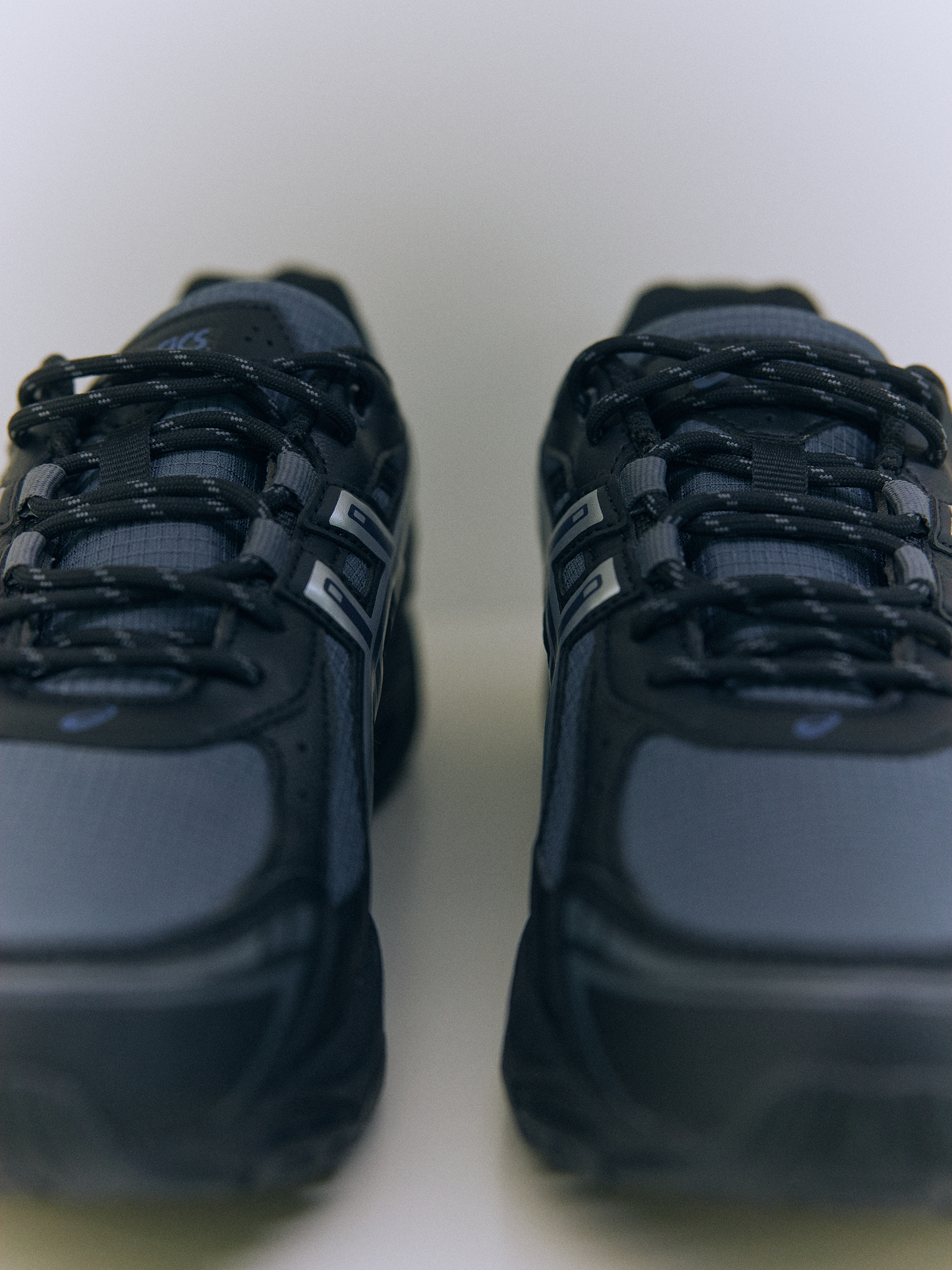
Courtesy of HURS, photography by Morten Nordstrøm.
World Mental Health Day is a critical piece on ASICS’ agenda. Let’s talk about this year’s campaign.
Caroline: This year, we’re applying a conservation lens to movement. Knowing that movement is in decline, we’re asking, “What would a conservation campaign look like for human movement?” We’ve conducted research across 31 markets, and it consistently shows that we are becoming less active. But it’s not really about people becoming less active. Movement is quietly being designed out of our daily lives. The environment and the habitat around us are becoming more convenient, more comfortable. But it’s not a doom and gloom campaign. Just 15 minutes of movement can help us thrive. And again, we’re applying humor, a wildlife documentary style. Working in a sports brand, surrounded by people who are moving all the time, we can assume there’s no inactivity crisis. But the reality is that the vast majority of people are not moving, specifically young people. It’s not just an ASICS issue to tackle. It’s a societal issue.
ASICS is a commercial company. How do you communicate that message without it ever feeling transactional?
Caroline: We are trying to convince people to choose our brand, and that is a combination of our superior products and our unique brand belief. People experience us through the products, but they understand why we exist through our brand. The more people that know what we stand for, the higher the chance they are going to buy ASICS.
What are you curious about right now?
Caroline: I don’t know how we’ve managed to not talk about AI. I would say this because my background is earned, but I feel like earned is having its heyday right now. It’s harder to get people’s attention. And the amount of people that will ask an LLM for an opinion about what to purchase is incredible. So how do you influence LLMs? Earned media, whether it’s media or experts or community platforms, are the places that are most influencing LLMs. Not only are we trying to influence people directly, but we can now also use all of that work to influence LLMs. I read a stat that more people are likely to trust an LLM’s advice than a friend. And we’re already seeing the rise of real world events, especially in the world of sport. Run clubs are booming. We’re only going to see more of that in the future.
And what are you working on next?
Caroline: Same thing. This is always the embarrassing thing. Every time we issue a brief for the seasons coming up, it’s the same brief, with very small nuance changes. The risk is that we give in to the temptation to change things. So we’re working on exactly the same brief: coming up with more ideas that people will care about, but that actually do something in the real world.
This interview has been edited and condensed for clarity. Listen to the unedited conversation here.


Shaniqwa Jarvis on why photographs are beautiful liars, grief as a portal, and the moment she found her whole practice hiding in a childhood snapshot.