Archive Fever
Fashion is in the grip of an archive fever, and the evidence is no longer anecdotal. Over the last decade, the industry has developed more cultural projects dedicated to its own history than in the previous fifty years combined. Fashion houses seem unable to imagine themselves without first consulting their past.
The term "Archive Fever" is Jacques Derrida's, and he starts, fittingly, with the word itself. "Archive" comes from the Greek arkheion, the house where the city's magistrates kept official records and decided what they meant; behind it lies arkhē, which means both "beginning" and "command." An archive is never a neutral container. It is where origin and authority meet. Who gets to decide what is preserved and what becomes history?
Fashion has always looked back, that isn't the problem. The problem is what happens once the drawers and boxes are open, and in most cases the answer is not enough. Too much of what the industry now calls "archival" is quotation passing itself off as knowledge.
Derrida tied this fever to Freud's death drive, a force that works silently to destroy the archive and even erases its own traces. He coined a word for it: "archiviolithic." The desire to archive and the drive to destroy the archive are two faces of the same compulsion. In fashion today, that destruction rarely looks like neglect. It looks like use: the archive treated as a moodboard, its pieces lifted for their silhouettes while the techniques, contexts, and ideas behind them stay in the box. A house can open its archive every season and still lose it.
The fever has a cause, and it lies in the present. Fashion houses now produce six to eight collections a year. Collections disappear within weeks; campaign imagery on social media gets buried in the scroll. Almost nothing in that system is built to last. Against that speed, archives look reassuringly solid. Nothing in them disappears, and their value only rises. They offer the opposite of everything the system produces: permanence and scarcity. That is precisely why the archive has stopped being a back-office function and become one of fashion's primary ways of narrating who it is.
Aurora Fiorentini, a Heritage Consultant and former Heritage Project Manager at Gucci, sees the renewed attention to archives partly as a question of credibility. "Having a museum now, compared to competitors, is an added value," she says. A museum is proof that a house has real history and craftsmanship behind it, but credibility borrowed from the past is still borrowed. Heritage, she warns, becomes a substitute for originality the moment it's used without discernment.
It doesn't have to be. Three of the most closely watched debuts of fashion's 2025 designer reshuffle started in the archive, and all three show what discernment looks like. Jonathan Anderson's Dior Men's Summer 2026 debut translated the Bar jacket in Donegal tweed, while the historic Delft, Caprice, and La Cigale dresses informed new shapes and constructions. Pierpaolo Piccioli's Balenciaga Summer 2026 debut centred on the revolutionary 1957 sack dress, revisiting its freedom from the waist alongside cocoon coats and sculptural volumes, with more recent references to Nicolas Ghesquière and Demna. Matthieu Blazy's Chanel Spring/Summer 2026 debut explored Gabrielle Chanel's personal wardrobe and design innovations through masculine tailoring, shirts recalling those she borrowed from Boy Capel, reworked two-tone shoes, and a deliberately crumpled 2.55 bag. The digging didn't stop at debuts: Chanel's Fall/Winter 2026 collection, shown in March, continued with 1920s-inspired dropped-waist dresses and experiments with the house's tweed suit in lurex and transparent silicone.
None of these collections simply reproduced the past. They translated it, crumpled it, rebuilt it. That is the archive used well, and it sets a standard most of the industry isn't meeting.
Fashion, more than most industries, knows how to turn memory into DESIRE. The risk is that it stops there.
Fiorentini saw that standard set years earlier. At Gucci, she recalls, Tom Ford would frequently pull pieces from the archive she was building. Rather than reproducing the historical objects, Ford and his team would use them as a starting point, transforming vintage pieces into something more contemporary. "This, in my opinion, is the right middle ground," she says: an archive treated as a repertoire of forms and ideas to rework, not a set of instructions to follow. She's careful to note that a fashion archive is rarely just clothes. It holds patents, photographs, sample books, and production records: a territory far wider than the finished garment, and one that rewards distillation over duplication.
Italy has institutionalized this instinct. The Portale degli Archivi della Moda del Novecento describes fashion archives as repositories not just of historical memory, but of ideas, creativity, authenticity, and national cultural identity. Fashion, more than most industries, knows how to turn memory into desire. The risk is that it stops there.
I asked Dylan Colussi, Archive Manager at Emilio Pucci Heritage, what people are searching for when they look at Pucci. He pointed to something more elusive than a particular collection or decade. A Pucci piece from the late Sixties, the Nineties, the 2000s, or today can belong to the same mental landscape. "In people's imagination all these pieces belong to a sort of mythical age," he tells me, "which one can somehow locate between the early Sixties and mid-Seventies."
What he describes is less a precise historical period than an idea of Italy: one constructed through images, films, and music, and one that, in his view, "travelled much more abroad than inside the country." Pucci becomes part of that imagery. The clothes are no longer experienced only in relation to the moment they were designed, but in relation to an idea of a world people still want to inhabit.
This is how nostalgia operates in fashion now: we don't necessarily long for a past we actually lived through. Increasingly, we long for pasts we've inherited secondhand, through images. The archive becomes a way of entering that imagined world, which is exactly why it is so easy to sell and so easy to flatten.
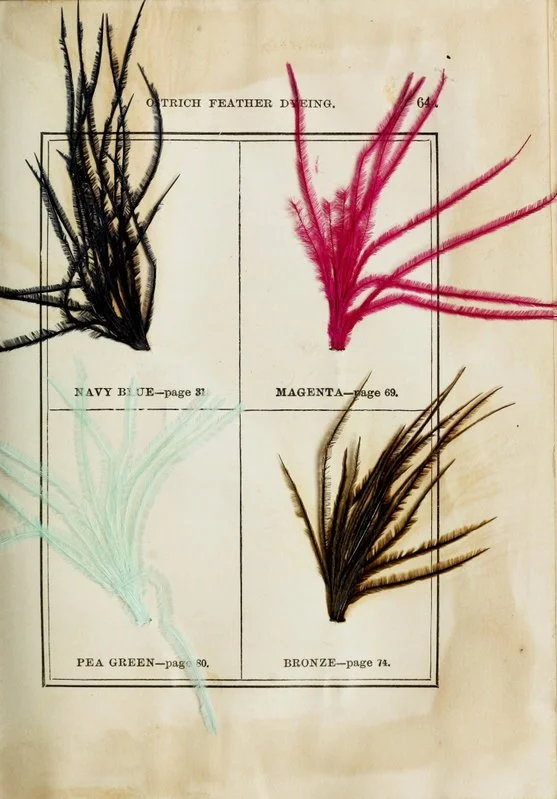
Fashion archives also complicate the idea that an archive is made up of objects someone knew, at the time, would matter. Colussi describes train tickets and travel catalogues from the late Fifties and early Sixties, rough sketches on notepaper, fabric samples: "working stuff" that was saved rather than deliberately preserved. It's easy to forget these things were once just part of an ordinary workday; their historical value came later. For designers of Pucci's generation, Colussi says, "the idea of an archive as we think about it today was something that rarely crossed their mind." Things were kept and stored, but not arranged into the historical narrative later built around them.
That shift in meaning is part of why the word "archive" carries so much weight in fashion right now. Colussi points out that what's changed isn't only who can access archives, but how people relate to the idea itself. "Something so obscure and dusty has never been so cool," he says. The word has escaped the physical archive altogether: it circulates through social media, resale listings, exhibition titles, and brand language. "Archive" now functions almost as an adjective, capable of raising an object's value simply by changing how we look at it. That is misuse in its purest form: the label standing in for the knowledge.
For Giulia Bonali, a Fashion Studies Lecturer and Curator, the industry's growing appetite for its own past isn't surprising. "The past has always haunted the present; it is its internal dynamic," she says. She welcomes the impulse to collect and preserve fashion history, provided the intent is serious rather than decorative. Archives, she stresses, are not static: "We need to know how to dialogue with the past and make it speak again in the present." She compares the process to ballet, where the same work is performed and reinterpreted again and again without losing its power to fascinate. No one mistakes a new staging for a copy, because the dancers have to understand the work before they can perform it.
That understanding is what's missing. An archive used as a catalogue of references turns fashion into quotation. Used as a source of knowledge, it recovers techniques, ideas, and cultural contexts that had been forgotten. The difference between those two outcomes is the difference between copying history and understanding it, and it is the only measure of whether an archive is earning its keep.
Physical archives carry real power precisely because so little about them can be replicated. They impose friction on an industry that has otherwise gone frictionless. Fashion doesn't need to stop looking backward; it needs to get sharper about what it's looking for. An archive is not a tomb to visit, nor a catalogue to order from. It is where a conversation between what has happened and what might happen next actually takes place.
Fashion has never looked back so often or seen so little. In this article, Mobina Mirzaei borrows Derrida’s “archive fever” to ask why an industry built on speed has fallen for its own past, what houses are really after when they open their archives and whether heritage can still be a source of ideas rather than a supply of references.