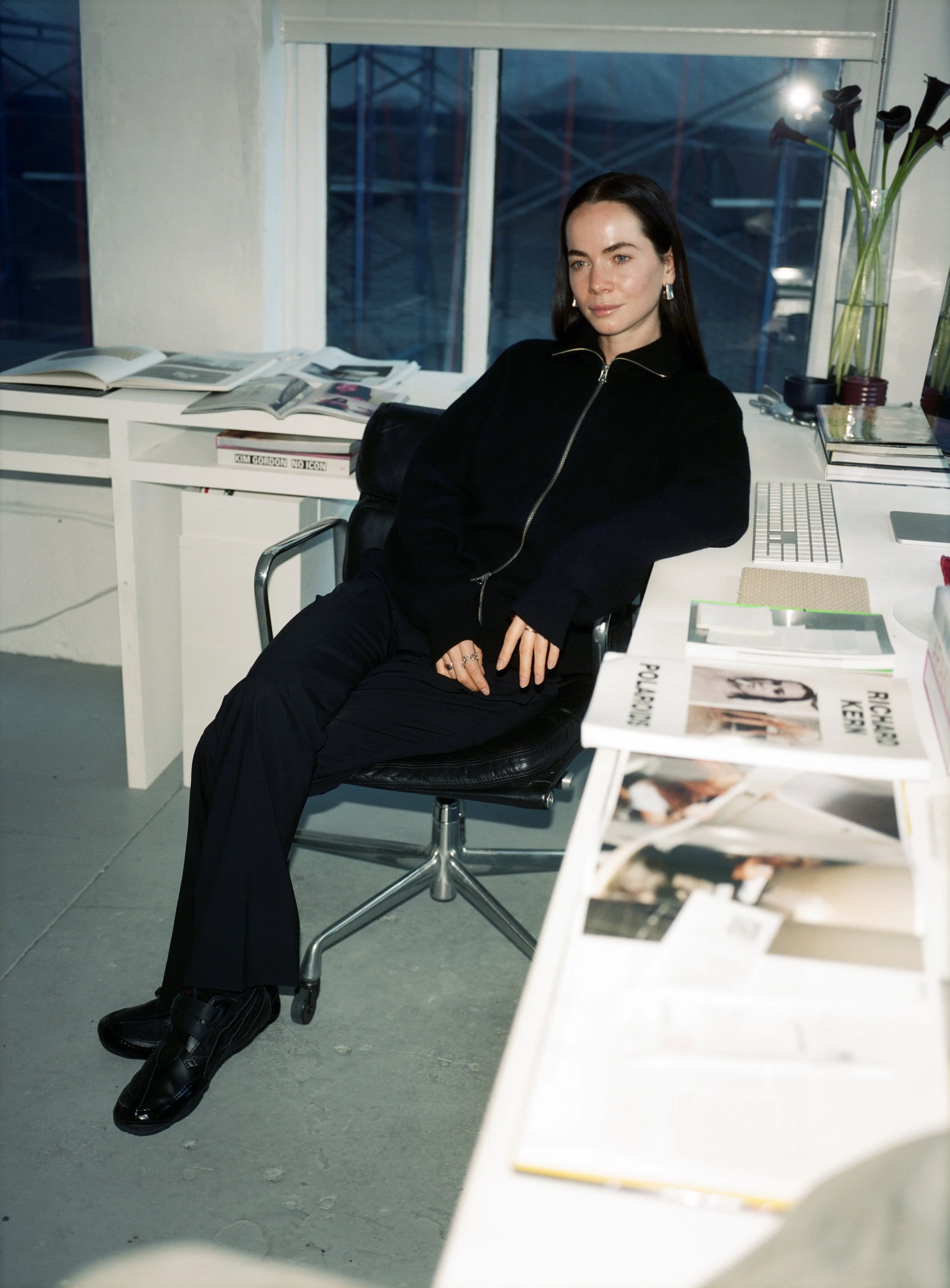
Kat Milne at her studio in New York, captured by Rebekah Campbell
Kat Milne
The Women of ASICS
In partnership with ASICS, HURS presents The Women of ASICS: a limited podcast series sitting down with five creative partners who brought their own world to the brand and expanded it.
By Bonnie Langedijk
Listen to the full podcast episode here
Kat Milne has no interest in making a room merely beautiful. Raised between Tokyo, Hong Kong and India, the New York-based designer and creative director is drawn to contrast above all else, making spaces that pair clean, minimal lines with a streak of something unexpected.
That tension has made her one of the most sought-after names in design, the person behind spaces for Marc Jacobs, Sandy Liang, A24 and Climax Books, and the reason her rooms tend to stay with you long after you've walked back out onto the street.
It found an easy match in ASICS SportStyle and Griff, whose collaboration on the GEL-CUMULUS 16 is rooted in the brand's belief in a sound mind in a sound body. For the London pop-up in Hackney, Milne translated that idea into a space about movement, softness and control, feminine and bold in equal measure. It was, in other words, very much a Kat Milne room: easy to walk into, and not so easy to leave.
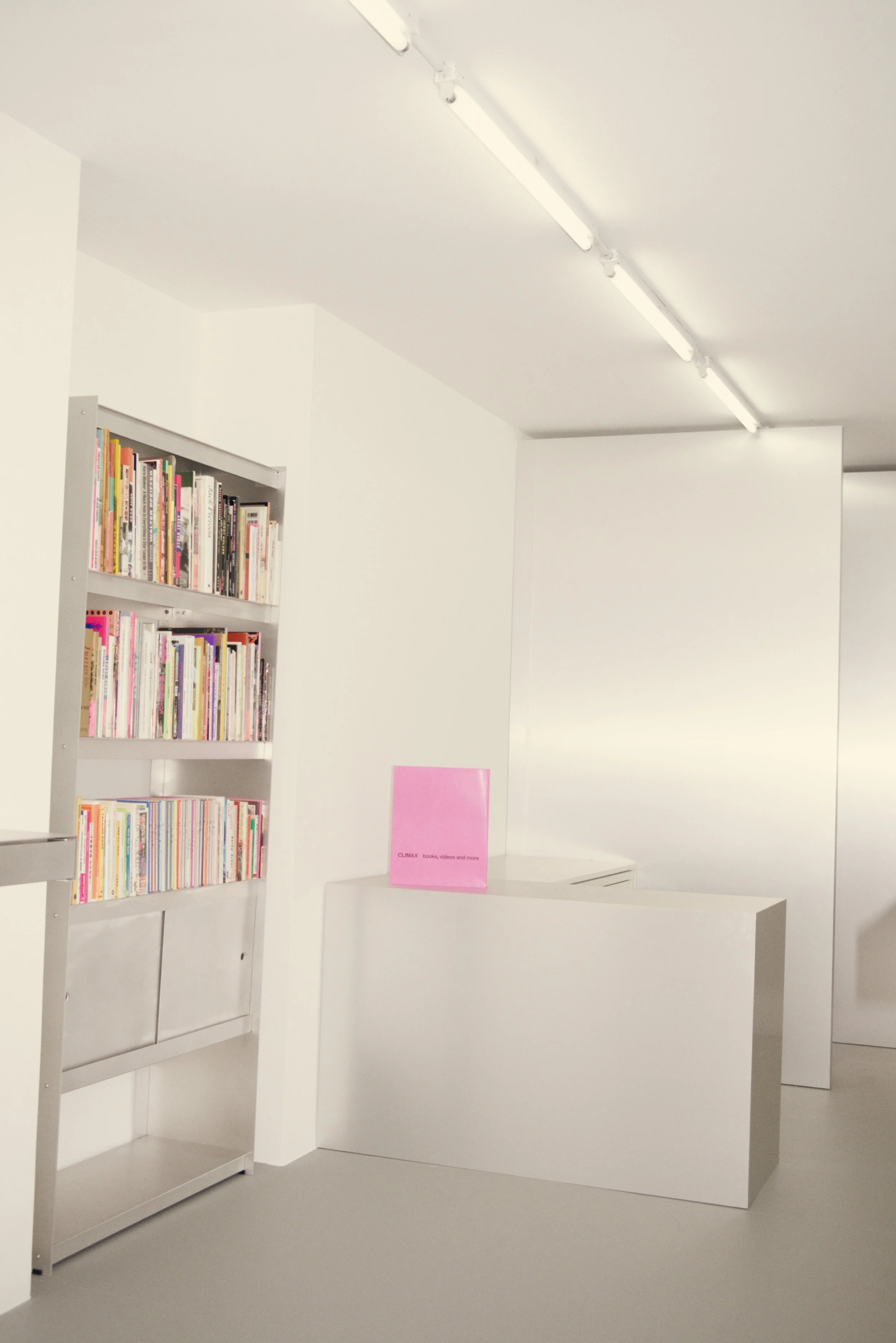
Climax Books New York, designed by Kat Milne. Photography by Heather Cleary.
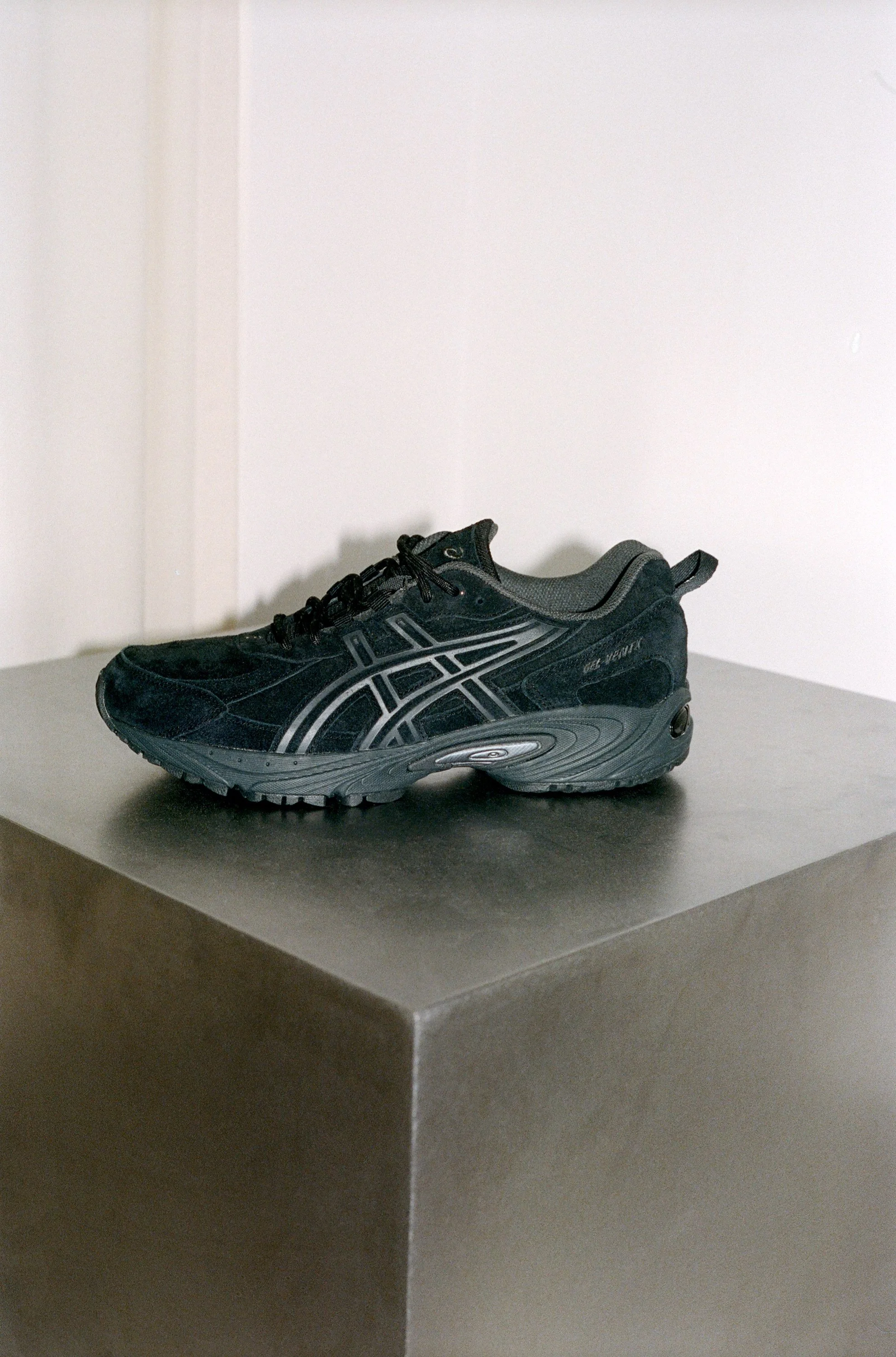
Courtesy of HURS, photography by Phoebe Salmon.
Bonnie: When you walk into a space, you instantly get a sense of its purpose. How do you think about that threshold between the street and someone moving into a space you design?
Kat: That liminal space is such a special opportunity. Particularly in Japan, it's treated with a lot of care and thought. It's something I really try to think about, whether it's priming someone for a surprise, transitioning them into a state of calm, or preparing them to be a little bit uncomfortable. There's so much opportunity in that first moment.
Do you have a starting point for what you want someone to notice straight away, or what you want them to discover?
Kat: Sometimes yes, sometimes no. It always tends to arise. Something I look for in every project is that contrast, that central tension. It often comes through as something that from the outset looks one way, but then you notice details that make you see it differently, make you cock your head to the side. It always comes out in that contradiction.
Where does that interest in finding contrasts come from?
Kat: I think I personally present differently. The way I sound is particularly English, but I've never lived in the UK. I wasn't brought up here, so I'm not necessarily culturally English at all. That internal contrast maybe pushes me to look for distinct contrasts in everything else, because you do always find it. Everyone has these central tensions, and they motivate the most interesting design work.
“I can't set out to design a BEAUTIFUL space. It doesn't excite me. And beauty is so subjective, as it should be. If everyone found the same thing beautiful, we'd all be very bored.”
Going for contrast also makes people see things in a new context, and question whether they actually like it.
Kat: I can't set out to design a beautiful space. It doesn't excite me. And beauty is so subjective, as it should be. If everyone found the same thing beautiful, we'd all be very bored. Creating spaces or objects that are at least interesting, that make you think, as opposed to, oh, that was beautiful, is what I'd rather have you feel coming out of one of my spaces.
How has growing up between so many different countries shaped your practice?
Kat: I was so lucky to be exposed to so many cultures and places from a young age. It made me realize you have to be endlessly curious, because you don't know anything. And that nothing is universal. Color is such a good example. In the West certain colors mean one thing, and in different places within Asia the same color has a completely different connotation. The same with behavior, how people move, how people act. When you're creating site-specific work you need to keep all of that in mind.
It changes what a store or a restaurant could be, and how people behave inside one.
Kat: With Climax, we were almost thinking closer to a gallery and a sex shop that then became a bookstore. How do you make it as comfortable for an NYU student who's never going to buy the archive Juergen Teller book but would like to sit there for an hour looking through it, as for the editor who's a serious shopper and will be in and out within five minutes? It's designing for those unwritten rules, and having different rules for different kinds of participants.
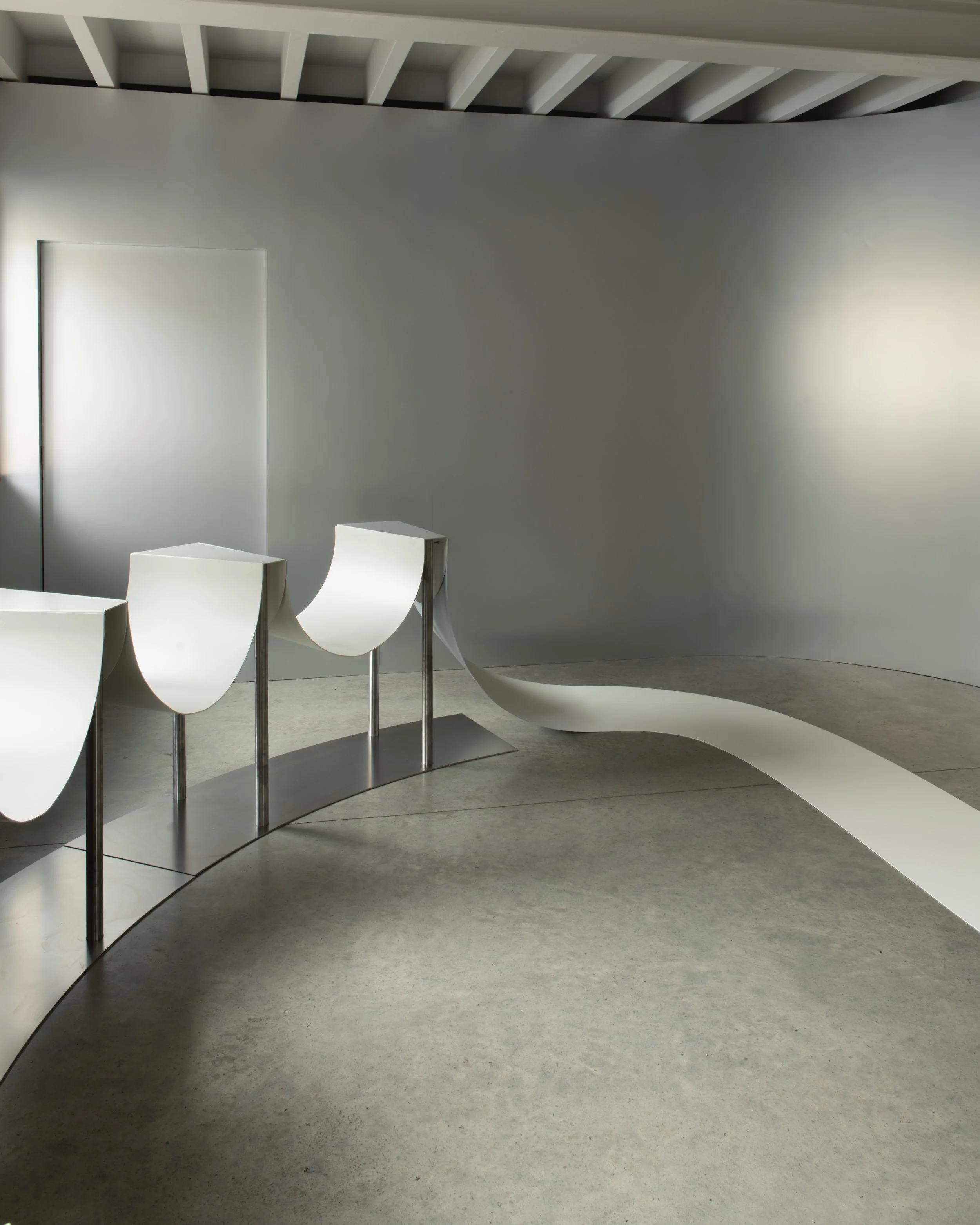
The ASICS x Griff pop-up designed by Kat Milne, photography by Genevieve Lutkin.
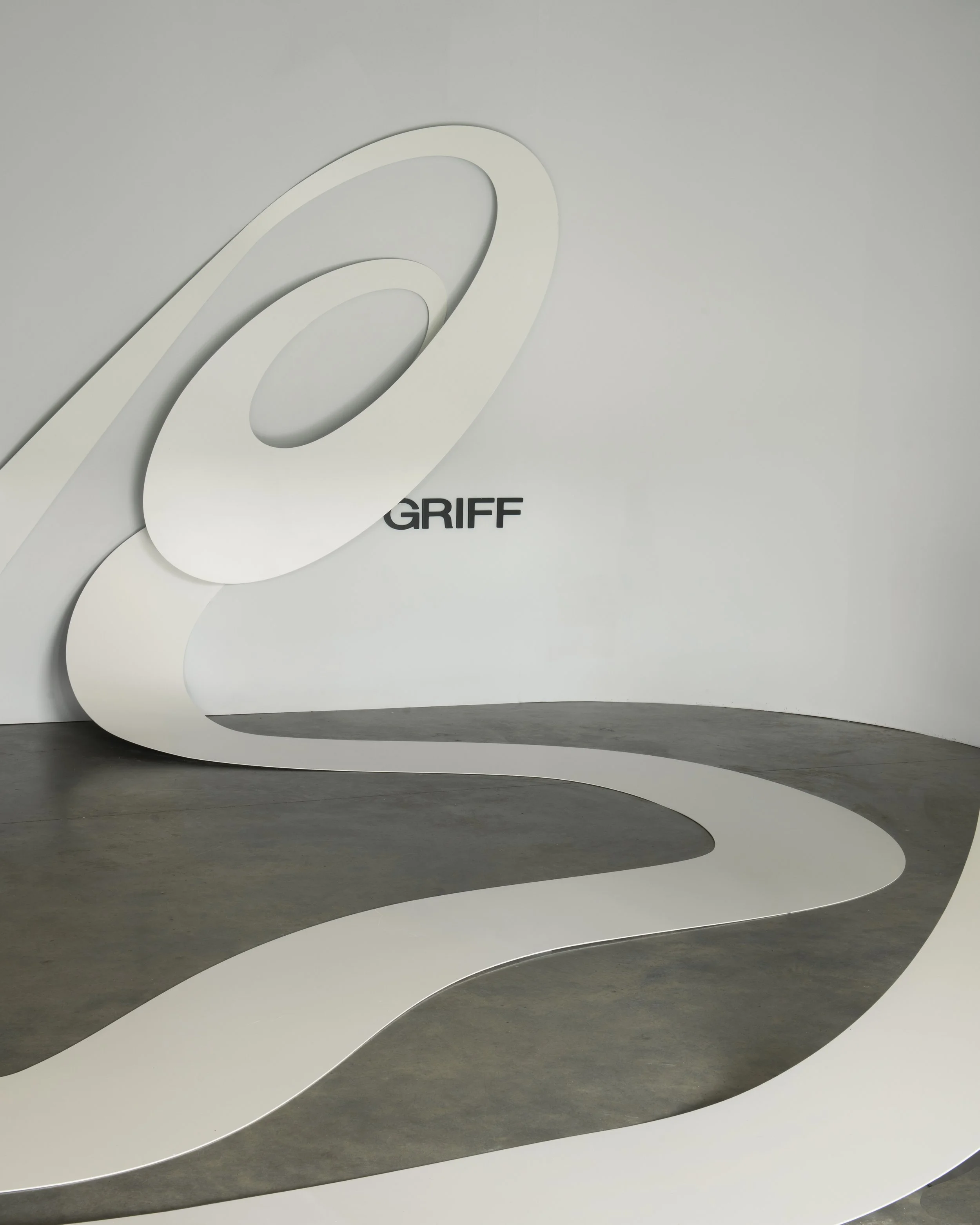
The ASICS x Griff pop-up designed by Kat Milne, photography by Genevieve Lutkin.
Do you remember the first space that really left an impression on you?
Kat: The Rothko Chapel in Houston. I've sat in front of many Rothkos in museums, but seeing a space designed specifically for that work, surrounded by so many of them, was a very, not to be cliche, meditative experience. It showed me how similar objects can exist completely differently in different spaces, and what something can do when it's almost perfect for that moment.
You cut your teeth in-house at Marc Jacobs. What did that teach you before you went out on your own?
Kat: So much. Marc is such an inspiration, a real visionary. What stuck with me is that everything he did, from the way he carried himself in an elevator at 9am on a Tuesday morning to what he put out on the runway, was always on time, off season, in his way. And then working with Heaven and Ava Nirui, watching her do her thing, another singular vision. A reminder that being true to yourself is always going to carry you farthest. It also gave me a network of vendors, some of whom knew me when I was 23. At my scale you rely on craftspeople to execute your work. I can't weld iron or steel. I wouldn't be able to do what I do without those people.
How would you describe your process now? Intuitive or planned?
Kat: I always start with walking.
That's very New York of you.
Kat: It helps synthesize all the references already floating around in my head, whether or not I know where they've come from. Then I start sketching, and often I'll go into a 3D model and sketch again. Usually I'll have a very clear idea in my head, and the process is actually just translating it in a way that's legible to someone else. The same with materiality. I love bringing 50 types of American cherry wood, because they're all so different to me, and really making sure everyone is on the same page about what we're talking about.
Do you think about how you want someone to feel in a space while you're designing it?
Kat: Always. Often that feeling might be discomfort. Hairs on the back of your neck, or something a little strange. That to me is always interesting, and always fun to see those reactions.
How do you know when it's finished?
Kat: My work is quite minimal, and there can be a tendency to push yourself to over-design. I end up playing with additions or detailing and then pulling it back, proving to myself I don't need any more. But you have to trust your gut and be who you are. I'm never going to be someone with a ton of ornate detailing. Other people do that and it's amazing. It's just not for me.
And retail spaces come alive once the product and the people are in them. Maybe they shouldn't be finished when you're finished.
Kat: That's true. A lot of my relationships with brands are long term, and what a space looks like on day zero versus day 100 might be slightly different. With Sandy Liang we've added things over the years. Any object I design, I love seeing how someone is really living with it.
You design your own objects now, too.
Kat: It came from having ideas that didn't have a home. I always thought they needed to find one with a brand, then realized that wasn't necessary. I could just do it myself. It got to the point where I couldn't not. I became impatient.
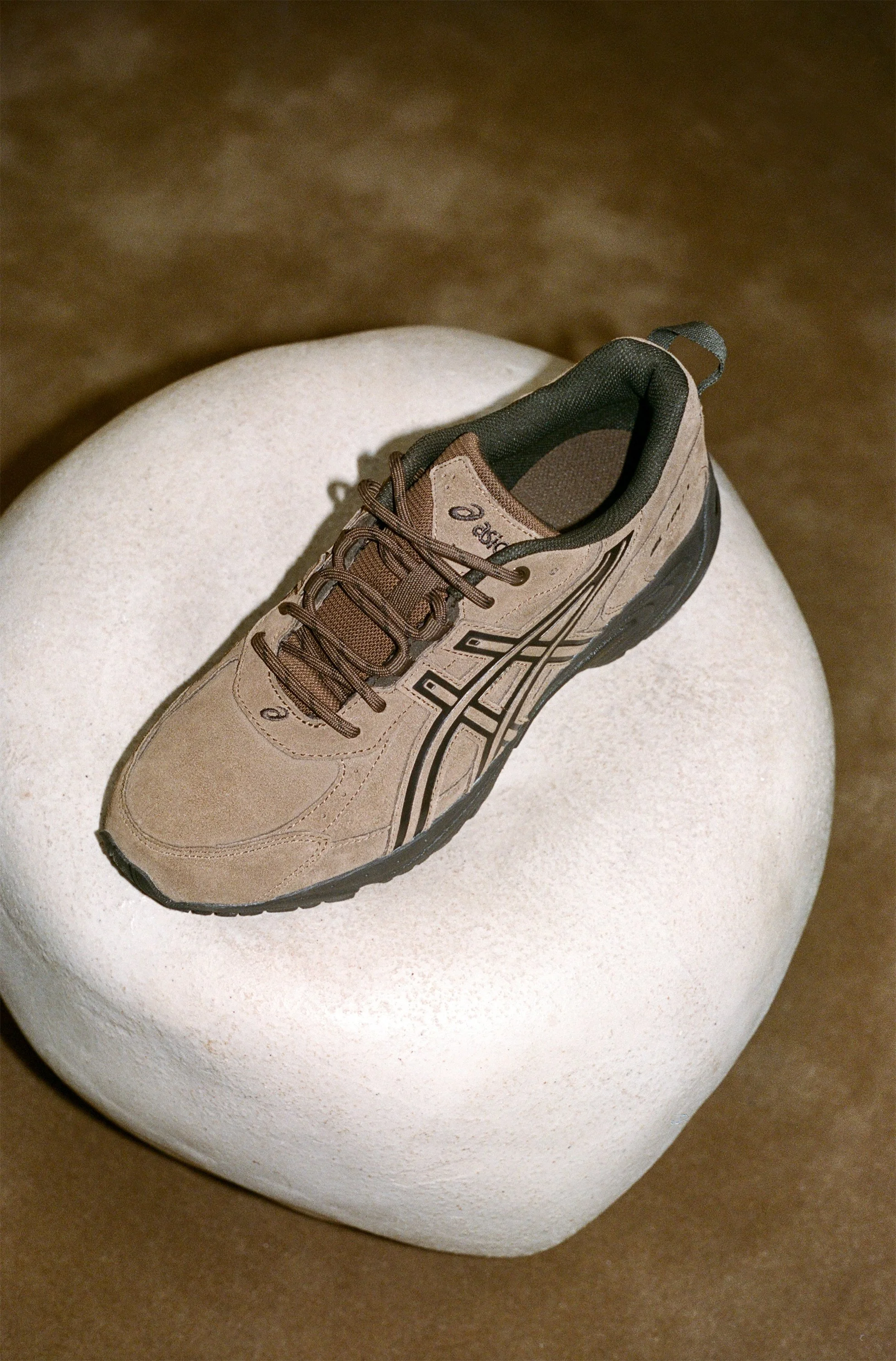
Courtesy of HURS, photography by Phoebe Salmon.
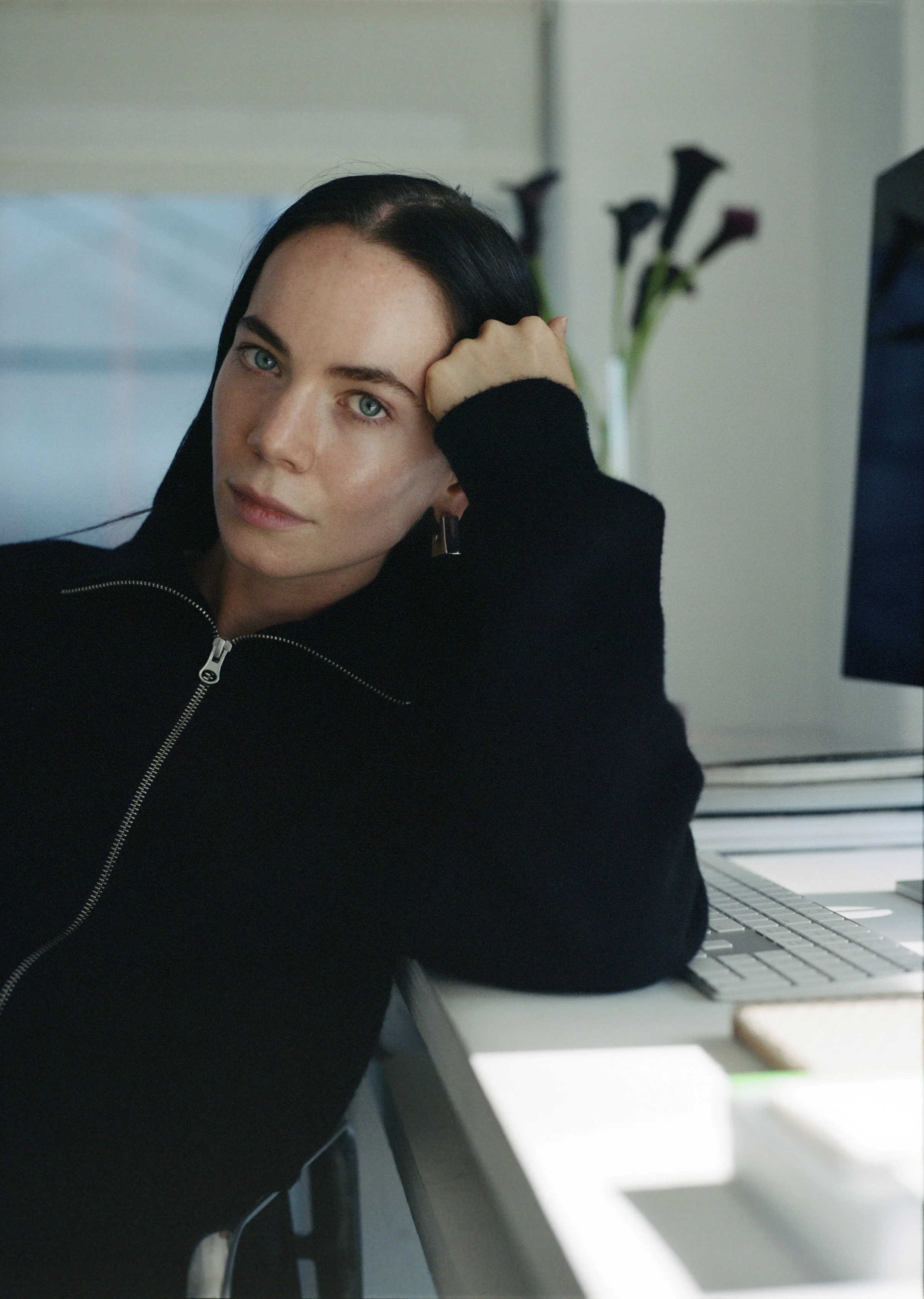
Kat Milne at her studio in New York, captured by Rebekah Campbell
Let's talk about ASICS. You designed the Griff pop-up in London. What was the starting point?
Kat: It started with the ASICS team talking about the foundations of the brand, Sound Mind, Sound Body, and how every space they do has some element of movement. It wasn't necessarily about winning or even achieving anything. It was just about movement in the smallest forms. That was really inspiring to me. One of the ways we connected, and connected with Griff, was this femininity with quite a hard edge. Not needing to be overtly high-femme, but still very feminine, and approachable to anyone who feels femme or wants to that day. Then the conversation around movement led to the swing chairs, one of which we have here.
A short pop-up, but the pieces have outlived it.
Kat: They have. Someone from the ASICS team has one of the chairs in her home, one went to the talent, and I still have some. That felt really special, because I hate to see things go to waste. I always try to design pop-ups with a view to the brand reusing them, or to keeping them myself as furniture pieces.
Brands come to you for your way of doing things, but they arrive with their own strong world, and here there was talent involved too. How do you approach collaboration?
Kat: If I tried to design something perfect for ASICS, I couldn't do it, and they probably wouldn't like it very much. The only way is to do what makes you feel really good, with them and that project in mind, but making sure first and foremost that it feels true to you. It was the same working with Amy, the graphic designer on the ASICS project. I can't do what she does. Being able to just show her the space and say, all right, please do your thing.
The best collaborations are the ones where nobody's trying to control anyone else.
Kat: Exactly. There's so much confidence in a brand or a talent who brings someone in and allows them to flourish. If you're Griff, you don't need to be too prescriptive, because it's clear and you get it. It's the same with all the projects I've worked on. There's no one like Isabella, no one like Ava, no one like Marc or Sandy Liang. People certainly try, but you can only be yourself, and that's when you'll be the most successful.
So many spaces are designed to be photographed now. How does that affect the way they look?
Kat: Everyone wants it and no one really wants to talk about it, but it's impossible to avoid. What I'd love is for a space to look beautiful in a photo, someone's talking about it, and then they say, oh, but did you go in the bathroom? There are little things in there for the people who do go, things they get to feel and touch. I also think about a different playlist or scent depending on the day or the time. A rainy Monday morning should feel different in the space than a Saturday at 7pm.
Is there a project you'd still love to work on?
Kat: I have an idea related to time. I've always been obsessed with public clocks, and the lack of them in the US, and how different cultures communicate time to each other. In Europe you hear church bells, quarter past, half past, quarter to. In the US you don't really have that. I'd love the chance to explore it.
I find it funny now when people ask you for the time. It sounds great not to have to walk around with a phone.
Kat: There's something so beautiful about being completely unaware of the time because you have nothing to do that day. A pause where you can do anything and it seems suspended. Maybe you're deep into a design and you've been sketching for hours without realizing. That's the dream.
That's the best feeling in a space too, when you forget the time. And that's only going to matter more, human connection and physical space, with everything becoming so digital.
Kat: And what a privilege to not know the time.
This interview has been edited and condensed for clarity. Listen to the unedited conversation here.


We spoke with Alice Diop about the books that have shaped her intellectual life, how literature becomes a form of freedom and resistance and the role of Chambre à soi in making space for the subjectivity of Black women.