Holding Two Worlds

Lina Bo Bardi at Casa de Vidro.
Holding Two Worlds
An essay by interior architect and designer Kim Mupangilaï On Lina Bo Bardi
In celebration of Making Space: Interior Design by Women by Phaidon—a groundbreaking survey of 250 leading interior designers spanning the twentieth and twenty-first centuries—we invited four women featured in the book to reflect on the visionaries who shaped their practice.
By Kim Mupangilaï
When I think about Lina Bo Bardi, I see someone who carried two worlds inside her and allowed them to exist together. Born in Italy and later rooted in Brazil, she never abandoned one identity for the other. She built a practice out of that in-between space, where cultures do not cancel each other out but begin to speak to one another. That gesture of holding both is something I recognize deeply in my own life and work.
Her Casa de Vidro, the Glass House, completed in 1951, embodies this spirit. Its clean lines and floating form reflect her European modernist training, yet its openness to the tropical forest and sensitivity to climate reveal a deep responsiveness to Brazil. It was neither purely European nor purely Brazilian. It was an architecture of dialogue. When I first saw it, I felt as though I recognized myself in it. It mirrored what it means to live between places, never fully one or the other, but always both.
That sense of belonging to more than one world became even more profound in her work at SESC Pompéia in São Paulo. Here Lina transformed an abandoned factory into a vibrant cultural center, preserving the rawness of its industrial character while weaving in new concrete towers and elevated walkways. Yet more than the design details, it was the generosity of the space that struck me. She created a place for people to gather, play, and create, a place rooted in Brazilian social life while still carrying the clarity of her European training. It was human, radical, and unmistakably her own.
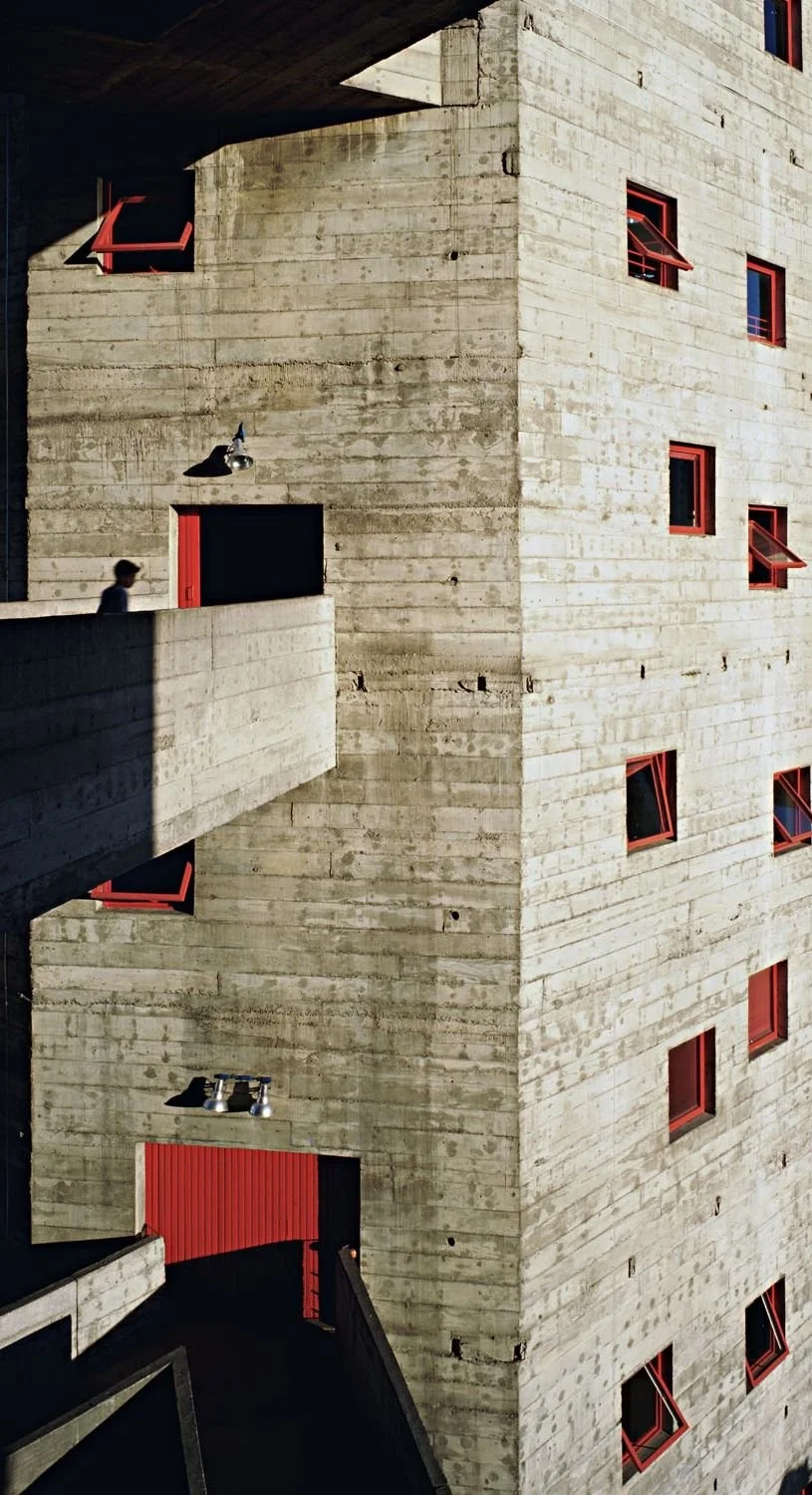
SESC Pompeia, a leisure centre comprised of disused factory buildings, São Paulo 1982, designed by Lina Bo Bardi.

Casa de Vidro, the first built project by the architect Lina Bo Bardi, 1951. Considered an icon of modern Brazilian architecture, it was the residence of the Bardi couple for over 40 years. Since 1951, the house has been a meeting point for artists, architects, and intellectuals.
This way of merging worlds is what makes Lina’s work feel so personal to me. My practice too is shaped by dual heritage, Belgian and Congolese. I grew up adapting to Western culture while feeling the quiet but powerful presence of Congolese traditions in my family. That tension—sometimes harmonious, sometimes uneasy—continues to inform my work. In my pieces I bring together the rigor of European design with organic forms and tactile materials that carry echoes of Congo. Like Lina, I see this not as contradiction but as dialogue.
What inspires me most is her ability to see vernacular culture as knowledge. Folk art, everyday craft, and the gestures of daily life were not treated as ornament but as wisdom, as essential to design. This way of seeing is central to my own process, where I try to move beyond borrowing motifs and instead create work that honors both Congolese memory and Belgian modernity.
“Today, when design often risks being FLATTENED by global uniformity, her vision feels urgent: rooted, inclusive, and responsive to the lives of people.”
Lina’s decision to let her multiplicity guide her produced a body of work that resists sameness. At a time when much of modernism chased universal solutions, she insisted on the particular. Today, when design often risks being flattened by global uniformity, her vision feels urgent: rooted, inclusive, and responsive to the lives of people.
Writing about Lina is not only an homage but a recognition that cultural complexity is a gift. Her architecture endures as a testimony to what it means to belong to more than one place, to carry more than one identity, and to let that richness shape the world we build. In her courage to merge, I see both inspiration and a reflection of my own path.
Everyone is an expert now, and almost no one is. In her latest essay, Bonnie Langedijk asks how confidence came loose from competence, why we believe the ring light over the researcher, and whether real expertise can survive a culture that rewards speed over depth.