At Design Miami.Paris, Taste Is the Real Currency
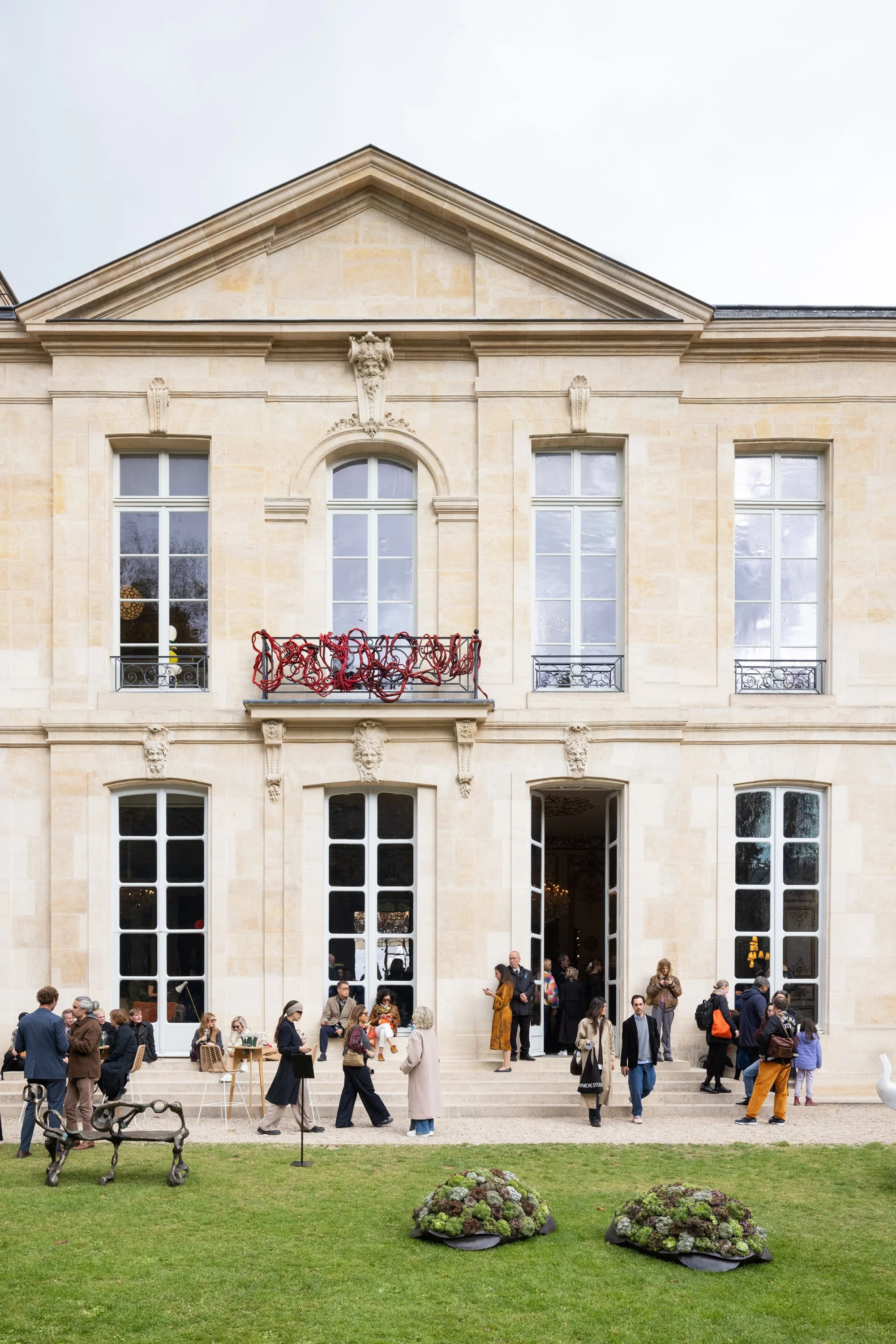
L'hôtel de Maisons during Design Miami.Paris. Photography by Ivan Erofeev, courtesy of Design Miami.Paris.
At Design Miami.Paris, Taste Is the Real Currency
By Bonnie Langedijk
Every October, an 18th-century mansion in Saint-Germain-des-Prés becomes a curious hybrid: part cultural salon, part high stakes marketplace. Design Miami.Paris takes over L'hôtel de Maisons for six days, filling its gilded rooms. It's a far cry from the white-box convention centers most fairs inhabit.
Unlike its December sibling in Miami Beach—which has become the place for experimental, occasionally bonkers contemporary design—the Paris edition runs in tandem with Art Basel Paris and leans into French design heritage. As Grela Orihuela, SVP of Fairs at Design Miami, puts it, the timing "cultivates a visitor that not only collects design but art as well, creating an ethos that echoes how we live with both."
This year's edition was the largest yet, with over 20 galleries presenting. Galerie Chastel-Maréchal showed Jean Dunand's Forêt—a 1929 lacquer screen from Princess Marie Bonaparte's collection. Gallery Maxime Flatry showcased historical ceramics from 1890-1930 by Jean Besnard and Ernest Chaplet, paired with Thierry Boutemy's floral installations. And Paulin, Paulin, Paulin presented Pierre Paulin's radical 1966 La Déclive—modular seating that eliminates furniture in favor of an inhabitable floor. The range was impressive. But it also raised a question that's been hovering over the design market for two decades: has collectible design finally found its own identity?
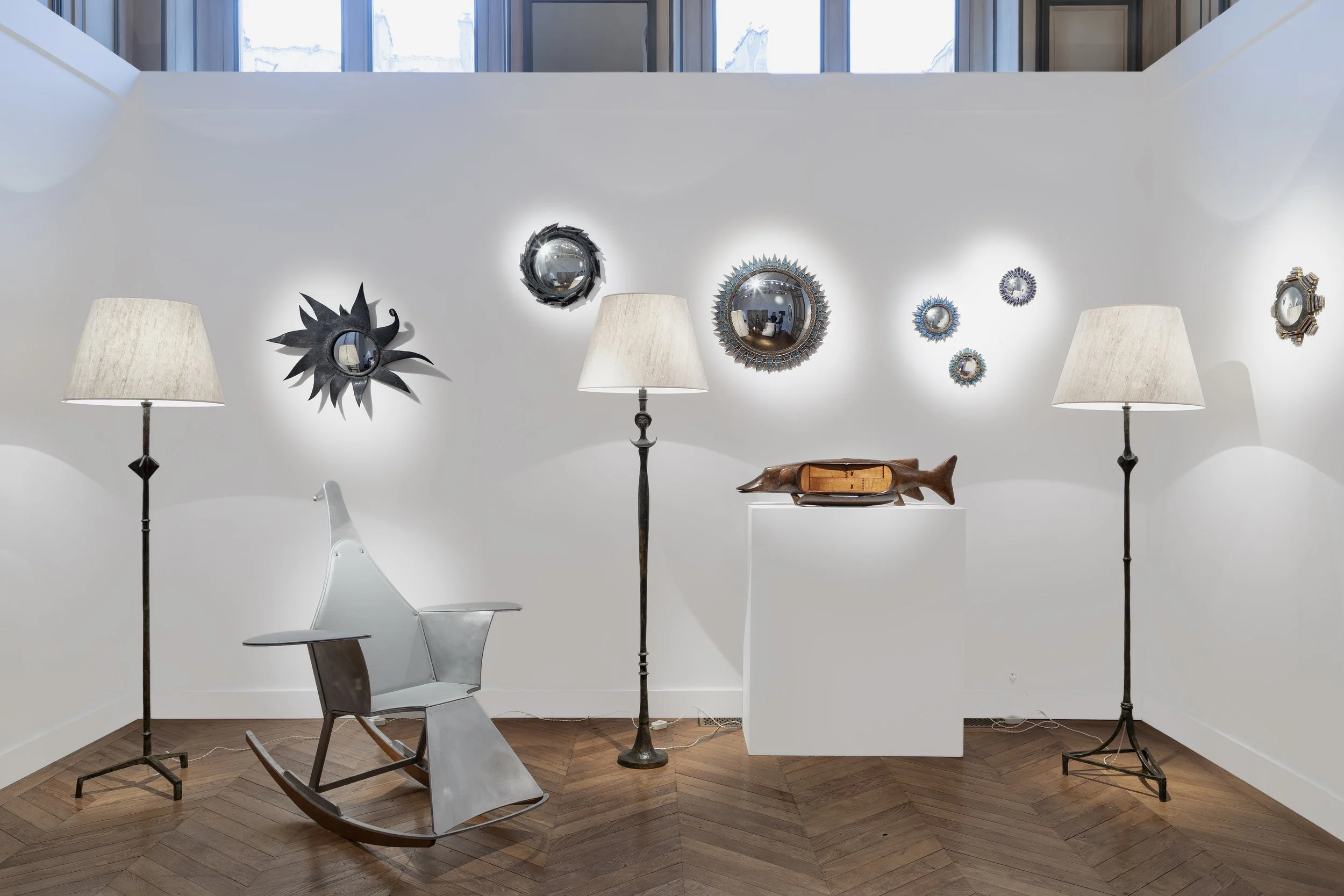
Galerie Chastel-Maréchal at Design Miami.Paris. Courtesy of Galerie Chastel-Maréchal.

Galerie Chastel-Maréchal at Design Miami.Paris. Courtesy of Galerie Chastel-Maréchal.
Not Your Mother's Design Fair
What makes Design.Miami Paris different isn't just the venue, though L'hôtel de Maisons does provide what Orihuela calls "architectural splendor." It's the strategy. As Jen Roberts, Design Miami's CEO, explains: "Our decision to activate in Paris was in large part because many of our loyal, deeply established galleries are based in the city. These galleries possess world-leading expertise in French design heritage. It felt only natural to bring our global platform to the doorstep of these galleries."
In other words, Design Miami doesn't parachute into Paris and demand the city come to it. It embeds itself in the existing ecosystem. Where Miami Beach is all about discovery and risk-taking—"an incubator for highly experimental design," as Orihuela describes it—Paris is about validation and expertise. Museum-quality historical pieces dominate. It's the same brand having two very different conversations with the market.
There's another dimension worth noting: the fair is run by a predominantly female leadership team. Something that matters in a market that's been male-dominated for decades. When Orihuela describes this year's exhibitors, she identifies a throughline: "I see a collective narrative centered on connection and empathy. Across regions and disciplines, designers are engaging deeply with questions of belonging, identity, and cultural exchange. There's a clear desire to move beyond aesthetics—to create work that reflects lived experiences and fosters meaningful dialogue." It's a softer, less chest-beating, institutional voice than you typically hear in the art-fair world.
Who's Actually in Charge Here?
To understand what this year's fair says about design, start with power. Twenty years ago, Roberts notes, there wasn't a coherent "design market"—just decorative arts tucked into auction house departments. Today it stands on its own, with heritage galleries, emerging studios and collectors who've wandered over from contemporary art.
Nina Yashar of Nilufar Gallery, who's been watching this evolution for decades, refuses to talk about "power" at all. "What truly shapes the market now," she says, "is the evolving taste of collectors and the trust they build over time with curators and designers." It's a relational reading, built around networks of influence that operate through trust and taste-making.
Aline Chastel, whose Galerie Chastel-Maréchal specializes in Art Deco and 20th-century design, has a sharper take: "The real power, in my view, now lies in the ability to narrate and contextualise. Those who possess the knowledge, memory and ability to forge links between designers, eras and aesthetics are the ones who drive the market." In other words, it's not about who has the biggest gallery or the deepest pockets anymore. It's about who can tell the best story.

Nina Yashar, Director of Nilufar, at Design Miami.Paris. Courtesy of Nilufar.

Nilufar at Design Miami.Paris. Courtesy of Nilufar.
Laurence Bonnel—a former sculptor who runs Galerie SCENE OUVERTE—splits the difference. Yes, the usual suspects still dominate (major galleries, auction houses, institutional collectors). But "a new generation of galleries has emerged, both in vintage and contemporary design. These younger, more agile spaces are sometimes more attuned to the evolving expectations of collectors." They're leveraging Instagram, spotlighting forgotten designers, finding niches the big players overlooked.
Which is to say: power hasn't democratized so much as it's become harder to see. It's diffused into narrative control and curator-collector relationships. If you can't tell a compelling story about why a piece matters, you're in trouble. As digital platforms have made information abundant, curation—the ability to make sense of the noise—has become the scarcity.
So what's driving this shift toward narrative power? Yashar identifies something fundamental: collectors today are seeking meaning over simply beauty or function. Design has become, in her words, "a vehicle for cultural storytelling." The objects people acquire are expressions of identity and worldview. Which sounds lofty until you realize it's also how you sell a €50,000 chair.
Chastel reads the current moment as revealing "a need for sincerity and a return to intimacy." After years of monumentality and spectacle, "design is returning to more human forms, to materials, to gestures." Bonnel sees similar patterns: "a celebration of diversity" and "the deep connection to materiality. Designers are returning to the essence of craftsmanship, reclaiming the tactile, the sensory, and the human in a world that often feels digital and detached."
The Past Is Having a Moment
This focus on storytelling explains why historical pieces featured so prominently at this year's fair. Chastel describes her gallery's work as "cultural transmission"—rescuing forgotten or misunderstood designers from obscurity. "Introducing a historical designer to a new collector," she explains, "means offering them a sensitive interpretation: explaining how a piece was conceived, the context in which it was created, and what it says about its era. It is a form of cultural transmission as much as a commercial transaction."
Yashar frames the past-present relationship differently. "I don't see vintage and contemporary design as competing forces," she says. "They serve different but deeply connected desires. Rarity today is no longer defined solely by age or provenance, it's also about vision, process, and authenticity." At Nilufar, she curates mid-century masterworks alongside emerging designers, creating what she calls "a dialogue between eras." When it works, a 1950s chair and a 2024 table don't clash—they illuminate each other.
But here's the tension: all this talk about "dialogue" and "cultural transmission" is essentially conservative work. These galleries are establishing canons, deciding which designers matter and which get forgotten again. Contemporary designers get positioned as heirs to traditions, continuing conversations rather than blowing them up. A century after Art Deco tried to reconcile handcraft and industrial production, design is still having the same argument.
Everything Is Everything Now
One way the market tries to advance—or at least refresh—the conversation is through boundary-crossing. Walking through this year's fair, it was found everywhere. Floral installations talked to historical ceramics. Contemporary designers collaborated with scent artists to reimagine mythology. The fair itself is boundary-crossing—its Art Basel Paris alignment is a recognition that collectors have already dissolved the barriers between art and design in their own lives.
Orihuela is refreshingly frank about this: "Fair weeks provide critical mass and it's nice to be aligned with Art Basel for synergy." The timing cultivates visitors who collect both, who move fluidly between disciplines. Design Miami isn't leeching off Art Basel—it's following where the audience already lives.
Yashar embraces this fluidity entirely. "Design has always existed in dialogue with other disciplines," she argues. "What we're seeing now is a more fluid and collaborative creative landscape. At Nilufar, I've long embraced cross-pollination—not because it's a trend, but because it reflects the way culture actually works." Chastel grounds this historically: during Art Deco, Jean-Michel Frank and Marc du Plantier collaborated with artists. "What we are experiencing today is therefore not a break with the past, but a continuation." But—and there's always a but—"this porosity can be stimulating, provided that the approach remains sincere. When a creator from another world approaches design with respect and curiosity, design comes out stronger. But if it's just a passing fad, then yes, it does it a disservice."
Bonnel echoes this qualified enthusiasm. Cross-pollination brings "fresh energy" but risks diluting "what makes design unique: its ability to blend functionality, aesthetics, and purpose." The challenge is staying true to "design's core mission: creating objects and spaces that resonate with those who use them."
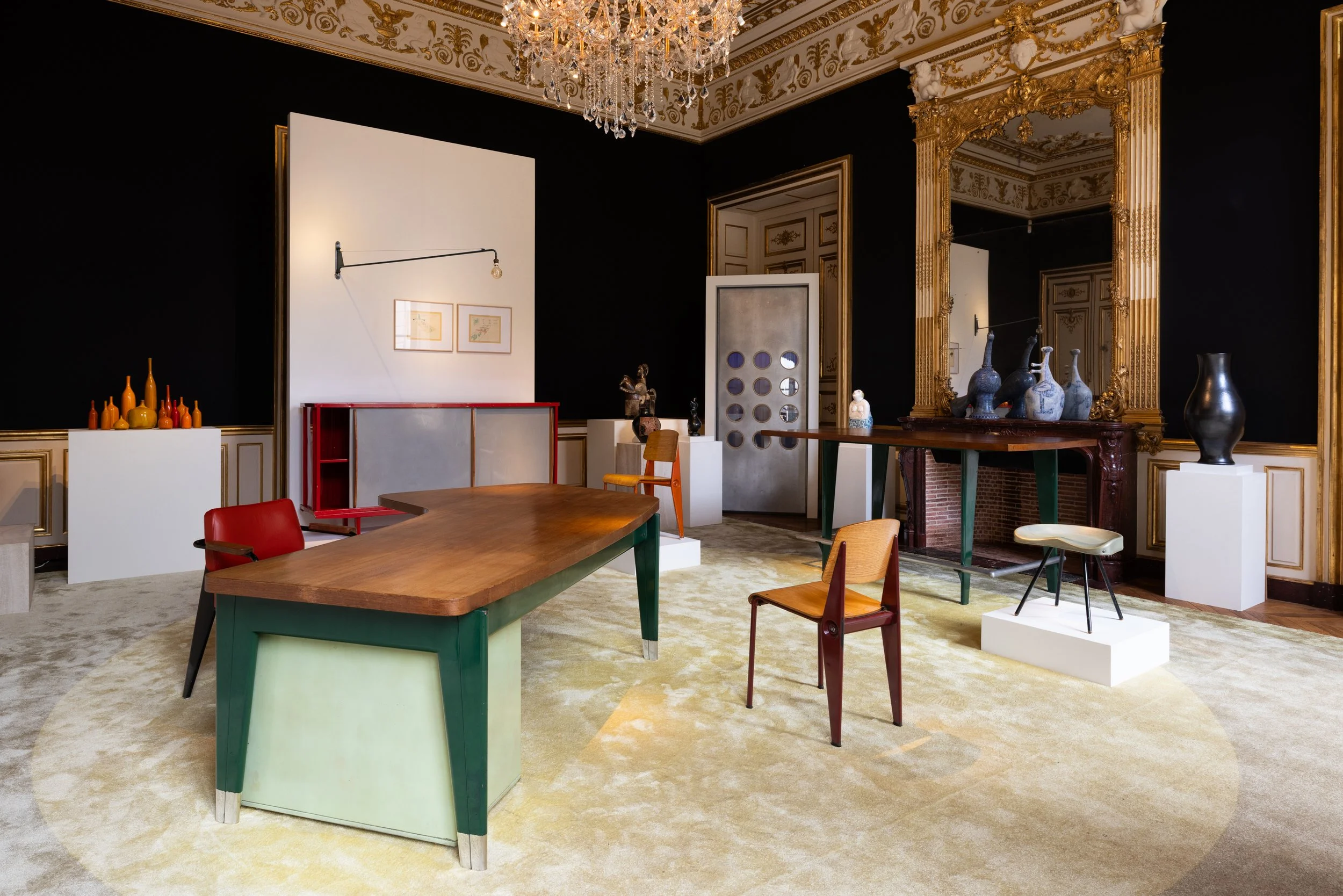
Laffanour at Design Miami.Paris 2025. Photography by Ivan Erofeev, courtesy of Design Miami.Paris.

Meubles et Lumières at Design Miami.Paris 2025. Photography by Ivan Erofeev, courtesy of Design Miami.Paris.
Do We Even Need Fairs Anymore?
It's a fair question, literally. When you can reach collectors via Instagram, when sales happen over DM, when digital lookbooks are more comprehensive than any booth—what's the point of hauling work to Paris?
Roberts says fairs offer "trust, content, and genuine community." Yashar emphasizes the irreplaceable experience of seeing "how materials react to light, how scale and proportion change your perception." Chastel describes fairs as creating "a moment of encounter and emulation that digital technology can never reproduce"—a place to "perceive the underlying trends, the collective emotions, what design says about our era." These are all true. But simultaneously something else is at play.
Yashar's Nilufar creates booth environments that feel "like a home. An elegant, charming setting that offers a different experience compared to the typical fair booth." It's strategic, not just aesthetic. By making their presentation feel domestic rather than commercial, galleries acknowledge what the fair has become—a marketplace but also a stage. The performance of intimacy generates the trust that facilitates transactions happening elsewhere, later, quietly.
The fair hasn't escaped the digital; it's been designed for it. Every carefully curated vignette becomes content. The "presence" everyone celebrates is increasingly presence for the camera. Which doesn't make fairs pointless—it just means they're serving a different function than most want to admit out loud.
What Happens Next
Ask the insiders where this is all headed and you get interesting answers. Yashar wants fairs to evolve "beyond being transactional spaces" to become "platforms for curatorial innovation." Chastel argues they must "go further in the cultural and educational dimension—it's no longer just about selling, but about nurturing a discourse, creating meaning."
Bonnel is blunter: "Rising costs are becoming unsustainable for galleries, especially smaller ones, and threaten the very diversity they champion." She sees potential in digital tools enhancing physical experience, but the core tension remains. The more fairs position themselves as cultural institutions rather than commercial venues, the harder it becomes to justify the costs to galleries whose participation is ultimately about sales.
Design.Miami Paris has created something genuinely special—a fair that feels more like a curated conversation than a trade show. But good conversations need tension, not just agreement. And salons, historically, were places where ideas got tested and challenged, not just displayed and admired.
Twenty years after its founding, Design Miami has helped build something that didn't exist before: a coherent market for collectible design with its own rhythms, its own community across two markets, its own logic. That's no small achievement. And Design Miami Paris, specifically, is pointing toward what comes next—a model that takes design seriously as culture, not just commerce. It's tapping into something larger than the art world's reflected glory. It's beginning to articulate design's own authority.
For now, in this gilded mansion in Saint-Germain-des-Prés, surrounded by historical masterworks and contemporary provocations, there's a genuine moment of possibility. Design Miami Paris is demonstrating that fairs can be more: more culturally embedded, more intellectually ambitious, more willing to meet audiences where they actually live. Whether that demonstration becomes a template for the industry or remains a beautiful outlier depends on how boldly it pursues its own vision. But the foundation is there.

As art becomes an asset class, gallerists Pilar Corrias, Dominique Lévy and Hannah Traore make the case for the place where its meaning is still decided.