The Space Between
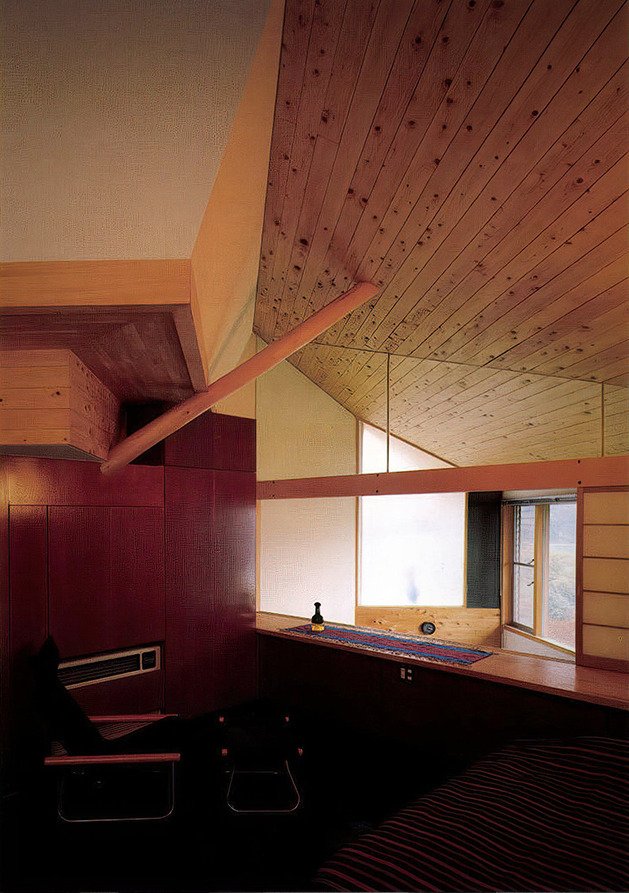
Atelier at Sagami. Midori Ward, Sagamihara, Kanagawa, Japan 1987-883, designed by Masako Hayashi
The Space Between
An essay by Rie Azuma on Masako Hayashi
In celebration of Making Space: Interior Design by Women by Phaidon—a groundbreaking survey of 250 leading interior designers spanning the twentieth and twenty-first centuries—we invited four women featured in the book to reflect on the visionaries who shaped their practice.
By Rie Azuma
The four seasons have long shaped Japanese culture through seasonal events, seasonal food, literature and poetry with seasonal words. Kimonos, which are traditional Japanese clothing, should present seasonal patterns such as cherry blossoms in spring. The use of seasonal items should be selected at the appropriate time.
As Kengyou Hokushi once said in his essay, houses should be designed with consideration of the summer. After the rainy season, the hot summer starts. To prepare for the extremely hot summers, Japanese houses are designed with eaves to provide shade and to draw in the wind. Japanese houses were built with the presence of summer in mind. Although air-conditioning technology made it possible for people to be comfortable at any time after the 1970s, it changed the way of life in Japan.
It was during my second year of undergraduate studies at Japan Women's University (JWU) that I was first exposed to the studio of architect Masako Hayashi. Japan Women's University, founded in 1901, was the first university for women in Japan, and she was one of the first graduates in the field specializing in architecture (the department of housing) in 1951 from JWU and became a pioneer of female architects in Japan.
My first project with Professor Masako Hayashi in 1979 was a house, and I fearfully showed her my design with the floor plan. Her comment was just "the wind will not blow in this house." She did not comment on design, function, or concepts. It was a big surprise for me and stuck in my memory for a long time, even now. I could not understand the meaning of her words at that time, but after starting my design career and working on several design projects, I understood its importance. I think that this one word expresses everything about Japanese housing culture.
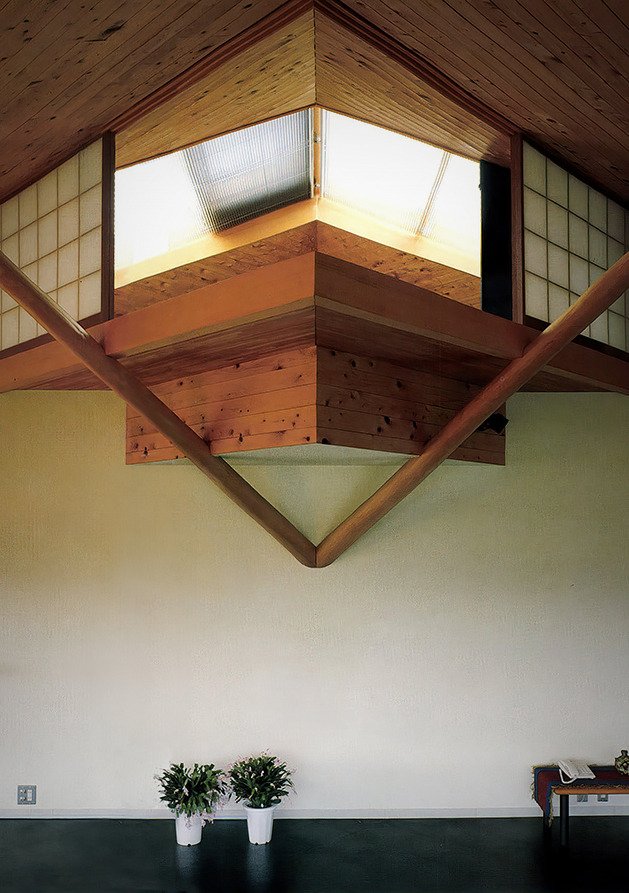
Atelier at Sagami. Midori Ward, Sagamihara, Kanagawa, Japan 1987-883, designed by Masako Hayashi

Atelier at Sagami. Midori Ward, Sagamihara, Kanagawa, Japan 1987-883, designed by Masako Hayashi
For housing in Japan, the path of wind has always been very important, and I feel it encapsulates everything—comfort, Japanese cultural sensibility, and more—in that single phrase. Later, when reviewing another project with her, she remarked "Architecture should be designed in sections."
In that time without computers, CAD, or CG, the only way to conceptualize three-dimensional space was through two-dimensional floor plans and sections. Young students would fiddle endlessly with floor plans, unable to develop them into three dimensions. However, she emphasized that sections were a crucial tool for visualizing that three-dimensional space.
“After I started my career as a professional architect, I had the OPPORTUNITY to visit a house designed by Masako Hayashi. It was a space where Japanese vocabulary and modernity fused in a way I had never experienced before.”
After I started my career as a professional architect, I had the opportunity to visit a house designed by Masako Hayashi. The space under the large sloping ceiling, the deep eaves and Engawa which is an in-between space outside and inside, the horizontally stretched openings, and the furniture emphasizing horizontal lines—it was a space where Japanese vocabulary and modernity fused in a way I had never experienced before. It was comfortable, not an eccentric space, but one that felt calming to Japanese people, and I was deeply impressed by its scale. I felt that the words my professor had spoken during my university days were realized there exactly as she had described.
After that, my work increasingly involved designing accommodation facilities, but at the same time, I took on more projects that constantly challenged me to balance Japanese traditions with modernization. In these projects, I found myself consciously considering details that echoed Professor Hayashi's teachings—such as the proportions in sectional drawings, the placement of windows, and the depth of eaves. I believe the foundation of my design practice lies in the fluid spaces I learned from living in the "Tower House" my father, Takamitsu Azuma, designed, and the sectional design principles rooted in Professor Hayashi's teachings, which remain central to my approach.
Everyone is an expert now, and almost no one is. In her latest essay, Bonnie Langedijk asks how confidence came loose from competence, why we believe the ring light over the researcher, and whether real expertise can survive a culture that rewards speed over depth.